The Ultimate Adventure Through China
Journey to China’s iconic sites and wild spots, via the Great Wall, panda encounters, kung fu traditions and Yangshuo’s karst landscapes
What's Included?
Activities & Certified Guides
All itinerary activities with a local, expert, English-speaking guideLodging
9 nights in high standard boutique hotels and 1 night in a simple local guesthouseMeals
All breakfasts, 5 lunches, and 8 dinnersInternal Flights & Transfers
Arrival airport transfer, flight from Beijing to Chengdu, and all transfers throughout (including high-speed trains)Gear & Permits
Bike rental with helmet; all permits and entry feesSmall Like-minded Groups
Solo-friendly by design, join our small n’ sociable groups of up to 14 like-minded, active and outdoorsy people…
…
What's it like?

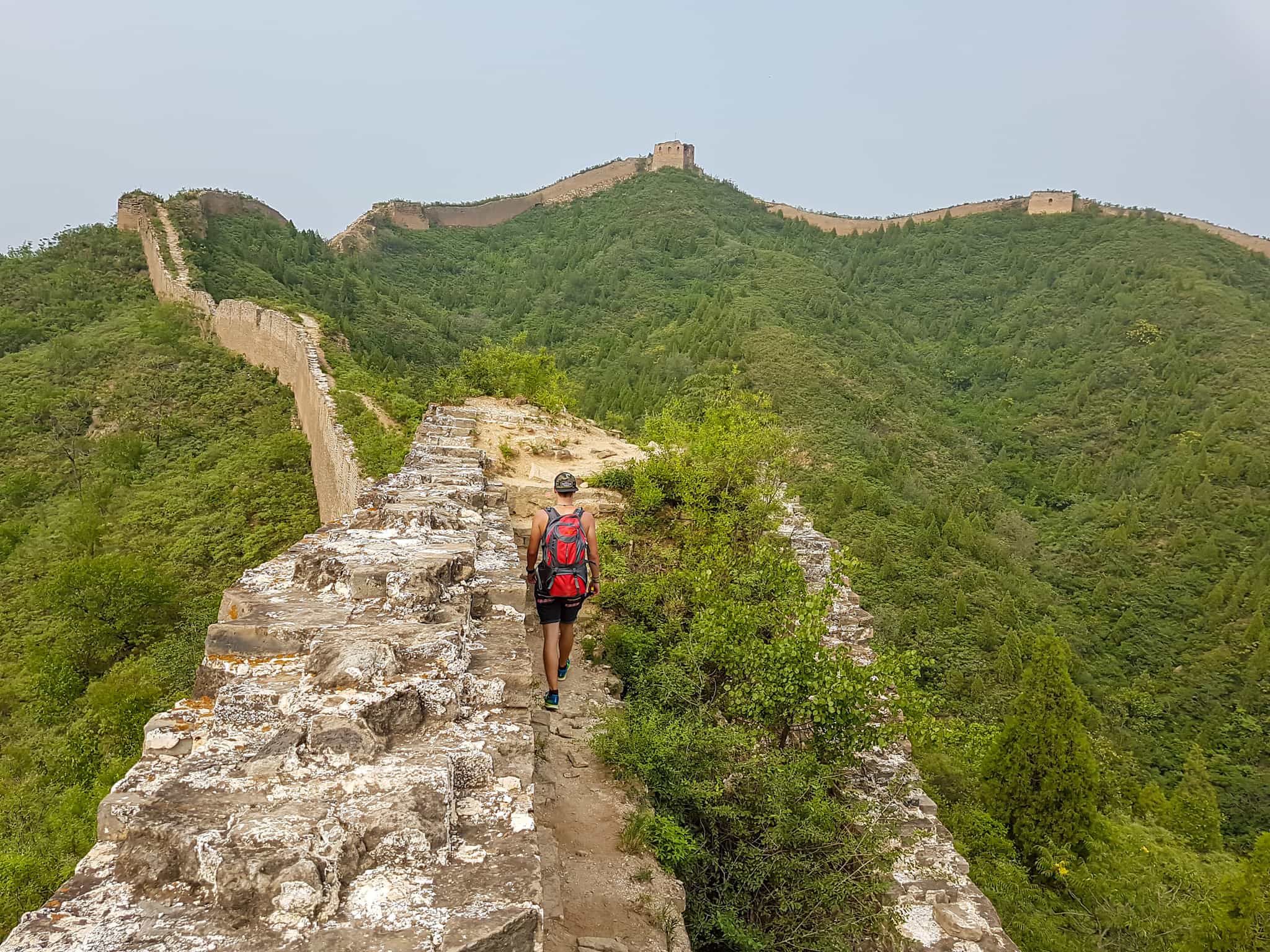
Hike the quieter, wilder Jinshanling section of the Great Wall, staying overnight in a local village beneath its ancient watchtowers
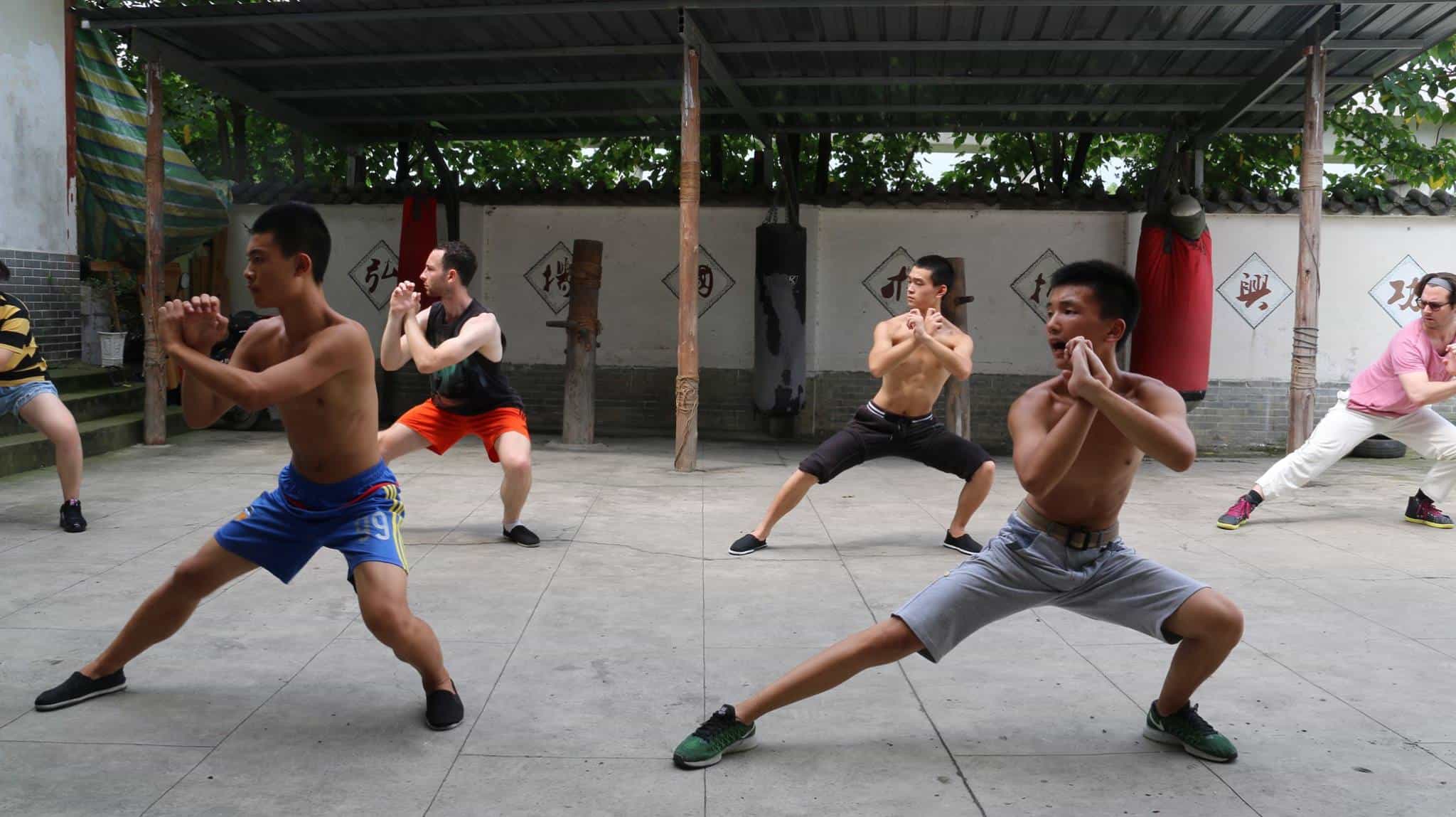
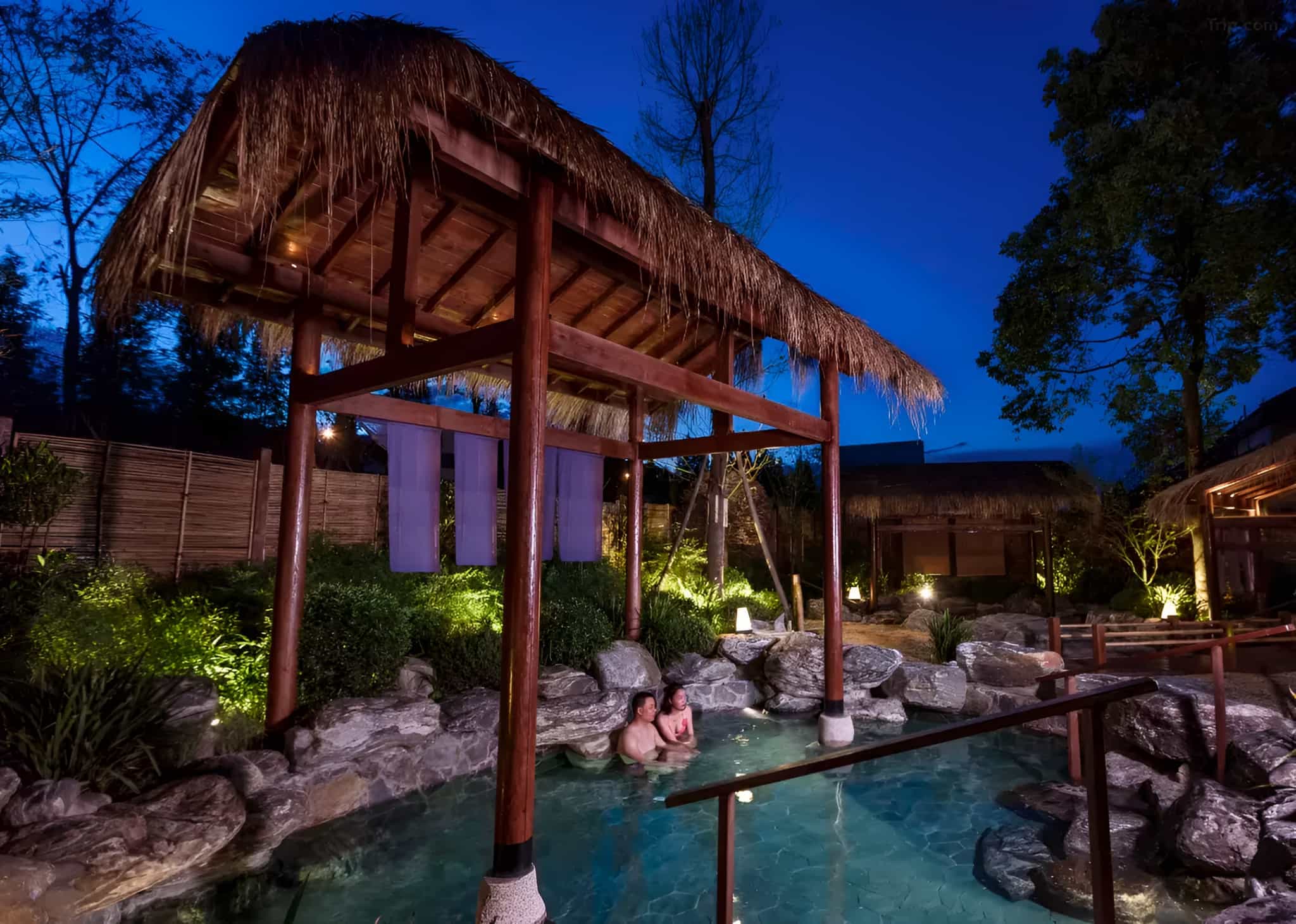
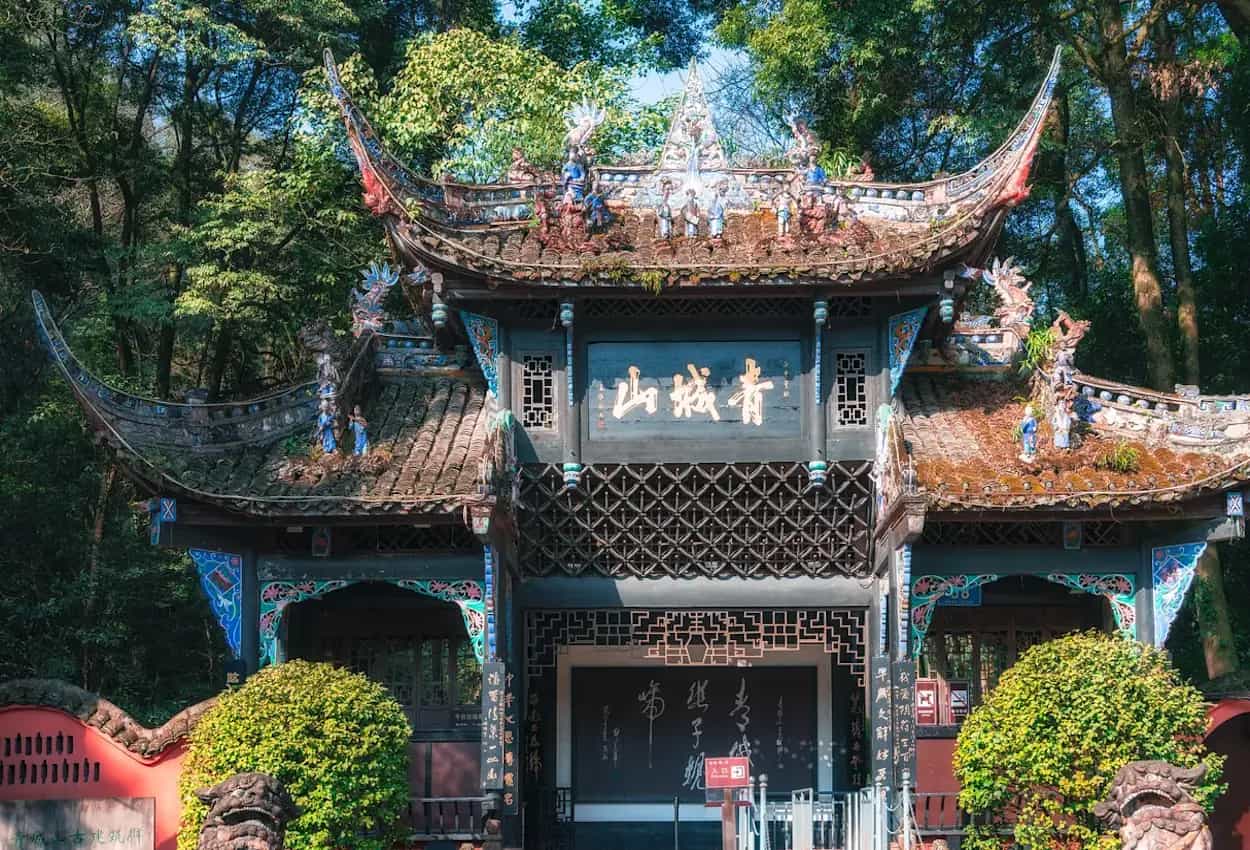
Experience the best of Sichuan as you hike Qingcheng's temple trails, soak in hot springs, practice martial arts, and see pandas up close
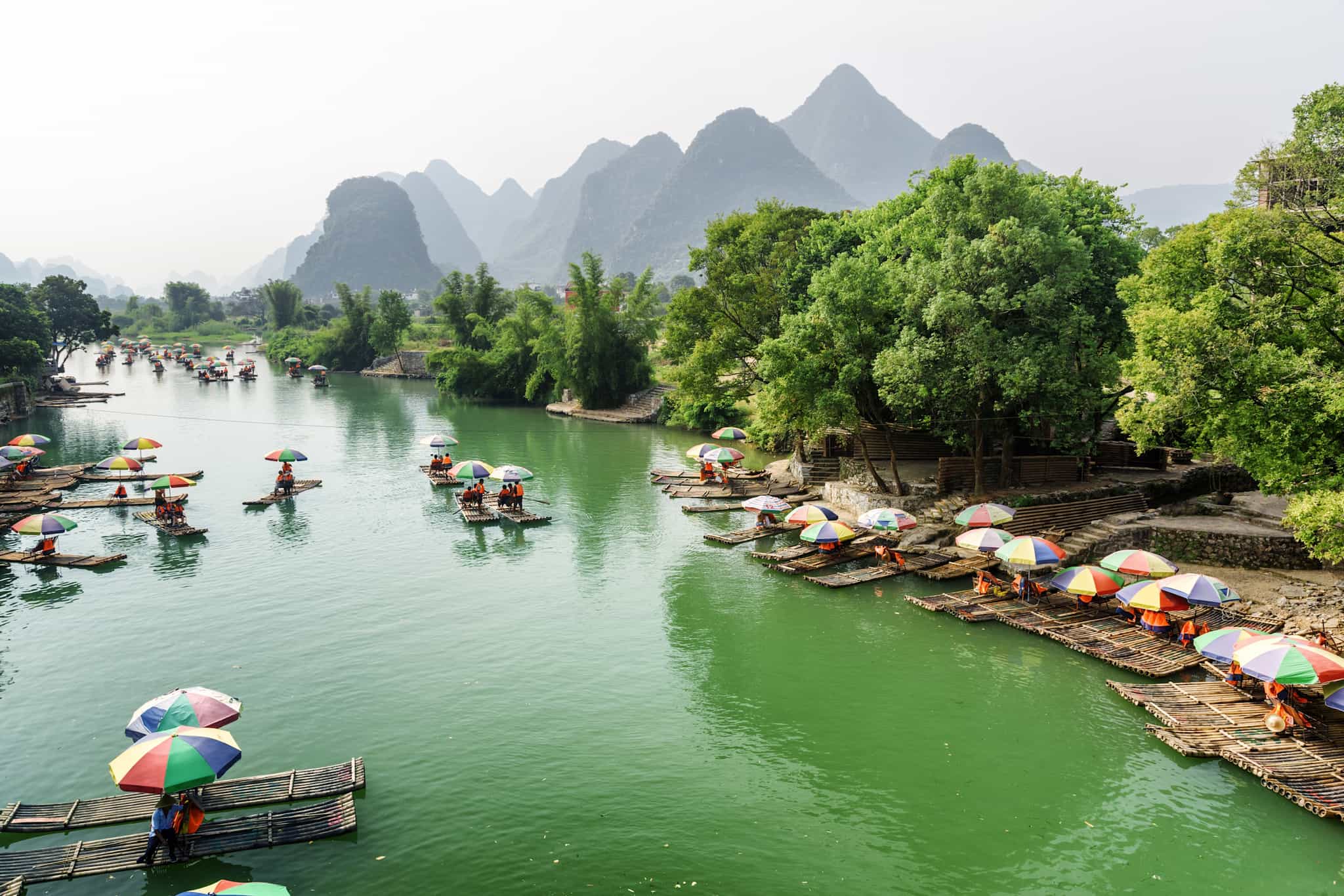
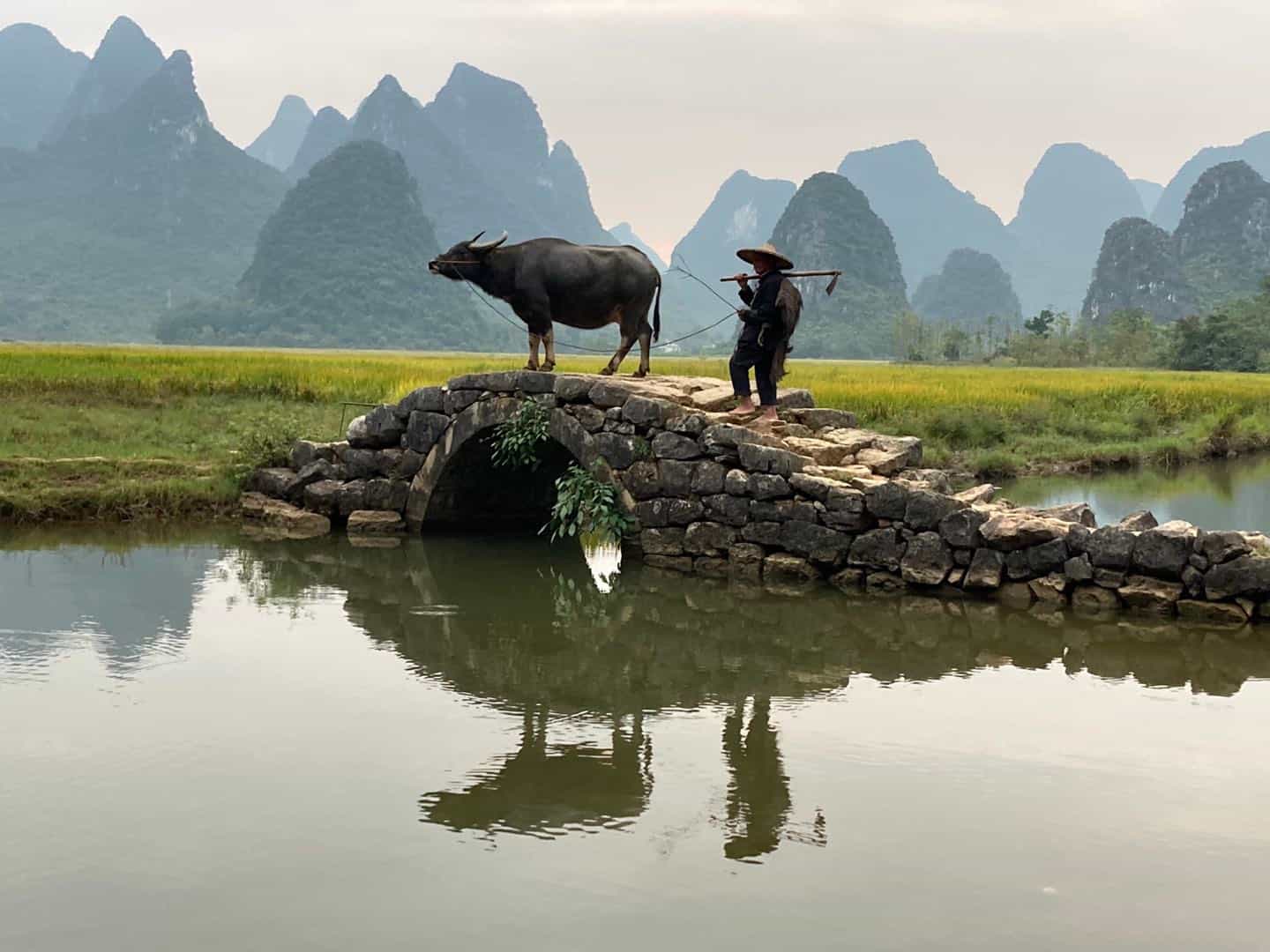
Explore Yangshuo by bike and float along the Yulong River on a bamboo raft, surrounded by iconic peaks and lush rice paddies
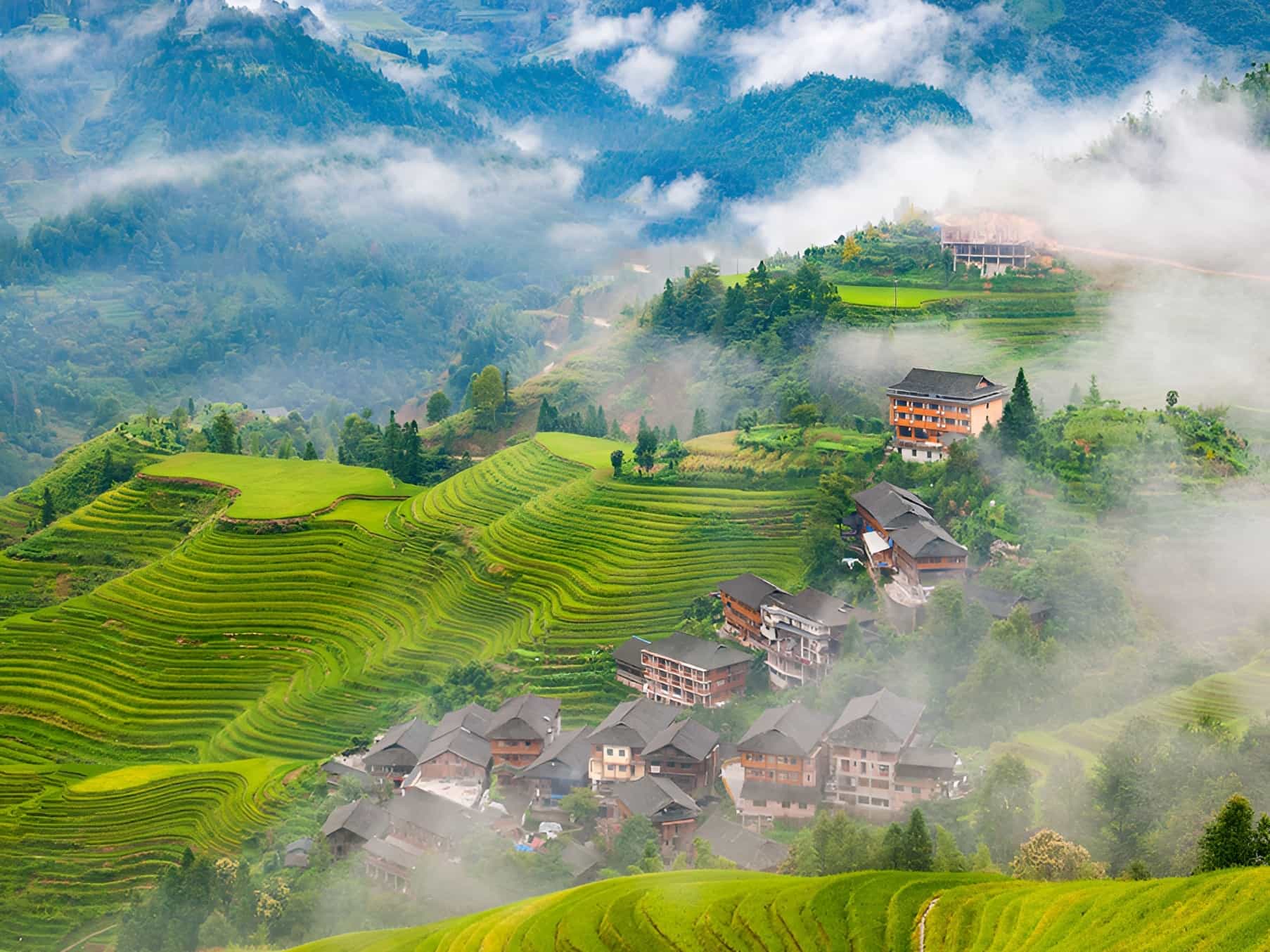
Venture to the remote Longji rice terraces, hiking from Ping’an to Dazhai through ancient, hand-carved landscapes and age-old villages
Key Information
Day 1
Welcome to China!
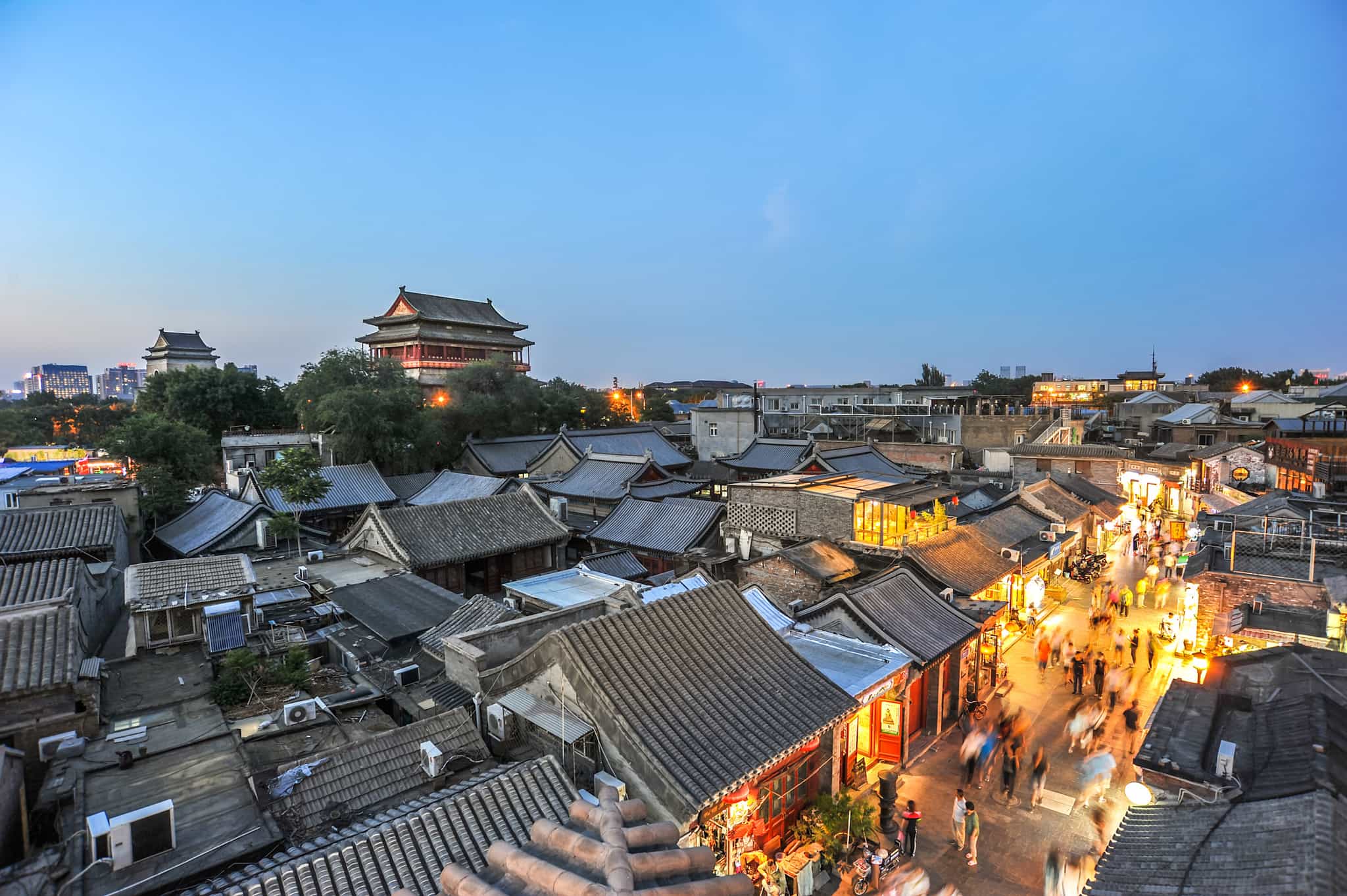
Ni hao! Welcome to China. On arrival in Beijing, you’ll be met at the airport and transferred to your hotel in the heart of the city. Once you’ve had time to check in and freshen up, meet your guide and fellow travelers for a welcome briefing (usually scheduled late afternoon), where you’ll run through the plans for the days ahead. Afterwards, head out on a short orientation walk through Beijing’s historic hutongs – narrow alleyways lined with traditional courtyard homes that offer a glimpse into the city’s past and everyday local life. As evening falls, sit down together for a welcome dinner featuring Beijing’s most famous dish: Peking duck, served in a local restaurant (vegetarian options are available on request). Since this itinerary includes limited time in the city, if you’d like to visit sites such as the Forbidden City or Temple of Heaven, we recommend arriving a day or two early to explore at your own pace and adjust to jet lag.
Day 2
Hike a less-trodden section of the Great Wall in Jinshanling
Driving
Hiking
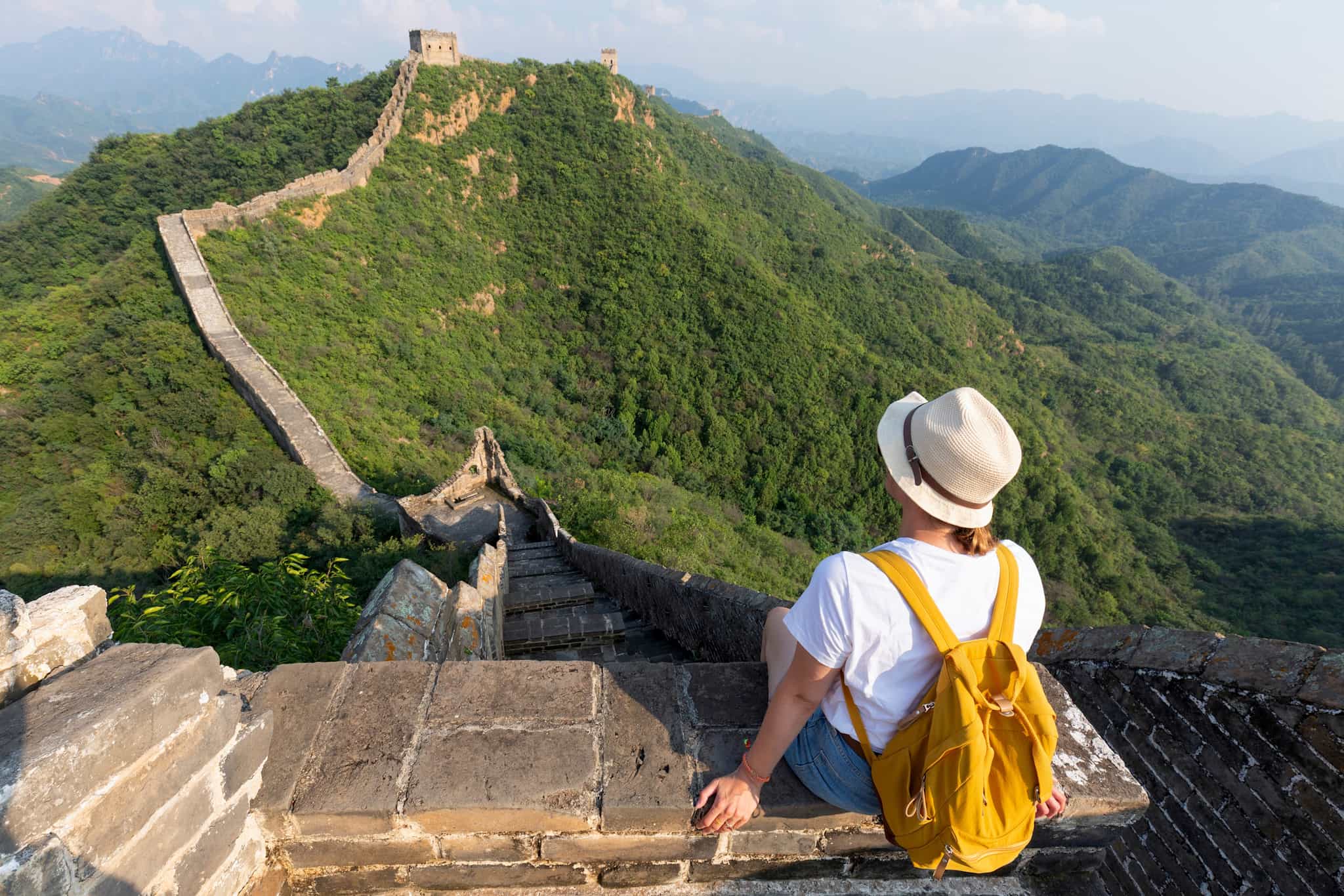
Rise early this morning and leave the city behind as you drive to the Jinshanling section of the Great Wall. Thanks to its distance from Beijing, this is one of the quieter, less-visited stretches, known for its wild scenery – a nice contrast to the busier sections closer to the city, which attract most day trippers. Once you arrive, stretch your legs as you set out on a four-hour hike along the Wall, following its undulating path between watchtowers. While the distance isn’t long, the large, uneven stone steps and frequent ascents and descents make this a moderate hike requiring a reasonable level of fitness. The pace is relaxed, with plenty of time to stop for photos and take in the views. At the end of the hike, enjoy a late lunch of freshly prepared food, cooked by local farmers and carried up to the Wall – a unique experience and a great way to support the local community. Afterwards, descend to the nearby village and check into your guesthouse. This evening, head to a local family home to learn how to make traditional dumplings before sitting down to enjoy them together – a simple, authentic experience in a rural setting.
Day 3
Travel to Sichuan
Driving
Flight
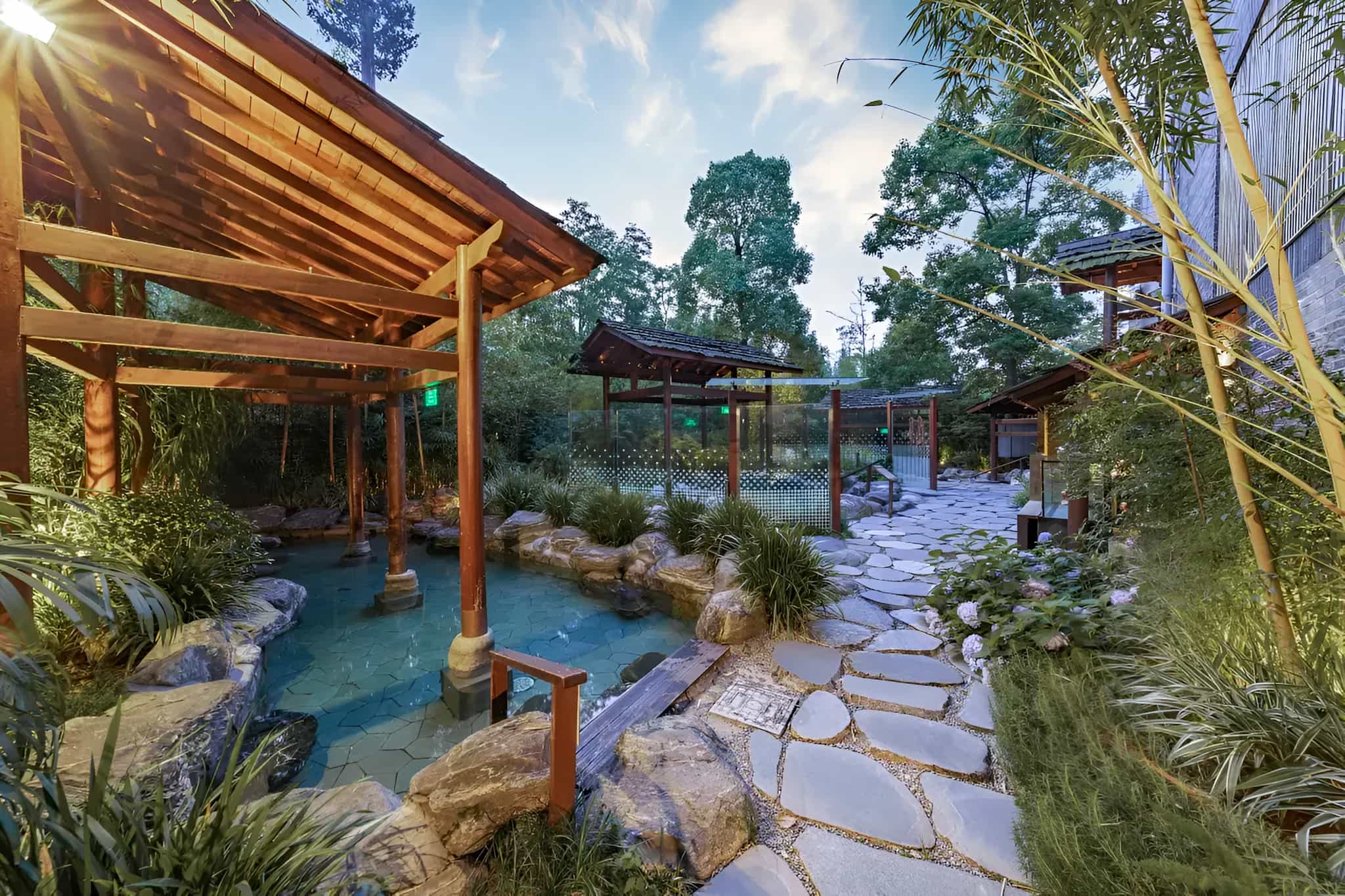
Today is mainly a travel day as you move from northern China to Sichuan province in the southwest, known for its rich culture, cuisine, and more relaxed pace of life. For those eager to make the most of your final moments at the Great Wall, there's the option of an early short walk at sunrise, as your guesthouse is located within walking distance. Conditions permitting, your leader can accompany you – a special chance to see the wall in softer light and with fewer people around. After breakfast, leave the Great Wall behind and transfer back to Beijing Airport for your flight to Chengdu. On arrival, continue by road to your hot spring resort near Qingcheng Mountain, where you’ll stay for the next two nights. After checking in, take time to unwind and enjoy the resort’s natural hot spring baths – the perfect way to relax after a long day of travel.
Day 4
Hike Qingcheng Mountain's temple trails
Hiking
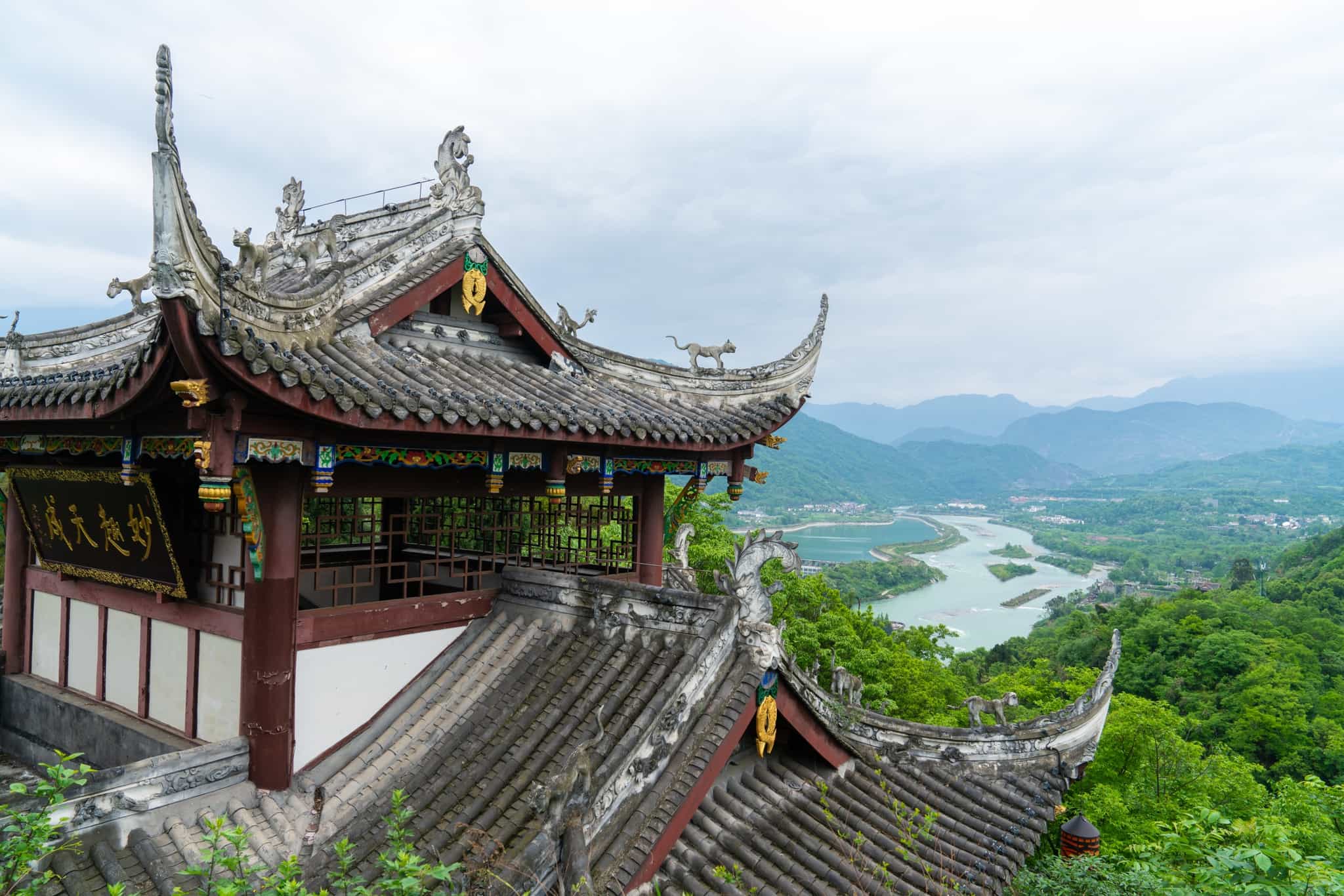
After an early breakfast, set off to explore Qingcheng Mountain, one of the birthplaces of Taoism. Qingcheng is known for its lush, forested slopes and deeply spiritual atmosphere. Today’s hike focuses on the Front Mountain, the cultural heart of Qingcheng, following stone stairways and shaded trails through Taoist temples hidden among the trees. The route covers around 4–5 miles and takes approximately 4–5 hours, including stops. While gradients are generally gentle, the constant uneven steps make this a moderate hike requiring steady effort. Along the way, pass key sites including Jianfu Palace and the sacred Tianshi Cave, where Taoism was first taught nearly 2,000 years ago. Higher up, reach the Upper Qing Palace, set among forested peaks with sweeping views on clear days. As one of China’s most important sacred mountains, some sections can be busy, but others offer quieter forest trails with a more calm, often misty atmosphere. After reaching the top, descend by a combination of walking and cable car before returning to your resort. The rest of the afternoon and evening are free to relax and enjoy the resort’s hot spring facilities. Alternatively, if you still have the energy, your guide can help arrange an optional visit to nearby Jiezi Ancient Town.
Day 5
Kung Fu panda!
Wildlife Watching
Driving
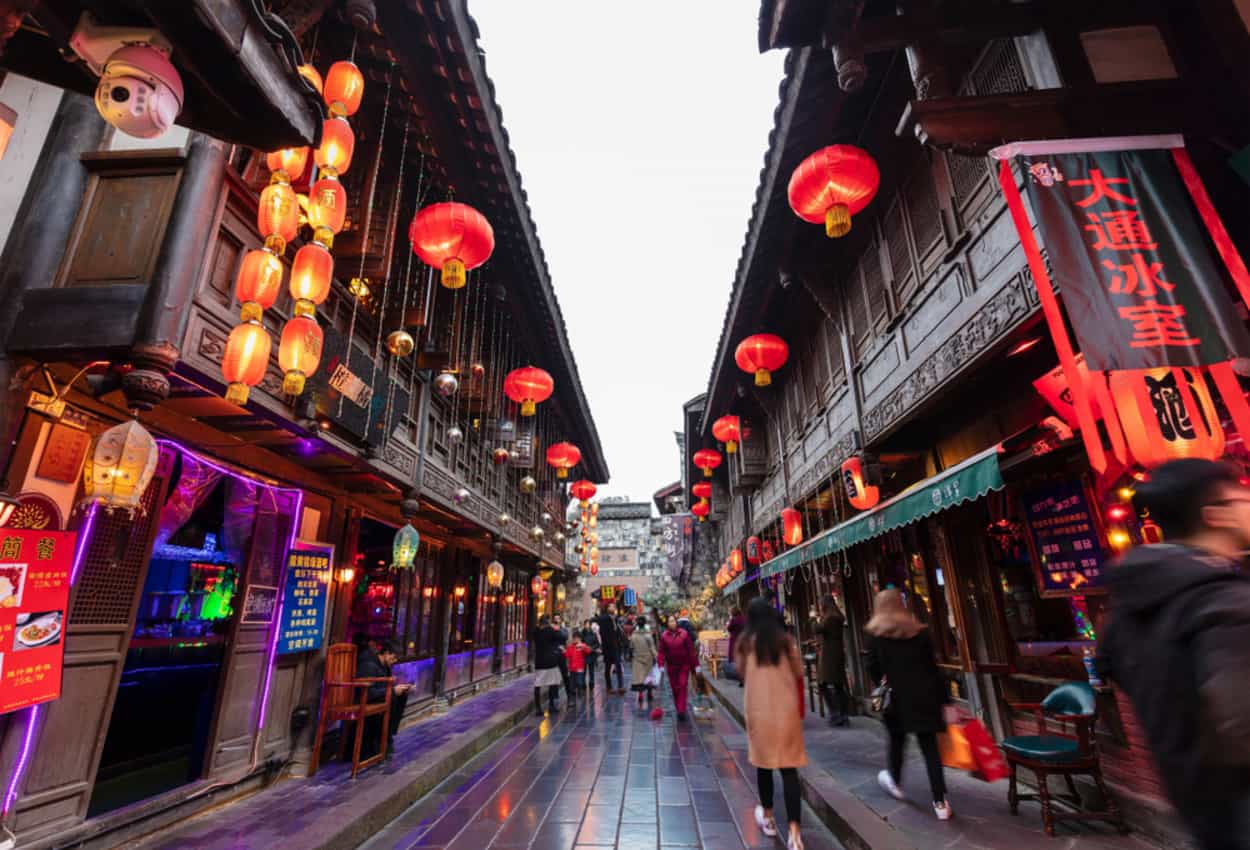
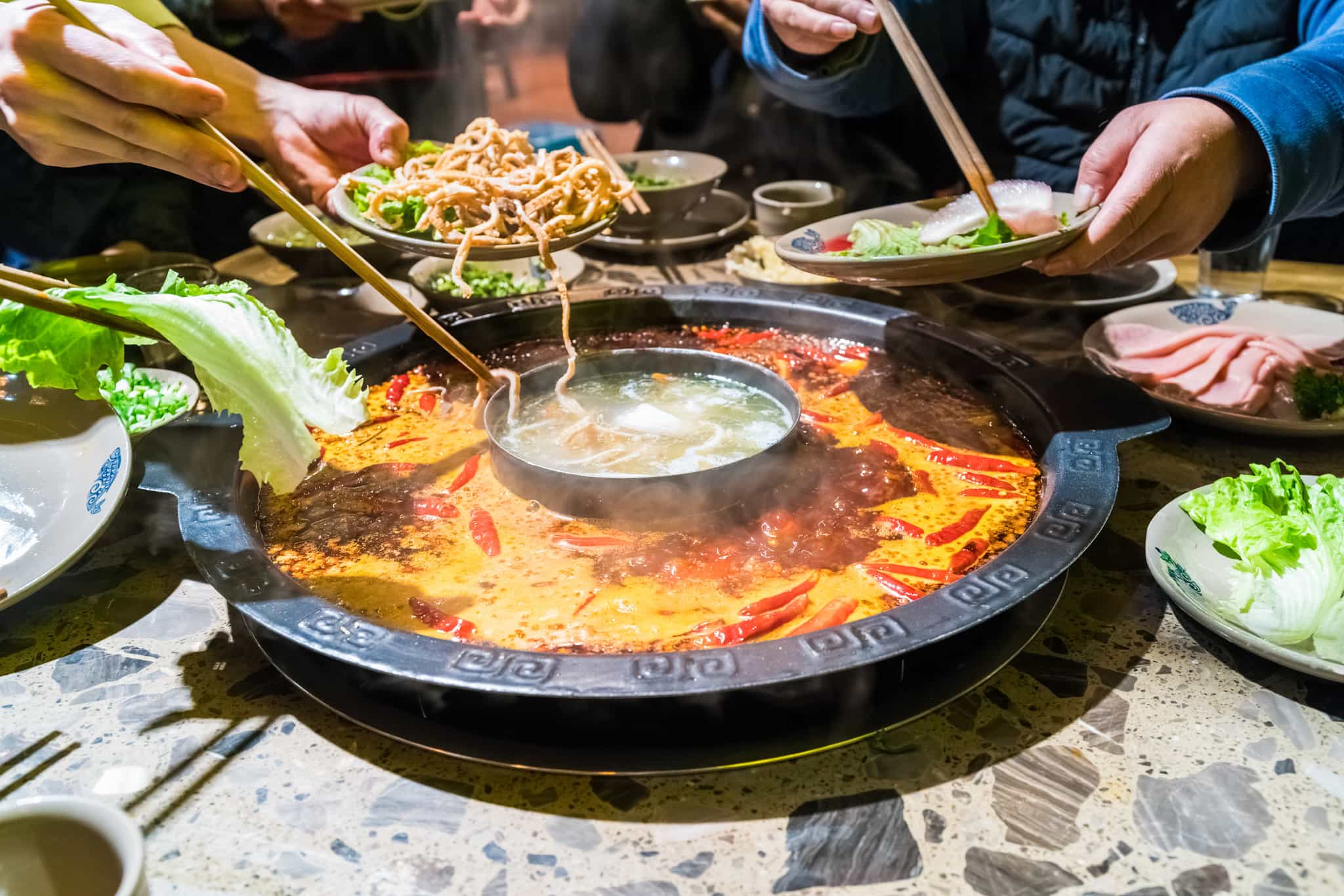
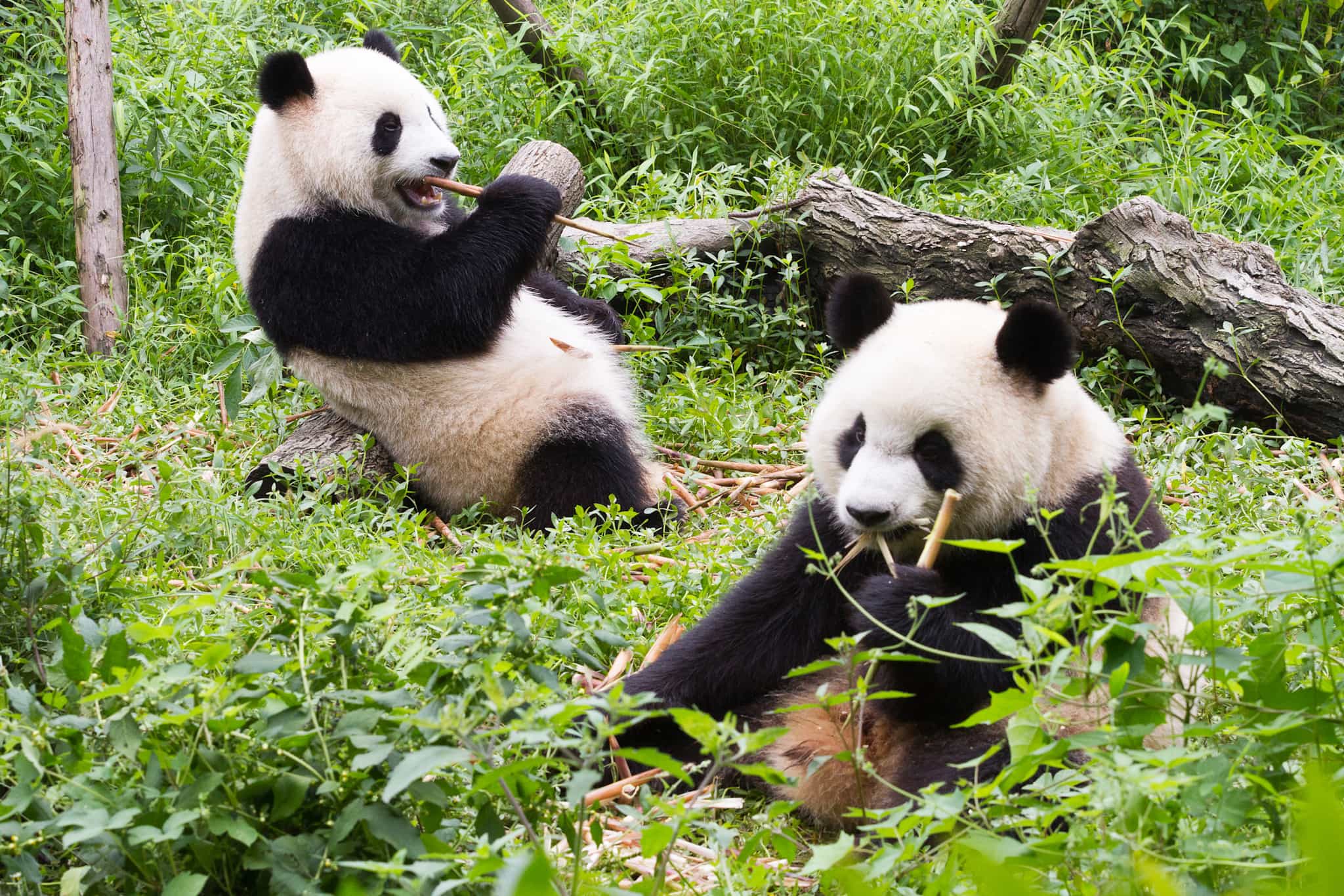
Start early this morning with a visit to Dujiangyan Panda Base, giving you the best chance to see the pandas when they are most active. Set in a forested valley on the outskirts of Quicheng, this is a conservation and research center focused on the protection, breeding, and reintroduction of giant pandas into the wild. Designed to reflect the pandas’ natural habitat, the park is spread across bamboo-covered hills with walking trails linking spacious enclosures. As you explore on foot, look out for giant pandas as they eat, play, and rest, along with red pandas, which are often more active and can be spotted climbing through the trees. Afterward, drive one hour to Chengdu for a hands-on kung fu experience, training with a local master and learning the basics of this centuries-old martial art. It’s a fun and active session, offering insight into an important part of Chinese culture. Tonight, you may choose to join your guide and explore Kuanzhai Alley, a historic district of narrow lanes, traditional courtyards, and lively street food stalls. It’s a great place to soak up Chengdu’s laid-back atmosphere, browse local shops, or try Sichuan's famous hot pot.
Day 6
Travel to Yangshuo's epic karst landscapes
Train Ride
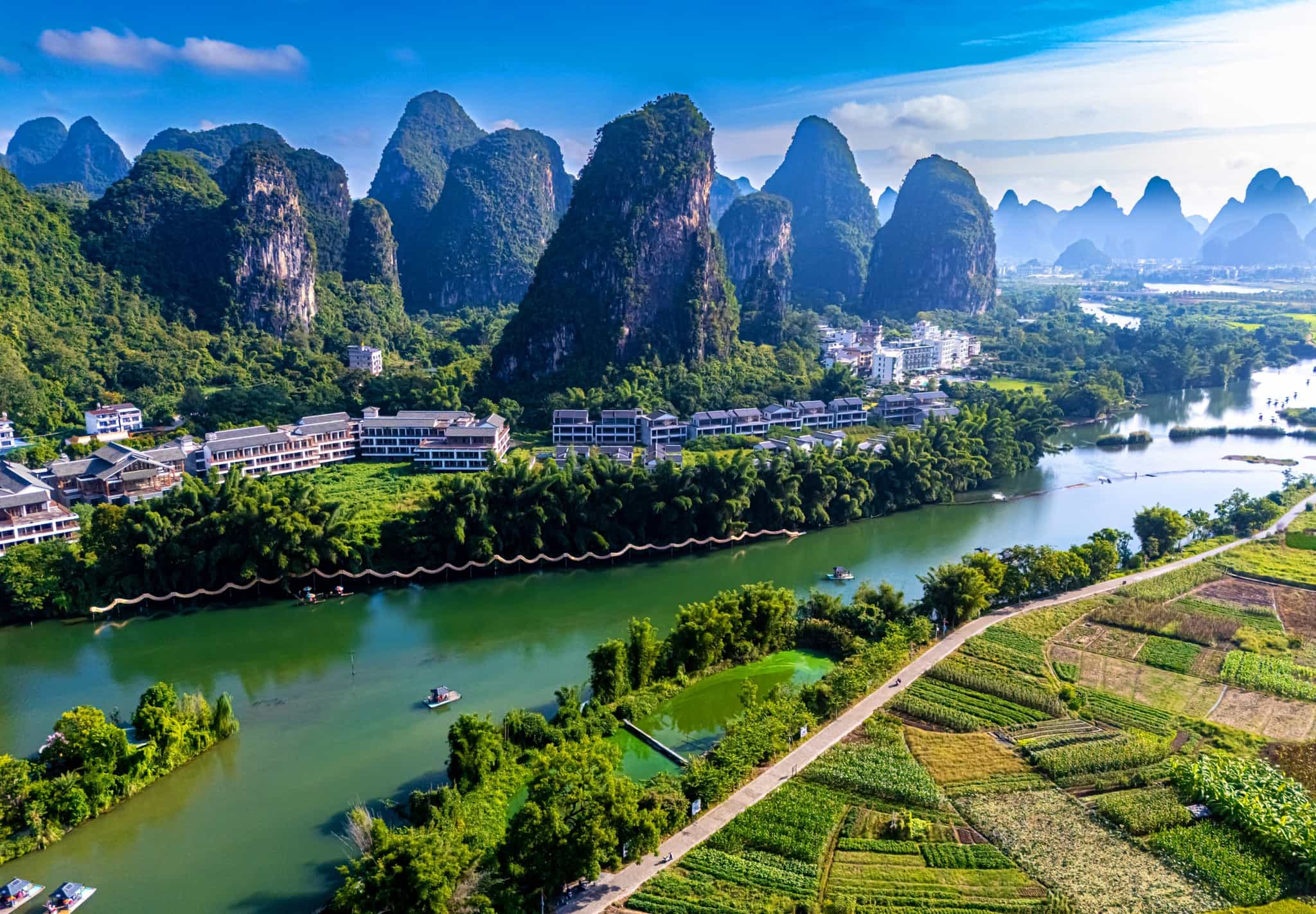
Enjoy a more relaxed start this morning before heading to the station for a late morning high-speed train to Yangshuo (departing at around 11:30). You relax with a well-deserved lie-in after a few busy days, or you can head out to explore the People’s Park before checking out, where locals gather to practice tai chi, play board games and enjoy the slower rhythm of daily life. The train journey takes around six hours and is smooth and comfortable – a good opportunity to switch off for a bit, whether you want to sleep, listen to music or just watch the landscape roll by. By late afternoon, you’ll arrive in a completely different setting. Gone are the cities and forested hills – here, the scenery opens up into Yangshuo’s distinctive karst landscape, where sharp limestone peaks rise abruptly from farmland and river valleys. After checking in to your next hotel, head out with your guide for a short walk through town to get your bearings. Yangshuo has a laid-back feel, with a mix of local life and traveler energy, and plenty of small cafes, shops and street food spots dotted around. In the evening, you'll enjoy dinner near the river. It’s a low-key end to the day, with the karst peaks silhouetted in the background – your first real sense of the landscape you’ll explore more deeply tomorrow.
Day 7
Cycle, hike and raft through Yangshuo’s countryside
Cycling
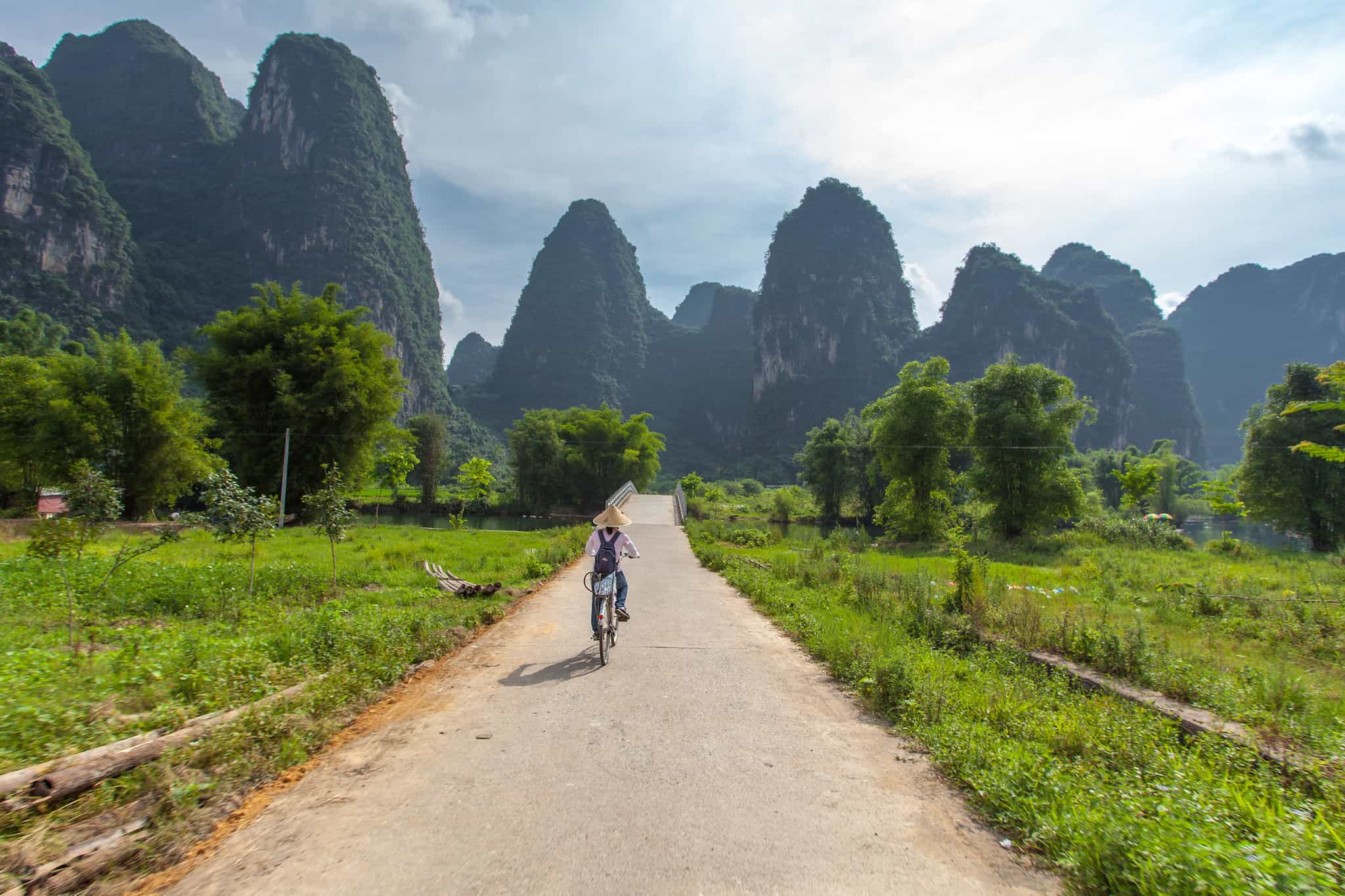
Today is all about fully immersing yourself in Yangshuo’s landscapes. After breakfast, set off by bike, leaving the town behind as you ride through quiet country lanes, past rice fields, small villages and waterways, all framed by dramatic karst peaks. The cycling follows mostly flat or gently rolling terrain, with plenty of stops to take in the views. Continue to a local village for lunch at a family home, where you’ll enjoy a simple, home-cooked meal made with locally grown ingredients. This afternoon, swap bikes for bamboo rafts and drift along the Yulong River. With no motorized boats, it’s a peaceful way to take in some of the best views of the karst landscape, floating past rice paddies, villages and towering peaks. You'll return to your hotel later in the day, with the evening free to relax or explore further.
Day 8
From tea fields to the Longji rice terraces
Driving
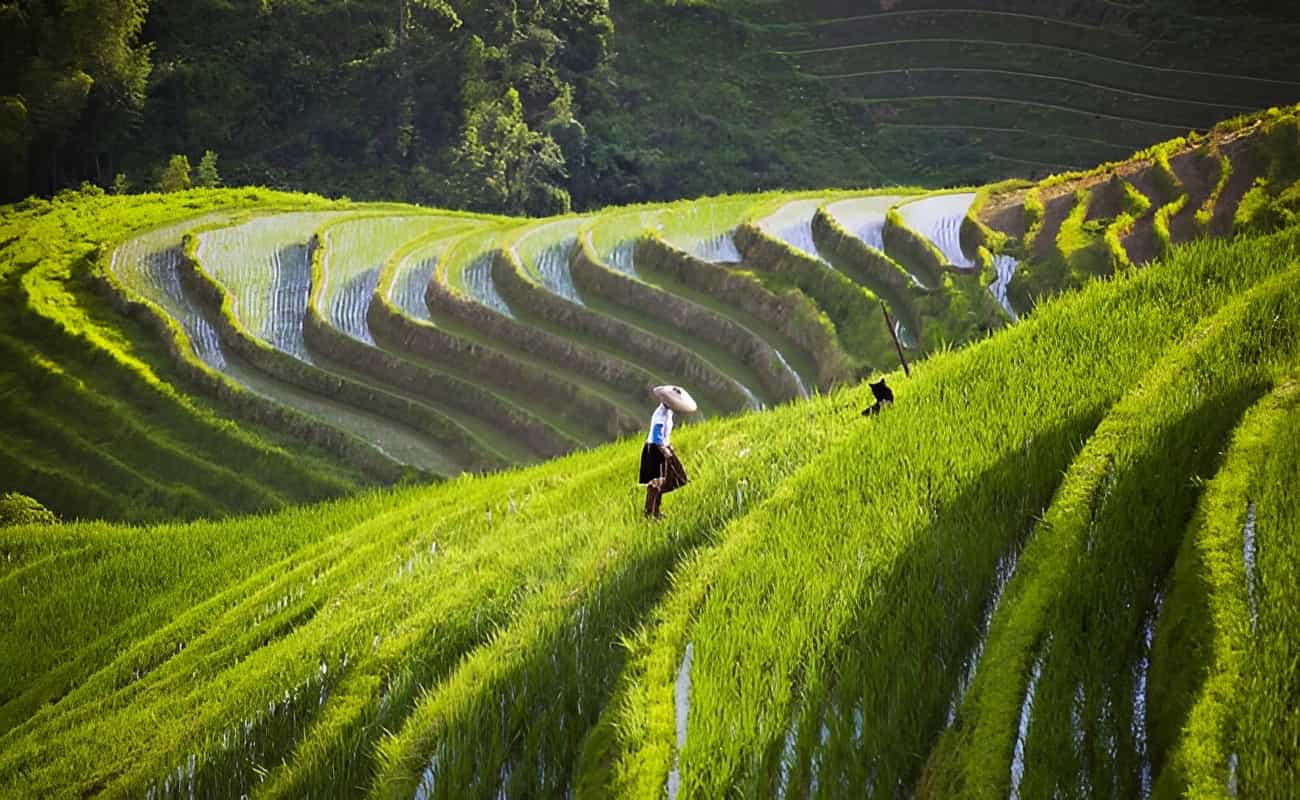
After breakfast, leave Yangshuo behind and drive into the countryside to visit a local tea farm. Walk through the fields, learn how tea is grown and harvested, then try your hand at picking leaves while gaining insight into one of China’s oldest traditions. After lunch, continue your journey north towards the Longji Rice Terraces, where the scenery shifts to layered mountains carved with rice fields. With a history of over 600 years, these terraces are still farmed today by local Zhuang and Yao communities, creating a striking, ever-changing landscape. Once you arrive, head to your guesthouse, where you'll stay for the next two nights. From here, you’ll have sweeping views across the surrounding mountains and rice fields. If the weather is nice, join your guide to head out on foot to a nearby viewpoint for sunset. As the light softens, the terraces take on different tones and textures – it's one of the most photogenic times of day to experience this unique landscape.
Day 9
Hike through the Longji rice terraces and villages
Hiking
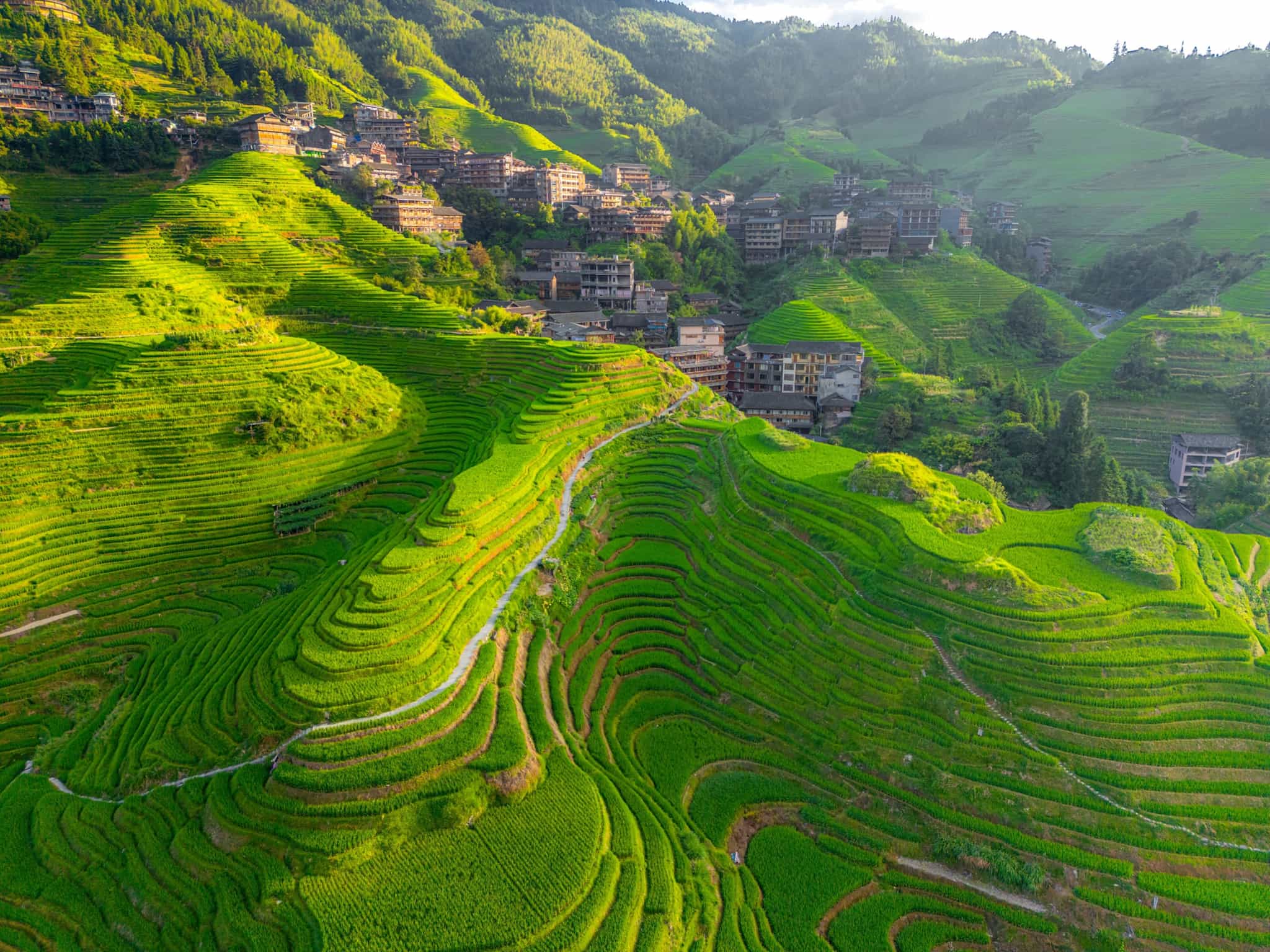
Wake up in the heart of the Longji terraces and set out on a full day hike through this remarkable landscape. Today’s route takes you from Ping’an towards Dazhai, following stone paths that weave through layered rice fields, forested hillsides, and small mountain villages. You'll cover around 6 miles and hike for approximately 5–6 hours. While not technical, there are steady ascents and descents along uneven paths, with plenty of steps along the way. The effort is well rewarded, with constantly changing views across the terraces, which stretch in every direction like contours across the mountains. Along the way, pass through remote villages where daily life continues much as it has for generations, before stopping for lunch in a local village. In the afternoon, return to your lodging, with time to relax and take in the views.
Day 10
From mountain terraces to Hong Kong's skyline

Driving
Train Ride
After breakfast, leave the rice terraces behind and transfer to Guilin to catch a high-speed train to Hong Kong (usually scheduled around noon). It’s a comfortable three-hour journey and by the time you arrive, the shift in pace and setting is immediate – from quiet mountain villages to one of Asia’s most dynamic cities. On arrival, you’ll head straight to Victoria Peak to take in sweeping views over Hong Kong’s iconic skyline, a spectacular first introduction to the city and a fitting finale to your journey through China. Afterwards, enjoy a final group dinner of dim sum (Hong Kong’s signature cuisine) at a local restaurant. Then transfer to your hotel in Kowloon for check-in, no doubt ready for a deep sleep after an incredible trip.
Day 11
Head home, or explore Hong Kong
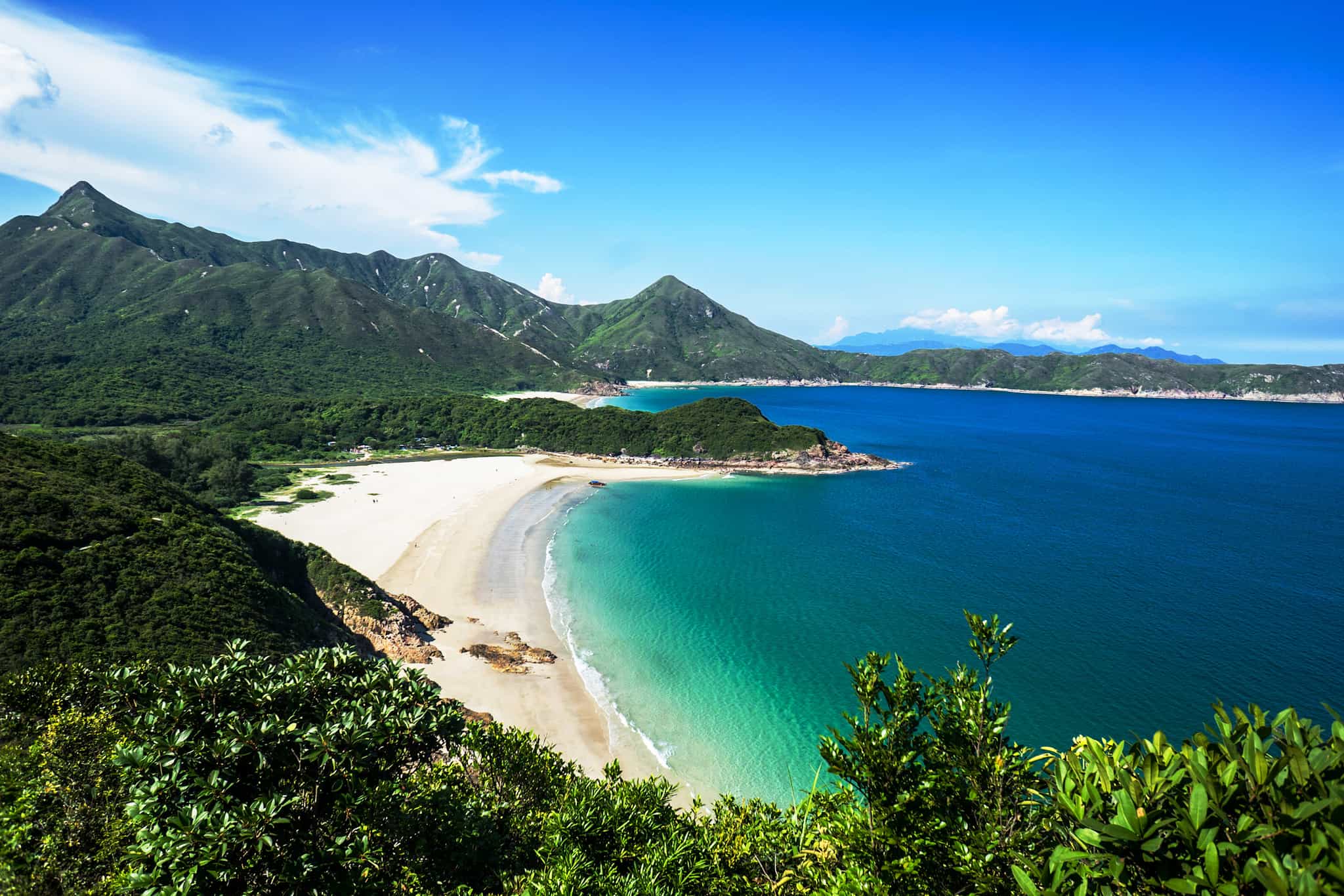
Your trip comes to an end this morning in Hong Kong. There are no planned activities, so you’re free to make your way to the airport and depart at any time. If you have extra time, Hong Kong is well worth extending your stay – beyond the skyline, the city offers a surprising amount of nature with scenic coastal hikes, outlying islands, and quiet beaches all within easy reach. If you’d like to continue your travels, your host can offer recommendations and help you plan the next steps.
The Area
Logistics
Starts
Beijing International Airport (PEK)
Arrive before 15:00 on Day 1 (recommended)
Ends
Kowloon, Hong Kong
Depart any time on Day 11
Transfers
Your trip begins at Beijing International Airport (PEK), and an arrival transfer is included on Day 1 at any time. Once you arrive, you’ll have time to check in before meeting your guide and fellow travelers for a welcome briefing and orientation walk, usually starting around 5:00 PM. We therefore recommend booking a flight that lands by around 3:00 PM to allow enough time to reach the hotel and settle in. If your flight arrives later, your guide can brief you separately, but you may miss the first group's dinner. Please note that this itinerary does not include dedicated time to explore Beijing’s main city attractions, so if you’d like to visit sites such as the Forbidden City or Temple of Heaven, we recommend arriving a day or two earlier to explore at your own pace and adjust to jet lag.
Your trip ends in Hong Kong on Day 11. No departure airport transfer is included, because Hong Kong has an excellent and easy-to-use public transportation system. From Kowloon, you can reach Hong Kong International Airport (HKG) in around 30–40 minutes via the Airport Express train from Kowloon or Hong Kong Station. Alternatively, taxis are readily available and take approximately 30–45 minutes (depending on traffic). Your guide will be able to provide detailed directions and assist with onward travel arrangements if needed.
Travel options
There are frequent international flights to Beijing and from Hong Kong, making this trip well-suited to a multi-city (open-jaw) flight booking. From the UK and Europe, there are direct flights to both Beijing and from Hong Kong, but these are often operated by different airlines. Booking direct flights in both directions may therefore require two separate tickets. If you prefer to book with the same airline or alliance such as Air China, itineraries are widely available with one stop, which can offer more flexibility and cheaper fares. From the US, there are direct and one-stop options to both Beijing and Hong Kong, with many routes operating via major hubs such as Tokyo, Seoul or Taipei. Using a multi-city search can help you find the most efficient routing.
For the best value and smoothest journey, we recommend using the multi-city option on flight comparison sites (such as Skyscanner or Google Flights) and, where possible, booking directly with the airline to simplify baggage transfers and provide better protection in case of delays.
Day 1
Breakfast
Lunch
Dinner
Day 2
Breakfast
Lunch
Dinner
Day 3
Breakfast
Lunch
Dinner
Day 4
Breakfast
Lunch
Dinner
Day 5
Breakfast
Lunch
Dinner
Day 6
Breakfast
Lunch
Dinner
Day 7
Breakfast
Lunch
Dinner
Day 8 – Day 9
Breakfast
Lunch
Dinner
Day 10
Breakfast
Lunch
Dinner
Day 11
Breakfast
Lunch
Dinner
What is the food like?
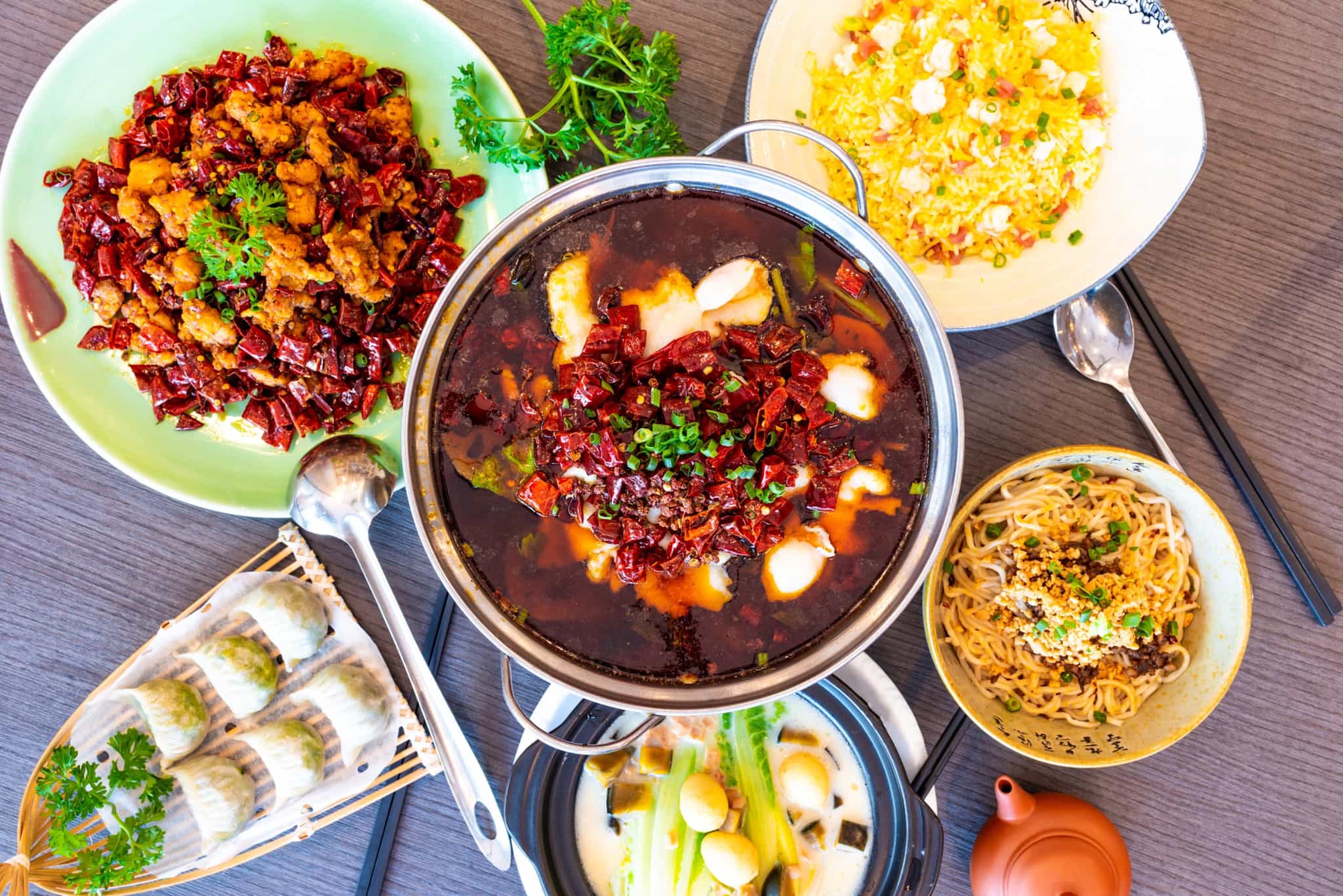
Chinese cuisine is a highlight of this trip, with each region offering its own distinctive flavors and culinary traditions. From northern specialties in Beijing to the bold, spicy dishes of Sichuan and the fresh, vibrant flavors of southern China, you’ll experience a wide variety of local food along the way. In Beijing, expect hearty northern dishes such as hand-pulled noodles and the city’s famous Peking duck. In Sichuan (Chengdu), cuisine is known for its rich, aromatic flavors and liberal use of chili and Sichuan pepper - with highlights including hot pot and a wide range of street food snacks. Further south in Yangshuo and Longji, food becomes lighter and more regional, with fresh vegetables, rice-based dishes and simple, flavorful home-style cooking often served in small local restaurants or village settings. In Hong Kong, you’ll experience Cantonese cuisine, including classic dim sum and a wide variety of international dining options. Meals are an important social experience in China and are typically shared, with multiple dishes served for the table. Most meals are included throughout the trip, showcasing local specialties, but some lunches and one dinner are left free, giving you the flexibility to explore independently. Your guide will always be on hand to recommend the best local spots, whether you’re after street food or a sit-down meal. Hands-on and immersive food experiences are also included, such as making dumplings with a local family near the Great Wall and great local eateries, giving you a deeper insight into China’s food culture.
If you have any dietary requirements, intolerances or allergies, please check the FAQ below: ‘Can my dietary requirements be catered for on this adventure?’ for specific advice relating to this trip. The availability of foods you may get at home varies in different destinations, so please read the FAQ in full before making your booking to ensure that this trip can accommodate your dietary needs.
What is the accommodation like?
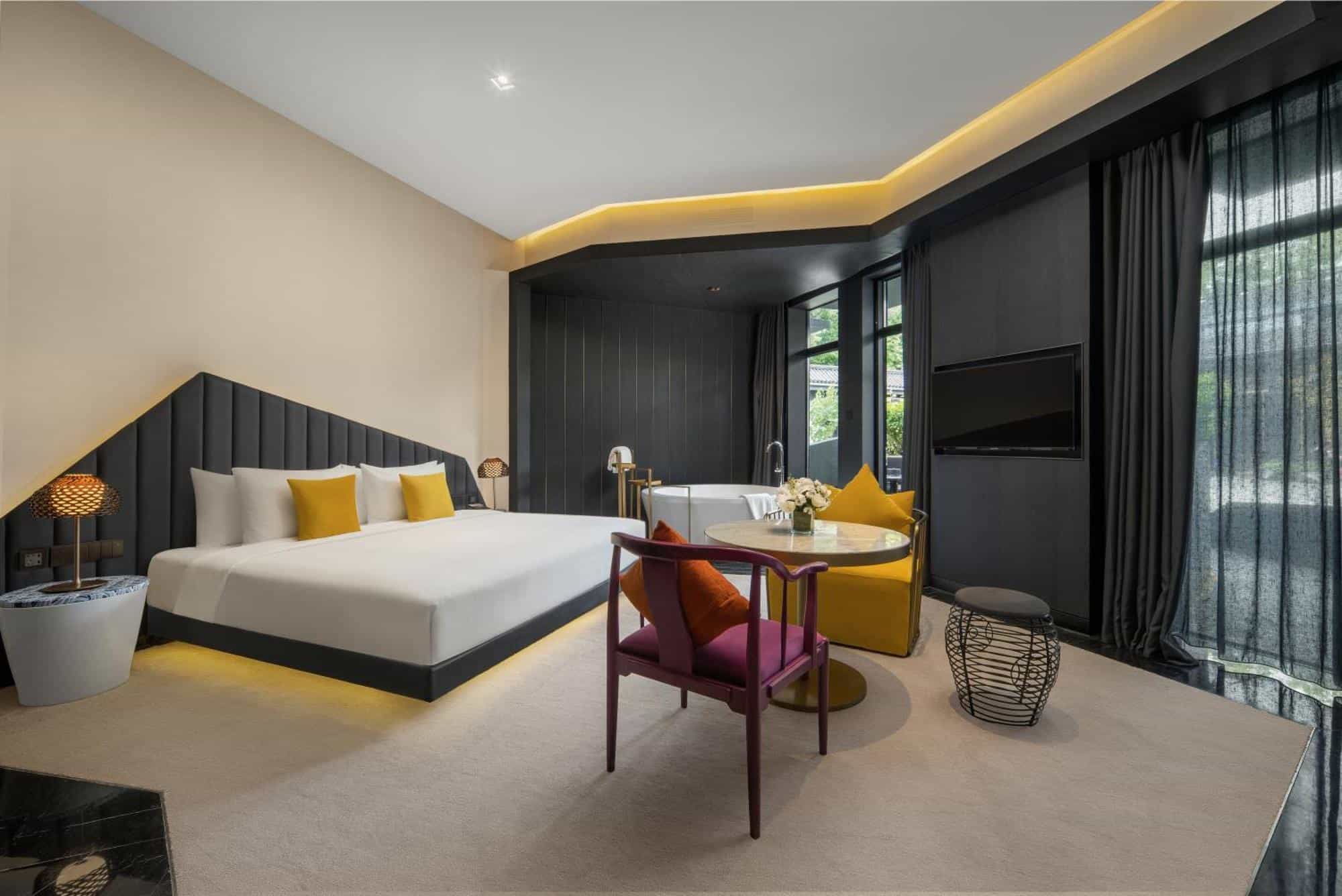
Spend the first night of the trip at Blossom House Beijing Houhai, a stylish boutique hotel set within a collection of restored mid-20th-century buildings, blending heritage architecture with contemporary design. Tucked among Beijing’s historic hutongs, the hotel features peaceful landscaped courtyards and a lively bakery cafe opening onto the street. You'll stay in modern twin-share rooms that are individually designed, with many offering private gardens or views over nearby parkland or Houhai Lake, creating a calm retreat from the city. Located in one of Beijing’s most atmospheric neighborhoods, the hotel is within walking distance of Prince Gong’s Mansion and the Former Residence of Soong Ching-ling. The surrounding hutongs are best explored on foot, while major landmarks such as the Forbidden City and Tiananmen Square are easily accessible by public transportation.
Jinshanling, Great Wall
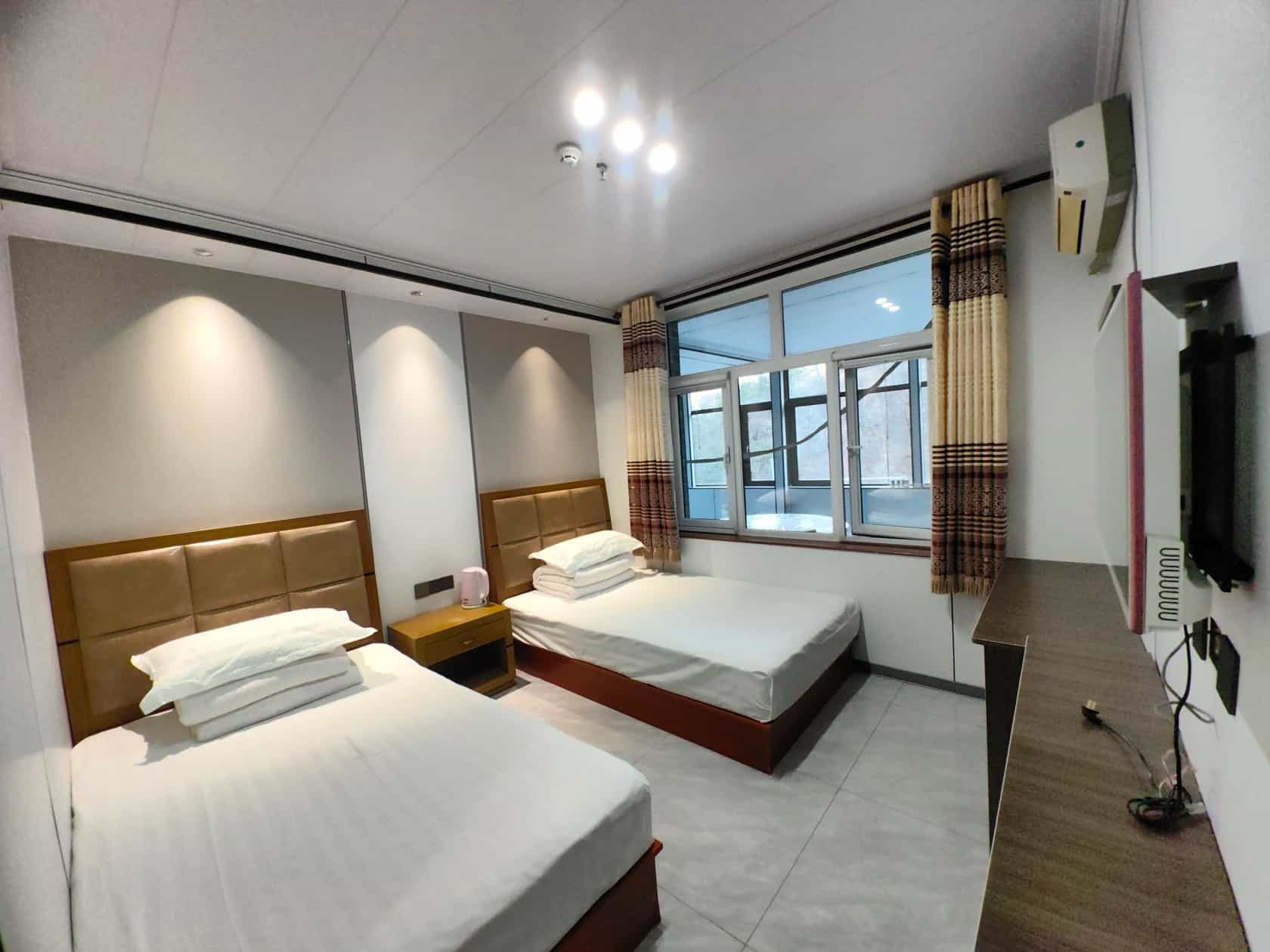
You'll stay one night in a simple, family-run guesthouse nestled in a quiet village at the foot of the Jinshanling Great Wall, usually Luanping Jianxia Farm stay or similar. This rural stay offers a great opportunity to support the local community in the Chinese countryside, far from the bustle of Beijing. Rooms are simple but comfortable. The highlight here is the hospitality – enjoy home-cooked meals prepared by your hosts and take part in hands-on experiences such as making dumplings together. With the Great Wall just a short walk away, this is one of the best places to experience it at its most peaceful. You have the option to get up early for some sunrise photography, when the first light slowly reveals the undulating wall. This stay is about simplicity, authenticity, and location.
Quicheng
Stay two nights near Qingcheng Mountain at a peaceful hot spring resort, your base for exploring this scenic region. Set in a tranquil location surrounded by lush greenery, the resort offers a relaxing retreat after your time in the mountains. Rooms are spacious, comfortable, and well-appointed, with modern amenities and thoughtful touches throughout. The highlight of your stay is the natural hot spring facilities – perfect for unwinding after a day of hiking, alongside serene surroundings that reflect the slower pace of life in this part of Sichuan.
Chengdu
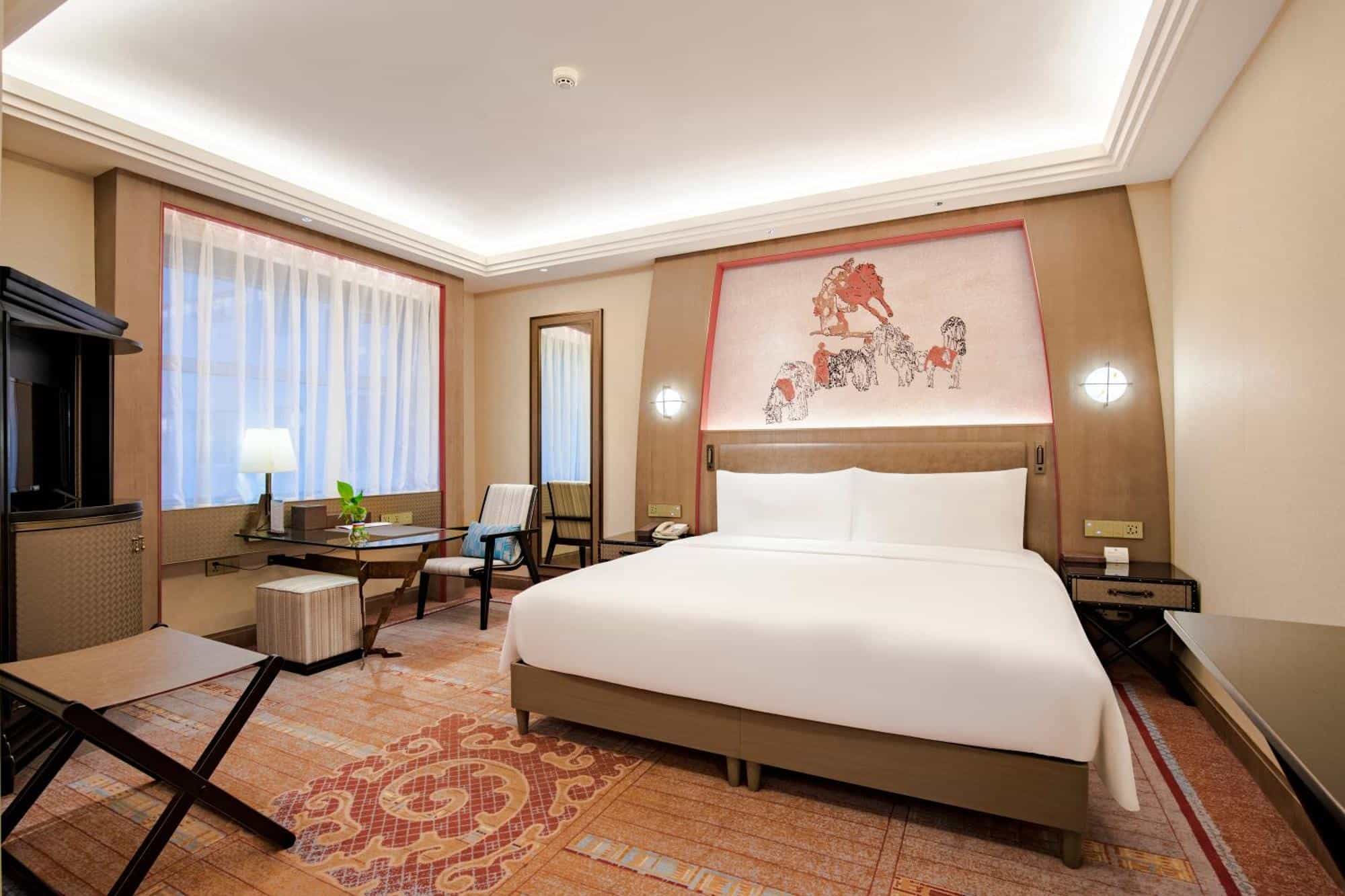
In Chengdu, spend one night at the Tibet Hotel Chengdu, a five-star property blending traditional Tibetan design with modern comfort. Located in the north of the city near the Fu River, the hotel provides a peaceful base away from the hustle, while still within easy reach of Chengdu’s main sights. Rooms are spacious and well-appointed, featuring warm interiors inspired by Tibetan culture and all modern amenities for a comfortable stay.
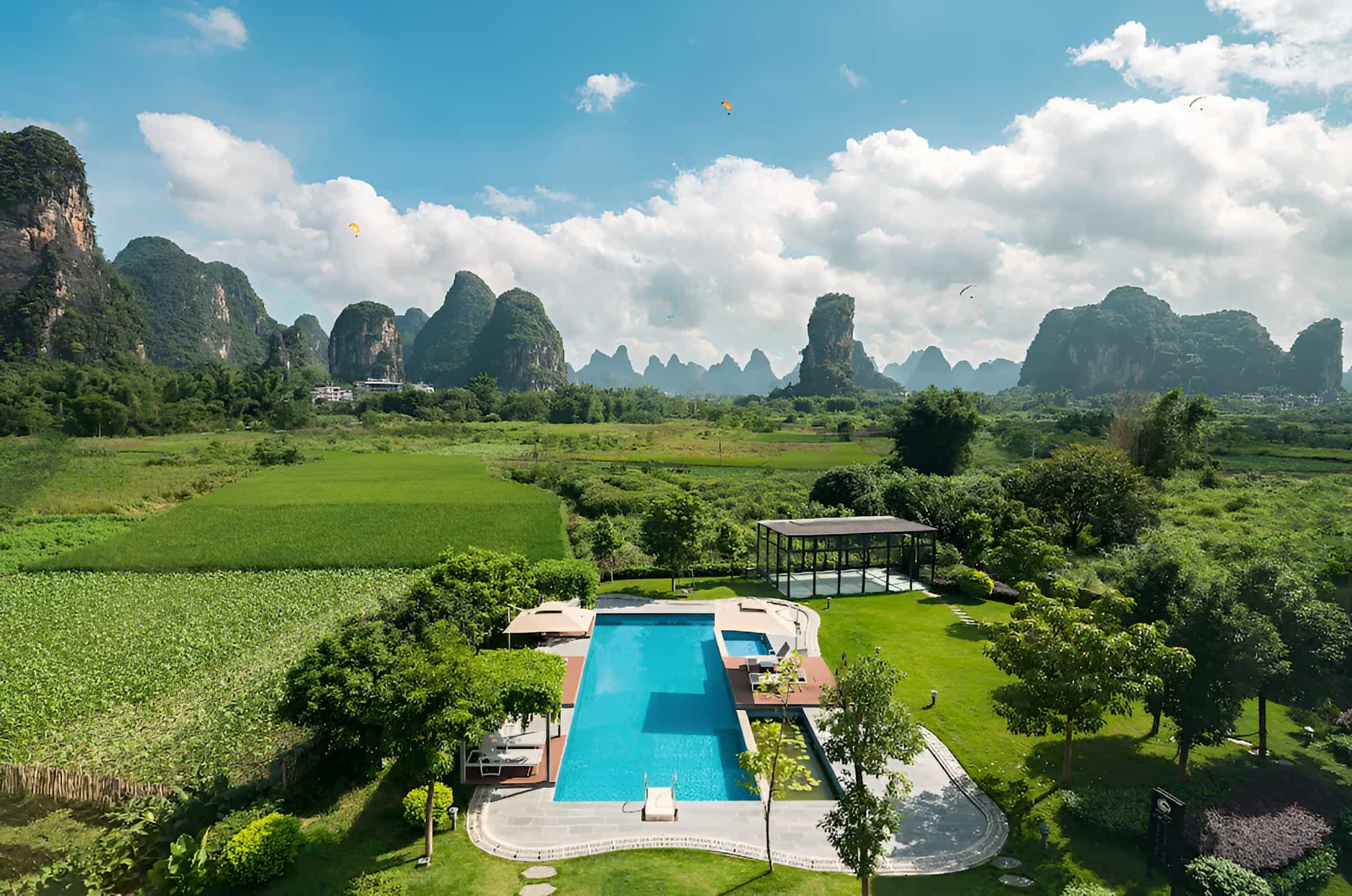
During your stay in Yangshuo, you will spend two nights at the tranquil Zen Garden Resort, a boutique retreat set in the scenic Ten Mile Gallery area. Just a short walk from the Yulong River and close to Gong Nong Bridge, the property is perfectly positioned to enjoy the region’s iconic karst landscapes while remaining within easy reach of Yangshuo town. Designed with a strong Zen-inspired aesthetic, the hotel offers a peaceful and restorative atmosphere. Spacious, thoughtfully designed twin-share rooms feature modern comforts, with some offering sweeping views of the surrounding mountains or gardens. The property also has a chlorine-free swimming pool and a sun terrace with panoramic views, ideal for relaxing after a day of exploring. There is also an on-site vegetarian restaurant, which serves a creative fusion of contemporary Chinese and Mediterranean cuisine. Additional experiences such as spa treatments and cultural workshops are also available on request.
Longji terraces
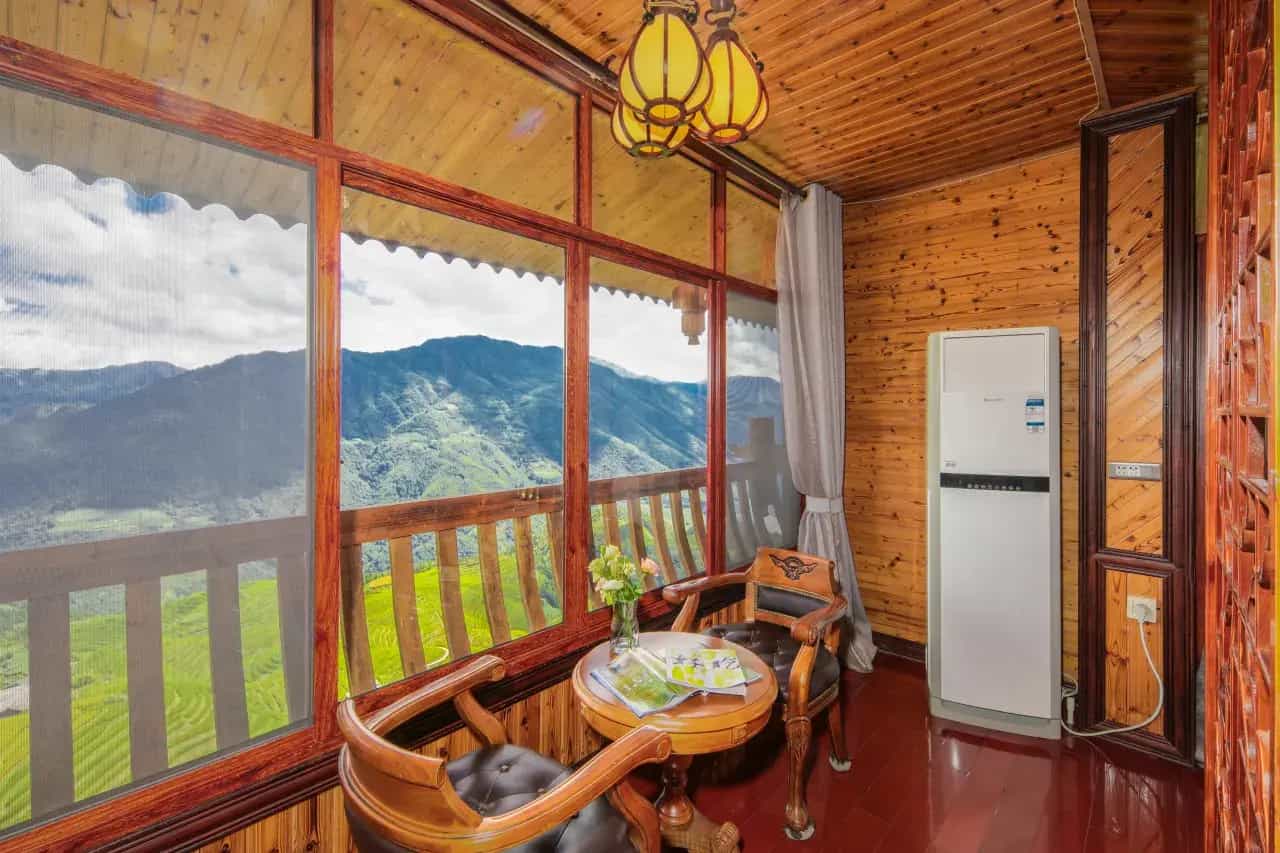
Spend two nights at the Seven Star Resort, set high within the Longji Rice Terraces near the Qixing Banyue (Seven Stars with Moon) viewpoint. Surrounded by sweeping mountain scenery and layered rice fields, this is a truly special location with panoramic views right from your doorstep. Rooms are simple yet comfortable, designed to make the most of the incredible setting, with many offering terrace or valley views. After a day of hiking through the rice terraces and nearby villages, this is the perfect place to unwind and take in the landscape. Located within Ping’an Village, the hotel provides direct access to some of the most scenic trails and viewpoints in the Longji area, making it an ideal base for exploring this remarkable and remote region.
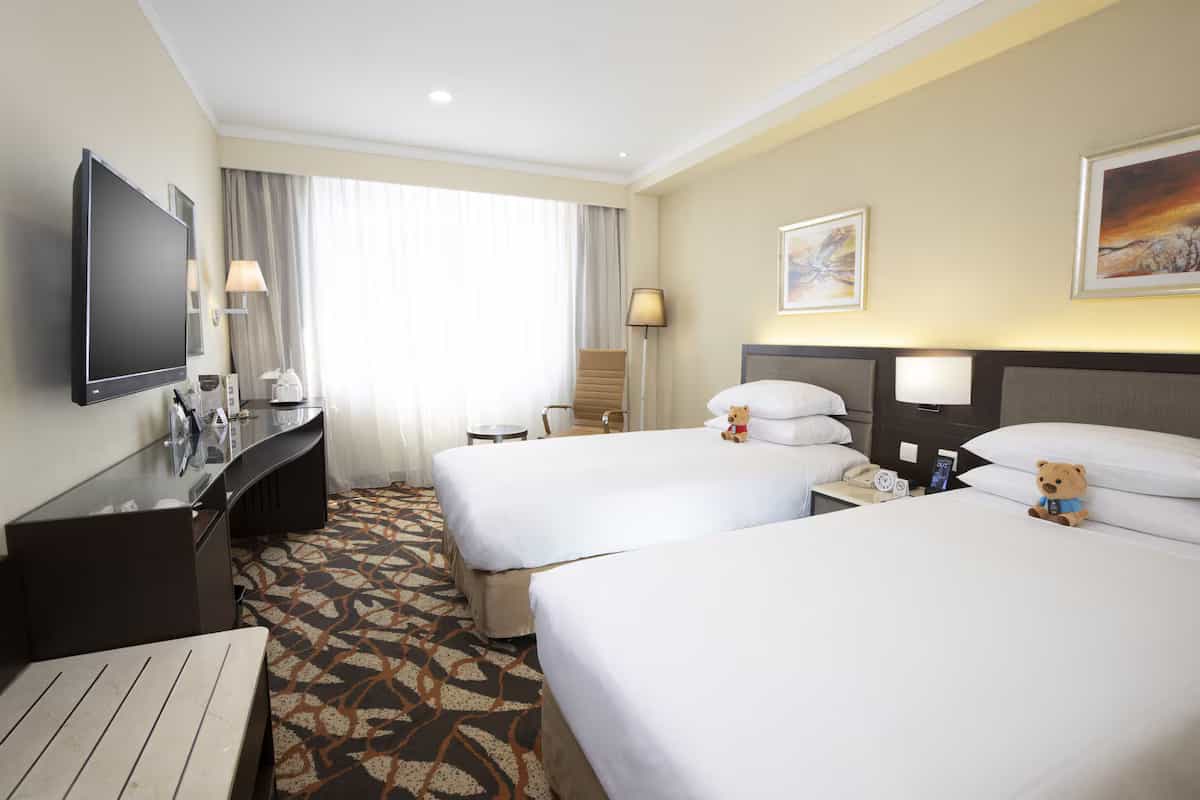
Spend your final night in Hong Kong at the Metropark Hotel Kowloon, a comfortable and well-located hotel in the heart of the city’s vibrant Kowloon district. Close to the bustling neighborhood of Mong Kok, the hotel offers easy access to markets, shopping streets, and local eateries, giving you a taste of Hong Kong’s dynamic urban energy. Twin-share rooms are well-equipped, providing a convenient base after your adventure. The hotel also features a rooftop swimming pool and fitness center.
Upgrades
Solo travellers who prefer their own space can book a private room for an additional charge (see Optional Extras for pricing). Please request the single supplement at the time of booking, as availability is limited to a maximum of two per trip due to some accommodation constraints.
This trip usually runs from April to May and September to mid-November, when conditions are generally ideal for exploring China’s diverse regions. During these months, you can expect a mix of mild to warm temperatures, typically ranging between 59–86°F (15–30°C), depending on the location.
China’s size means you’ll experience noticeable regional variation. In Beijing, spring and autumn are typically dry with clear skies and comfortable temperatures, ideal for hiking the Great Wall, though it can feel cooler in the mornings and evenings.
In Sichuan (Chengdu and Qingcheng Mountain), the climate is more humid year-round. Expect warm, often misty conditions in the mountains, with occasional light rain showers that add to the atmospheric feel but can make trails slightly slippery. Light layers and a waterproof jacket are recommended.
In southern China (Yangshuo and Longji), the climate is warmer, more humid and more prone to rainfall. April and May fall within the wetter season, when short, heavy showers are common and landscapes are at their greenest. September to November is generally drier, with clearer skies and more comfortable humidity levels. The Longji Rice Terraces are particularly spectacular from late April to June, when they are filled with water, and again from September to October, when they turn golden ahead of harvest.
Hong Kong shares a similar subtropical climate, with high humidity and a greater chance of rain in spring, sometimes with intense but short-lived downpours. Autumn (October to November) tends to be drier, with clearer skies and more comfortable conditions for exploring.
Overall, you should be prepared for heat, humidity and occasional rain, particularly in the south. Breathable clothing, good walking shoes and a light waterproof layer are essential throughout the trip.
We’re still waiting to collect any reviews from other travellers on this trip. However, all our hosts go through an extensive vetting process to ensure that your adventure is awesome.
Itinerary Activities
- Guided walking tour of Beijing’s hutongs
- Guided hike along the Jinshanling section of the Great Wall
- Guided hike on Qingcheng Mountain
- Guided visit to Dujiangyan Panda Base (entry included)
- Kung fu training experience with a local master in Chengdu
- Guided countryside bike ride in Yangshuo
- Bamboo rafting experience on the Yulong River
- Guided visit to a local tea farm with tea-picking experience
- Guided hike through the Longji rice terraces from Ping’an to Dazhai
Guides
- An expert, local, English-speaking guide throughout
All Lodging
- 1 night in a boutique hotel in Beijing
- 1 night in a simple, family-run guesthouse near the Great Wall (Jinshanling)
- 2 nights in a comfortable hot spring hotel near Qingcheng Mountain
- 1 night in a modern, well-located hotel in Chengdu
- 2 nights in a scenic boutique hotel in Yangshuo
- 2 nights in a characterful hotel in Ping’an village, Longji rice terraces
- 1 night in a comfortable hotel in Hong Kong
Meals
- All (10) local breakfasts
- 5 local lunches
- 8 delicious dinners, including a Peking duck welcome dinner, a dumpling-making experience with a local family, and a Sichuan hot pot dinner
Internal Flights
- An internal flight from Beijing to Chengdu on Day 3
Transfers
- Arrival transfer from Beijing Airport at any time on Day 1
- All transfers throughout the trip in private vehicles
- Two high-speed train journeys: Chengdu to Yangshuo, and Guilin to Hong Kong
Gear
- Bike rental and helmet
Permits & Fees
- All permits and entry fees listed in the itinerary
Our trips are hassle-free by design. We include all the activities and equipment, as well as many of the meals, so you can simply rock up with your rucksack and share the adventure with your new pals.
Travel to and from the trip
Our trips do not include flights, trains or other travel to the start point and back from the end point.
Departure Airport Transfers
The airport transfer in Hong Kong on Day 11 is not included on this trip – this journey is easily done by public transportation. See the 'Getting There' section for more information.
Some Meals
Some meals are not included in the trip, giving you the flexibility to explore local cuisine at your own pace.
Most lunches are not included during the trip, allowing you to choose where and what to eat depending on your appetite and location – from simple local eateries or packed lunches, to more substantial restaurant meals. Your guide will always be able to recommend good options.
We recommend budgeting around ¥80–120 per day for lunches and ¥120–200 for dinners, depending on your choices. Simple local meals can cost as little as ¥40–60, while restaurant meals are typically ¥80–150.
Tips
Tipping is not a traditional part of Chinese culture and is not expected in most situations. However, on guided trips like this, it is customary to tip your tour leader as a gesture of appreciation for good service. As a guideline, we recommend budgeting around ¥50 ($7 USD) per day for your tour leader. This equates to approximately ¥500 ($70 USD) per person for the full 10-day trip. Your tour leader will be able to advise on local customs and how best to handle tipping throughout the trip.
Personal expenses
You know your own spending habits best, so please budget an appropriate amount for things like optional food and drinks, shopping and laundry.
Travel insurance
Travel insurance is compulsory for all of our adventures, and you'll need to provide your policy details before departure. Your insurance should offer adequate coverage for overseas medical treatment, evacuation/repatriation, your baggage and gear, and the specific activities involved in your adventure. We also recommend ensuring your policy includes cancellation and curtailment coverage, in case you're unable to join your trip due to unforeseen circumstances such as illness.
Standard travel insurance may not cover all the activities included in your adventure, so it's essential to check the details carefully. There are adventure-specific providers that many travelers have used in the past, such as True Traveller (for those based in the UK or Europe), or Rise + Shield, both of which offer coverage for a wide range of adventurous activities.
Please make sure your chosen policy meets your individual needs and covers all aspects of your trip.
Visas
Visa requirements for China can change at short notice, and you are responsible for obtaining the correct documentation for your trip. We recommend checking with your nearest Chinese embassy or consulate for the most up-to-date information based on your nationality.
Currently, citizens of the UK, most EU countries, Australia, and several other nationalities can enter mainland China visa-free for up to 30 days for tourism. This policy is in place until at least the end of 2026, but conditions apply and eligibility should be confirmed before travel. At the time of writing, US citizens are not included in this visa-free scheme and will typically need to apply for a visa in advance. Your host can assist you and provide you with an invitation letter if required.
Please note that Hong Kong has separate immigration rules from mainland China, and many nationalities can enter Hong Kong visa-free for short stays. Traveling from mainland China to Hong Kong counts as exiting China. If you then return to mainland China, this will be treated as a new entry.
Under the current visa-free policy, eligible travelers can typically enter China multiple times, with each stay limited to 30 days. However, entry is always subject to immigration approval. If you plan to re-enter mainland China after visiting Hong Kong, you should ensure you meet all requirements.
Your local host can assist with guidance and supporting documents if required, but it remains your responsibility to ensure you have the correct information and documents in place before travel.
What's included?
- Bike rental, with helmet
What do I need to bring?
BAGS
- Soft overnight duffel bag or luggage (33 lbs max – you’ll be moving between regions by train and internal flight, so a manageable bag makes a big difference)
- Daypack (20-30 liters)
- Waterproof liner or drybags for kitbag/rucksack
CLOTHES
- Light down jacket
- Waterproof jacket
- Waterproof pants
- Fleece jacket or similar
- Casual clothes for evenings
- Lightweight pants/shorts/skirts for hiking
- T-shirts
- Underwear and socks
- Swimwear
- Sunglasses
- Sunhat
- Sleepwear
- Hiking boots or shoes (worn-in)
- Sneakers
- Sandals
OTHER
- Trekking poles (optional, but helpful for steps)
- Universal travel plug adapter
- Power bank or solar charger
- Passports (and visas)
- Travel insurance documents
- Ear plugs
- Insect repellent
- Sunscreen
- Personal first-aid kit (inc. blister treatment)
- Personal items (biodegradable toiletries, sanitary wear etc)
- Quick-dry towel
- Alcohol hand-gel
- Reusable water bottle x1 liter (or x2)
Additional Night in Beijing Single Room
Payable Before Departure
Additional Night in Beijing Single Room
… Per night
Additional Night in Beijing Twin/Double Room
Payable Before Departure
Additional Night in Beijing Twin/Double Room
… Per night
Additional Night in Hong Kong Single Room
Payable Before Departure
Additional Night in Hong Kong Single Room
… Per night
Additional Night in Hong Kong Twin/Double Room
Payable Before Departure
Additional Night in Hong Kong Twin/Double Room
… Per night
Optional Private Room Upgrade
Payable Before Departure
Optional Private Room Upgrade
…
Private Transfer Beijing Airport - Hotel (1-3 pax)
Payable Before Departure
Private Transfer Beijing Airport - Hotel (1-3 pax)
…
Private Transfer Hong Kong Hotel - Airport (1-3 pax)
Payable Before Departure
Private Transfer Hong Kong Hotel - Airport (1-3 pax)
…
We partner with the World Land Trust to ensure this trip achieves Net-Zero emissions. We also support their Buy an Acre program, helping local communities to buy and protect natural habitats in perpetuity.
What's the number?
It works out on average at 589kg of CO2 emissions per person, including all local transport, accommodation, food, activities, guides, staff and office operations.
The only thing it doesn’t include right now is flights and travel to the destination. We do make an overall estimate across all our customers separately, but as we don’t book flights, have customers from all corners of the world, and no way of reliably knowing their travel plans, we simply can’t include an individual number in the figure on display here. We’ve got a goal to fix that, so that when you book, there is a way to measure and mitigate the carbon emitted by your flight too.
But what does the number mean?
Yep, hard to picture eh? To give you an idea:
- Driving 1000 miles/1609km would be approximately 281kg of CO2 in an average car (or 140.5kg per person, if there were two of you in it).
- A return economy class flight between London and New York would be approximately 1619kg (1.66 tonnes) per person.
- 10 trees in a temperate forest are estimated to remove approximately 250kg of CO2 from the air in a period of 5-10 years.
What are we doing about it?
Our trips are relatively low-carbon by design, and we're working with all our hosts to develop long term carbon reduction plans. We partner with the World Land Trust to ensure this trip achieves Net-Zero emissions. We also support their Buy an Acre programme, helping local communities to buy and protect natural habitats in perpetuity, ensuring the protection of the reserve and its wildlife.
Want to know more?
Amazingly, no international travel company has ever publicly published their carbon measurements before, as far as we know. We believe that must change, quickly. So we’re openly sharing the method we used in the hope that other companies will be able to more easily follow suit and build on what we've done so far. You'll find it all here.
At Much Better Adventures, we work hard to accommodate dietary requirements and allergies so your trip is safe, inclusive, and enjoyable. That said, options can vary by country, location, and lodging, and in some places, options may be limited or unavailable. The information below has been provided by your host so you’re fully informed about what will be possible on your trip depending on your individual requirements. This information should be read carefully prior to your trip to ensure that you are adequately prepared for the situation ‘on the ground’.
Once you have booked your trip, please fill out your passenger information form asap with any dietary requirements. Once you complete your passenger information, your dietary needs and any allergies are automatically shared with your host and, in turn, your guide. Please submit this as early as possible so they can plan accordingly and deliver the best experience. Please also remind your guide about your dietary requirements upon arrival, as mentioning these in person allows your guide to comprehend individual preferences and limitations as soon as you arrive.
SPECIAL DIETS
Vegetarian
Vegetarian diets can be catered for on this trip, provided that your host is made aware in advance.
Vegan
Vegan diets can be catered for on this trip, provided that your host is made aware in advance.
Kosher
Fully certified Kosher kitchens and supervision are rare outside of big cities, and usually cannot be guaranteed unless expressly confirmed in advance by your host. Vegetarian or vegan options can often be the most reliable alternative if this is acceptable to you. Please read the related sections above.
Halal
Certified Halal supply varies by location and may not always be possible. Vegetarian or vegan options can often be the most reliable alternative if this is acceptable to you. Please read the related sections above.
INTOLERANCES
Gluten-free (for Celiac, please see Allergies section below)
Gluten-free diets can be catered for on this trip, provided that your host is made aware in advance.
Lactose-free
Lactose-free diets can be catered for on this trip, provided that your host is made aware in advance.
ALLERGIES
Our host has confirmed that they are able to accommodate mild allergies to the 14 allergens identified by the UK Food Standards Agency, where these are disclosed in advance. However, if you have a severe or life-threatening food allergy, please get in touch with our Customer Experience team prior to booking, to discuss whether your requirements can be accommodated safely on this trip. This will allow us to carefully consider the sensitivity and severity of your allergy, the available provision on the trip, and the accessibility of medical care should a reaction occur. Your safety is always our top priority. Please note that when traveling overseas, local ingredients, food preparation methods, and labeling standards may vary, particularly in remote areas. It is also worth noting that any allergies may result in more limited options and repetitive provision in some areas. Whilst your guide will help communicate dietary requirements where possible, customers remain responsible for managing their own allergies during the trip.
Tap water is not safe to drink in China. Filtered water is widely available, and hotels typically provide drinking water daily. We recommend bringing your refillable bottle or purification tablets to avoid purchasing plastic bottles throughout the trip.
China is one of the most populous countries in the world, so some level of crowding is part of the experience—particularly at major attractions. That said, this itinerary has been carefully designed to avoid the busiest locations and travel periods wherever possible, including scheduling departures outside major national holidays. Throughout the trip, we’ve made conscious choices to reduce crowd levels. For example, you’ll visit the Dujiangyan Panda Base, located outside Chengdu, which is still popular but far less crowded than the main city center reserve. At the Great Wall, you’ll hike the Jinshanling section, a quieter and more scenic stretch compared to the heavily visited sections closer to Beijing. In Yangshuo—a popular destination for both domestic and international travelers—you’ll explore by bike, allowing you to move away from the busier areas and into the surrounding countryside. Your lodging is also set outside the main built-up areas, offering a more peaceful setting. In the Longji Rice Terraces, viewpoints can be busy during the day, particularly with day-trippers. However, your hike takes you between villages along quieter trails, where you’ll experience a more remote and less crowded side of the terraces. While you may still encounter crowds at times, the trip is designed to balance China’s iconic highlights with more peaceful, immersive experiences whenever possible.
This trip covers large and diverse regions of China, so there are a few longer travel days as you move between destinations. To reduce the need for multiple internal flights and keep the trip more environmentally friendly, we’ve chosen to include only one internal flight and two high-speed train journeys, which are modern, comfortable, and often comparable in total travel time when factoring in airport transfers, check-in, and waiting times. There are three key travel days throughout the itinerary: Day 3, Day 6, and Day 10. While these days are long, they are balanced with immersive experiences and time to enjoy each destination along the way. We strongly recommend allowing extra time before and after the trip if you’d like to explore Beijing or Hong Kong in more depth, as both cities are best experienced at your own pace and according to your personal interests. Some of Beijing’s key attractions, including Tiananmen Square and the Forbidden City, require advance reservations and timed entry slots, which can be difficult to navigate independently due to language barriers and booking systems. For ease, we recommend booking a guided tour in advance through a reputable provider. This takes care of permits, entry tickets, and logistics, and provides useful context for these historic sites.
The Dujiangyan Panda Base is part of a network of research and breeding centers focused on protecting and reintroducing giant pandas into the wild. Set in a forested environment, it is designed to replicate natural conditions and help pandas develop the skills needed to survive independently. Compared to the main Chengdu city base, Dujiangyan has fewer pandas but offers a more natural setting and fewer crowds, making for a more relaxed and immersive experience. You’ll walk along shaded paths with the chance to see both giant pandas and the smaller, more active red pandas. Morning visits offer the best chance to see them feeding and moving, while later in the day they tend to rest. While you can often see the pandas at relatively close range, this remains a conservation setting, so sightings will depend on their behavior on the day. Your visit contributes directly to panda care, habitat protection and ongoing conservation efforts, while offering valuable insight into the work being done to protect this iconic species.
Your kung fu session takes place with Kung Fu Family, a respected local school in Chengdu dedicated to sharing traditional Chinese martial arts in an accessible and authentic way. The school is led by Master Li, an experienced practitioner who has trained in martial arts from a young age and now teaches both locals and visitors. Rather than a performance or demonstration, this is a hands-on introduction to kung fu. You'll learn basic movements, stances, and techniques, with a focus on coordination, balance, and discipline—all key principles rooted in Chinese martial arts philosophy. Sessions are designed to be fun and inclusive, so no prior experience or fitness level is required. It's a great way to gain insight into the cultural significance of kung fu, while also getting a light, engaging workout.
Many China itineraries of a similar length focus on the classic “Golden Triangle” route - typically Beijing, Xi’an, and Shanghai - sometimes adding a short stop in Guilin/Yangshuo or Chengdu. This trip takes a different approach. Instead of trying to include as many major cities as possible, it focuses on a more varied and immersive journey through fewer regions, combining iconic highlights with deeper, more active experiences. For example:
- You’ll hike a quieter, more scenic section of the Great Wall (Jinshanling) rather than visiting the busiest restored sections
- Spend time in Sichuan beyond Chengdu, including Qingcheng Mountain, a less crowded panda conservation base, and a kung fu experience
- Explore Yangshuo and the surrounding countryside actively by bike and bamboo raft, rather than only taking a river cruise
- Hike through the Longji Rice Terraces between villages, rather than visiting viewpoints only
Compared to many tours, which often prioritize city sightseeing, this itinerary places more emphasis on active exploration (hiking, cycling), local experiences, and scenic landscapes over major cities. The result is a journey that may feel more dynamic, but also offers a richer and more immersive experience of China’s landscapes and culture.
China’s transportation network is extremely efficient and reliable, particularly when it comes to high-speed trains and domestic flights. Delays can occasionally happen, as anywhere, but services are generally well-organized and run frequently. Throughout the trip, all major logistics – including train travel, transfers, and internal flights – are arranged for you and managed by your local guide. They will be on hand to assist with any changes or unexpected situations and ensure the group stays on track. In the unlikely event of disruption, there are usually multiple alternative options available, and your guide will coordinate any adjustments needed. Overall, while travel in China can feel different, the infrastructure is modern and dependable, and you’ll be well supported every step of the way. As with any trip, factors such as weather can occasionally affect plans, particularly in mountainous or rural areas like the Great Wall, Qingcheng Mountain, or the Longji Rice Terraces. Your guide will always monitor conditions and adjust the itinerary where needed to ensure the best possible experience. This might mean changing the timing of a hike, taking an alternative route, or adapting activities to suit the conditions on the day.
The Longji Rice Terraces are beautiful year-round, but their appearance changes with the seasons:
- April–May (spring): the terraces are filled with water for planting, creating stunning mirror-like reflections – one of the most photogenic times to visit.
- June–September (summer): The rice is lush and green, covering the mountains in vibrant layers.
- Late September–October (fall): The terraces turn golden as the rice ripens – another peak season for photography.
- Winter: Quieter and more atmospheric, sometimes with mist or occasional snow, but less visually dramatic.
While certain times of year are considered more photogenic, the terraces are impressive year-round, and the experience of walking through the mountains, passing through traditional villages and seeing this centuries-old landscape up close is what makes the visit truly special – regardless of seasonal conditions.
China is largely a cashless society, but international cards are not always widely accepted. Most payments are made via mobile apps like WeChat Pay or Alipay. We recommend bringing some cash (Chinese Yuan) and setting up one of these apps in advance if possible. Convenience stores are widely available and well-stocked, so you’ll be able to buy snacks, drinks, toiletries and other essentials easily throughout the trip.
Please note that some commonly used apps and websites (such as Google, WhatsApp, Instagram) are restricted in China. WiFi is available in most hotels, but connection speeds can vary.
Sure can! Over 70% of our travellers travel solo, it’s a great way to meet like-minded people.
Our team of Adventure Hunters co-create exclusive adventures which are run by highly vetted, specialist hosts. The trip is run by our trusted host partner in the destination. We only work with independent, local, in-destination experts who know the very best places to explore and how to stay safe. Read more information about the local teams we partner with. You’ll be introduced to the host straight after making a booking via the Much Better Adventures platform.
Much Better Adventures refer to the UK Government’s official travel advice when designing trips and monitoring trip operations. We recommend that all customers review the practical information available on the UK Government’s FCDO website, where you can find up-to-date advice by searching for your destination(s).
If you are based in the United States, you can also check the latest travel advisories from the U.S. Department of State.
For customers joining from other international locations, we recommend checking the official travel advice issued by your country of residence, as guidance may vary.
We recommend checking out the country-specific information and also talking to a travel nurse.
We automatically convert prices from the local currency that a host receives to your chosen currency. We update our exchange rates daily, so prices displayed on the site are subject to currency fluctuations, which is why you may see them change over time.
If you wish to change the currency you pay in, head to the bottom of the page.
All of our group adventures are specially designed for adults to enjoy as we want these adventures to bring together outdoorsy people who are truly like-minded. You must be over 18 to join one of our trips.
You're always in good company on one of our adventures.
Our trips typically consist of a mix of solo travelers and small groups of 2 or 3 friends, with most in their 30s-50s.
Our sociable adventures are solo-friendly by design and naturally attract outdoorsy people with a shared mindset; a love for adventure, a desire to push themselves, and meet awesome, like-minded people along the way.
It’s this camaraderie that has so often turned a great adventure into a life-changing one.
Don't just take our word for it:
- 95% of people rate the group dynamics on our trips 5/5
- 90% of people recommend joining a trip to make new friends
- 75% of people have met people on our trips that they would now consider friends
See here for more info about the Much Better Adventures tribe.
This trip is graded Level 2
Easy-Moderate
Perfect for adventurers looking to gently step things up
Daily light activities, usually three to four hours long
This trip is ideal for first-time visitors to China looking to experience a mix of iconic highlights and lesser-known regions. From the Great Wall and panda reserves to the ka...
Browse all our Easy-Moderate trips
Your next adventure is out there
There's a level for everyone – find your match
No Reviews yet
This trip is brand new
We’re still waiting to collect any reviews from other travellers on this trip. However, all our hosts go through an extensive vetting process to ensure that your adventure is awesome.
We've got your back
Book with confidence and peace of mind.
DEPARTURE DATES
Thursday 15th October 2026
to Sunday 25th October 2026
New Trip Offer - Next 1 spot available at 10% off
Thursday 5th November 2026
to Sunday 15th November 2026
New Trip Offer - Next 2 spots available at 10% off
Thursday 18th March 2027
to Sunday 28th March 2027
New Trip Offer - Next 2 spots available at 10% off
Thursday 8th April 2027
to Sunday 18th April 2027
New Trip Offer - Next 2 spots available at 10% off
Thursday 15th April 2027
to Sunday 25th April 2027
New Trip Offer - Next 2 spots available at 10% off
Thursday 6th May 2027
to Sunday 16th May 2027
New Trip Offer - Next 1 spot available at 10% off
Thursday 2nd September 2027
to Sunday 12th September 2027
Thursday 16th September 2027
to Sunday 26th September 2027
Thursday 14th October 2027
to Sunday 24th October 2027
Thursday 4th November 2027
to Sunday 14th November 2027
Don't see a date you like?
Get an email alert when new dates are added.