

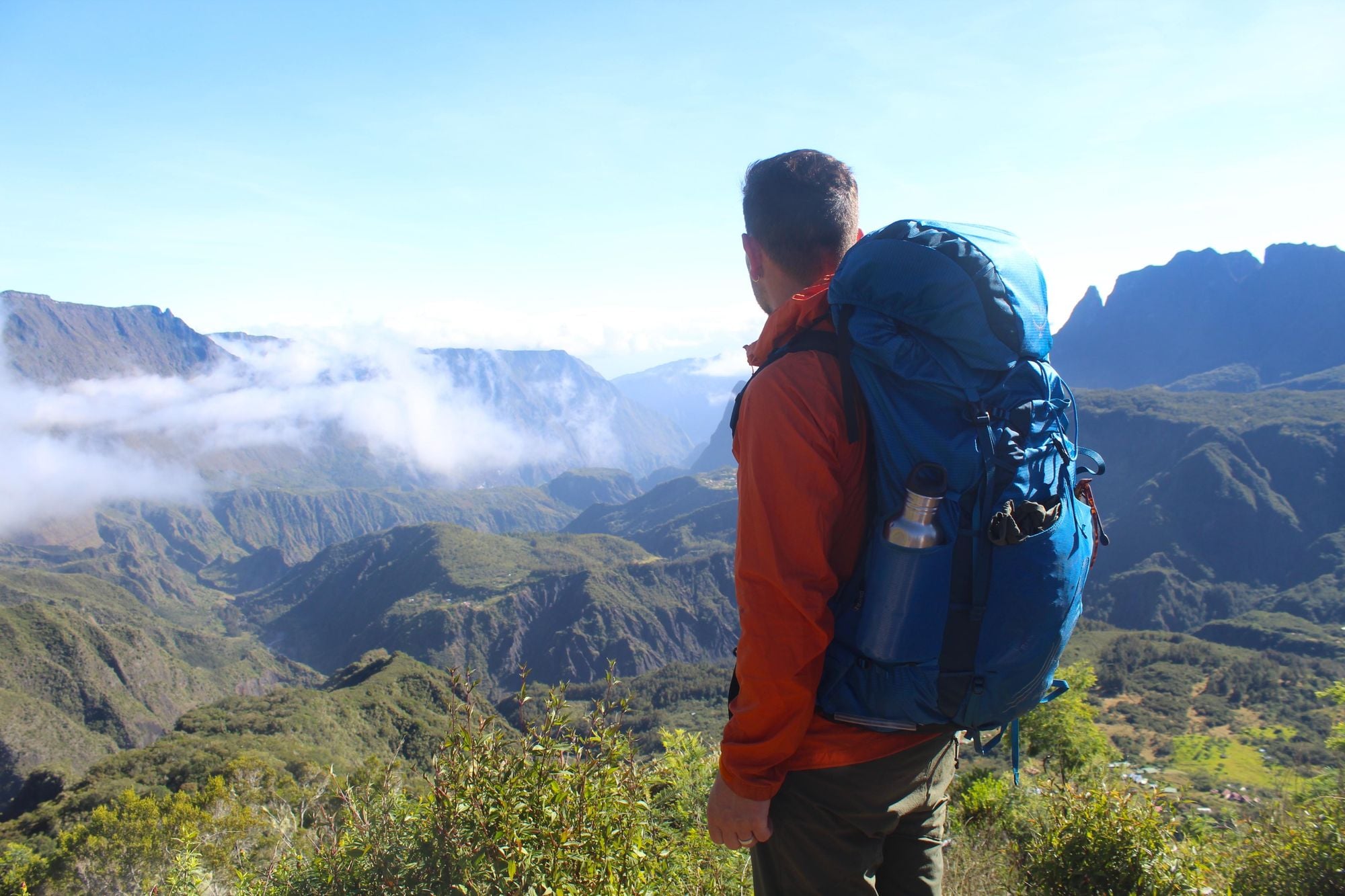
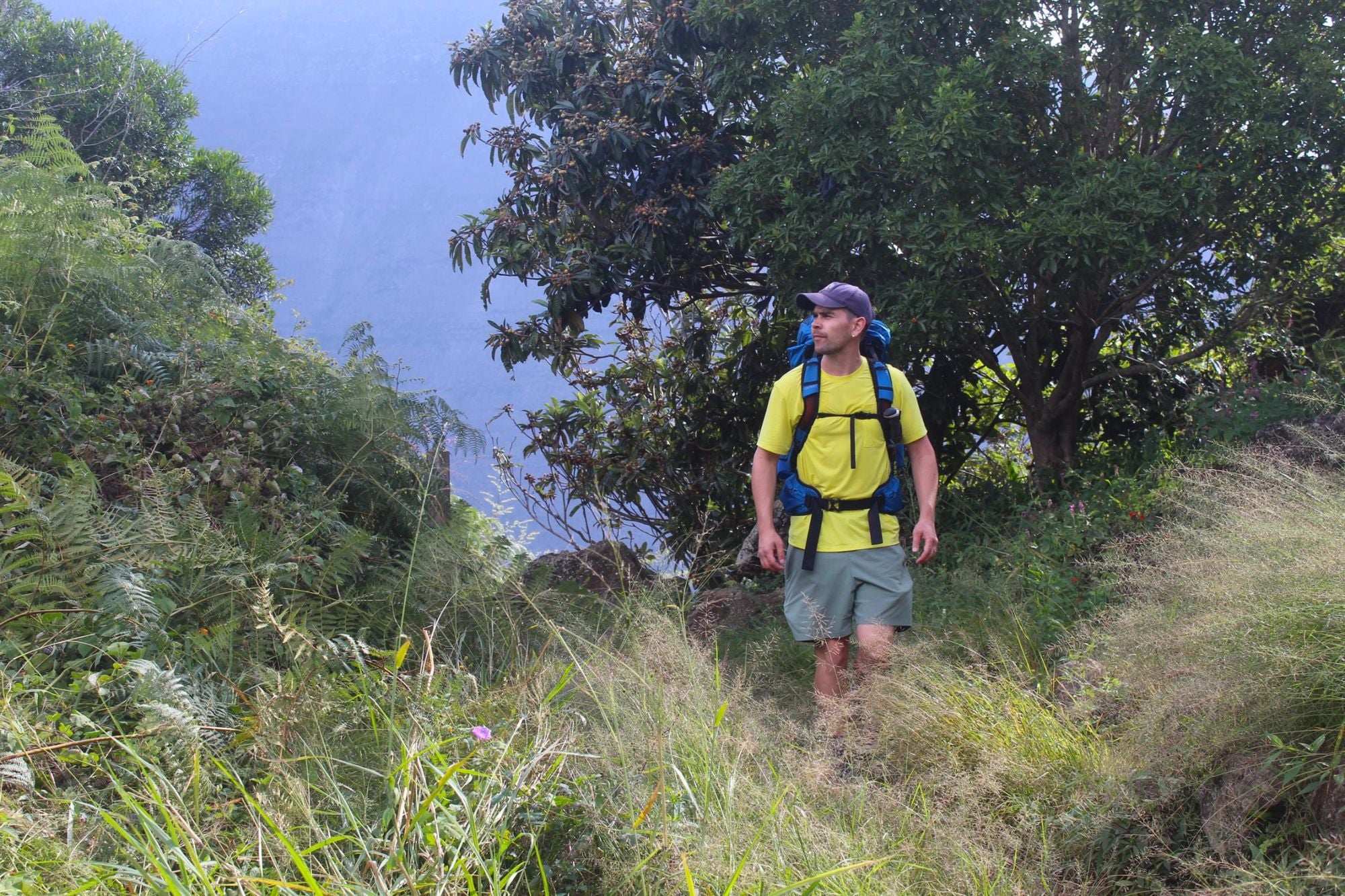
Réunion Island is an enormous, active shield volcano, surrounded by sharks, isolated in the Indian Ocean. There is a reason it is known as l'île intense - the intense island.
A French overseas department, this volcanic mass sits 140 miles (226km) west of Mauritius, and 440 miles (708km) east of Madagascar. The flight from Paris Charles de Gaulle to Roland Garros Airport on Réunion is the longest active domestic flight in the world - taking almost 12 hours. Before the French settled the island in 1665, Réunion was uninhabited, and as the island first comes into sight out of the airplane window, it’s not particularly hard to see why.
In those cirques, there are waymarked hiking trails which take you to impossible mountain hamlets and guide you out, revealing dried lava and volcanic rims.
Réunion was created three million years ago when the volcano Piton des Neiges erupted out of the ocean. That shield volcano remains the base of the island today - and retains that wild shape. It is now dormant, but the other volcano on the island, Piton de la Fournaise, is one of the most active volcanoes in the world.
The volcanic nature of Réunion means that the interior is formed of a series of cirques - dramatic mountainous amphitheatres, walled off by dramatic, towering cliffs and ridges, covered in greenery and dotted with jaw-dropping waterfalls.
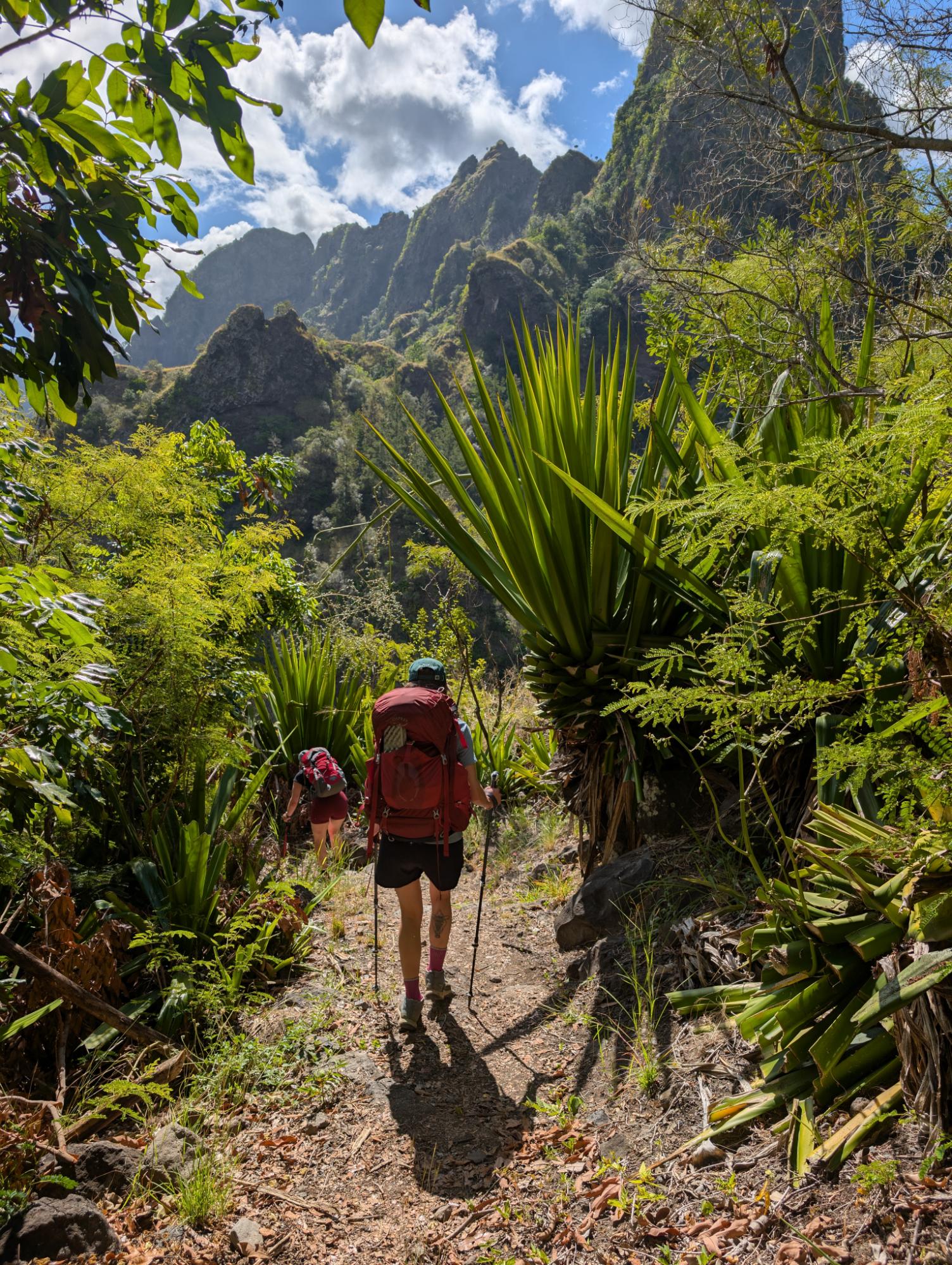
There are 150 microclimates on the island, and the scenery (and weather) changes quickly as you move through them - from forest to alpine shrub to volcanic moonscapes. Off the coast, there is rich coral and then a steep drop down to the sea floor of the ocean, meaning whales and, more famously, sharks swim in close proximity to the beaches. In the cities, white-tailed tropicbirds dance in the sky above colorful Creole and French colonial architecture.
Of course, the severity of the terrain in Réunion is also the appeal of the island.

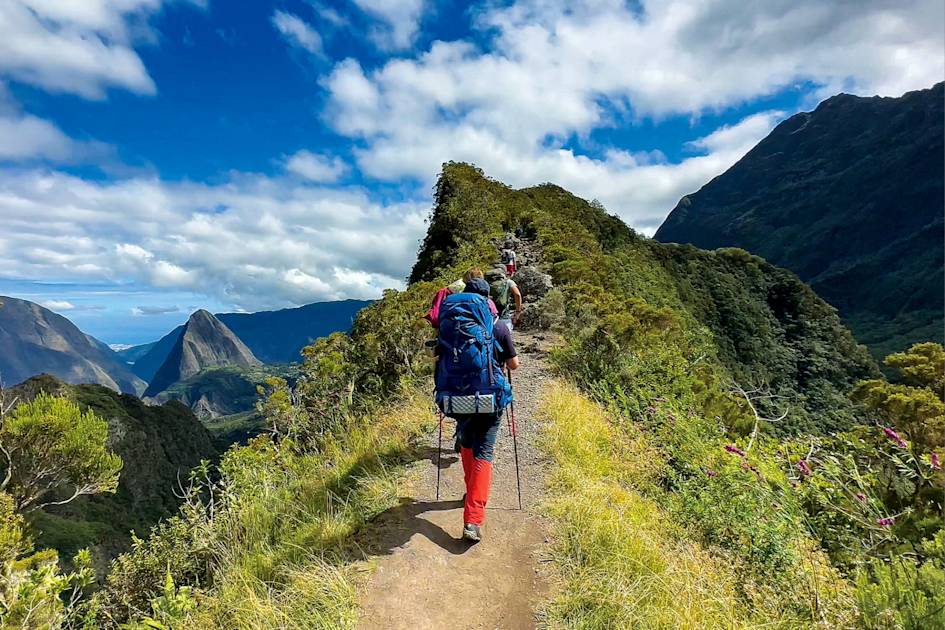
In those cirques, there are waymarked hiking trails which take you to impossible mountain hamlets and guide you out to volcanic rims. Even the corals hold brilliant biodiversity - though do heed the (unnervingly common) signs forbidding certain spots for risk of sharks.
Réunion is a fever dream of a place; an island vibrant with community and culture, gripping in its extremity and individuality. I spent three unforgettable weeks on the island, which included a coast-to-coast hike of the Grande Randonnée R2 (GR-R2), a waymarked route running the length of the island.
English is not commonly spoken on Réunion. French and Réunion Creole are the two key languages on the island. So, it can be tough to find out certain particulars about the island before arriving. Here are my travel tips for Réunion Island.
The cirques make for seriously tough hiking
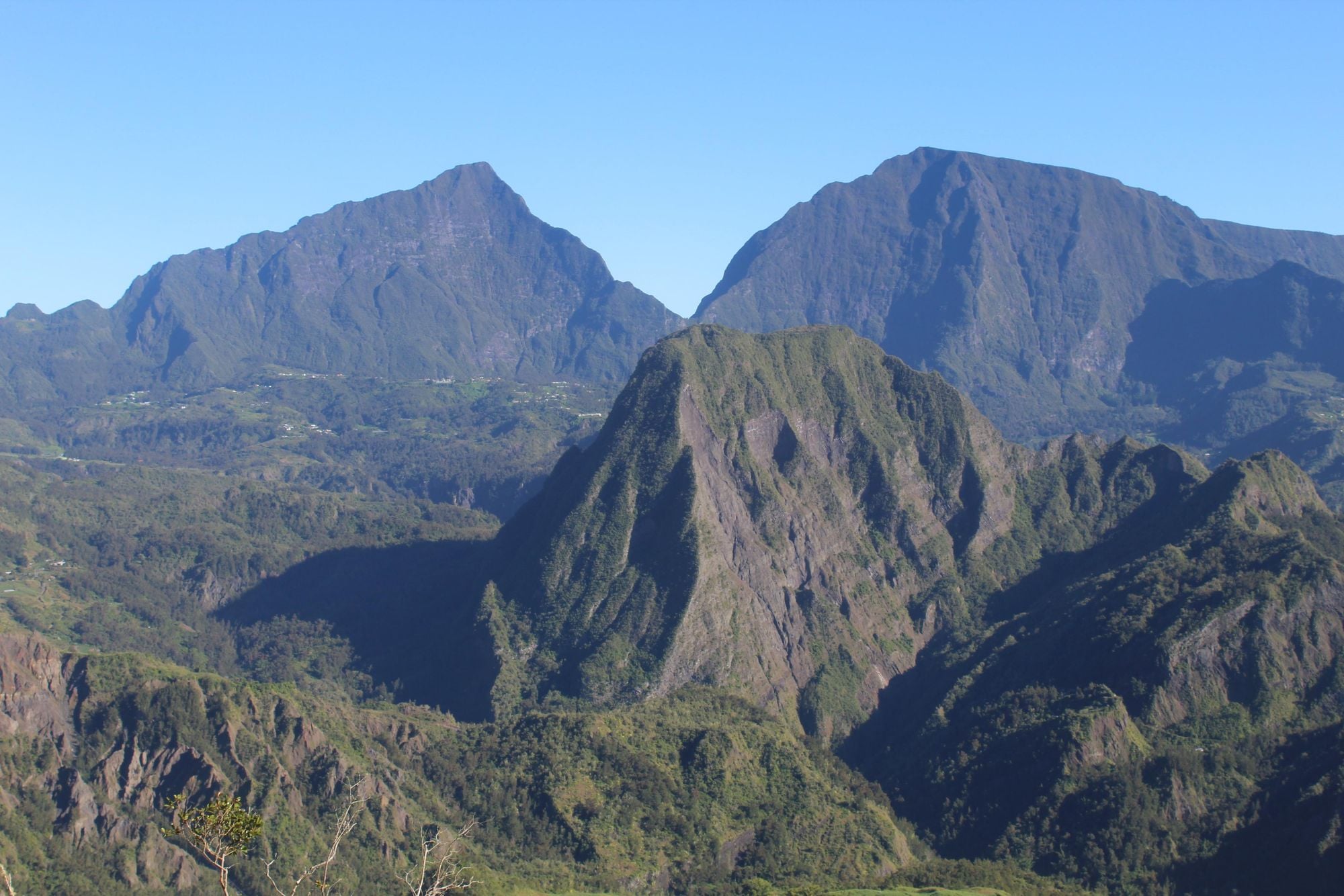
Three volcanic cirques - think jungles, fenced off by vertical mountain walls - define the interior of Réunion. Salazie is the most popular with tourists because it’s the most easily accessible. The GR-R2 passes through the other two - Cilaos (which is the site of a remarkable town, surrounded by mountain peaks on every side) and Mafate, which is by far the most remote of the three.
Each cirque is surrounded by mountain walls which are high and steep, while closer to the valley floor, the rocky, rooty ground undulates and drops to rivers which cut through the canyons.
Even if the ascent and descent numbers you do back home mirror the days you’ll be doing on the island, expect the hiking here to be more demanding. Sometimes, you’ll find yourself exposed, walking in the sun. Often, you’ll be switchbacking your way slowly up those big mountain walls, or tackling an upward kilometre of stairs in the rain. It’s rare to see a flat metre.
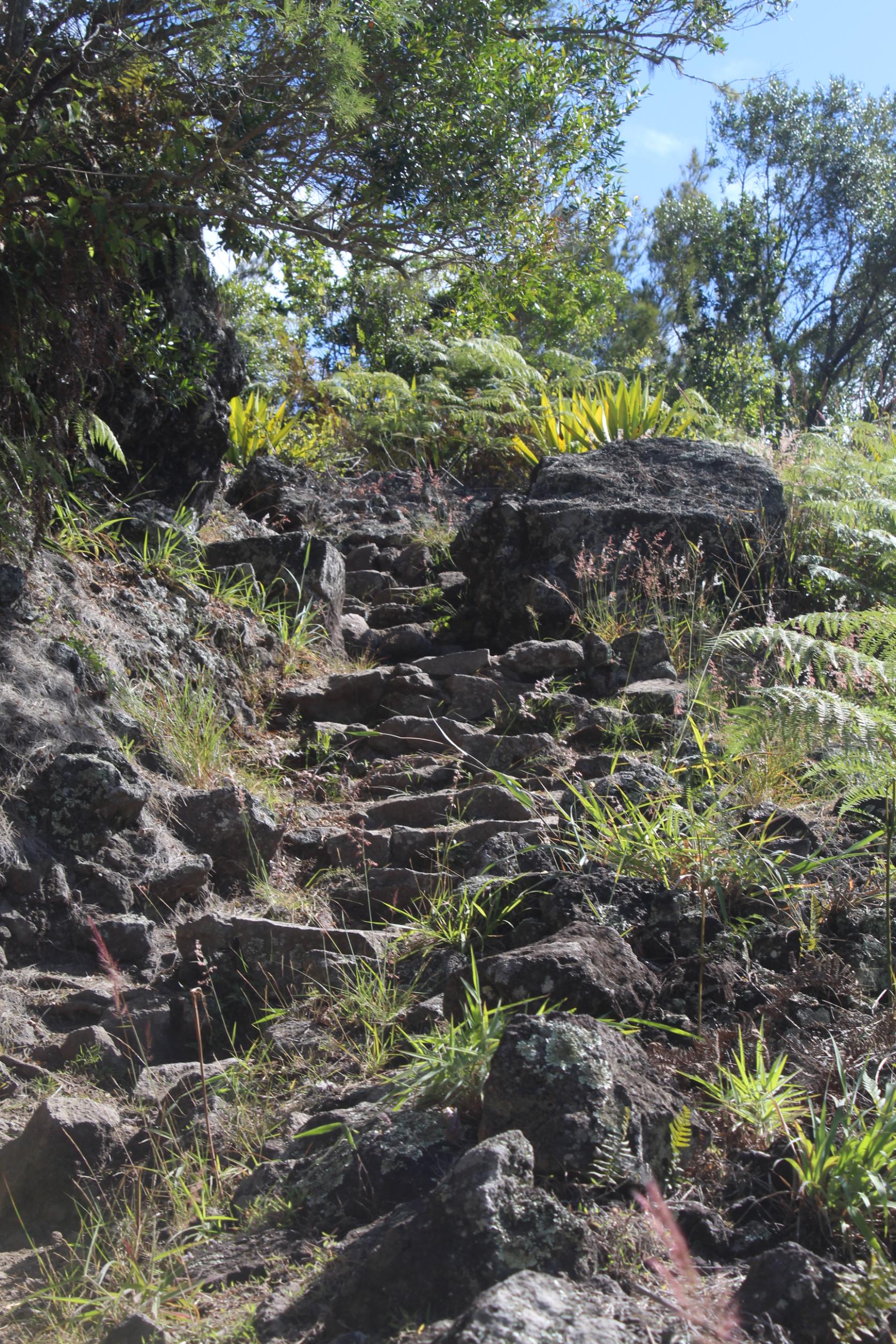
Pace yourself, bring snacks for fuel and make sure you take breaks to hydrate.
A lot of the bunkhouse-style gîtes in the cirques sit between the valley floor and mountain tops. So you’ll often find days end with a challenging final push uphill, and start with either another climb up to a ridgeline (followed by a beautiful view and a descent), or a walk back down to the valley floor. The constant climbing - especially with a 10kg+ backpack - is a real challenge. The pay-off is near constant panoramas of this wild isle; as beautiful as any place I’ve seen.
Don’t expect a big breakfast in Mafate
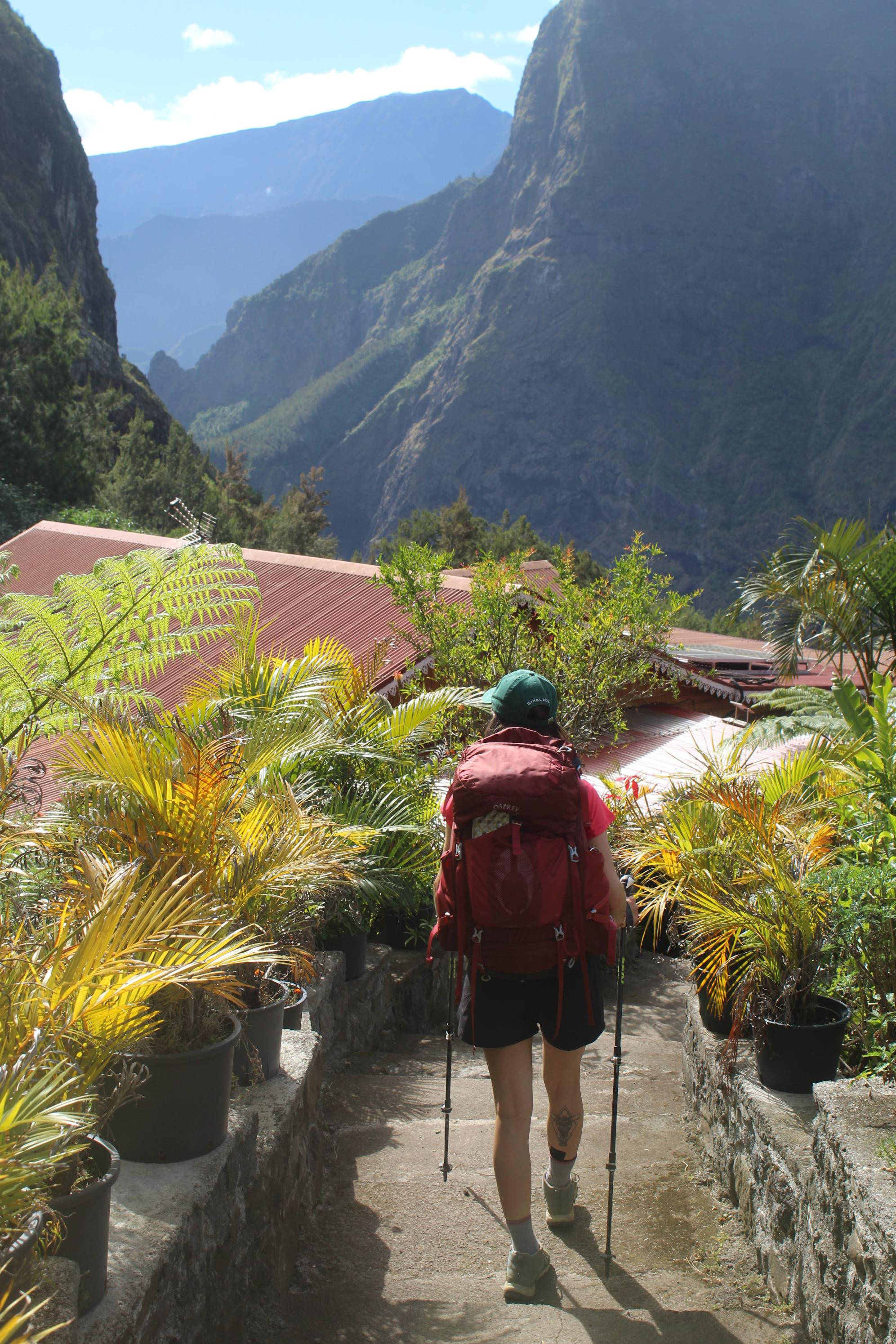
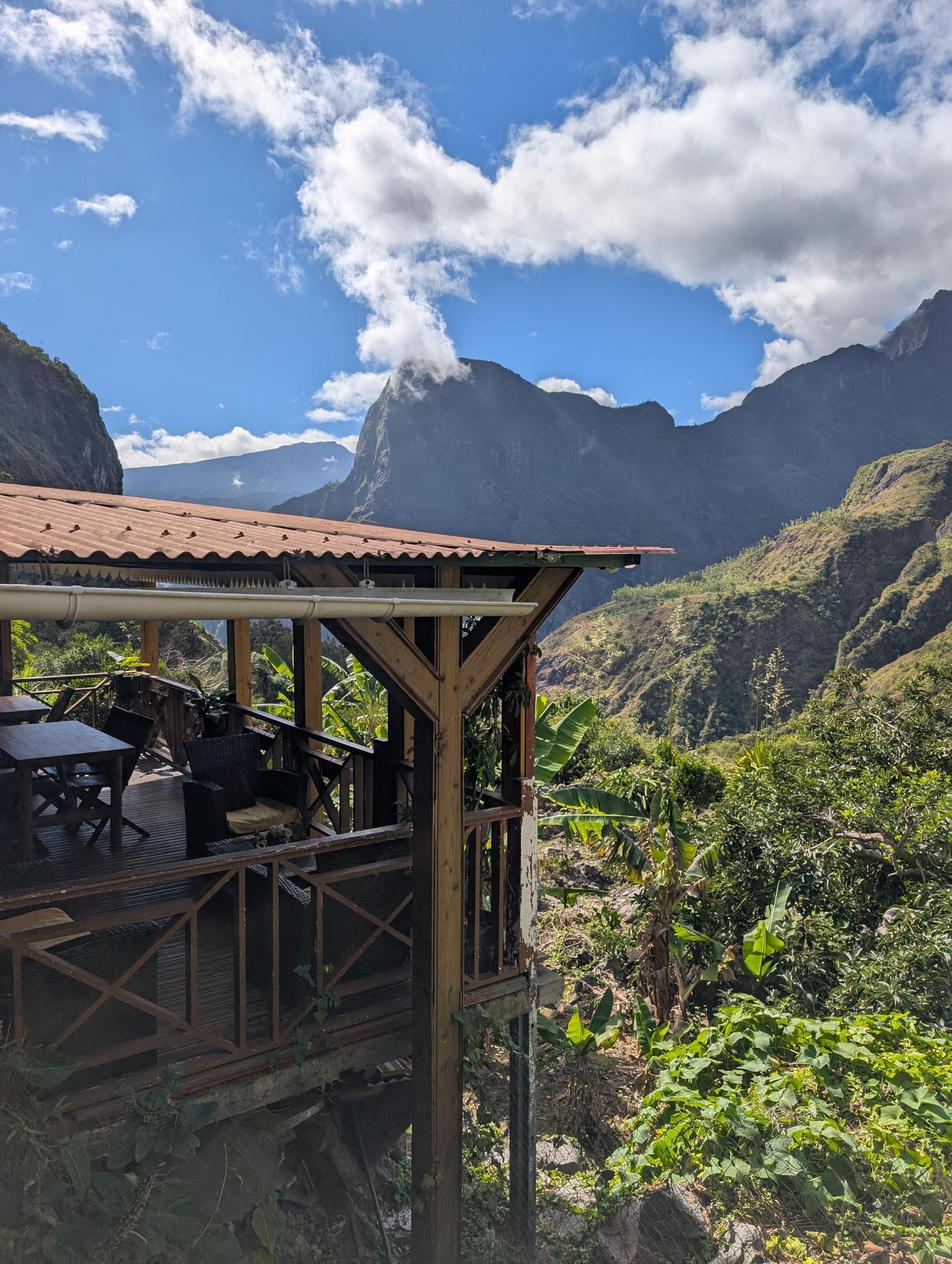
France is not a nation famed for its breakfasts, but in the remote gîtes, things are particularly minimalistic. When you hike through Mafate, you’ll be staying in isolated villages known as Îlets. These remote homesteads were first established as hideaways of runaway slaves fleeing French sugar plantations in the 17th century - so, by their nature, they are difficult to reach. Every bit of food served in these Îlets is either grown there, carried up by a resident (you will sometimes pass a local carrying a chicken up a hiking trail) or brought in by helicopter.
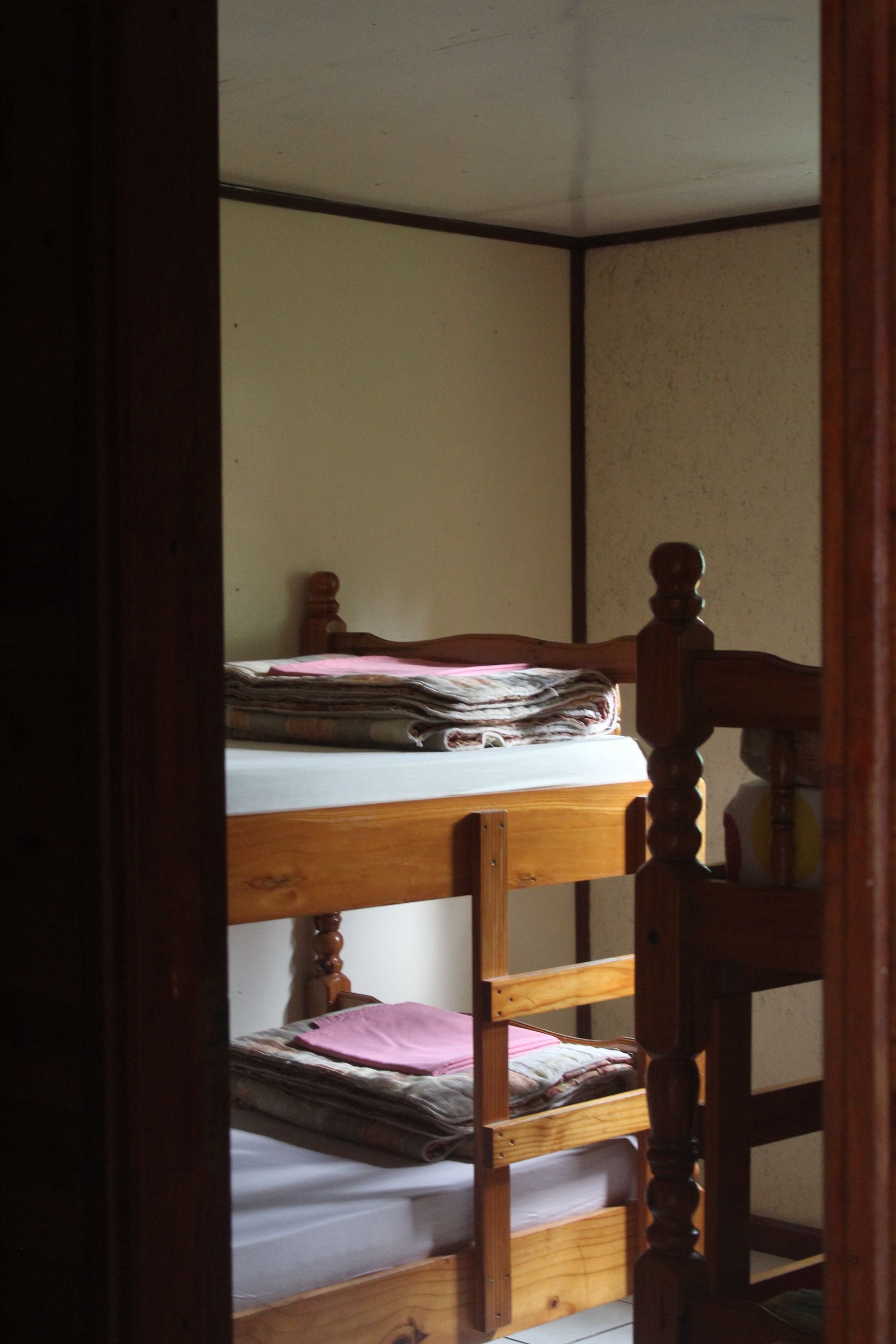
I was pleasantly surprised that each of our bunkhouses actually had hot water.
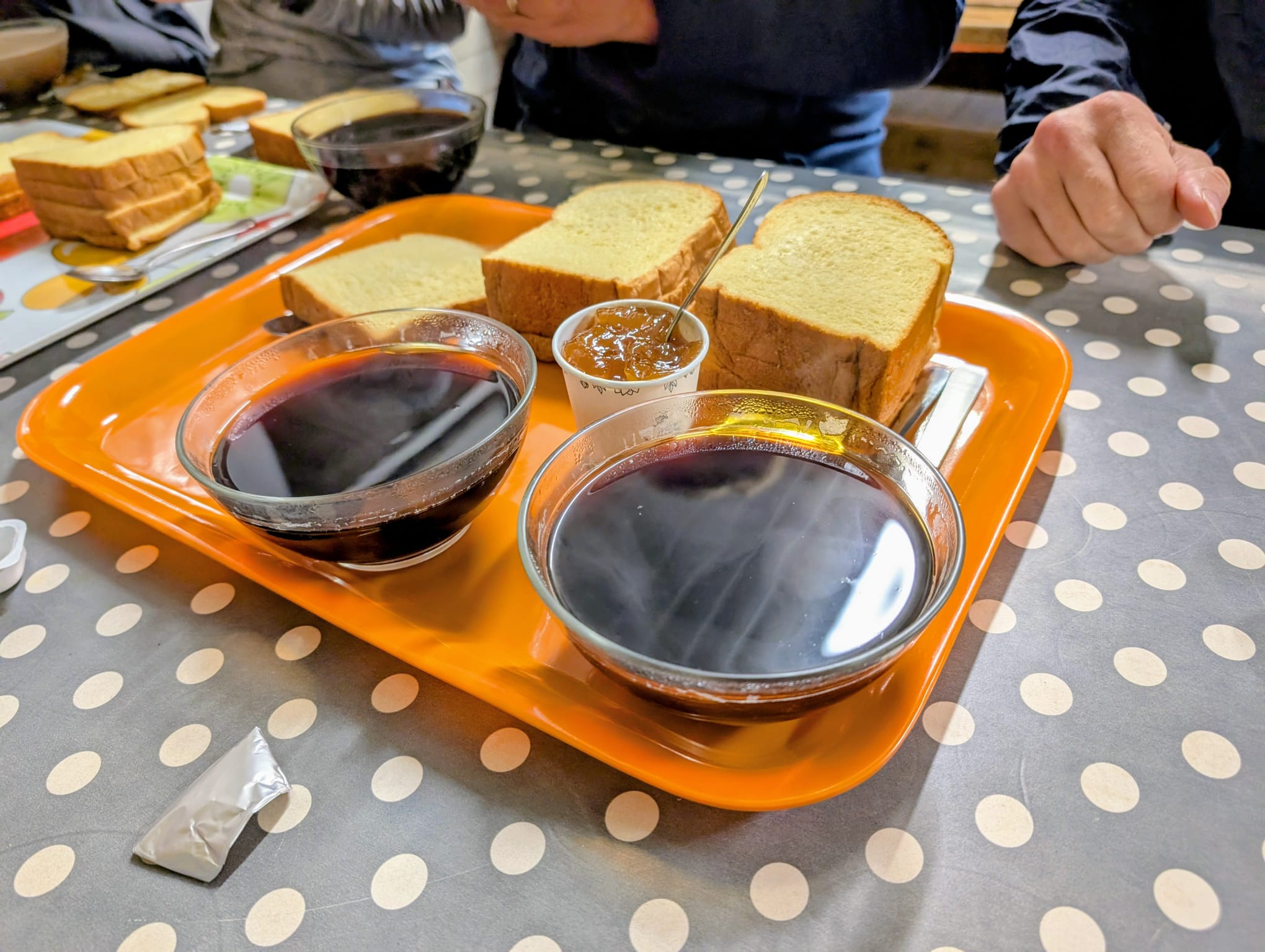
The most basic breakfast we had was a baguette with a stick of butter and some strong coffee. After climbing Piton des Neiges, our breakfast was also a stack of brioche bread and a literal bowl of coffee. My advice? Bring snacks. And there are tuck shops in most villages for stocking up with snacks - use them wisely.
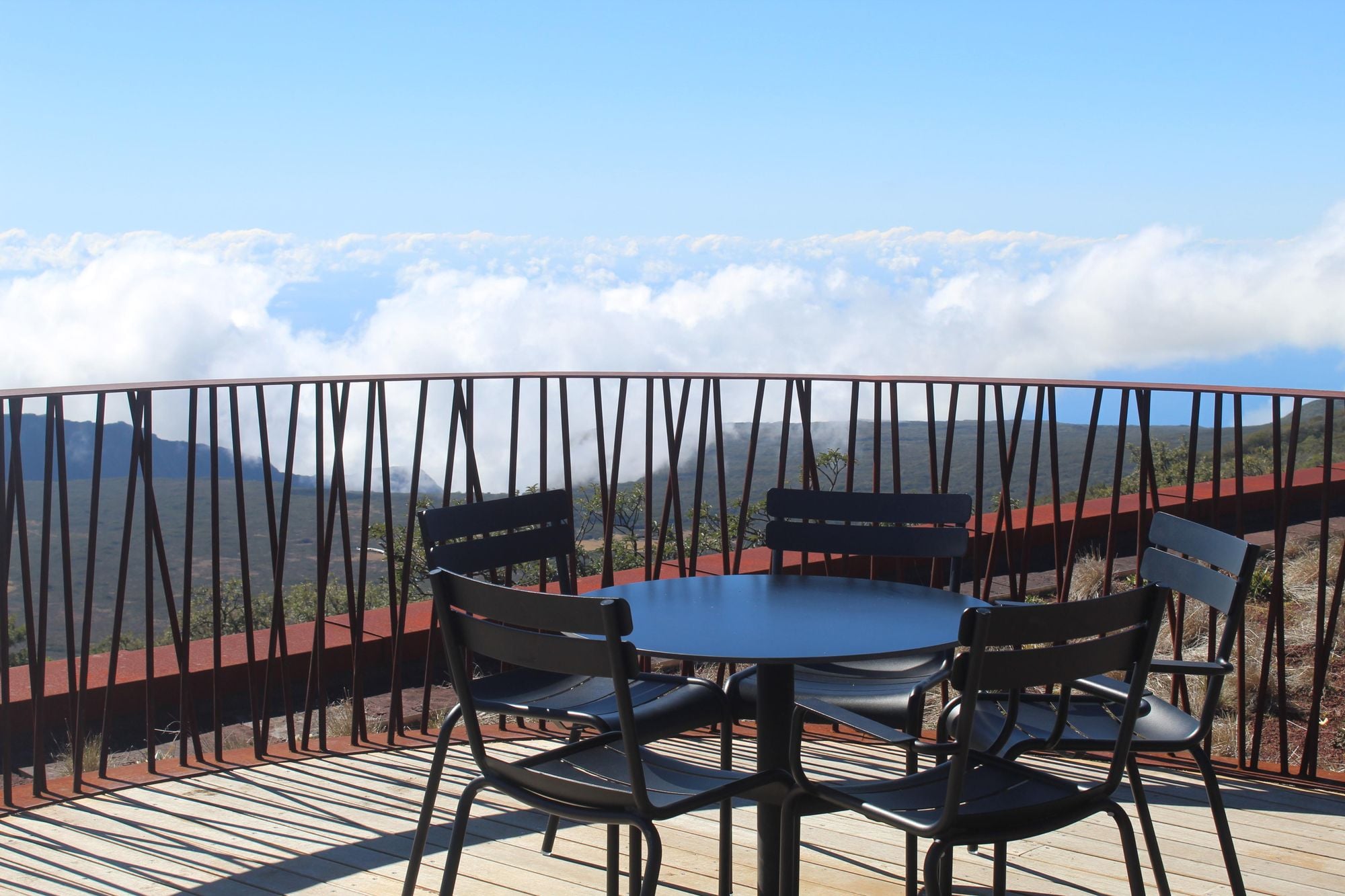
In Cilaos, a larger (impossibly beautiful) town within a cirque, things are different. There, you can stay in comfort and take your pick of boulangeries in the morning. The newly-opened Gîte du Volcan, near Piton de la Fournaise is also worth a mention - a bunkhouse, but a fancy one, with an elite buffet.
Rougail is the local delicacy you need to know
If the breakfasts come light in Réunion, dinner comes in abundance.
Expect some kind of hearty lentil dish, accompanied by a significant wallop of rice, a chicken or fish cari (curry), or a rougail saucisse - a Creole stew made with sausages, ginger, garlic, chili and a tomato sauce.
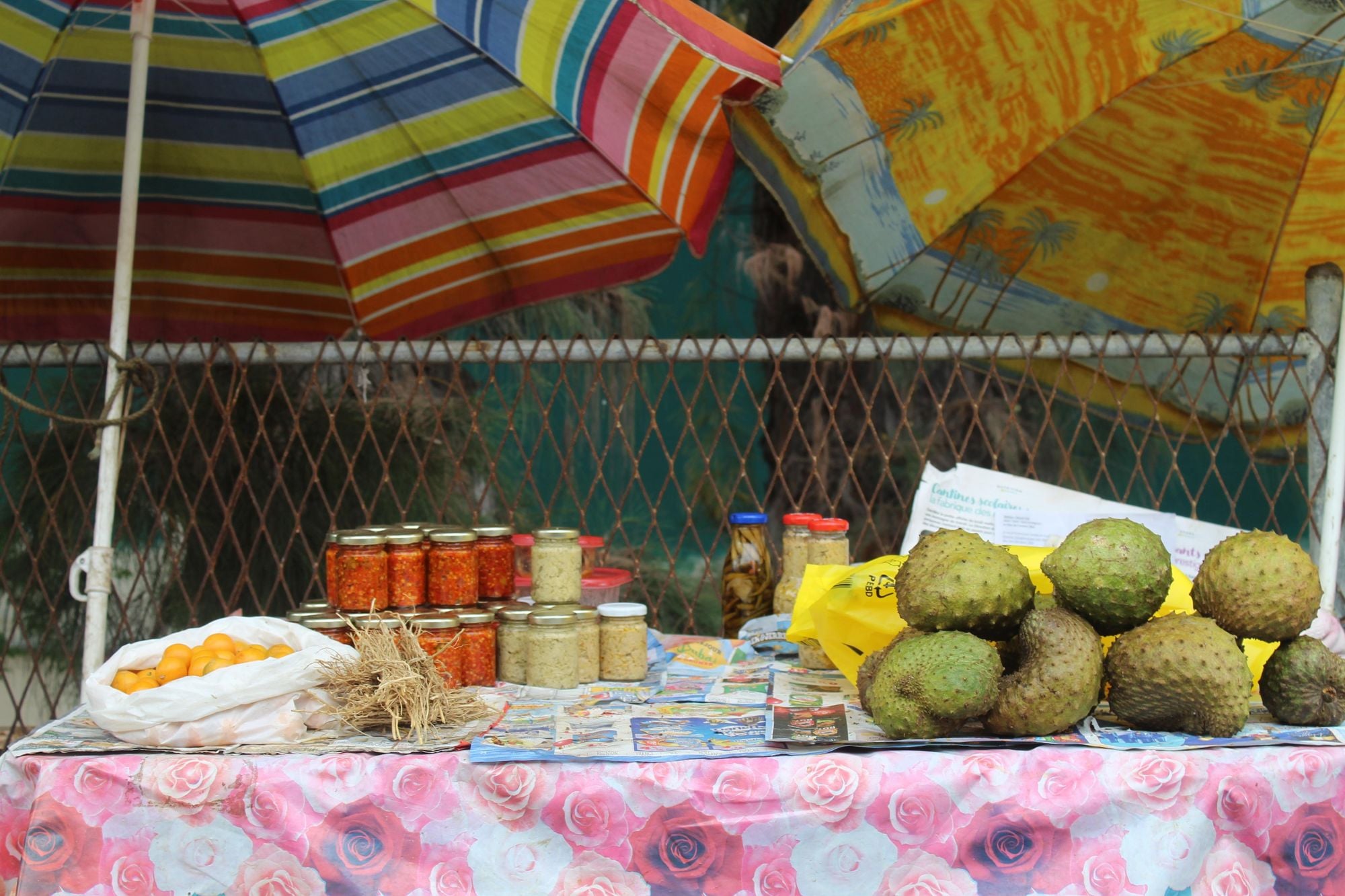
You’ll also notice a little condiment served with almost every meal. It’s also called rougail (pictured in jars above), but is something different - a seriously spicy condiment made with chili and whatever else the maker fancied that day. My favourite rougail cost three euros from a lady selling jars outside her house in Cilaos. It was made with chili, ginger, pepper and coriander. The stuff of dreams.
In the cities, local vanilla and giant avocados are plentiful, and the Indian influence means you can pick up tiny samosas widely, for 20-50 cents.
Dawn or Dusk on Piton des Neiges? Either works
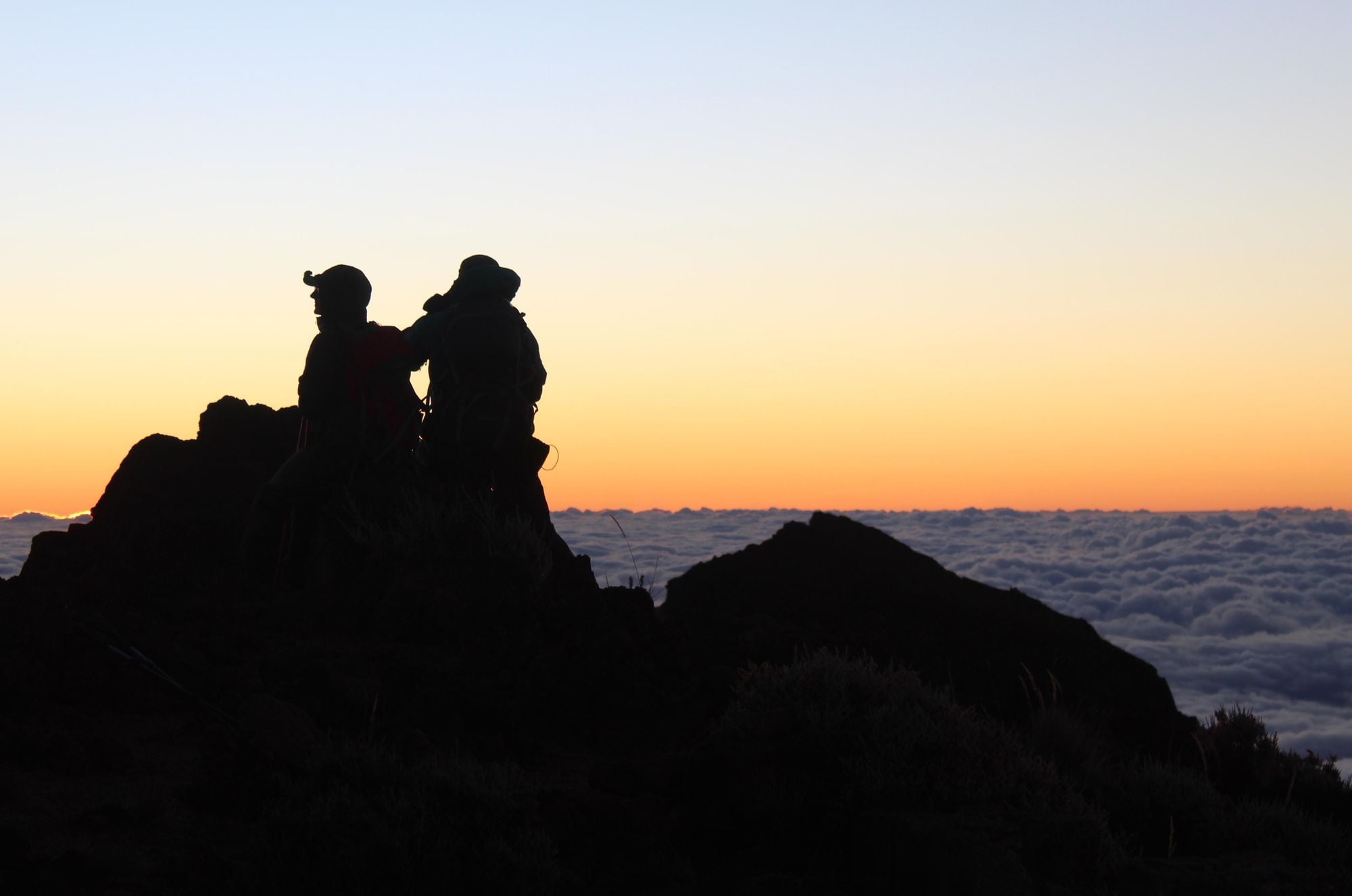
Piton des Neiges is the heart of Réunion; the shield volcano which birthed the island. At 3,070 metres (10,0072ft), it’s the highest point in the Indian Ocean.
In a stacked list of memories, reaching the summit of Piton des Neiges was the highlight of my time hiking on Réunion. The ascent begins in Cilaos, zig-zagging up one of those near-vertical cirque walls; with sublime views of town, and endemic Réunion stonechats fluttering around.
The immense views and that vibrant orange glow will stay with me forever.
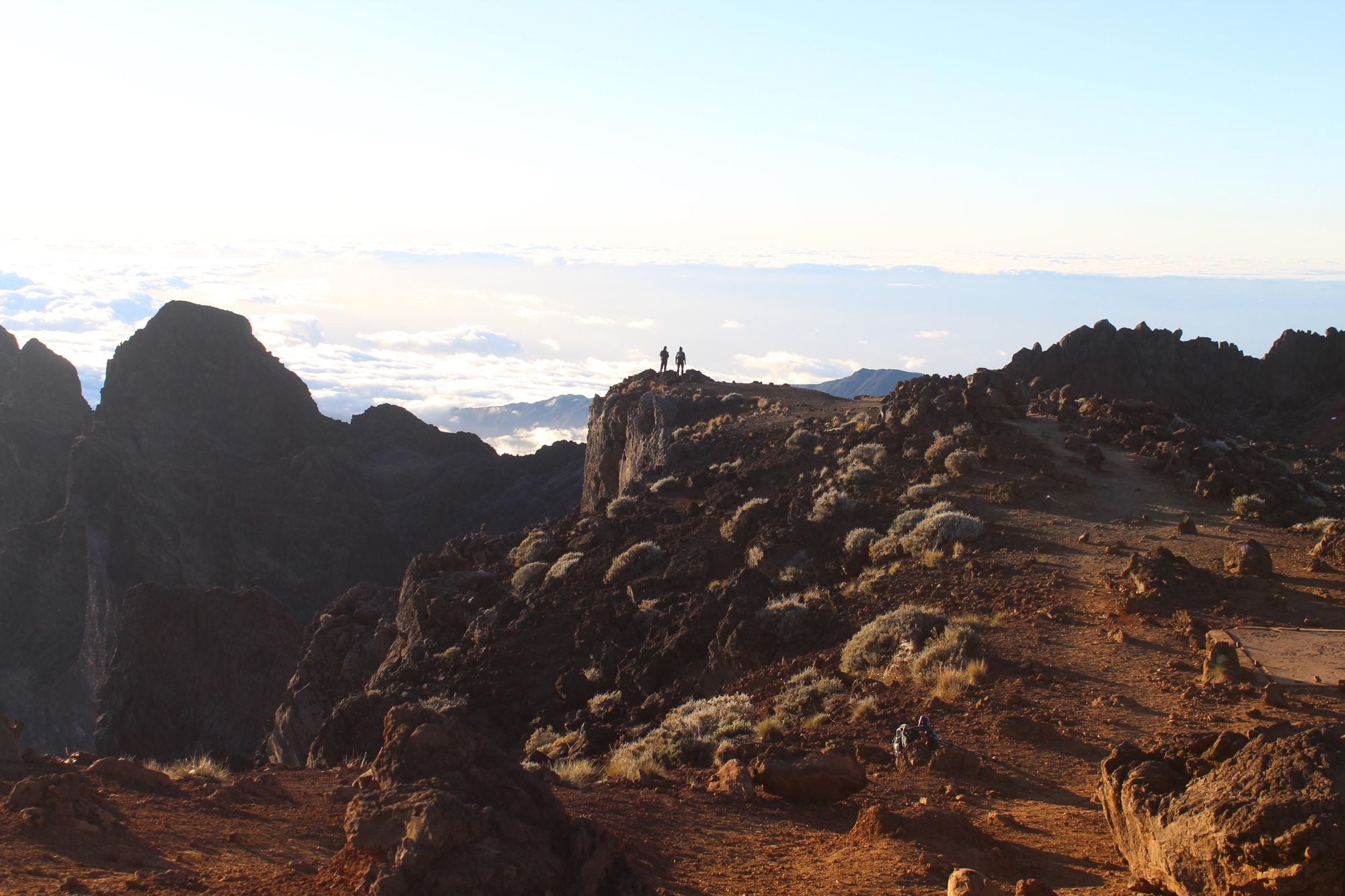
A good day of hiking gets you to Le Refuge de la Caverne Dufour, at 2,400m (7,874ft), beneath the volcano. And then you’ll have a choice. Either you can ditch your bag and continue up to the volcano that evening to watch the sunset, or you can recover for the evening and head up to the summit in the morning, to see the golden light of dawn strike the volcanic rocks.
What I will say is the Piton des Neiges refuge is the toughest one to sleep in. There are roughly nine beds in each dorm, and so the likelihood someone will snore is, unfortunately, extremely high. Bring earplugs.
We opted to go up for the sunset hike to make the following day easier. It was remarkable watching the volcanic moonscape glow in the sunset; looking thousands of metres down to sharp peaks and ridgelines poking out the clouds and descending with headtorch and down jacket.
The immense views and that vibrant orange glow will stay with me forever.
The floor is lava - and it tells a story
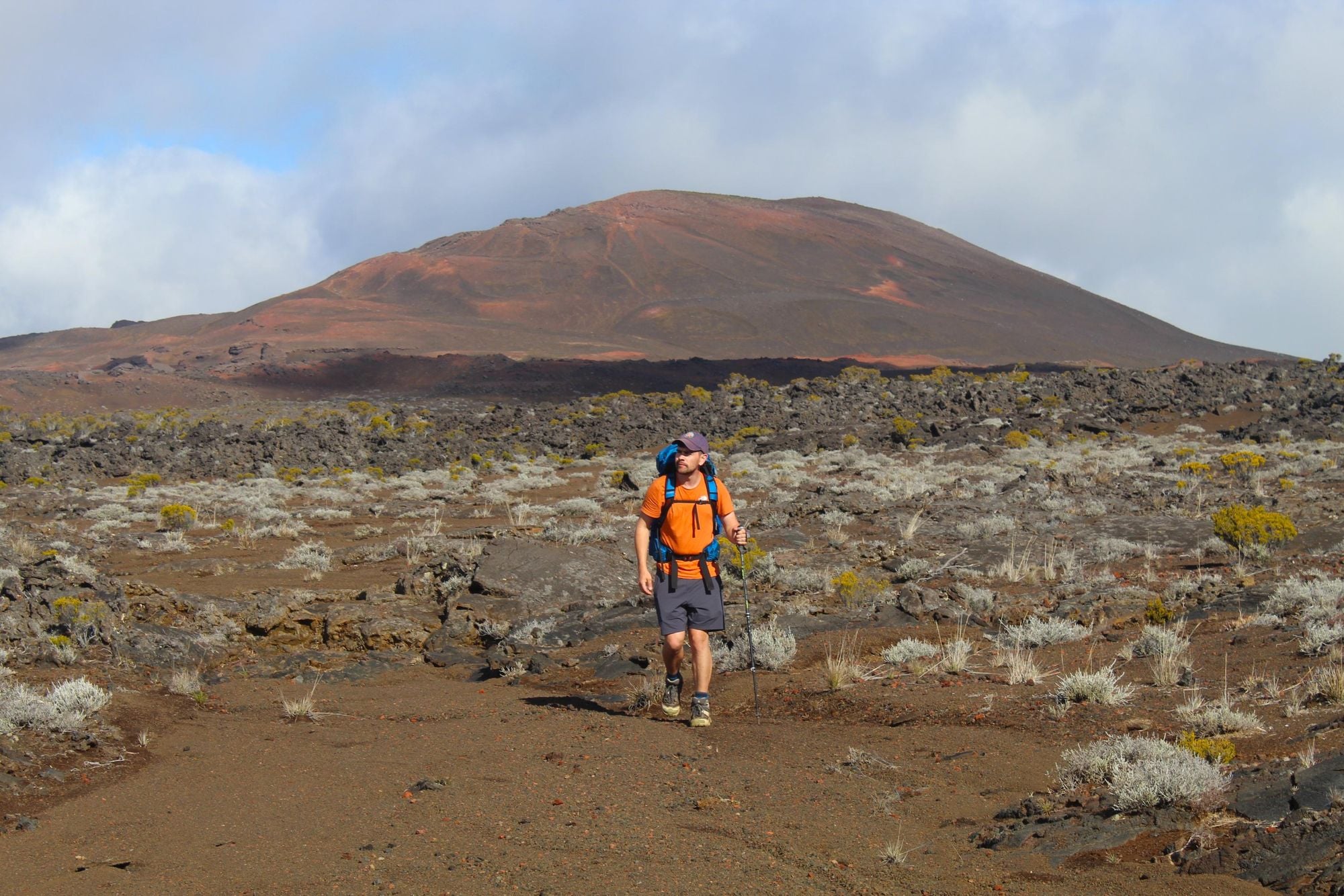
Piton de la Fournaise is Réunion’s current volcanic heartbeat; erupting annually, and occasionally sending lava plummeting down to the coast at 40mph (64km/h). When this happens, the island is remade - calderas get new borders, hillsides are transformed and new beaches are created. The Plage du Tremblet black sand beach is often called “the world’s newest”, created after an eruption in 2007.
Piton de la Fournaise is a geological wonder.
The hike up begins in the Dolomieu crater, on hardened lava, lined by spiky, jet black clumps from more recent eruptions. The lower flanks of the summit cone mostly dates from the 1970s onwards, and the whole area is frequently resurfaced by eruptions - despite the ancient look.
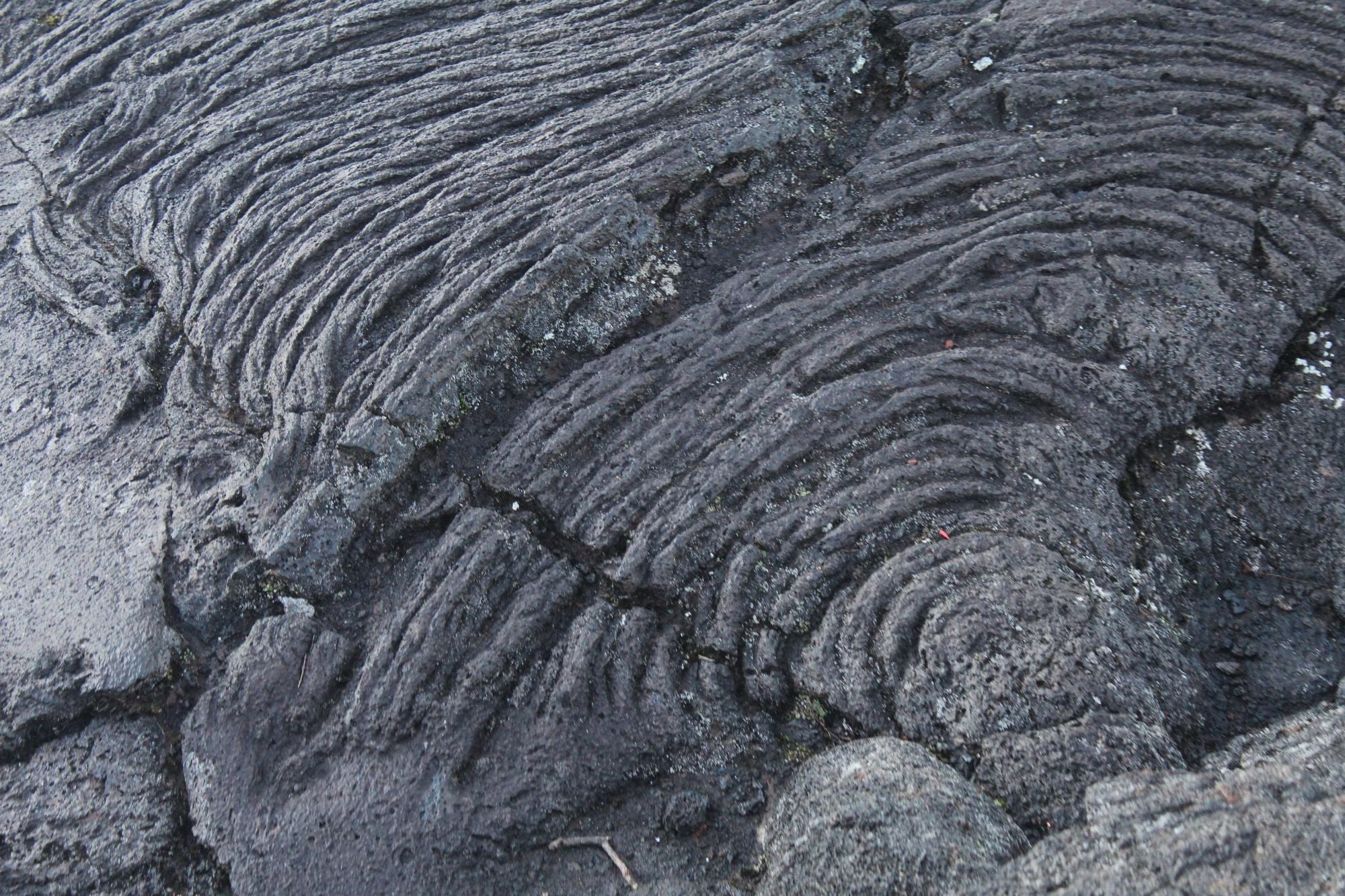
Look out for rope lava - folded blocks of lava created when hot, running lava dries. There are even lava tunnels within the volcano (strictly not to be explored without a guide). The top of the volcano only collapsed a few years back, creating the caldera floor you can now see.
La Cite du Volcan museum is well worth a visit if you visit in Bourg-Murat.
Shark signs are common - but you can still swim
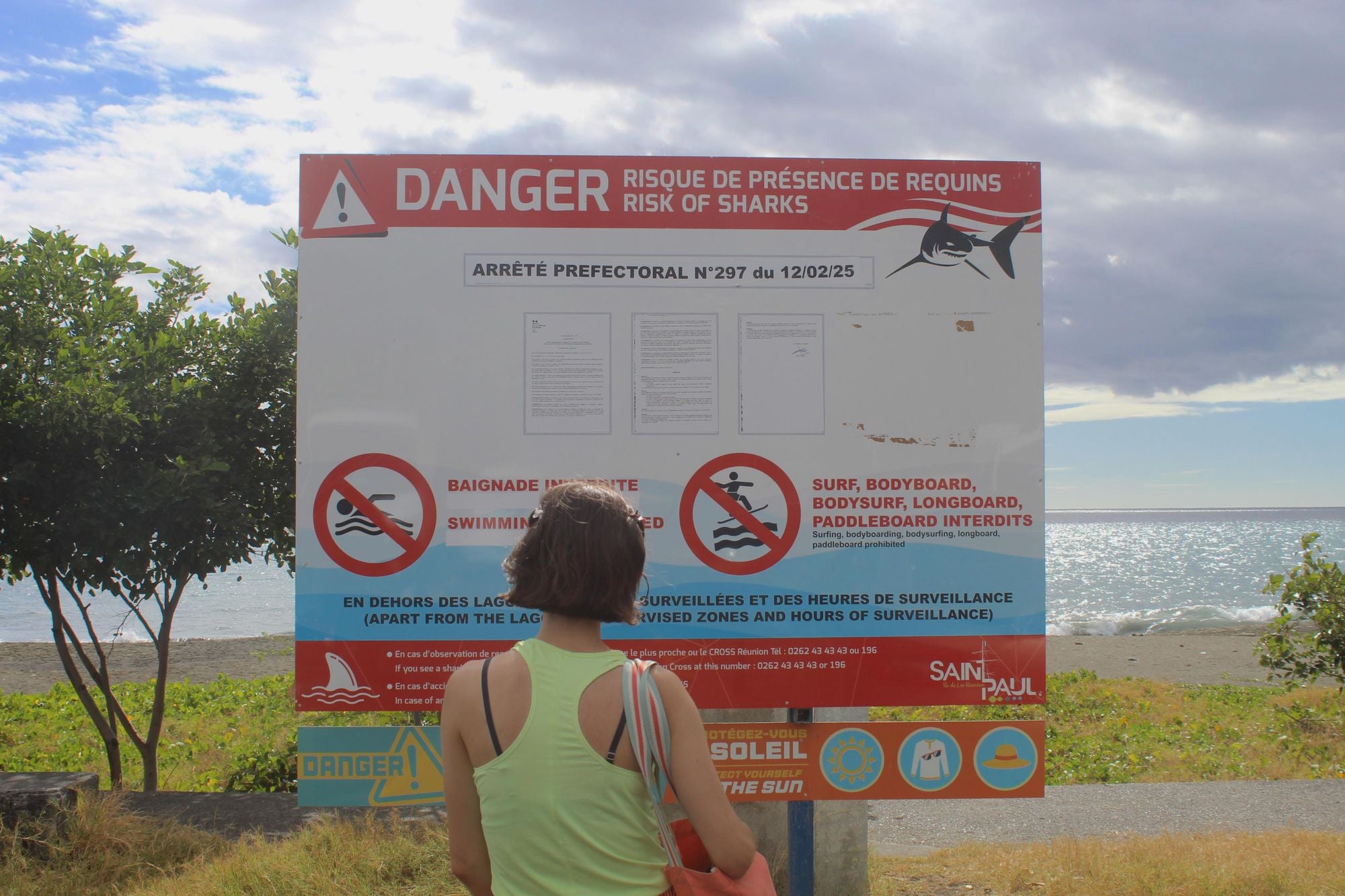
You are unlikely to have booked a trip to Réunion without encountering the fact that, between 2011-2019, the island was the site for around 16% of the world’s fatal shark attacks. So, what does that mean for visitors?
Snorkelling is only permitted in approved lagoons, but these lagoons are frequented by beach go-ers.
Firstly, they take shark risk seriously here. It’s common to see large signs forbidding swimming in certain areas. Shark monitoring practises and shark nets are in place at certain sites, and snorkelling is only permitted in approved lagoons, but these lagoons are frequented by beachgoers. I saw tropical fish in the corals of L’Ermitage Lagoon while snorkelling, although I must admit I felt trepidation while doing so - having met several locals with sharky stories.
I don't honestly know how safe those waters currently are today, but it is worth noting that there have been no recorded shark attacks on Réunion since May 2019. Hopefully, that means the mitigating efforts are having an impact.
Maloya is the sound of Réunion
I was sitting next to a lovely local on my flight into Réunion. He introduced me to the island’s very own genre of music - maloya - which is actually UNESCO listed.
Maloya is a genre created by Malagasy and African slaves brought to Réunion by the French. Today’s iteration of it combines jazz, reggae, poetry and song. Originally a music of worship, it became a form of protest music; a lament against slavery, and almost every cultural, political or social event on the island today will feature some form of maloya music. Traditional instruments involved include a roulér (barrel drum), a kayamb (a square rattle made from sugar cane) and a bob (a single-string musical bow). Guitars and bass are common too.
We visited Réunion during Sakifo Musik Festival, and were lucky enough to see a local maloya collective perform. There’s a contagious energy to this artform.
Inspired? Join our hiking trip to Reunion Island in 2026!