
Brand New!
The Ultimate Adventure Through South Korea
- South Korea
- 10 nights
An immersive journey from Seoul to coastal Busan, hiking mountains, cycling rural Korea, exploring the DMZ and staying at a Buddhist temple
What's Included?
- Activities & Certified GuidesAll itinerary activities with expert, English-speaking guides
- All Lodging7 nights in comfortable hotels, 2 nights in a boutique hanok, 1 night at a Buddhist temple
- MealsAll breakfasts, 3 lunches, and 7 dinners
- TransfersAll transportation during the trip (except airport transfers), plus luggage transfer between destinations
- Gear & FeesAll your cycling gear, plus entry fees and permits to access the DMZ
- Maximum group size: 12Join small n’ sociable groups of like-minded, active and outdoorsy people – designed to be solo-friendly
FromPrice loadingexcluding flights
Highlights
Wander Seoul's buzzing streets, hike to a viewpoint near the DMZ for a glimpse over North Korea and meet with a defector to hear their incredible story
Cycle along Andong's rural trails, past a Confucian academy and Hahoe's UNESCO folk village, sleeping at a boutique hanok inspired by Korea's royal palaces
Hand yourself over to temple life, joining dawn meditation, chanting and training alongside the monks who've practiced it for generations
Hike Busan's granite ridges, temples and sea cliffs, unwind in a traditional Korean bath house and feast on excellent local food
Itinerary
Day 1
Touch down in bustling Seoul
Walking Tour1hrHotelTwin shareDinner includedShow Day 1 detailHide detail
Annyeonghaseyo – welcome to South Korea! Arrival at Incheon Airport, and make your own way to your hotel. If you'd like to explore more of the city before things get going, it's worth arriving a day or two early; Seoul rewards a slower look, and there's plenty beyond what's covered on this itinerary; Bukchon Hanok Village, the palaces after dark, or simply wandering neighborhoods like Ikseon-dong at your own pace. This afternoon, meet your guide and fellow adventurers at your hotel lobby for a welcome briefing, before heading out to Hongdae. This is Seoul's creative pulse: indie musicians perform street concerts, emerging artists sell handmade goods at weekend flea markets, and trendsetting boutiques fill converted warehouses. Wander the mural-lined alleys, browse the designer shops, and drift into the adjacent Yeonnam-dong neighborhood along the Gyeongui Line Forest Park. The night winds down with a Korean BBQ dinner, one of the country's most iconic and convivial dining traditions: with grilled pork (or a vegetarian option) and a glass of soju or someak in hand, get to know the group over your first taste of Korean cuisine. Your adventure through South Korea kicks off tomorrow morning.
Day 2
Meet a North Korean defector and hike above the DMZ
Driving2-3hrsWalking Tour3-4hrsHiking2.5hrs · 2mi · 1247ft up · 1247ft downHotelTwin shareBreakfast and lunch includedShow Day 2 detailHide detail
After an early breakfast, it's around an hour's drive to the Korean Demilitarized Zone (DMZ), the heavily fortified 2-mile-wide buffer that has separated North and South Korea since the end of the Korean War in 1953. You'll visit Imjingak Park, the Third Infiltration Tunnel and its exhibition hall, and Dora Observatory, tracing the route past the Bridge of Freedom and the Unification Village. The day builds to a genuinely unique experience: a private meeting with a North Korean defector, who shares their own story of escape and life on both sides of the border. During peak season, the DMZ tour may be shared with other groups, but your group gets its own private Q&A with the defector afterwards. Grab a quick lunch at a local restaurant before you drive roughly 16 miles on to Gimpo, right at the edge of the border zone, for a short hike on Munsusan. This scenic mountain, home to a 17th-century fortress built to defend against marine invasion, combines forest paths with historic fortress remains and ridge walking. On clear days you can see across into North Korea from the summit. Later, transfer back to Seoul, where the evening is free to do as you wish; your guide will be around for recommendations on great local restaurants. It's a long day, covering a lot of ground both physically and emotionally, so you can choose how you want to spend your evening. An early night will set you up well for tomorrow.
Please note: it's possible that the DMZ visit may be canceled or restricted without prior notice, due to the geopolitical situation. An alternative activity such as a rewarding hike near Seoul will be offered if this affects your departure.
Day 3
From Seoul to Andong into Korea's rural heartland
Hiking2hrs · 3mi · 997ft up · 997ft downTrain Journey2hrsHotelTwin shareBreakfast and dinner includedShow Day 3 detailHide detail
For early risers, join your guide for a short hike up Inwangsan before you leave Seoul today: granite peaks and dramatic rock formations that inspired one of Korea's most famous landscape paintings, with views back over Gyeongbokgung Palace from the summit. It's entirely optional, and you can lie in if you'd rather ease into the day. Later, you'll take the fast KTX train to Andong (a journey of just over two hours), trading Seoul's skyline for a landscape of rice paddies, forested hills and the slow curve of the Nakdong River. This is Korea's countryside heartland, home to more preserved Confucian academies and traditional clan villages than anywhere else in the country. Before checking in, check out Buyongdae Cliff, a viewpoint over the UNESCO-listed Hahoe Village below, where the river curls around traditional thatched-roof homes in a shape often compared to a lotus flower. You'll spend the next two nights at Andong Giwa Rakkojae Hanok, a boutique hanok lodging built in the style of Korea's royal palaces, all set around a traditional courtyard of timber, clay and tiled roofs. In the evening, a special dinner is served at the hanok, inspired by Suunjabbang, the oldest known Korean cookbook, written by a noblewoman in the 16th century. This is a curated tasting menu drawing on her recipes: seasonal dishes, fermented octopus, an early form of Andong jjimdak, and a traditional 15th-century yogurt among them.
Day 4
Cycle to Korea's oldest living village
Cycling Tour4hrs · 24mi · 1476ft up · 1476ft downWalking Tour1hrHotelTwin shareAll meals includedShow Day 4 detailHide detail
After breakfast at the hanok, saddle up for a bike ride along the peaceful shores of Andong Lake, mostly on paved paths, through open countryside, some hills, and quieter local roads. The route brings you to Byeongsan Seowon, a UNESCO World Heritage-listed Confucian academy founded in 1613 on the banks of the Nakdong River. Its Mandaeru Pavilion is considered one of the finest surviving examples of Neo-Confucian academic architecture in Korea, with an open-sided hall framing river and mountain views that scholars once used as a setting for study and reflection. From there, continue on to Hahoe Village, the same 600-year-old UNESCO-listed folk village you glimpsed from Buyongdae Cliff the day before, but now from within: wander among centuries-old aristocratic homes still lived in today, set inside the Nakdong River's dramatic curve. Lunch and dinner today are taken at local restaurants, where you'll try two of the region's most iconic dishes: andong jjimdak, a rich braised chicken dish, and grilled mackerel, a local specialty. Back at the hanok, a stint in the yellow-mud sauna is the perfect way to ease legs tired from the day's ride.
Day 5
Andong to Gyeongju via forest trails and a valley of waterfalls
Driving3hrsHiking3hrs · 6mi · 1214ft up · 1214ft downHotelTwin shareBreakfast and lunch includedShow Day 5 detailHide detail
After breakfast, it's around two hours by private transfer to Naeyeonsan, a forested mountain valley that's a well-loved weekend spot for Korean hikers – but rarely makes it onto an international visitor's itinerary. The valley threads through some of the region's most dramatic terrain: crystal-clear streams, sheer cliffs and a run of twelve cascading waterfalls strung one after another along the trail, each with its own name and character. Lunch is a packed kimbap or sandwich, eaten wherever the view earns it. If you dare, look out for a handful of designated spots where you can cool off with a proper dip in the mountain water, a welcome break partway through the walk. From here it's just over an hour on to Gyeongju, once the capital of the Silla Kingdom for nearly a thousand years and still one of the richest concentrations of ancient sites in the country, from royal tombs to Buddhist temples. The evening is yours to spend as you like, ahead of two full days exploring what Silla left behind.
Day 6
Hike Namsan, Gyeongju's sacred peak
Hiking3hrs · 4mi · 1378ft up · 1378ft downWalking Tour1hrHotelTwin shareBreakfast and dinner includedShow Day 6 detailHide detail
After breakfast, hike across Gyeongju Namsan, part of the Gyeongju Historic Area and often nicknamed Korea's open-air museum. Silla-era rock-carved Buddhas, temple ruins, and stone pagodas sit scattered along the forest paths, some barely marked, making this a very different way to take in Korea's Buddhist heritage than a single temple visit. The afternoon is free to relax, with lunch at your leisure. Worth exploring is Hwangnidan-gil, a street of traditional Korean houses now filled with cafes and small shops. In the early evening, meet your guide again for a home-style Korean dinner at a local restaurant, made up of seasonal dishes, before heading to Donggung Palace and Wolji Pond, once Silla royalty's banquet grounds. The pavilions are lit up after dark and reflect in the water, making this one of the best times of day to see the site.
Day 7
Cycle Silla's tombs, then embrace temple life
Cycling Tour2-3hrs · 18miTemple StayMulti shareBreakfast and dinner includedShow Day 7 detailHide detail
After breakfast, enjoy a leisurely cycling tour through Gyeongju's Silla heritage. The route passes Daereungwon, a scenic cluster of grass-covered royal burial mounds known as tumuli, where Silla kings and queens were buried beneath earth rather than stone tombs, some over 65 feet high. It's a gentle two hours in the saddle followed by lunch at your leisure, before transferring to Golgulsa Temple, where the pace of the day changes completely. Golgulsa is Korea's only stone cave temple, founded around 1,500 years ago by a monk who traveled from India and carved a series of grottoes into a limestone cliff, inspired by the rock-hewn monasteries of his homeland. Twelve of those grottoes remain, along with a Buddha carved directly into the cliff face, gazing out toward the sea. The temple is also home to Seonmudo, a Buddhist martial art of moving meditation that monks here have trained in for centuries, sometimes earning Golgulsa the nickname 'the Shaolin Temple of Korea'. Your stay follows the temple's own rhythm: check in, settle into the grounds, then move through orientation, hands-on Seonmudo training and a formal round of prostrations before a vegetarian dinner and an early, monastic bedtime. Rooms here are gender-separated and shared between two and four people, on traditional futon mattresses on the floor. It's a working temple, not a hotel, and the basic setup and training program is all part of the experience.
Please note: as this is a working temple rather than a hotel, there is a rare possibility that the temple may be unable to accommodate your group, for example due to a closure. If this happens, we’ll either move the temple stay earlier in the itinerary or arrange an alternative. While the experience may differ slightly (without Seonmudo training), it will be equally as authentic and rewarding, and we’ll notify you before departure.
Day 8
A monastic morning, then on to coastal life in Busan
Walking Tour2hrsHotelTwin shareBreakfast and dinner includedShow Day 8 detailHide detail
The temple day starts early: a 5:00 AM wake-up call, followed by morning Buddhist service, sitting and walking meditation, and a vegetarian breakfast, all before most of Busan is awake. There's time for one more round of Seonmudo training and a morning service before moving on. From Golgulsa, it's around an hour and 20 minutes by private transfer to Busan, giving you some time to relax and shake off the early start. You can nap, or perhaps head to the beach for a dip and some relaxation, before regrouping with your fellow travelers in the late afternoon. If you have the energy, join your guide for a walk on Dongbaekseom Island, now connected to the mainland by a coastal walkway, where camellias bloom against the backdrop of Haeundae's skyline. The path takes in the APEC House and a lighthouse, with the illuminated Gwangan Bridge coming into view as the light starts to fade. From there, head to Jagalchi Market, Korea's largest seafood market and over a century old. Pick your own catch from the modern stalls or the older outdoor vendors and have it cooked on the spot, or save your appetite for dinner at a local restaurant.
Day 9
Climb Godangbong Peak, then soak in a traditional bathhouse
Hiking3-4hrs · 6mi · 1739ft up · 1739ft downHotelTwin shareBreakfast includedShow Day 9 detailHide detail
After breakfast, spend the morning hiking Geumjeongsan, Busan's highest mountain and one of its most-loved outdoor spots. The trail winds through Geumjeongsanseong, the largest fortress in Korea: 11 miles of stone walls built in 1703 to guard against Japanese invasion, with parts of the fortification thought to date back as far as the Three Kingdoms period. Along the way, look out for Geumsaem Spring, a natural rock pool near the summit that gave the mountain its name (Geumjeongsan means 'Golden Well Mountain'), before the final push to Godangbong Peak at 2,631 feet, where the reward on a clear day is a sweeping, uninterrupted view over the whole of Busan and out to the sea. On the way back down, stop at Beomeosa Temple, one of the region's most significant Buddhist temples, founded in 678 during the Silla dynasty and set into the mountain's forested slopes – its multi-tiered stone stairway and iconic one-pillar gate are worth the pause before continuing on. Your legs have earned a rest by now, so back in Busan round off the day at a traditional Korean jjimjilbang: a public bathhouse with hot pools and themed saunas, exactly what's needed to recover after a morning on the mountain. Dinner tonight can be taken wherever you fancy – your guide will be happy to help with recommendations.
Day 10
Hike the Igidae Coastal Trail and head back to Seoul
Hiking2-3hrs · 3mi · 656ft up · 656ft downTrain Journey2hrsHotelTwin shareBreakfast and dinner includedShow Day 10 detailHide detail
After an early breakfast at the hotel, head out for one last hike in Busan along the scenic Igidae Coastal Trail, which traces the cliffs between Oryukdo Skywalk and Gwangalli Beach. It starts at Oryukdo itself, a set of small islets just offshore whose name means 'five or six islands', a nod to the way the tide submerges one of them, so the count genuinely shifts depending on when you look. From there, the trail hugs the coast past sea cliffs, suspension bridges and a sea cave, with Gwangan Bridge drifting in and out of view across the water the whole way. From the trail's end, it's a short transfer to Gwangalli Beach where you can grab some lunch, before heading to Busan Station to catch a fast train back to Seoul. Once you're back and settled, it's time to celebrate the final night together, starting with chimaek, Korea's classic pairing of crispy fried chicken and cold beer. Save some energy for afterwards; your guide has one more distinctly Korean tradition lined up to send the trip off properly.
Day 11
Farewell South Korea!
Breakfast includedShow Day 11 detailHide detail
Breakfast at the hotel this morning is the last chance to swap stories with the group before it's time to say goodbye to each other. You're free to depart at any time, and if you have a later onward connection, the hotel reception will happily store your luggage for the day. If you're not quite ready to leave Korea behind, Jeju Island is an easy way to extend the trip: a short domestic flight from Gimpo, and a very different side of the country awaits, with volcanic coastline, lava tube caves and the slopes of Hallasan, Korea's highest peak.
Practical Stuff
Getting There
- Nearest airport
- Incheon International Airport (ICN)
- Pick up
- Your hotel in Seoul
16:00 on Day 1 - Drop off
- Your hotel in Seoul
Any time on Day 11
This Trip is Graded Level 2
- Level 2
Easy-Moderate
Perfect for adventurers looking to gently step things up
Remote environment: factors to consider - How much activity is involved?
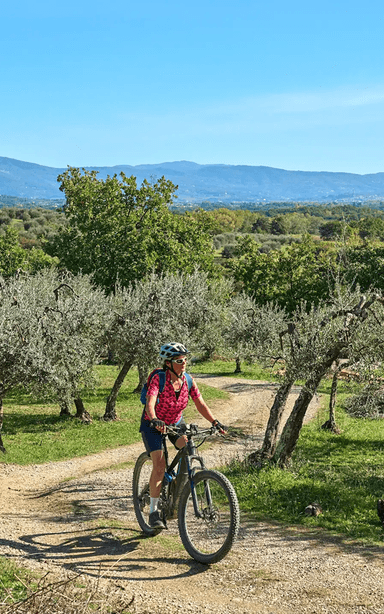
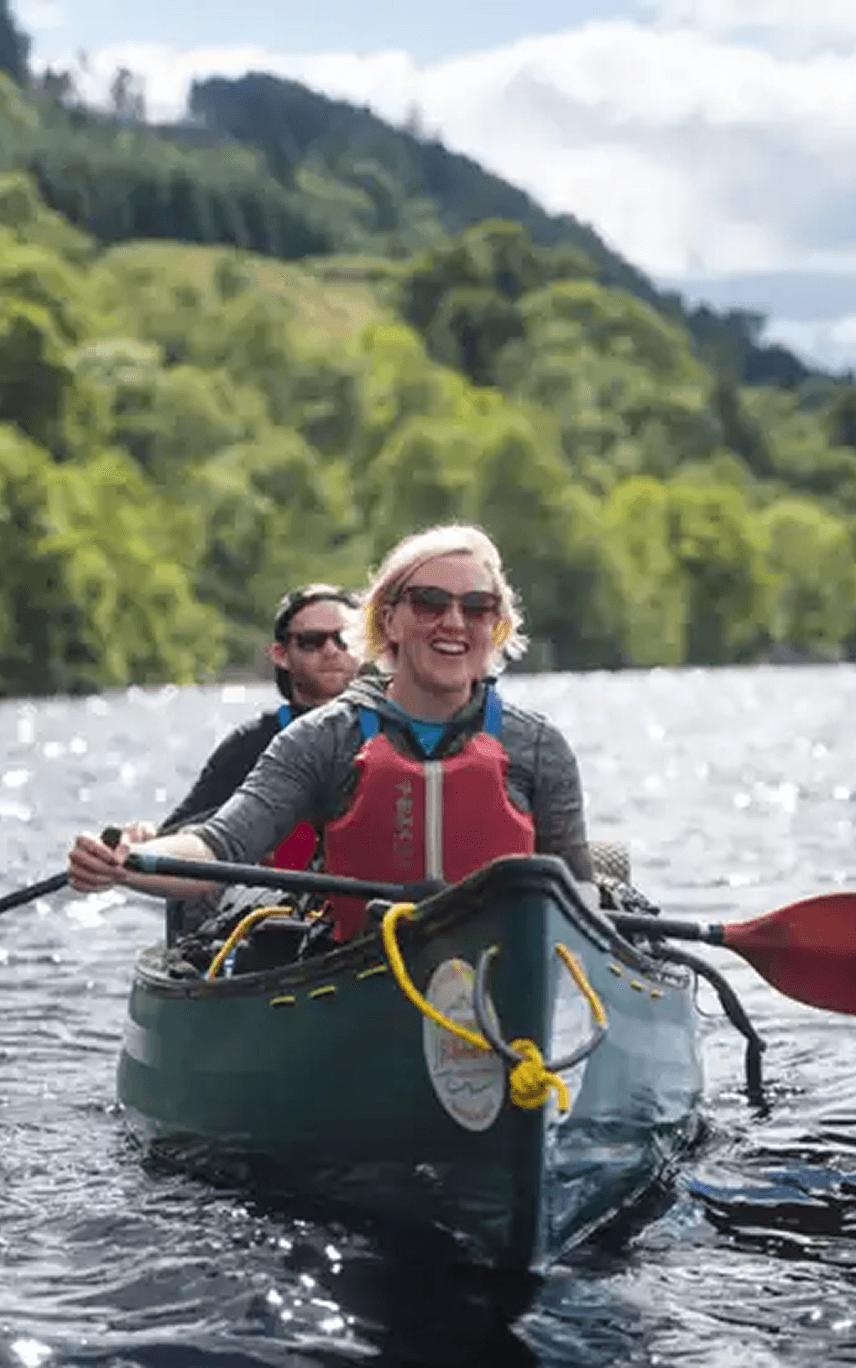
Daily light activities, usually three to four hours long
This is a well-paced, multi-activity trip combining hiking, cycling, and immersive local experiences, with most days sitting at an easy or moderate level. A little pre-trip pr...
- Right level, wrong trip?
Browse all our Easy-Moderate trips
Your next adventure is out there

 Not sure which level is right?
There's a level for everyone – find your match
What is and isn't Included?
What's included
- Guided orientation tour in Seoul
- Guided hike on Gimpo Munsusan, near the North Korean border
- Guided DMZ tour, including Imjingak Park, the Third Infiltration Tunnel, Dora Observatory and a private Q&A with a North Korean defector
- Optional guided hike on Inwangsan Mountain (Gyeongbokgung to Jeongsang course)
- Guided cycling tour of Andong, via Byeongsan Seowon and Hahoe Folk Village
- Guided hike through the Naeyeonsan 12 Waterfalls valley
- Guided hike on Gyeongju Namsan Mountain
- Guided cycling tour of Gyeongju, via Daereungwon tombs and Gyeongju National Museum
- Two-day, one-night temple stay including training, meditation and traditional Buddhist ceremonies
- Guided hike on Busan's Geumjeongsan (Godangbong Peak)
- Guided hike along Busan's Igidae Coastal Trail
- Visits to Hwangnidan-gil, Daereungwon (Tumuli Park), Donggung Palace and Wolji Pond, Dongbaekseom Island, Jagalchi Market and Gwangalli Beach
- Expert, English-speaking local tour leader throughout
- Additional cycling guide for groups of 8+ people
- 3 nights in a city hotel in Seoul
- 2 nights in a boutique hanok (traditional Korean house) in Andong
- 2 nights in a hotel in Gyeongju
- 1 night at Golgulsa Temple, in gender-separated shared rooms
- 2 nights in a city hotel in Busan
- All (10) breakfasts
- 3 tasty local lunches
- 7 authentic Korean dinners, including a BBQ welcome dinner, a Suunjabbang-inspired feast at your Andong hanok, a vegetarian temple dinner at Golgulsa, and a chimaek night out in Seoul
- Private transfers where possible, including Seoul to the DMZ, Andong to Gyeongju and Golgulsa Temple to Busan and within Busan
- KTX high-speed rail journey from Seoul to Andong and from Busan to Seoul
- Local public transportation in Seoul where needed
- Bike rental (including helmet) for the cycling activities
- All entrance fees to the DMZ, temples and sites included within the itinerary
What's not included
Our trips do not include flights, trains or other travel to the start point and back from the end point.
Transfers to and from the airport are not included on this trip, as this journey is easily and quickly done by public transportation. See the 'Getting There' section for more information.
Three dinners and seven lunches are not included in the trip, giving you the flexibility to explore local cuisine at your own pace. Your guide will always be able to recommend good options.
Tipping is not customary in South Korea and is not generally expected. The one exception is your guide and driver, for whom a tip is recommended. We suggest ₩15,000 per person, per day as a guideline (which equates to ₩150,000 per person for the full 10 days). This is approximately $100 (USD) in total, and we suggest $70 for the guide and $30 for the driver.
Of course, you are free to tip more or less, and the amount should be reflective of your perception of service and quality – a tip is not compulsory and should only be given when you receive excellent service.
Travel insurance is compulsory for all of our adventures, and you'll need to provide your policy details before departure. Your insurance should offer adequate coverage for overseas medical treatment, evacuation/repatriation, your baggage and gear, and the specific activities involved in your adventure. We also recommend ensuring your policy includes cancellation and curtailment coverage, in case you're unable to join your trip due to unforeseen circumstances such as illness.
Standard travel insurance may not cover all the activities included in your adventure, so it's essential to check the details carefully. There are adventure-specific providers that many travelers have used in the past, such as True Traveller (opens in new tab) (for those based in the UK or Europe), or Rise + Shield (opens in new tab), both of which offer coverage for a wide range of adventurous activities.
Please make sure your chosen policy meets your individual needs and covers all aspects of your trip.
Currently, no visa is required for stays of up to 90 days for many nationalities, including the UK, US, EU, Canada, and Australia. However, you will need to apply for a K-ETA (Korea Electronic Travel Authorization) before departure, a paid online pre-approval costing approximately $7-8 (USD). Requirements vary by nationality, so please check the Korean Government's website for your specific situation.
Please note that visa requirements often change, and you are responsible for obtaining any required visas for this trip. Please check with your nearest embassy or consulate for up-to-date advice.
You know your own spending habits best, so please budget an appropriate amount for things like optional meals, drinks, shopping, optional activities, and laundry. Make sure you have read the itinerary and inclusions thoroughly so you know what is included in the trip price and what you may need to pay for while traveling.
Where You'll Stay
Looking for a private room? See Optional Extras for details and pricing.
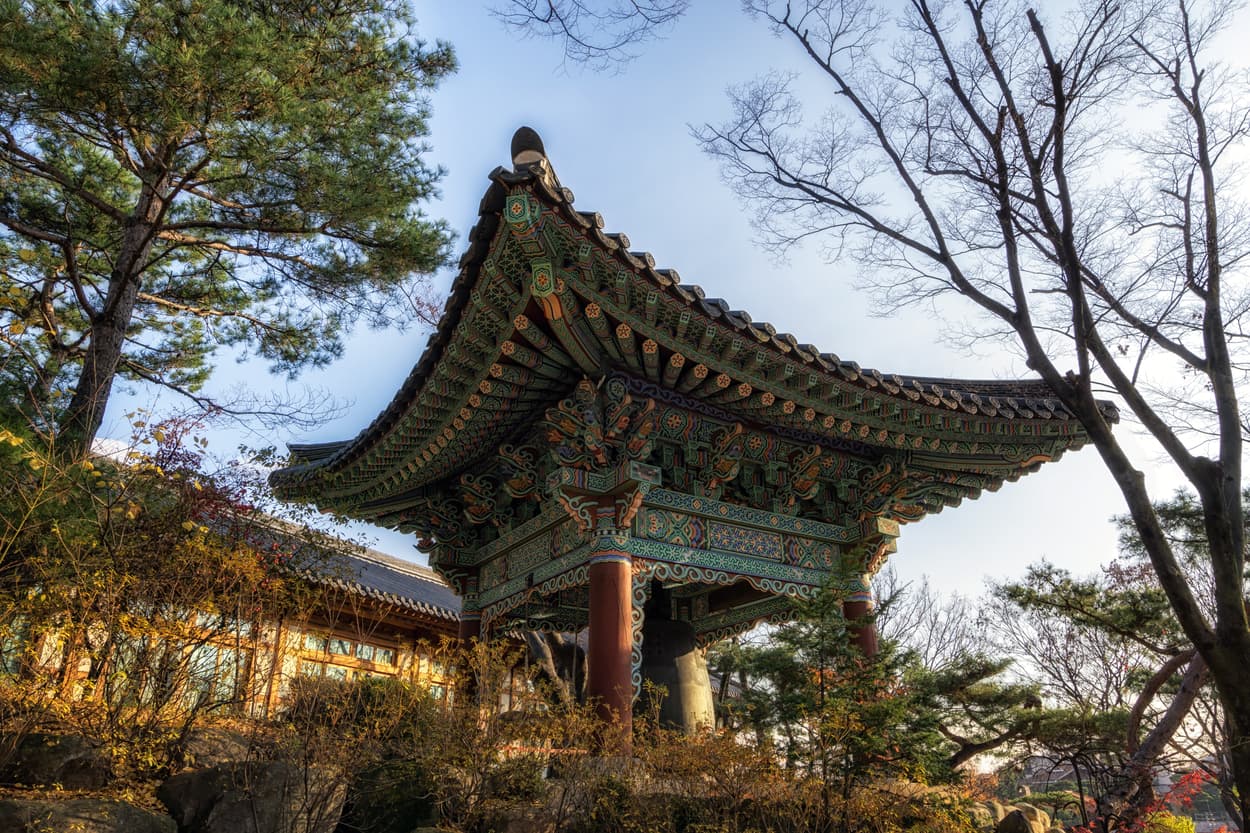
Golgulsa Temple
What You'll Eat
Korean cuisine is built on balance and fermentation, with meals typically centered on rice, soup, and a rotating spread of banchan, small side dishes shared across the table rather than assigned to one person. Bold, layered flavor is the norm rather…
Optional Extras
Upgrades
- Optional Solo Room Upgrade (Apr-Sep 2027)
- $842
- Optional Solo Room Upgrade (Oct-Nov 2027)
- $1,167
For solo travellers looking for their own space, an optional private room can be requested for seven nights of this trip. A private room is not available for three nights, at the temple and at the hanok in Andong. Rooms held are usually set up as twin rooms: if you're travelling as a couple and prefer a double bed, please add this to the booking form with your details, and your host will request this with the hotels (please note, this is subject to availability).
To request any extras, message your host via your Much Better Adventures account once you have booked your trip.
All extras must be paid before your trip starts.
Ratings & Reviews
This trip is brand new!
So new, in fact, that it's not got any reviews yet. But rest assured, it's been designed with the same care, quality and attention to detail as all of our highly rated adventures.
4.8
Our average trip score20,000+ reviews
Before You Travel
What to Pack
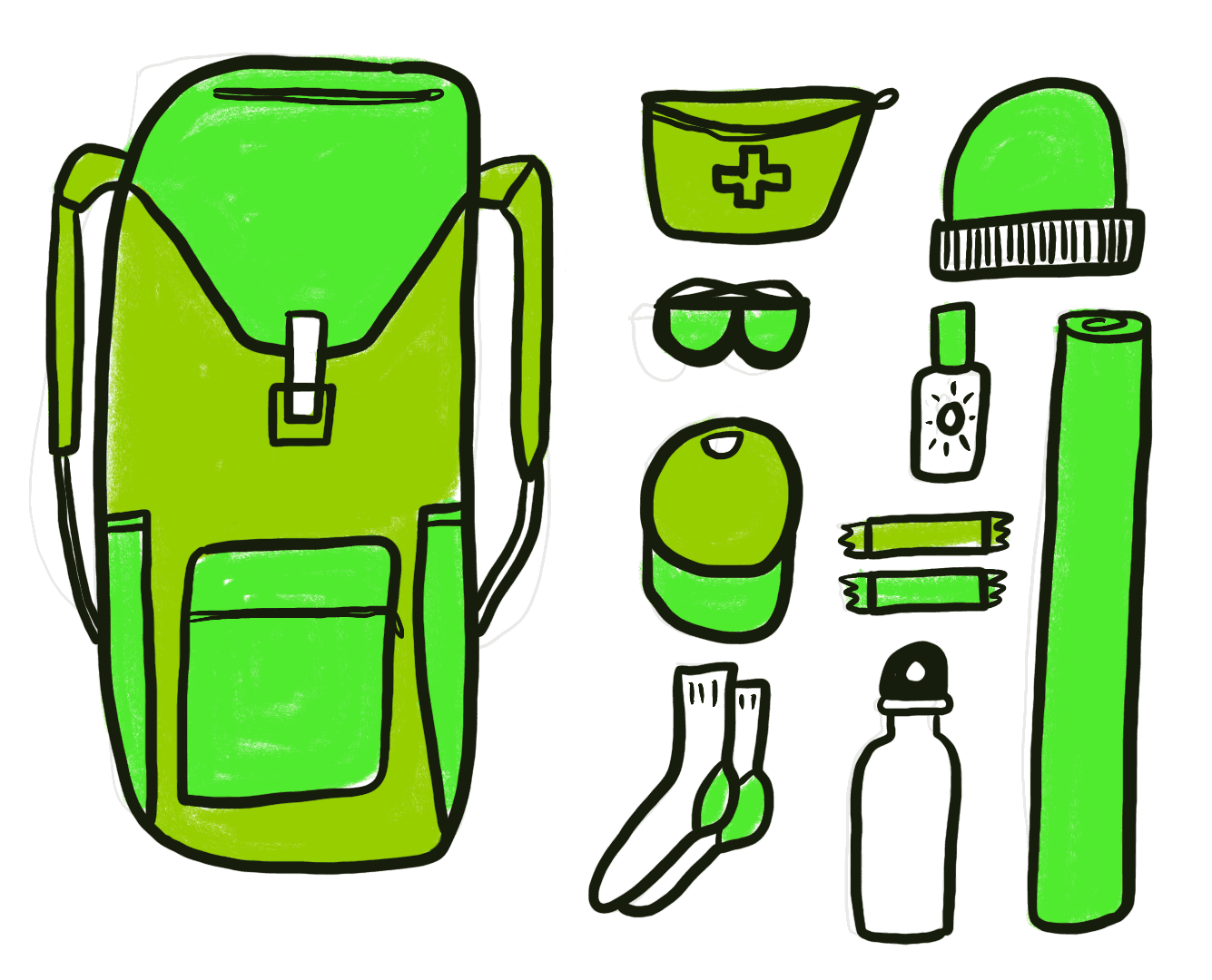
Know before you go! Some stuff we'll provide, other things you'll need to bring.
FAQs
What if things don't go as planned?
Please be aware that the itinerary, activities, and hotels are subject to change. These changes can happen with little notice due to adverse weather, seasonal changes, or other circumstances beyond your host's control, but they will always do their best to ensure it has little impact on your experience. Your host or your leader will notify you should any significant changes be required for your particular departure date. Access to the DMZ depends on the current geopolitical situation and can be restricted or delayed at short notice. If this affects your trip, your host will let you know as early as possible and adjust the day with an alternative activity such as a hike in the outskirts of Seoul.
What does the DMZ visit involve, and who is the North Korean defector?
The DMZ (Demilitarized Zone) is the 2-mile-wide buffer that has separated North and South Korea since the armistice that paused the Korean War in 1953. Your visit doesn't take you into the DMZ itself, but into the surrounding civilian control zone – one of the most heavily fortified areas in the world, and also one of South Korea's most visited historical sites. It includes Imjingak Park (built around the Bridge of Freedom, where prisoners of war were once exchanged), the Third Infiltration Tunnel (one of four tunnels discovered running beneath the border, originally dug by the North for a surprise invasion), and Dora Observatory.
This is an active military zone, not a regular tourist site, and it comes with genuine rules rather than formalities. You must carry your original physical passport on the day; a photo or photocopy isn't accepted, and you won't pass the military checkpoint without it. Photography is banned entirely inside the Third Tunnel and heavily restricted at Dora Observatory, where you can only shoot from designated lines; staff actively enforce this, and phones or cameras are sometimes required to be left in lockers at the tunnel entrance. Photography may also be restricted while traveling through the controlled area itself, so always follow the instructions of your guide and any military personnel present. There's no dress code for this general DMZ tour, but comfortable, closed shoes are worth wearing given the tunnel's steep descent and low ceiling. Because this is a working military and diplomatic border, the whole schedule sits under government and military authority rather than your host's control, and access can be delayed, restricted, or closed without notice depending on the geopolitical situation on any given day.
The defector meeting will offer the opportunity to have a real conversation with someone who was born and grew up in North Korea and later escaped, now living in South Korea and sharing their own story of that life and their journey out. They're individuals speaking from direct, lived experience, taking questions from the group afterward. Worth knowing: this session may be shared with other visitors during peak season rather than run as a private group session, with your own private Q&A time afterward. Some defectors who do this work choose to use a pseudonym publicly, since escaping is treated as a serious crime by the North Korean regime and can put family members still living there at risk, so it's best not to press for more personal detail than they choose to share.
What is the temple stay actually like?
Golgulsa is an officially registered temple under Korea's government-run temple stay program, home to resident monks who practice Seonmudo, a Buddhist martial art of moving meditation, as their genuine daily discipline. Over the years it's become one of the more popular temple stays in the country, partly because it tailors its program to English-speaking visitors, something not all temples do, and it follows the monks' own daily schedule. However, it's worth setting expectations accordingly: this isn't a solitary retreat. You'll be active for much of the stay, and depending on the night, you may be the only group staying plus a few other independent visitors or part of a larger group split into English-speaking and Korean-speaking tracks running the same program side by side. Weekday stays, when your visit is planned, do tend to be much quieter than weekends, especially once the day's visitors have left.
The Temple Stay program itself is arranged and run by the temple, not by your host, and follows the monastery's own schedule; it's often shared with other overnight guests staying at the temple that night, though your rooms are allocated within your own group. As with any working religious institution, the exact schedule can shift depending on the day. The program typically includes Seonmudo training (a genuine martial art that can involve kicks, turning movements and other physical exercises, so come prepared for something active rather than purely gentle), a vegetarian dinner, the 108 prostrations, and an early bedtime, followed by an early start the next morning for meditation and a second training session. The 108 prostrations are the most physically demanding part of the stay, and while you're encouraged to take part for the full experience, you can opt out if you'd rather sit that one out. A uniform is provided for the duration of your stay; bring a plain t-shirt or light layer to wear underneath, and comfortable shoes are recommended, as you'll be removing them frequently to move between indoor and outdoor spaces.
Come with an open mind, ready to take part, and you'll be rewarded with a genuinely rewarding night unlike any other you may have experienced before!
Please note: In the rare event Golgulsa needs to close around your dates for reasons beyond our control (e.g. for renovation) an alternative temple stay with be arranged. The experience there would be different, without the Seonmudo training, and likely calmer and less physically active – but no less rewarding. You would be notified of any change before departure.
Is South Korea expensive? What should I expect?
South Korea can sometimes be mentally filed alongside cheaper Asian destinations such as Thailand or Vietnam, but that can create unrealistic expectations around costs. South Korea is a high-income, developed economy, and Seoul is one of the more expensive cities in Asia for day-to-day living. In practice, costs can feel much closer to Japan or parts of Western Europe than to Southeast Asia, particularly for lodging and some dining and leisure expenses. That said, street food, markets, and casual local restaurants can still offer very good value.
Hotel standards follow a similar pattern, although with some important local differences. Rooms in Korea – particularly in major cities such as Seoul – can be noticeably more compact than equivalent-category hotels in Europe or North America. This is a feature of the local hotel market and urban environment rather than an indication of lower quality: hotels can be exceptionally clean, well maintained, and efficient, even when rooms are relatively small. Korean hotel classifications also follow local standards, so star ratings shouldn't be treated as a direct one-to-one comparison with European or North American properties. We select lodging based on location, comfort, cleanliness, and reliability rather than star rating alone. It's therefore worth packing light and calibrating your expectations to local hotel norms rather than assuming a Korean 4-star property will necessarily look or feel like a European 4-star hotel.
What do I do about drinking water?
Tap water in South Korea is generally safe to drink, but filtered drinking water is also widely available at many of the places you stay and visit, so please bring a refillable bottle to avoid purchasing too many plastic bottles.
What should I expect from a South Korean bathhouse?
Your trip includes a visit to a jjimjilbang in Busan. This bathhouse combines two distinct areas, and it's worth knowing the difference before you go. The bathing floor itself is gender-separated and requires full nudity: swimwear isn't permitted as a hygiene rule. You shower and wash thoroughly before getting into any of the pools, which typically range from hot to cold, sometimes with herbal or mineral variations. Beyond the bathing area, there's a clothed, mixed-gender common area where everyone wears the same simple uniform provided at check-in, with saunas, relaxation rooms, and a small snack bar. A small towel is usually provided, along with basic soap; if you'd prefer your own shampoo or skincare, bring it along. Tattoos are generally accepted at most modern jjimjilbangs, unlike in Japanese onsens. If you'd rather not go the full communal route, a private body scrub service is usually available as an alternative for a fee.
It can feel like a big first step for some travelers, but it's an extremely normal, everyday part of Korean life, and most people say the nerves disappear within minutes of walking in.
Can my dietary needs be accommodated on this adventure?
At Much Better Adventures, we work hard to accommodate dietary requirements and allergies so your trip is safe, inclusive, and enjoyable. That said, options can vary by country, location, and lodging, and in some places, options may be limited or unavailable. The information below has been provided by your host so you're fully informed about what will be possible on your trip depending on your individual requirements. This information should be read carefully before your trip to ensure that you are adequately prepared for the situation 'on the ground'.
Once you have booked your trip, please fill out your passenger information form as soon as possible with any dietary requirements. Once you complete your passenger information, your dietary needs and any allergies are automatically shared with your host and, in turn, your guide. Please submit this as early as possible so they can plan accordingly and deliver the best experience. Please also remind your guide about your dietary requirements upon arrival, as mentioning these in person allows your guide to comprehend individual preferences and limitations as soon as you arrive.
BACKGROUND
Korean cuisine is built on balance and fermentation, with meals typically centered on rice, soup and a rotating spread of banchan, small side dishes shared across the table rather than assigned to one person. Bold, layered flavor is the norm across almost everything, built on chili, garlic, sesame and fermented soybean and chili pastes (doenjang and gochujang). Many dishes that look plant-based aren't: kimchi is very often fermented with fish sauce or salted shrimp, and broths are commonly built on an anchovy or dried fish stock (myeolchi yuksu), even in dishes with no visible meat or seafood. Soy sauce, used throughout Korean cooking, typically contains wheat. Beyond Seoul, this trip spends most of its time in mid-sized cities or rural towns (Andong, Gyeongju and Busan) rather than genuinely remote countryside, so options are generally more available, though one night, the temple stay at Golgulsa, follows strict Buddhist dietary rules rather than a flexible menu. Your guide will help communicate dietary needs locally, though some personal research before travel is genuinely worthwhile.
SPECIAL DIETS
Vegetarian
Vegetarian diets can be catered for on this trip with advance planning, particularly in Seoul and Busan, where dedicated vegetarian options exist. Options are more limited in smaller towns like Andong, and many banchan side dishes served alongside a vegetarian main may still be fermented with fish sauce or shrimp unless specifically requested otherwise. One genuine highlight for vegetarians is dinner and breakfast at Golgulsa Temple, which is strictly vegetarian by tradition, prepared without meat or fish.
Vegan
Vegan diets are very difficult to cater for on this trip, largely because fish sauce and fish-based stocks appear so widely, even in dishes that look plant-based. Golgulsa Temple's Buddhist cuisine is a genuine exception: shojin-style Korean temple food (sachal eumsik) is prepared entirely without meat, fish, dairy or eggs, and traditionally also avoids strong aromatics like garlic and onion. Outside the temple stay, fully vegan meals are achievable in Seoul and Busan with some planning, but options in Andong and at set-menu group meals elsewhere on the trip may be more limited and repetitive.
Kosher
Fully certified Kosher kitchens and supervision are rare in South Korea and usually cannot be guaranteed, unless expressly confirmed in advance by your host. Vegetarian or vegan options can often be the most reliable alternative if this is acceptable to you, as your host is unable to guarantee a separate, certified cooking or preparation area, or the use of certified Kosher products. They can, however, provide meals that exclude non-Kosher ingredients (such as pork and shellfish) and avoid mixing meat and dairy, which is more straightforward in Korean cooking than in many other cuisines, as dairy is rarely used.
Halal
Halal-certified options are limited outside major cities. Seoul has a small but growing number of Halal-certified and Muslim-friendly restaurants, but many staple dishes on this trip, including Korean BBQ and several regional specialties such as Andong jjimdak, are typically prepared with pork or non-Halal seasoning as standard. Halal provision cannot be guaranteed in Andong, Gyeongju or at the Golgulsa Temple (whose meals are vegetarian in any case), so please get in touch with our Customer Experience team before booking to discuss whether this trip can accommodate your requirements.
INTOLERANCES
Gluten-Free
Gluten-free diets are difficult to cater for on this trip. Soy sauce, used throughout Korean cooking, typically contains wheat, and gochujang (fermented chili paste) can also contain wheat depending on the brand. Fixed set-menu meals, which make up several of this trip's included dinners, offer limited flexibility to substitute ingredients, and food preparation environments are not set up to avoid cross-contamination. For guests with celiac disease or severe gluten allergies, please be aware that the risk of contamination cannot be eliminated.
Lactose-Free
Lactose-free diets are generally straightforward to cater for on this trip but please let your host know in advance, as dairy products are used in a number of modern Korean dishes, sauces and processed ingredients. For guests with severe dairy allergies, please note that food preparation environments are shared, and the risk of cross-contamination cannot be eliminated.
ALLERGIES
South Korea has food hygiene regulations, but the avoidance of cross-contamination cannot be guaranteed anywhere, and your host takes a cautious approach, confirming that provision for certain mild and severe or life-threatening food allergies on this trip may be unreliable. Please get in touch with our Customer Experience team before booking to discuss whether your requirements can be accommodated safely on this trip.
This will allow us to carefully consider the sensitivity and severity of your allergy, the available provision on the trip, and the accessibility of medical care should a reaction occur. Your safety is always our top priority. Please note that when traveling overseas, local ingredients, food preparation methods, and labeling standards may vary, particularly in smaller towns and at the temple stay. It is also worth noting that any allergies may result in more limited options and repetitive provision in some areas. While your guide will help communicate dietary requirements where possible, customers remain responsible for managing their own allergies during the trip.
How should I pay for things in South Korea?
South Korea is one of the most card-friendly countries in the world, and your Visa or Mastercard will work at the vast majority of hotels, restaurants, cafes, and convenience stores without any issue. Where it gets more unpredictable is in traditional markets like Jagalchi, small family-run restaurants, street food stalls, and smaller towns like Andong, where terminals are sometimes only configured for domestic Korean cards, or vendors simply prefer cash to avoid international transaction fees. A sign saying 'card accepted' doesn't always guarantee a foreign-issued card specifically will go through. We'd therefore recommend carrying some Korean won in cash for markets, small guesthouses, temple donation boxes, and similar spots – your guide will recommend how much to exchange during the first briefing.
One thing worth knowing: card payments in South Korea don't require a PIN, and some overseas banks flag or block cards after repeated transactions without PIN verification, treating it as suspicious activity. For this reason, it's especially important to notify your bank of your travel dates before you fly, so your card isn't blocked mid-trip.
Who at Much Better Adventures designed this trip?
Marta Marinelli, raised in Italy’s serene Prosecco Hills, dreamed of global adventures, inspired by her father's travel stories. Her passion evolved into a career, backed by a decade of studies including degrees in international tourism and destination management. She’s worked in the adventure travel sector since 2012, living in Italy, the UK, and now sunny Portugal.
Over twenty years, Marta has explored over 55 countries, visiting remote areas like Ghana, Rwanda, Sao Tome and Principe, Haiti and Nepal’s Upper Mustang region. As a Senior Adventure Expansion Manager at Much Better Adventures, she focuses on creating life-changing experiences, ranging from multi-activity adventures, challenging treks, to ultimate adventures in iconic places. She loves the challenge of finding the best local adventure hosts around the world, collaborating on adventures that offer genuine immersion, pushing beyond the beaten path and working on exclusive itineraries that challenge your comfort zone.
What makes her tick? Enabling people to live adventure-rich lives while positively impacting and empowering local communities around the world, generating sustainable opportunities for both the host, guides, community, and the environment.
Can I book on my own?
Sure can! Over 70% of our travellers travel solo, it’s a great way to meet like-minded people.
Who is running the trip?
Our team of Adventure Hunters co-create exclusive adventures which are run by highly vetted, specialist hosts. The trip is run by our trusted host partner in the destination. We only work with independent, local, in-destination experts who know the very best places to explore and how to stay safe. Read more information about the local teams we partner with (opens in new tab). You’ll be introduced to the host straight after making a booking via the Much Better Adventures platform.
What is the official travel advice?
Much Better Adventures refer to the UK Government’s official travel advice when designing trips and monitoring trip operations. We recommend that all customers review the practical information available on the UK Government’s FCDO website (opens in new tab), where you can find up-to-date advice by searching for your destination(s).
If you are based in the United States, you can also check the latest travel advisories from the U.S. Department of State (opens in new tab).
For customers joining from other international locations, we recommend checking the official travel advice issued by your country of residence, as guidance may vary.
What vaccinations do I need?
We recommend checking out the country-specific information (opens in new tab) and also talking to a travel nurse.
How are the trips priced?
We automatically convert prices from the local currency that a host receives to your chosen currency. We update our exchange rates daily, so prices displayed on the site are subject to currency fluctuations, which is why you may see them change over time.
If you wish to change the currency you pay in, head to the bottom of the page.
Why are your adventures only for adults?
All of our group adventures are specially designed for adults to enjoy as we want these adventures to bring together outdoorsy people who are truly like-minded. You must be over 18 to join one of our trips.
Who else will be on my trip?
You're always in good company on one of our adventures.
Our trips typically consist of a mix of solo travelers and small groups of 2 or 3 friends, with most in their 30s-50s.
Our sociable adventures are solo-friendly by design and naturally attract outdoorsy people with a shared mindset (opens in new tab); a love for adventure, a desire to push themselves, and meet awesome, like-minded people along the way.
It’s this camaraderie that has so often turned a great adventure into a life-changing one.
Don't just take our word for it:
- 95% of people rate the group dynamics on our trips 5/5
- 90% of people recommend joining a trip to make new friends
- 75% of people have met people on our trips that they would now consider friends
See here (opens in new tab) for more info about the Much Better Adventures tribe.
What's the weather like?
South Korea has four distinct seasons, and this trip avoids the extremes: it doesn't run during the summer monsoon (late June to August), when heavy rain and heat make hiking uncomfortable, or through winter, when snow can affect the higher mountain trails.
-
Spring runs from March to May and is South Korea's most celebrated season, with cherry blossoms in full bloom across Seoul and the countryside from late March. Temperatures climb steadily over the season, from a cool 41-55°F in March to a much milder 63-75°F by May, with generally dry, clear days that suit hiking and cycling well. Mornings can still have a chilly edge, particularly early in the season, so layers are worth packing.
-
Early summer (June) brings warmer, more humid conditions, with temperatures typically reaching 72-82°F. Korea's rainy season (jangma) usually arrives from mid-to-late June, so trips running in the first half of the month should still expect mostly dry weather, though a light waterproof layer is sensible.
-
Fall runs from September to November and is widely considered the best time to visit, with clear skies, comfortable temperatures and Korea's famous fall foliage at its peak, particularly through October. September still carries some late-summer warmth, at around 68-81°F, cooling to a crisp 55-72°F in October and a cooler 45-63°F by November.
Busan runs a few degrees warmer and more humid than the rest of the locations visited on this trip, so it tends to hold onto that late-summer feel a little longer into September than Seoul, Andong or Gyeongju.
What's the carbon footprint for this trip?
We partner with the World Land Trust to ensure this trip achieves Net-Zero emissions. We also support their Buy an Acre program, helping local communities to buy and protect natural habitats in perpetuity.
What's the number?
It works out on average at 547kg of CO2 emissions per person, including all local transport, accommodation, food, activities, guides, staff and office operations.
The only thing it doesn’t include right now is flights and travel to the destination. We do make an overall estimate across all our customers separately, but as we don’t book flights, have customers from all corners of the world, and no way of reliably knowing their travel plans, we simply can’t include an individual number in the figure on display here. We’ve got a goal to fix that, so that when you book, there is a way to measure and mitigate the carbon emitted by your flight too.
But what does the number mean?
Yep, hard to picture eh? To give you an idea:
- Driving 1000 miles/1609km would be approximately 281kg of CO2 in an average car (or 140.5kg per person, if there were two of you in it).
- A return economy class flight between London and New York would be approximately 1619kg (1.66 tonnes) per person.
- 10 trees in a temperate forest are estimated to remove approximately 250kg of CO2 from the air in a period of 5-10 years.
What are we doing about it?
Our trips are relatively low-carbon by design, and we're working with all our hosts to develop long term carbon reduction plans. We partner with the World Land Trust (opens in new tab) to ensure this trip achieves Net-Zero emissions. We also support their Buy an Acre (opens in new tab) programme, helping local communities to buy and protect natural habitats in perpetuity, ensuring the protection of the reserve and its wildlife.
Want to know more?
Amazingly, no international travel company has ever publicly published their carbon measurements before, as far as we know. We believe that must change, quickly. So we’re openly sharing the method we used in the hope that other companies will be able to more easily follow suit and build on what we've done so far. You'll find it all here (opens in new tab).
Want to Know More?
Ask our AI Assistant
Get instant answers about this adventure
Departure dates
Secure your spot
10% deposit to book (limited exceptions)
Pay in instalments, no interest or fees
New Trip Offer - Next 2 spots available at 10% off
Thursday 15th April 2027
to Sunday 25th April 2027
Save $456$4,112
Don’t see a date you like?
Get an email alert when new dates are added for this trip
Subscribe to alertsWe've Got Your Back
Book with confidence and peace of mind.
Got a Group of 6 or More?
Book the whole trip privately. We sort the details, you split the cost. Pure adventure, zero faff.
Feeling adventurous? Here's £100 towards it.
Sign up to our newsletter and we'll email you a £100 code for your first trip. You'll also get weekly trip inspiration, expert advice and last minute deals.
Still Undecided?
A few other trips to tickle your fancy
The Ultimate Adventure Through China
10 nights from$3,558
Premium: The Ultimate Adventure in Peru's Sacred Valley
8 nights from$4,554
Premium: The Ultimate Adventure Through Rajasthan
11 nights from$3,588
Hike, Bike and Raft in the Dolomites
5 nights from$2,865
Premium: The Ultimate Adventure in the Scottish Highlands
6 nights from$4,768
Premium: The Ultimate Adventure Along Ireland's Wild Atlantic Way
6 nights from$4,590
The Ultimate Adventure Through Argentina
10 nights from$4,773
Premium: Hike the Italian Dolomites
6 nights from$4,168
Premium: The Ultimate Adventure Through Uzbekistan
10 nights from$3,694
Premium: The Ultimate Adventure in Georgia
7 nights from$2,697