

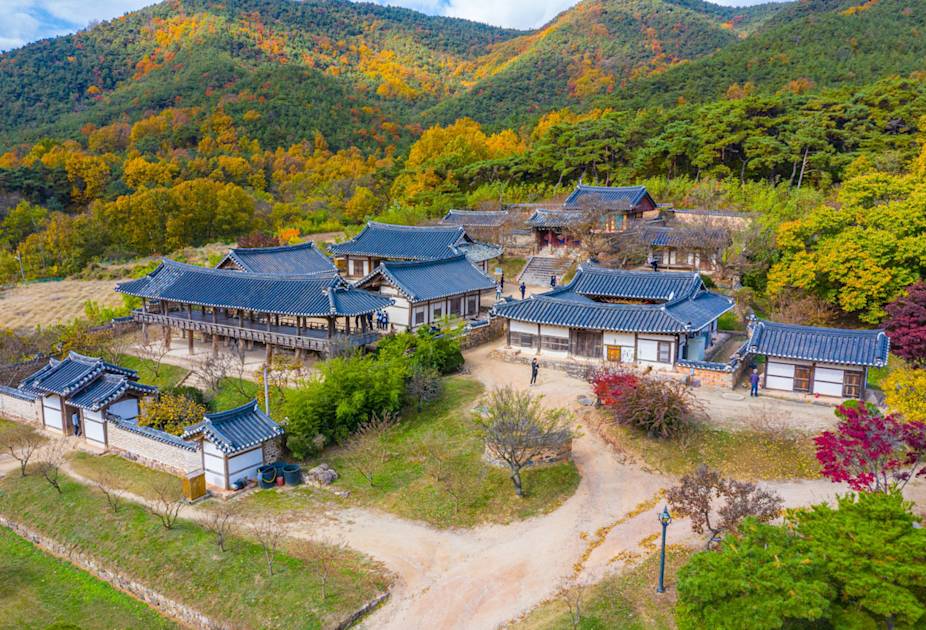
The cliffs of Mount Hamwol climb through the forests of Gyeongju, in the southeast corner of South Korea. This is a spiritual place. Here, amongst red pines and deciduous oak and maple trees, the ancient heart of the Silla Kingdom - which endured for a millennium - still has a footprint. Carved into the volcanic rocks of the mountain face is Golgulsa Temple, a vertical monastery where boundaries between past and present; old and new blur.
The monks studied the books and reconstructed this martial art. And now they are re-teaching it - both to monks, and also to us - people willing to learn!”
Ancient traditions and factual narratives mix together in the leaves and breeze of these parts, and so, the history tends to vary depending on who you ask.
The Buddhist master Wonhyo - a legendary philosopher, who had broken from the aristocracy to spread Buddhism to the common folk - is said by some to have spent his dying days at this site. But this was not a place of peace alone. For as the Silla Kingdom found themselves fighting the Tang Dynasty of China for the control of the Korean Peninsula at the end of the 7th century, the stories tell that a new form of martial art was born here, amongst Silla’s soldier-monks.
It carries the modern name of Sunmudo - and it led Golgulsa to be known as “the Shaolin of Korea”.
The Ancient Ways
Sunmudo is a meditative martial art, which combines physical movement and spirituality. The name only came into use in 1985, but it breaks down as such: sun (禪) means zen, or meditation. Mu (武) means martial arts or fighting. Do (道) means the way. The martial art was created to foster the warrior spirit in monks through meditation. It prepared monks to survive in tough terrain. Here, they taught breath control and movement to the elite soldiers of the Silla state, including the Hwarang, who defeated the Tang Dynasty at the Battle of Maeso.
But the biggest influence of Sunmudo was still to come. During the Goryeo Dynasty, Buddhist monks also played an important role in defending the kingdom, sometimes serving in organised military units.
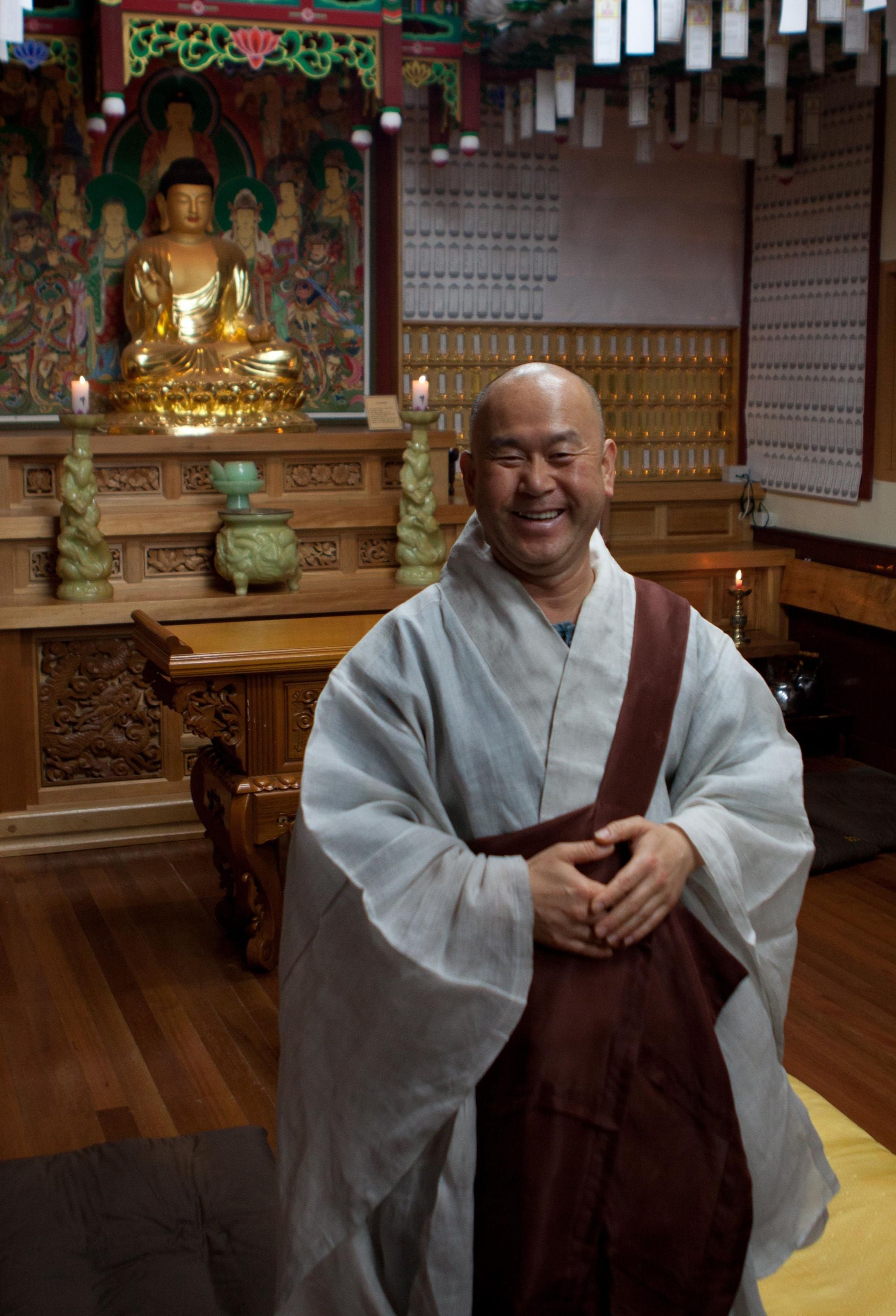
“If you go into our history, monks used to fight for our country,” says Gieun Kim of Jigi Travel, partners of Much Better Adventures in South Korea. “One of the virtues of a monk was to live a separate life, not to be greedy, and another was to protect their king and country. So a lot of monks used to do martial arts.”
When the Joseon Dynasty replaced Goryeo in 1392, Buddhism in Korea fell out of favour. Temples like Golgulsa were stripped of their material wealth, but the monks kept their practices alive - and when Japan invaded during the Imjin War (1592-98), the monk militias rose once again to defend their country.
 Much Better Adventures
Many Korean martial arts were banned by the imperial Japanese government between 1910-1945, but Sunmudo was already operating underground, and it became a tool of the resistance. “During the Japanese occupation, a lot of martial arts in Korea were lost,” says Gieun. “They were banned, because they didn’t want people practising martial arts - but there were books, so the monks studied them and reconstructed this martial art. And now they are re-teaching it.
“They are teaching Sunmudo to monks, and also to us - people willing to learn!”
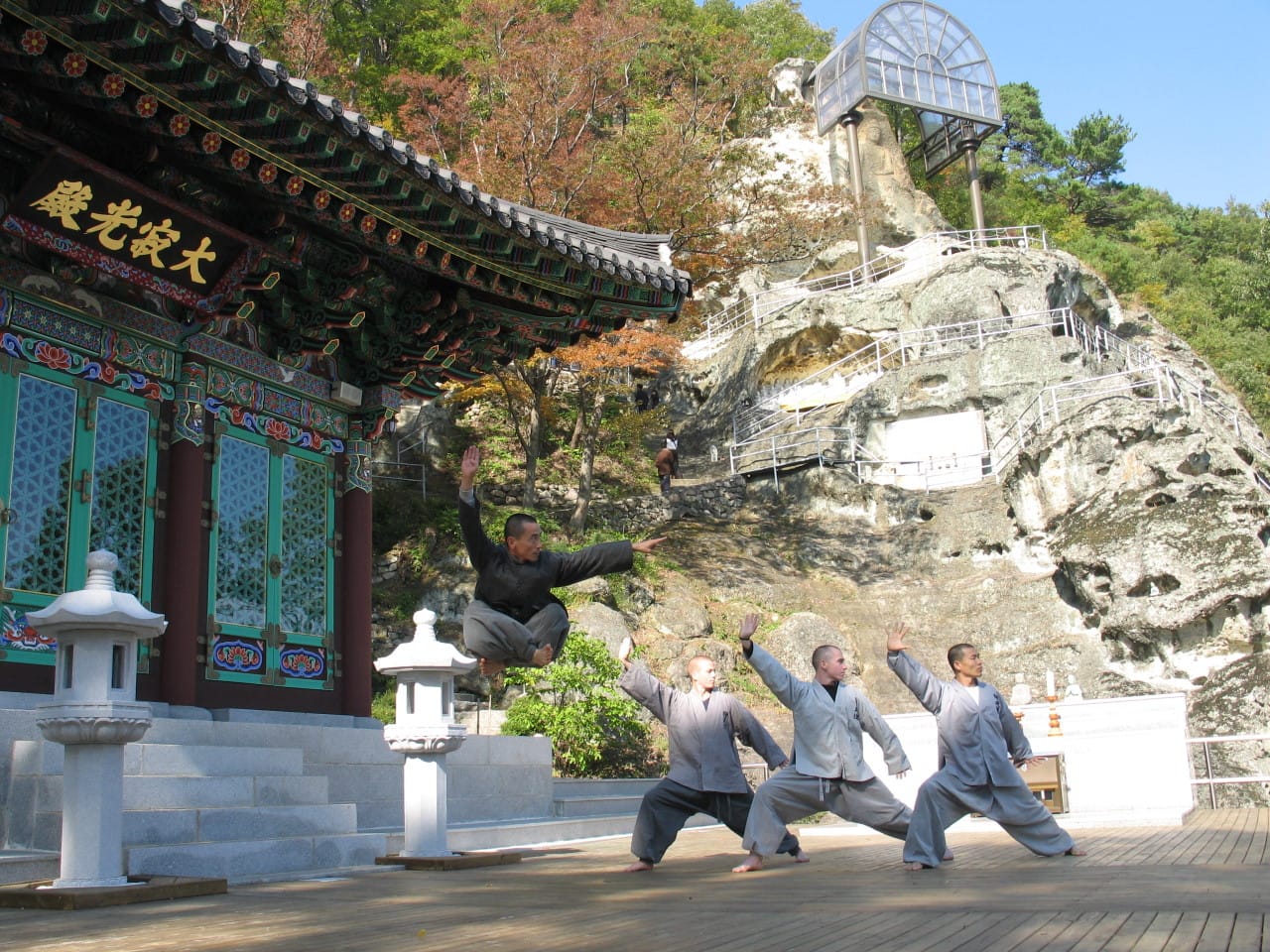
Today, when you visit Golgulsa - the global headquarters of Sunmudo - you can see displays of this artform from the monks. If you stay at the temple, you can try it yourself; learning the basic principles and moves of this storied art, which has played a key part in Korean history. More than a martial art, today Sunmudo exists as a time capsule. It is a preservation of ancient ways of moving.
Golgulsa is a remarkable place; an ancient network of cave temples carved into the tuff rock here in the sixth century, under the guidance of an Indian Buddhist monk called Saint Gwangyu. “The peculiarity of the temple is that it is a Buddhist temple inspired by Hinduism,” says Gieun, so you see imagery and architecture inspired by various cultures.
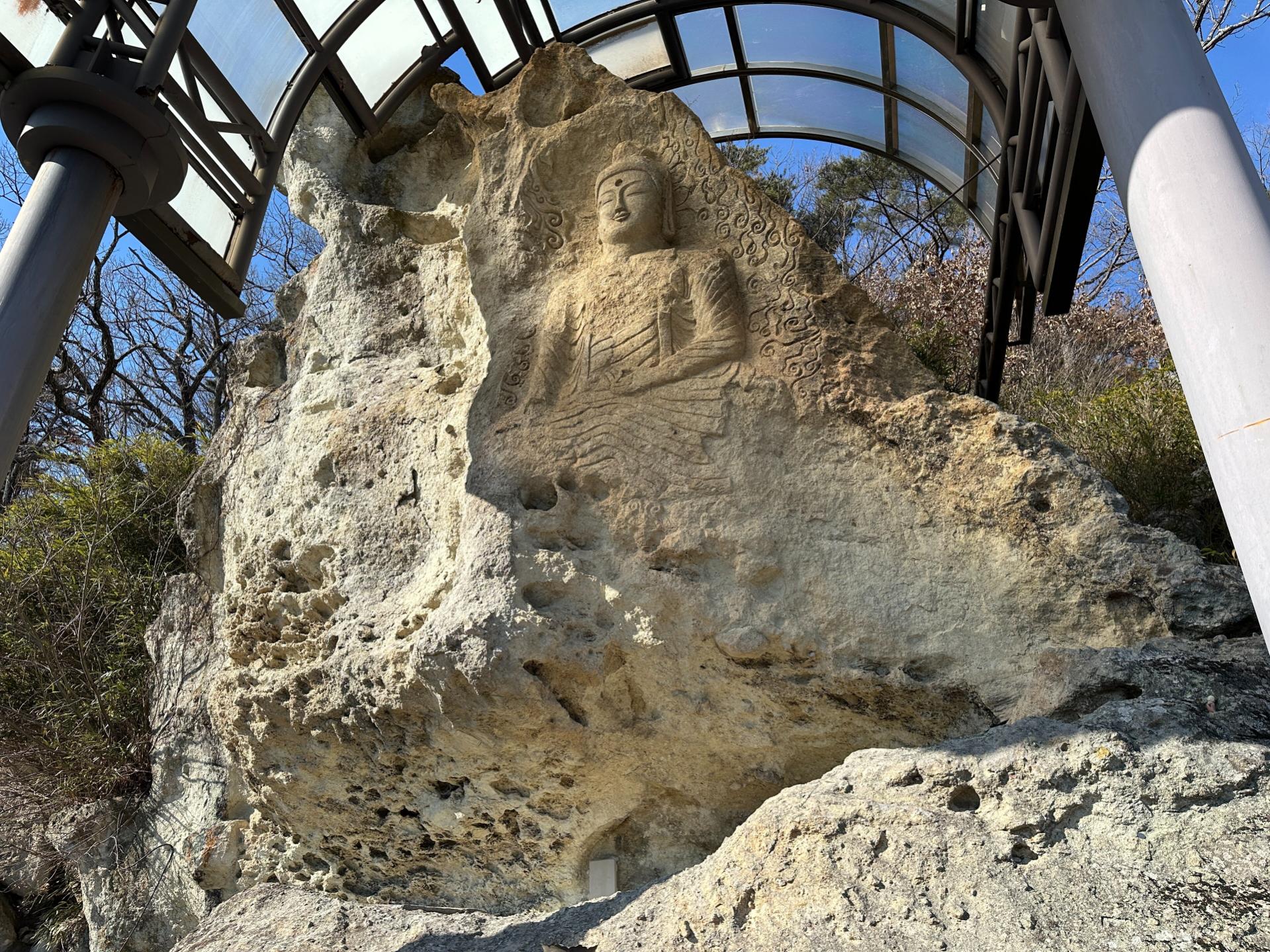
Within the high rock walls, there are 12 cave temples, each carved to be a dharma hall (prayer hall) or dormitory - and the site is topped by a 4-metre (13ft) relief carving of the Maae Yeorae Jwasang, cut into the rock, which has watched over the valley since the 9th century. The carving is a designated Treasure of Korea - and its continued existence is a testament to the skills of Silla craftsmen.
A Portal to the Past
Though day visits are possible, for a fully immersive experience at Golgulsa, you can and should stay overnight. After arriving, you will be given a standardised temple outfit (comfortable trousers and a shirt or vest) and then you’ll be shown to your room. It will be basic; sleeping on a thin mattress on the floor. “You share rooms,” says Gieun. “It’s like a dormitory, and they are separated by gender.”
The two-hour training course takes place on the slopes of Hamwol Mountain - on a platform terrace with views out over forest greenery and mountains around Gyeongju, overlooked by the carved Buddha.
Though exact itineraries and programmes vary from stay to stay, the monks do perform demonstrations of Sunmudo for visitors. It is an intensely physical artform; high kicks and fast, controlled arm and footwork, as well as slower intentional movement. Some say it's like a mix of Shaolin Kung Fu and Tai Chi.
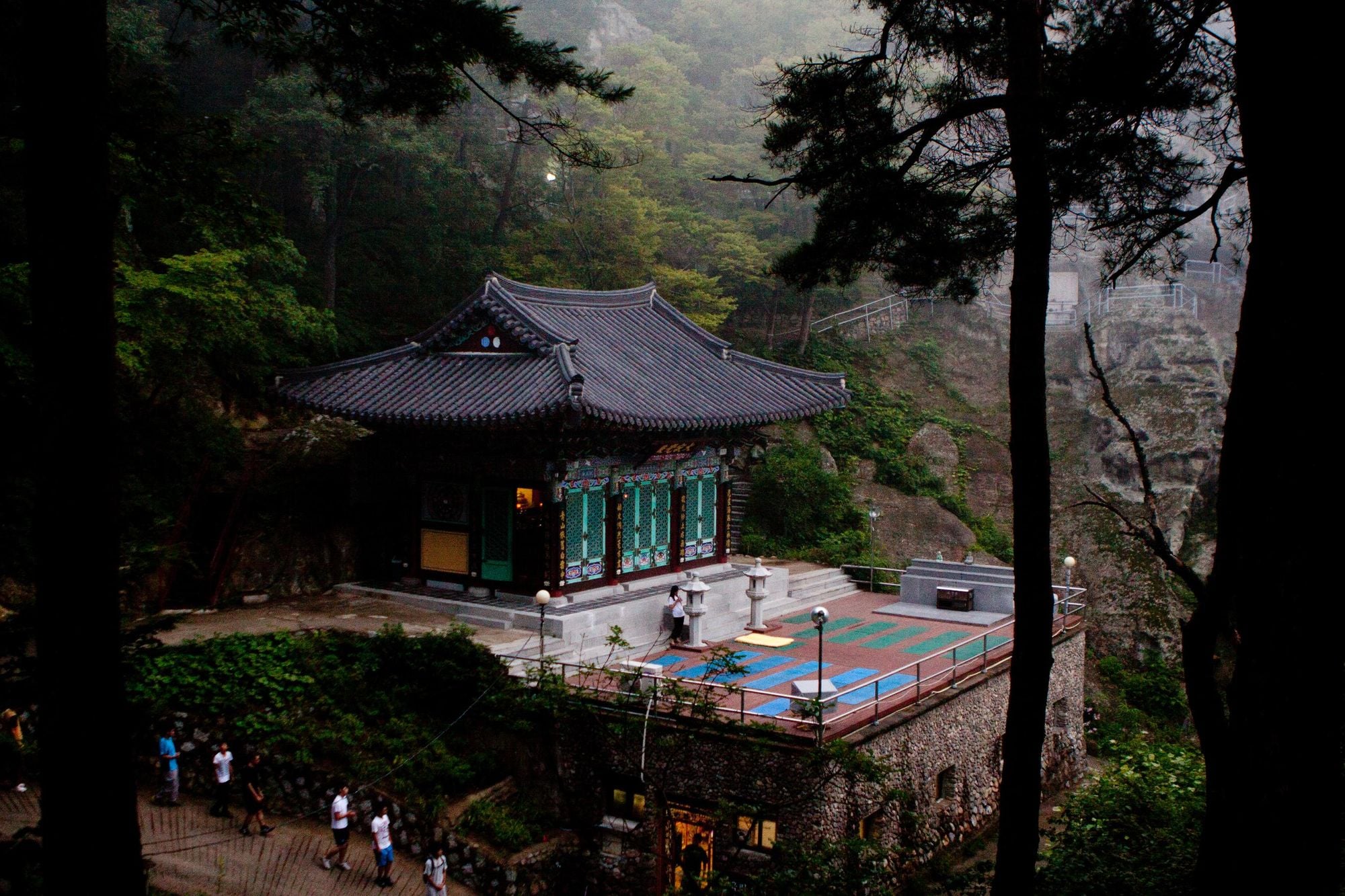
The overnight experience allows you to try Sunmudo out for yourself, on a two-hour training course led by a master. The course takes place on the slopes of the mountain - on a terrace with views out over forest greenery, overlooked by the carved Buddha. The session will usually begin with yoga-style stretching and breathing techniques, before moving onto more physical movement.
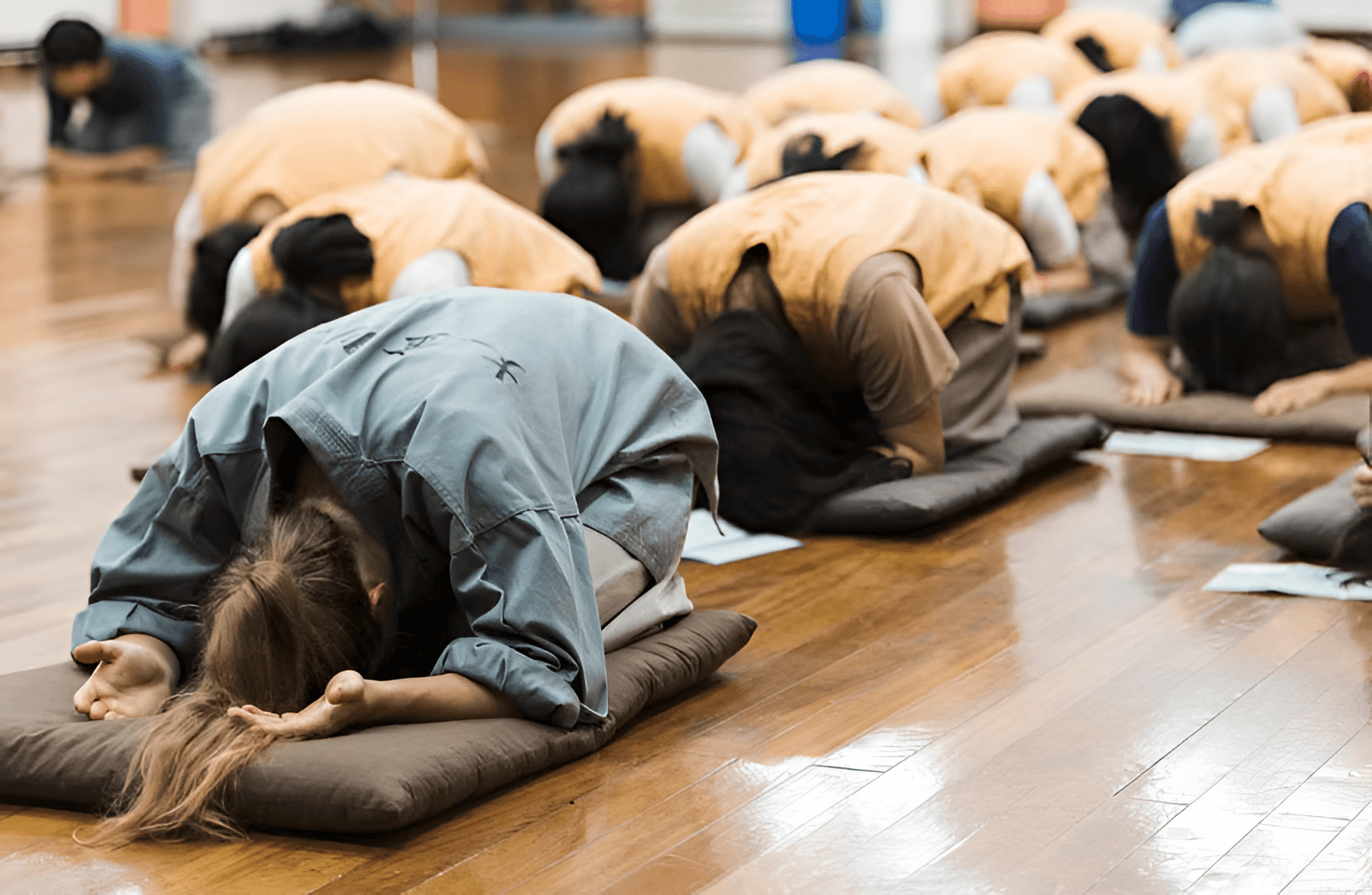
“There is a lot of kicking," Gieun laughs. "You have to be a little bit flexible. It’s not the easiest - particularly if you’re doing it right after doing 108 prostrations.” Prostrations are Buddhist bows, where you lower your knees, chest and head to the floor, then stand back up. It’s designed to cultivate humility.
Much Better AdventuresIf you’re not particularly sporty - don’t worry. Everyone is welcome, and the monks are experienced and (as you would imagine), they are very understanding. Nobody is expecting you to emulate the ancient warrior monks.
The food is excellent. Expect dishes like tofu stews, bean sprout soups or red chili sauces, served up in a modern hall. “You have to be vegetarian for the day, because everything is vegetarian - no meat, no fish, no garlic,” says Gieun.
You do eat in silence, and there is an expectation not to waste food based on anti-waste philosophy called Baru Gongyang. Visitors control their own portion sizes (it's served buffet style), so you should only take what you know you can finish. It makes sense to start with a small portion, and then go back for more.
In the evening, people like to hike up the steps to see the carving of the Buddha - but bedtime also comes early - partly because, at 5am the next morning, a temple bell will ring out and you'll find it's time to get up. Rise for morning meditation and a walk in the early mist of the day. The monks lead a single-file through the forest - through pines, acacia and oak trees, with the air cool and crisp.
It's a grounding, a mental clarity and an insight into a life far removed from your own.
Breakfast, and a final session of Sunmudo may follow depending on your programme, and then before leaving, you may have the chance to drink tea with a monk and to ask open questions about monastic life.
Golgulsa is a special place, which seems to exist outside of time. It is an experience that for many, will push comfort zones and challenge expectations of conventional tourism. It may even be physically challenging at times - but immerse yourself in the temple; in the art and nature and you can experience something profound; an insight into a life far removed from your own.
Inspired? Stay at Golgulsa on our Ultimate Adventure Through South Korea!