
Trek the Tour Du Mont Blanc in a Week: The Hotels Edition 2026
Tackle one of the world’s greatest hikes with a touch of comfort whilst you meander through the heart of the Alps
6nights
Level 5
12max group
Why you'll love it
Border-hop your way through the Alps, crossing from France into Switzerland and Italy as you circumnavigate the Mont Blanc massif
Trek beneath towering 4000m giants, traverse valleys and reach high passes for epic lookout spots over Lac Blanc and the Cheserys Lakes
Relax in cosy alpine village hotels as you tackle 'the TMB', refuelling each evening on tasty French, Swiss and Italian mountain cuisine
Sucker for a mountain hut? Then check out our classic Tour du Mont Blanc in a Week (opens in new tab), or go for comfier Alpine stays on our Premium adventure (opens in new tab)
What's Included?
- Activities & Certified Guides
- Hotel
- MealsAll your breakfasts, lunches and dinners throughout the trip
- TransfersAll transfers throughout the trek, via a mix of private vehicles and public buses
- Luggage TransferLuggage transfer of your main bag throughout the trip
- Maximum group size: 12
Itinerary
Day 1
The trek begins: La Flégère to Argentière
Hiking6hrs · 10km · 530m up · 1060m downHotelTwin shareLunch and dinner includedShow Day 1 detailHide detail
Meet up with your guide first thing this morning and head to the cable car station for the ride up to La Flégère at 1877m, taking in the breathtaking views of the Mer de Glace valley on the northern slopes of Mont Blanc. Hit the Tour du Mont Blanc trail, beginning along a balcony path and ascending steadily up to Lac Blanc (2353m) and its spectacular view of the massif. Tuck into a picnic lunch here accompanied by clear views of Les Drus, the Aiguille Verte, the Aiguille du Midi and the Mont Blanc summit. This afternoon, continue along the trail passing by the Cheserys Lakes, descending down one of the most scenic trails in France to where you'll spend the first night of your trip in a peaceful village hotel in Argentière.
Day 2
Trient to Champex
Hiking7.5hrs · 17km · 1170m up · 825m downHotelTwin shareAll meals includedShow Day 2 detailHide detail
After a hearty breakfast at your hotel, you'll be transferred to pick the trail back up at Trient, setting off for a hike up through a pine and larch forest to join the high pastures of Bovine, from where you'll enjoy lunch with an expansive view of the Martigny Valley and the surrounding mountains. Wind your way down through the woods, cross cool mountain streams, and in the afternoon you'll arrive in the charming lakeside village of Champex Lac, your journey's end for today.
Day 3
La Fouly to Val Ferret
Hiking7hrs · 18km · 990m up · 940m downHotelTwin shareAll meals includedShow Day 3 detailHide detail
Today's section starts from La Fouly after a short transfer from your hotel, picking back up the TMB trail as you begin to trek up the valley towards the Grand Col Ferret (2537m), the border between Switzerland and Italy. Reaching the top of the pass you'll see jaw-dropping views open out in front of you looking down the Val Ferret and the Italian side of the Mont Blanc massif. The towering peak of Mont Dolent (3823m) acts as the shared border of all three countries; next is the Grandes Jorasses and the Dent du Géant (4013m) and in the distance, the summit of Mont Blanc itself. After an epic border crossing, you'll tackle the descent to Arnouvaz, from where you'll be transferred to your next cosy hotel in Courmayeur. Enjoy a taste of some of the Aosta specialities offered in Courmayeur’s many atmospheric restaurants.
Day 4
Arnouvaz to Courmayeur
Hiking7hrs · 17km · 510m up · 1090m downHotelTwin shareAll meals includedShow Day 4 detailHide detail
This morning you'll head back up Val Ferret to where you finished hiking the day before, to take the trail from Arnouvaz to Courmayeur, arguably one of the most beautiful sections of the entire TMB with expansive views of the Italian side of Monte Bianco, Dent du Géant and the Grandes Jorasses. After an initial climb the trail levels out for much for it, making for some fine walking; along the way you'll pass by the famous Rifugio Walter Bonatti and the Rifugio Bertone, before descending down winding forest trails back to your hotel for a second night in Courmayeur.
For those seeking to take a rest mid-trip there is the option to stay in Courmayeur and have an easier day, where you can explore the many cafes and shops in the town or go for a shorter walk at your own leisure.
Day 5
La Visaille to Les Chapieux
Hiking6hrs · 16km · 900m up · 760m downHotelTwin shareAll meals includedShow Day 5 detailHide detail
Enjoy the short and incredibly scenic transfer to La Visaille first thing this morning as the hiking kicks off from Val Veny, climbing up the valley from the Lac Combal plateau and past the majestic Glacier du Miage which descends from high up on the flanks of Mont Blanc. Passing by the Rifugio Elisabetta the trail gets steeper, and after a while you'll reach the Col de la Seigne pass (2516m), leaving Italy and crossing the border back into France. From the top of the pass, you'll descend down the long remote valley to Les Chapieux (1549m), where you'll take a short transfer to your hotel in the mountain town of Bourg Saint Maurice.
Day 6
Les Chapieux to Les Contamines
Hiking7-8hrs · 19km · 1100m up · 1400m downHotelTwin shareAll meals includedShow Day 6 detailHide detail
The biggest day of the trip awaits today, setting off from Les Chapieux to tackle the steep ascent to the Col de la Croix du Bonhomme (2433m). There is a grand old refuge here to grab snacks and drinks from while you take in the ever-present and ever-changing views of the Mont Blanc range. After lunch, you'll continue on to the Col du Bonhomme (2329m) before taking a sharp descent down to the pastures of the Bois de la Rollaz, through pine forest, and eventually to an ancient Roman road which leads the way to the small chapel of Notre Dame de la Gorge. Follow the valley floor to the town of Les Contamines, where you'll rest and recover for the evening.
Day 7
The final climb, and back to Chamonix
Hiking5-6hrs · 13km · 784m up · 150m downBreakfast and lunch includedShow Day 7 detailHide detail
Your final day on the Tour du Mont Blanc takes you from the village of Les Contamines up to to the hamlets of Gruvaz, Champel and Bionnassay – a typical Savoyard hamlet with a magnificent 17th-century chapel. From there, you'll take the path that brings you to the Col de Voza pass (1653m). You'll then take the Bellevue Gondola to descend to Les Houches, the traditional start/finish point of the TMB circuit, before hopping on the bus back to Chamonix where your epic Alpine adventure comes to an end.
Where You'll Stay
Private room upgrades are not available on this trip due to the nature of the accommodation.

Argentière
In Argentière, you'll stay at the Hotel La Couronne, which is one of the most historic hotels in the Chamonix valley, built in the 1860s but with modern renovations providing twin-share rooms with ensuite bathrooms and WiFi. On some departures the host may arrange for the group to stay at a hotel in the main part of Chamonix, of a similar style and standard to La Couronne, and would coordinate the necessary transfers. Your host will include confirmation of the hotel arrangements for your group in your pre-departure instructions.

Champex Lac
You'll stay in the Hotel du Glacier in Champex Lac (or similar). Established in 1895, the Hotel du Glacier has been run by four generations of the Biselx family, offering authentic Swiss hospitality and tradition in the heart of the Valais. The hotel has their own restaurant and bar, typical of the alpine style, catering for all their guests needs.

Courmayeur
In Courmayeur, you'll usually stay in the Edelweiss Hotel, which is a third-generation family-run hotel in the historic part of the village. You'll stay in simply furnished rooms with ensuite bathrooms, which will be allocated on a same-sex, twin-share basis. Facilities include a breakfast room and a bar with board games and WiFi, providing everything you need to relax after a day spent hiking on the trails. The alternative accommodation in Courmayeur is the Hotel Crampon, which is of a similar style and standard to the Edelweiss and also in a convenient central location.

Les Chapieux
From Les Chapieux, you'll be transferred down to Bourg St Maurice and stay in the Hotel L'Autantic or the Base Camp Lodge. The Hotel L'Autantic is of a more traditional character and the other a more modern style, both offer twin-share rooms with ensuite bathrooms, WiFi, and wonderful views of the Haute Tarentaise.

Les Contamines
In Les Contamines, you'll usually stay at the Hotel le Christiania or the Hotel La Gelinotte. Both are of the traditional Haute-Savoie style offering twin-share rooms with en-suite bathrooms and provide an excellent place to rest your tired hikers feet after another big day in the mountains.
What You'll Eat
Breakfast at each of the village hotels is usually continental – think juices, teas, coffee, yoghurt, bread and preserves, pastries, cheese and cereals. Each day your guide will provide healthy packed lunches for you to add to your backpack. They’re big and include things like sandwiches, wraps or a salad, as well as a selection of fresh fruits, muesli bars, chocolate and nuts (for example). Dinner each evening will be taken either in the hotel or at a nearby restaurant. There'll be a variety of classic options for you to choose from, and the c…
Dates & prices
Secure your spot
10% deposit to bookLimited exceptions
Pay in instalmentsNo interest or fees
Free cancellationOn most trips, up to 65 days before departure
No departures that month. Try another, or get an alert when new dates go live.
Don’t see a date you like?
Get an email alert when new dates are added for this trip.
Subscribe to alertsWhat is and isn't Included?
What's included
- 7 days of guided hiking along the Tour du Mont Blanc route
- Experienced, English-speaking mountain guides
- 6 nights in cosy alpine village hotels
All your meals are provided for the duration of the trip. This includes:
- 6 continental breakfasts
- 7 hearty packed lunches
- 6 classic Alpine dinners
- All transfers from the meeting point to the end point in Chamonix, via a mix of private vehicles and public buses
- Your overnight luggage will be transferred for you each day
What's not included
Our trips do not include flights, trains or other travel to the start point and back from the end point.
This trip starts and ends in Chamonix. See the 'Getting There' section for details of how to get to the start point of this trip (La Flégère cable car station in Chamonix).
Travel insurance is compulsory for all of our adventures, and you'll need to provide your policy details before departure. Your insurance should offer adequate cover for overseas medical treatment, evacuation/repatriation, your baggage and equipment, and the specific activities involved in your adventure. We also recommend ensuring your policy includes cancellation and curtailment cover, in case you're unable to join your trip due to unforeseen circumstances such as illness.
Standard travel insurance may not cover all the activities included in your adventure, so it's essential to check the details carefully. There are adventure-specific providers that many travellers have used in the past, such as True Traveller (opens in new tab) (for those based in the UK or Europe), or Rise + Shield (opens in new tab), both of which offer cover for a wide range of adventurous activities.
Please make sure your chosen policy meets your individual needs and covers all aspects of your trip.
Visa requirements often change, and you are responsible for obtaining any required visas for this trip. Please check with your nearest embassy or consulate for up-to-date advice.
You know your own spending habits best, so please budget an appropriate amount for things like optional meals and drinks, shopping, optional activities, and laundry.
Optional Extras
Due to the high demand for accommodation on the Tour du Mont Blanc route, we are unable to offer private room upgrades on this trip.
We've Got Your Back
Book with confidence and peace of mind.
Ratings & Reviews
4.763 reviews
Category rating
- Food
- 4.0
- Guides & crew
- 5.0
- Accommodation
- 4.0
- Itinerary
- 5.0
Latest Reviews
Mary S.
The Tour du Mont Blanc was, without a doubt, the hardest thing I have ever done—and also one of the most rewarding. I knew going into it that it would be challenging, but there is no way to fully understand the physical and mental demands until you are actually out there, climbing mile after mile. There were moments when I wondered how I was going to keep going, but reaching each summit and ultimately completing the entire trek left me with an incredible sense of accomplishment. And then there were the views. Absolutely spectacular. The mountains, valleys, glaciers, animals and ever-changing scenery were breathtaking. There were countless moments when I simply stopped and took it all in, grateful to be experiencing something so beautiful. One of the most special parts of the journey was our group. We came from different countries, backgrounds, and walks of life, yet we quickly became a team. Sharing the challenges, laughter, meals, stories, and victories with people from around the globe made the experience even more meaningful. And I cannot say enough about our guide, Vincent. He was exceptional. Knowledgeable, caring, easygoing, patient, and fun. Vincent brought exactly the right combination of professionalism and personality to our trek. He was always paying attention to the group as a whole and genuinely had everyone's best interests at heart. He knew when to encourage us, when to give us space, and how to make even the toughest days feel manageable. I always felt that we were in very capable hands. This journey was especially meaningful because I did it alongside my brother after an incredibly challenging year in my life. The TMB became so much more than a hike. It gave me the opportunity to push myself, reconnect with what I am capable of, experience incredible beauty, and share something unforgettable with someone I love. I came home tired, sore, and incredibly proud—but also feeling renewed and transformed. The Tour du Mont Blanc challenged me physically, strengthened me mentally, and reminded me that we are capable of far more than we sometimes believe. It was hard. It was beautiful. It was unforgettable. And for me, it was truly life-changing. I am deeply grateful for the experience, for the amazing people I shared it with, for my brother, and for Vincent, who helped make this incredible journey everything it was.
Heather R.
Exceptional guide in Vincent. He kept us intrigued and in the go while providing rest as needed. Great course. Good food. Lodgings were all good except the one in Switzerland. Could have done with less bus transfers as they were very crowded uncomfortable and made me feel unsafe. Private transfers were all lovely. We had the best group ever and a challenging wonderful time overall
Heloisa R.
What a memorable week we had. This surpassed all my expectations. It is hard, yes, but as you'd expect of a multi day mountain hike. Our guide Vincent made the trip so special. His knowledge, his humour, his calm. He led and managed the group perfectly. This was indeed something I will never forget.
Customer Photos
Need to Know
Getting There
- Nearest airport
- Geneva Cointrin International Airport (GVA)
- Pick up
- La Flégère cable car station, Chamonix
09:00 on Day 1 - Drop off
- Chamonix
17:30 on Day 7
Trip level: 5 of 7 • Challenging
Very active days, usually seven to eight hours long
The Tour du Mont Blanc trek is no easy feat! Each day you'll hike for between 6-8 hours (equating to 10-16km) with 1000m+ ascents/descents. The trails are well used and generally in good condition on non-technical terrain, but the steepness and size of the mountains should not be underestimated. Weather conditions can vary significantly at any point in the season, snow, rain, wind and extreme heat can all be a factor in the space of just a few days. Doing some practice hikes before the trip with your pack and boots is strongly recommended to help you prepare for this adventure!
High altitude (over 2500m): factors to consider
This trip visits locations at or above 2500m, where some people may experience symptoms of Altitude Sickness (opens in new tab), also known as Acute Mountain Sickness (AMS).
Previous experience at altitude doesn’t guarantee the same response again – your body can react differently on each trip. However, having been at altitude before is still valuable: it gives you a better understanding of how your body might respond, what symptoms to look out for, and how to manage your pace and energy levels.
Your guide is trained to manage the risk of altitude sickness by controlling the rate of ascent, monitoring group wellbeing, and responding appropriately if anyone feels unwell.
Before booking, we recommend considering your personal health, particularly if you have any pre-existing conditions, and consulting a medical professional if you’re unsure. Arriving early to allow your body to acclimatise can also make a big difference.
Your travel insurance must cover the maximum altitude reached on this trip and include emergency evacuation.
Remote environment: factors to consider
Some parts of this trip take place in areas where access to medical facilities and emergency services may be limited. This may mean that reaching medical care takes longer than you might normally expect, or that local medical facilities have fewer resources than those you may be used to at home.
If someone becomes unwell or injured, initial treatment may be provided locally before onward travel to a larger hospital or city for further care. Evacuation could involve changing the planned route or using different forms of transport to reach appropriate medical facilities. Mobile phone coverage may also be intermittent in some locations.
Your guide is trained to manage situations in remote environments and will monitor the group and respond appropriately if any issues arise. However, it’s important that you let your guide know straight away if you feel unwell or experience any health concerns during the trip.
Before booking, consider your personal health and ability to travel in locations where access to medical care may be delayed. If you have any pre-existing medical conditions or concerns, we recommend seeking advice from a medical professional and discussing them with your host before travelling.
All travellers must have suitable travel insurance that covers the activities included in the trip and emergency medical evacuation if required.
What to Pack
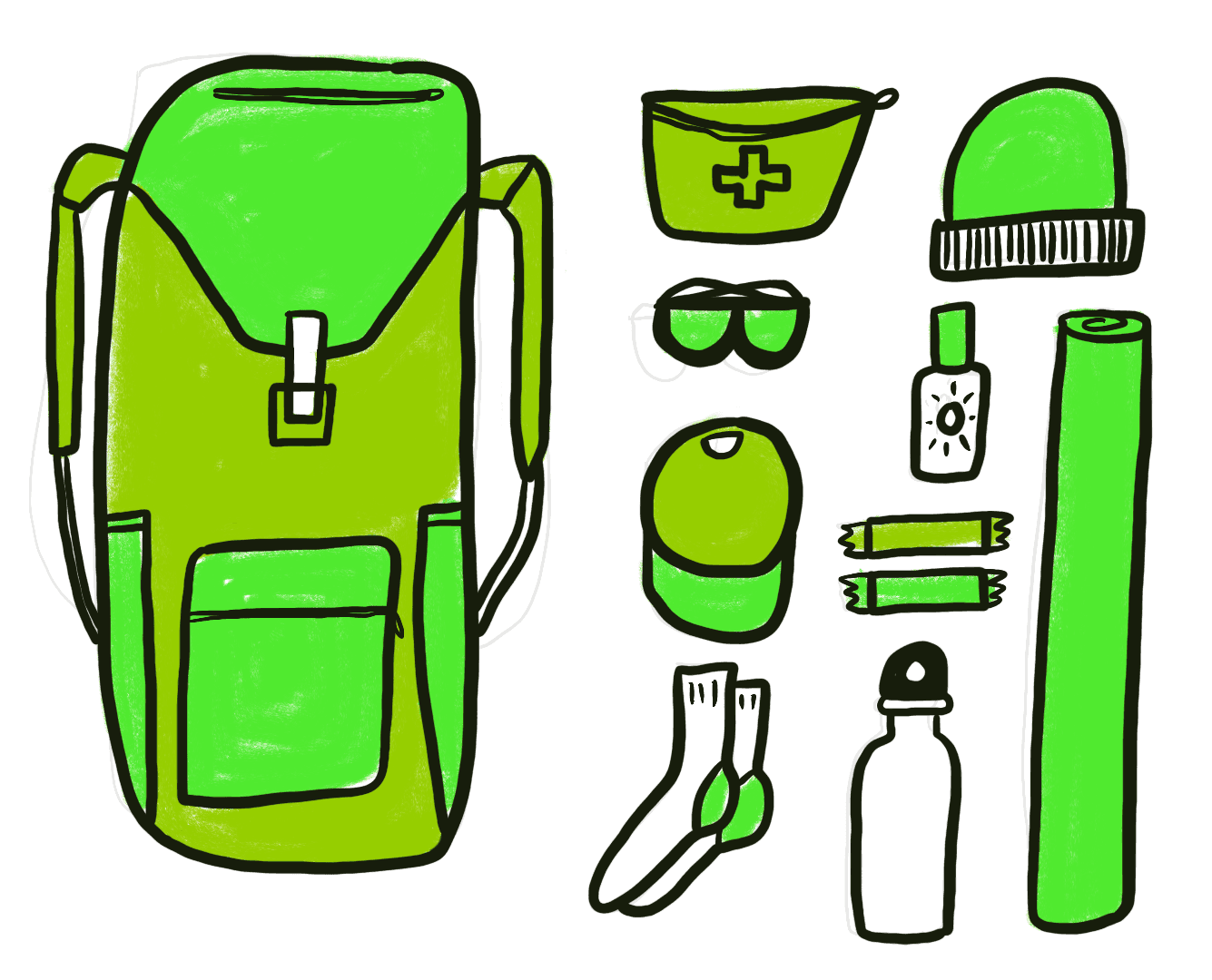
Know before you go! Some stuff we'll provide, other things you'll need to bring.
FAQs
Can I leave my excess luggage somewhere?
Luggage transfers are included in the trip cost, with your main bag transported from hotel to hotel while you hike each day. You’ll only need to carry a day pack with the essentials for the trail. Please note that the service is provided by a specialist company supporting hikers on the TMB. They transfer luggage only, and each bag must not exceed 15kg.
If you travelling to Chamonix with extra baggage that you do not need access to during the hike, there is secure luggage storage opposite the Chamonix Train Station provided by Chamlockers (opens in new tab)
What do I do about drinking water?
The tap water in the Alps is safe to drink, so bring along a minimum of two litres carrying capacity in water bottles and/or a water bladder to fill up each morning before setting off. There will be opportunities to fill up along the route at refuges and other stops – your guide will advise as you go.
Can I book on my own?
Sure can! Over 70% of our travellers travel solo, it’s a great way to meet like-minded people.
Who is running the trip?
Our team of Adventure Hunters co-create exclusive adventures which are run by highly vetted, specialist hosts. The trip is run by our trusted host partner in the destination. We only work with independent, local, in-destination experts who know the very best places to explore and how to stay safe. Read more information about the local teams we partner with (opens in new tab). You’ll be introduced to the host straight after making a booking via the Much Better Adventures platform.
What is the official travel advice?
Much Better Adventures refer to the UK Government’s official travel advice when designing trips and monitoring trip operations. We recommend that all customers are familiar with the practical information provided on the Government’s FCDO website (opens in new tab), where current travel advice can be found by searching for the applicable destination(s).
For customers joining this trip from other international destinations – please also read the official travel advice applicable to your country of residence/origin, as this may differ.
What vaccinations do I need?
We recommend checking out the country-specific information (opens in new tab) and also talking to a travel nurse.
How are the trips priced?
We automatically convert prices from the local currency that a host receives to your chosen currency. We update our exchange rates on a daily basis so this does mean that prices displayed on the site are subject to currency fluctuations, which is why you may see them change over time.
If you wish to change the currency you pay in, head to the bottom of the page.
Why are your adventures only for adults?
All of our group adventures are specially designed for adults to enjoy as we want these adventures to bring together outdoorsy people who are truly like-minded. You must be over 18 to join one of our trips.
Who else will be on my trip?
You're always in good company on one of our adventures.
Our trips are typically made up of a mixture of solo travellers and small groups of 2 or 3 friends, with most in their 30s-50s.
Our sociable adventures are solo-friendly by design and naturally attract outdoorsy people with a shared mindset; a love for adventure, a desire to push themselves and meet awesome, like-minded people along the way. Check out our Community Values (opens in new tab) – a shared code to make sure that everyone's experience is safe, inclusive and brilliantly unforgettable.
It’s this camaraderie that has so often turned a great adventure into a life-changing one.
Don't just take our word for it:
- 95% of people rate the group dynamics on our trips 5/5
- 90% of people recommend joining a trip to make new friends
- 75% of people have met people on our trips that they would now consider friends
See here (opens in new tab) for more info about the Much Better Adventures tribe.
What's the weather like?
The Tour du Mont Blanc trekking season is from June to September. Summer around Mont Blanc is generally warm and fair, but the weather can change very quickly in the high mountains, bringing cold rain and wind. Average temperatures range from 6 to 26 °C. It rains roughly half of the days each month, but storms generally pass through quickly. There can be snow on the mountain passes at the start of the season. Even in the peak of summer you can have very mixed conditions, especially when climbing over the high mountain passes above 2000m. Heatwaves have also been a feature of recent European summers. Our kit list is intended to guide you on what to pack for this trip.
What's the carbon footprint for this trip?
What's the number?
It works out on average at 120kg of CO2 emissions per person, including all local transport, accommodation, food, activities, guides, staff and office operations.
The only thing it doesn’t include right now is flights and travel to the destination. We do make an overall estimate across all our customers separately, but as we don’t book flights, have customers from all corners of the world, and no way of reliably knowing their travel plans, we simply can’t include an individual number in the figure on display here. We’ve got a goal to fix that, so that when you book, there is a way to measure and mitigate the carbon emitted by your flight too.
But what does the number mean?
Yep, hard to picture eh? To give you an idea:
- Driving 1000 miles/1609km would be approximately 281kg of CO2 in an average car (or 140.5kg per person, if there were two of you in it).
- A return economy class flight between London and New York would be approximately 1619kg (1.66 tonnes) per person.
- 10 trees in a temperate forest are estimated to remove approximately 250kg of CO2 from the air in a period of 5-10 years.
What are we doing about it?
Our trips are relatively low-carbon by design, and we're working with all our hosts to develop long term carbon reduction plans.
Want to know more?
Amazingly, no international travel company has ever publicly published their carbon measurements before, as far as we know. We believe that must change, quickly. So we’re openly sharing the method we used in the hope that other companies will be able to more easily follow suit and build on what we've done so far. You'll find it all here (opens in new tab).
Want to Know More?
Ask our AI Assistant
Get instant answers about this adventure
Got a Group of 6 or More?
Book the whole trip privately. We sort the details, you split the cost. Pure adventure, zero faff.
Feeling adventurous? Here's £100 towards it.
Sign up to our newsletter and we'll email you a £100 code for your first trip. You'll also get weekly trip inspiration, expert advice and last minute deals.
Still Undecided?
A few other trips to tickle your fancy
Premium: Trek the Tour du Mont Blanc
7 nights from£3,988
Trek the Tour du Mont Blanc in a Week
6 nights from£1,604
Trek the Tour du Mont Blanc: The Full Circuit
9 nights from£2,162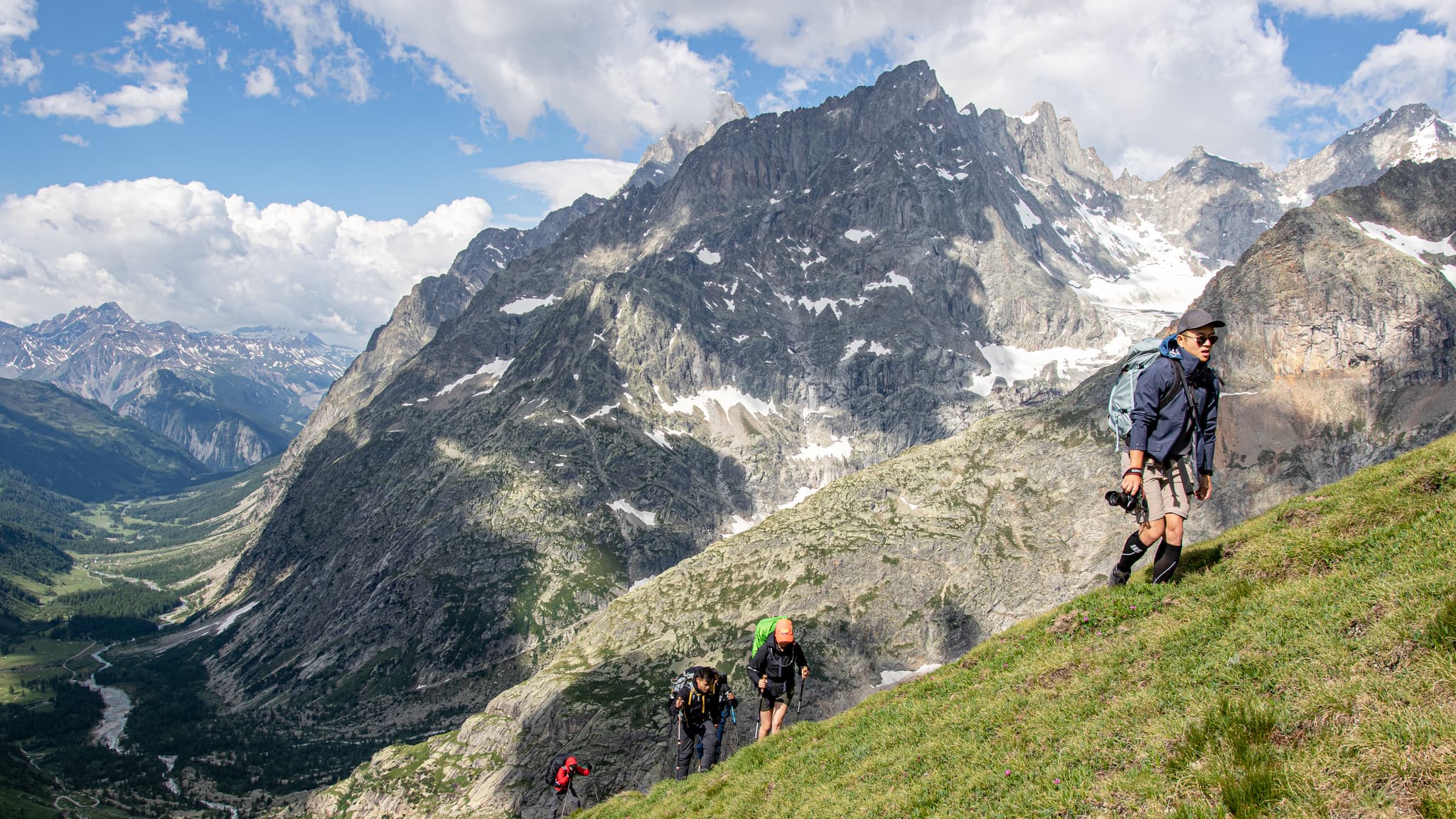
Trek the Tour du Mont Blanc in a Weekend: The Hut-to-Hut Edition
3 nights from£912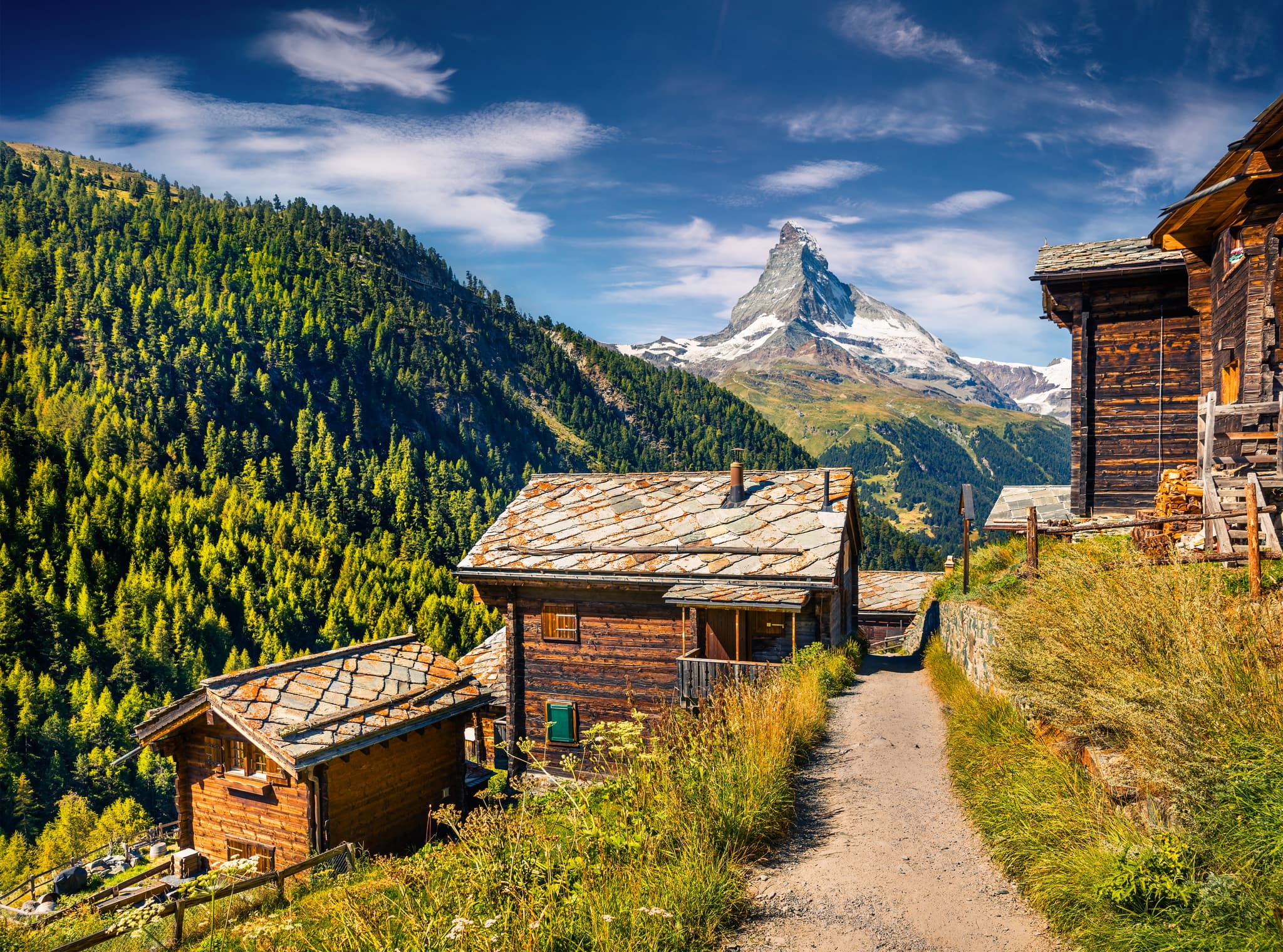
Trek the Haute Route from Chamonix to Zermatt
9 nights from£2,865
Hike the Italian Dolomites
7 nights from£2,347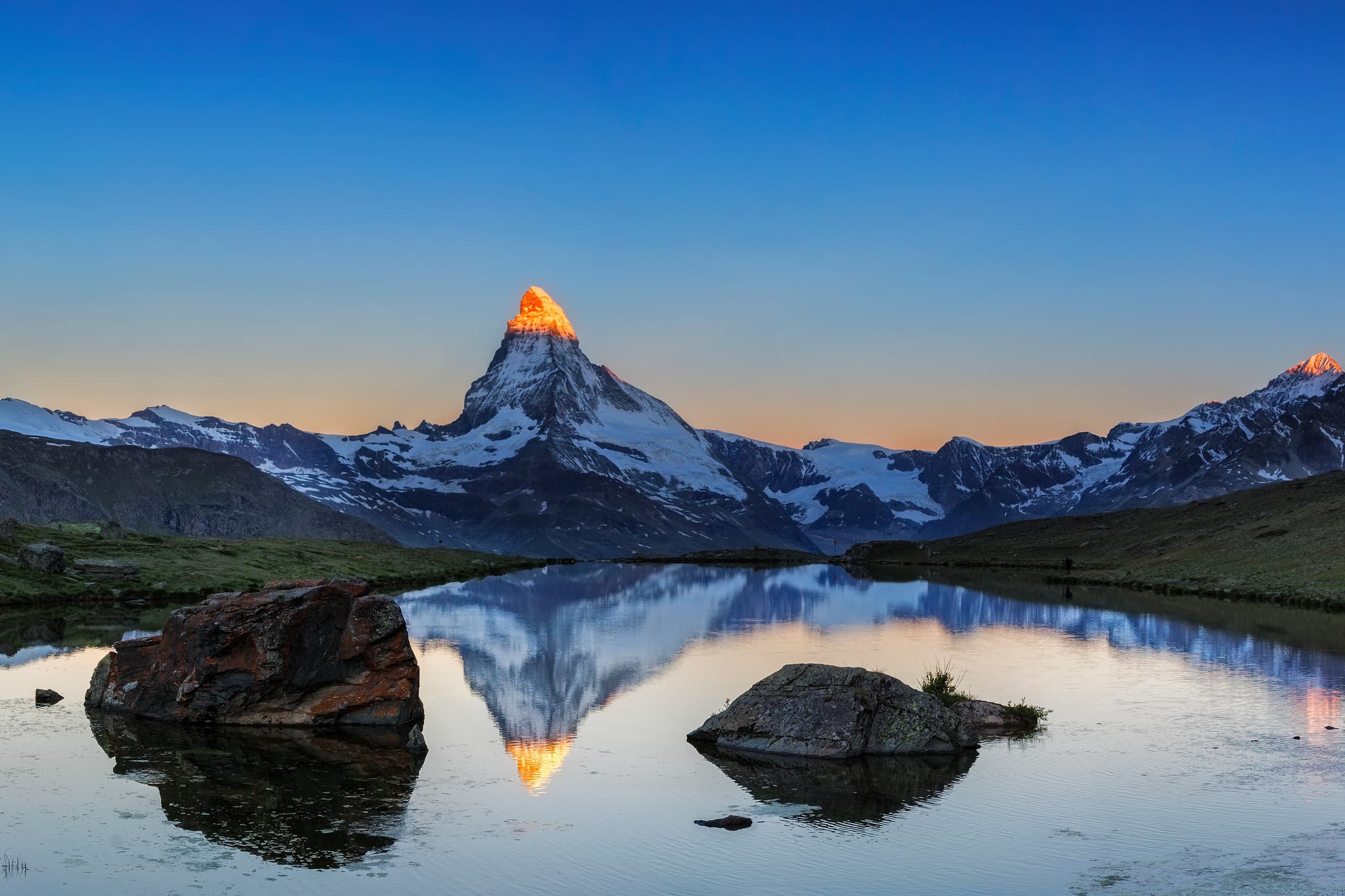
Trek the Matterhorn Circuit in a Weekend
3 nights from£1,081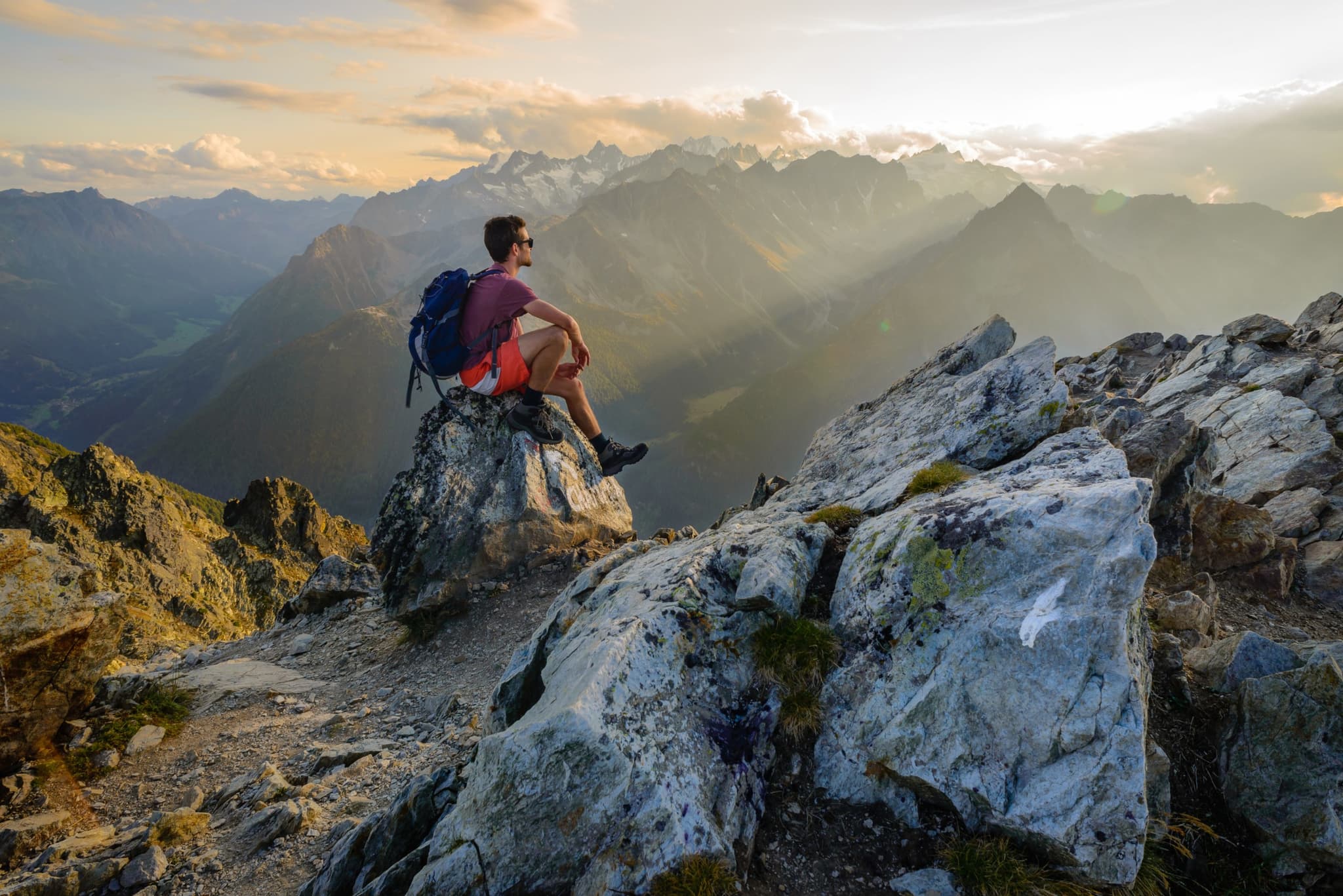
Trek the Haute Route in a Week
6 nights from£2,198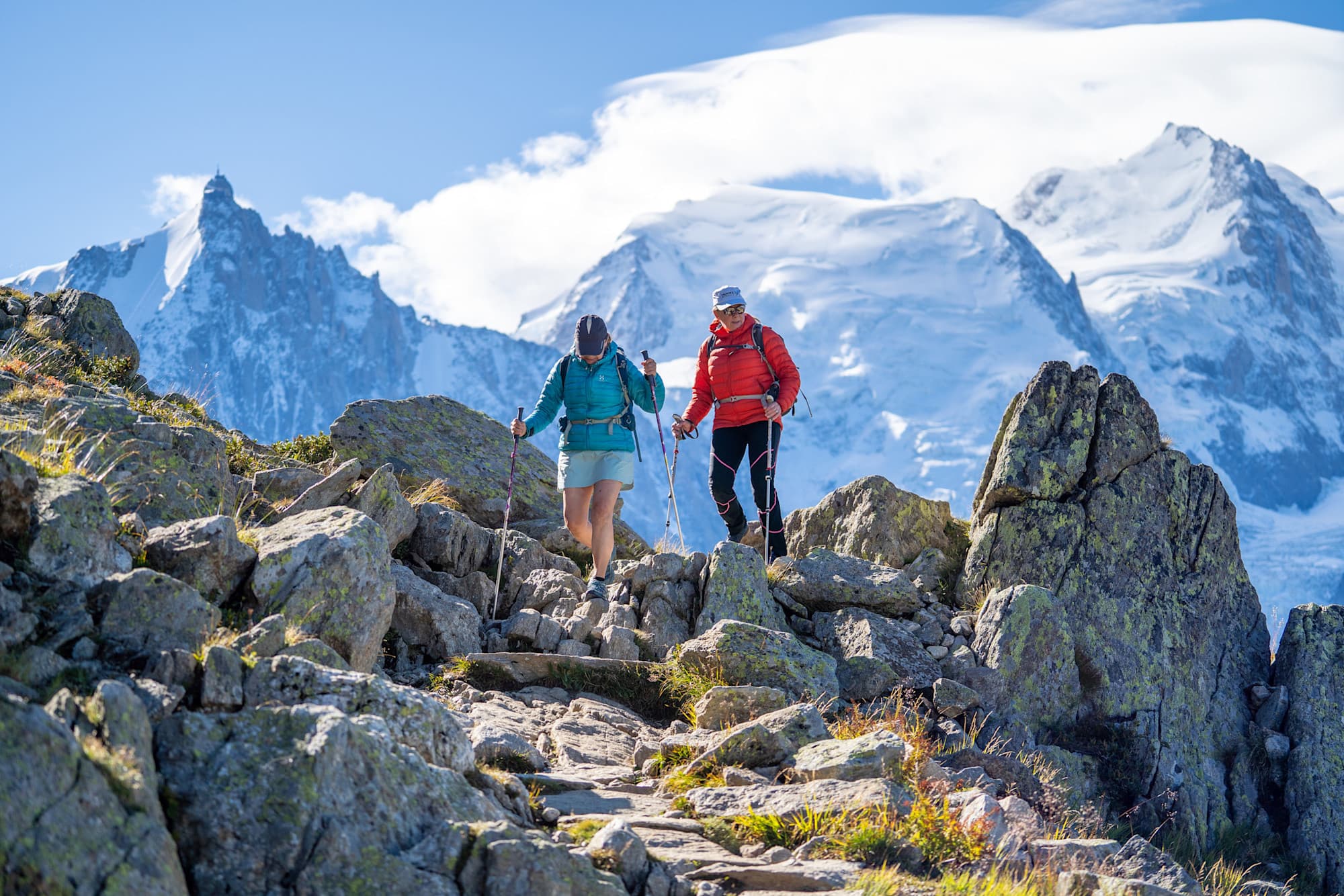
Premium: Hike the French Alps
5 nights from£2,818
Trek the Tour du Mont Blanc in a Weekend: The Hotels Edition
3 nights from£1,341