


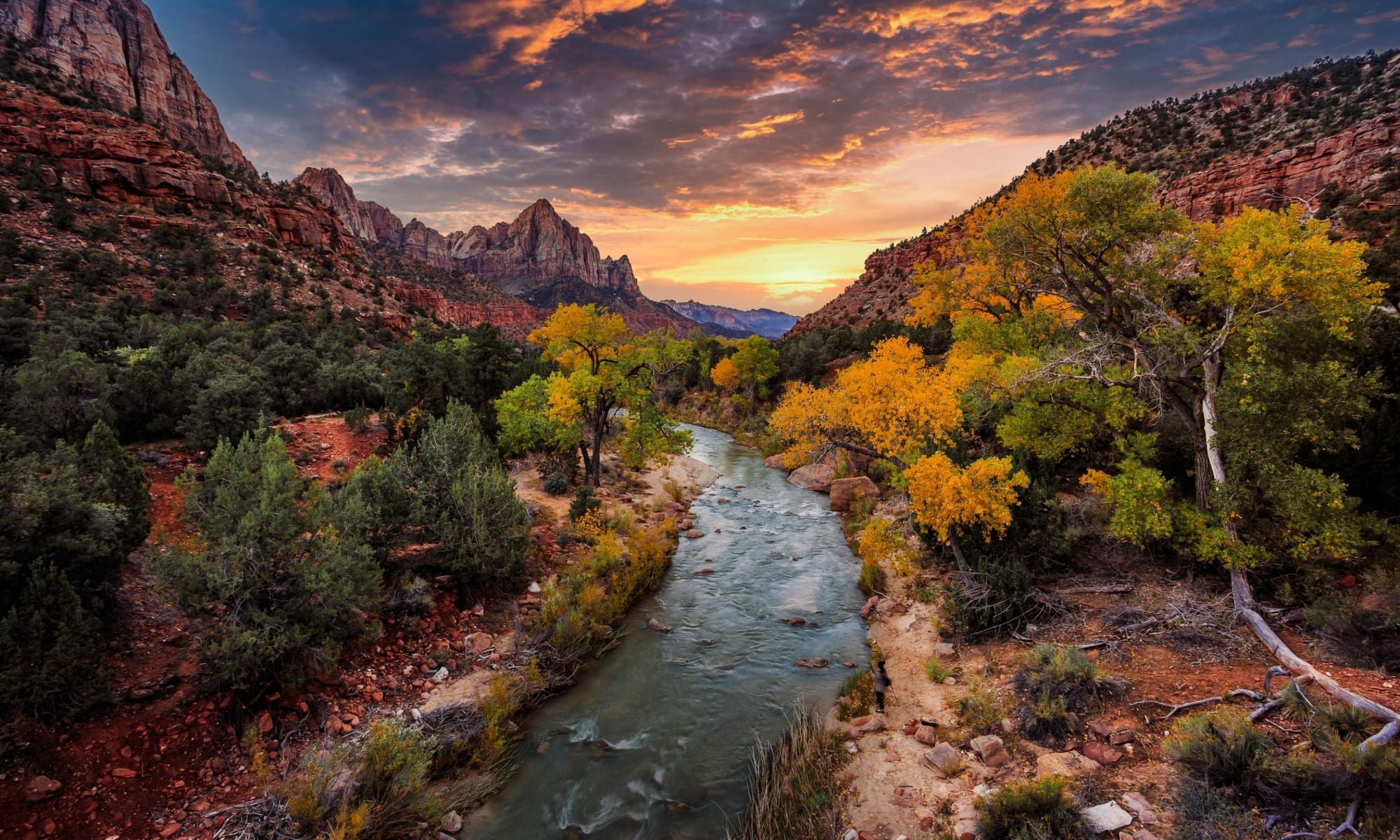
Zion National Park, in southwestern Utah, is famous for its dramatic rock formations, including towering sandstone cliffs, narrow slot canyons, stone monoliths and natural amphitheatres like the imposing Temple of Sinawava. The most popular area, Zion Canyon, features red and white cliffs soaring above the winding Virgin River.
Originally called Mukuntuweap, meaning “straight canyon,” the park was renamed Zion by 19th-century Mormon settlers, a Hebrew word for “heavenly city.” The naming of some of its rock formations further cement this idea, such as 2,110m (6,930ft) high Cathedral Mountain and Angels Landing, which is now famed as an exposed ridge hike with chained sections and panoramic views.
Zion is something else. Especially Zion Valley. It has these towering cliffs; it's super unique
Zion's rock formations are topped by high plateaus and bisected by steep canyons, their lower slopes hugged by pinyon-juniper forests. Desert areas have been colonised by prickly pears and yucca plants. The Virgin River and its tributaries thread through the park, feeding hidden pools, waterfalls and ‘hanging gardens’ – colourful plants growing vertically from the cliffs.
“It’s a pretty majestic place,” says adventure guide Ryan Romito. “There are lots of places that have those iron red rocks, but Zion is something else. Especially Zion Valley. It has these towering cliffs; it's super unique.”


The park has three entrances: the south entrance near Springdale, offering access to Zion Canyon; the east entrance, known for its elevated scenic views; and the Kolob Canyons entrance to the northwest, which provides quieter trails.
“Zion is one of the most popular parks in all of the US, but most people head to Springdale and into the park by the south entrance,” Ryan says. “Kolob Canyons has only around 10 to 15% of the visitors. It doesn't connect to Zion Canyon at all, other than by foot if you were to take multi-day backpacking trails.”
Ryan recommends exploring both areas of the park over a period of several days, combining the iconic views of Zion Canyon with the quieter hiking trails of Kolob Canyons.
The Best Things to Do in Zion National Park, Mapped
10 Things to Do in Zion National Park
1. Explore Kolob Canyons
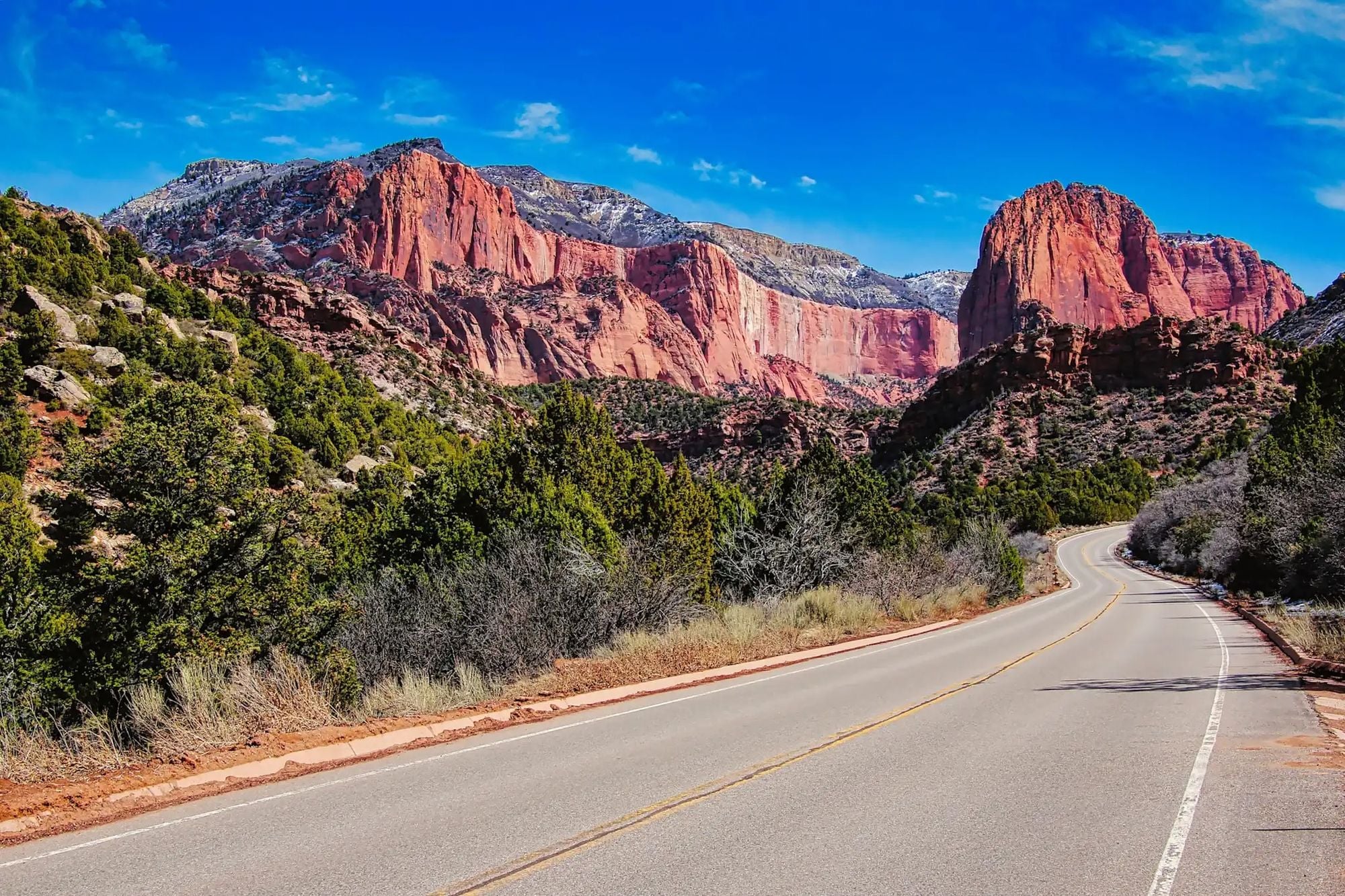
Kolob Canyons is one of the lesser-visited areas of Zion National Park. It’s an area of narrow parallel canyons hewn into the western edge of the Colorado Plateau, with cliffs reaching up to 610m (2,000ft) and dramatic peaks.
“It's a great introduction to Zion because it's just stunning as soon as you drive in,” says Ryan. “You climb up these winding roads up to the top where you can take a hike. There are lots of different trails you can go down.”
To visit, take the Kolob Canyons Road from Exit 40 on Interstate 15 – a five mile (8km) scenic route with plenty of stopping points, including the trailheads for the Taylor Creek and Timber Creek Overlook trails.
2. Watch the Sun Set from Timber Creek Overlook
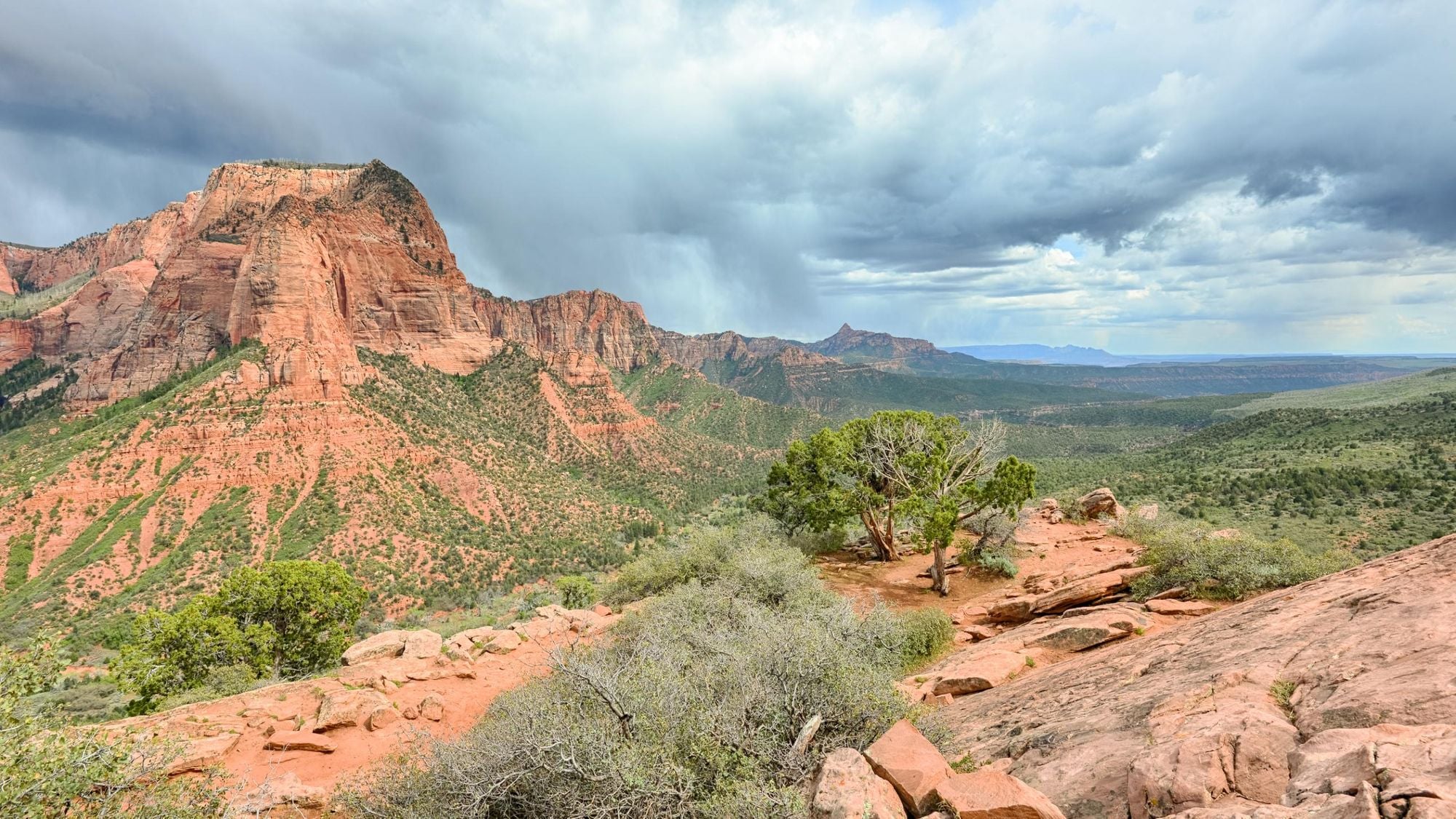
Timber Creek Overlook is a viewpoint in Kolob Canyons. You can reach it via the aptly-named Timber Creek Overlook Trail, a short 1.2 miles (2km) out-and-back trail along a rocky ridgeline with minimal elevation gain. There’s also a picnic area located a short distance from the trailhead.
Upon arriving at the overlook, you’ll have wide-ranging views of flat-topped Shuntavi Butte, the craggy Pine Valley Mountains and Timber Creek. On a clear day you can see all the way to Mount Trumbull on the Grand Canyon, around 100 miles (161km) away. The view is even more breathtaking at sunset, when the sandstone rock formations flame fiery red.
3. Stay in a Mountain Ranch
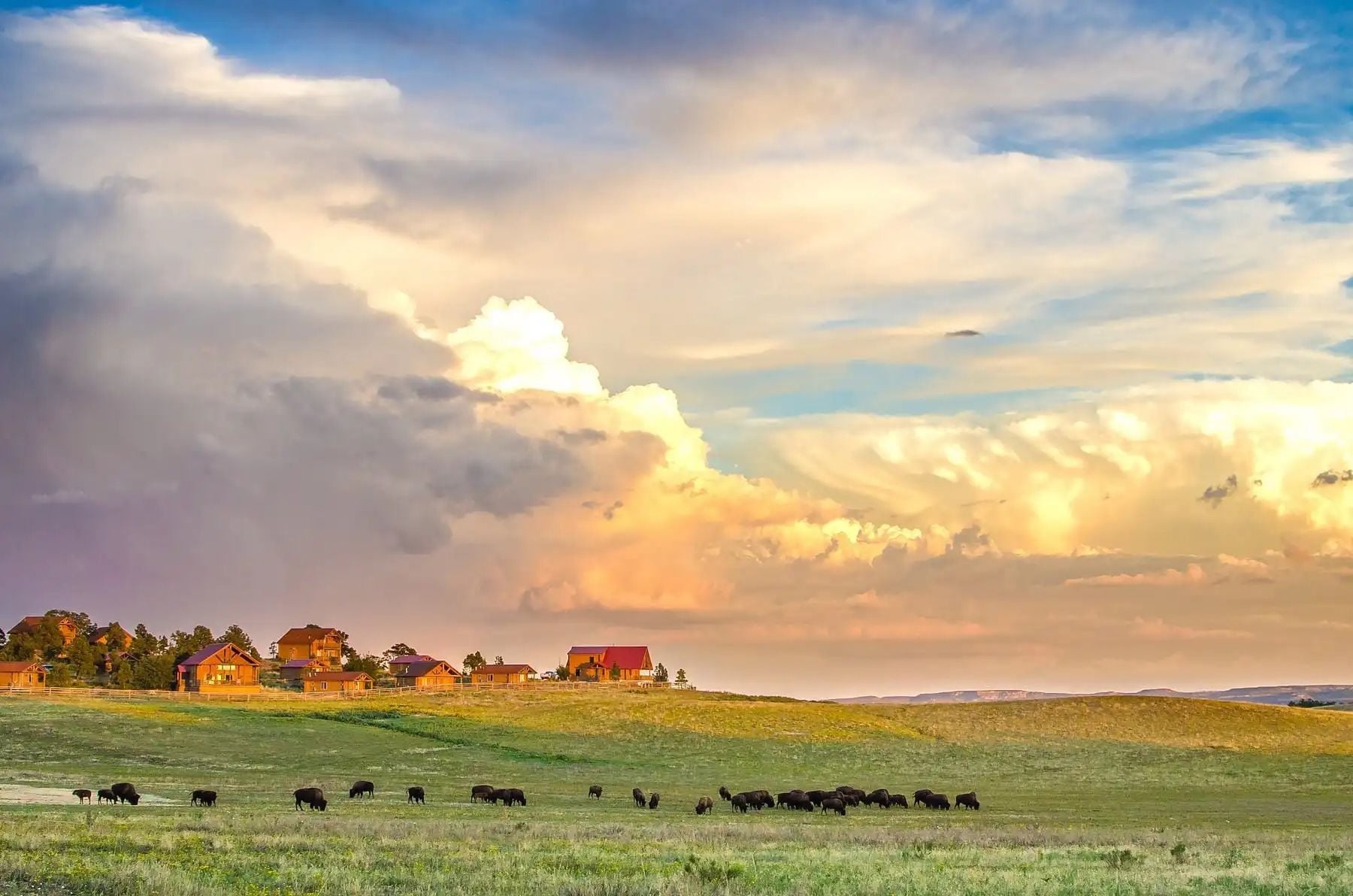
There are plenty of accommodation options in Zion, including campgrounds within the national park and a range of hotels in the town of Springdale, the gateway to Zion Canyon. For something really special, however, we recommend staying at Zion Mountain Ranch.
This remote, rustic-chic retreat is set high above Zion National Park, amidst pastures where American bison roam freely. You’ll stay in cosy private log cabins, enjoy meals from the farm-to-table restaurant and can spend the evenings stargazing.
4. E-Bike up Zion Canyon
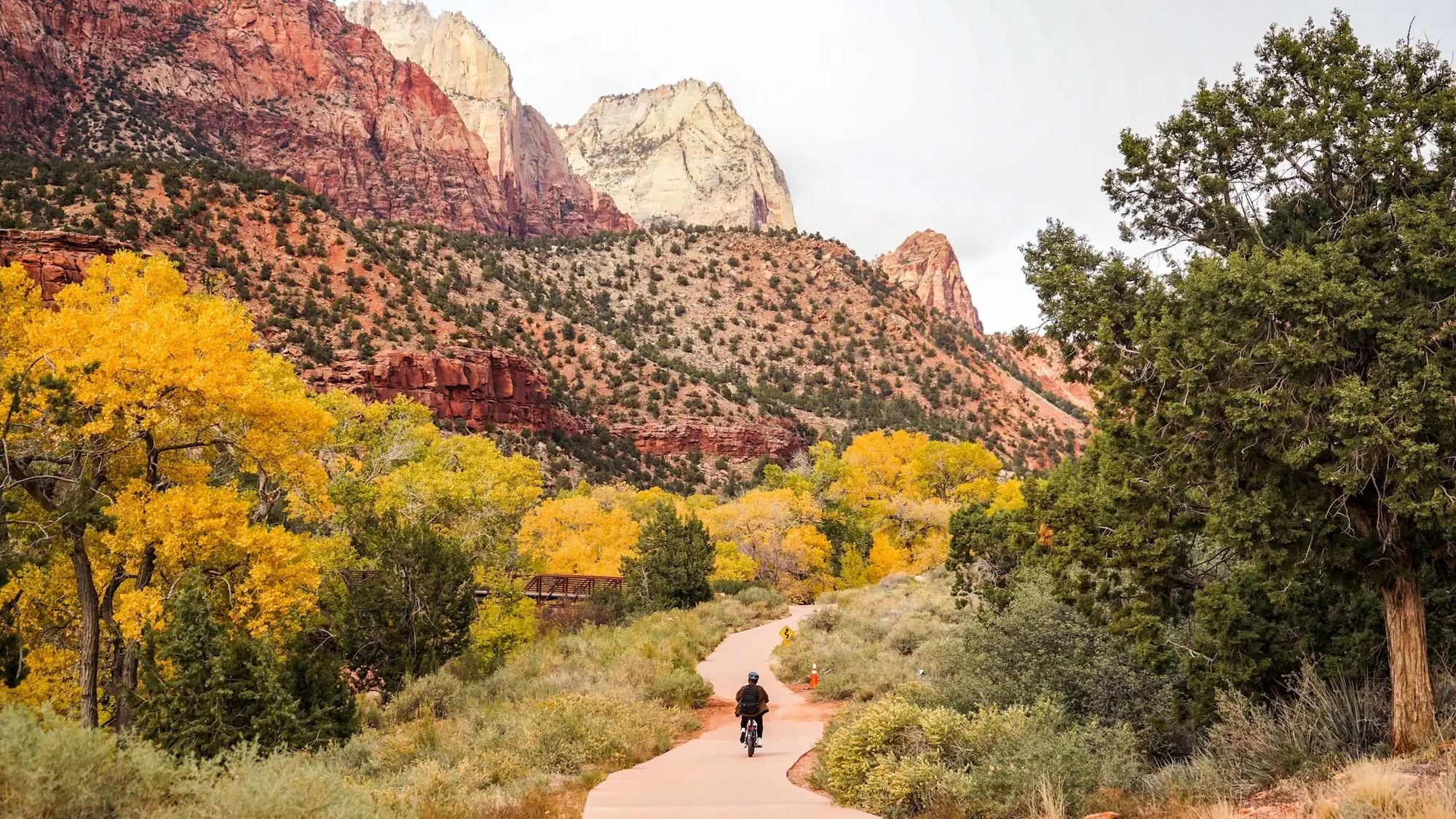
The main scenic road through Zion National Park is Zion Canyon Road, which takes you to the trailheads for some of the park's most popular hikes, such as the Riverside Walk. During peak season, car access to Zion Canyon Road is restricted to avoid congestion. Instead of driving, park-goers can use a shuttle service. But there’s another option: travelling by e-bike.
“It's a very different experience to pedal through the canyon instead of taking the shuttle,” Ryan says. “A really cool way to take it all in, having the breeze on your face and making some stops along the way between point A and point B. The only cars that are going up the canyon road are the cars that are staying at the lodge up there. So there’s limited road traffic and also cycling paths you can use.”
5. Hike the Riverside Walk and the Narrows
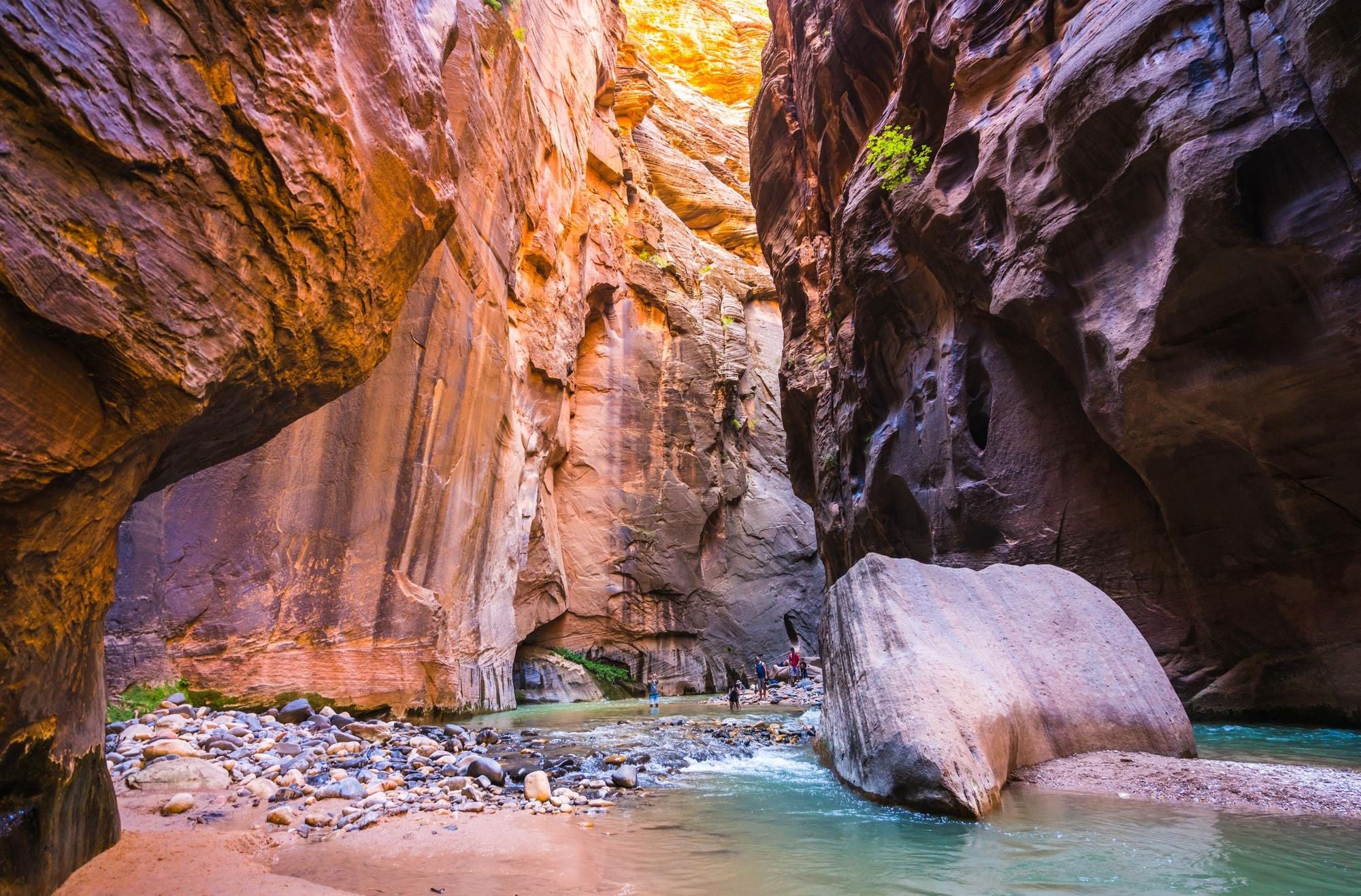
The Riverside Walk is a popular trail at the northern end of Zion Canyon. It begins at the Temple of Sinawava, a vast natural amphitheatre with 914m (3,000ft) high sandstone cliffs. After passing through the amphitheatre, the trail traces the Virgin River down a tree-lined path, which is particularly beautiful in autumn. The walls of the surrounding canyon will narrow as you walk.
After around a mile (1.6km) you’ll reach The Narrows, so named because it’s the narrowest part of Zion Canyon, with walls six to nine metres (20 - 30ft) apart.
“The Narrows goes through the Virgin River. So, the trail is actually like you're walking through the water,” Ryan says. “It can be a nice little place to put your feet in, but not swim – the water is sometimes chest deep.”
If you want to walk The Narrows, you’ll need neoprene shoes and hiking poles. While the entrance can be crowded, head further upstream and you’ll find it much more peaceful. If you do go, it’s important to check flash flooding risks before setting out. On high risk days the Narrows will be closed.
6. Hike to the Emerald Pools
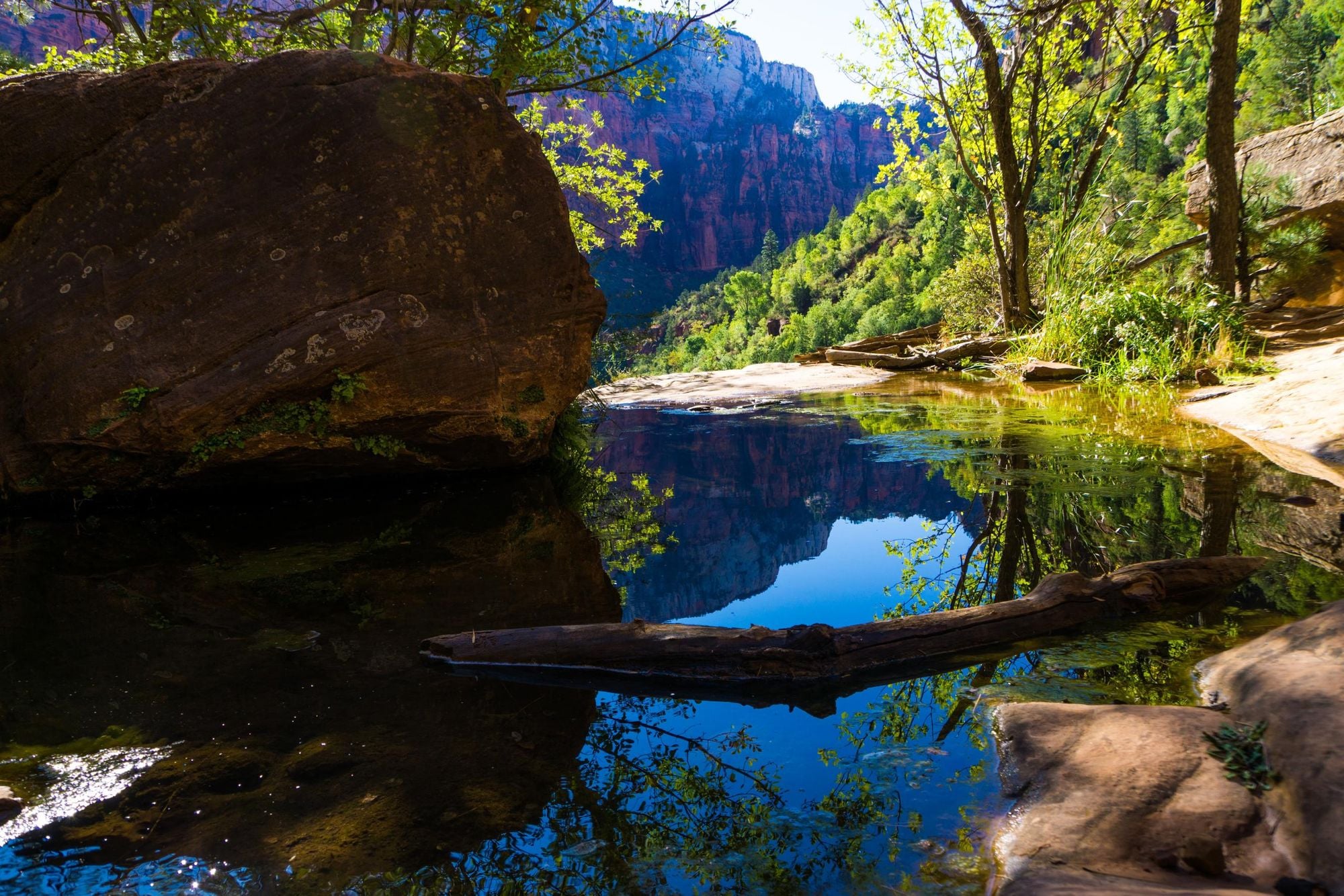
The Emerald Pools are located about halfway up Zion Canyon, tucked into its western wall; three watery oases in a landscape of sandstone, with trickling cascades. You’ll encounter the first of them, Lower Emerald Pool, after walking for around 0.6 miles (1km) along a trail through pinyon-juniper woodland. Continue walking along the trail to reach the middle and upper pools.

“If you want to walk further, there’s a connecting trail to the Emerald Pools called Kayenta Trail,” says Ryan. “It’s an undulating path with some great views through Zion Canyon."
7. Admire the View at Scout Lookout
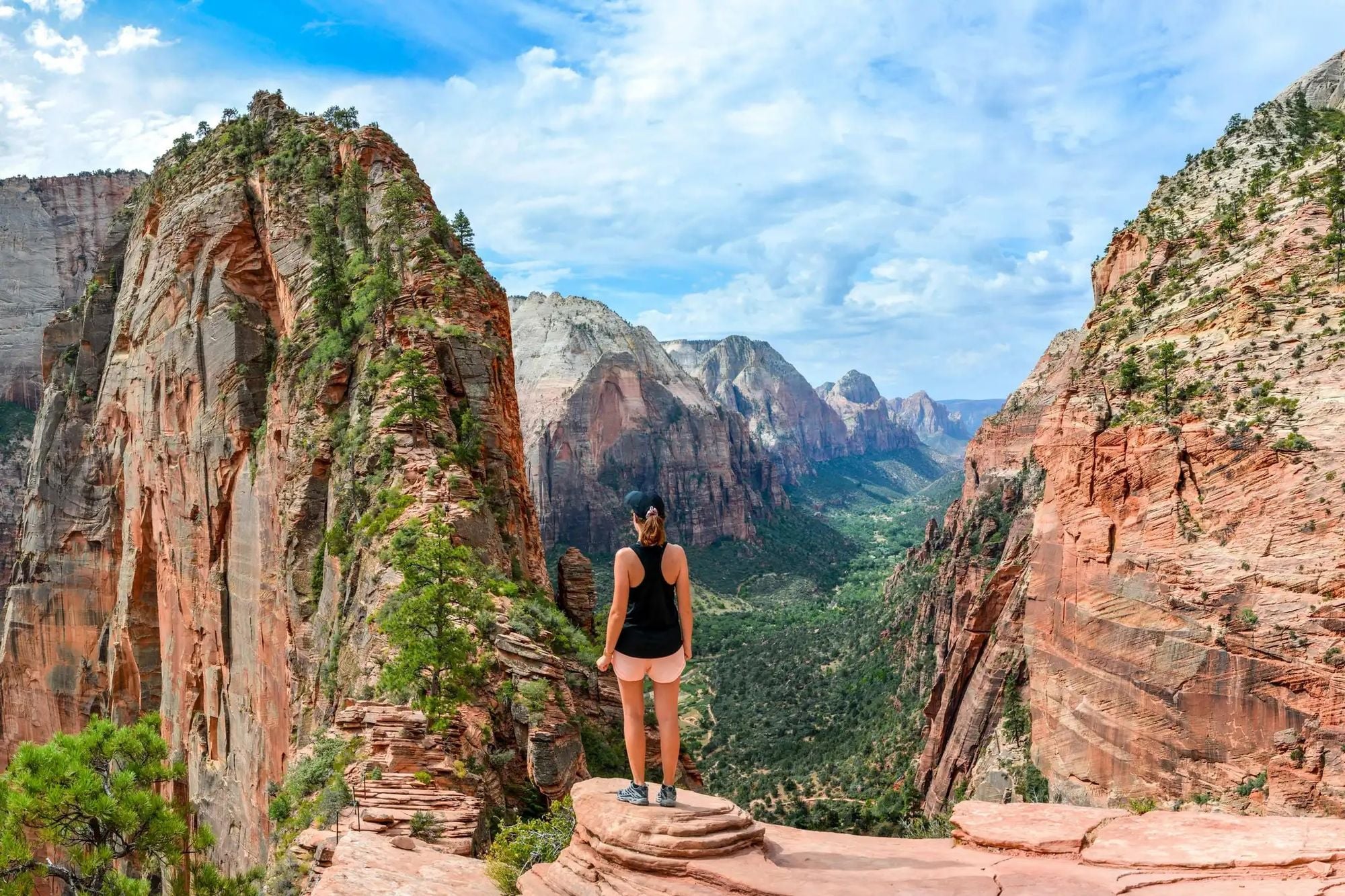
Scout Lookout is one of Ryan’s favourite viewpoint hikes, offering a spectacular panoramic view over the towering sandstone walls of Zion Canyon, with Virgin River twining across the valley floor.
You’re able to just look out over everything.
“Scout Lookout is an outstanding trail, which can work up your heartbeat a little bit but not overdo it. It's part of the West Rim Trail,” Ryan says. “There's a series of 21 switchbacks known as Walter’s Wiggles, where you can really take in the Zion Canyon. There are some great overlooks as you climb. Then you get to Scout Lookout and you’re able to just look out over everything from up there.”
8. Go Canyoneering
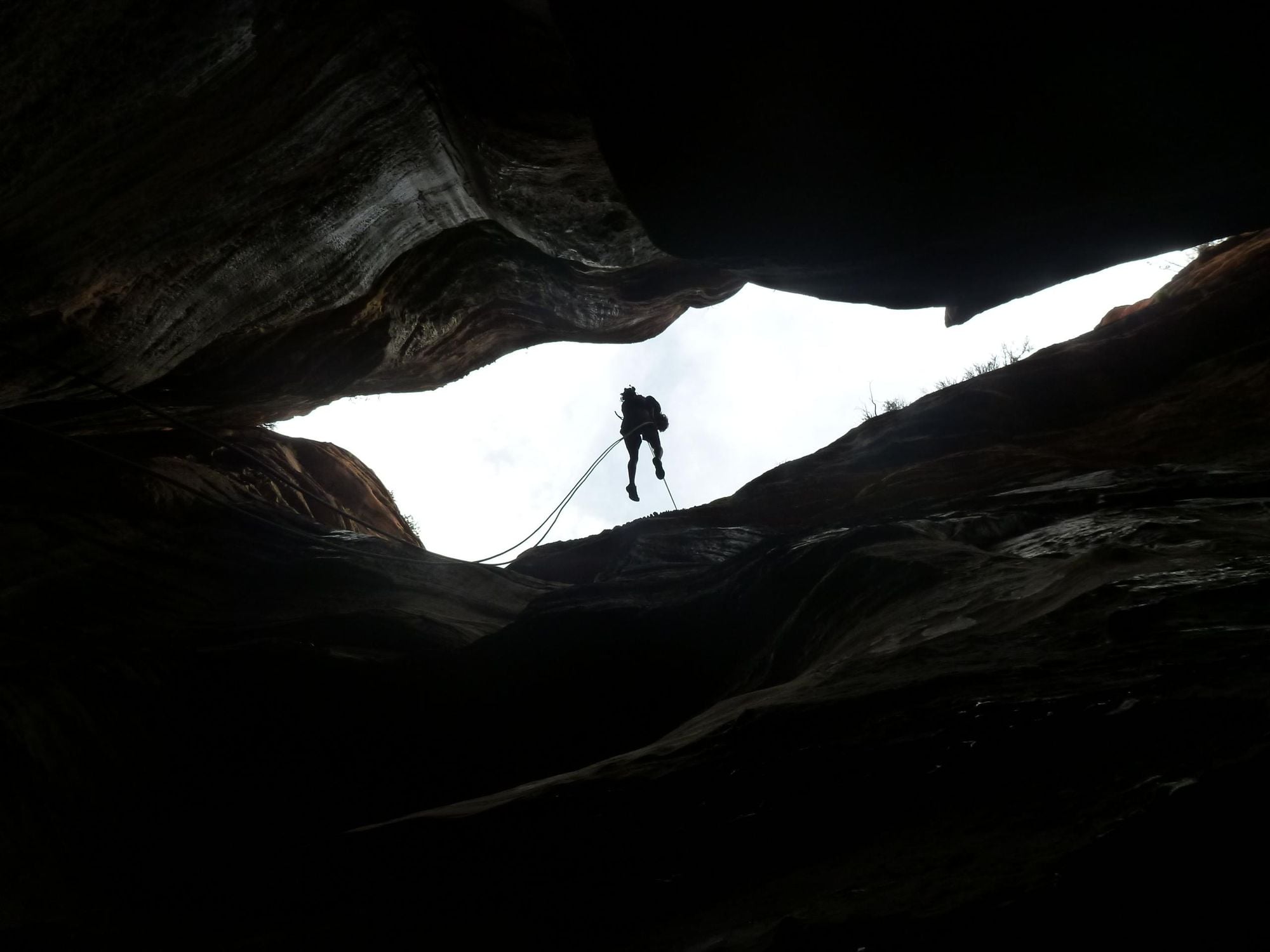
Zion National Park is a great place to try canyoneering, an adventurous blend of hiking, scrambling, swimming and abseiling through canyons.
“It’s one of the coolest activities to do out here,” Ryan says. They have every level available, from beginners to advanced routes. There's so many different canyons and slot canyons and rock falls and everything else that makes it just perfect.”
Routes like Pine Creek Canyon and Keyhole Canyon offer incredible scenery as you descend through sculpted rock walls, natural pools and tight corridors where sunlight filters down from above. Specialist equipment and technical knowledge is required to canyoneer, so we’d always recommend going with an experienced local guide.
9. Go Stargazing
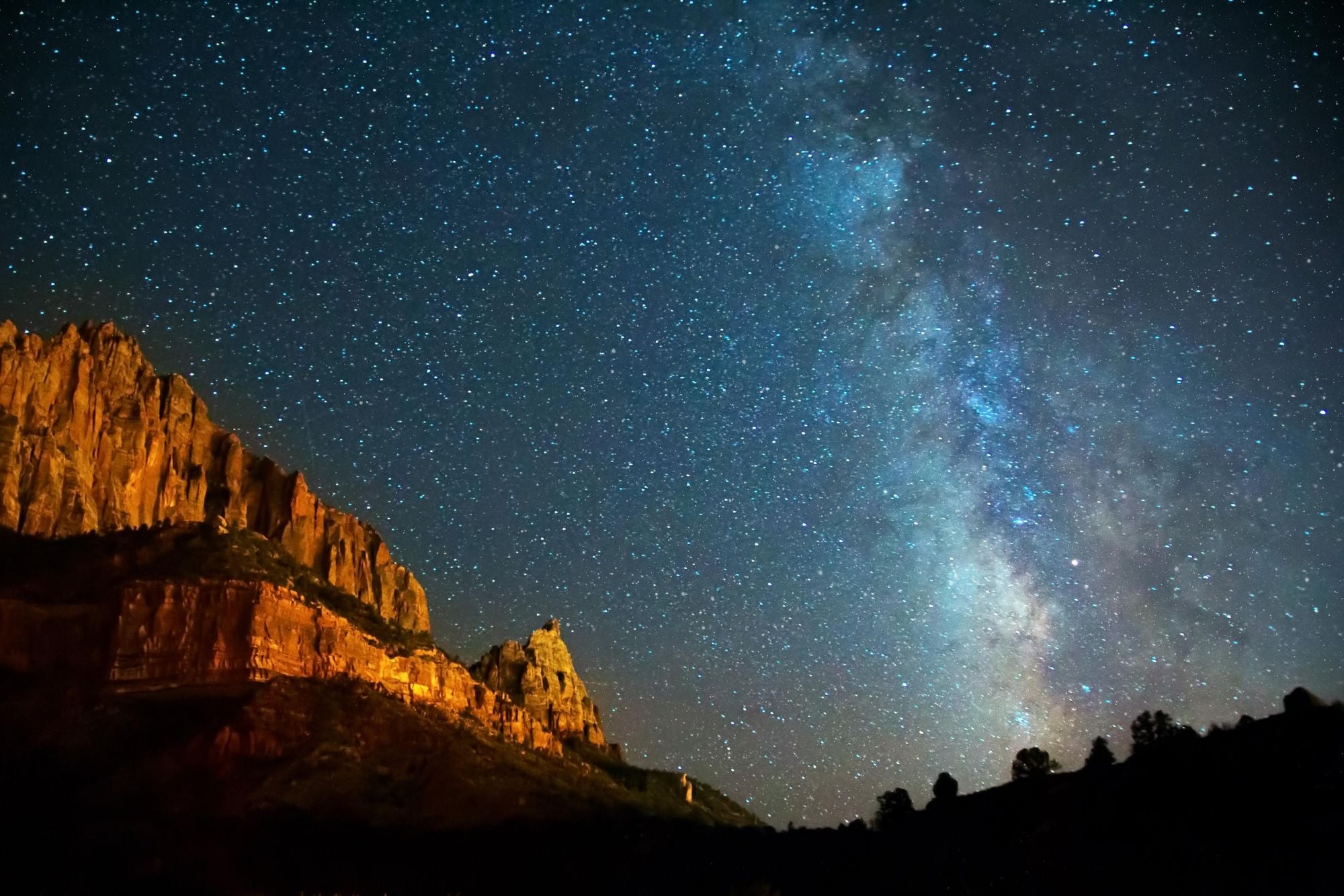
Zion has been designated an International Dark Sky Park, thanks to low levels of light pollution and its remote location. On clear nights it’s possible to see thousands of glinting stars, and the glowing band of the Milky Way stretching across the sky.
The darkest skies can be found on the east side of the park and along Kolob Terrace Road. Some of the best stargazing locations include Lava Point Overlook and Checkerboard Mesa Pullout, both of which have flat ground where you can set up a telescope if you wish. It’s also possible to book a stargazing tour by jeep, which will take you off-road and away from any light pollution, into a landscape of rock balconies and mesas
10. Hang out in Springdale
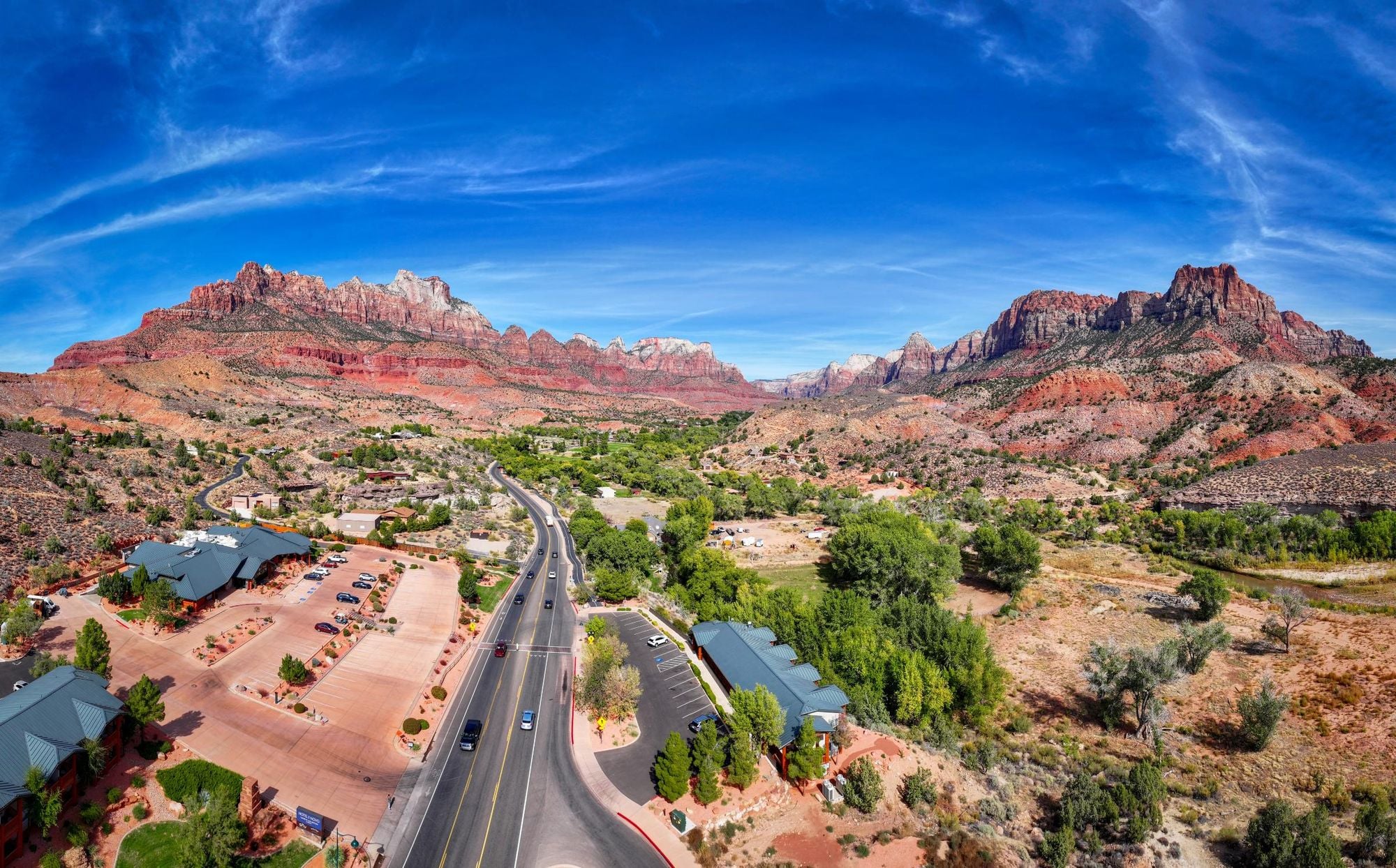
Just outside Zion’s southern entrance, the town of Springdale is the park’s lively gateway, surrounded by towering red rock walls.
“Springdale's really cool; it’s got a lot of hotels but still preserves its small-town charm,” says Ryan. “It’s got some great places to eat, with a lot of focus on locally-sourced food as well. There's also some different artists that have set up shop there.”
It’s the ideal spot to visit after a long day on the trails, being packed with independent art galleries, restaurants and outdoor gear shops.
FAQs
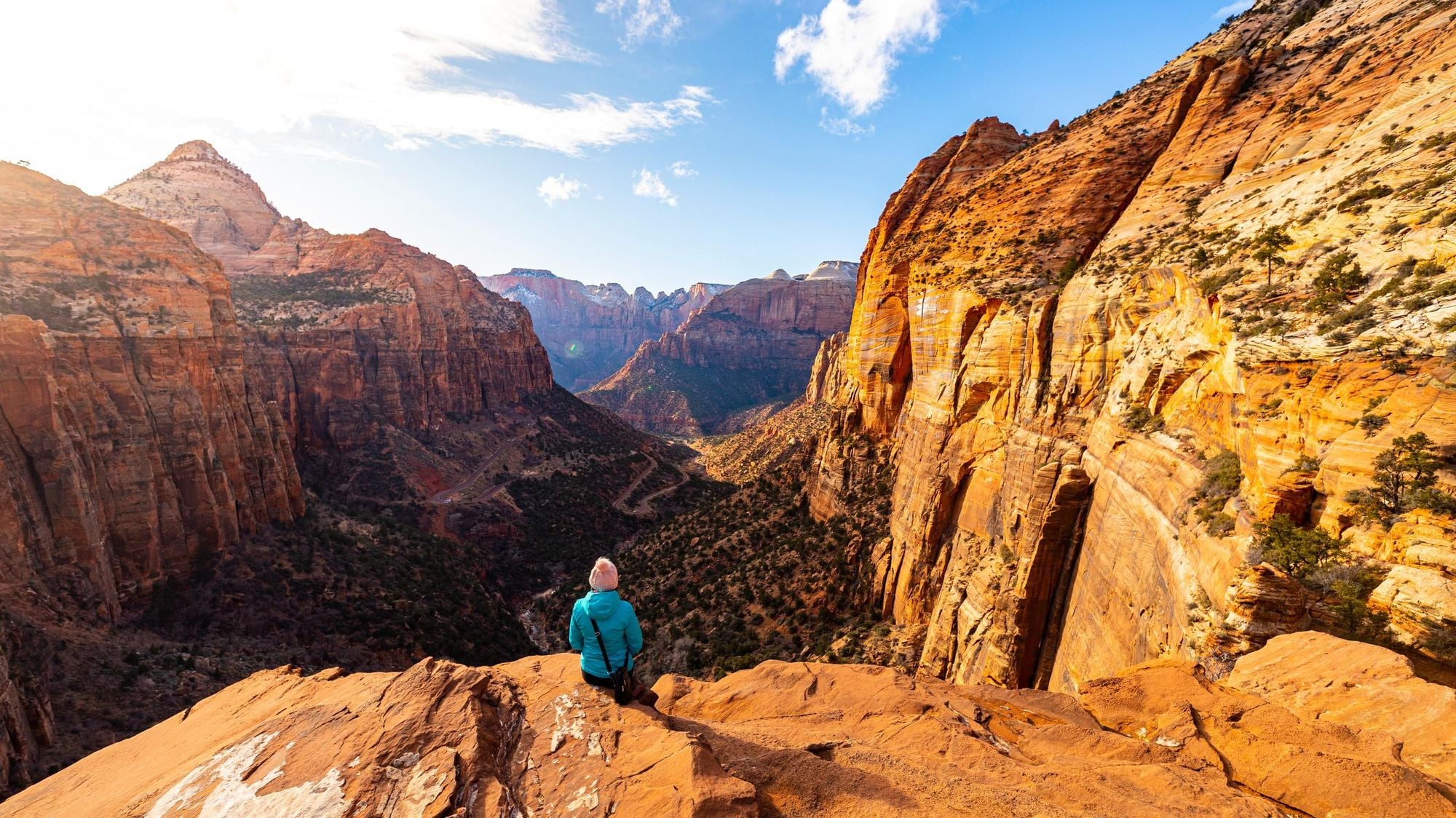
When is the Best Time of Year to Visit Zion National Park?
Visit Zion National Park in spring (March to May) or from late August to the end of October for mild temperatures, smaller crowds, and full accessibility to trails and scenic areas. During the peak summer period, temperatures can exceed 38°C (100°F) and trails and shuttles will be busier.
Where to Stay in Zion National Park?
Stay inside the park at Zion Lodge or a campsite for convenience (advance booking is recommended since spaces are limited). You can also stay in the town of Springdale near the southern entrance, which has plenty of hotels and restaurants, or Cedar City near quieter Kolob Canyon.
How Many Days to Spend in Zion National Park?
Spend between two and four days in Zion National Park and you’ll have time to hike some of the main trails (such as Emerald Pools and Scout Lookout) and enjoy activities such as canyoneering, e-biking and stargazing.
How far is Zion National Park from Los Vegas?
Zion National Park is approximately 152 miles (244km) from Las Vegas, around a 2 hour 30 minute drive via the I‑15 North.
How to get to Zion National Park?
The closest airports to Zion National Park are in Las Vegas (152 miles/244km) and Salt Lake City (274 miles/ 441km), both of which are connected to the park via the I-15 North. Private shuttle services are available from these cities, but many people opt to drive. The closest town to Zion National Park’s southern entrance is Springdale, where you can get a free shuttle service into the park.
Do I need a permit for Zion National Park?
You do not need a permit to enter the park, ride the park shuttle or visit most areas. However, you will need to pay an entrance fee. You need a permit for more technical, demanding activities, including overnight trips into the backcountry, canyoneering excursions and hiking Angel’s Landing. For more information and to apply visit the Zion National Park website.
Inspired? Visit Zion National Park on our Premium: Hike and E-bike Bryce and Zion National Parks adventure, or our Hike the Iconic Landscapes of Utah and Arizona adventure.