

The rain lashed the shore, dragging watery curtains across the window. Every so often, the reflection of the bedroom light would bend in the glass as the gale-force winds hurled themselves at our accommodation. The fjord tossed angrily in the storm.
This was a very different image from the postcard wintry scene we had in mind when booking our five-night trip to the Lofoten archipelago, and not exactly ideal conditions for seeing Northern Lights. But then, this is Norway, where this shattered chain of islands bends into the Norwegian Sea against icy Arctic winds.
You can imagine how myths and legends grew here, as people tried to make sense of water and weather that refused to be tamed.
Our guides – Carlos and Lucio – gave us the reality check on that first night: it’s going to be a very challenging week; the wind is extremely strong; we will have to see about the overnight camp. And would we see the Lights? Well, they danced around that question.
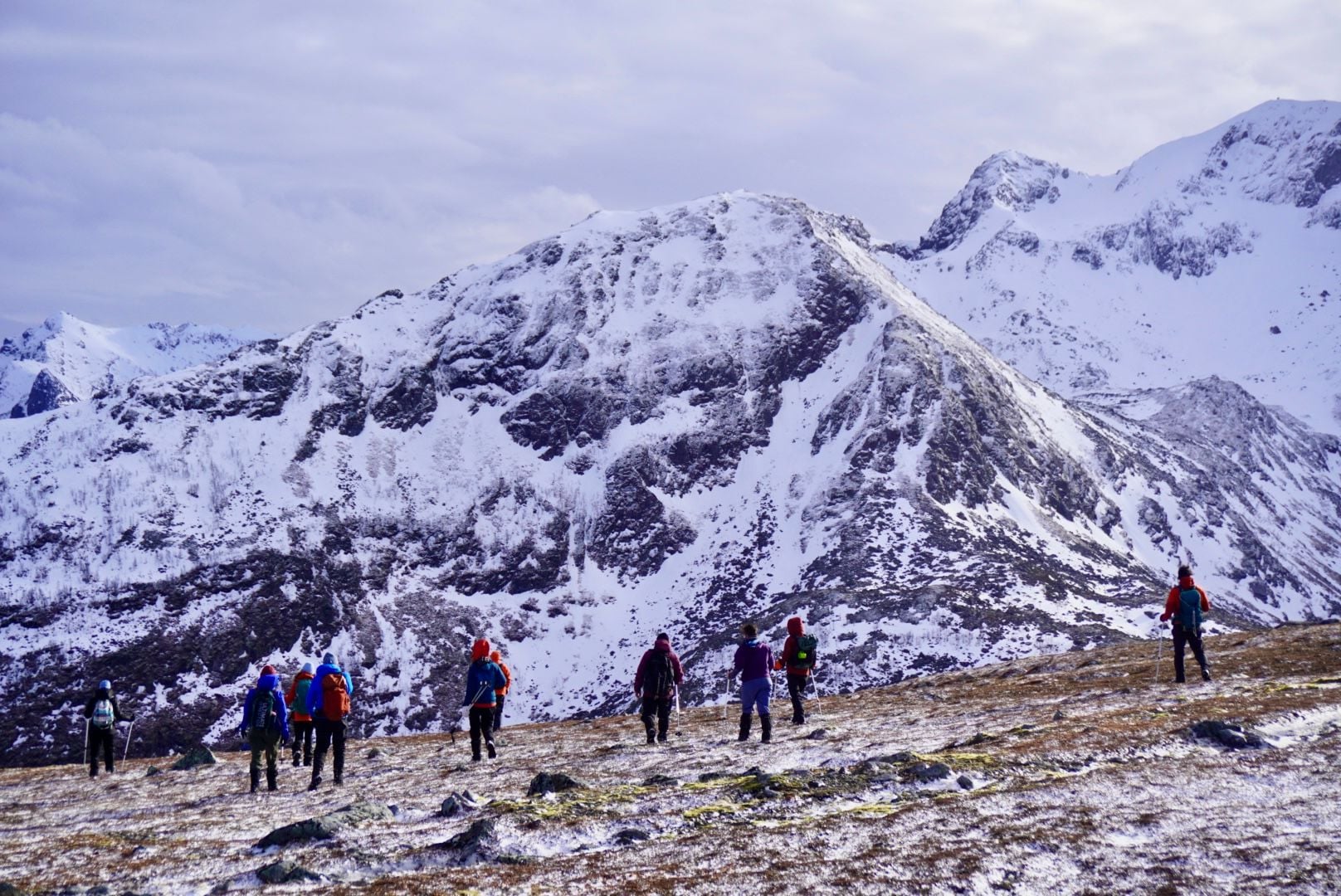
But they did provide us with reassurance: “We know the terrain and we are constantly checking the forecast, so we might be changing our plans last minute to get the best for you guys,” Carlos said. Little did we know how much we’d appreciate that expertise.
 Much Better Adventures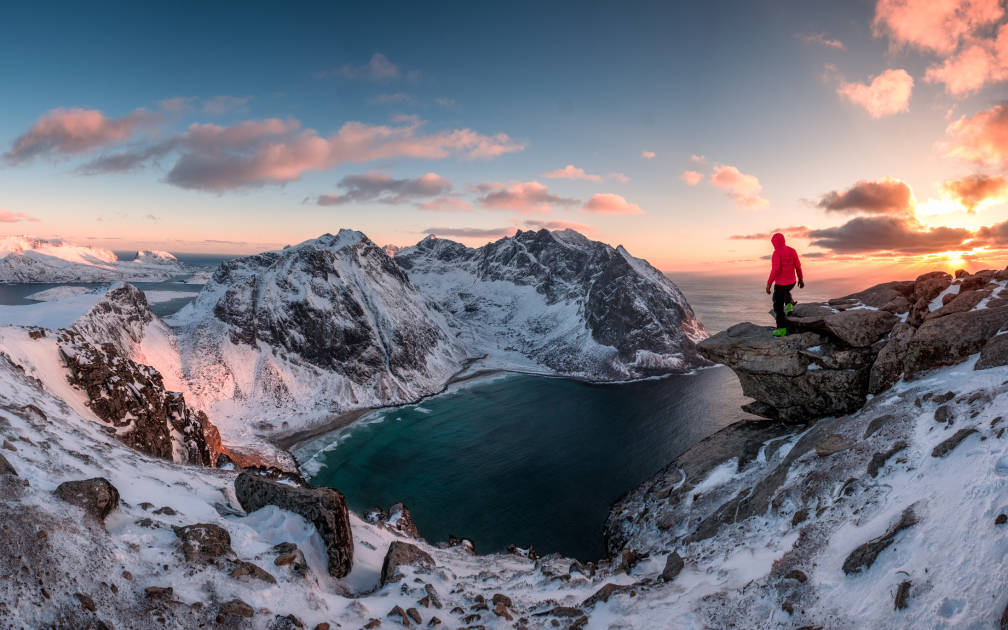
Where the weather rules
In Lofoten, everything bends to the elements. Coming from Scotland, I’m used to seeing four seasons in one day, but Lofoten takes that to another level, with sun and rain hurried along in the blink of an eye.
On our first morning, Carlos and Lucio collected us at 7am, the storm outside immediately blowing away any sleep from our eyes. Rain thudded on the windscreen as we followed the one main road that snakes its way through the islands.
Our guides had spotted a weather window early in the morning. As soon as Carlos pulled the handbrake, the first ray of sun cracked the sky...
Soon enough, Carlos pointed out a feature distinctive to Lofoten – in fact, we smelled it before we spotted it. As we rounded the rain-soaked headland to reveal a craggy bay, line after line of cod hung from what islanders call hjeller: large wooden racks used to dry cod and create the Lofoten island delicacy of Stockfish (or tørrfisk in Norwegian). Such is the strength of the wind here that cod doesn’t need smoke or salt, just time and air.
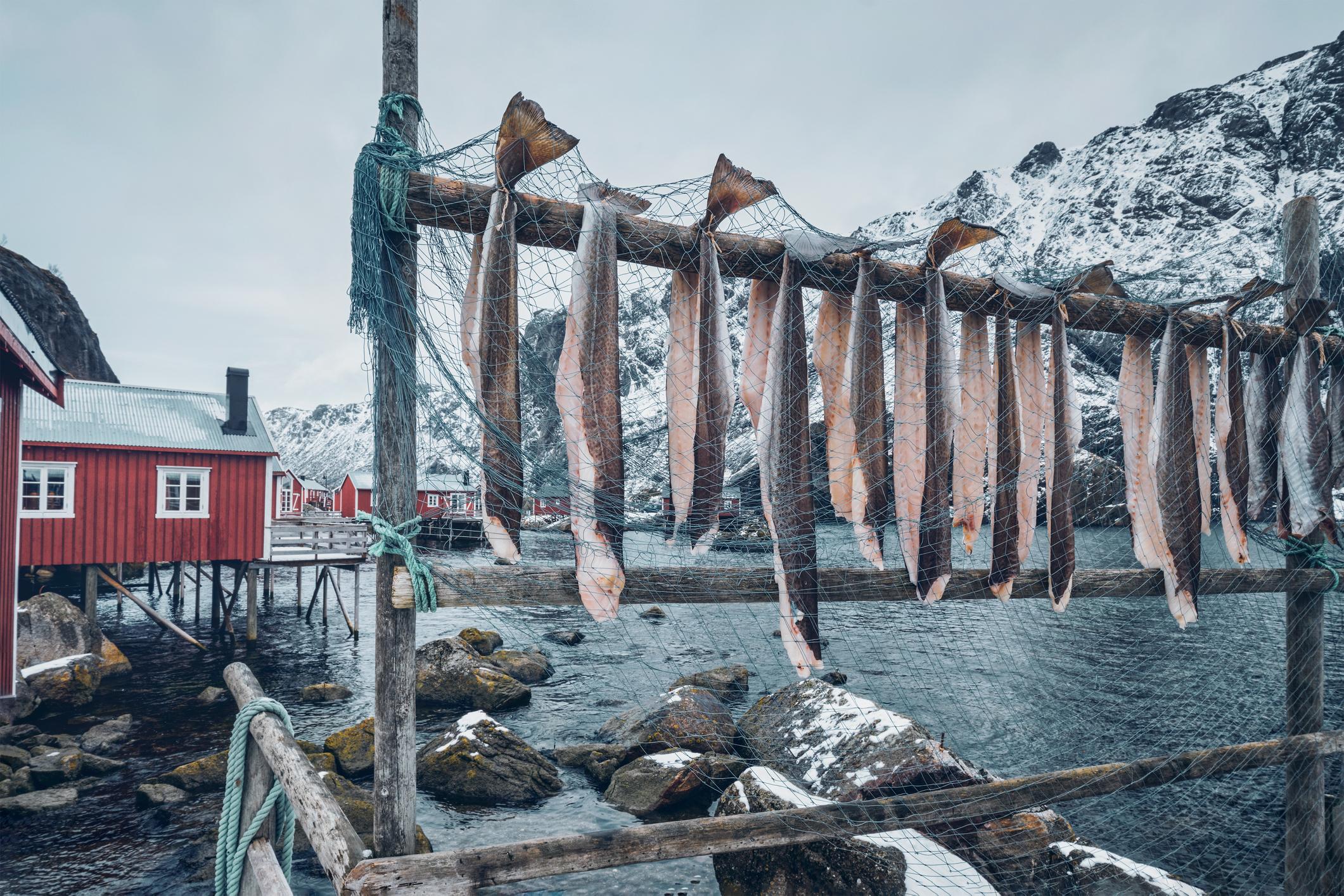
Thanks to the warm seas created by the Gulf Stream, Lofoten is a haven for cod fishing. For millennia, cod has supported life on these islands – both for sustenance and employment. Now, that resource is demanded across the world, from Portugal to China.
Chasing weather windows
The reason for our early start was that our guides had spotted a weather window early in the morning. Sure enough, as soon as Carlos pulled the handbrake, the first ray of sun cracked the sky. The wind was omnipresent, but such was the knowledge of Carlos and Lucio that we often managed to avoid the worst of it.
Much Better Adventures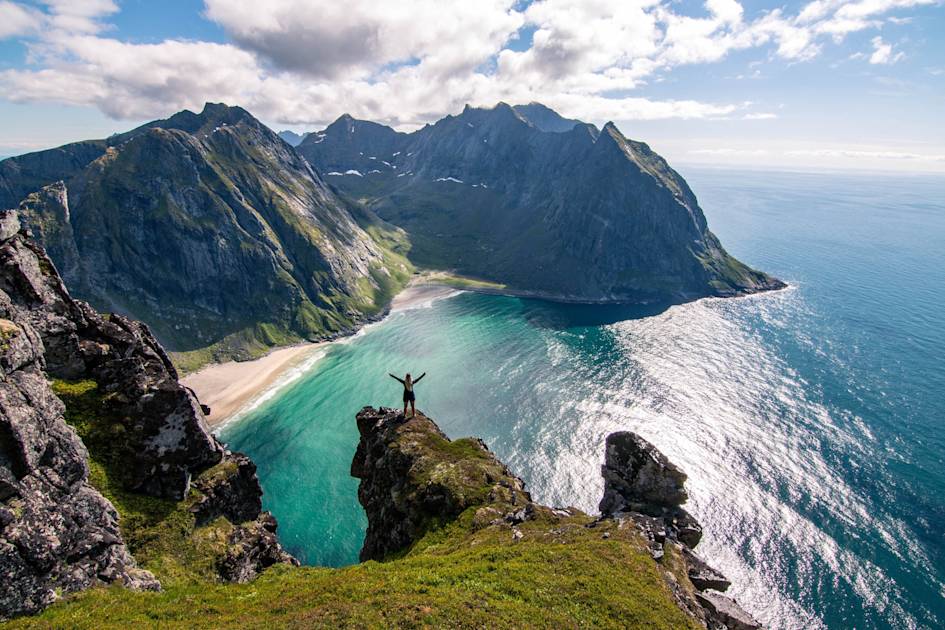
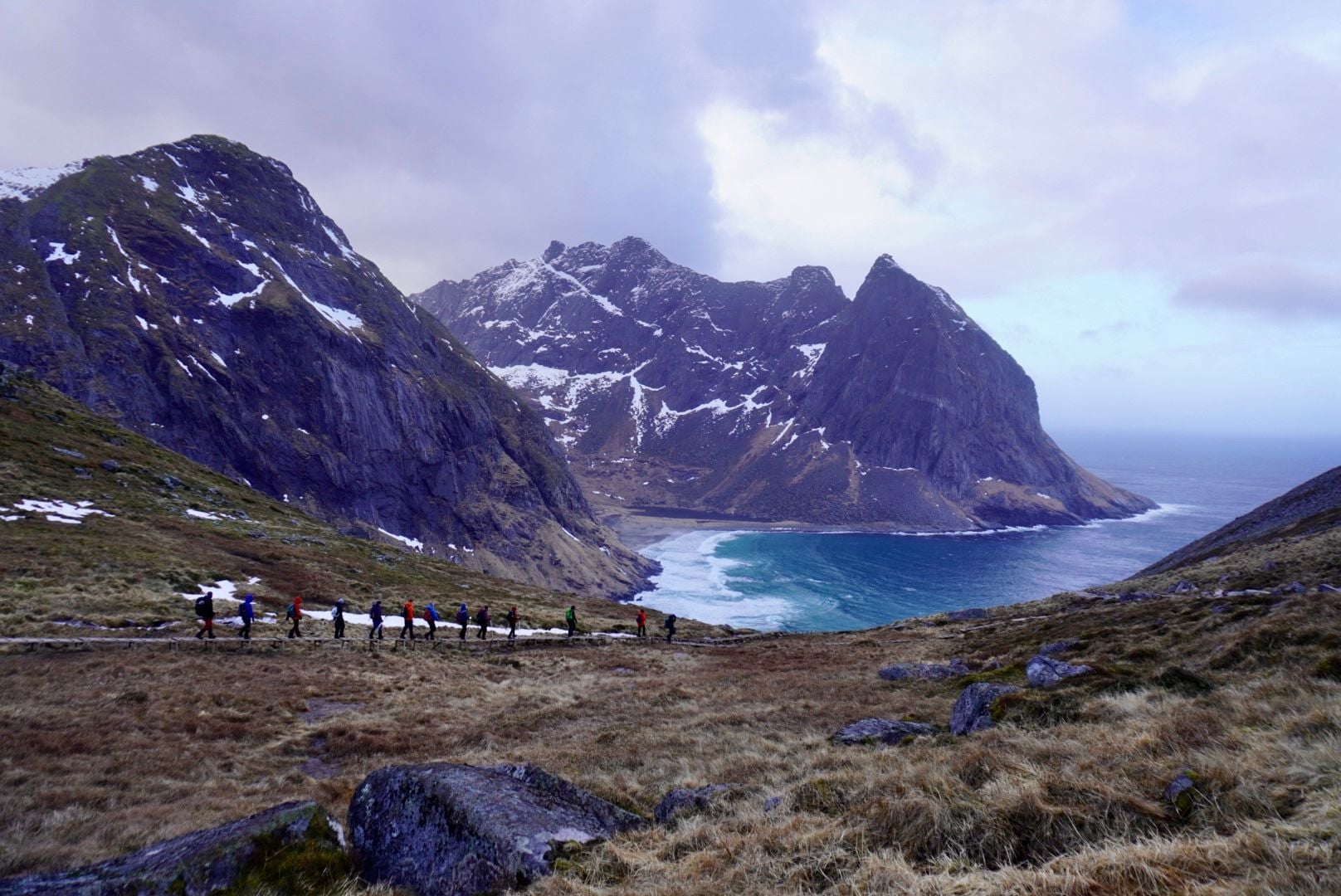
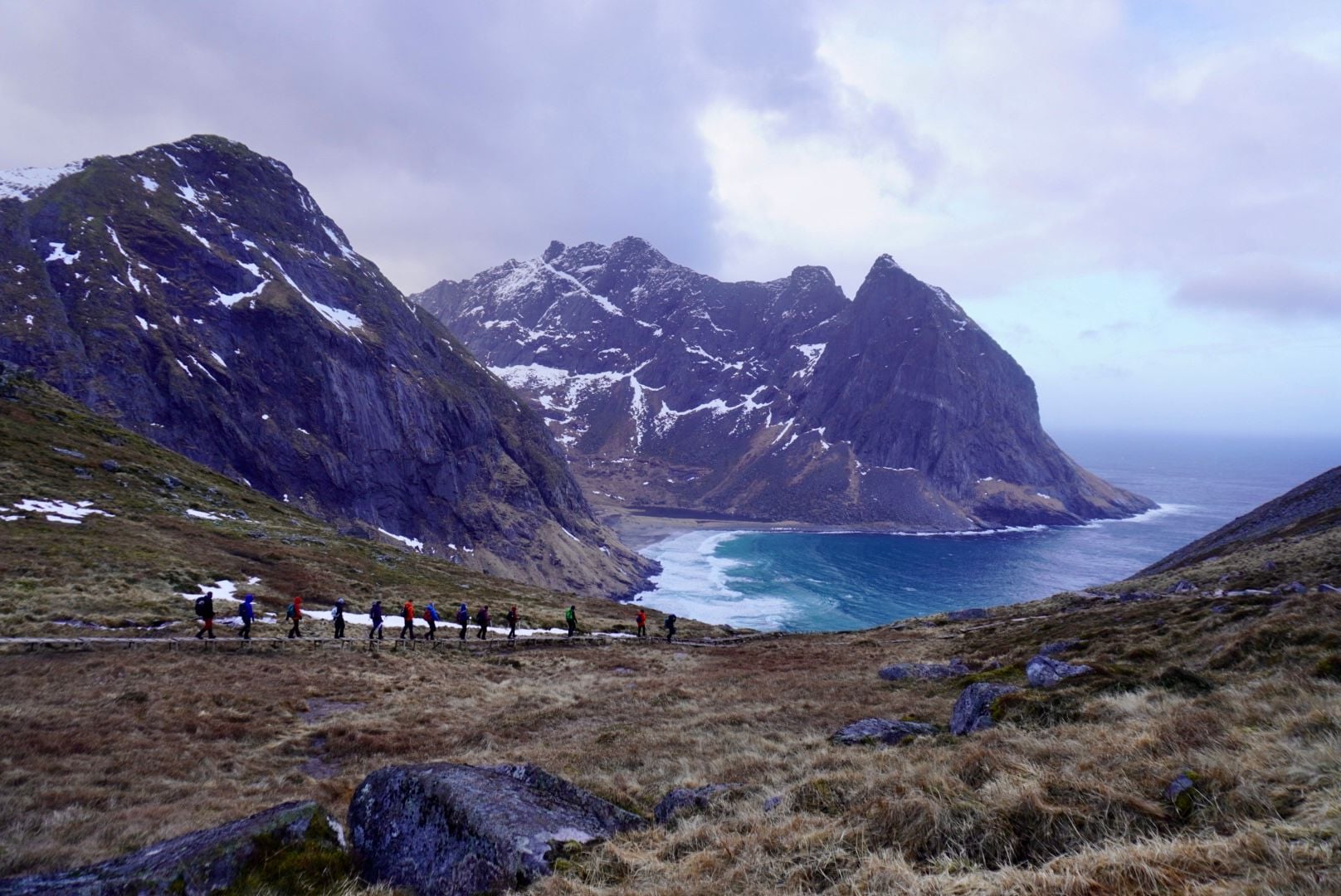
As we hiked uphill through boggy ground towards a pass, I got to know my fellow group members more. It was my first group trip since university and, I confess, I was unsure how I’d feel about it. After all, spending multiple days with a group of strangers, doing what I’d typically prefer to do alone, is daunting.
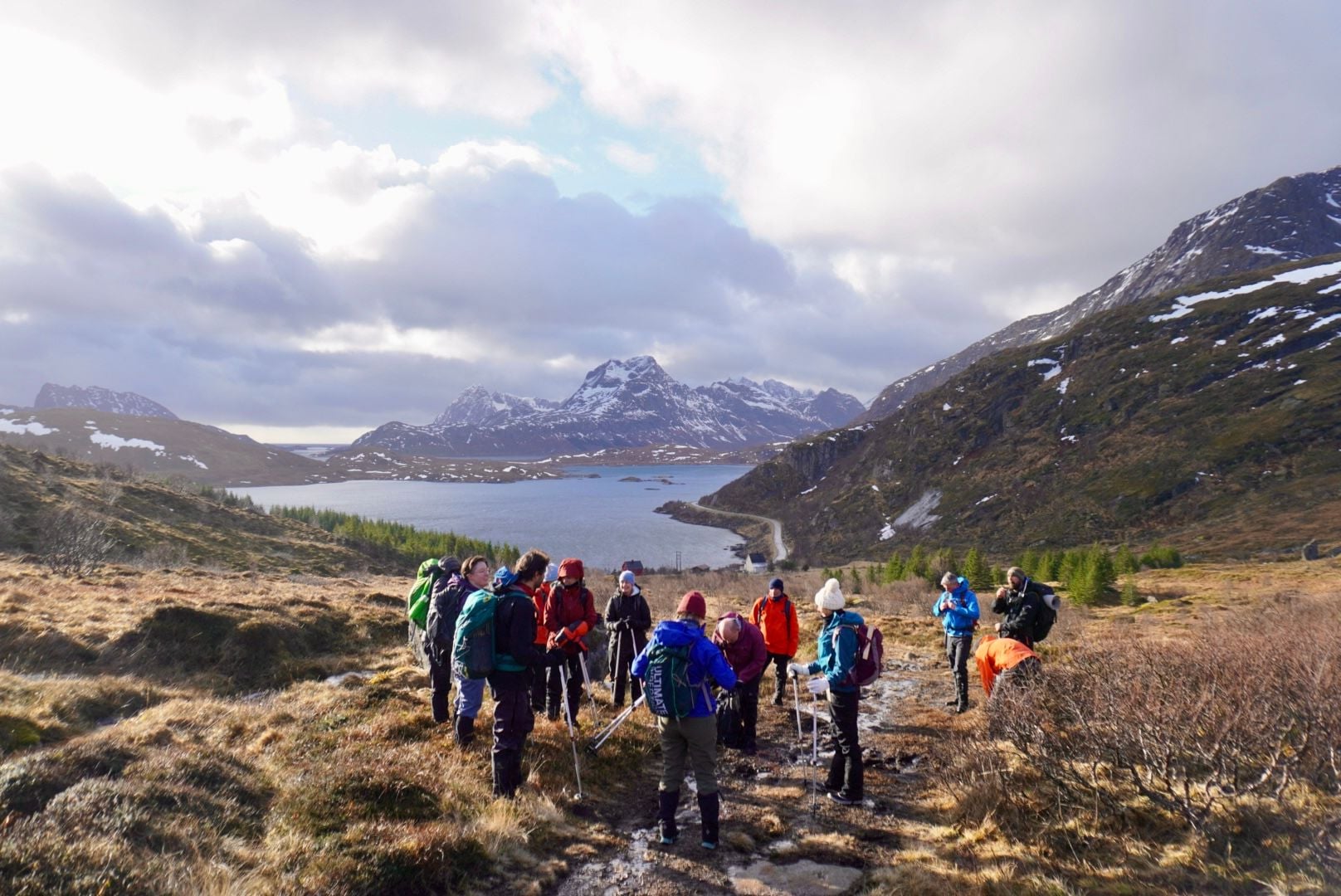
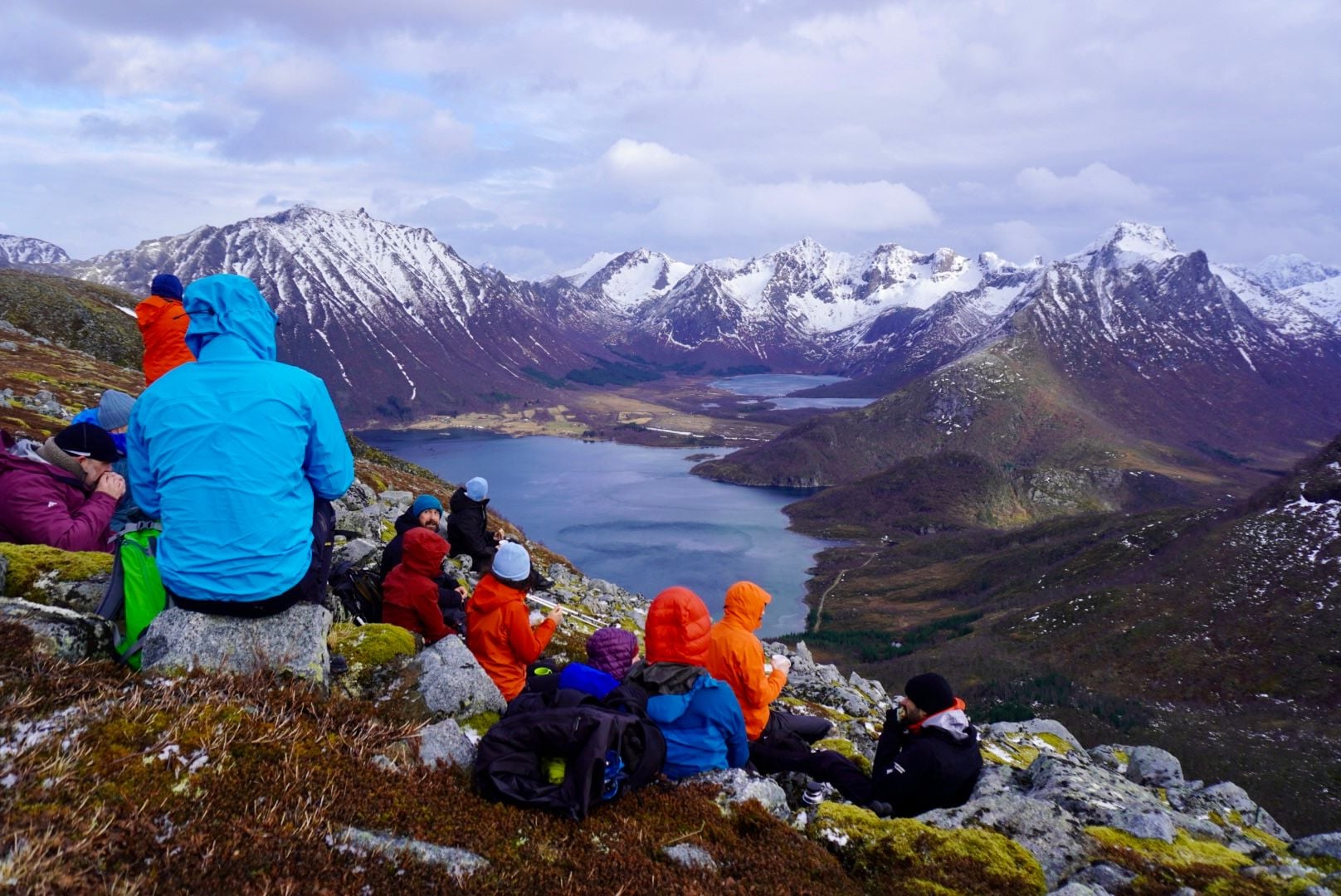
But by the time we reached the windswept and rocky pass to overlook Fredvang beach, those anxieties were gone and conversation came easily. Backgrounds blurred. It didn’t matter who had done what before arriving here – only that we were all leaning into the same wind, watching the same clouds race across the same sky, the same eagles soaring overhead.
Waves crashed against Kvalvika Beach where our guides made a campfire and passed around sausages. Just 100m away, the sea thundered violently...
At my feet, there was further evidence of the weather’s work. Only the bravest plants grow tall in Lofoten. Mosses and lichens carpeted the ground, intricate and unfamiliar, while birch trees stood low and twisted, shaped more by survival than ambition.
Waves crashed against Kvalvika Beach where our guides made a campfire and passed around sausages and marshmallows to roast in the open air. I couldn’t help but laugh at this heartwarming scene while, just 100m away, the sea thundered violently. That night, taking off my kit, the smell of campfire and sea would reach my nose again – a reminder of how the outdoors penetrated manmade defences.
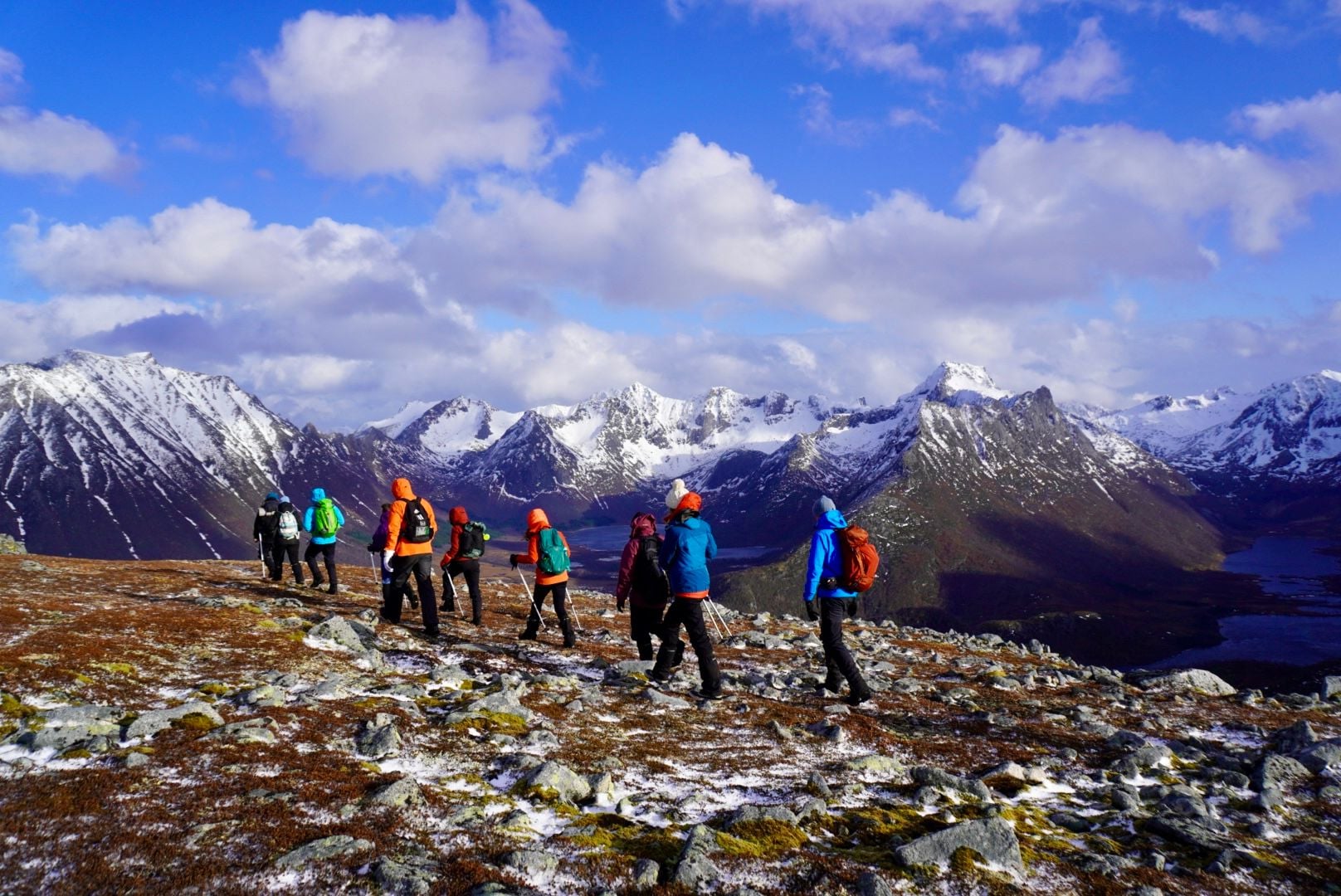
We stayed for over an hour, marvelling at how the light raced across cliffs that rose like Viking longships from the sea. After plenty of hot food and drinks, we hiked out from the beach back to the cars. Sure enough, the first drops of rain arrived as soon as we reached our ride home. The weather window was closing. This happened several times across the trip. Our guides seemed to know exactly when to be out and where. We were able to take advantage of the good weather and work around the bad.
Legends of Lofoten
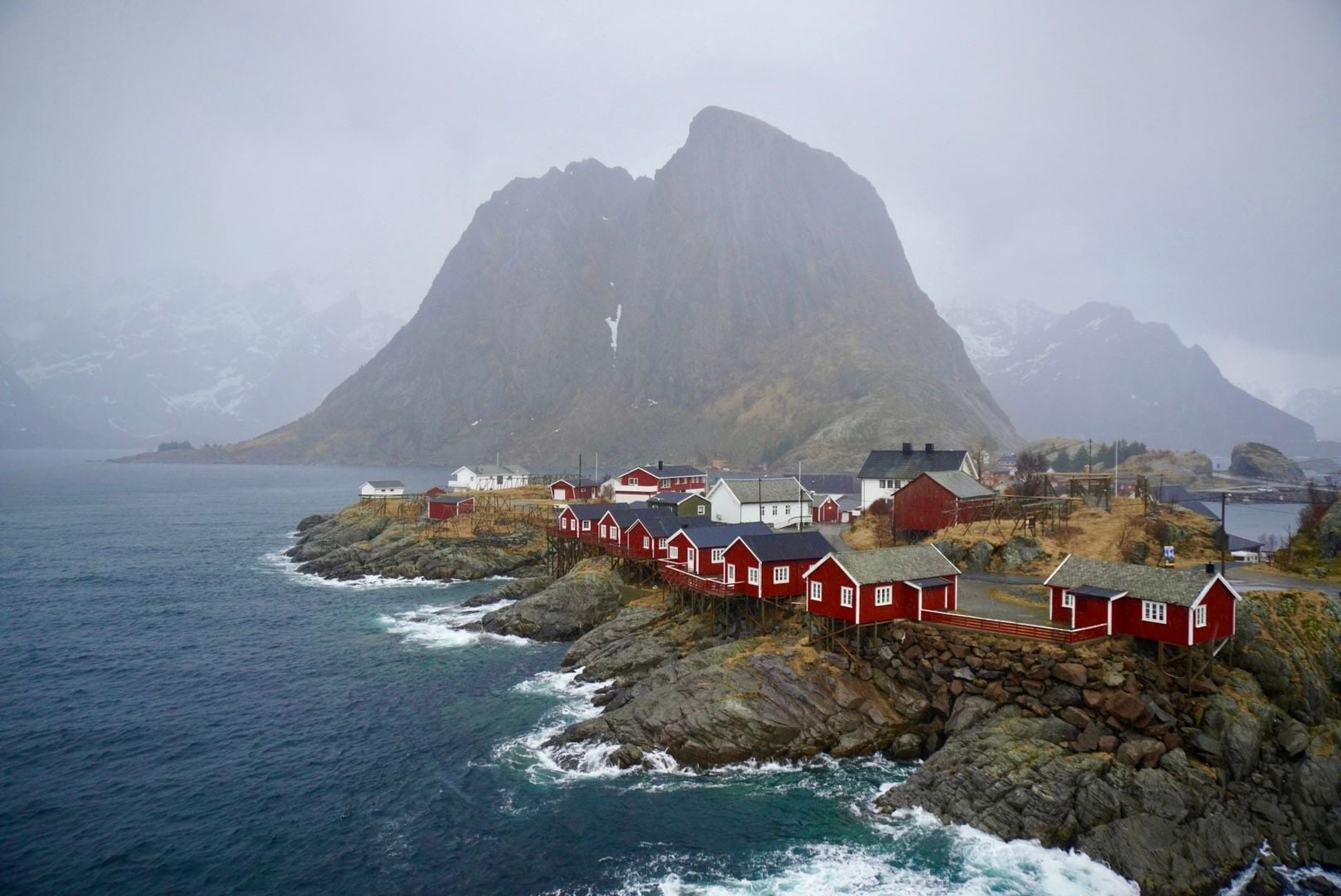
When it got really bad, we still managed smaller adventures. Walking along the cliffs above a foaming sea, we watched in awe as kittiwakes and shags flew in and out of precarious-placed nests. As we drove around the islands, we’d often pass harbours with their bright red rorbuer. These iconic fisherman’s cabins are designed to be easily spotted in harsh conditions and are sheltered from the worst of the storms. You can imagine how myths and legends grew here, as people tried to make sense of water and weather that refused to be tamed.
Much Better Adventures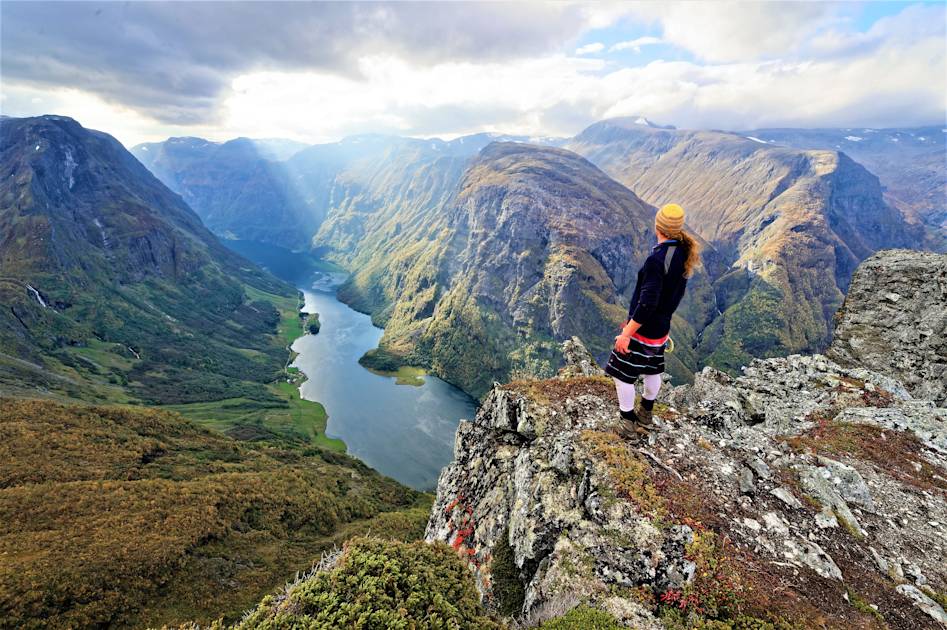
For one hour in the five days, the wind relented, allowing us to push out from the shore at Eggum and kayak around the sea inlet.
The frozen sea stretched south, broken only by a smattering of grassy islands leading to the shrouded mountains beyond.
Two seals mosied over to us, wondering who these crazy creatures were. After a short paddle, we found our way was blocked by a layer of thick ice floating on the sea, forming a crust like crème brûlée. Despite egging each other on to break a path through it, we were unsuccessful, and contented ourselves with racing each other and laughing at some of the group’s navigational challenges. All the while, the frozen sea stretched south, broken only by a smattering of grassy islands leading to the shrouded mountains beyond.
Much Better Adventures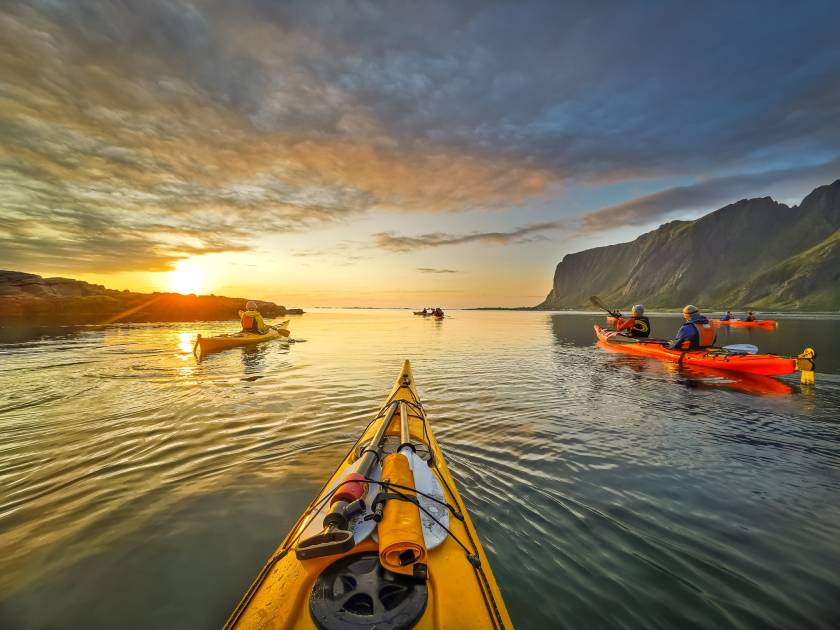
As the days went by, our group went from strangers united by common interest to genuine friends. The smell of drying kit and the warmth of the fire filled the house every night as we ate home cooked food, swapped jokes and stories, and watched nature’s dominion beyond the window.
In the end, we did see the Northern Lights. Briefly. Through a gap in the cloud that closed almost as soon as it opened.
But by then, it felt beside the point. We’d experienced the real Lofoten – and while the storms never really let up, the right people only made it better.
Inspired? Browse our range of adventure holidays in Norway now!