

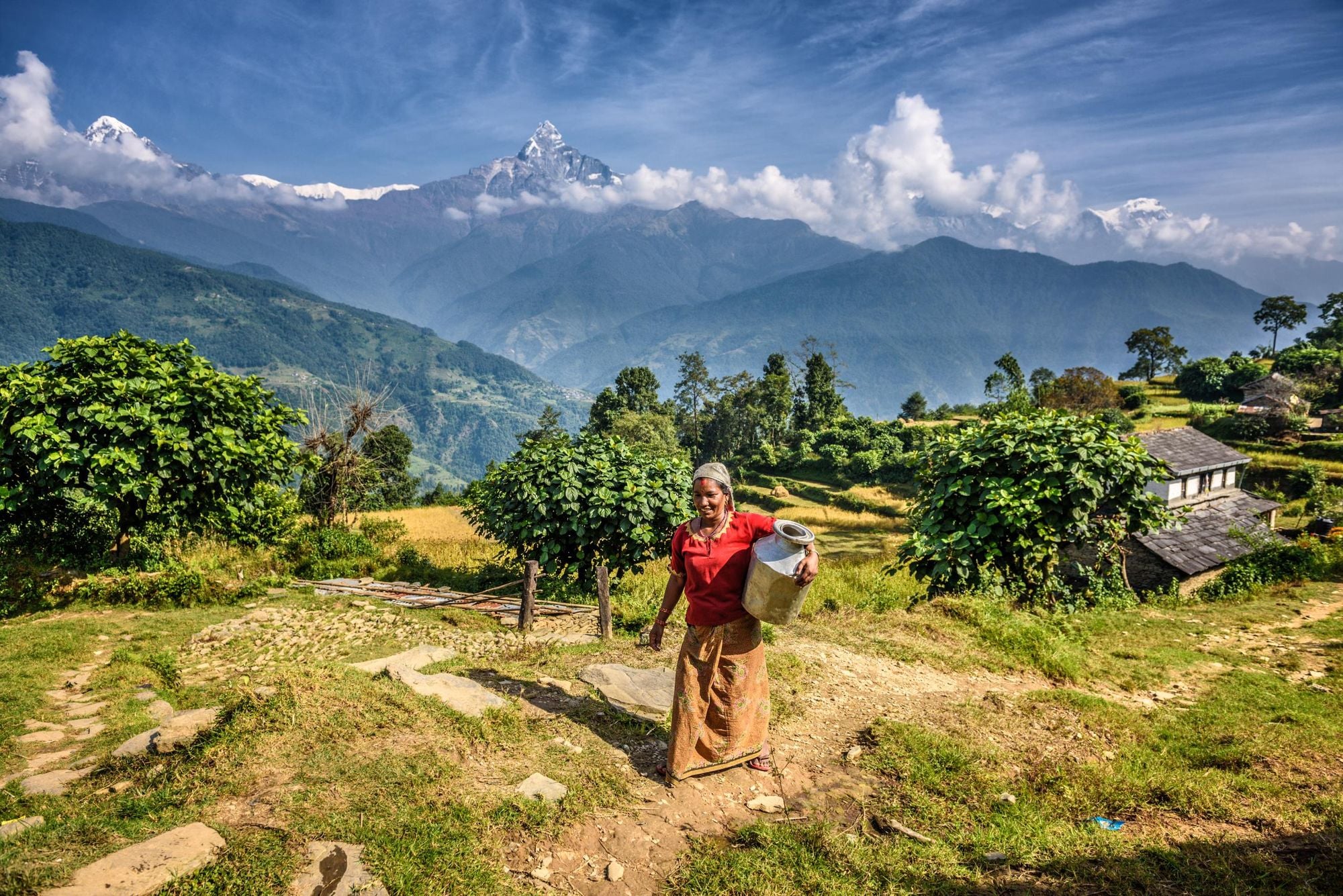
The Dhampus Trek is a short but scenic overnight trek in Nepal’s superlative Annapurna region, close to the lakeside city of Pokhara. It takes you from the village of Kande up to a viewpoint known as the Australian Camp (2,055m/6,742ft) to watch the sun set over soaring Himalayan peaks. After an overnight stay you’ll return the way you came.
However, there is a longer three day variant of the route (also referred to as the Dhampus Trek). This 25.4 mile (41km) circuit winds through the verdant foothills of the Himalayas, passing through rural agricultural communities and forested ridgelines before finishing in the village of Bhumdi. What sets it apart is its accessibility: it delivers sweeping, panoramic views of the Annapurna and Dhaulagiri ranges without requiring trekkers to ascend to extreme altitudes.

“The highest point in this trek is the Australian Camp, which is at 2,055m. That means people who haven’t walked much at high elevations are very attracted to it,” says guide Sanjeet Twayana. “The Dhampus Trek is popular with people who don’t have much time, because you can experience the mountains, their lifestyle and culture, across three days of hiking.”
To experience this variant of the Dhampus trek, you’ll head out of Pokhara towards the village of Hemja, which is close to Kande (the official trailhead). You’ll follow a gently undulating trail upwards through terraced farmland, passing small villages inhabited by the Brahmin, Kshetri and Gurung communities, each with their own traditions, architecture and ways of life. You’ll see locals tending crops, carrying firewood or herding livestock as you walk.
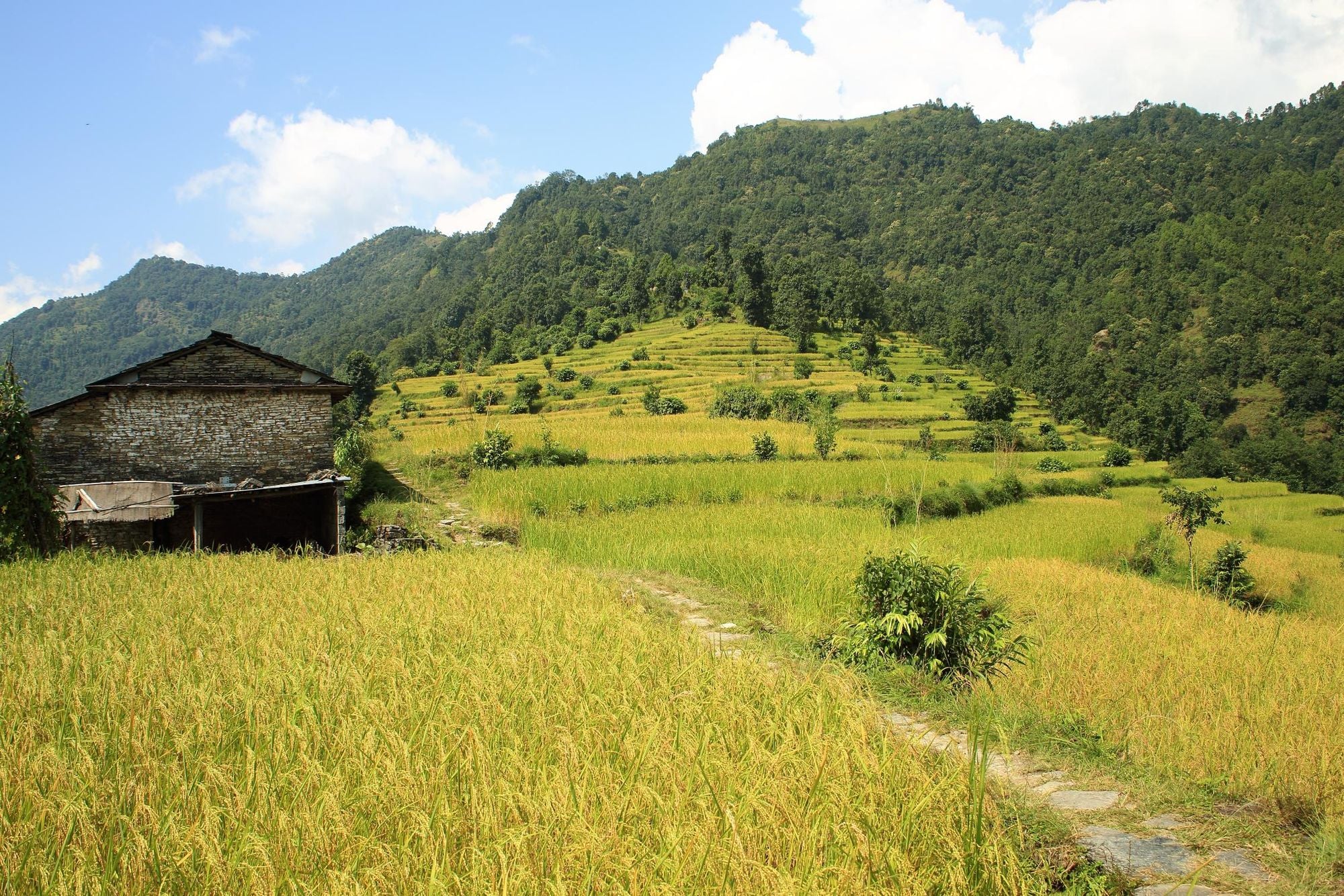
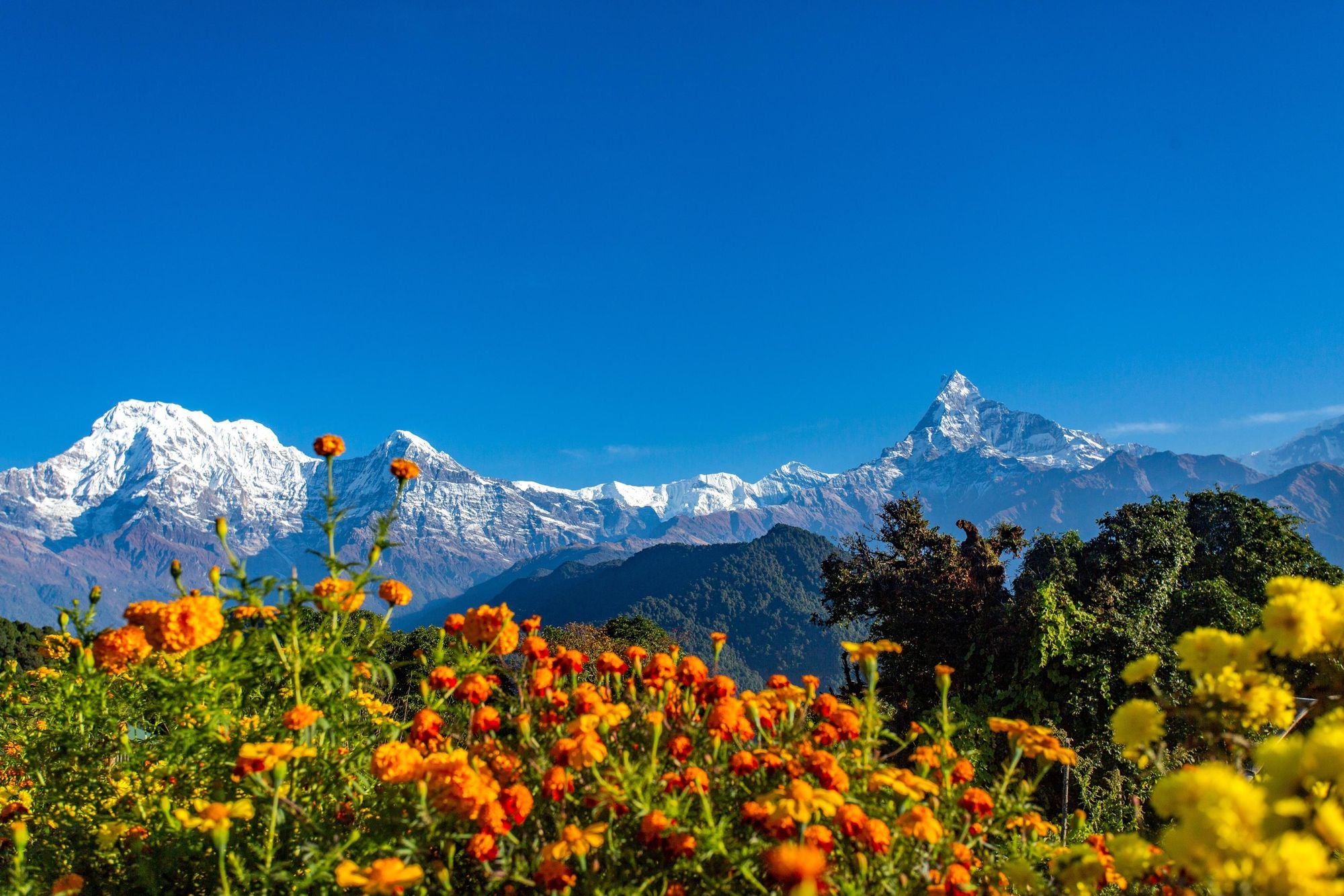
From Kande, you’ll ascend stone steps up through a dense forest of oak and rhododendron, emerging onto a grassy ridgeline. Follow it to the Gurung village of Dhampus, located at an elevation of 1,750m (5,741ft). It’s surrounded by lush green hills, with a panoramic view of Himalayan peaks including Annapurna I (8,091m/ 26,545ft), known as ‘the world’s deadliest mountain’, Manaslu (8,163m/26,781ft) and the distinctive double-summited Machhapuchhare, or ‘Fish Tail’ Mountain (6,993m/22,943ft).
“It’s possible to stay the first night in Dhampus, but most people will continue trekking to the Australian Camp,” says Sanjeet. “It’s around one hour of uphill walking from Dhampus, and a thousand feet higher. It also has a scenic view where we can see the mountains as well as the Pokhara Valley with lots of the green hills. And then, on the second day, early in the morning, we will see the sunrise, which is beautiful from here.”
At dawn, the sunrise transforms the peaks with a soft golden glow
The climb to Australian Camp is short but rewarding. The trail, made of uneven stone slabs, winds through forest with occasional openings in the foliage allowing glimpses of the mountains. A series of signposts will let you know how much of your hike is left, although some people (especially those unused to hiking) will take longer.
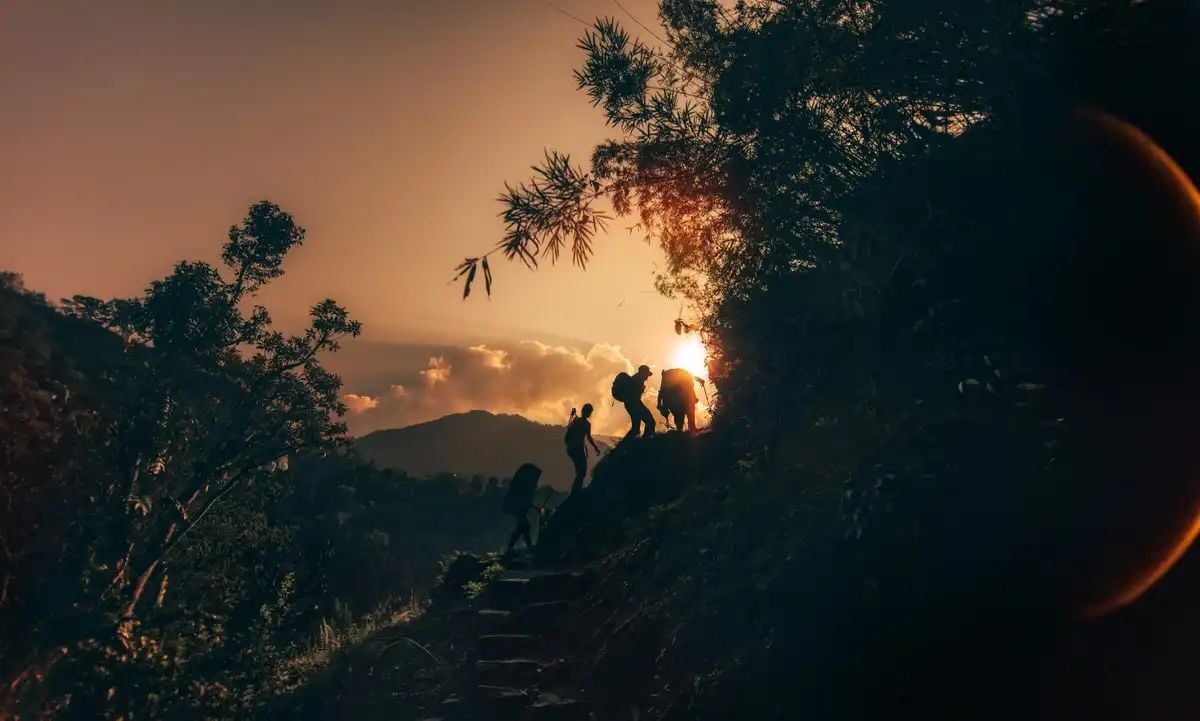
At the top, you’re greeted with a sweeping panorama of the Annapurna range, including Machhapuchhare and Lamjung Himal. As evening falls, the mountains are blue silhouettes against a fiery sky, and at dawn, the sunrise transforms the peaks with a soft golden glow.
The site itself has an interesting history. Locally known as Thulo Kharka (‘big field’), it was once a grazing pasture for nearby villages. In the 1980s, Austrian climbers began camping here, drawn by its flat terrain and Himalayan views. Over time, “Austrian Camp” evolved into “Australian Camp,” a name that stuck — reportedly because it was easier for locals to pronounce. There are now several different accommodation options on offer; fixed tents, small wooden huts and also a couple of local tea houses.
The second day of the trek takes you from the Australian Camp to the town of Panchase, a distance of 8.7 miles (14km). The trail descends along a gravel track that threads through terraced farmland and small hamlets. It leads to the Gurung village of Bhadaure, where you’ll have a view of Pokhara Valley and Phewa Lake, surrounded by green hills and the misty silhouettes of the Annapurna range. From here, you’ll walk through the forest to Panchase along a gently winding trail. In spring, the rhododendrons bloom in vivid reds and pinks, adding a burst of colour to the landscape.
Panchase is another town with excellent views out over the mountains and terraced hills. It's peaceful and uncrowded — more so than other trekking hubs in the region — with several tea houses where you can spend the night.
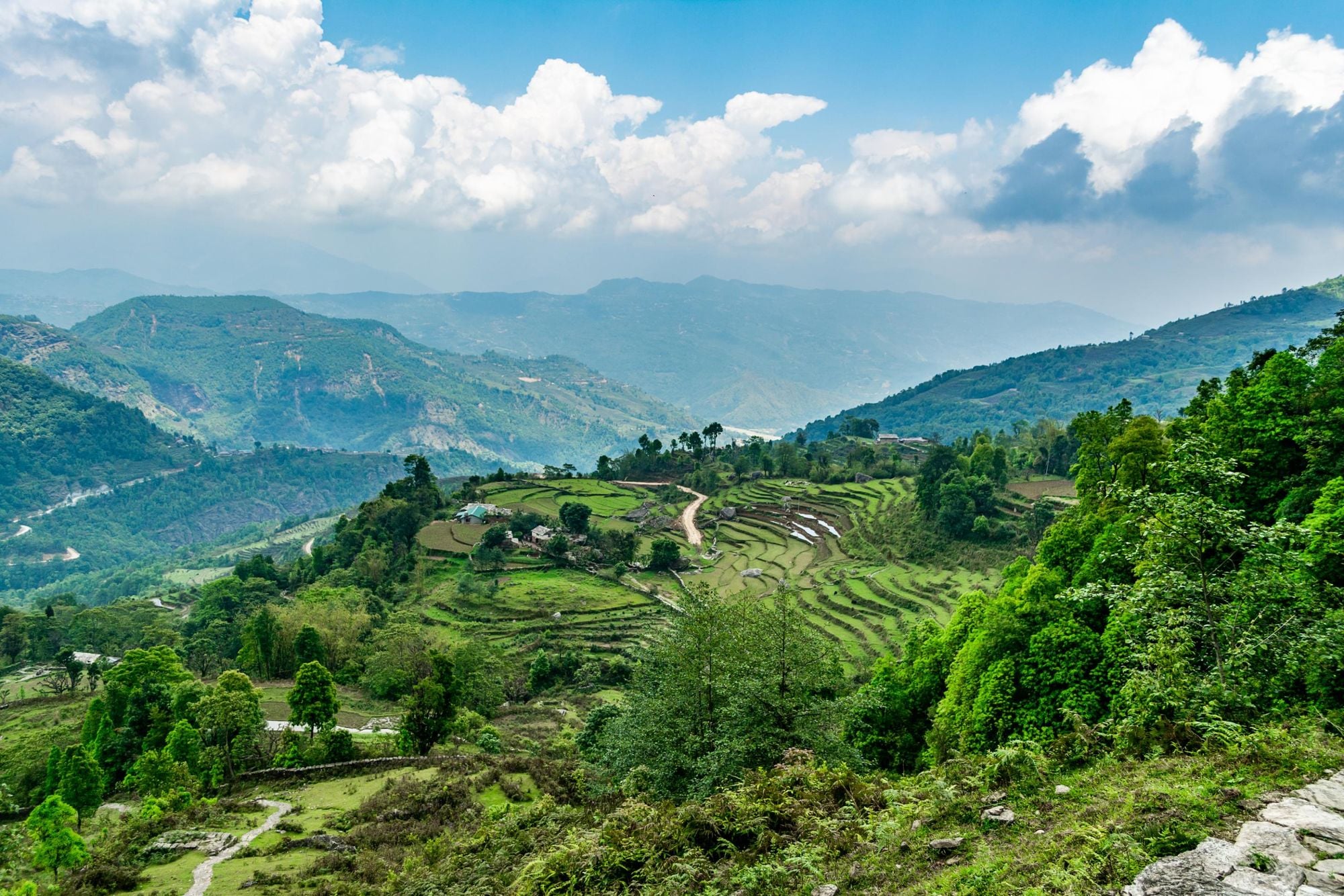
“Panchase is a beautiful place, thanks to the panoramic views of the Dhaulagiri, Annapurna and Manaslu Himalayan ranges. It’s also the starting point of the Royal Trek,” Sanjeet says.
The third and final day takes you steadily downhill towards Pokhara. The trail passes through dense forest before opening onto meadowland, with occasional glimpses back towards the mountains you’ve just explored. Eventually, you’ll reach Bhumdi; once a separate village, now part of greater Pokhara. It’s a short taxi ride back to the city centre from here.
Panchase is a beautiful place, thanks to the panoramic views of the Dhaulagiri, Annapurna and Manaslu Himalayan ranges
The Dhampus Trek is a reminder that adventure doesn’t always have to be extreme to be extraordinary. It’s proof you don’t need to tackle high summits or take weeks off work to experience the Himalayas. Across a few short days you’ll travel through farmland, dappled forest and across ridges, watching the light dance across some of the world’s highest mountains and immersing yourself in the silence.
FAQs
How far is Dhampus from Pokhara?
It’s around 15.5 miles (25km) from the city of Pokhara to the village of Dhampus, which takes around an hour by car. The fastest route takes you along the NH03 highway.
Is Dhampus Village near Dhampus Peak?
No. Dhampus village is located in the Annapurna region near the city of Pokhara, at an approximate elevation of 1,750m (5,741ft). Dhampus Peak (6,012m/19,724ft) is located north of Dhampus village, in the Dhaulagiri region.
How long is the Dhampus trek?
There are several versions of the Dhampus Trek. The most common is an overnight out-and-back hike which takes you from the village of Kande and up to the Australian Camp via the town of Dhampus. Another three-day option takes you from the village of Hemja to the Australian Camp, then to the village of Panchase, and on the final day to Bhumdi (a village near Pokhara).
How experienced do I need to be to do the Dhampus trek?
People of all ages and experience levels can do the beginner-friendly Dhampus Trek. However, there are some stone steps and other ascents, so having a decent level of fitness and stamina is necessary.
Do I need a guide for the Dhampus trek?
A guide is not required for the Dhampus Trek, and it is popular with independent hikers. However, a guide is recommended if you are new to trekking or would like to do a longer variant of the itinerary. They can also help you with tea house accommodation, organise luggage transfers and give you insights about local culture.
Inspired? Hike the Dhampus Trek on our Ultimate Adventure Through Nepal.