


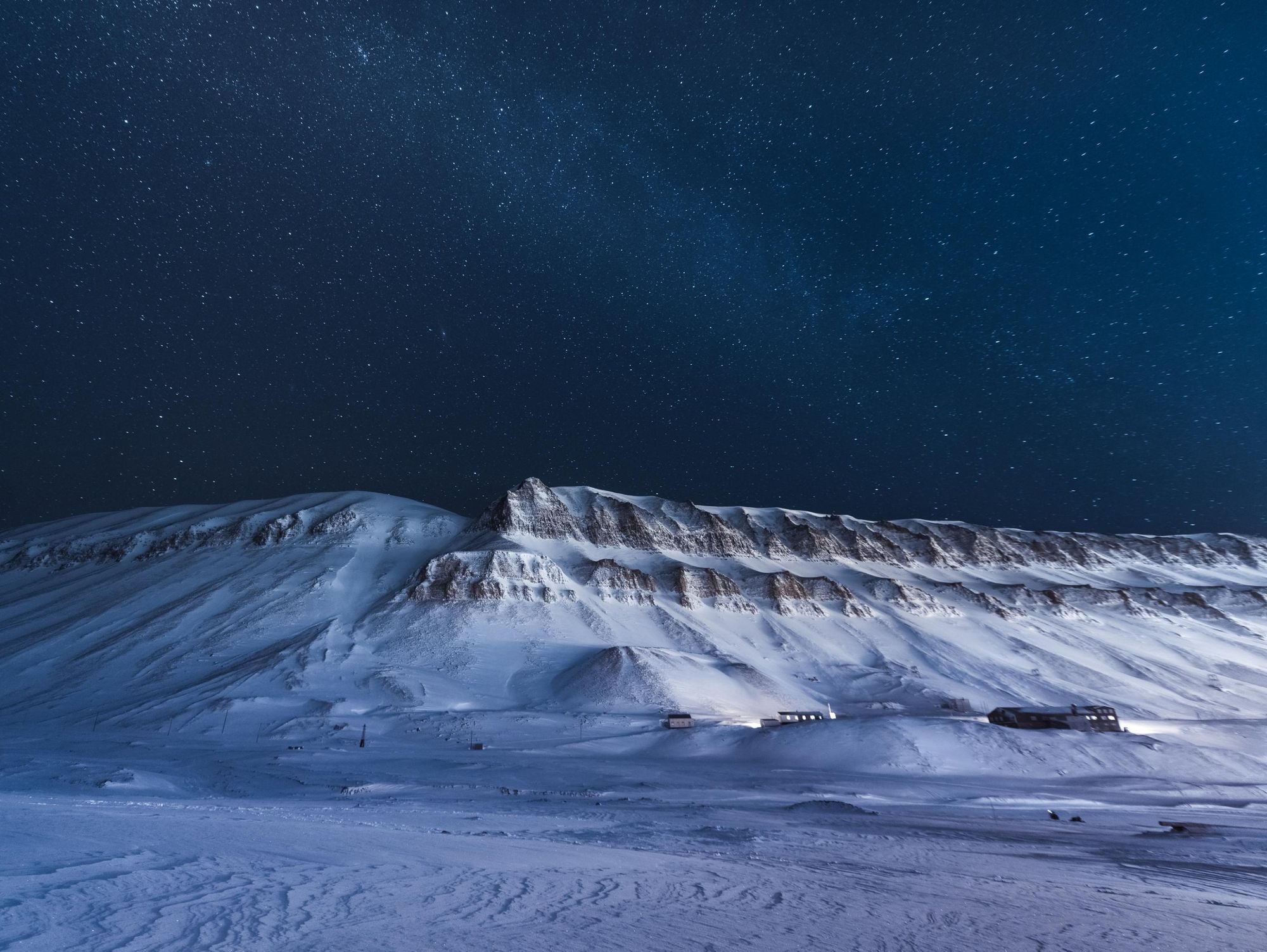
When I stepped off the plane in the early afternoon, it was already dark. There was a sharp sensation in my nasal passages when I inhaled, as though my breath had turned to ice. I grabbed my rucksack and caught the bus into town. The darkness pressed thickly against the windows, as though it were the middle of the night. I was in bed by eight. When I woke up, 13 hours later, it was still dark and I felt completely disoriented, as though I’d lost a day.
It was the polar winter. I was visiting Longyearbyen, the largest town on Svalbard, a Norwegian archipelago high in the Arctic Circle. Its proximity to the North Pole means that the sun dips below the horizon around late October and doesn’t rise again until mid-February; a period known as the dark season.

During this period, you might experience blue twilight and pastel-coloured skies when the sun reaches its zenith. But during the true polar night (which lasts from mid-November to the end of January), the sun is more than six degrees below the horizon and you’re plunged into ink-black night.
Visiting for a week during the polar night, I found myself far more sluggish and sleeping much longer than usual. But how do Svalbard’s permanent inhabitants cope without seeing the sun for months on end?
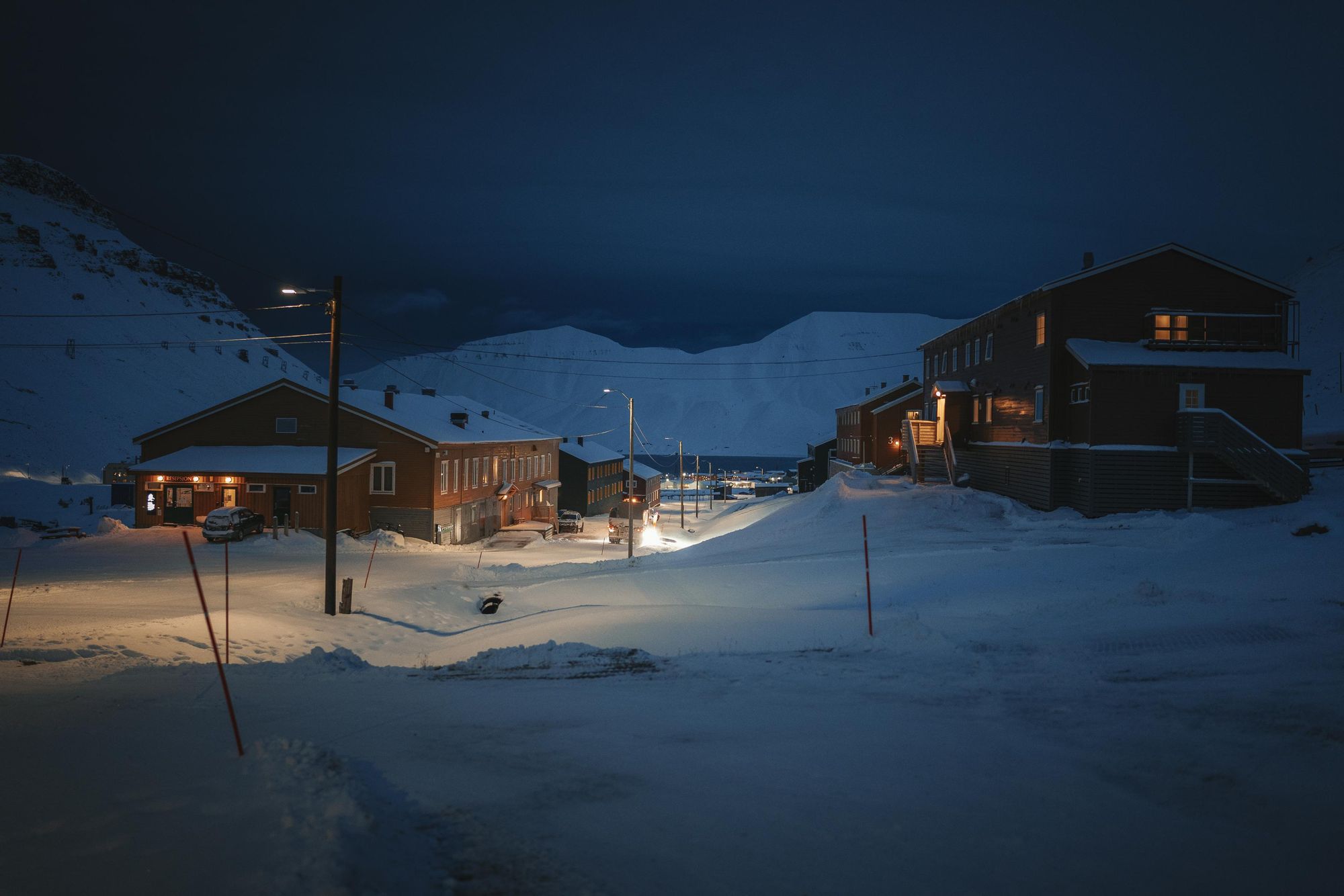
“For me, the beauty of living in Svalbard is that there’s a lot of contrast," says Kaisa, an adventure guide who has lived in Longyearbyen for six years. “It's really busy during summer. Nature is busy, all the birds are coming back for the breeding season. There’s a lot of sun so you have a lot of things to do outside. Also there’s a lot of guests, so you’re always out on expeditions.
“By the time the polar night arrives, you feel you need this time to calm down. It's the complete opposite. There’s not so much work and not so many people; winter is very peaceful. I like it because I have time to do things that I didn't have time to do in the summer.”
Winter is very peaceful. I like it because I have time to do things that I didn't have time to do in the summer
The dark winter months are often associated with Seasonal Affective Disorder (SAD), when reduced daylight disrupts the body’s internal clock, serotonin levels and melatonin regulation, leading to symptoms such as low mood and fatigue.
However, living at higher latitudes doesn’t necessarily lead to higher incidences of SAD, especially among Nordic cultures. According to a study by psychological researcher Kari Leibowitz, this is because many inhabitants of Svalbard look at winter with a positive mindset, reframing it as a cosy season where they have ample time to enjoy a period of rest and relaxation, or winter activities like skiing and snowmobiling. In Svalbard, there’s still scope for getting outdoors—your adventures just take place entirely in the dark.
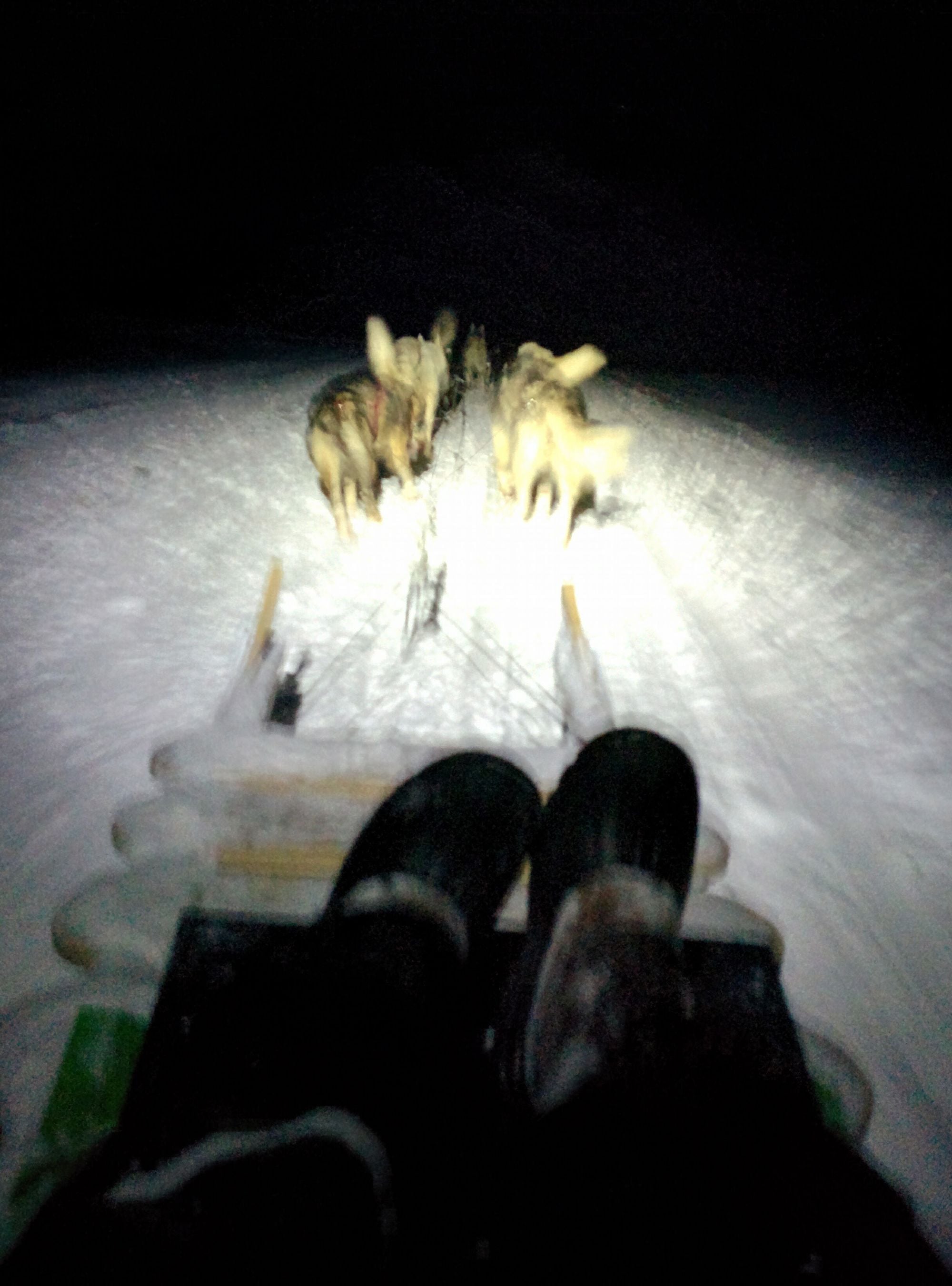
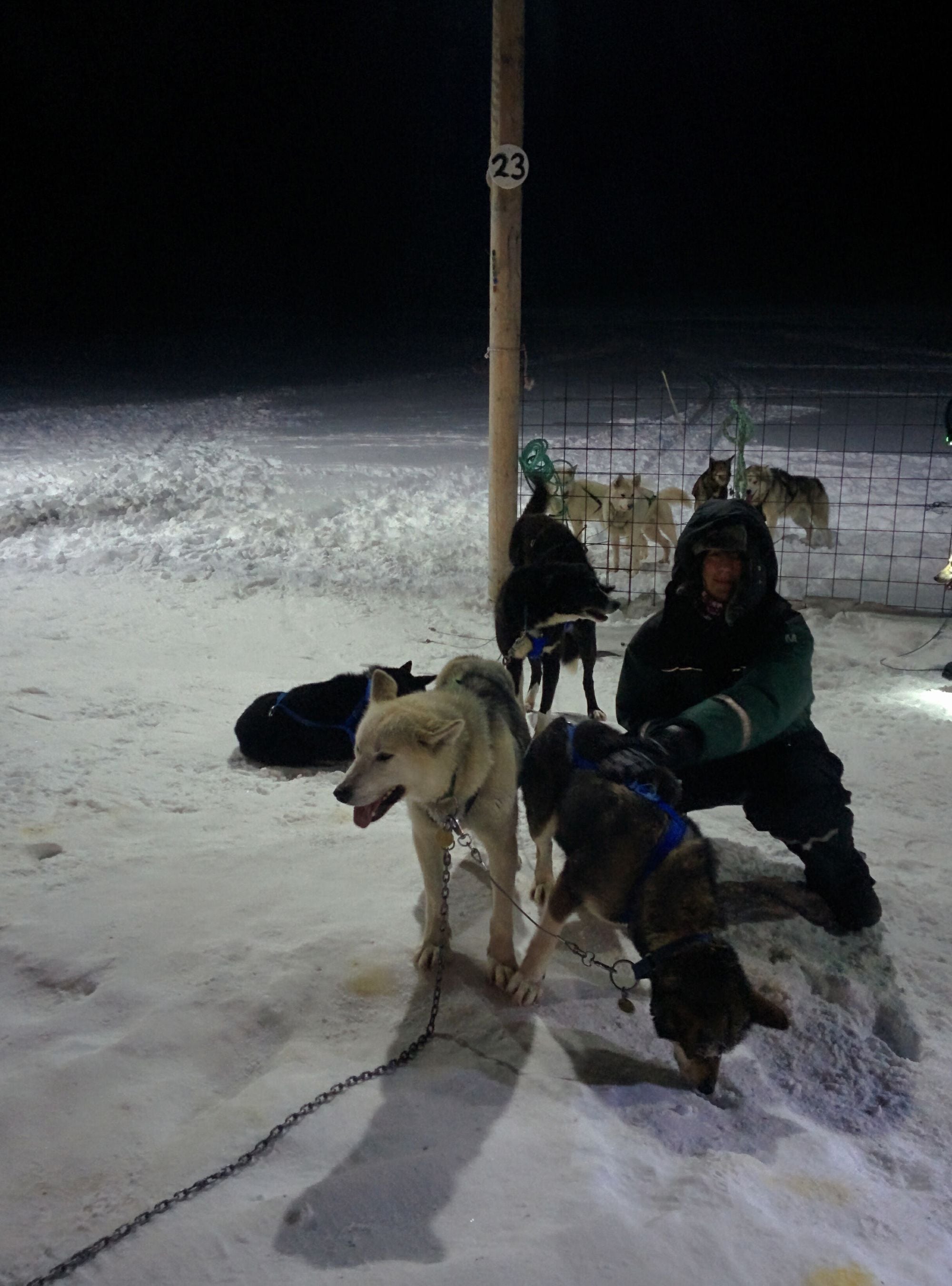
When I visited Svalbard during polar night, I went out on a short dogsledding expedition. We were driven out of Longyearbyen to the dog kennels, where we were given thick gloves and thermal suits to wear, as well as headlamps. Then we set out into the darkness. The only sound was the dogs breathing and the sound of the sled runners gliding across the snow. Outside the circle of light cast by the headlamp, the darkness was absolute. Inside it, I could see whirling patterns of snow, the silhouettes of the dogs and the faint pale shapes of mountains in the distance.
By the time I finished the dogsledding trip, my fingers were numb and my body felt as though it were frozen solid. We were taken indoors to a rustic log cabin, and given steaming mugs of hot chocolate. The sugar hit fortified me, and I quickly warmed up by the wood-burning stove. This was an example of polar night in Svalbard at its finest: type two fun followed up by a contrasting moment of warmth and relaxation.
One of the most fascinating times to visit Svalbard is during the transitional months—October, February and March—between light and darkness.
“What every visitor notices is that there's a 20 minute difference every day in the light conditions,” says Kaisa. “That's quite a dramatic change. Usually people are used to two or three minutes where they come from.”
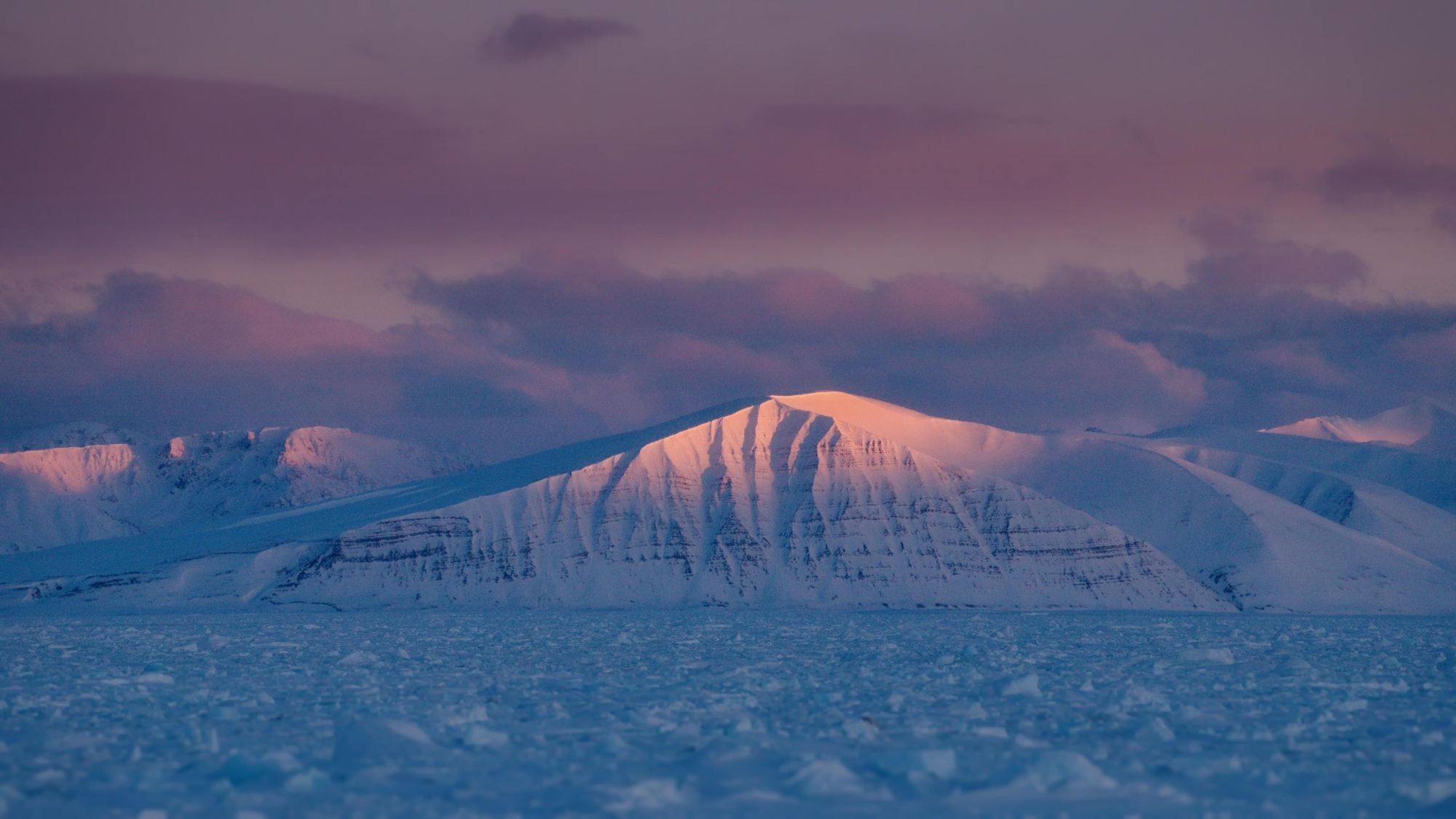
Light returns to Svalbard in mid-February, although in Longyearbyen, which is surrounded by mountains, you don’t see the sun before 8 March. This return is celebrated with Solfestuka, the ‘sun festival’ which culminates in locals and tourists gathering on the steps of Longyearbyen’s old hospital on 8 March to watch the sun rise over the horizon for the first time.
But those who leave the town on expeditions, like Kaisa, experience the returning of the light earlier, in February. Out in the Svalbard wilderness, you’re able to see all the different hues of sunset and twilight, which are remarkable for their astonishing beauty.
Whatever light we have in the sky reflects everywhere. You feel that you are immersed in this light
"In February in Svalbard, the sky has these beautiful gradients of blue and light blue and pink,” Kaisa says. “In March there is a lot of what they call the ‘blue hour’, although it often lasts much longer. Then at the end of March and beginning of April, there are really long sunrises and sunsets. So there are a lot of orange tones in the mountains.
“What is special here is that everything is very open. The landscape doesn't have any vegetation. So whatever light we have in the sky reflects everywhere. You feel that you are immersed in this light. When you normally see the sunset, the sky is orange. But here the whole world is orange.”
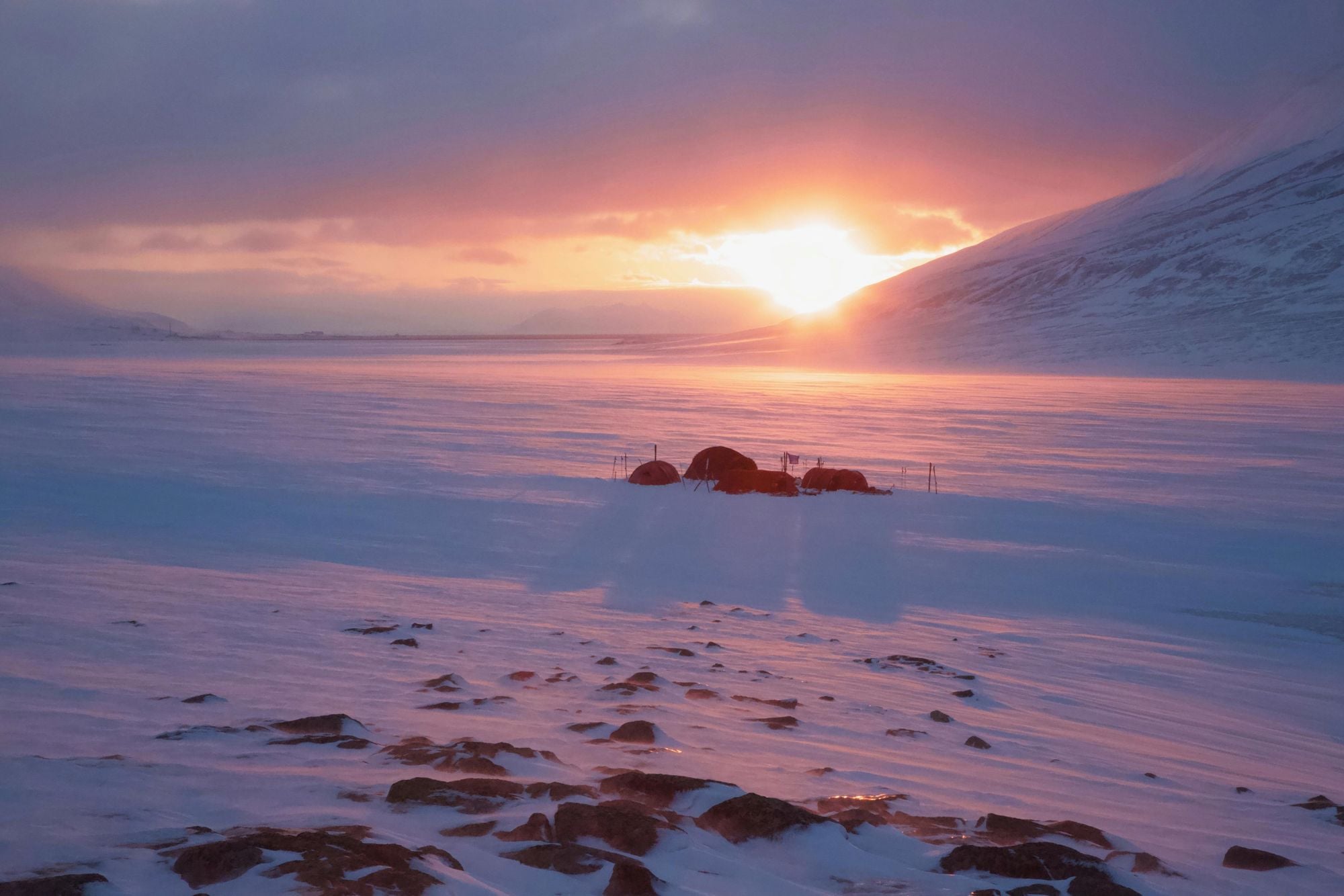
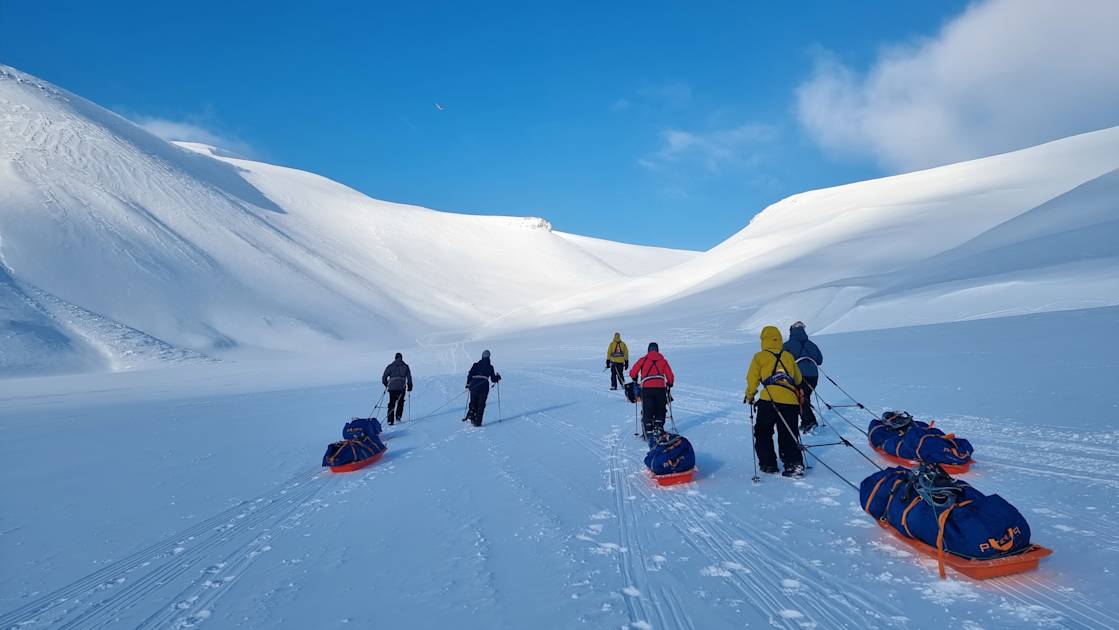
March marks the beginning of expedition season, as the return of the light means you can travel further afield. Kaisa guides groups of Much Better Adventures travellers out on an overnight trip into the Arctic wilderness at this time of year. You’ll load up a pulka (a small sled which is dragged using a harness attachment) and hike deep into the snow-covered landscape, keeping an eye out for polar bears, arctic foxes and reindeer.
Camp out in the wilderness overnight, watching the blazing sunset fade to deep inky black, and learn from your guide how to sleep in the sub-zero temperatures. After a safety briefing, you'll take it in turns to go on polar bear watch; absorbing the stillness and silence of the Arctic night while your fellow campers sleep.
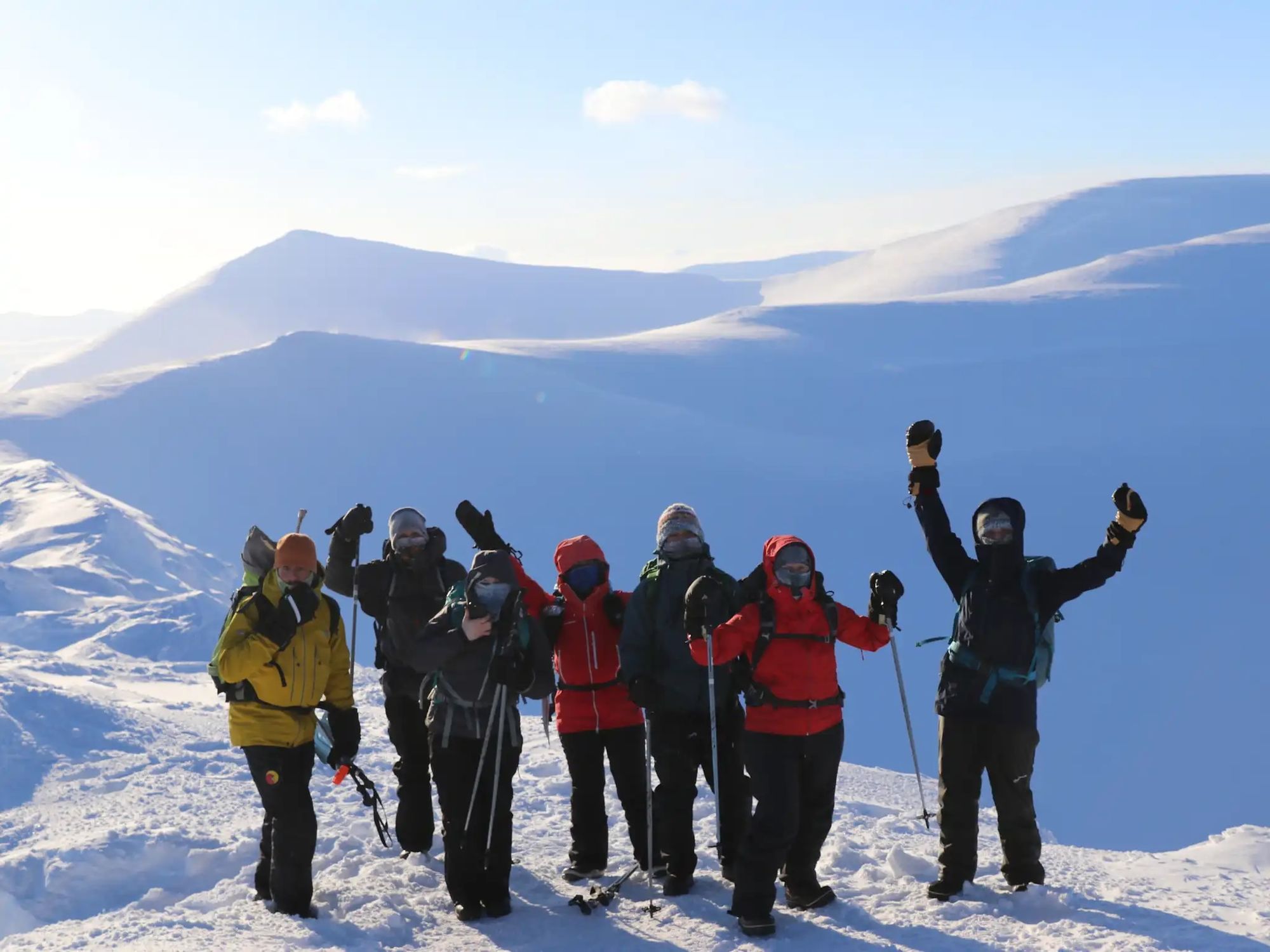
By April, the ground is still covered in snow but light has returned to the island. From the 19th April, visitors can experience the phenomenon of the midnight sun, when the landscape is bathed in 24-hour-daylight.
“This is my favourite month. I almost feel like I'm living here for April because the light comes back and it gives a lot of energy after the long polar night. You feel like you can live two lives; you work in the day and in the night you can go out snowmobiling,” Kaisa says.
Life in Svalbard is defined by opposites: the polar night and midnight sun; bone-chilling cold and fireside warmth; isolation and community. The people who choose to call Svalbard home understand that the darkness and the cold don’t stop you from adventuring—in fact, they enhance it. And when the light finally returns, the whole island seems to burst into wakefulness, ready for the new season of adventuring.
Feeling inspired? Check out our Arctic Expedition Through Svalbard in Winter.