



The beginning of the year is a time of good intentions. Some people embark on Dry January or Veganuary, while others make, and attempt to stick to, new year’s resolutions. But for us, January signals something much more exciting: a refreshed calendar, and another opportunity to line up an adventure.
Now, the process of picking an adventure is a rather exciting one—but it's also one which, we know all too well, isn't quite as simple as it appears at first glance.
First, you've got to decide on your landscape. Is it to be toucan-topped trees and lush rainforest? Camels and sand dunes? Packrafts and river canyons or rugged mountain tops and serrated ridgelines? Once you've decided, are you going to choose to hike, cycle or paddle through that terrain? Then there's the query of what time of year to go, and who to travel with when you go? Often, budget will play an element in this, which brings another dimension to it altogether.


This can quickly lead to a type of burnout, known as decision fatigue.
Humans make hundreds (perhaps even thousands) of decisions every day, from small choices like what to eat for breakfast to major life decisions such as whether to accept a job offer. Whilst many of these decisions require precious little thought, cumulatively they can have an impact, affecting emotions and also the quality of subsequent decision-making. There's science behind it.
Humans deplete internal resources when performing acts of self-regulation, such as processing information to formulate a decision
A study conducted by Grant Pignatiello et al. helps explain this phenomenon.
“Humans deplete internal resources when performing acts of self-regulation, such as processing information to formulate a decision,” the study reads. “The depleted state of internal resources (executive function, emotion regulation) is referred to as ego depletion.”
This is a key term. Ego depletion refers to the concept of internal resources being taxed to exhaustion. In layman's terms, mental energy is depleted, leaving you feeling fatigued, impairing your performance and decreasing impulse control.
You will get an example of this when you try and clean out your house. As you go through each cupboard and clothes drawer, asking ‘keep, throw or give away to charity?’ you’ll be making hundreds of choices in quick succession. You’ll be surprised how quickly you tire, and how, by the end, you’ll start uttering phrases like “I don’t know, just…get rid of it”. Even if it's something you really like.
Decision fatigue has come to the fore in recent years because we have more choices than ever before. The internet presents us with endless options for everything from activities and food to home décor; an overwhelming abundance of options known as ‘choice overload’. This is particularly true of travel.
There are 195 countries in the world, each of them containing thousands of destinations, ranging from bustling cities to quiet beach towns. Rather than reading maps and guidebooks we’re more likely to browse on social media, where we’re exposed to endless carousels and videos of far-flung places. There's a reason #travel has racked up over 729 million posts on Instagram, for example.
Research indicates that women make up to 82% of all travel decisions, suggesting that, in this area at least, they might be more prone to decision fatigue.
‘Decision detoxes’ are the latest travel trend—an opportunity for people to minimise their decision-making while on holiday
There are various antidotes to this. The emergence of ‘decision detoxes’, for example, as well as more common, historic bargains like all-inclusive breaks (which typically, don't tend to be particularly good for local businesses).
Another option? The small group adventure—a form of travel which also provides an opportunity to hand over the logistics to expert adventure planners. Your hiking or cycling route is decided, as are your meals and accommodation, plus you get a guide to help you learn all about the landscape.
But of course, you still have to choose which adventure to go on. Considering the vast number of hiking trails, national parks and mountain peaks in the world, even this can be a challenge. However, there are ways to simplify the process...
How to Beat Travel Decision Fatigue
Decision fatigue thrives on endless options. The cure, then, is to try and restrict them. There are several ways you can do this, such as setting a budget or working out the time of year you want to travel. For Marta Marinelli, a trip designer for Much Better Adventures, it starts with being honest.
“When it comes to choosing my next adventure, I try to start thinking beyond the destination itself,” she says. “I ask myself a broader question: what do I want more of in my life next? Is it a challenge, time in the wilderness, cultural immersion, wildlife, perspective, or simply being pushed outside my comfort zone?
“For me, choosing the right adventure starts with mindset. Before thinking about destinations or activities, I try to be honest with myself about whether I’m in the right mental and physical space for a particular kind of trip.
For me, it’s less about ticking off new countries or iconic sights, and more about choosing what emotionally aligns in a given year
“Sometimes I’m drawn to something rougher, very remote and more demanding, other times I want something slower, more comfortable and restorative—and neither is better or worse. For me, it’s less about ticking off new countries or iconic sights, and more about choosing what emotionally aligns in a given year.”
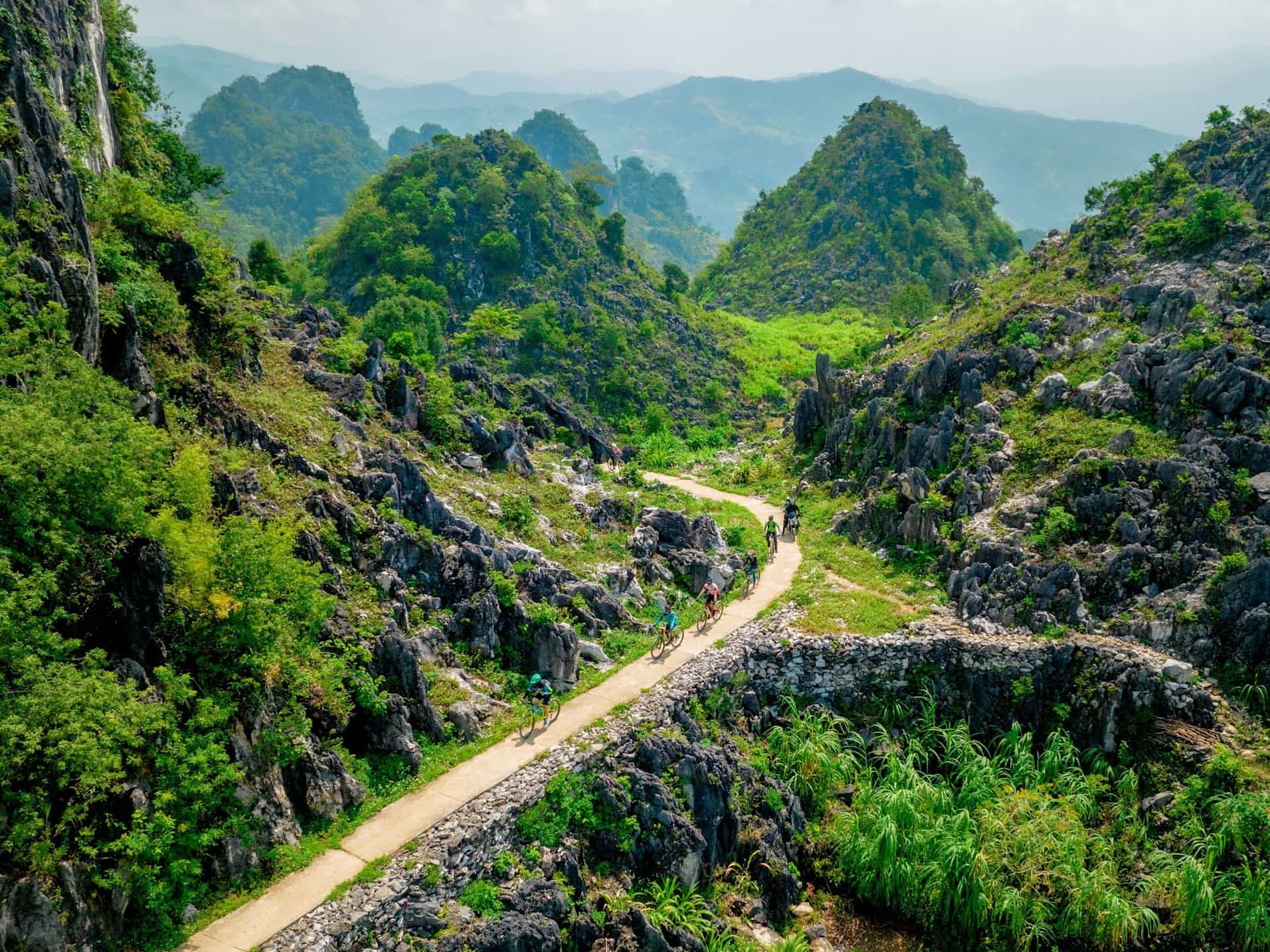
Marta recommends choosing a mixture of different types of experiences across a year, as the variety ensures travel remains exciting and meaningful. For example, cyclists could cycle the wine trails of Burgundy, then challenge themselves by cycling the highlands of Northern Vietnam—on the former you'll embrace slow living and indulgent cuisine, while the latter will push you out of your comfort zone.
Once Marta’s gone through this process, it’s time to make some more practical decisions.
“I look at seasonality first—where will actually be at its best when I can travel? Then I factor in how much annual leave I have available and how much mental and physical energy I realistically want to invest. Being honest about those constraints helps narrow options quickly and avoids unnecessary overwhelm,” she says.
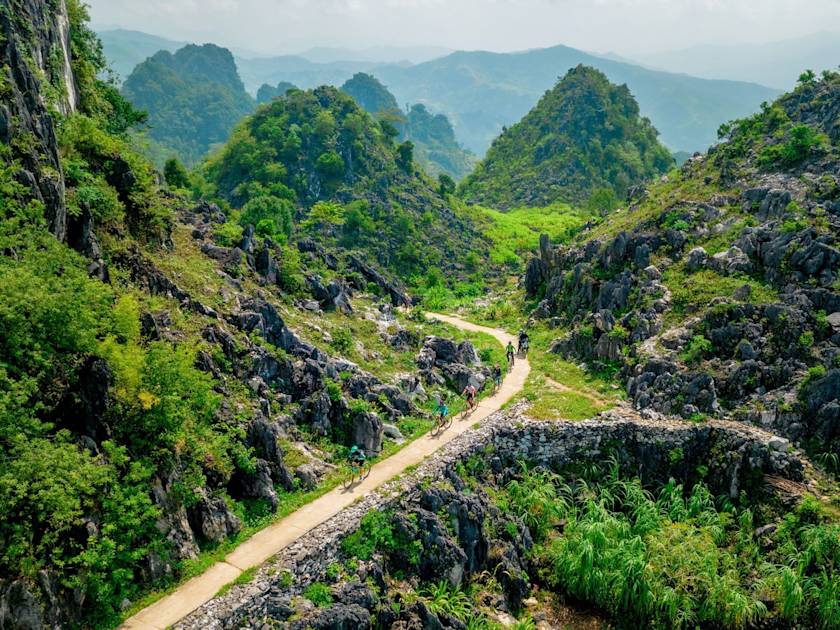
Seasonality is an important aspect of travel planning. The weather in the country that you’re visiting versus where you live is an important part of timing your trip. You probably don’t want to go on a hiking trip during sizzling summer heat or a wet monsoon season. Guided adventures are often scheduled at times of year to avoid such problems, but it’s worth checking the weather if you’re travelling independently.
It’s also important to take peak season into consideration. If you have the flexibility you might prefer to travel during the cheaper, less crowded ‘shoulder’ seasons.
Choosing an adventure isn’t about finding the “perfect” trip or completing a list. It’s about matching the journey to your mindset, energy and life stage...
Marta tends to plan long-haul trips further in advance and shorter trips closer to departure, depending on her mood and the remaining annual leave she has available. This means she has something to look forward to, but can also embrace spontaneous travel.
Her final piece of advice is to let go of perfectionism. There is no ‘wrong place’ or ‘wrong trip’—every destination has its own challenges and rewards.
“Ultimately, choosing an adventure isn’t about finding the “perfect” trip or completing a list,” Marta says. “It’s about matching the journey to your mindset, energy and life stage, then letting practical realities—timing, budget, seasonality and logistics—guide the final decision. When those elements align, decision fatigue fades, and excitement takes its place.”
Inspired? Then check out our small-group adventures across the world.