


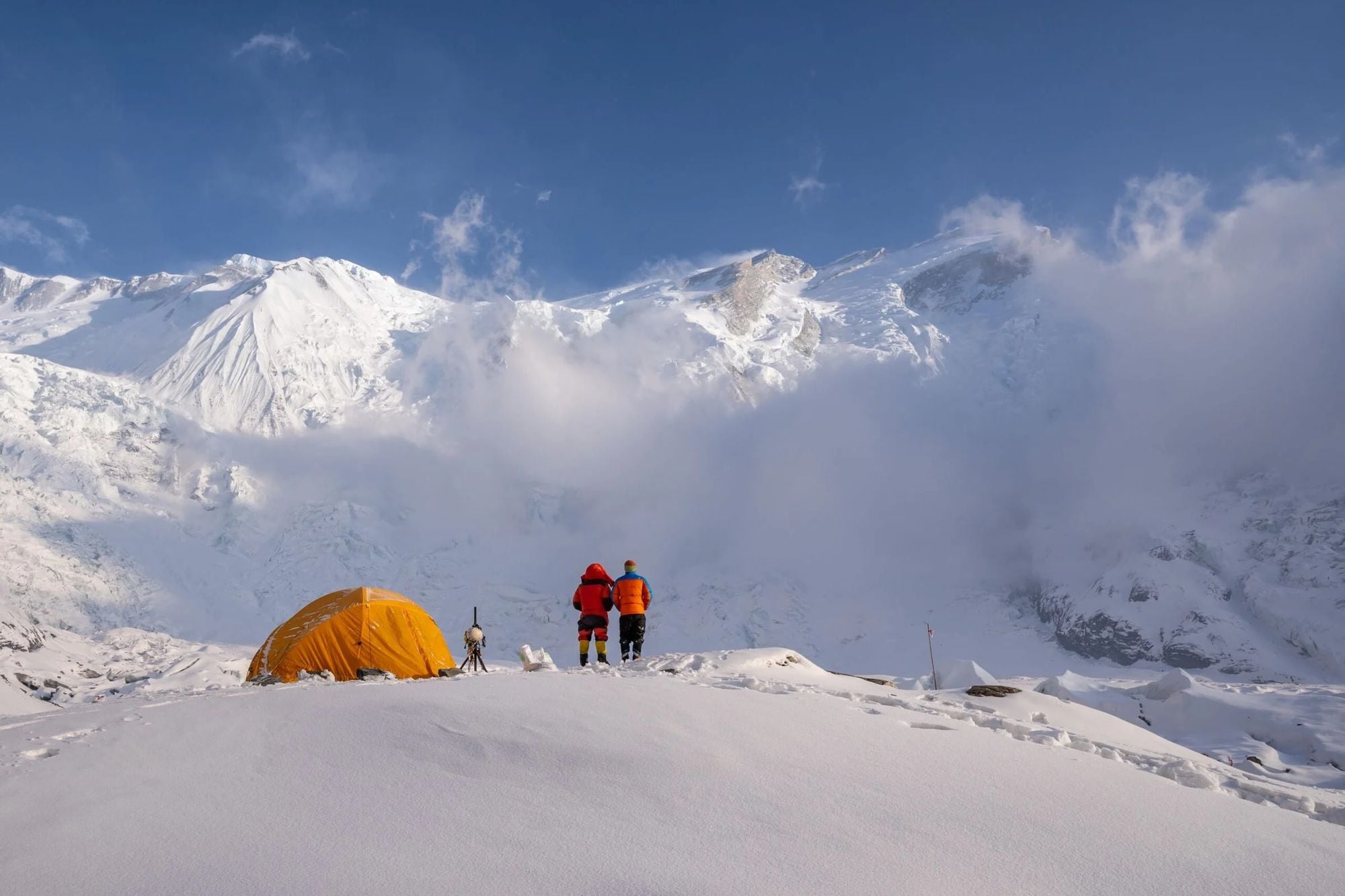
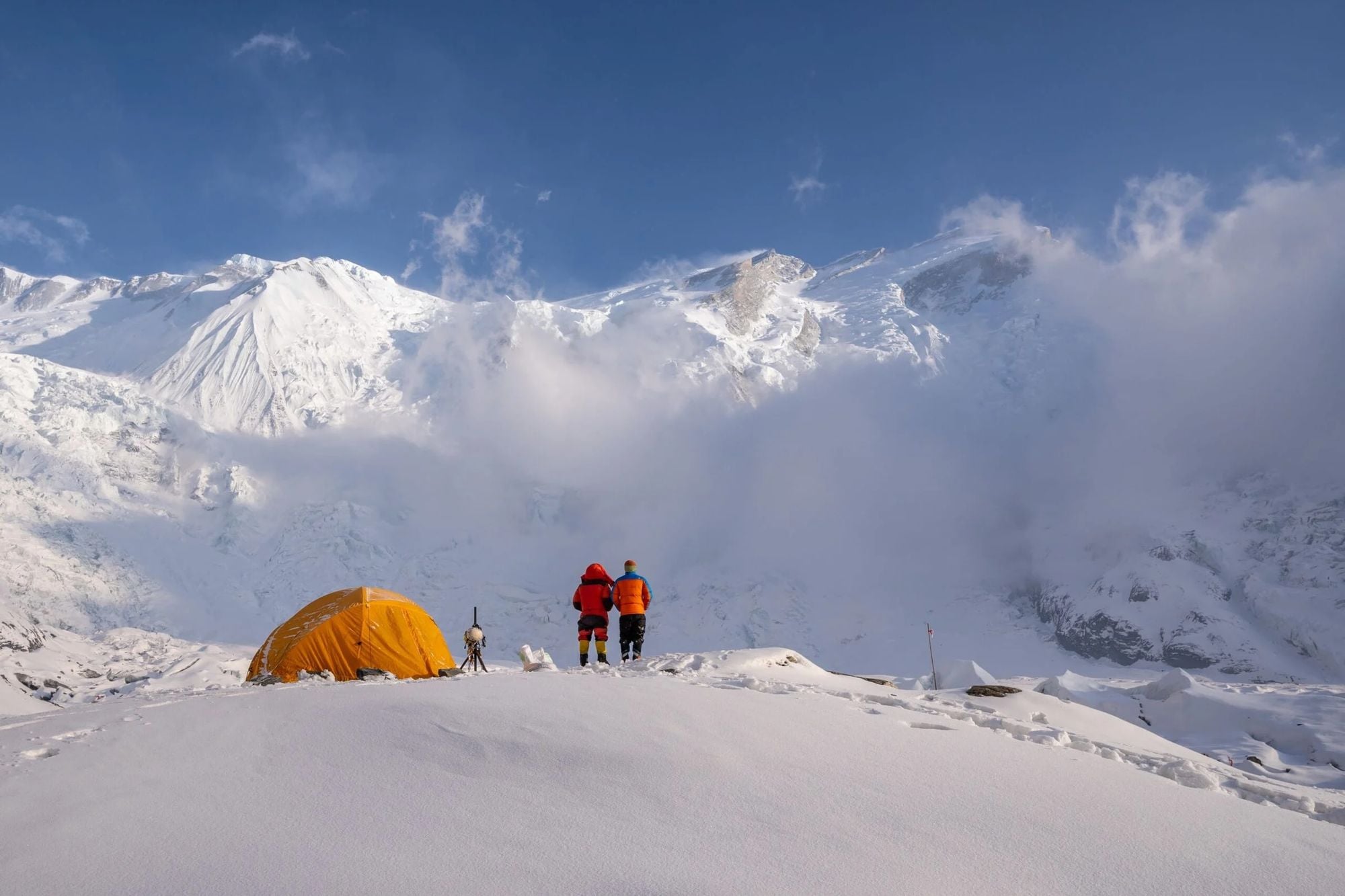
Adventure is undeniably goal-oriented. Many people push their physical and mental limits by setting themselves a challenge, such as completing the Seven Summits (climbing the highest mountain on all seven continents), swimming the Channel or running an ultra-marathon.
Goal-setting is important for adventurers, providing a powerful motivation and focus, helping to shape training plans and track progress. Achieving these goals can help boost self-confidence, widen your comfort zone and increase your resilience.


There is, however, a downside—the impact that failing to achieve your goals can have on you. If ‘success’ equals reaching the summit, surely not being able to get there constitutes a ‘failure’? This risks undermining an adventurer’s progress and self-esteem. Furthermore, focusing entirely on the destination fails to take into account the journey; the excitement and growth that takes place along the way.
But perhaps success doesn’t have to just be about reaching the top. Could it refer to something more meaningful alongside that? Should our ‘failures’ be something to upset and embarrass us, or can they be reframed as moments which help us grow?
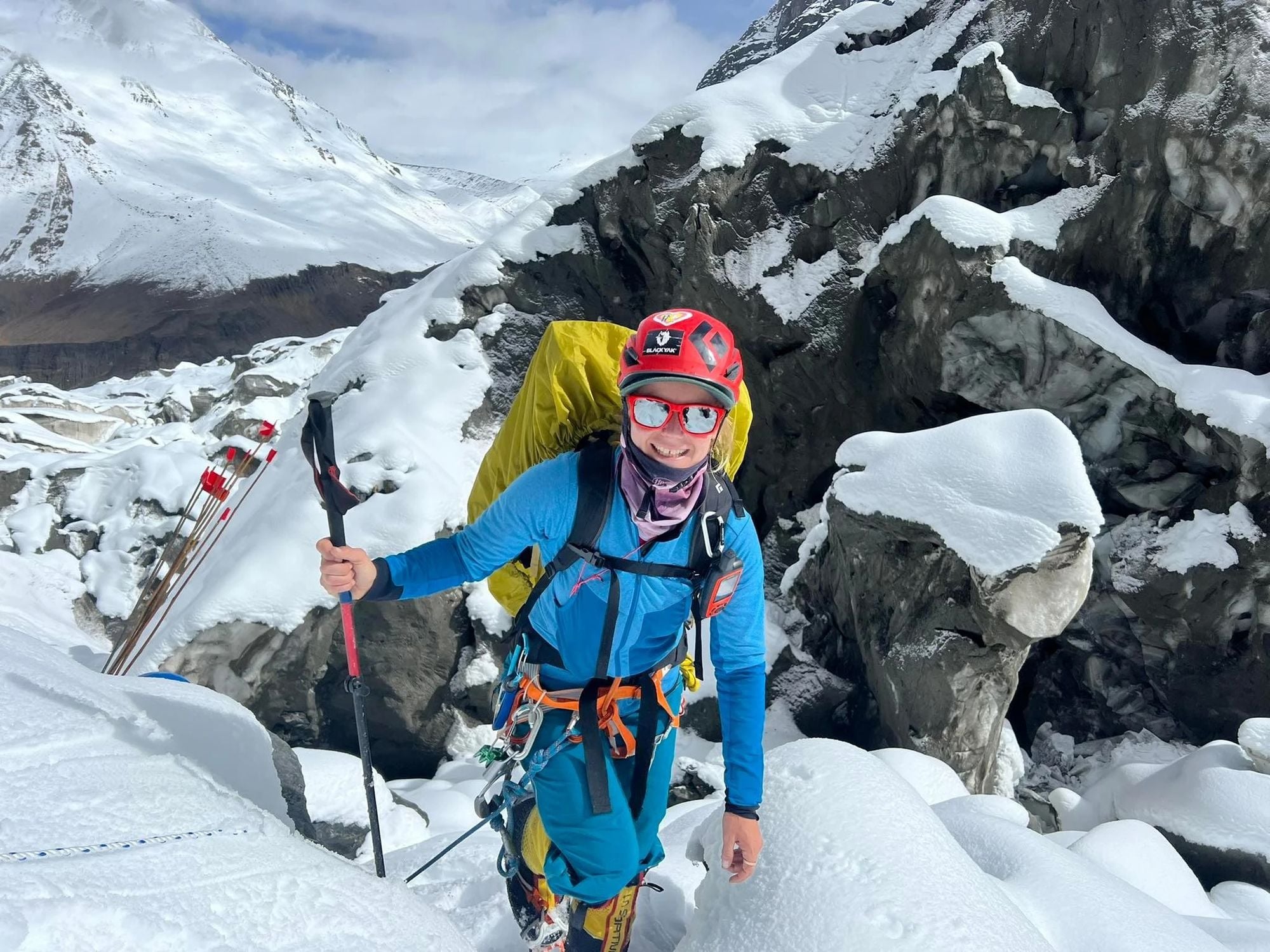
For climber Uta Ibrahimi, redefining success didn’t happen overnight—it was shaped by years of confronting what she once saw as failure. As the first woman from the Balkans to have climbed all 14 of the world’s 8,000m+ high mountains in 2025, she is rightfully celebrated for this achievement. However, she says that her personal definition of success and failure has evolved throughout her career.
“In the beginning, when I started climbing, it was always about reaching the summit,” she says. “If I didn't summit, it was a failure. I would try to find who was responsible, who did something wrong.
“I’m talking about the 8,000ers here. In the Balkans if you can’t climb, you can go back the next day and try again. But on 8,000ers it’s a little bit more difficult because there are many more people involved; you have responsibility towards the sponsors and the people supporting you as well.”
Each failure is a learning experience
However, her mindset began to change when she started to reflect on these perceived failures more deeply.
“Each failure is a learning experience,” she says. “Personally, each time I don't summit, when I come back home, I try to write down or draw what happened. I ask, ‘what did I do wrong?’ so the next time I do better. I question how I can improve myself.”
This shift, from assigning blame to seeking understanding, marked a turning point in how she approached climbing.
This mindset was soon tested in the most extreme way possible when she began embarking on more dangerous, high-altitude climbs, where failure carries far greater consequences. An ascent of Shishapangma in 2024 revealed the importance of making the right decisions.
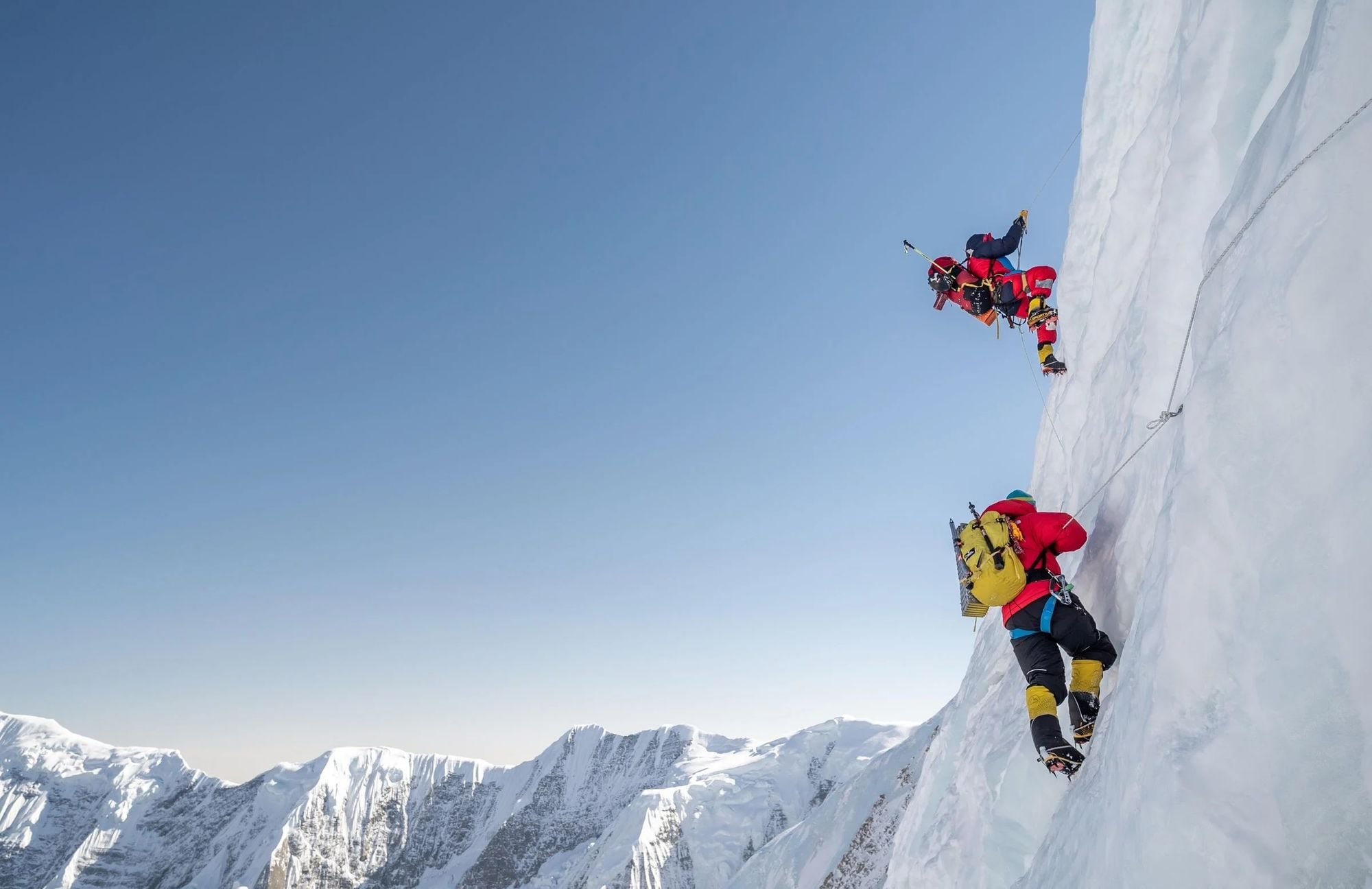
“We were going for the summit push and we were not more than 200 or 300 metres from the summit, but there was a big avalanche and we lost two people,” she explains. “When the first avalanche hit, some people continued. But personally, I just wanted to go down. It happened right next to me. For a few metres on the climb I wasn’t at the front, and that’s why I survived.
“I left. I wanted to run back, I didn’t even want to stay at base camp because I was so anxious. I felt very sad because they were both my friends. Two people continued climbing, but then a second avalanche fell and took those people. It was shocking. But at the same time, it was a lesson that we all learned on that expedition. The mountain wasn't ready, the mountain didn't let us go, and I totally respect that.”
Success for me is no longer the summit—it’s being alive and being complete
In situations like this, Uta realised, reaching the summit is not important. Striving too hard for a goal led to disastrous consequences. ‘Success’ here was synonymous with survival, with trusting your instincts and respecting nature.
“Success for me is no longer the summit—it’s being alive and being complete,” she says. “Even if it matters for sponsorship, it doesn't matter for me, because I want to live. I enjoy the life I have. Why lose your life just to be there, and make other people suffer?”
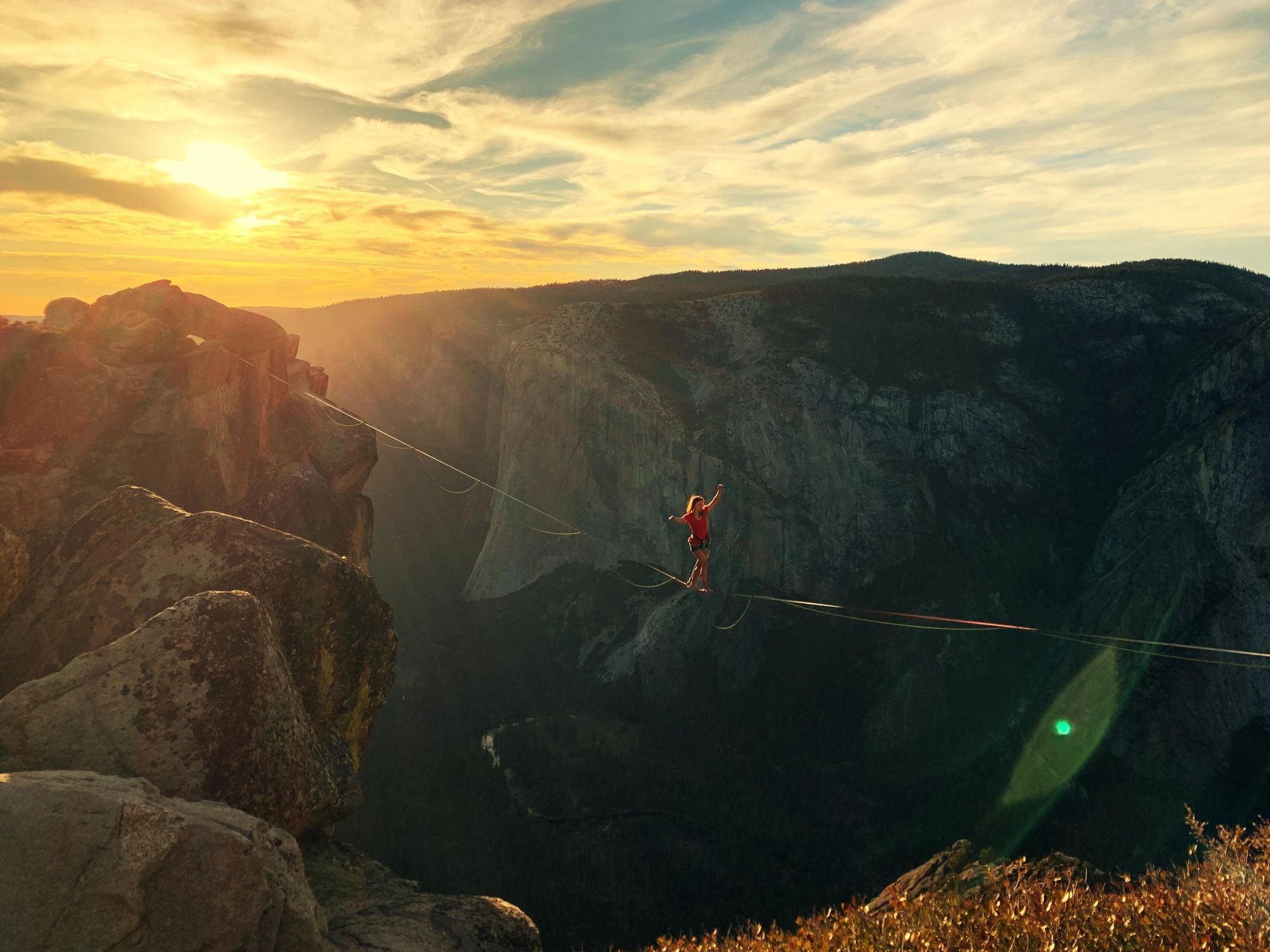
While Uta’s perspective was reshaped by life-and-death decisions in the mountains, Denisa Krásná’s understanding of failure has evolved in a different arena. A climber and highliner, she’s also an academic researching adventure counternarratives—her book Flow: Women's Counternarratives from Rivers, Rock and Sky highlights ways of thinking about adventure which deviate from dominant narratives of goal-setting or ‘conquering’ peaks. It also shows that concepts of success and failure in adventure are inherently personal.
Denisa has always been interested in adventure as internal fulfilment, rather than a process of goal-setting. Summiting for her was about seeking the best views; climbing was about exploring new routes, rather than trying to perfect each one.
However, this changed when she began learning to highline, which involves walking along a slackline at extreme heights (for which a harness is required). The goal for most experienced highliners is to ‘send’ the route, which means to walk it in one direction without falling.
Falling is not necessarily a failure every time; it’s a natural part of the process
“Every line is different and falling is not necessarily a failure every time; it’s a natural part of the process,” Denisa says. “For me, crossing a line that's one kilometre with a few falls is amazing, a great success. But then if I'm on a 300 metre-line and I don't send it, that can feel like failing.
“What I really consider a failure is when I try to send repeatedly, and fall only a few metres from the end. I know that I can do it, but I feel afraid. Every time I tried to send a line that would be my personal record, I would just freeze. I would walk normally, and then be afraid of taking another step because I just couldn't trust myself.
“Unfortunately, that was ongoing and it created a pattern for me. What I see in that is failure to control my mind. Physically, eventually, we can all get there, especially if you have the willpower and the motivation to train. But what distinguishes athletes is being able to control your mind.”
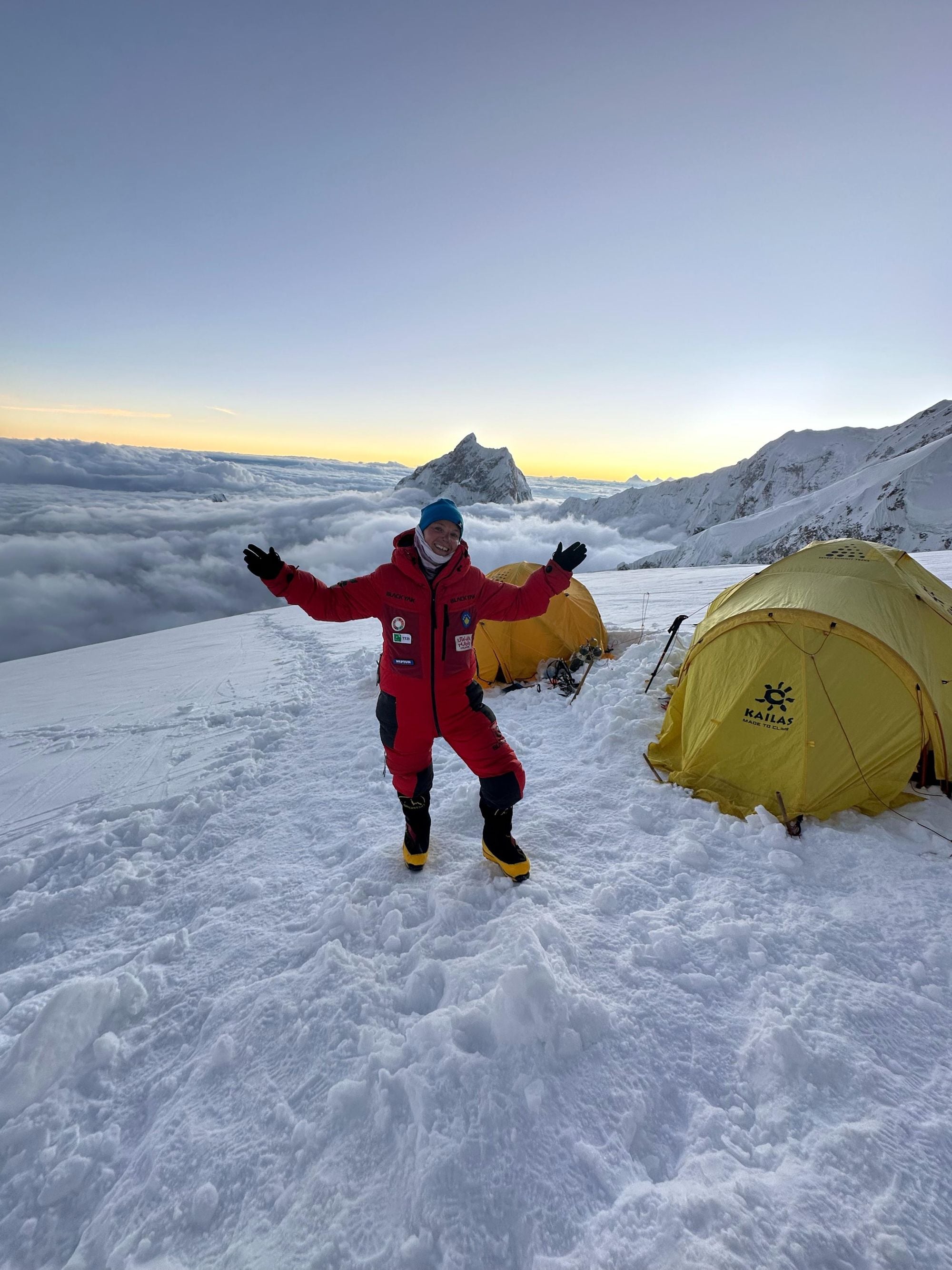
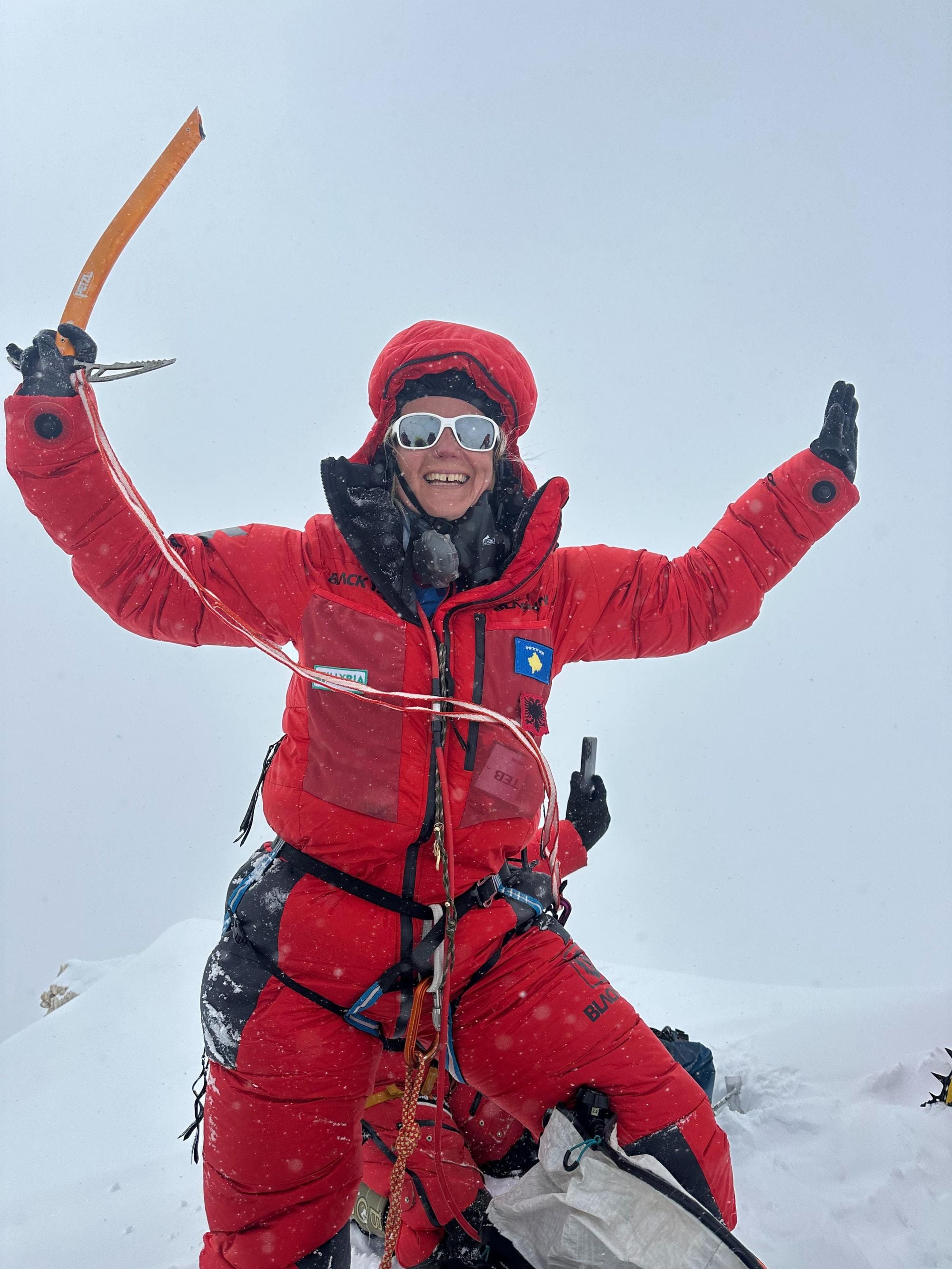
Uta, then, falls into this category of athletes. After the tragedy at Shishapangma, she had to spend a lot of time processing her trauma before feeling emotionally ready to return to the Himalayas and climb again. Her next summit attempt was Kanchenjunga in 2024, an 8,586-metre-high (28,169 ft) peak on the border of India and Nepal. This, too, she didn’t summit.
“Kanchenjunga is a really big mountain and it's also quite technical,” she explains. “The summit day has a very long ascent—from 7,200 to 8,400 metres—and there are a lot of rocks and traverses. It is a difficult mountain.
“The weather was great. We had a big team, but we didn't have a leader, so there was no fixing of the rope. If they don't fix it, nobody climbs it. I didn't feel like there was a failure because of me personally, because I was ready, I was feeling strong and everything else. But I think it was a failure because of the way the company organised the expedition.
“When the summit push wasn't happening, I tried to bring everyone together and I talked to the company and asked them to bring more rope and a team, and said we would pay extra. I started to take on the role of organising everything for people. But two others went away from the group and started to organise their own thing. It really hurt me.”
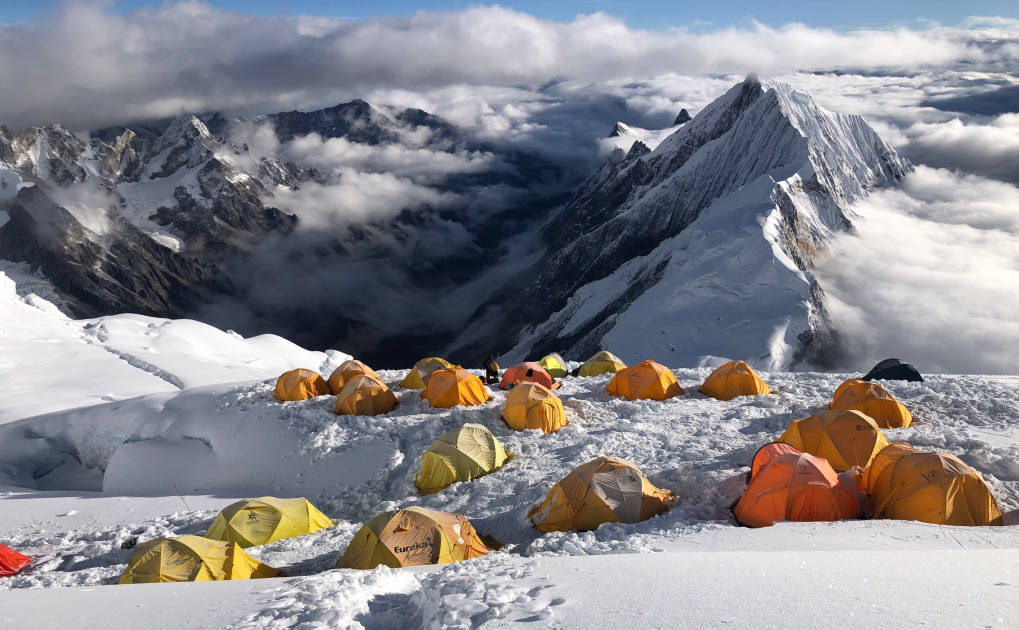
This organisational failure, for Uta, led to another lesson—that she far prefers to climb on smaller teams. For her next ascent, which was of 8,035m-high (26,362ft) G2 on the Pakistan border, she decided to climb only with her partner and a sherpa.
“It was so peaceful. I could make my own plans, could do my own summit push, and it was very important also for me because sometimes I don't feel good just following the crew and being a sheep in the herd,” she says. “I like to be a leader on my own expedition and make my own decisions.
“You learn much more, actually, on the failed expedition. Not just training-wise, but about how people behave in different situations. Personally, I use all these experiences in my everyday life at home, so then I can be a better person.”
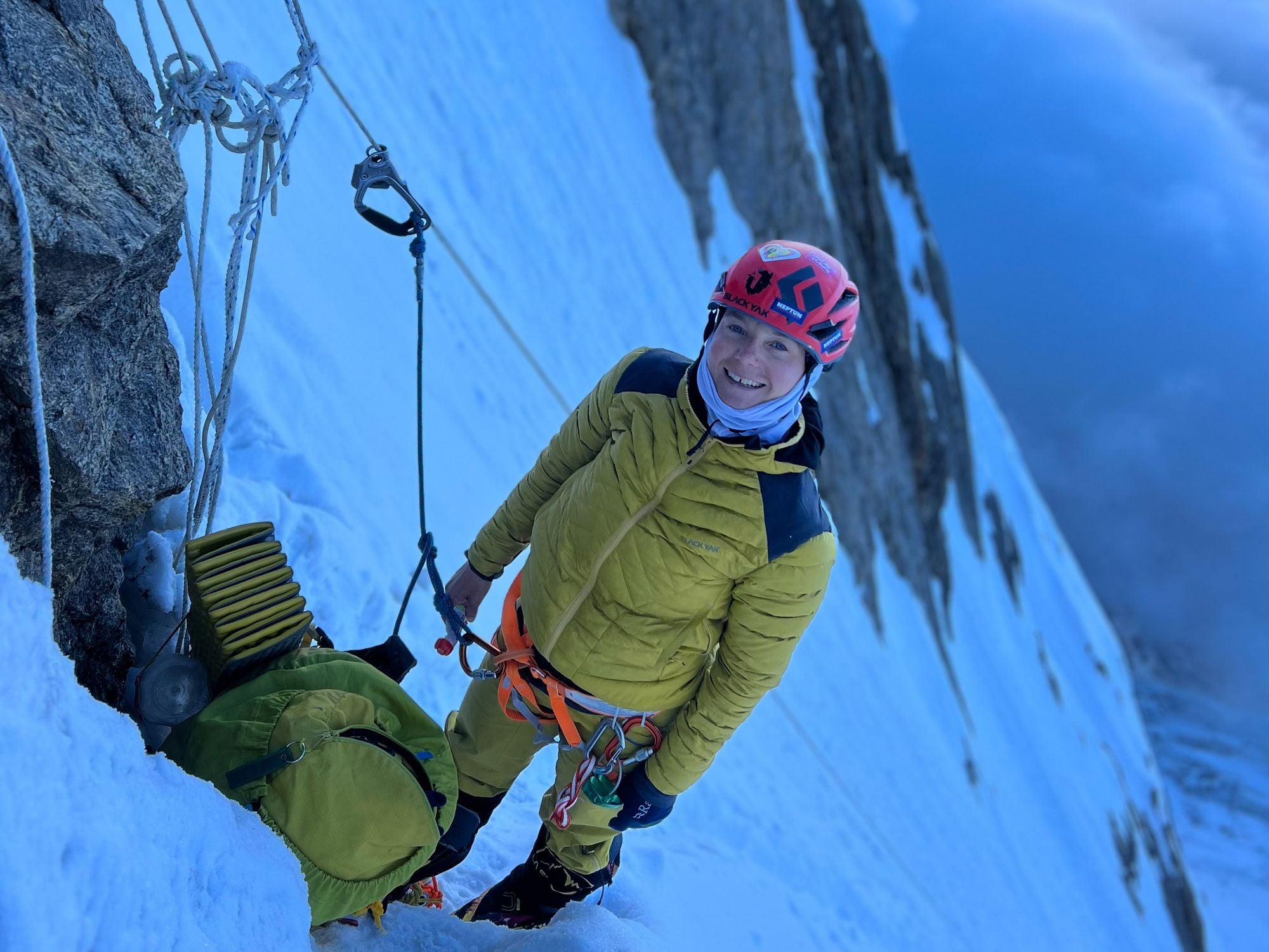
Having now finished climbing all 14 of the world’s 8,000m high peaks (including a successful ascent of Kanchenjunga in 2025), Uta has had time to reflect on her journey—both its successes and 'failures'.
“One thing that I regret for the first four years is I was more focused on climbing to the top,” she says. “But towards the end I was far more grateful and happy to be there.
“I want to take my time to understand each mountain; to climb it, to know it. Whichever mountain I have climbed, I know the route exactly. It's in my memory. That's my message to everyone. Feel it, experience it, take your time. A lot of emotions are involved in mountaineering. So let these emotions be with you and enjoy the whole thing.”
Uta is currently back in Kosovo, guiding in her local Sharr Mountains and planning a trip back to Everest next year to lead a friend’s summit attempt. She’s finding a balance between peace and adventure.

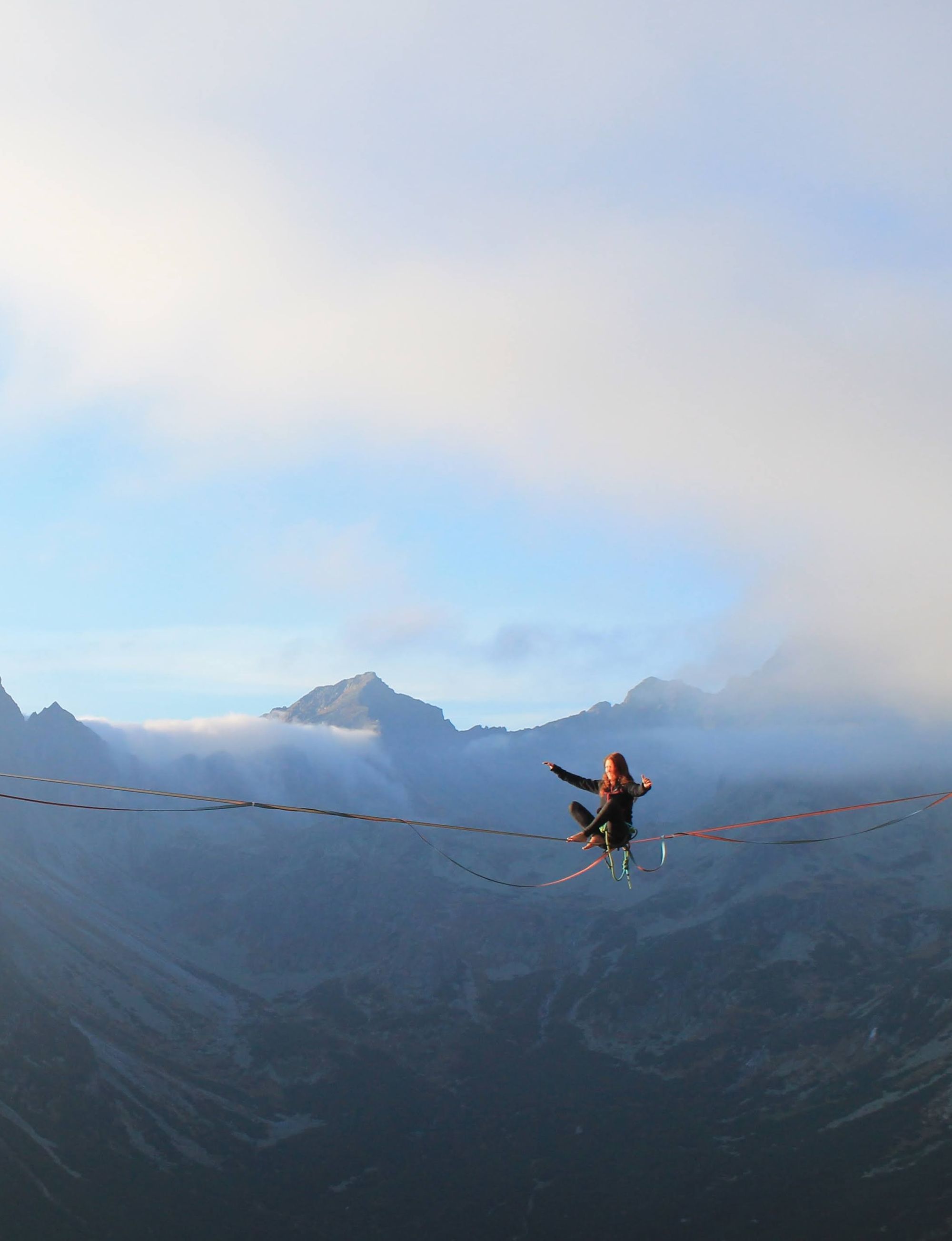
Denisa too, has decided to take a break from chasing longer distances on highlines. Instead of worrying about ‘freezing’ before the finish line, she’s currently more focused on enjoying different types of adventure and re-finding her ‘flow’.
“For me, success in adventure is about finding your flow,” she says. “I first experienced this when I started walking longer distances on highlines. I got really hooked on and addicted to that feeling. I think in that way flow could be a counternarrative to success because it's not about how far you can get on the highline or whether you reach the summit; it’s more about a process than a destination.”
It's a state that we seek because it fulfills us internally; it's not something that we do for external validation
The flow state Denisa describes refers to being fully immersed in an activity, where you’re beyond the point of distraction. Within sport and adventure it’s something to aspire to—not only because it’s an indicator of peak performance, it’s also deeply satisfying.
“It's a state that we seek because it fulfils us internally; it's not something that we do for external validation,” Denisa says.
Both Uta and Denisa’s experiences show that in adventure, success is far more fluid than we often assume. For Uta, it became about survival, intuition and respect for the mountain. For Denisa, it lies in flow and internal fulfilment. In both cases, failure is no longer something to avoid, but something that has helped them learn and develop as adventurers.
In a world that often celebrates summits, speed records and measurable achievements, these perspectives offer a quieter, more sustainable way of approaching adventure—one that prioritises the journey over the destination.
Because perhaps the real failure isn’t turning back before the summit, or falling short of a goal. It’s missing what the experience was trying to teach you along the way.
Inspired? Check out our adventures across the world, including Hike the Sharr Mountains in Kosovo and North Macedonia, designed by Uta.