


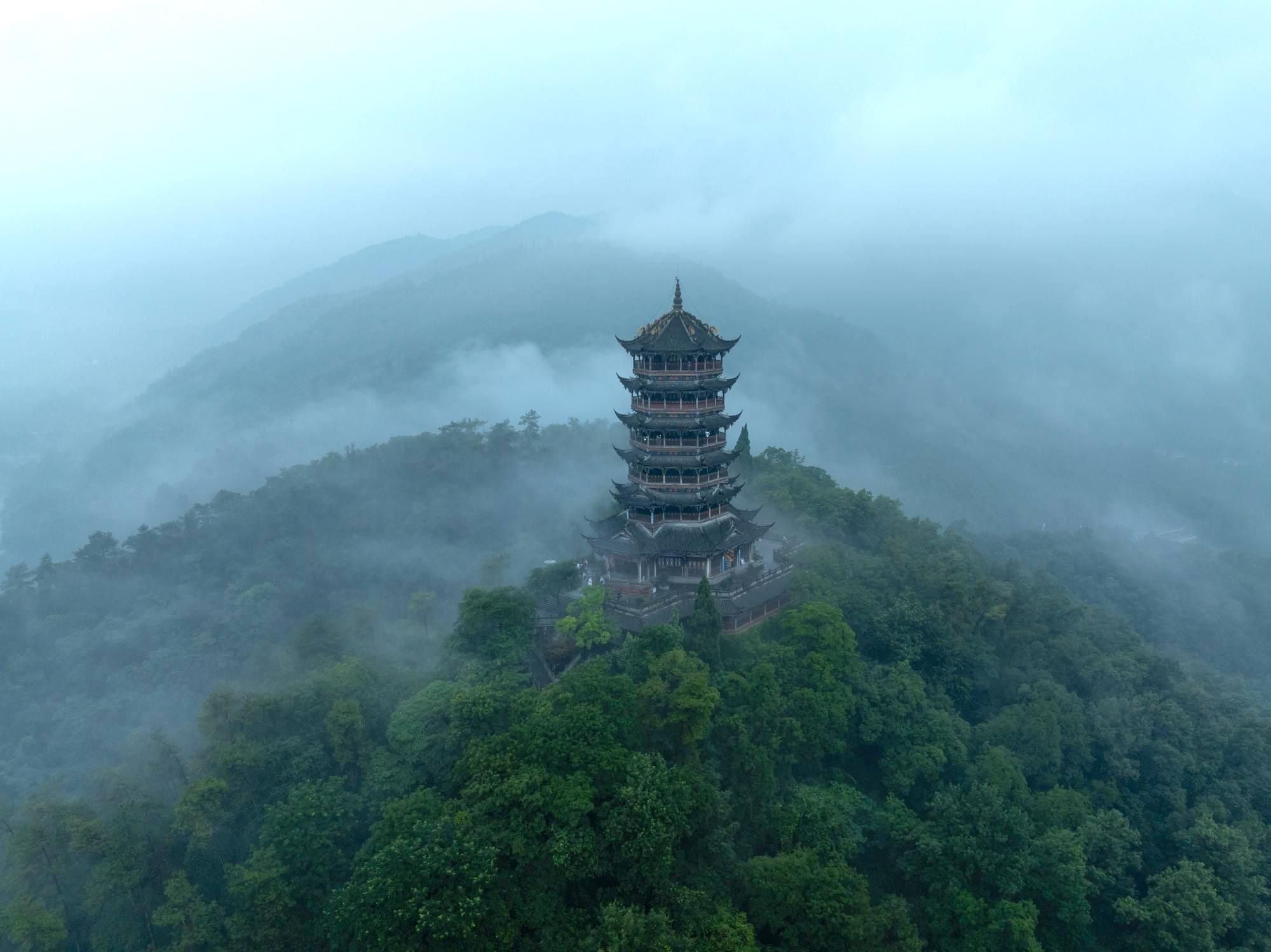
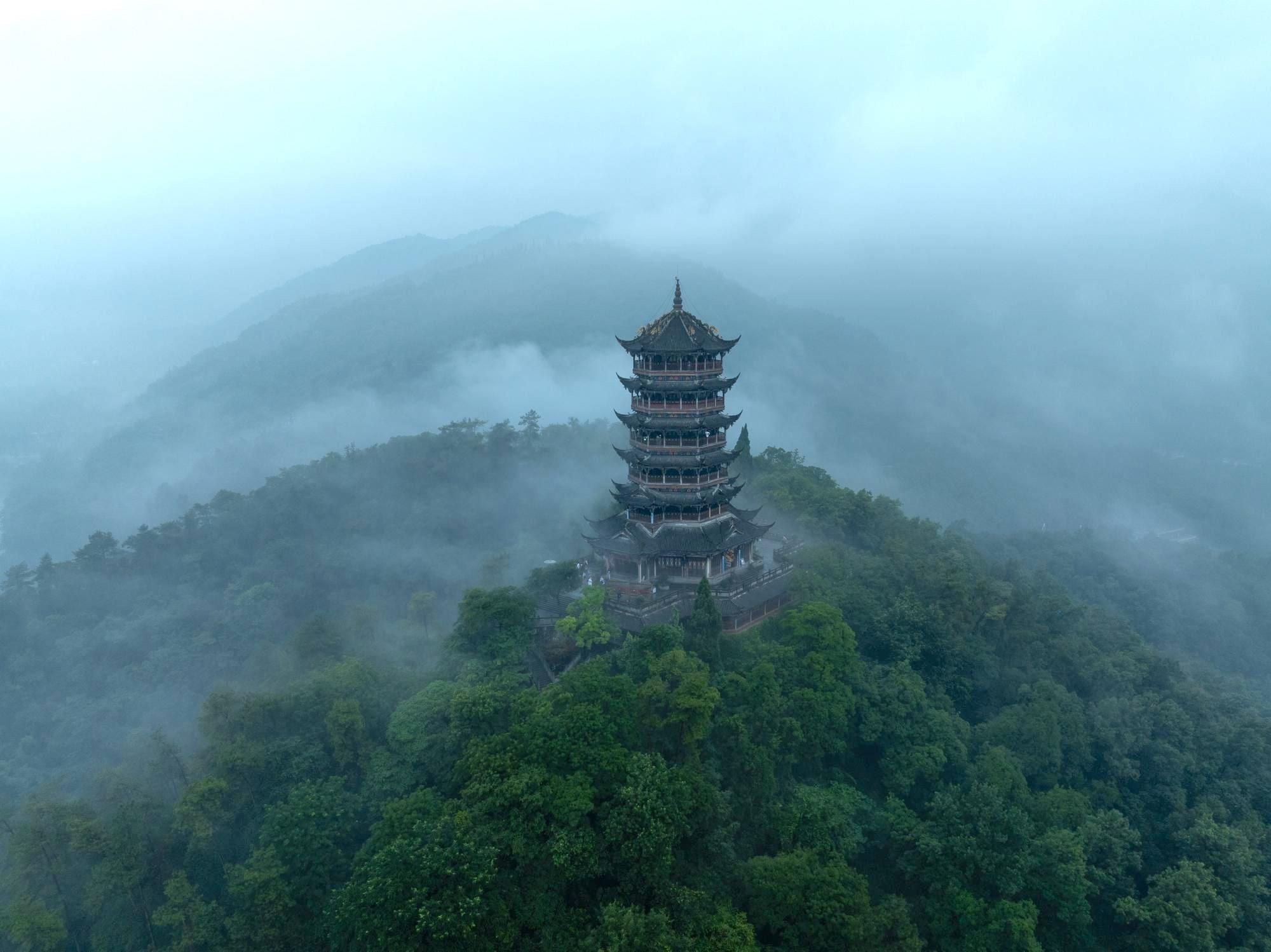
The characters of 青城山 paint a picture of the place they represent - Qīngchéng Shān, meaning ‘Green City Mountain’, is a sacred and serene place, tucked away in the expansive flora of the Sichuan Province in southwestern China, an hour’s drive from the megacity of Chengdu.
Mount Qingcheng is made up of 36 peaks in total, many of which rise over 1,200 metres (3,900ft) above sea level. The verdant mountain walls here have the shape and curve of a city wall - and the thick flora beneath them gives the outline of a city hidden in the mist, giving this area of ravines and waterfalls its name.
The mountain is one of the birthplaces of Taoism.
“This is the backyard of the people in Chengdu,” says Helena Pan, an expert on travel to China. “It’s where people go to relax. There are hot springs and ancient towns. It’s just a wonderful place to visit - walk, eat good food and drink tea.”
Most people know this region for the pandas or fiery food, but Qingcheng offers another side to Sichuan - where pristine nature meets an ancient culture.
 Much Better Adventures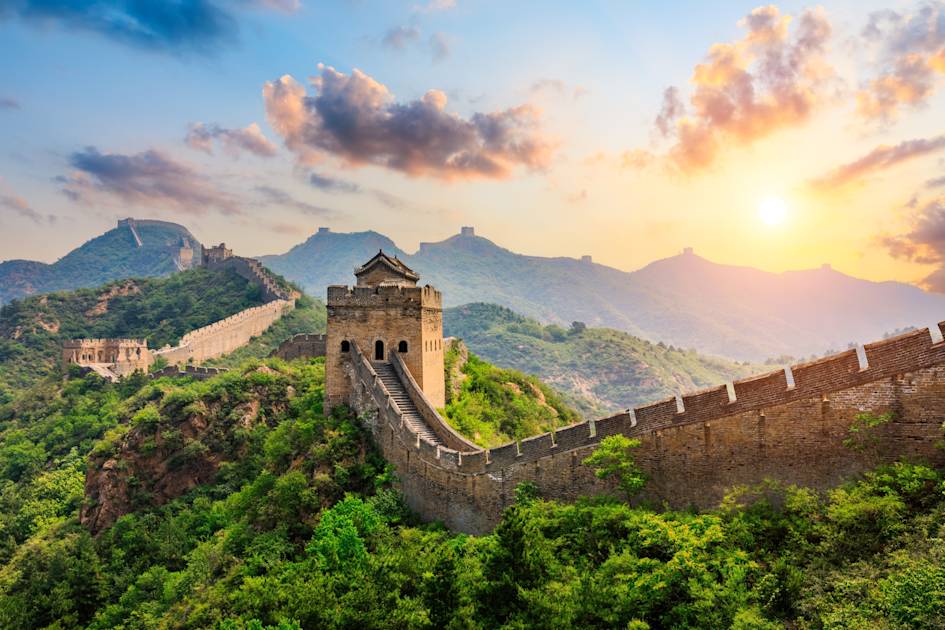
Mount Qingcheng is a place of forested peaks and cliff walls, where ancient evergreen pines mix and muddle with ginkgo trees, redwoods, bamboo and scenic waterways. But it is not for the landscape that this lush place is best known. Rather, it’s for the temples hidden amongst it.
“Qingcheng is one of the mountains which is famous for Taoism,” says Pan.
Indeed, this UNESCO World Heritage site is one of the birthplaces of Taoism and one of the most important Taoist sites in China. And the history here goes beyond written records and recent past - into the realms of myth and folklore.
The Cradle of Taoism
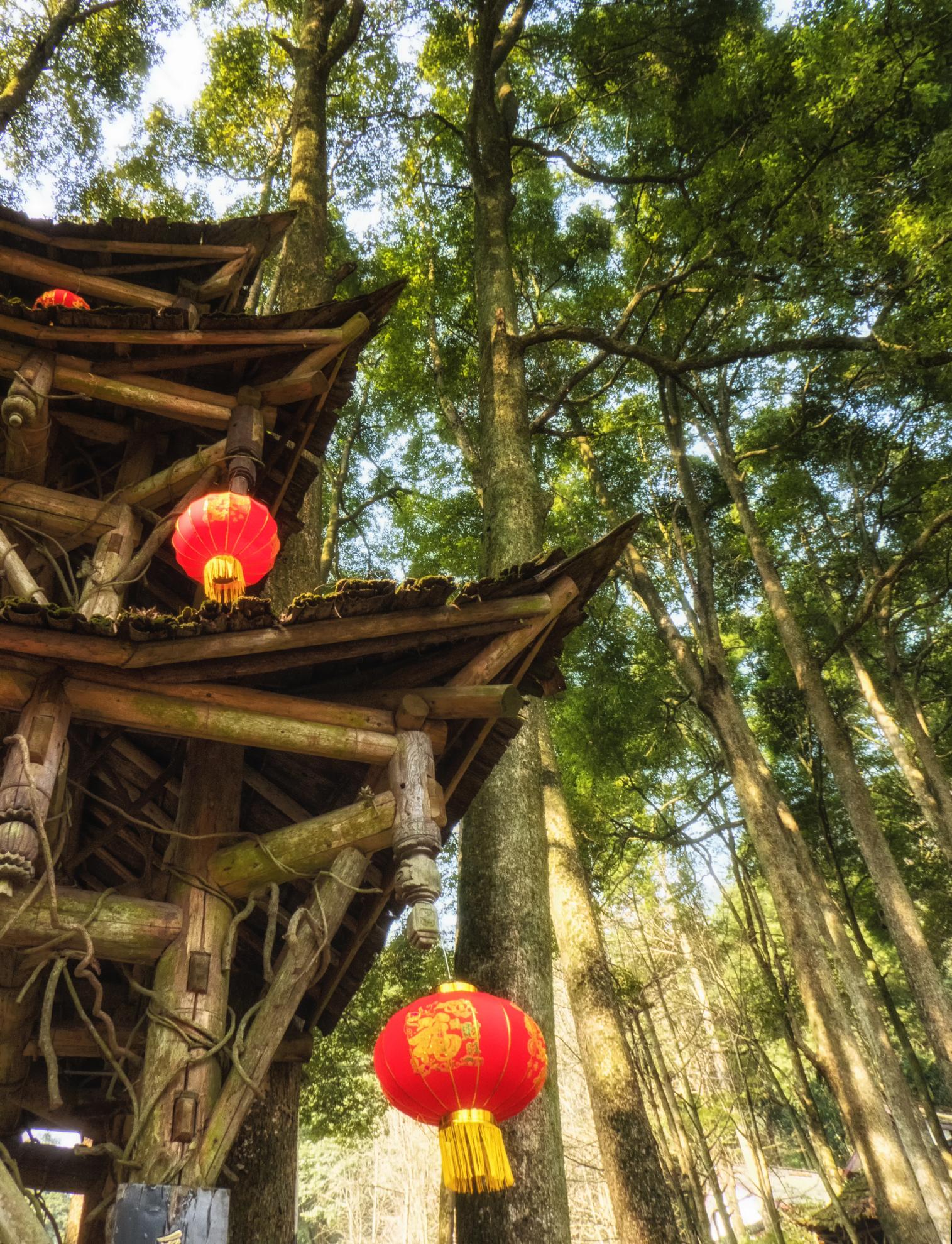
In Taoist folklore, it’s here at Mount Qingcheng that Huangdi, the 'Yellow Emperor', known in legend as the founder of Chinese Civilisation, came to study under the hermit sage Ning Fengzi. It’s said that Fengzi taught the Yellow Emperor the ways of dragon riding, and the two walked the ridgelines together - so long ago that by the time Zhang Daoling (an early Chinese Taoist leader) arrived in 142 AD, he already considered the area to be ancient.
While contemplating in a secluded cave, Master Daoling received a revelation from Laojun (the deified form of Laozi, the philosopher who founded Taoism).
The temple complex, guarded by natural mountain walls with three mounds at its top and a river flowing by its side, is considered highly auspicious according to the principles of feng shui.
The instructions he received - to rid the world of decadence - led Master Daoling to gather followers, and form what would become one of the first forms of organised Taoism, The Way of the Celestial Masters. This Taoist sect - the first of its kind - believed that Qi (a vital life force) was present in everything humans did, everywhere we went, and that in order to achieve immortality, we must balance Qi. Those with poor levels of Qi would get ill, and could die. Those who balanced their Qi successfully - when they did pass away - could be reborn.
In their 2007 book China’s Sacred Sites, Shun-xun Nan and Beverly Foit-Albert wrote about Qingcheng, noting that “the temple complex, guarded by natural mountain walls with three mounds at its top and a river flowing by its side, is considered highly auspicious according to the principles of feng shui.”
In short, Master Daoling considered it the ideal setting for optimising Qi.
By the 17th century, Qingcheng had grown into one of the most important centres of Taoism in China. Visit today and you can still see 11 Taoist temples.
The Two Sides of Mount Qingcheng
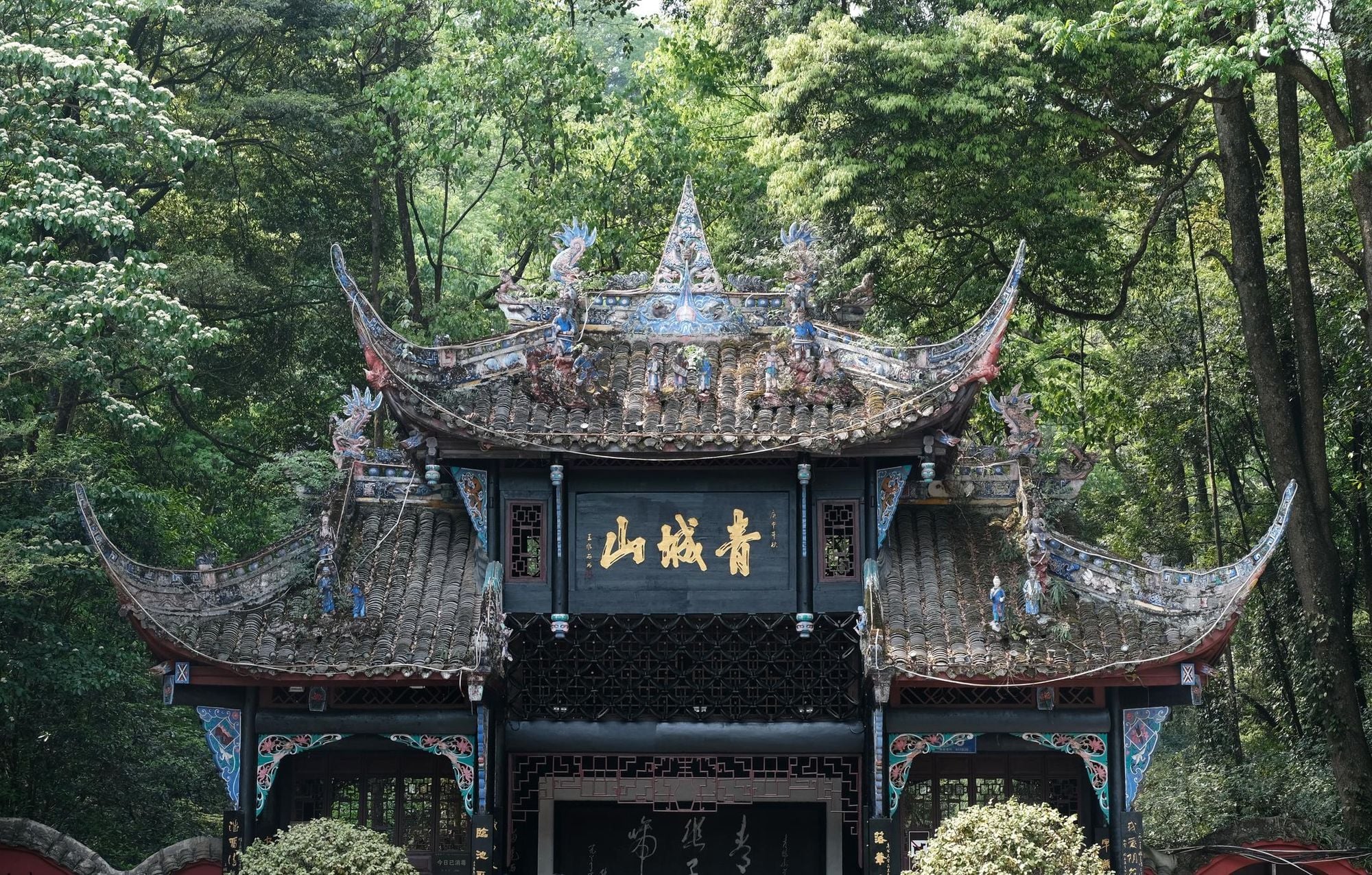
Front Mountain is the cultural heart of Qingcheng. Popular with domestic tourists, it can get busy on weekends, and the entry gate can feel more like a festival site than a site of serenity - despite the connection to spiritualism.
That energy is part of the experience of visiting Qingcheng, but equally, once you’re out on the trail, you’ll find there are plenty of scenic pavilions and quiet spots for contemplation located along the walking route in the dense forest. Many of those at the gate will actually be taking the cable car up.
Much Better AdventuresThis side of the mountain is easily-accessible and is where you’ll find the Taoist temples - meaning it’s this side that most people want to visit in Qingcheng.
Before you head off, we'd recommend taking the time to visit Jianfu Palace near the entrance to the mountain. It was founded in 730 AD during the Tang dynasty, and rebuilt in the late 19th century during the reign of the Guangxu Emperor. It’s a colourful building with architecture typical of the time and region, with curved roofs topping the buildings, which look like the wings of a bird mid-flight.
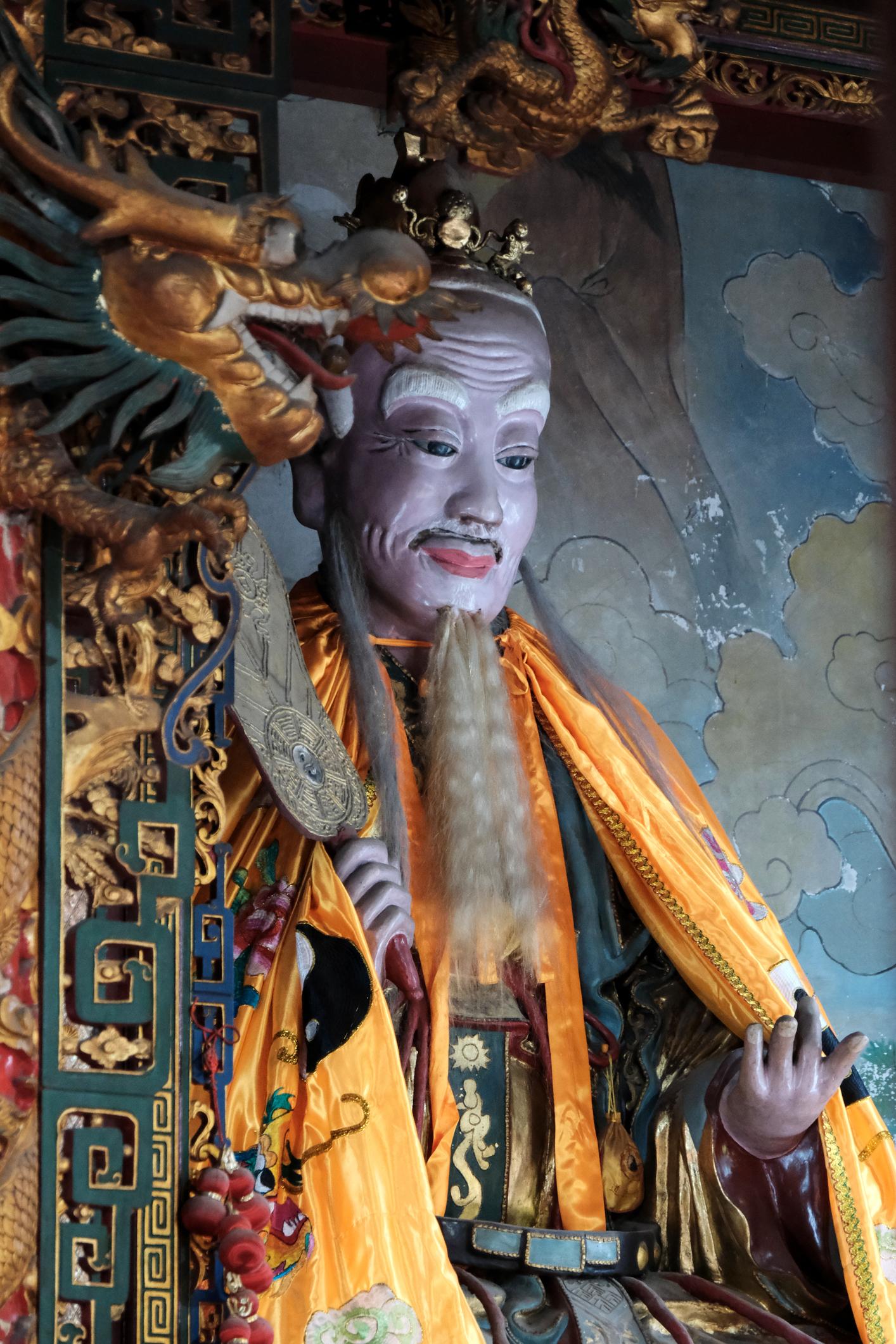
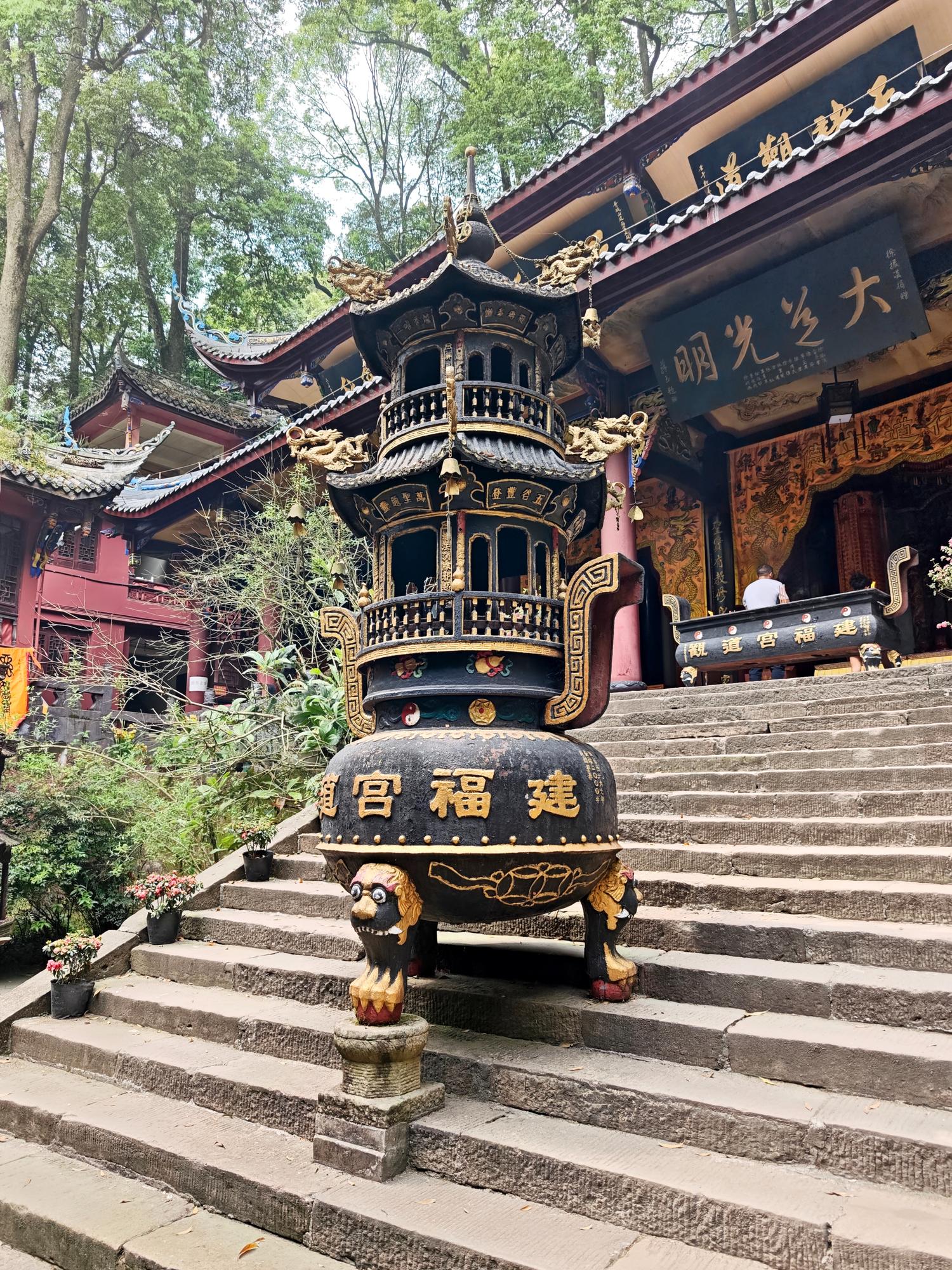
Inside the Jianfu temple complex, the halls and courtyards are shrines to figures of Taoism. Indeed, the peak above the palace is named Zhangren Peak in honour of Ning Fengzi, who was given the title of Elder of the Five Sacred Mountains.
Back Mountains (后山, Houshan) is the less commercial of Mount Qingcheng. It’s the wilder side, known for rugged trails, waterfalls and untouched forest. It’s tougher hiking, and doesn’t have those Taoist temples, so it attracts less visitors.
It’s for that reason we’re going to focus on hiking up Front Mountain below.
The Temple Trails of Front Mountain
The route up Front Mountain stretches out for around four to five miles (6-8km).
You’ll walk on stone stairways and through shaded forest paths on this hike, frequently encountering Taoist temples, and ancient bridges as you go. Walk slowly, taking in the details, and it’s a casual three hour walk to Laojun Pavillion at the top. From there, you can continue on to Ciyun Pavillion and Lingyun Resort for fantastic views, and take a cable car ride back down the mountain.
This isn’t a tricky hike, but it is uphill. You’ll start at 800m (2,624ft) in altitude, meaning there’s 400m (1,312ft) of ascent to go. The gradients are gentle, but the steps are old, worn down by pilgrims, scholars and visitors, so stay sure-footed.
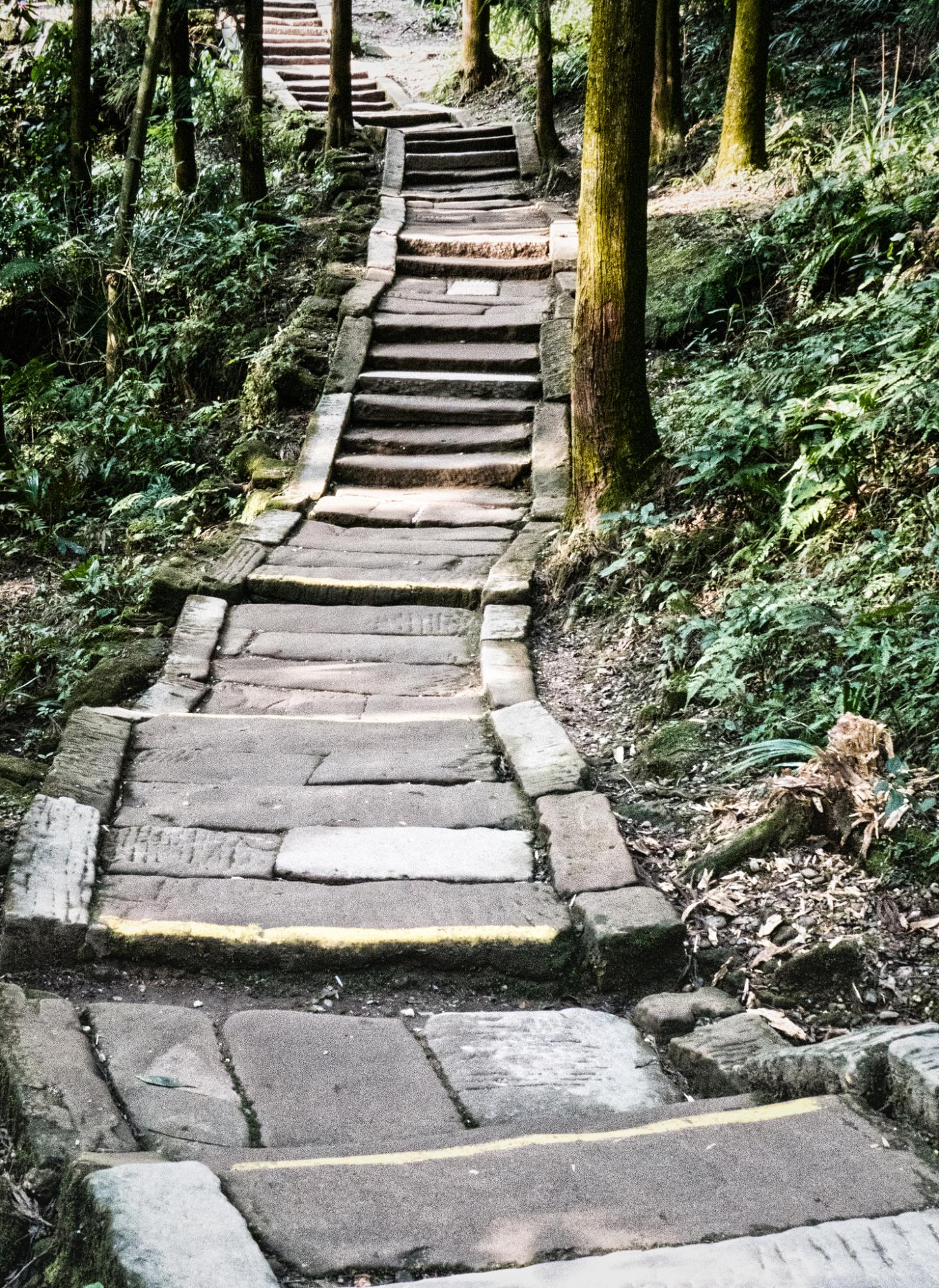
As you set off on the walk, Sichuan’s signature broadleaves will close around you. In spring and early summer, rhododendrons brighten the walk at the lower elevations, while higher up, mosses and ferns claimed every damp crevasse.
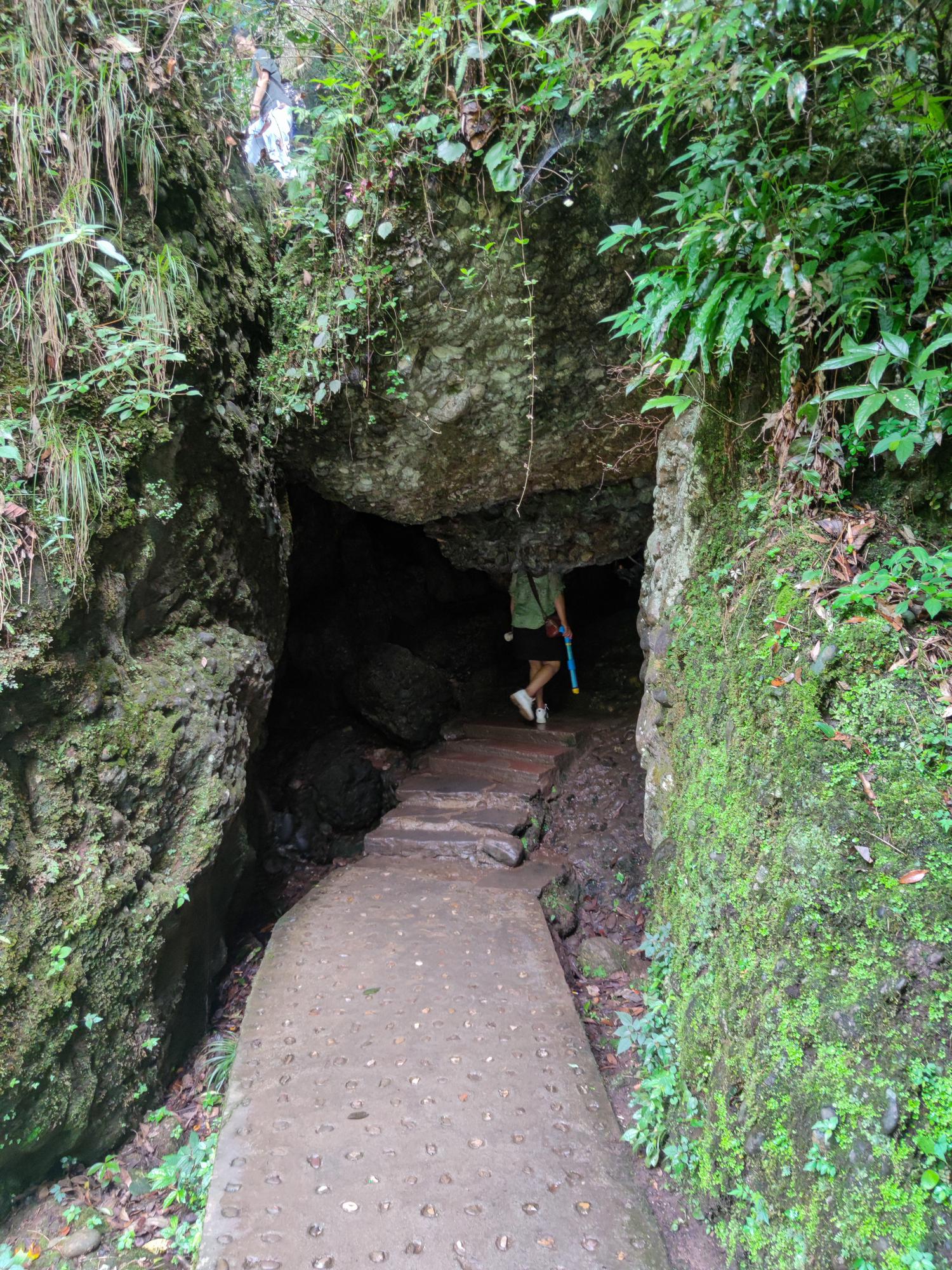
After crossing Ningcui Bridge, walkers will soon arrive at Tianshi Cave, where Taoism was first taught by Master Daoling 2,000 years ago.
Misty mornings are frequent in this part of the country, and they only add to the sense of serenity and wonder that the history here already brings to every step.
After passing the Mountain Shadow Pavillion and crossing Ningcui Bridge, walkers will arrive at Tianshi Cave, where Taoism was first taught by Master Daoling 2,000 years ago. Also known as the Celestial Master’s Cave, this is the spiritual centre of Mount Qingcheng. It was here that Zhang Daoling built his hermitage, sometime in the 2nd century. The temple that grew here grew around it, built in the Sui dynasty in the sixth century. It remains the centre of spiritualism, intellect and religious life in Qingcheng.
Visit this cave, cool regardless of the temperatures outside, take it in and know that you're standing where deep thinkers have meditated for millennia.
Outside the cave entrance is a ginkgo tree over 1,800 years old. The trunk is over two metres wide; roots gnarled and strong. Legend has it the tree was planted by Master Daoling himself. A Qing dynasty poet described the trunk as soaring into the clouds like a dancing phoenix, in an autumnal blaze of orange and amber.
There are various routes to the summit from here, but sticking to the official paths furthest to the left will often bear fruit. You can see Zushi Temple, another outstanding example of Sichuan architecture as you walk, and pass the Horizontal Cloud Pavillion before a staircase takes you up past some cliffs with stone carvings, and on to the famous Shangqing Palace.
Much Better AdventuresAlso known as the Upper Qing Palace, Shangqing dates back to the Jin dynasty but it was rebuilt in the 1860s (during the Tongzhi period of the Qing dynasty).
Nan and Foit-Albert write of the temple: “Shangqing Hall contains 28 columns symbolising the constellations and 12 stone animals of the early branches symbolising years of birth in the Chinese zodiac. Sculptures of children on the balustrades embody the Taoist saying, ‘With virtue one returns to infancy.’”
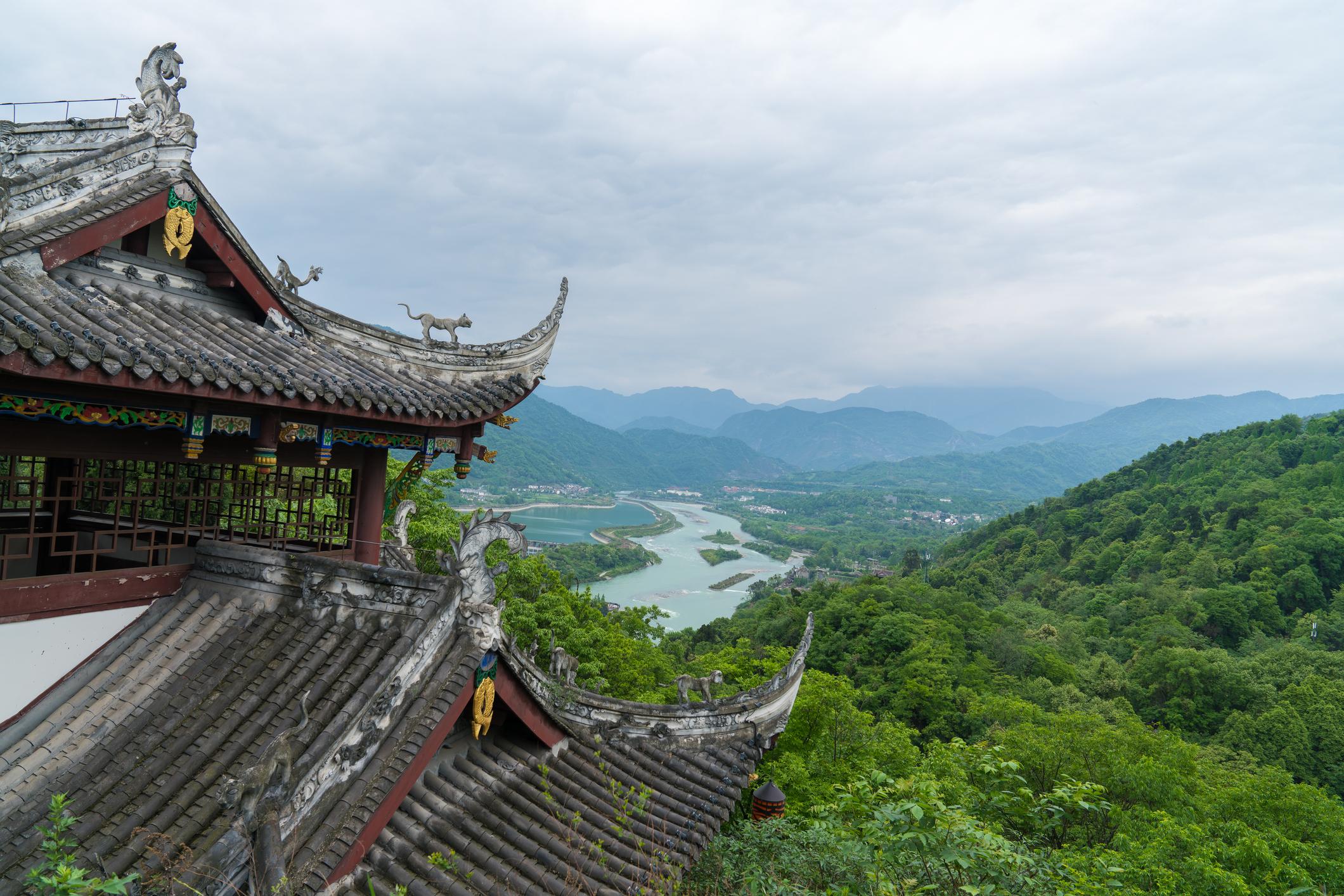
Zhang Daqian, a master of traditional Chinese painting, stayed in this temple in the 1930s and 40s - creating an abundance of work and leaving behind stone carvings and portraits of Taoist figures. The three characters above the gate, meanwhile, were inscribed by Chiang Kai-shek in 1940, the man who would later become the President of the Republic of China.
There is a woodblock carving of the entire five-thousand-character Tao Te Ching (Laozi’s foundational work of Taoism) on nanmu wood here. And an inscription in Shangqing Hall reads: “One gives birth to two, two to three, and three to all things. Earth is modelled on Heaven, Heaven on Tao, and Tao on nature.”
These are forests and mountains that, in their silence and beauty, have inspired pensive thought for generations - and still invite it now.
Behind the palace, the Sun Viewing Pavillion looks out on forested ridgelines.
Different routes will visit these sites in different order, but if you’ve not already done so, you can then head on to Lingyun Resort and Laojun Pavillion - at the summit of the mountain, 1,260m (4,133ft). The structure rises out of the forest like it was part of the mountain itself, soaring into the sky.
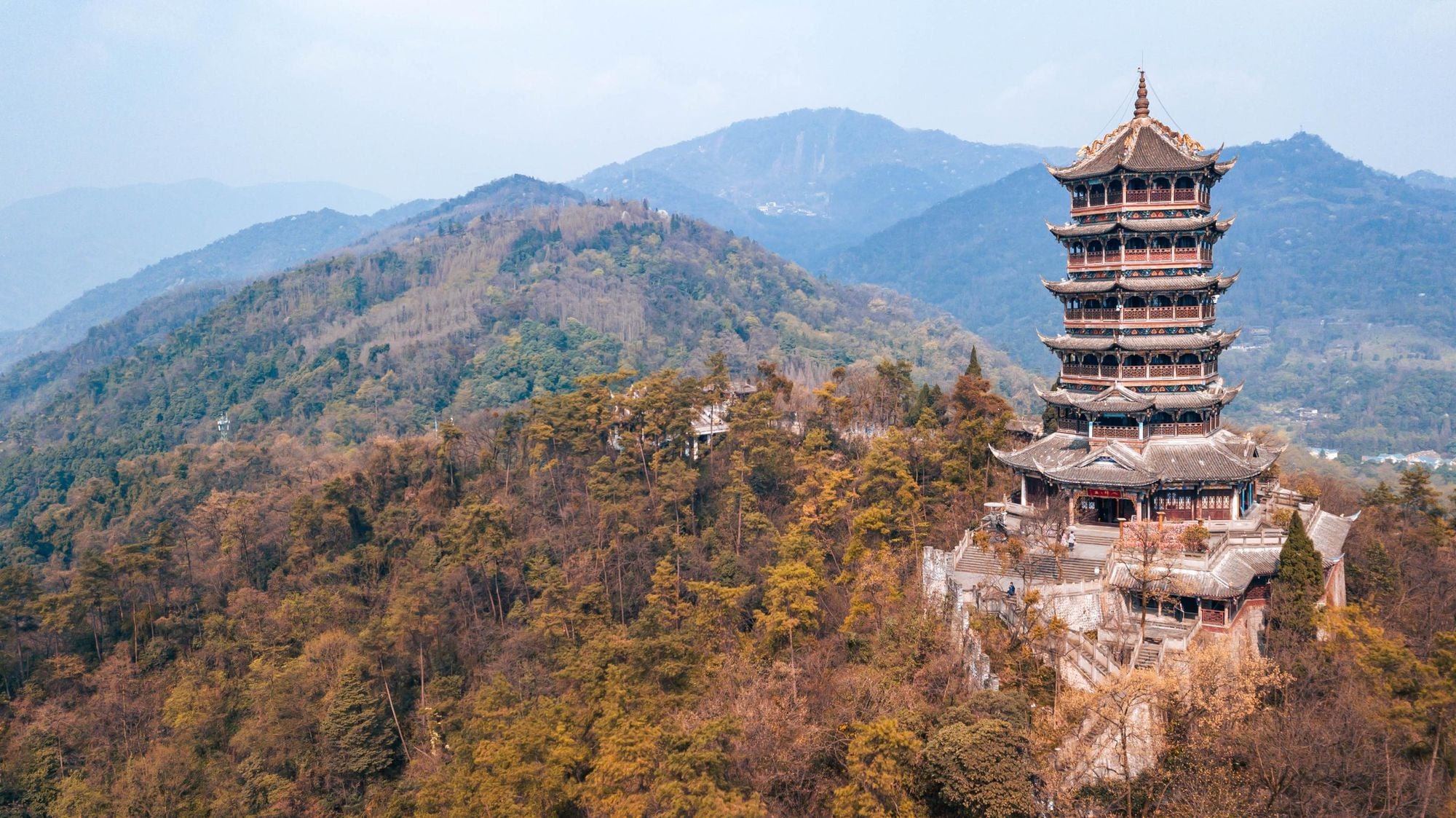
The original pavilion here was actually destroyed in 2008 in the Sichuan earthquake, but the reconstruction is still 33 metres high with nine floors - and is open and accessible to visitors. The panoramas of forests are sublime.
From here, walk to Ciyun Pavillion and take the cable car back down the mountain to Yuecheng Lake, close to the Entrance Gate where you started.
What to Do After?
After descending the mountain, there are hot springs in the area to recharge. Or for those keen to explore the area further, head into the nearby Jiezi Ancient Town - a place with riverfront teahouses and Qing-era wooden streetscapes.
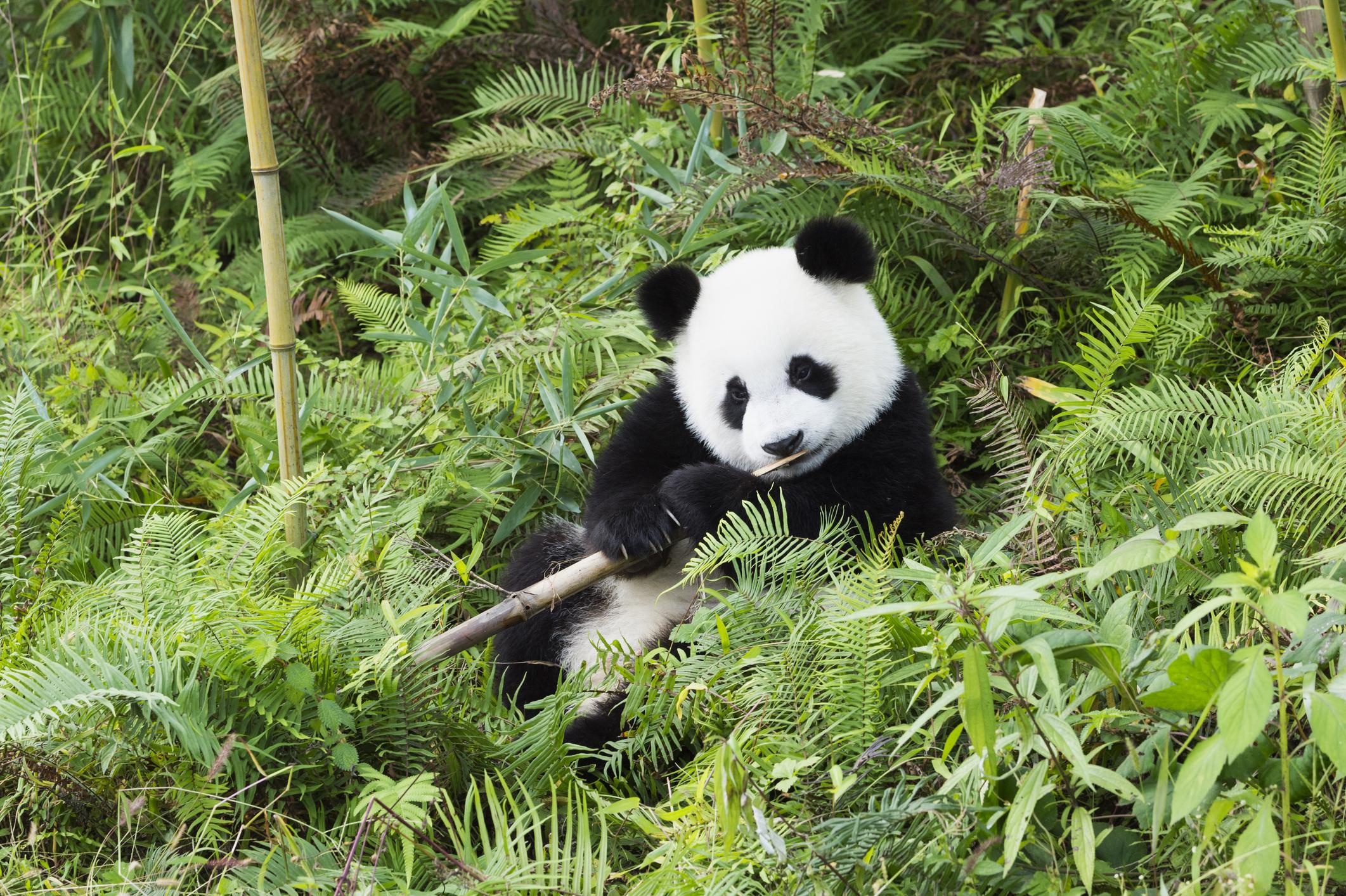
A short distance from the mountain, you’ll also find Dujiangyan Giant Panda Centre, which is part of China's national conservation network for giant pandas. Visit to see a project working to preserve the long history of pandas in this region. It's a reminder this landscape is not only spiritual but ecologically alive.
 Stuart Kenny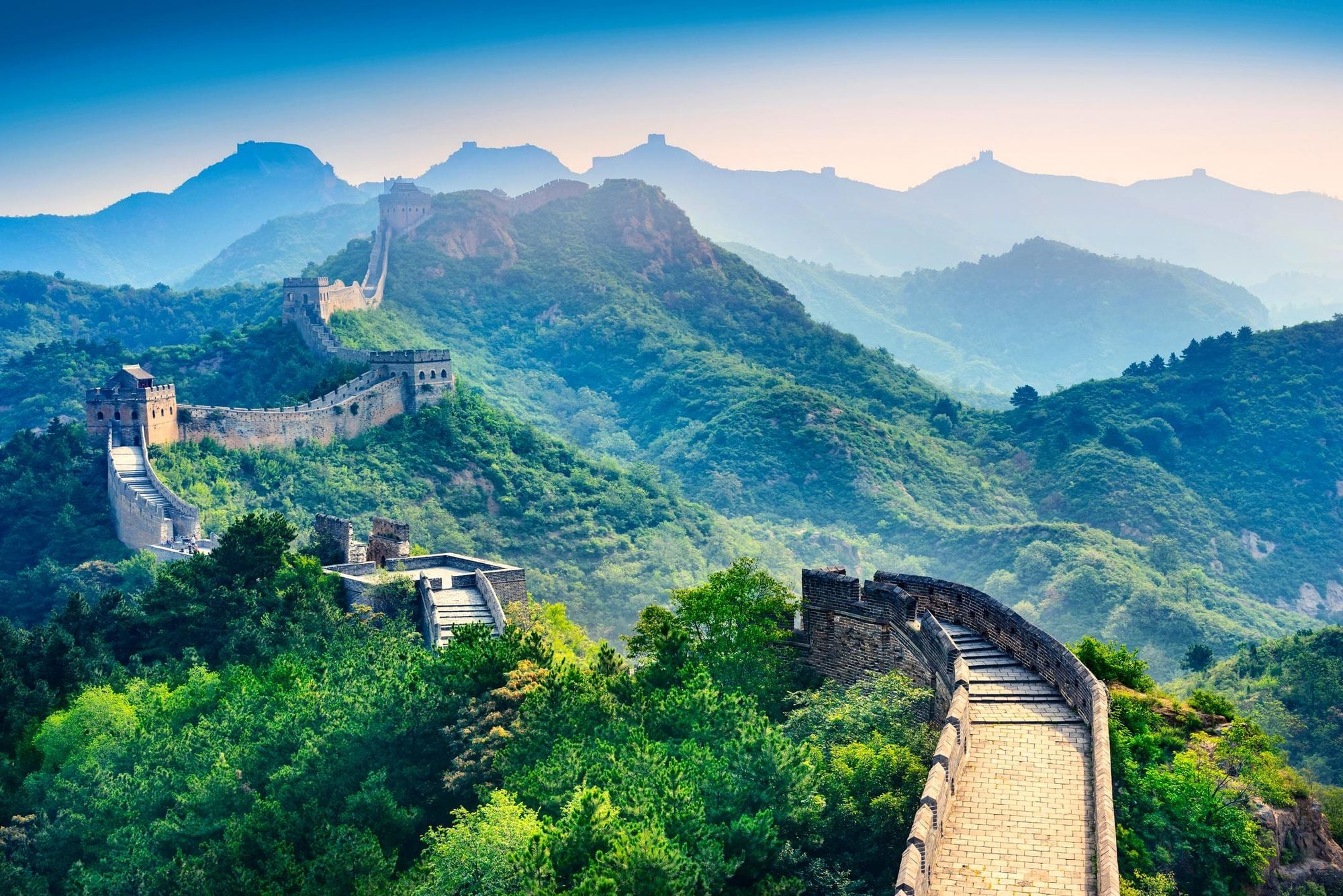
Oh, and a fun fact: Mount Qingcheng both has its own brand of kung fu (Qingcheng Kung Fu, one of the most widely practised forms in all of China) and, appropriately, the mountain inspired Panda Village in Kung Fu Panda 3.
This is a place where folklore and ancient history meet culturally-distinctive architecture dating back millenia. These are forests that, in their silence and beauty, have inspired pensive thought for generations - and still invite it now.
Inspired? Check out our Ultimate Adventure through China, visiting Mount Qingcheng, the wild side of the Great Wall of China and more!