

When I ask David Guthrie about the state-of-the-art thermal scopes he's been using, he doesn't immediately get into the minutiae of the technology. Instead, he talks about the elephants - and the rare behaviours that tech has allowed him to see while everybody else was asleep.
"In 35 years in Tanzania I'd only ever seen elephants lie down three times," says Guthrie, who along with his Tanzanian partner Masoud Kilanga co-founded a positive-impact safari specialist in the 1990s. "Then I saw it twice in one night."


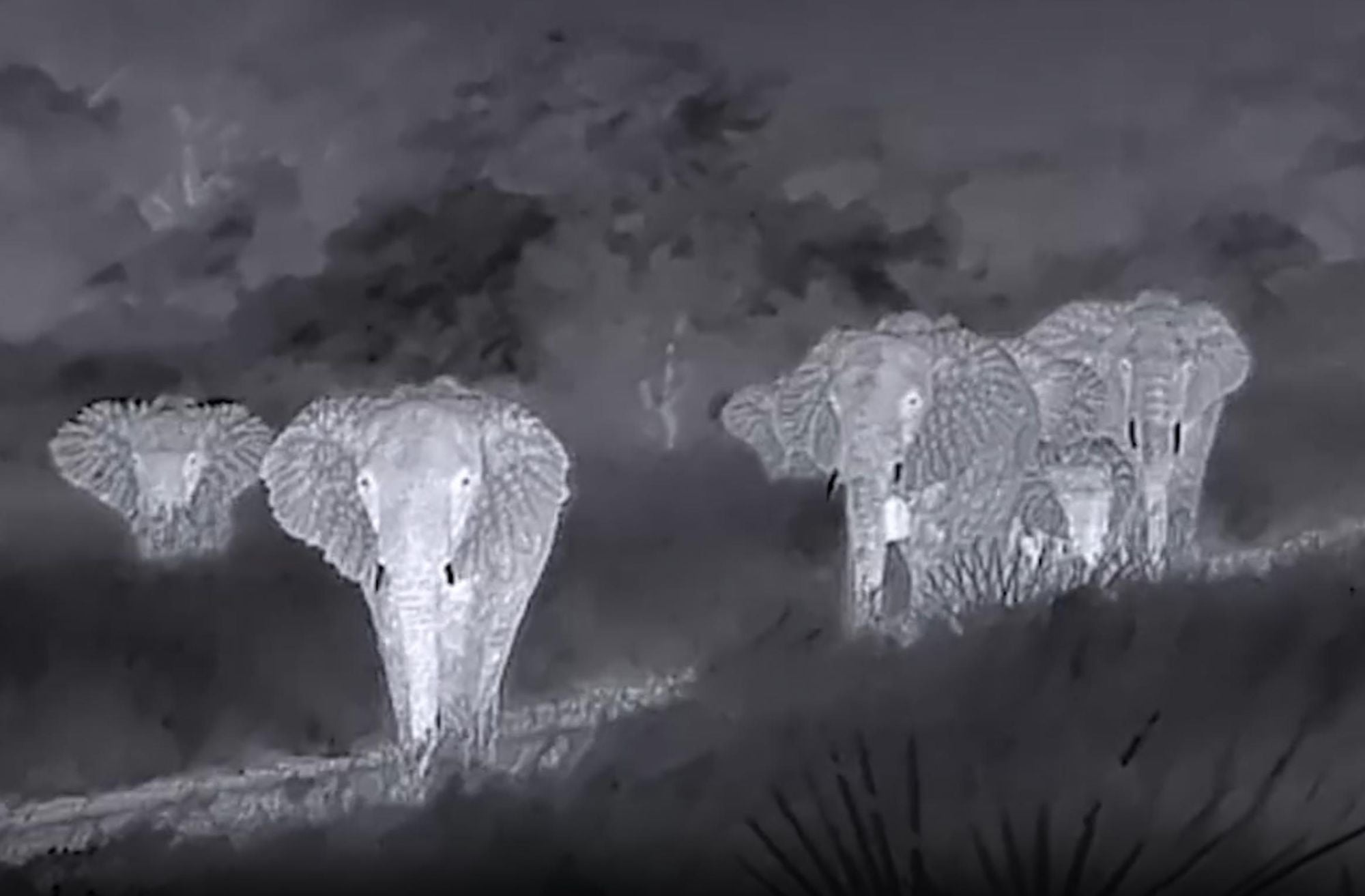
Guthrie watched as elephants lay down to sleep beneath the tower at Bab’s Camp - a five-storey timber lookout that rises above the treetops of Saadani National Park. They had emerged out of the coastal scrub, plodded slowly over and felt safe enough there to stretch out, beneath the tower where David sat watching.
He goes on to describe what it's like to follow the roars of male lions in the darkness, and time spent sitting amongst huge herds of wild buffalo at night.
I don't think there's anywhere else in the world where turtles are laying eggs on the beach, then a few hundred metres behind are places where elephants gather - as many as 250 at a time.
Moments like these showcase the wonder of thermal safari, which guests can experience for themselves on Much Better Adventure's brand new adventure in Tanzania, in partnership with Guthrie and Kilanga's A Tent With a View.
While daytime safari remains the star attraction of such itineraries out in wild Tanzania, this state-of-the-art thermal imaging technology now allows guests to peer into the hours still off limits to most operators - and to explore the night.
Where oceans meets bush
Saadani is a place truly unlike anywhere else on the continent. “You park and walk down through some coastal forest, past some 300-year-old Shirazi ruins, and then you can hear the sound of the waves,” Guthrie explains.
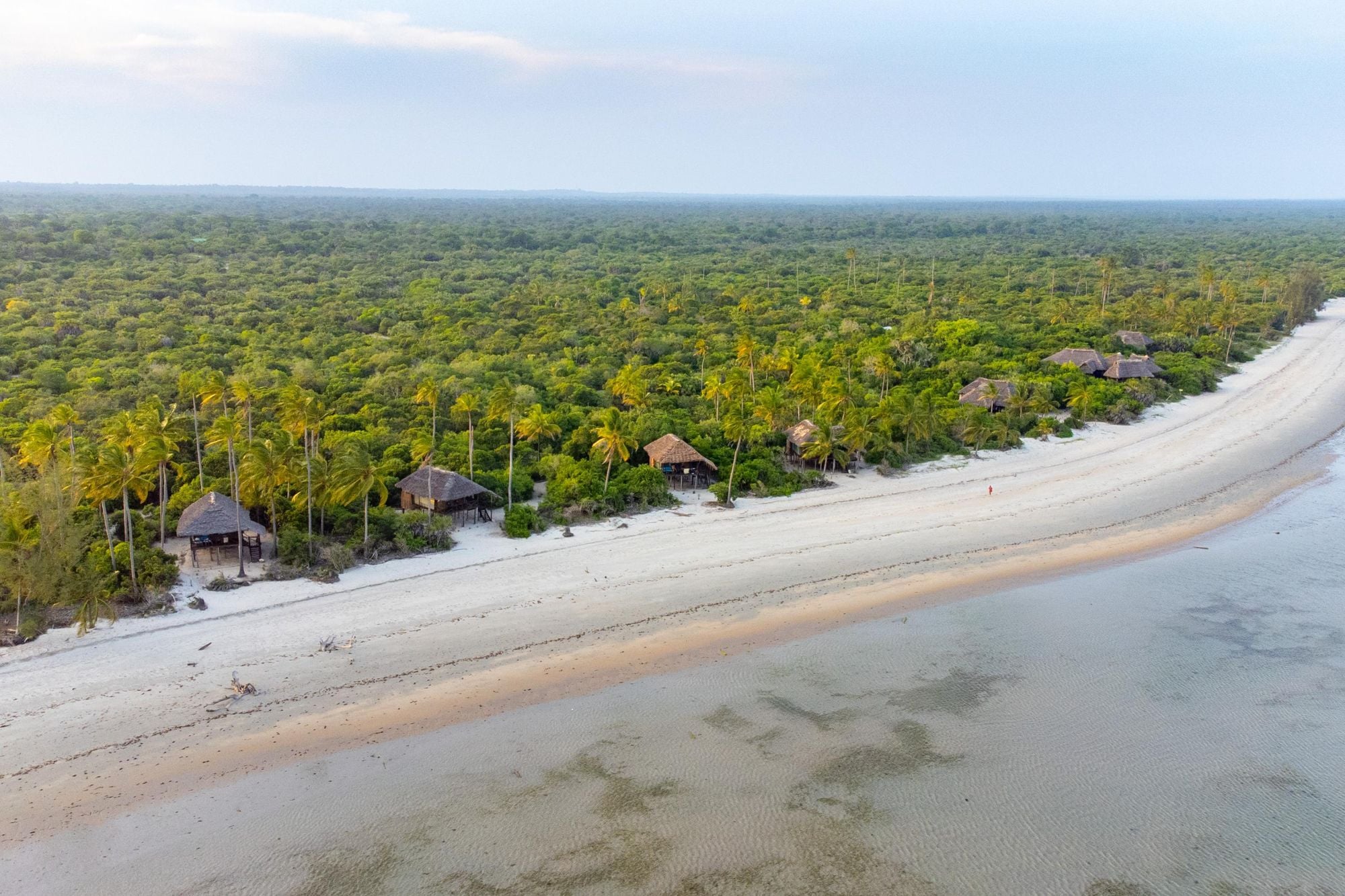
It is the only national park in East Africa where bush meets beach. From the top of Bab's tower, you can see out to Zanzibar on a clear day, while in the green mess below roams the masses of charismatic fauna that people come to see.
“It is unique,” David says. “I don't think there's anywhere else in the world where you have turtles laying their eggs on the beach, and then right behind, within a few hundred metres, places where elephants gather - as many as 250 at a time. And you have a pride of lions. This is the centre of their territory, and they have their cubs on little islands with baobab trees that punctuate the salt flats.
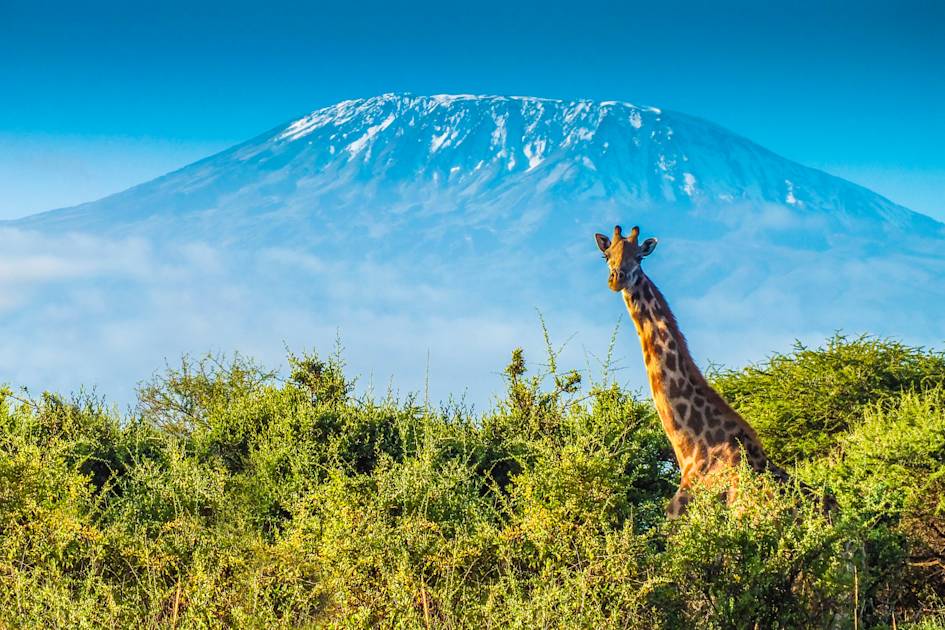
The elephants under the moonlight, buffalo all over the place, giraffe herds you can see from miles away with the scope...
“You can walk and see a mosaic of prints, and you can tell a really strong story because the prints are so clear in the sand. And then high tide cleans them away.”
David and his business partner Masoud helped to build the infrastructure of Saadani National Park up over the last three decades. When Guthrie first arrived in the early 1990s, the park's head ranger was, by his own rueful account, the main poacher. “He was ferrying meat to Dar es Salaam each weekend and so, we basically used to run the anti-poaching and everything,” Guthrie recalls.
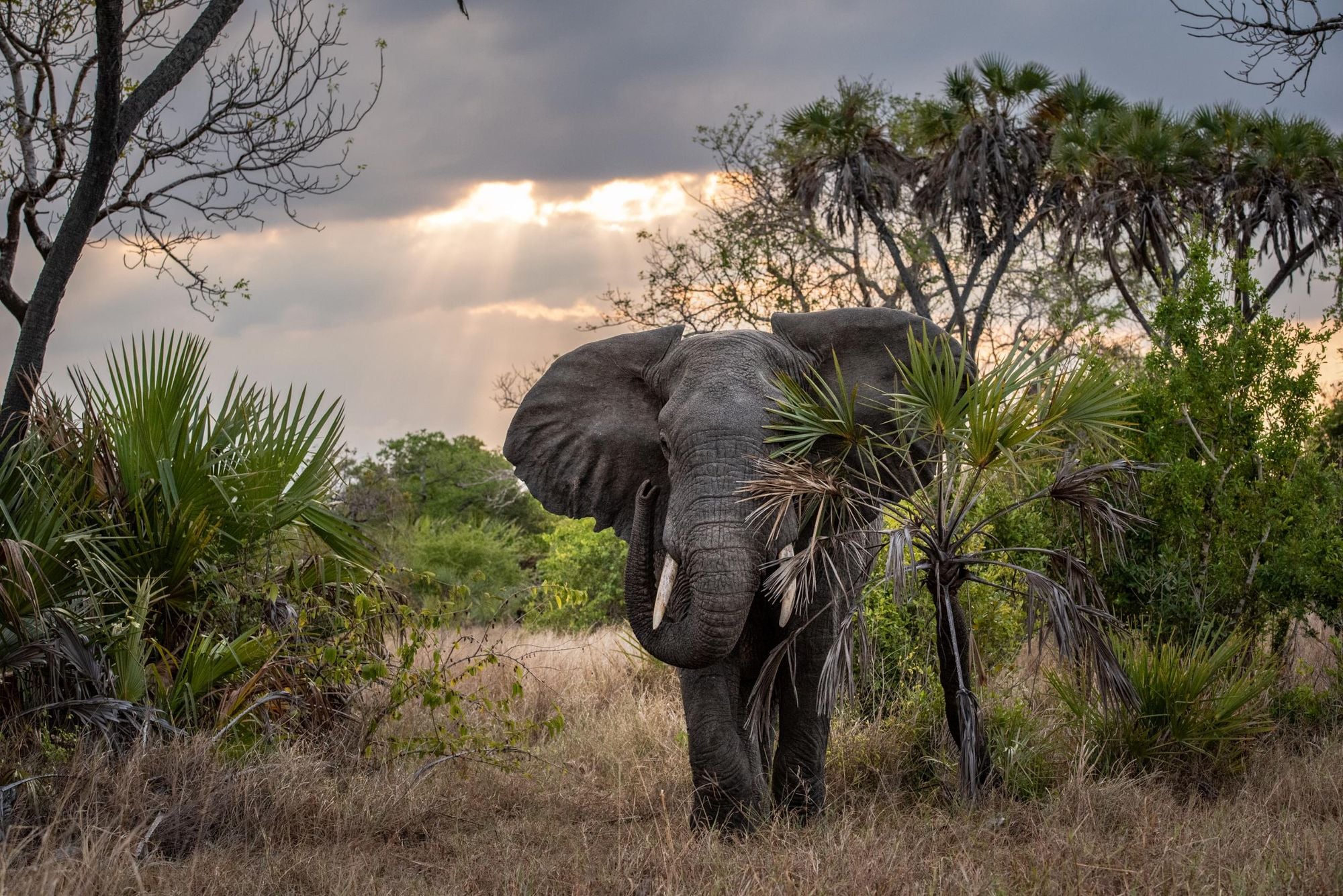
As well as those turtles, lions and elephants, the park today is also home to giraffes, leopards and buffalo. You can see hippopotamus, crocodiles and rare kingfishers. But Saadani keeps its most extraordinary secrets in the dark.
Night vision activated
As dusk settles and the temperature drops, Saadani transforms. From the top of the tower at Bab’s Camp, the effect is something quite remarkable.
“We have elephants under the moonlight, buffalo all over the place, giraffe herds you can see from miles away with the scope," he says. "And of course, the lion prides are calling every night, and you can then set out to go and find them, and watch the big male moving around. You see some magical behaviour.
“The wildlife tends to hide during the day and come out in prolific numbers at night. And this is where night safaris come in. These thermal scopes are brilliant. You can see very clearly what you’re watching - and how much comes to life.”
Most night safaris rely on intrusive spotlights, sweeping across the bush and sending animals scattering. What Guthrie has instead is a fleet of handheld thermal scopes. The same technology that has quietly revolutionised wildlife-documentary filmmaking, these devices read the heat signatures of animals and render them in luminous detail against the cool dark of the African night.
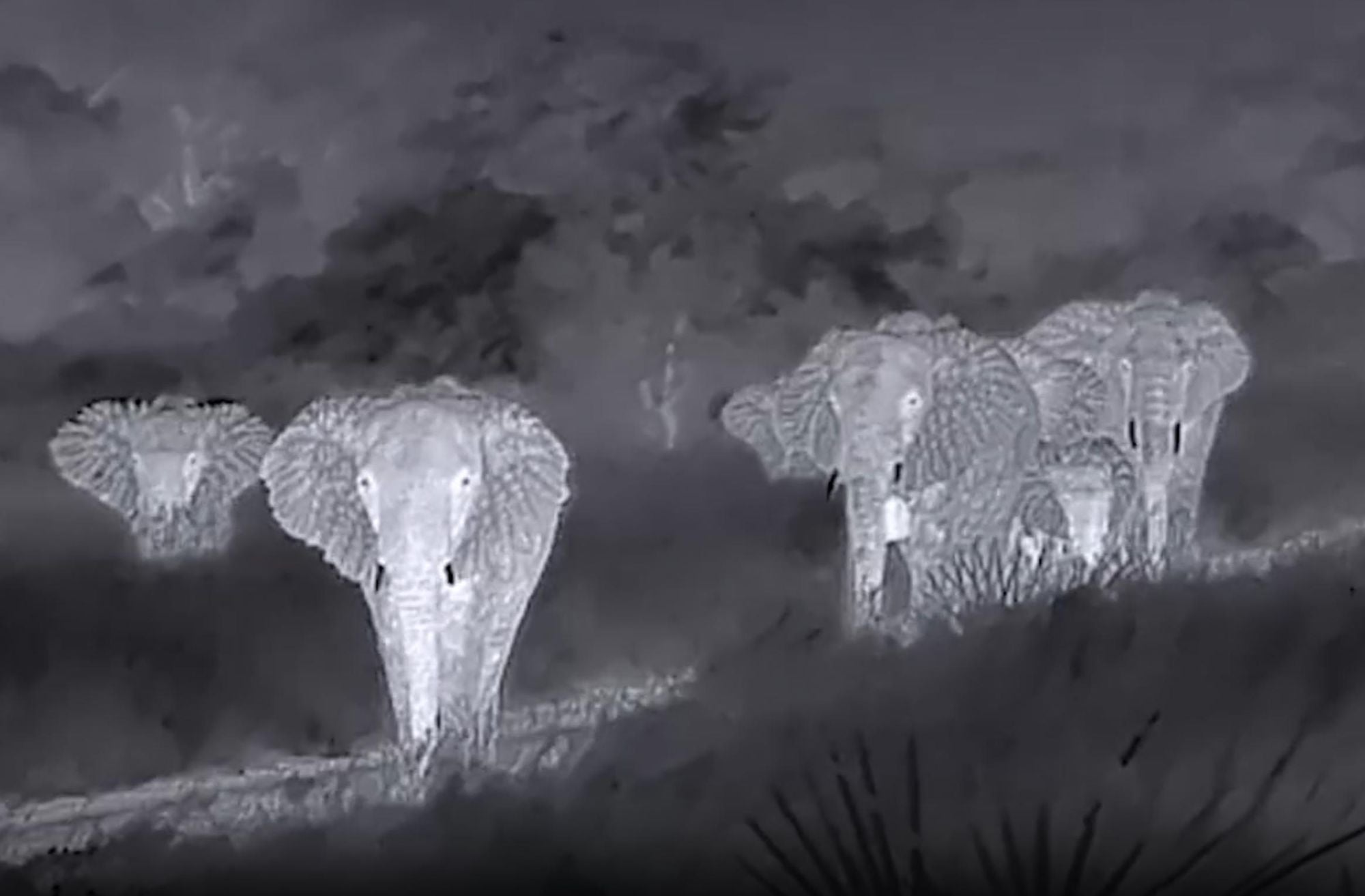
The use of thermal scopes doesn't come at the expense of sleep, either.
“We know most people are [tired] by midnight,” David laughs, “and if you wake them up at 3am they get uppity. But apart from the cats, most of it happens between dusk and 8.30pm, and then you get more movement in the morning.
“We used to monitor elephants and around 50% of their movement happens in that last light and early darkness. So we’ll relax, have a sundowner, watch the sun go down and then maybe see some movements before it gets dark. As soon as it’s dark, then bingo - we’ll almost definitely start to see things. It’s great in the tower but we can also jump into the car and move to where we see animals coming. Switch off the engine and they’ll come right to you. It’s unbelievable.”
These thermal scopes are brilliant. You can see very clearly what you’re watching - and just how much comes to life.
If the lion pride appears in the small hours, you’ll have the option to go looking.
“We’ll say to people 'go to sleep', but ask: do you want to be awoken if there is some good elephant viewing, buffalo, giraffe?” says Guthrie. “We’ll wake you for predators. So you get to bed at a normal time, but if we hear lions, we’ll wake and go in that direction, and scan around and sit. Often they’ll call again and usually within two calls we’ll find them. If there's no activity with predators at night, we'll wake everybody before dawn, maybe 5am, and get the scopes out again."
Scoping it out
Each thermal imaging safari scope connects to an app (downloadable by any modern phone) via Wi-Fi - and one scope is then shared between two people.
“So, the guide has a scope connected to a screen everyone can see,” David says. “And then one person watches through the thermal device, while the other can watch and record on the phone - and no doubt, people will swap over."
The app allows you to take live photographs and videos, so you can easily capture that moment an elephant family or herd of buffalo waltz into view.
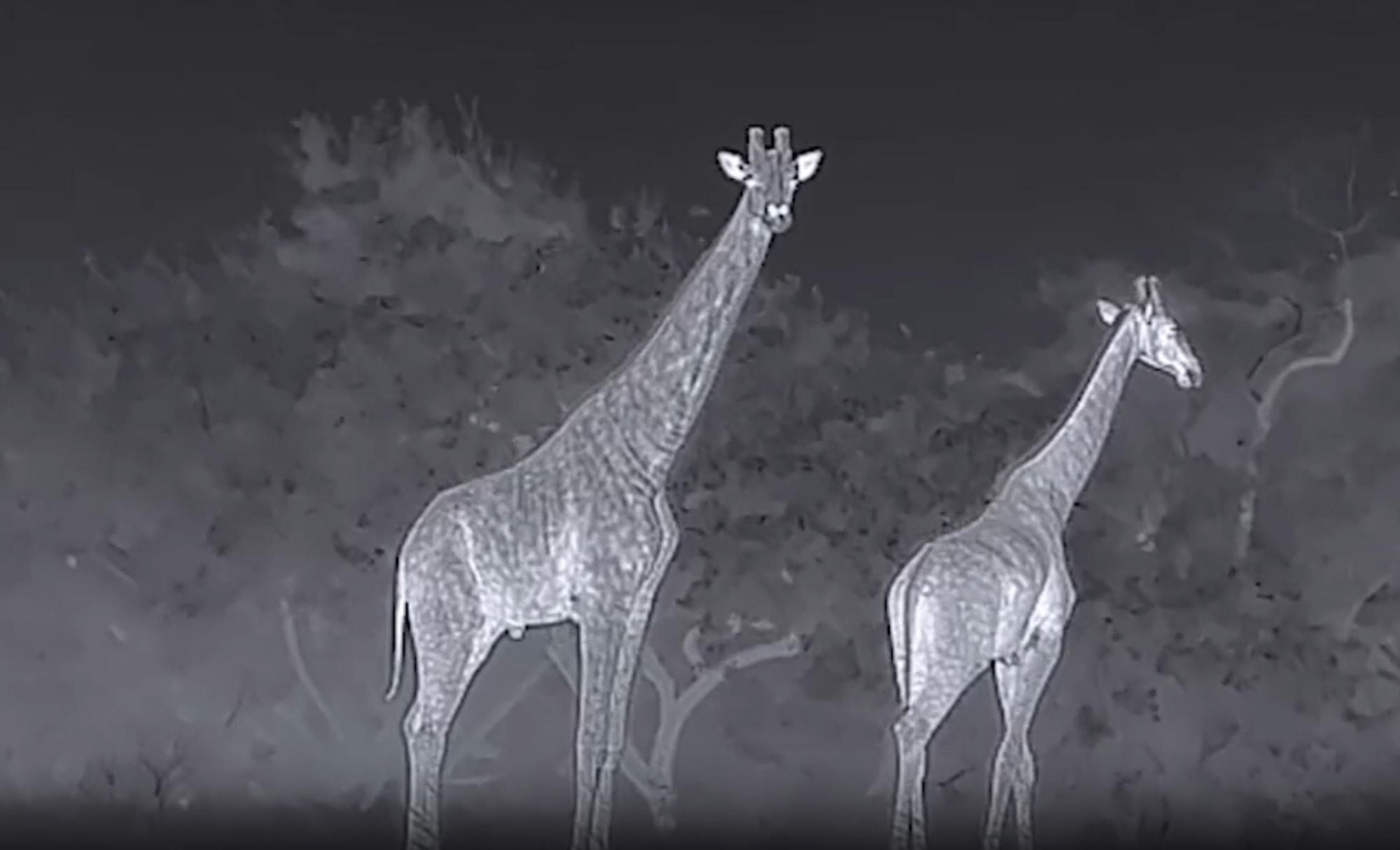
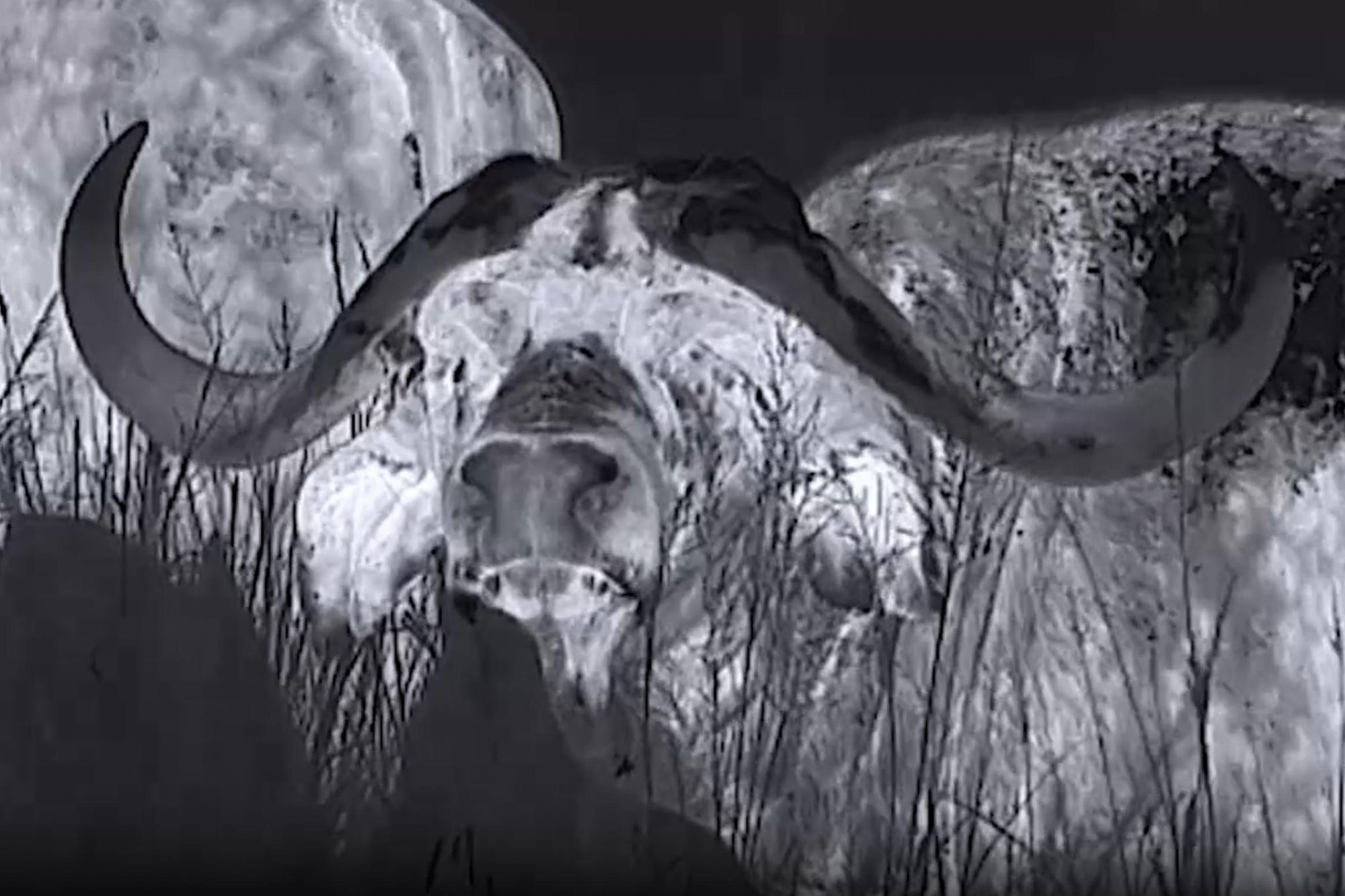
Thermal safari is still a new idea. "Very few people have cottoned onto this," David says. "A lot of people are still going out at night with spotlights, but that’s intrusive. We don’t disturb lions or get right in their face.” Under cover of darkness, elephants walk, sleep and dream. Lions prowl and buffalo herds move unseen (by most) in one of the most remarkable landscapes in the world.
“I think this is going to become a big way that people safari,” David says. “But you need to have all the elements. You need plenty of wildlife in your area and to be free to move around. This is our own area, so we're allowed to move, whereas in a national park, you're not allowed to drive at night. You also need elevation. The tower is magic for that, because without it, we wouldn't see half of these things. So it's a combination of all that, plus the fact that as an ecosystem it's so unique. I think that it's a really magical part of the trip.”
This is a place where Indian Ocean meets African bush, and where safari doesn’t end at sunset. Rather, it continues, through the thermal glow of a camera scope.
Inspired? Read the full itinerary for our Safari to Shore Journey in Hidden Tanzania with David, Masoud and the thermal scopes, out in Tanzania!