

Pakistan’s Karakoram Mountains are one of the world’s superlative trekking destinations, where sky-piercing peaks are surrounded by wild rivers and snaking glaciers. The range is dominated by the iconic K2 (8,611m/28,251ft), the world’s second-highest mountain, and other standout peaks exceeding 7,000m (22,965ft), including Chogolisa and Masherbrum. Nowhere else on Earth offers such a dense concentration of high mountains—and while K2 is the big draw, other lesser-known hikes here can actually provide a deeper insight into the culture of this storied area, and offer more benefits to local life.
Despite the raw beauty of this region, it is rarely visited by western trekkers. Only around 25,000 foreign tourists visited the Gilgit-Baltistan region (the primary location of the Karakoram Mountains) in 2024, while 244,045 foreign tourists headed to Nepal's Annapurna region.
Trekking in Pakistan is very authentic. It’s expedition-style, so you go with local guides and porters and you have a true cultural exchange.
“Trekking in Pakistan is very authentic,” says Umer Latif. “It’s expedition-style, so you go with local guides and porters and you have a true cultural exchange. You understand the geographical impact of the landscape on people's lives, and the historical significance of adventures and expeditions of the past.
"In short, Karakoram gives you a sense of discovery, authentic adventure, physical challenge and tourism for good, if done right. So it's very unique.”

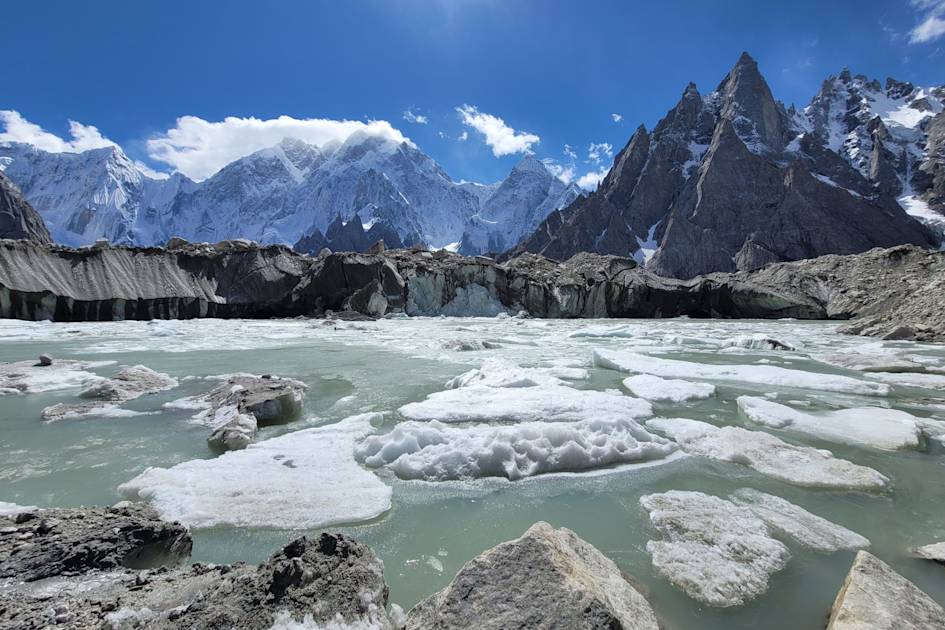
The Might of the Karakoram Mountains
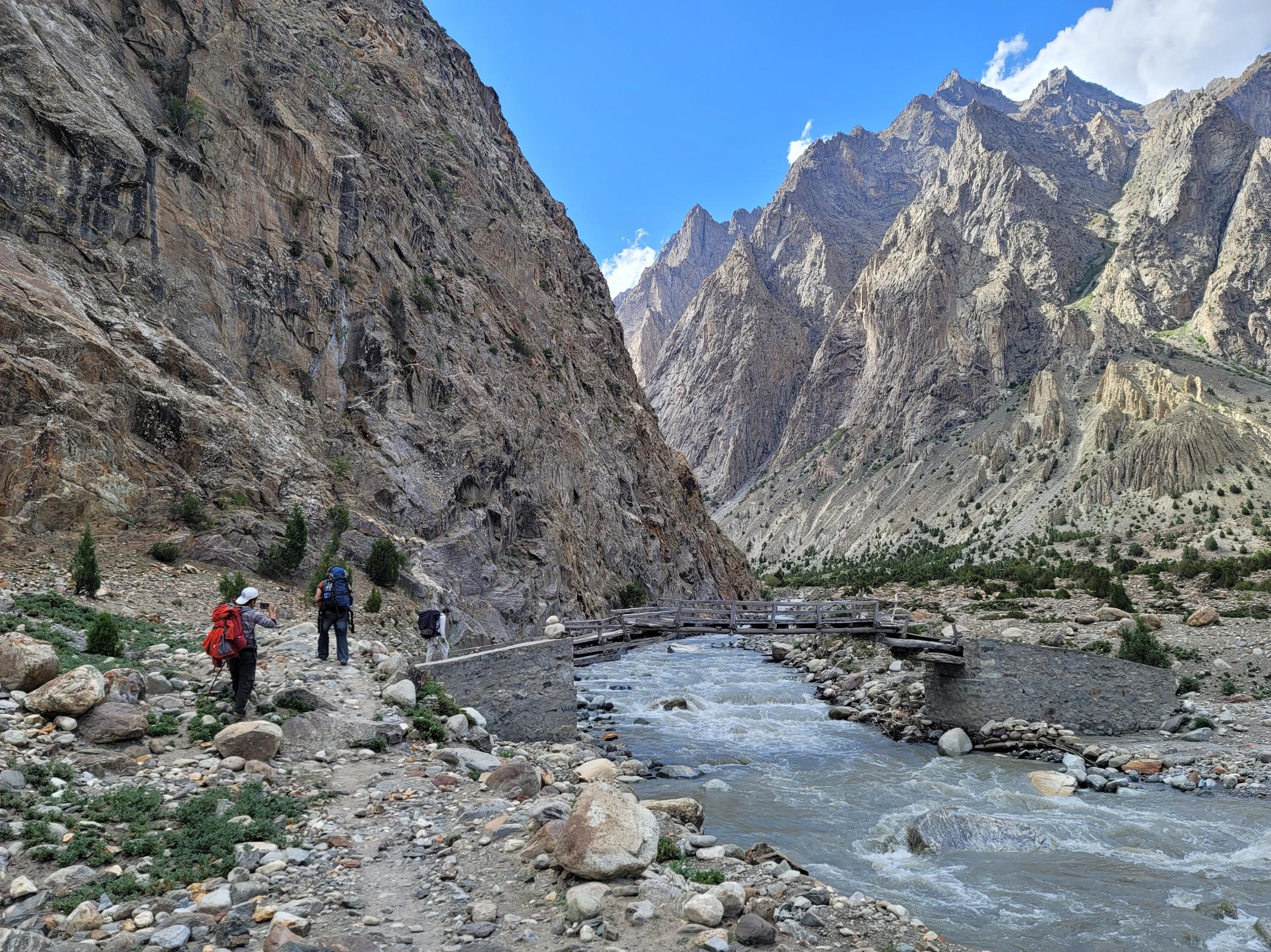
Many of the trails in the mountains are rarely trodden by western trekkers—they follow traditional herder’s tracks, rather than being dedicated paths created for hikers. There are, however, several exceptions. These include the trekking routes to the base camps of K2 and Nanga Parbat (the world's world's ninth-highest mountain, reaching 8,126m/26,660ft), and Fairy Meadows, a high altitude grassland with views of Nanga Parbat.
“There is concern about overtourism in destinations like K2 and Nanga Parbat Base Camp,” Umer says. “It's not that the numbers are too large. It's just the campsites don't have much capacity. They can accommodate a few hundred people; even 3,000 to 4,000 people annually seems large.”
There is concern about overtourism in destinations like K2 and Nanga Parbat Base Camp. It's not that the numbers are too large. It's just the campsites don't have much capacity
K2 is one of the world’s most dangerous mountains to climb due to its extreme technicality and the notoriously unpredictable weather, which make it prone to icefall, rockfall and avalanches. Although it was first climbed in 1954, the mountain wasn't climbed in winter until January 2021. But being one of the world's iconic peaks, it remains a point of fascination with both mountaineers eyeing up the summit and hikers, who want to reach base camp (located at 5,150m/16,896 ft) beneath it to get a sense of the immensity and power here.
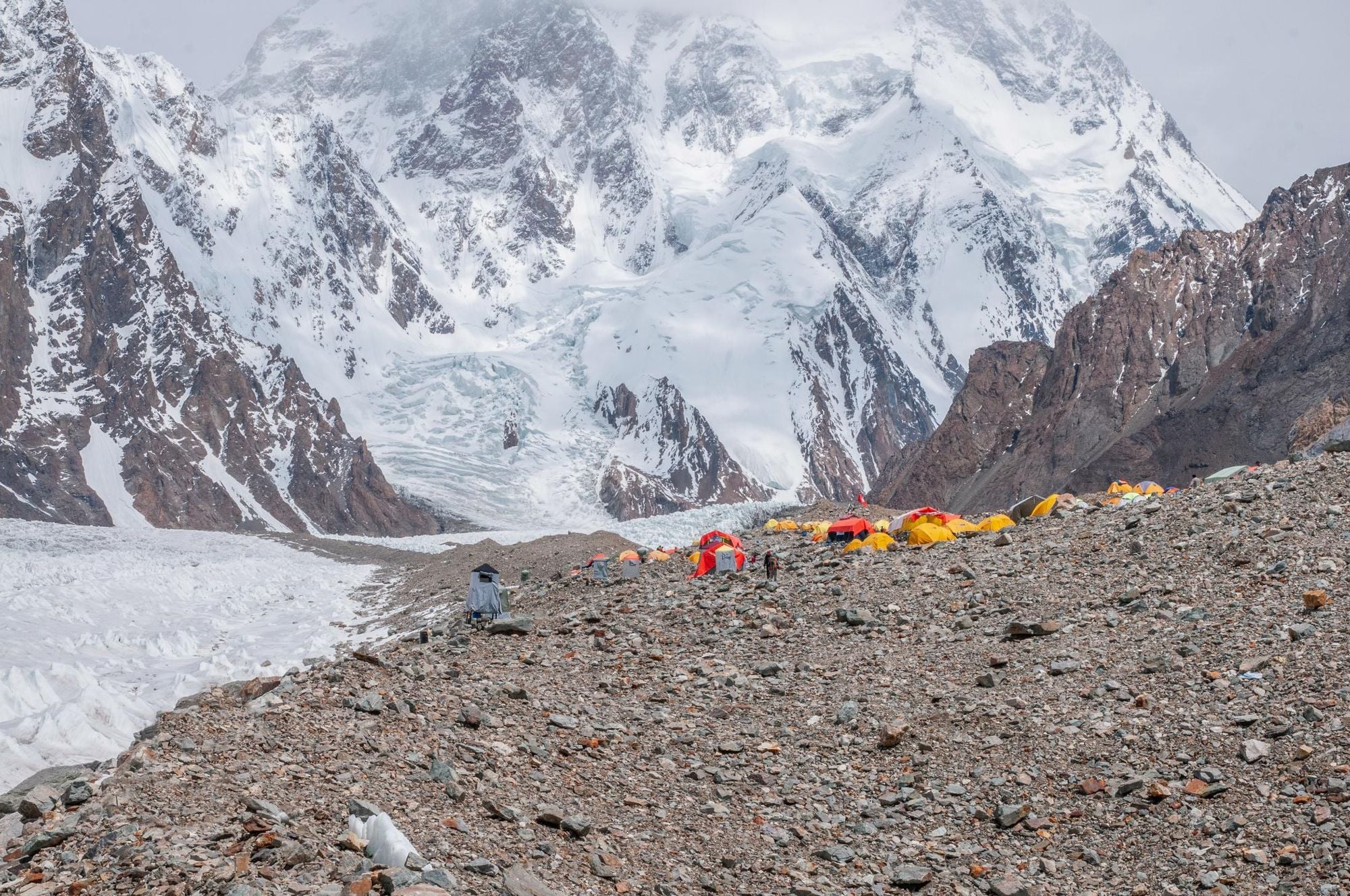
But increasing commercialisation has led to an increasing amount of rubbish being left at K2 base camp by both climbers and trekkers - as well as at the higher altitude camps. While some companies are responsible, removing waste belonging to themselves and other people as they climb, other teams discard tents, old ropes and leave human waste behind them.
“I did the K2 Base Camp trek recently," says Umer. "I spoke with ambassadors and environmentalists who did it, and were unhappy. Yes, the mountain scenery is mind-blowing. You don't see that anywhere on Earth. But then you see those campsites overpopulated and you see mules and porters being abused. Three porters died this year due to altitude sickness. It happens all the time."
These routes are still being managed properly and create crucial income streams, whereas the K2 route is now showing serious signs of strain.
So, where to go instead?
There are other routes here, including a trek to K1 (Masherbrum) Base Camp and K6/K7 Base Camp in the Charakusa Valley, which still serves local communities, allowing people to benefit fairly from tourism, and providing an authentic, positive visitor experience in amongst the beauty of these enormous mountains. These routes are still being managed properly and create crucial income streams, whereas the K2 route is now showing serious signs of strain.
Umer continues: “It’s not only irresponsible to travel to K2, bluntly speaking, but there is also not much we can do to improve it. Pakistan had something called the 18th amendment about a decade ago. They decentralised tourism, so each province has responsibility and control, but actually what happened is that nobody is taking responsibility anymore. I think at least for a few years there should not be more people going to K2—it's already too much.”
Alongside the environmental and labour exploitation occurring at K2, Umer says there are also safety concerns when it comes to the base camp trek.
“Pakistan has more than 5,000 active glaciers, the most outside the polar regions,” he says. “That's why we have well-irrigated land down in the Punjab and other parts of Pakistan. But it also means as global warming is serious now, those glaciers are also melting fast and we are seeing floods.
“This season, rainfall is also expected to be 26% more, which is especially challenging on the K2 base camp trek. Last year, a river flood took away one of the bridges, so people had to make makeshift bridges. The same happened with the Nanga Parbat Base Camp. The drive to it is on a very unstable road. A flood hit, a landslide happened; it got cut off for the whole month. It’s difficult to plan a trek months ahead of time because of this unpredictability.”
A Better Way to See the Beauty
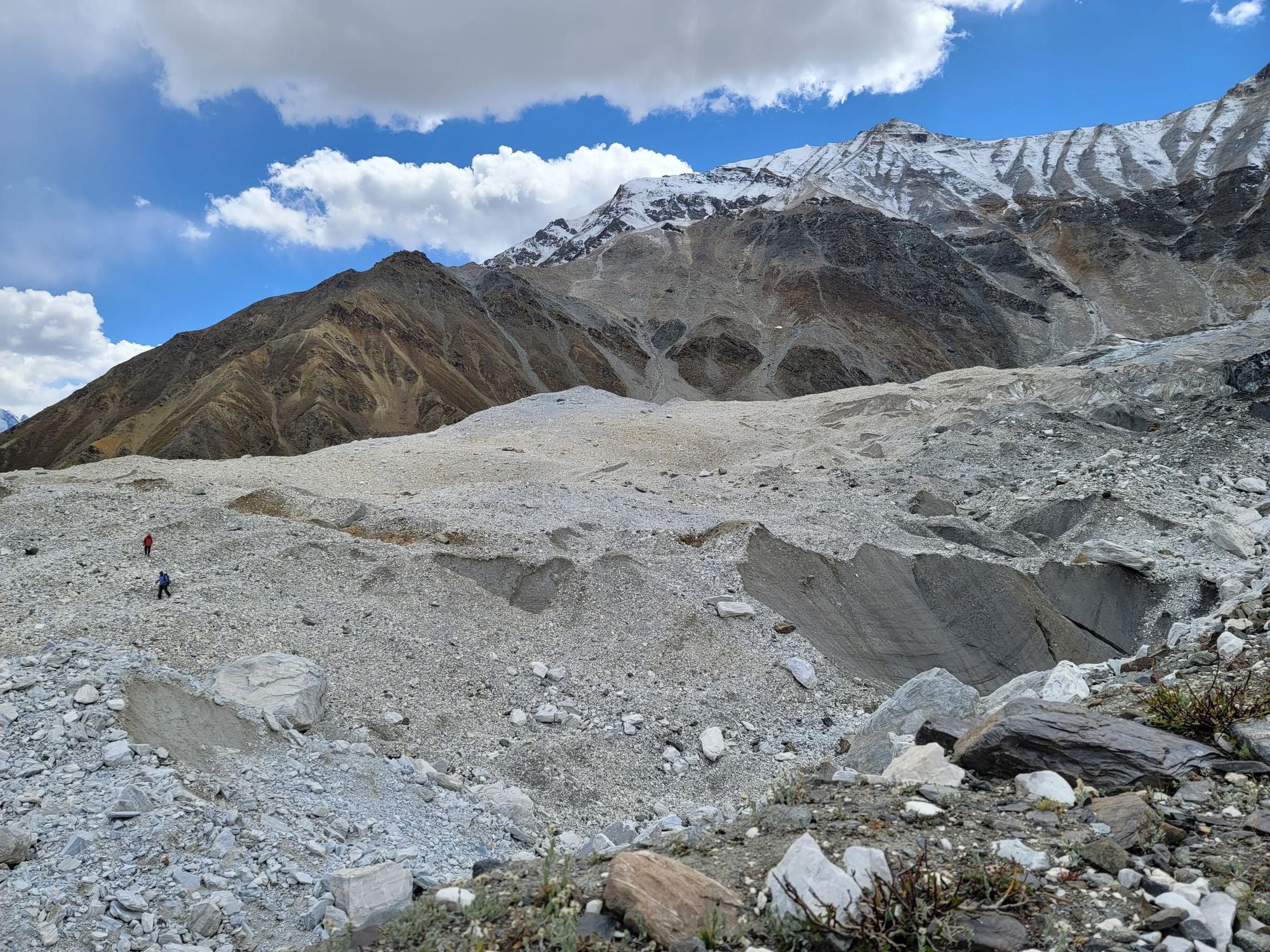
This is where the alternatives come in. There are many less-crowded—and less environmentally volatile—trekking routes within the Karakoram Mountains. One of Umer’s favourite routes, measuring around 50 miles (80km), takes you through the Hushe Valley to K1 Base Camp (also known as Masherbrum Base Camp) and then to K6/K7 Base Camp in the nearby Charakusa Valley.
The journey begins in Skardu, the gateway town to the Gilgit-Baltistan region where the Karakoram Mountains are located.
It’s situated in a broad glacial valley, surrounded by high peaks. A short walk takes you to Nansoq, Pakistan’s first organic village, a handful of stone houses nestled amid terraced fields and apricot trees. Here, locals farm with minimal machinery, growing fruit and vegetables according to organic principles. Skardu is also a good place to try Balti cuisine before you leave civilisation behind. Tuck into a bowl of hearty noodle soup known as balay, or sample prappu, pieces of soft-boiled dough coated in a sauce of ground nuts and apricot oil.
To start the trek, you’ll drive east to the village of Hushe, passing small Balti farming villages, including the geographically significant settlement of Khaplu.
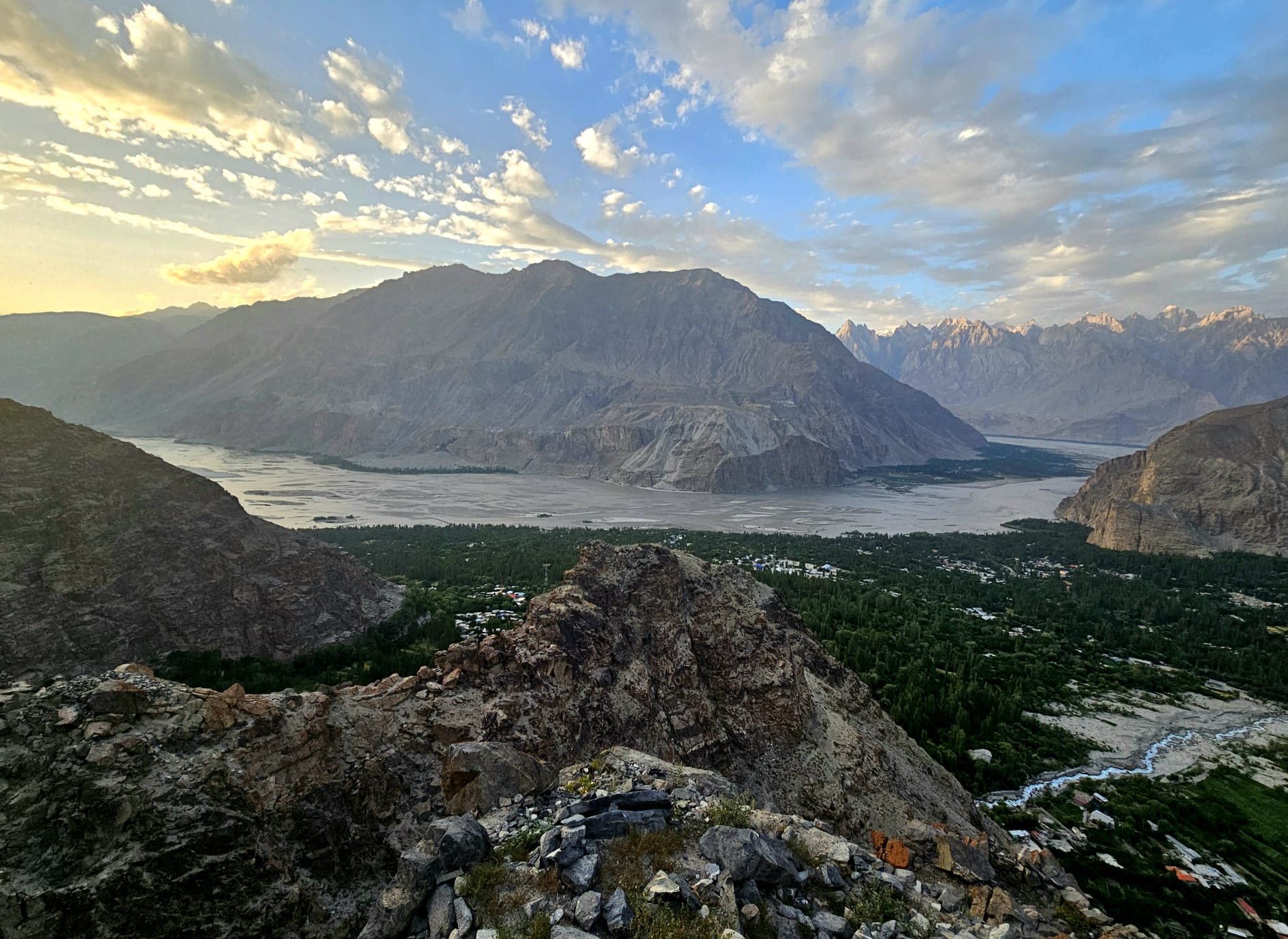
“Khaplu is the place where the three rivers, Masherbrum, Shyok and Siachen, collide and join the Indus River,” Umer says. “The Indus River is the third longest river in Asia, and it’s what gave India its name—it’s instrumental in forming and sustaining one of the world’s oldest civilisations.”
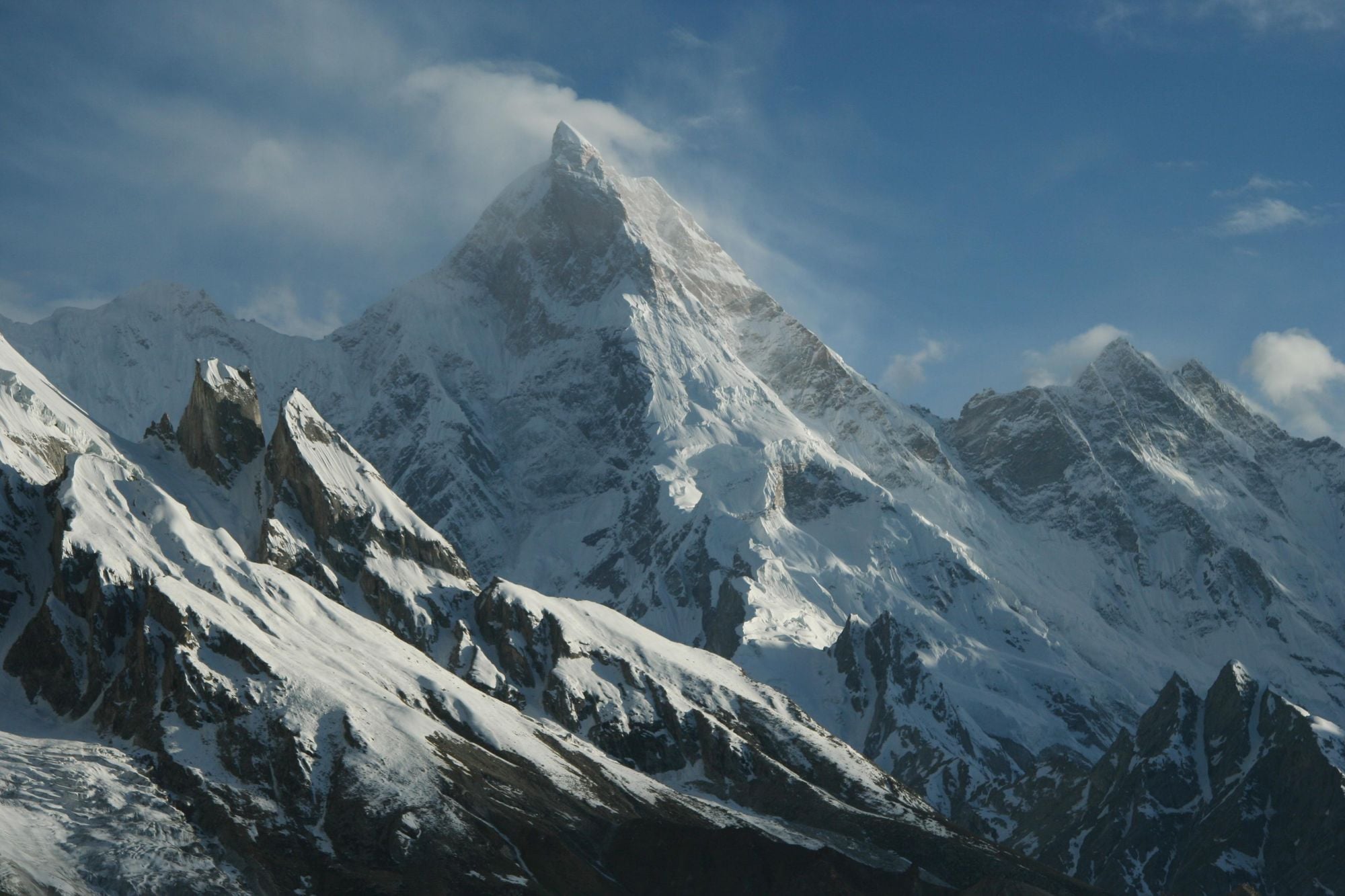
Hushe is the last village before you head up into the Karakoram Mountains. The prominent K1 mountain, also known as Masherbrum, looms over it.
Khaplu is the place where the three rivers, Masherbrum, Shyok and Siachen, collide and join the Indus River.
“When British surveyors did the survey of Karakoram, they labelled the mountains in size order, beginning with K1,” Umer says. “Actually, they were incorrect because K2 is higher—but K1 is one of the most prominent mountains in the world. It’s considered one of the world’s most difficult Alpine challenges, as the top 1,000 metres is pure rock climbing.”
Hushe is connected to the iconic K2 via the Gondogoro La pass (5,585m/18,323ft). But instead of following that route, you’ll head through the lesser-known Hushe Valley, passing terraced farmland flanked by high mountains. The first campsite is located at Dumsum, a lush green clearing surrounded by juniper trees.
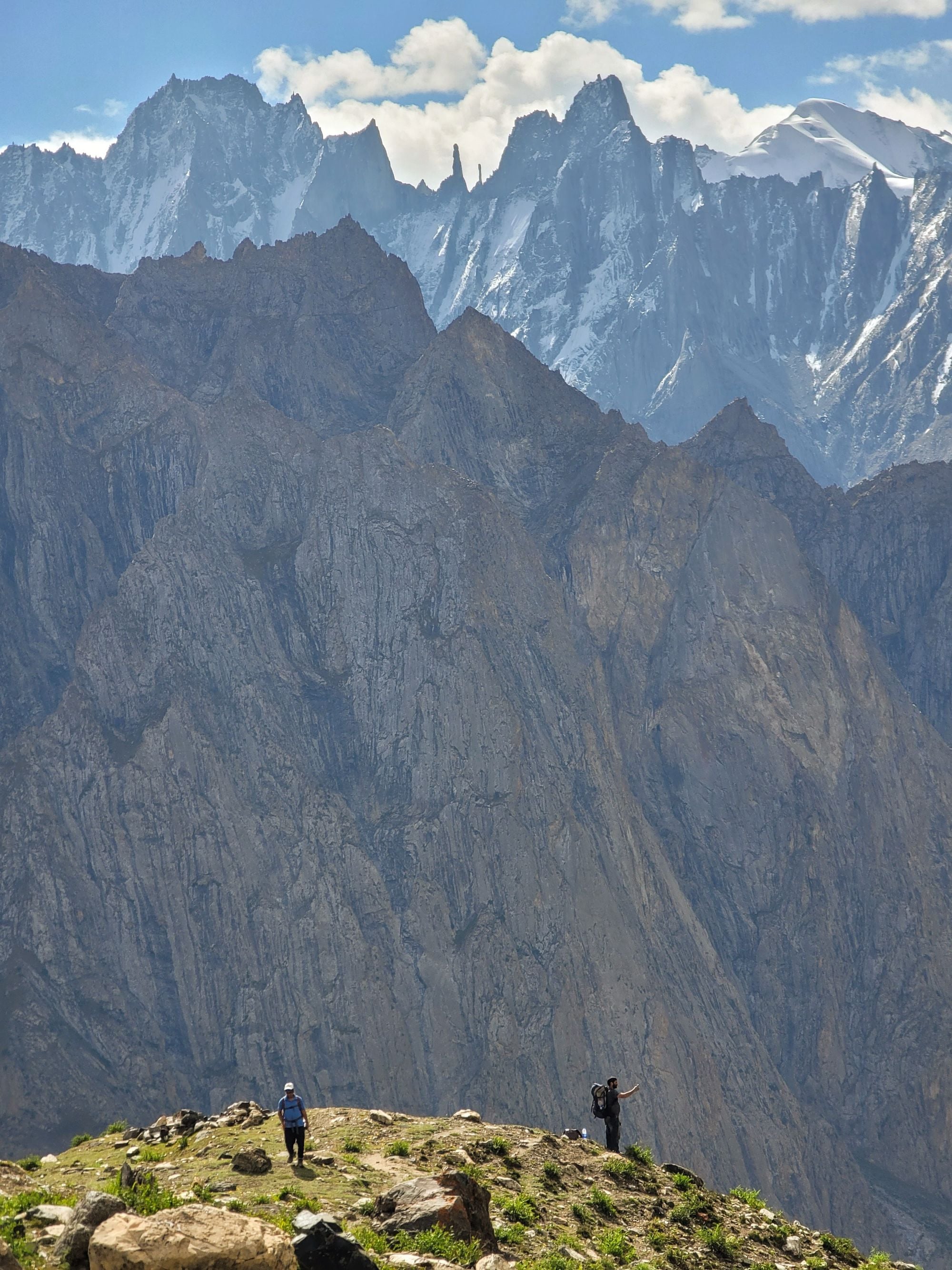
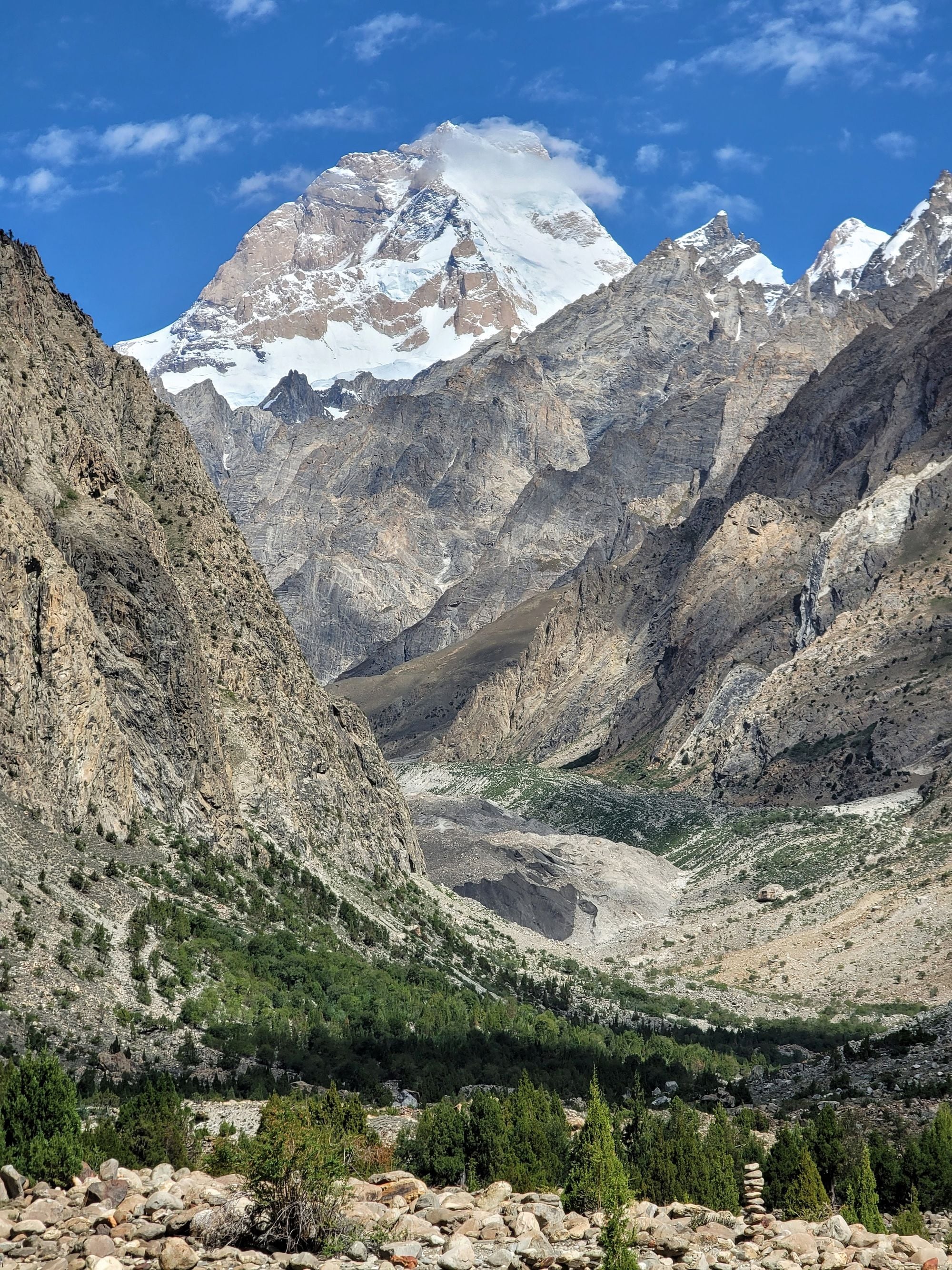
From here you’ll pass through a forest of tamarisk (or salt cedar trees) until you reach the glacial moraine demarcating the beginning of Masherbrum Glacier. You’ll trek alongside the glacier, surrounded by rocky spires and steep cliffs, ascending slowly upwards. After crossing a small glacier, you'll camp in the shadow of K1 at an elevation of 4,200m (13,780ft) among breathtaking mountain scenery. After retracing your steps to Dumsum, you’ll head northwest through the Charakusa Valley to Saitcho.
“Saitcho is like a very famous junction, because the people who do K2 and return via Gondogoro La stay here,” says Umer. “We stay in Saitcho as well, but we head in a different direction, eastwards.”
From Saitcho, the trail enters the remote Charakusa Valley, where the Tsarak Tsa and Chogolisa glaciers meet. Chogolisa itself carries a poignant legacy.
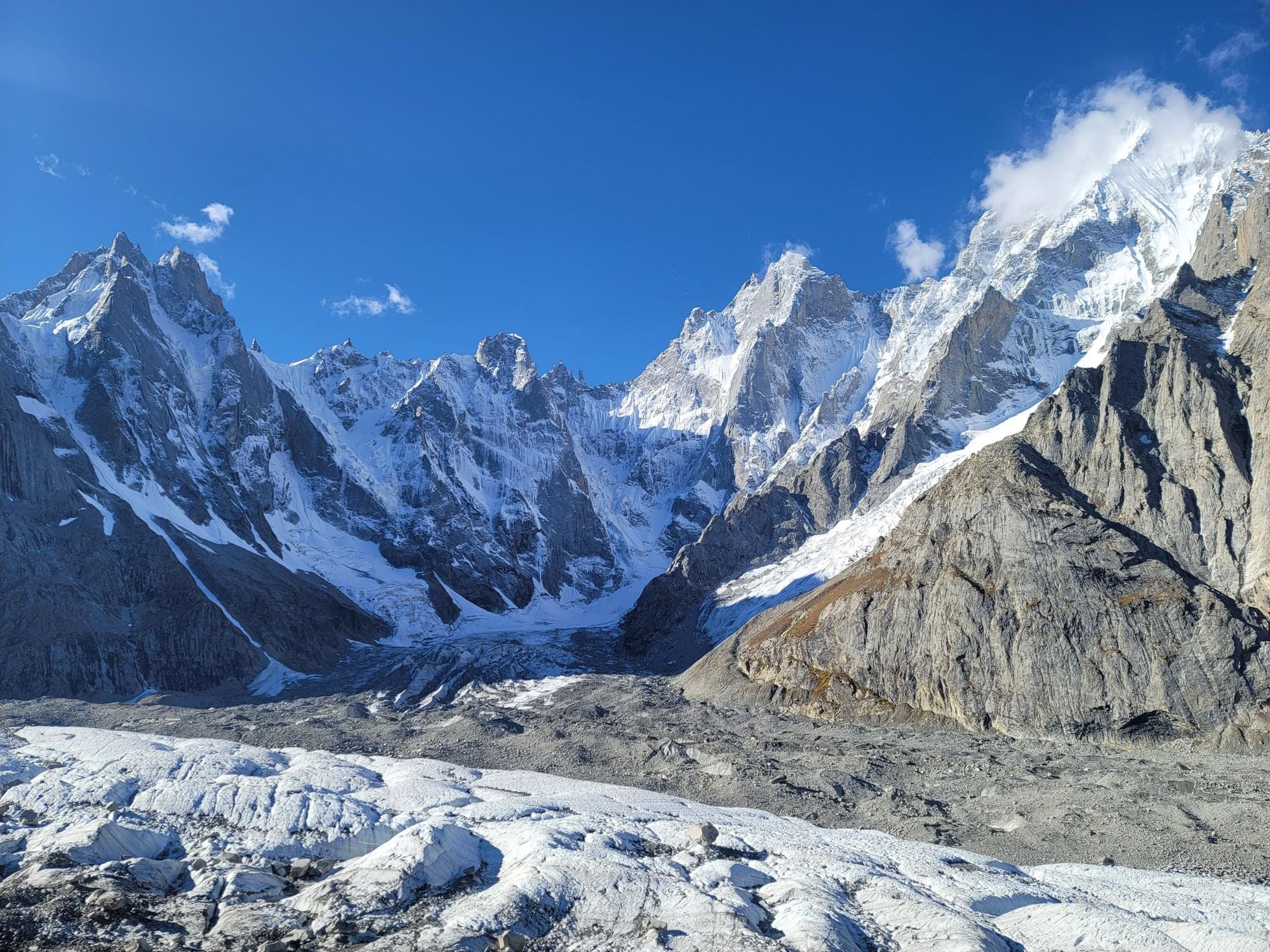
“It’s the resting place of Hermann Buhl, the first Austrian climber who climbed Nanga Parbat without oxygen,” Umer explains.
As the valley narrows, the trek becomes more demanding, gaining altitude as it weaves across glacial terrain. You’ll trace the western edge of the Chogolisa Glacier, crossing it to reach the verdant wildflower meadow of Spangser, which is encircled by granite cliffs. From here, you’ll head uphill to the campsite of Ancom, set amid vast summer grazing pastures.
There is one vertical rock wall where you have to use your hands. I would call it level three scrambling, so it might challenge people.
“The day you spend trying to reach Ancom is the most difficult in the entire trek,” Umer says. “There is one vertical rock wall where you have to use your hands. I would call it level three scrambling, so it might challenge people. But it's only one part of the trek where you would have to do that.”
Beyond Ancom, the route follows the central path of the ice flow, alternating between patches of snow, ice, and rocky moraine until you reach your final destination: the broad, high basin beneath K6 (Baltistan Peak) and K7, encircled by soaring rock walls. You’ll set up camp here, and spend a day immersed in this breathtaking landscape before embarking on the return journey.
'Tourism is a Lifeline for Locals'
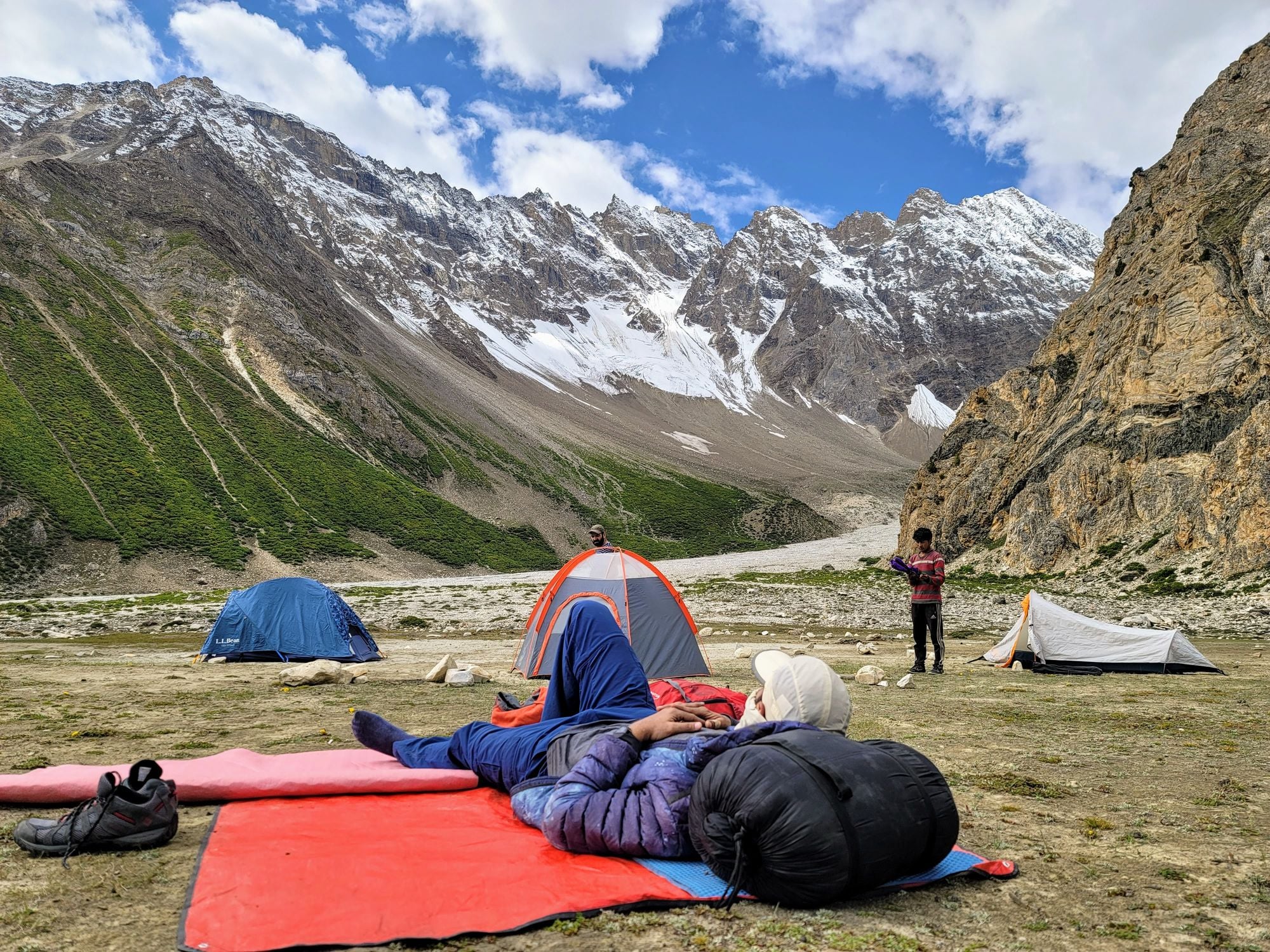
There are no teahouses in these remote valleys. Aside from a stay at a refugio in Hushe, the trek is entirely self-sustaining.
“At each campsite we establish our camp. We have kitchen tents, toilet tents, mess tents and everything,” Umer says. “It's very unlikely that you would see another commercial expedition out there. You will see local herders, taking their goats to the summer pastures, but nobody aside from that.
It's very unlikely that you would see another commercial expedition out there.
“The guides, cooks and porters really look after you, serving you a three course meal in the evenings. They are all from the Balti region, and we strongly believe they are the most hospitable people on earth. It’s down to their Buddhist traditions and cultural history—there were small valleys and they had to stick together to survive.”
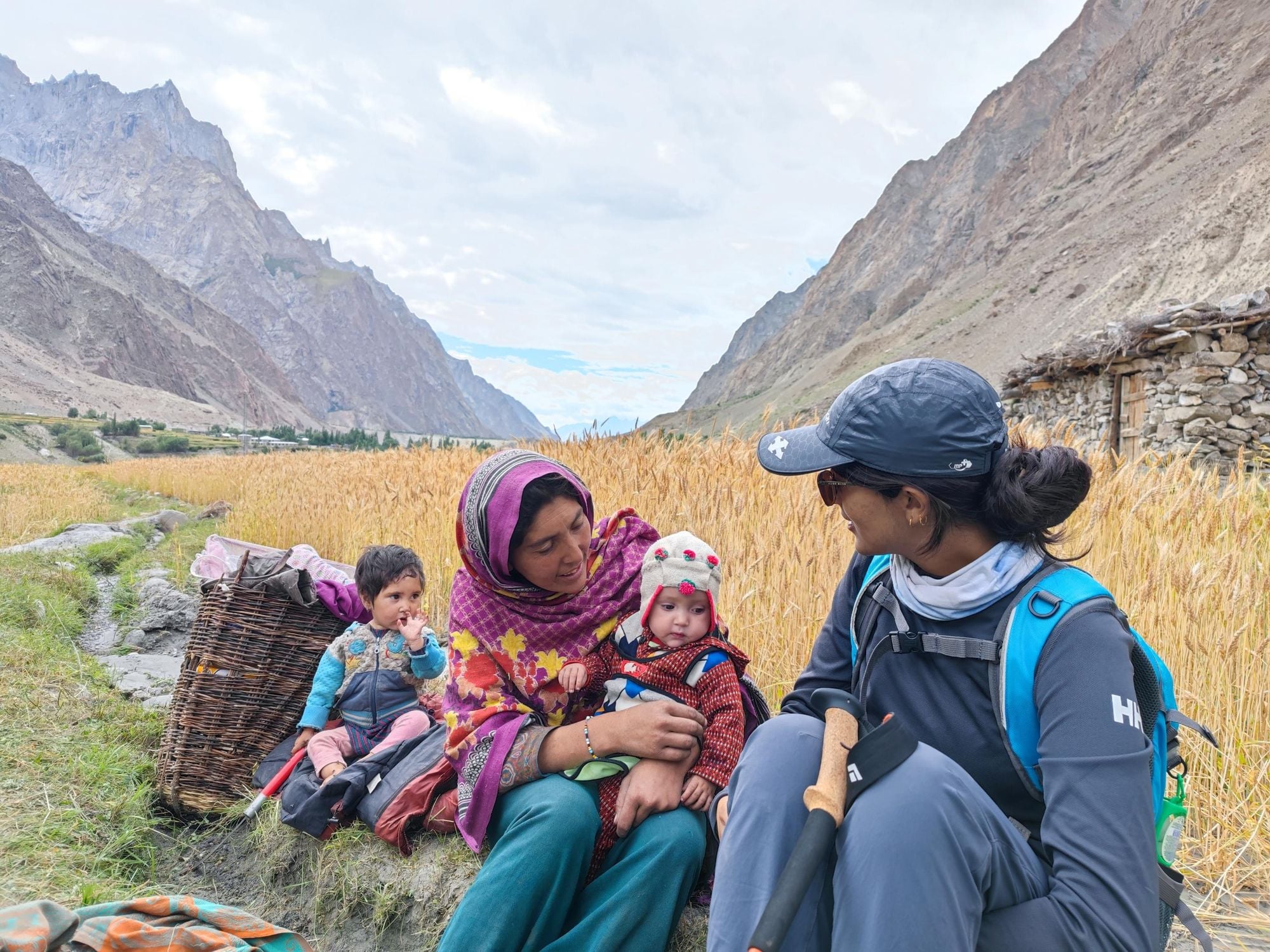
For the porters and guides who work on the K6 and K7 trek, tourism is a lifeline. Most come from villages in the remote Hushe Valley, a region bypassed by Pakistan’s small but growing tourism industry. Unlike areas around K2 and Nanga Parbat, where visitors pass through in increasing numbers, Hushe sees few trekkers each season, and opportunities to earn a steady income are limited.
You feel that if you go with the right operator and the right destination, to places like the Hushe Valley, that every dollar is impacting lives.
Because these expeditions are small, self-sufficient and locally run, the benefits of tourism are felt immediately and personally. When people trek here, the money goes directly into families’ homes, paying for education, healthcare, and for people to stay in the valley rather than leaving to find work elsewhere.
“You can really make a difference in Pakistan. You feel that if you go with the right operator and the right destination, to places like the Hushe Valley, that every dollar is impacting lives,” Umer says.
Choosing K6 and K7 over K2, then, isn’t about settling for second best. It’s about seeking out solitude instead of crowds, connection instead of consumption. In a region where tourism can still be a force for good, sometimes the most meaningful choice is to turn away from the more well-worn path—and immerse yourself in the stillness of high peaks and glacially sculpted valleys instead.
Inspired? Come on our Trek to K1 Base Camp in Pakistan adventure.