

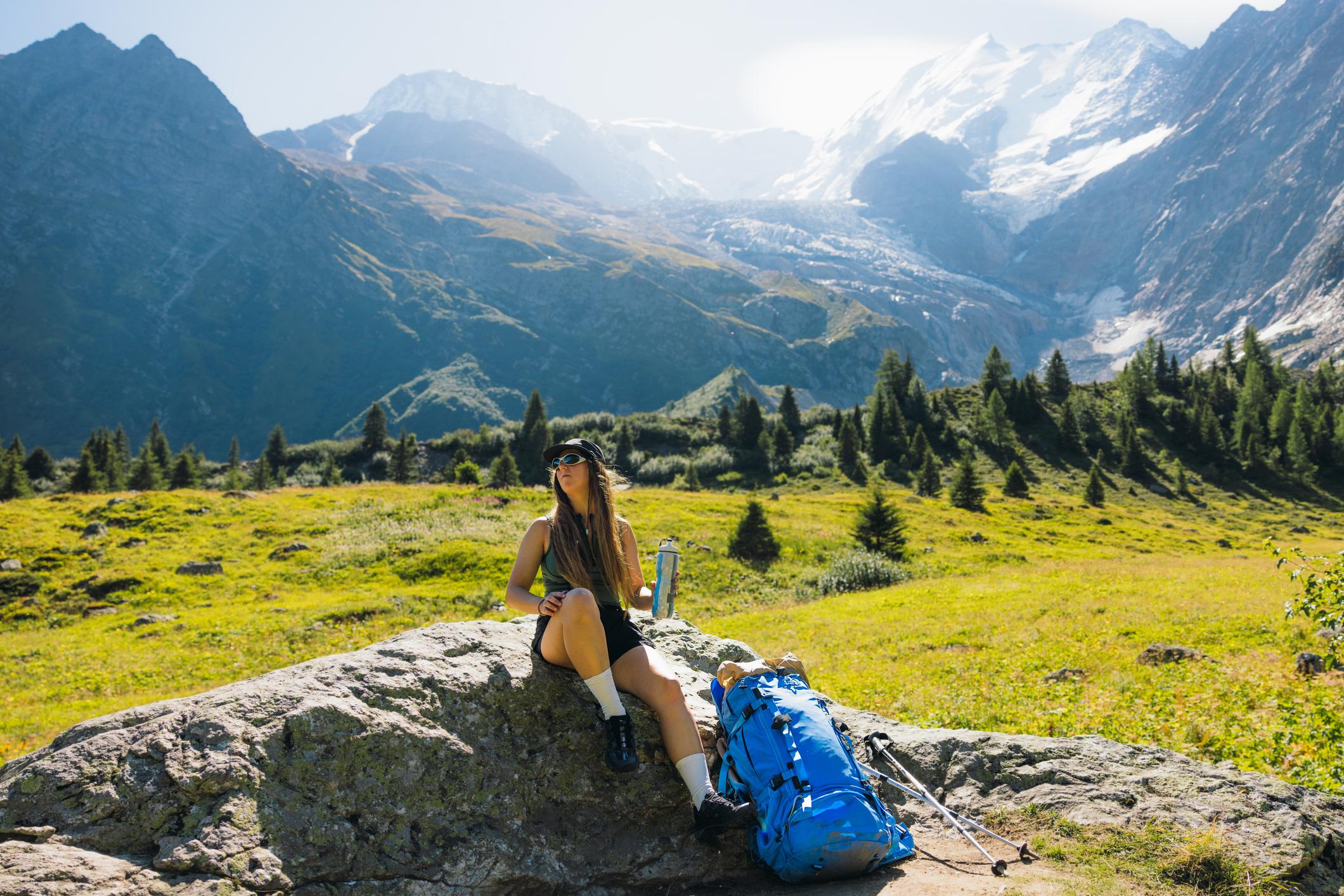
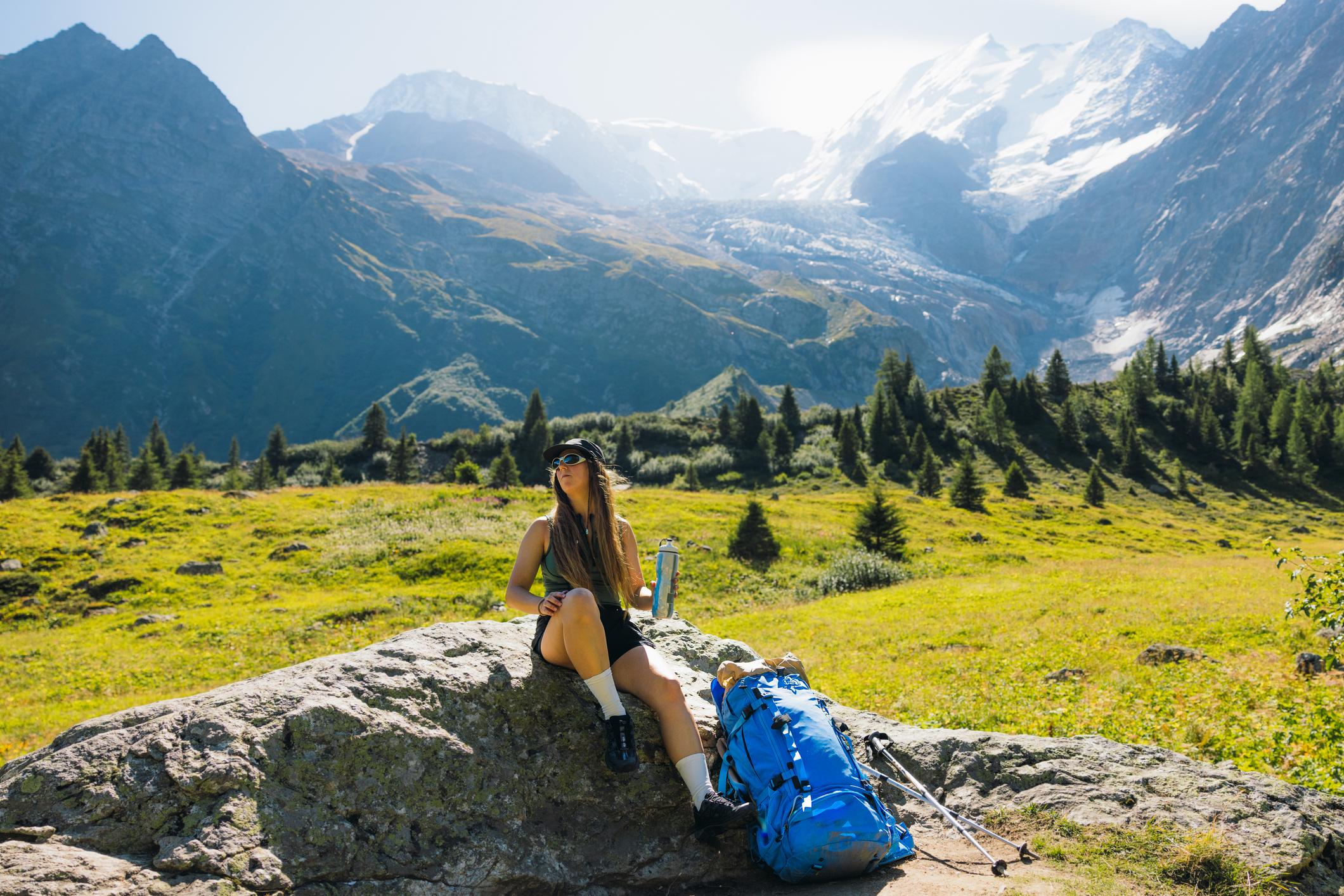
The Tour du Mont Blanc is perhaps the best-known walking route in Europe - a route of pure alpine wonder measuring around the 105-miles (170km) mark and circling the Mont Blanc massif. If you walk the route, you'll pass through France, Switzerland and Italy, taking in the valleys and pastures of the alps along the way, from the high mountains to the rolling green hills. This is an iconic hike, but with so many cumulative days of back-to-back walking, it's not an easy trek - so you need to come prepared.
"There is nothing that can prepare you for it other than doing a 10-day hut-to-hut trek in the Alps," says Joel Evans, our expert host in Chamonix, who was a guide on the route for six years, and now organised group adventures on the TMB.
The main thing is you're in a place of great beauty, surrounded by spectacular mountains.
So, what do you need to pack to walk the Tour du Mont Blanc? It's much the same as any other long-distance hike. For starters, you'll need a good (worn-in) pare of walking boots, as well as hiking socks, appropriate layers and waterproof rain gear for when the clouds inevitably turn to the dark side. Walking poles are an option that many (particularly younger hikers) sneer at to begin with, but then can't live without. They really do ease the pressure on your knees - and an eyemask and earplugs are always good for the refuges. Yup, the snoring is real.


To remember, though - anything you pack on the TMB, you're going to have to carry for the entire duration of your circuit (unless you've paid extra for a baggage transfer service, of course). So the goal is to pack well, but pack light.
We’ve built this Tour du Mont Blanc packing list in collaboration with Joel, and a team of expert guides who lead groups on the TMB route. Still, to see our full and extensive kit list, just head over to our guided Tour du Mont Blanc treks page, select the tour you're interested in, and then scroll down to 'What to Pack'.
The Essential Tour du Mont Blanc Packing List
Again, for our full packing list, see our Tour du Mont Blanc trip pages, but below you'll find a list of the essential bits of kits that you'll need to walk the TMB:
- Hiking boots or shoes, worn-in: The 101 of packing for a big hiking trip is a good, trusted pair of boots. You want something that you find comfortable, and can wear for days on end, but also a shoe or boot with good grip and some waterproofing. Make sure they're worn in properly to help avoid blisters.
- Layers for hiking: By which we mean, base layers, a fleece or a wool mid-layer and a down jacket of some sort to keep you warm. It can get properly cold on the TMB, with snow on the high cols - sometimes even in summer. If you have the proper layers, you can layer up and down as the weather demands it.
- Waterproofs: Sorry - it's unlikely to be sunny the whole time! Bring a good waterproof jacket with a hood and a pair of waterproof trousers. Plus a rain cover for your back.
- A hat and gloves: These are easy to forget in summer, but essential for cold days on the high passes and can be good for the refuges too.
- Proper hiking socks: A must-have to fend off blisters - wool or synthetic.
- A 30-50L backpack: You're going to be wearing your bag for as long as you're on the trail, so don't skimp on this. Get a bag that you find comfortable, with a waist belt and a rain cover. Of course, if you’re using luggage transfer, you can bring a smaller daypack which will be lighter and easier to carry.
- Sun protection: Again, this is easily forgotten - but think sunglasses, a cap or sunhat, SPF 50+ sunscreen. It might sound like overkill when you're sitting at home, but the altitude in the Alps increases the UV exposure beyond what you'd normally expect.
- Water bottless and snacks: We say 2Ls of water and electrolyte tablets.
- Cash in euros: For drinks and snacks. Refuges don’t always take card.
- Hand sanitiser gel: To stay hygienic on the trail.
- Walking poles (optional): Not everyone likes them, but they take a lot of pressure off your knees on long, steep descents. You can also hire these.
See our Tour du Mont Blanc trip for the full kit list, detailing all items to bring.
What to Pack for the Refuges (and what people forget)
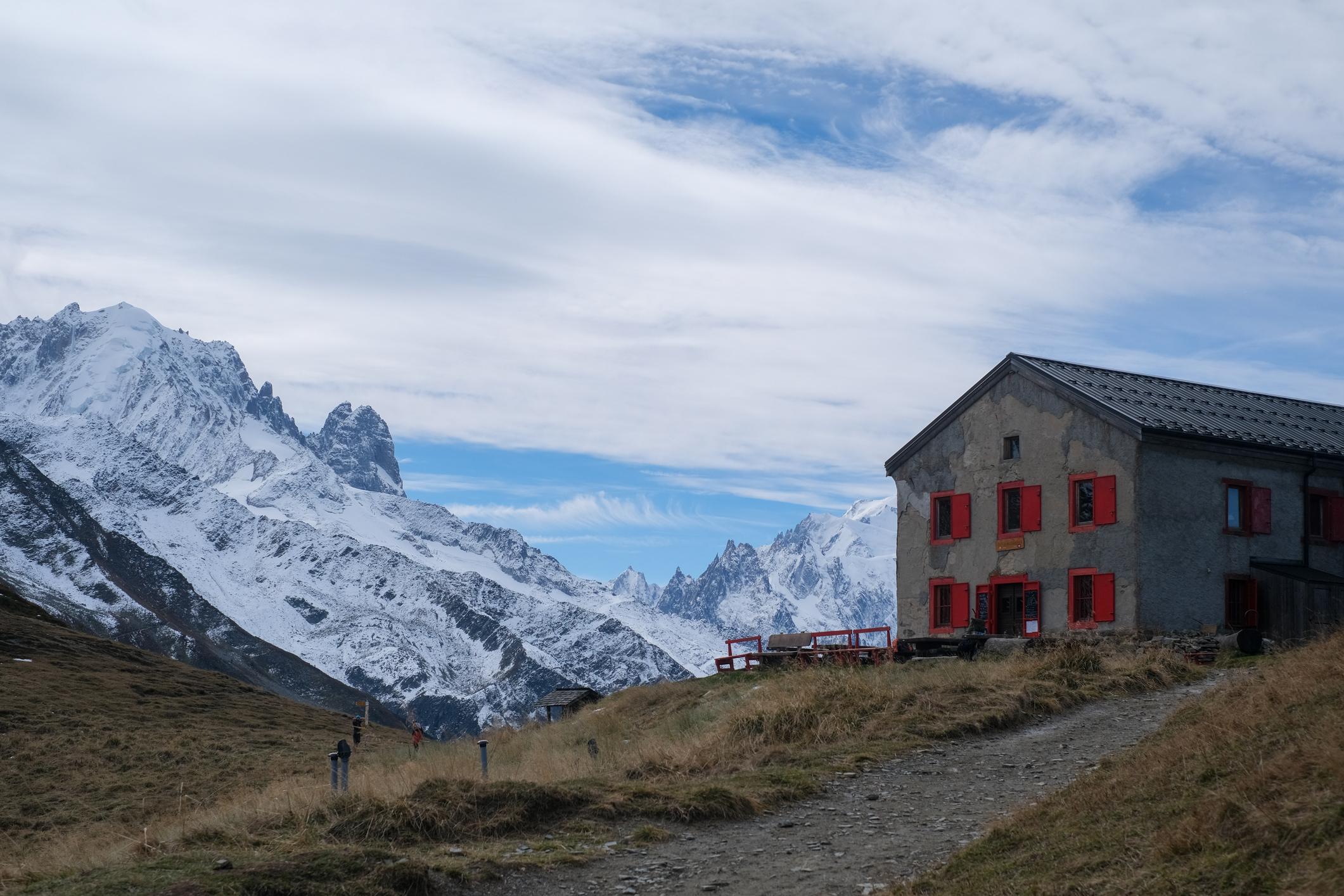
We find that when people overpack or underpack, they often do so with the refuges in mind. The refuges are quite basic. "They're not fancy, but they give you a warm place to shelter, get clean and get well fed before hiking again the next day," says James Leask of Much Better Adventures. He's walked the full route and run it as part of the UTMB. Think shared bunks and hearty meals.
"Yes, at times it can be a bit uncomfortable, crowded dining rooms, snoring in the dorms or the odd cold shower, but remember where you are and all of that is worth it. The main thing is you're in a place of great beauty, surrounded by spectacular mountains, and stopping at the huts allows the time to take it all in."
Bringing a few small items along can make a big difference to your sleep.
- A sleeping bag liner: Most refuges require this. Blankets and pillows are provided, but the liner is your responsibility, and may even be checked.
- Earplugs and an eye-mask: To block out the light and unfortunately the noise of a shared room. Yes, we are talking about snoring.
- A quick-dry travel towel and toiletries: As well as light, comfortable shoes or flip-flops to wear once your hiking boots are off. Some people prefer a small, proper towel, as quick-dry towels often don't do a great job.
- A swimsuit: For the showers or swim spots.
- The right plug adapters: Charging points are limited and shared, but note that Switzerland uses a different type of plug standard to the rest of Europe.
- A headlamp: for the early starts and the late night corridors.
We asked Joel Evans, our TMB expert and a former guide, for his tips on what to bring. "95% of the time you won't need a headtorch," he says. "But some of the groups really like it when there's an option for a sunrise hike - then you might need one. People don't like getting up at 4am, but when they're on the Col at sunrise, they'll think it was totally worth it. So having it for those little moments is great."
Much Better Adventures
To read more about where you sleep on the TMB, check out our other article on the refuges and huts on the Tour du Mont Blanc. If you’d rather try refuge life out before doing the full circuit, our weekend hut-to-hut trip may appeal, and there is also the option to do a week-long tour on the Tour du Mont Blanc circuit.
What to Leave Behind
You have to carry every extra kilogram you pack, so the lighter your load, the easier the hike. Of course, different people prioritise different things. We’d recommend leaving behind heavy camera equipment, but for some people, photography is a key part of travel, and worth the load. Try to only pack things that you’ll use. You probably don’t need 20 pairs of socks and three books.
Joel adds: "I would say you don't have to bring a power bank unless you're really heavily using your phone for photos and videos all day, every day. There's always a chance to charge it in the refuge. People who know they're going to hammer their phones should bring one, but I think 80% of people don't need one. And that's an easy 500 grams to get out of your bag. They're bulky little items."
Of course, you can (for an extra cost) also opt for luggage transfer on the TMB, meaning your main bags will be carried ahead to each night’s refuge and you’ll only have to hike with a day pack. For a full circuit, this costs a few hundred pounds extra - but that can be worth it if you're worried about the heavy bag.
Frequently Asked Questions
What should I pack for the Tour du Mont Blanc? You want to bring the key essentials for any multi-day, long-distance hiking trip - a pair of hiking boots you can trust, layers to keep you warm (but which allow you to cool down), waterproofs, walking poles, sun protection, a good backpack, a sleeping bag liner and an eyemark and earphones for the refuges. See the full list on our trip pages.
Much Better Adventures
Do I need walking poles for the Tour du Mont Blanc? You don't absolutely need them, no. Walking poles are optional, but they take a lot of the pressure off your knees and can be particularly useful on the steep descents. They also help you stay upright, but ultimately, it’s personal preference. These can be hired locally.
How big a backpack do I need? This depends on how smartly you pack, but a backpack of 30-50L for the full circuit - with a waistband and rain cover - is usually enough. This assumes that you are carrying all your own gear and staying in refuges or hotels (so don’t require a tent). If you have baggage transfer, you can hike with a smaller daypack.
What do I need for the refuges? A sleeping bag liner is essential for hygiene reasons when staying in TMB refuges, but a sleeping bag is not. Blankets and pillows are provided. Earplugs and an eyemask are also an often-forgotten essential - as is cash for drinks and snacks.
Inspired? Check out our range of treks on the Tour du Mont Blanc now!