


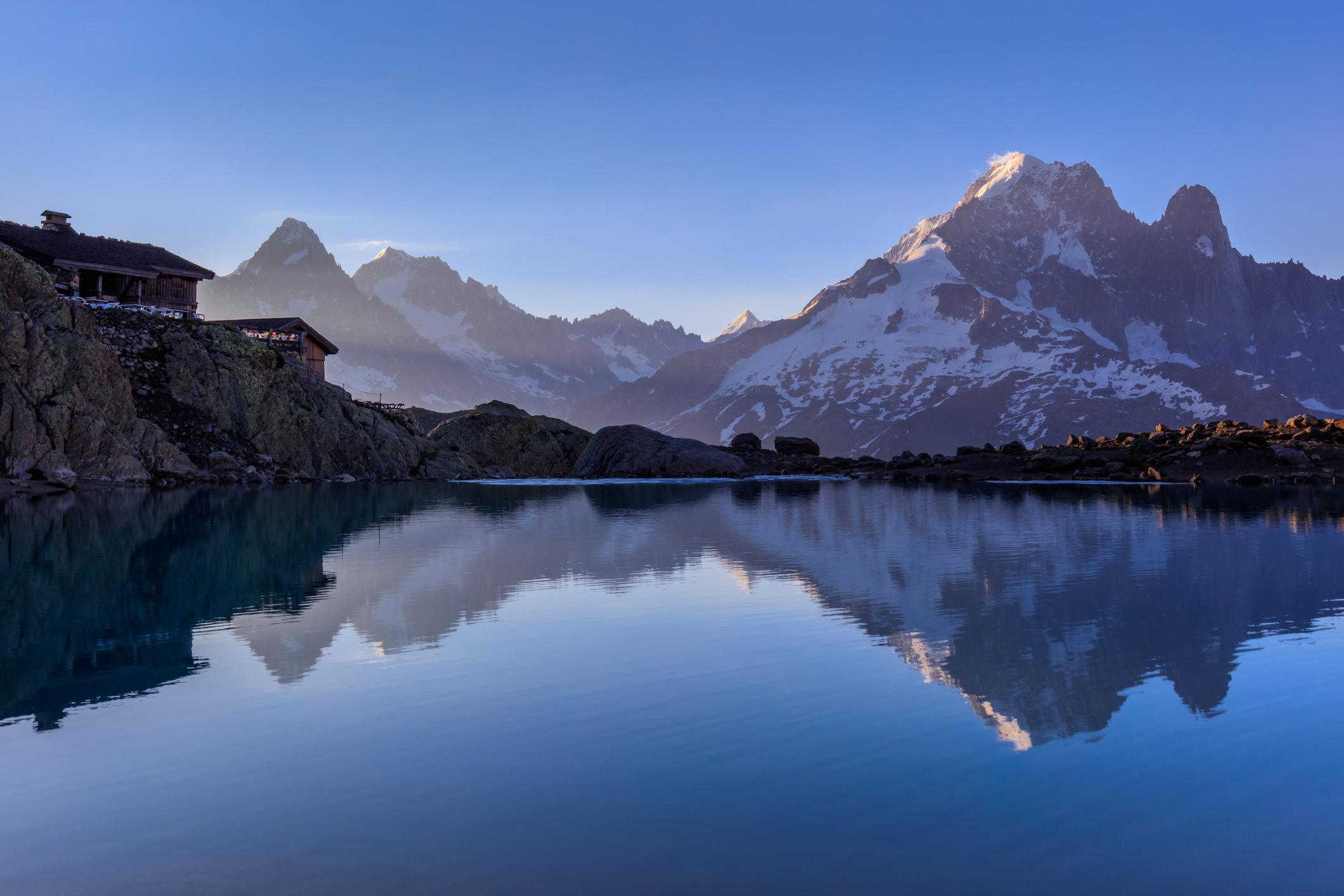
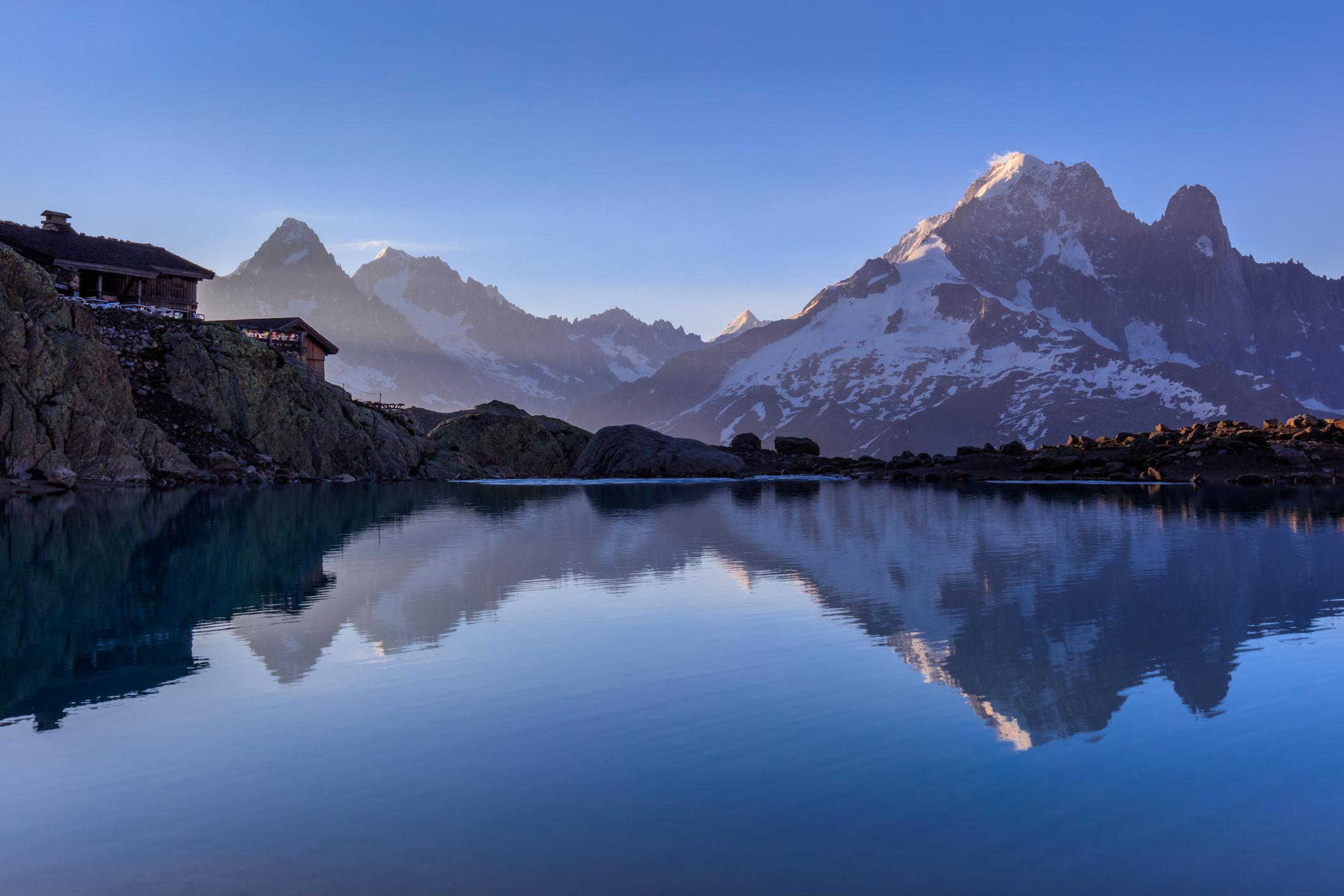
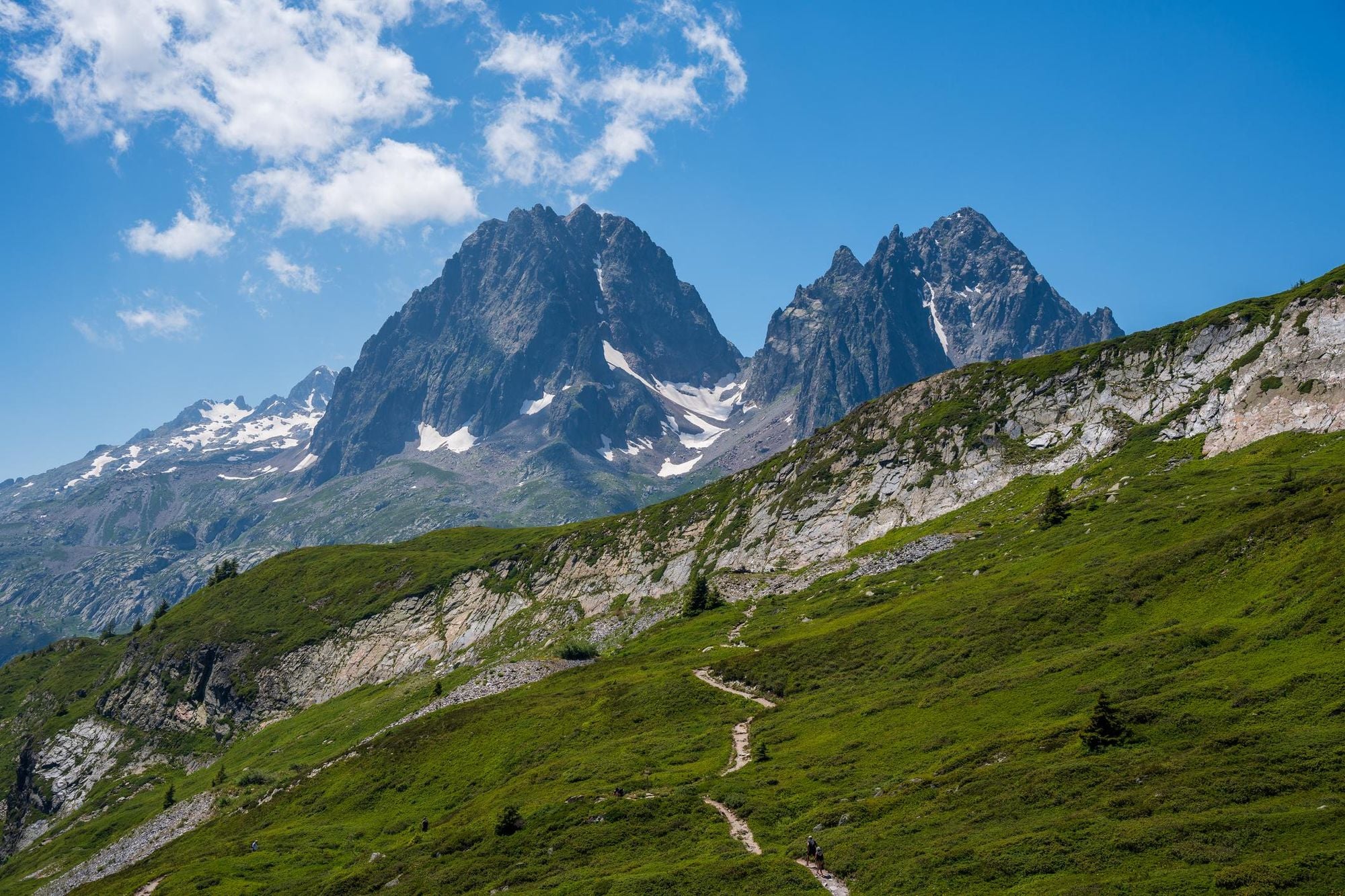
The Tour du Mont Blanc (TMB) is a 105-mile (170km) walking route around Western Europe’s highest mountain, Mont Blanc. It is one of the most famous multi-day hikes in the world, looping through France, Italy and Switzerland, passing glimmering mountains, lakes like Lac Blanc and Chéserys and high mountain passes like the , and Col de la Seigne, crossing from France into Italy, and Grand Col Ferret, crossing from Italy into Switzerland.
“The passes themselves are fairly unremarkable places, always hard earned, but the long views down Val Veny and Val Ferret are worth the effort,” says James Leask, of Much Better Adventures, who has both walked the full circuit and run it as part of the famous UTMB. “Those views encompass the entire Italian side of the Mont Blanc massif,” James continues. “Between those two points, you’ve got a few big days of hiking, and those moments of being able to see so far ahead - to where you’re going - and so far back, to where you’ve been, really puts the hike into scale. It gives you a huge sense of accomplishment."
The long views down Val Veny and Val Ferret are worth the effort.
Though itineraries vary, these are well-trodden paths. Many pick out the TMB as a first mult-day alpine hike, or build up to it - the ultimate alpine experience - over a life spent walking.
Most people walk the full circuit in between seven and 11 days. In this article, we’re going to look at one possible route. There’s an interactive map and a day-by-day walk description and elevation profile. It’s important to note that this is only one variant of the TMB route. Others (including our bookable Tour du Mont Blanc treks) may choose different stops along the way.


The below is only a small summary. It is not designed or intended to be used for navigational purposes, and further, significant research will be required before walking the actual route. For a more developed picture of what it's like to walk the Tour du Mont Blanc - including what kit you should pack, how to train for the TMB and how to book it - see our guide to trekking the Tour du Mont Blanc.
The Tour du Mont Blanc Route (and Map)
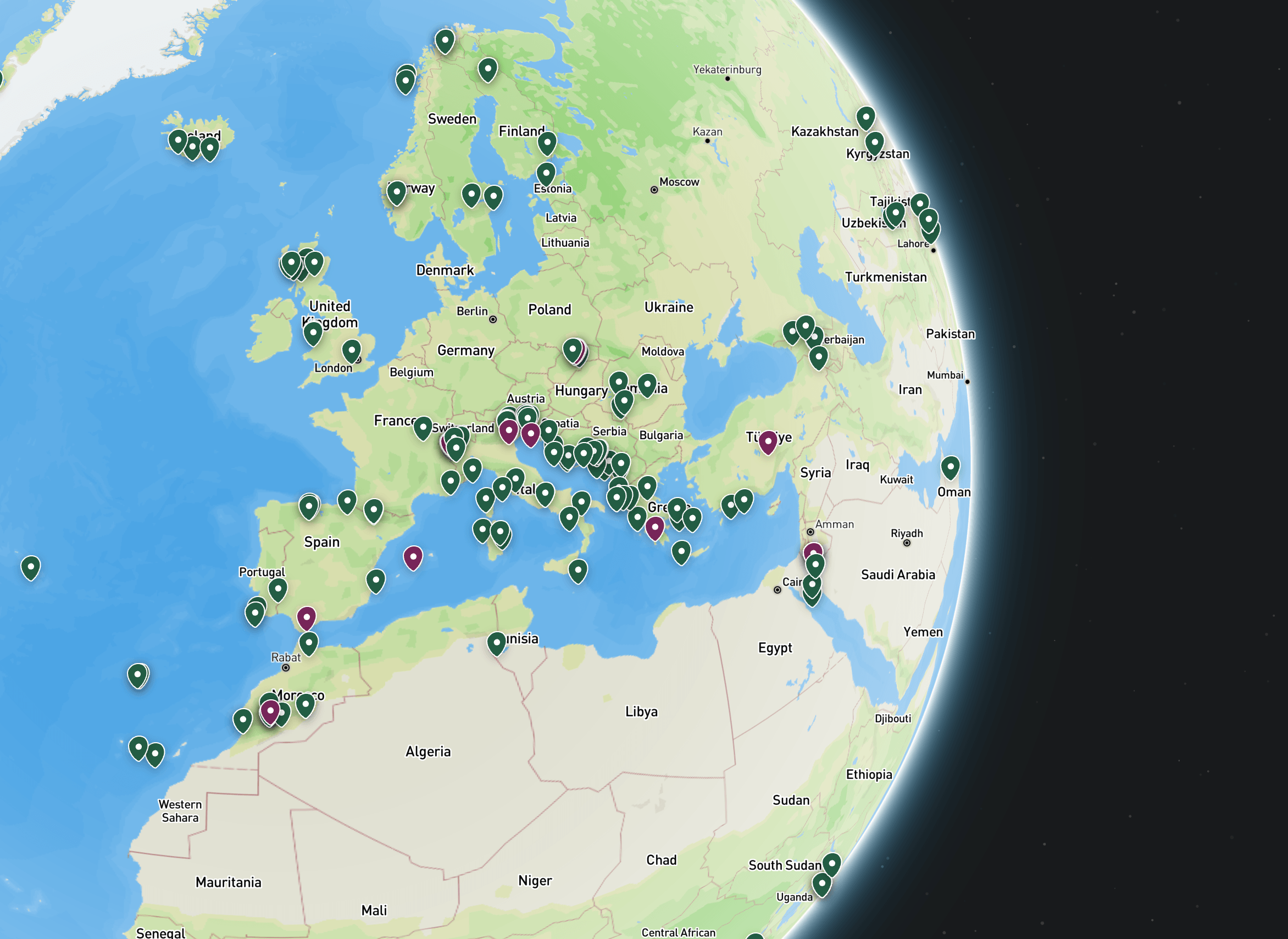
The Tour du Mont Blanc, at its core, is a hiking route which circles the Mont Blanc massif in a single, breathtaking loop. Being a circular walk, the TMB can technically be started in various towns along the way, but most people begin and end the walk in a place called Les Houches in France, which is not far from the famous alpine gateway town of Chamonix.
Below, you can see the circuit, mapped out stage-by-stage on Komoot. They’ve broken the route up into only seven stages - but below, we’ve used the more traditional 11 stage breakdown.
It’s good to remember that if you’re planning out your own Tour du Mont Blanc walk out, self-guided, the distance that you walk each day will impact which refuges and towns you can stay at - and refuges book out far in advance, so this may impact your planning. If you’re booking a guided trek, your accommodation and itinerary will be taken care for you.
Before we breakdown the route, here are some of the key anchor points of the TMB, in order:
- Les Houches: the starting point of the TMB, just outside of Chamonix, France
- Les Contaminés-Montjoie: a quiet alpine commune in France
- Col de la Deigne: a high mountain pass connecting Italy and France
- Courmayeur: the largest town on the TMB route, in northern Italy
- Grand Col Ferret: the Italian-Swiss border and the high point of the TMB
- La Fouly: a charming Swiss village, in the canton of Valais
- Champex-Lac: a lakeside resort town, also in Valais
- Trient: a hamlet below the Fenêtre d'Arpette mountain pass
- Col de Balme: the high mountain pass between Switzerland and France
- Argentière and Chamonix: the finish line, taking you back into Chamonix
The trail loops around the entire Mont Blanc massif, so you’re never far from a view of Mont Blanc - even when your scenery shifts from French pine forests to Italy’s Val Ferret or Switzerland’s greener pastures. This is a delightful hike, and perhaps the ultimate alpine walk.
The Full Day-by-Day Tour du Mont Blanc Itinerary: 11 stages
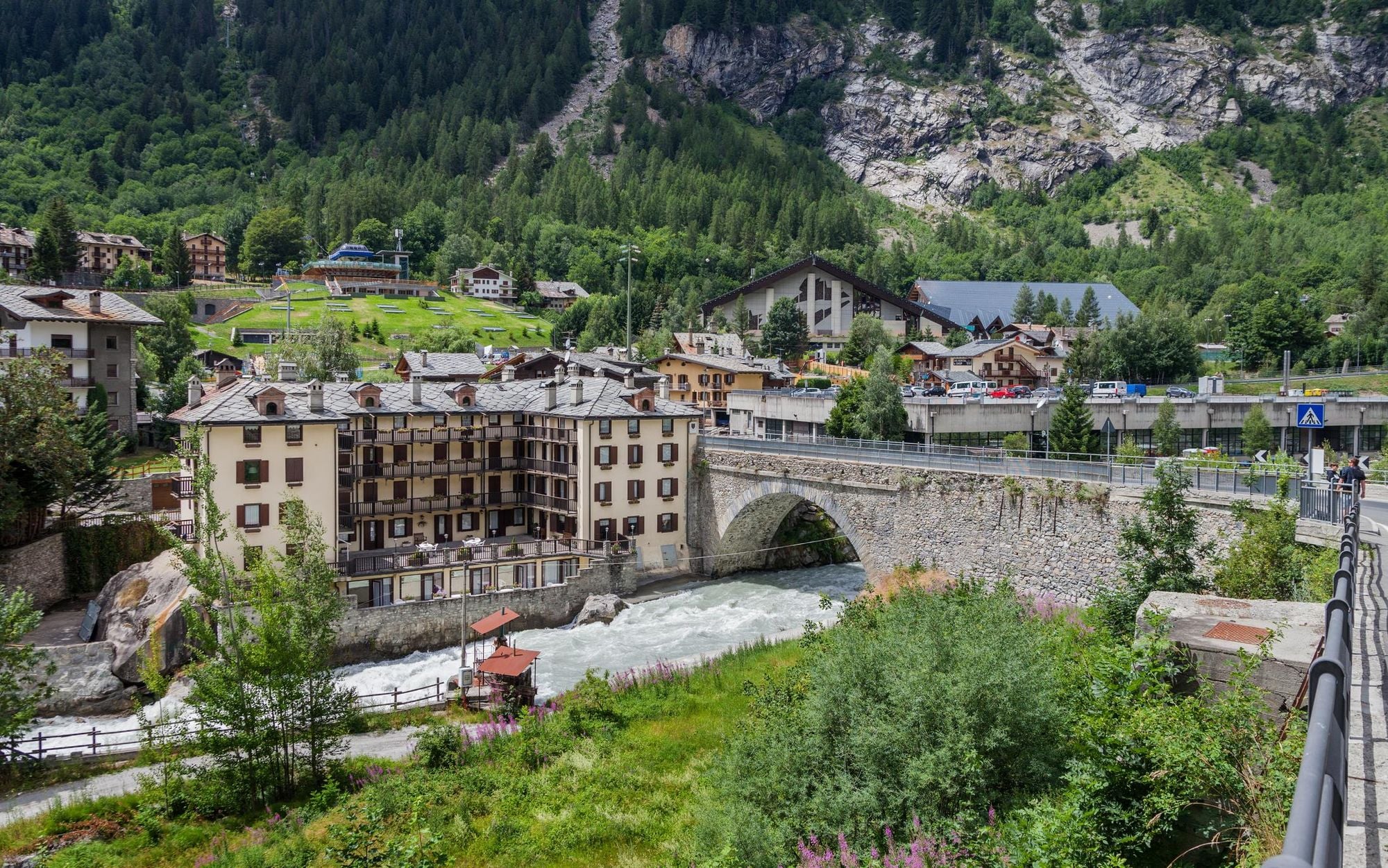
While the Komoot map above documents the Tour du Mont Blanc route in seven stages, the classic version of the route is usually broken up into 11 stages - a much more achievable feat, with less mileage walked per day.
There are a bunch of variants and low-level and high-level options when you walk the TMB, which is why route figures will vary from guide to guide, and website to website, but this will give you a rough indicator of what to expect if you’re going to be walking the route.
The distances and elevation figures used here are approximate and vary with each measurement taken. Verify them against your own personal route-planning research before you set out.
If you’re wondering about the practicalities of where to sleep each night, see our guide on which refuges and huts to use - and what to expect from the huts along the way. We also have guides to how hard the Tour du Mont Blanc is to walk, and how to train for a multi-day hiking route.
How to Compress the TMB Itinerary
Of course, not everyone has 11 spare days of annual leave available to walk a full circuit of the TMB (or they simply like putting in the miles and decide they would like to walk it faster). The map we’ve included above from Komoot is one example of how the route can be lowered from 11 days. They’ve compressed it into seven longer stages - though be aware, this does make walking the Tour du Mont Blanc significantly harder. It’ll also change the spots where you need to stay each night - since you’ll be adding miles to quite a few days, going past typical stop points.
Other ways to shorten the tour are to take cable cars at certain points, or simply to choose a guided walk which picks out the highlights of the trail and walk it in a long weekend - to sample the Tour du Mont Blanc and walk the highlights of the route. It’s ideal if you’re short on time. If you’d rather not plan the logistics yourself, see our self-guided or guided feature, which also looks at the costs. In that article, we break down the benefits and costs of both options.
How many days do you need for the Tour du Mont Blanc?
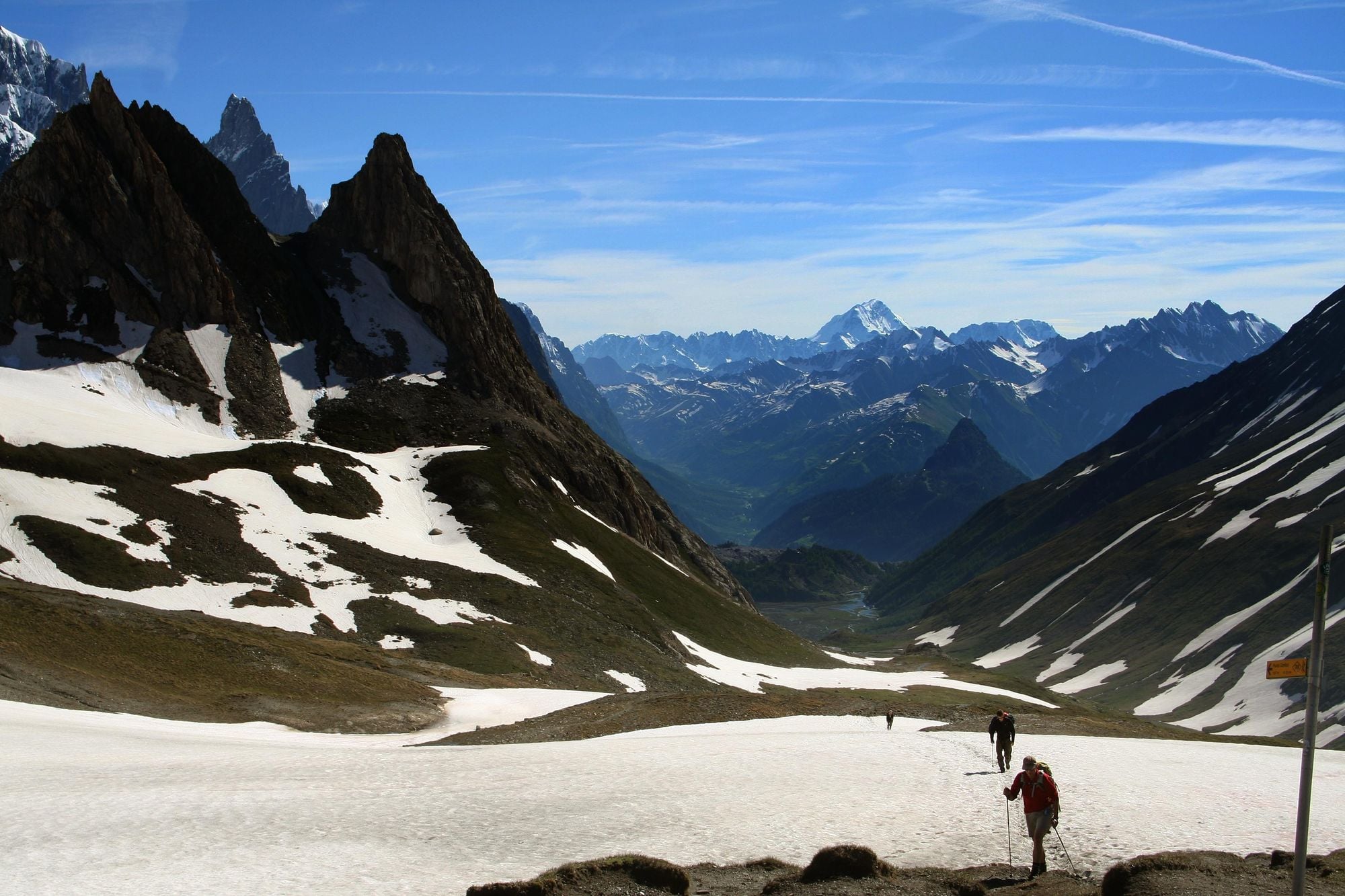
Most people trekking the Tour du Mont Blanc will take between seven and 11 days to do so. The classic circuit consists of 11 stages - as detailed above - and some people like to take a rest day to relax in Courmayeur, which would bring you up to 12. Strong hikers with less time may combine stages, or lengthen a few stages to shorten the number of days required, and some people use public transport to skip some of the less scenic sections. If you only have a weekend, you can still walk a highlights reel of the Tour du Mont Blanc rather than hiking the full loop.
At Much Better Adventures, we offer various trip options for those looking to walk the TMB:
- The full circuit: the complete loop over nine nights
- The week-long trek: a 7-day hut-to-hut version of the route
- The weekend trip: a hut-to-hut taster covering select highlight sections
Browse our guided Tour du Mont Blanc treks to see upcoming departures.
Which direction to walk the Tour du Mont Blanc and where to start?
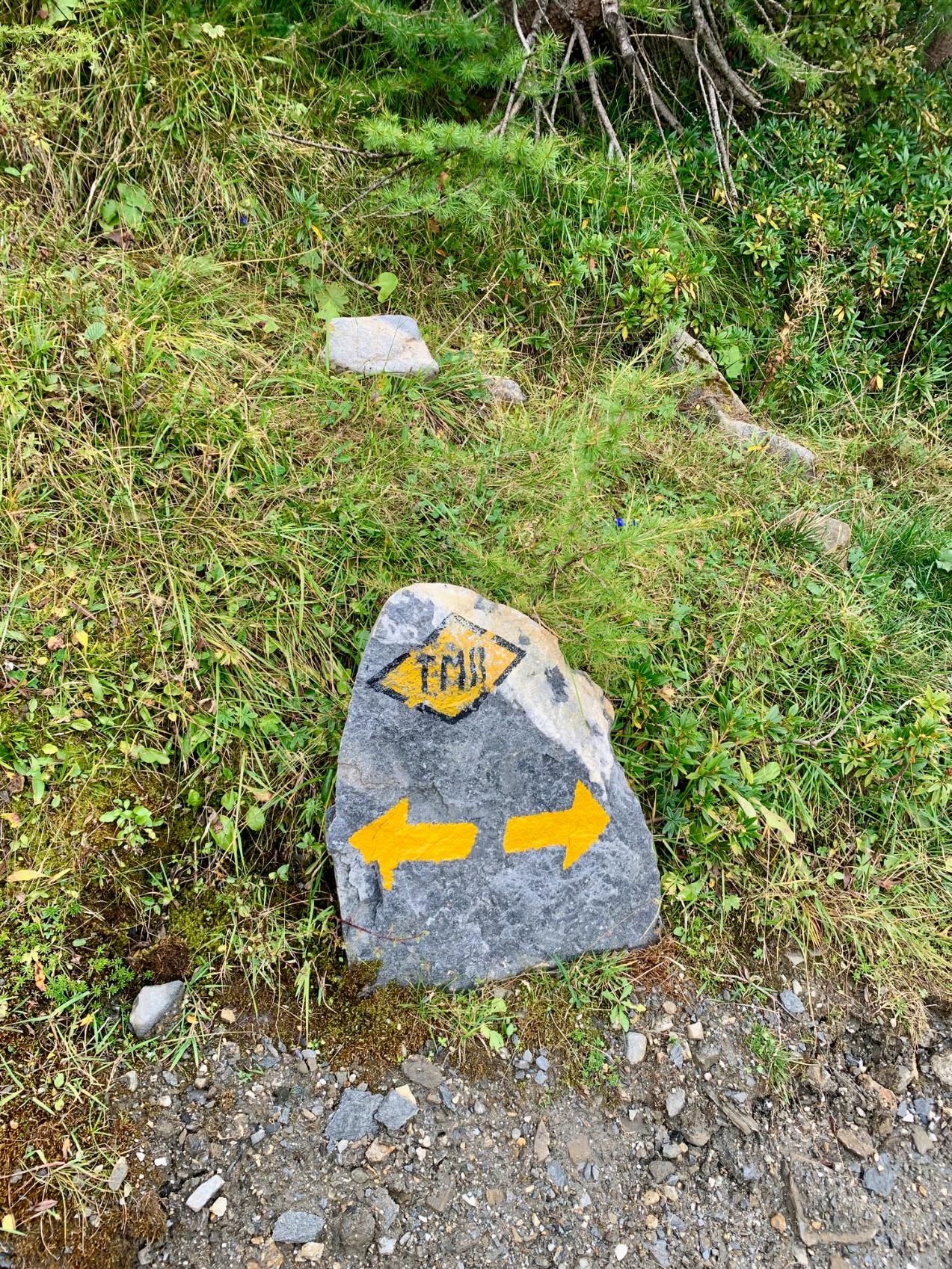
Most people trek the Tour du Mont Blanc in an anti-clockwise direction, starting and finishing in Les Houches, near Chamonix. This is the direction described by most guidebooks covering the TMB.
We asked Joel Evans, host of our Tour du Mont Blanc trekking trips, to explain why. “You have steeper uphills and long, gradual descents,” he says. “I think that's nicer for your legs and for your knees. It is generally the way that most people go, so you're walking with the traffic too.
And a steeper uphill is easier, and it gets the climb over quicker, then the more gradual descent takes a lot less of a toll on the knees.
“There are some mountain bike guides who like to do the opposite, because it's easier to cycle up a long, gradual uphill and get a fun, steeper descent. I think [for hikers] that anti-clockwise just makes it better for the descents really, I would say. Because every day you're almost going 1000m (3,280ft) up, 1000m (3,280ft) down, more or less. And a steeper uphill is easier, and it gets the climb over quicker, then the more gradual descent takes a lot less of a toll on the knees.”
An anti-clockwise tour also allows you to ease your way into the Tour du Mont Blanc, offering gentler gradients at the start, then building up to the cols, culminating in a delightful finish.
As the Cicerone guidebook to the Tour du Mont Blanc states: “walking the conventional anti-clockwise direction has tended to be favoured as it can be argued that the more dramatic views on reaching most of the high cols are revealed when walking in this direction.”
Where to start the TMB? Les Houches, which is a small town near Chamonix. It’s the official and most common starting point, though there are a couple of alternative options:
- Chamonix: the main transport hub for the region.
- Courmayeur, Italy: a less common starting point, but it can also be done.
Tour du Mont Blanc Elevation: the Cols and High Point
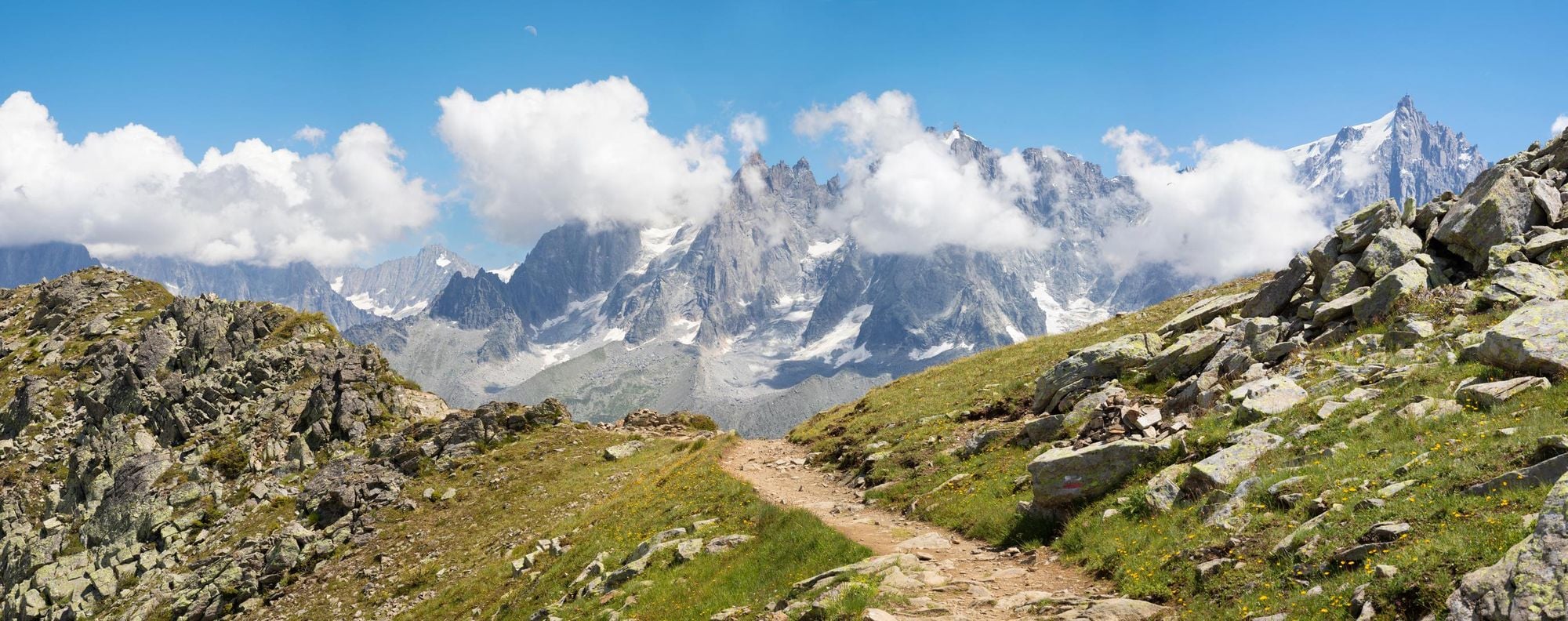
You can expect to ascend and descend roughly 9,212m (30,225ft) over the course of the TMB circuit. That’s a height greater than climbing Mount Everest from sea level, though obviously in this case, all that up and down is spread out over the course of 105 miles (170km).
It’s always quiet on the Val Ferret trail, at the south face of all the Mont Blanc massif.
The high point of the TMB is the Grand Col Ferret, up at 2,532m (8,307ft) on the Swiss-French border. Some walkers take a variant of the route which goes up the Fenêtre d'Arpette in Switzerland on stage eight, though. This is actually slightly higher, at 2,665m (8,743ft).
Much Better Adventures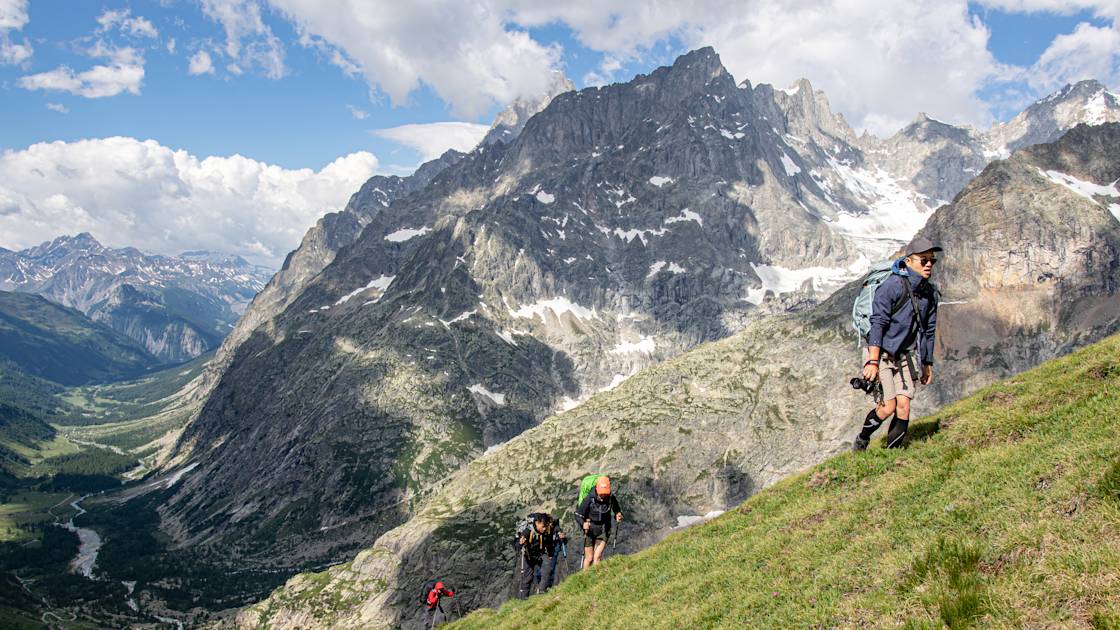
Joel Evans picks out the Grand Col Ferret as a highlight. “That’s my favourite section of the TMB,” he says. “It’s always quiet on the Val Ferret trail, at the south face of all the Mont Blanc massif. And then you get the night in Rifugio Walter Bonatti, which is the most sought after.”
Mont Blanc itself is at a much higher altitude - 4,805 (15,766ft) - but just to reiterate, this route goes around the Mont Blanc massif, not up it. Believe it or not, a lot of people make the mistake of assuming Mont Blanc is on the TMB route. In fact, climbing Mont Blanc is a feat of full-on mountaineering, requiring an entirely different skillset to walking the TMB. If you’re interested in climbing the mountain, see our guide to climbing Mont Blanc, western Europe’s high point.
Frequently Asked Questions
How long is the Tour du Mont Blanc? The full TMB circuit measures in at 105 miles (170km), with roughly 30,475ft (9,289m) of total ascent.
How many days does the Tour du Mont Blanc take? Most people trek the Tour du Mont Blanc in seven to 11 days. Check out our TMB trip page for all the options, which range from a weekend taster of some of the best stages to a full circuit.
Which direction should you walk the TMB? Anti-clockwise, starting from Les Houches is the most common option and the generally accepted one. You get a gentler start and more dramatic views along the way, and you’ll be walking the same direction as most other people.
Where does the Tour du Mont Blanc start? Les Houches is the official starting point for the TMB, though some walkers begin from Chamonix or, less commonly, Courmayeur in Italy.
Inspired? Check out our range of treks on the Tour du Mont Blanc now!