


The mountains of Ladakh take on the colour of shadow and steel in the twilight hours. It is difficult to spot wildlife here, on the rocky trails of the Indian Himalaya, even in the bright of day, and this dim gleam and the camouflaging colours of the slate scree and limestone mountains certainly don’t make it any easier. So, when a silent paw is placed on a snow patch on a remote ridgeline, it is unlikely to be noticed - unless you know where to look.
"There are particular routes the snow leopards use," says Dorjee Tondup, a lead guide who has spent over a decade reading these mountains. "Generally, they move through rocky cliffs, and there are places where they leave their marks. That’s where we go, very early in the morning, before the light hits the mountain. Often our spotting teams see fresh tracks. We look out for fresh scratch marks or scat, and you see a lot of footprints - not just with binoculars, but the naked eye.”
I was watching a mother snow leopard with her cubs. She went off hunting while the cubs waited, and at the end of the day, in the last light of the evening.
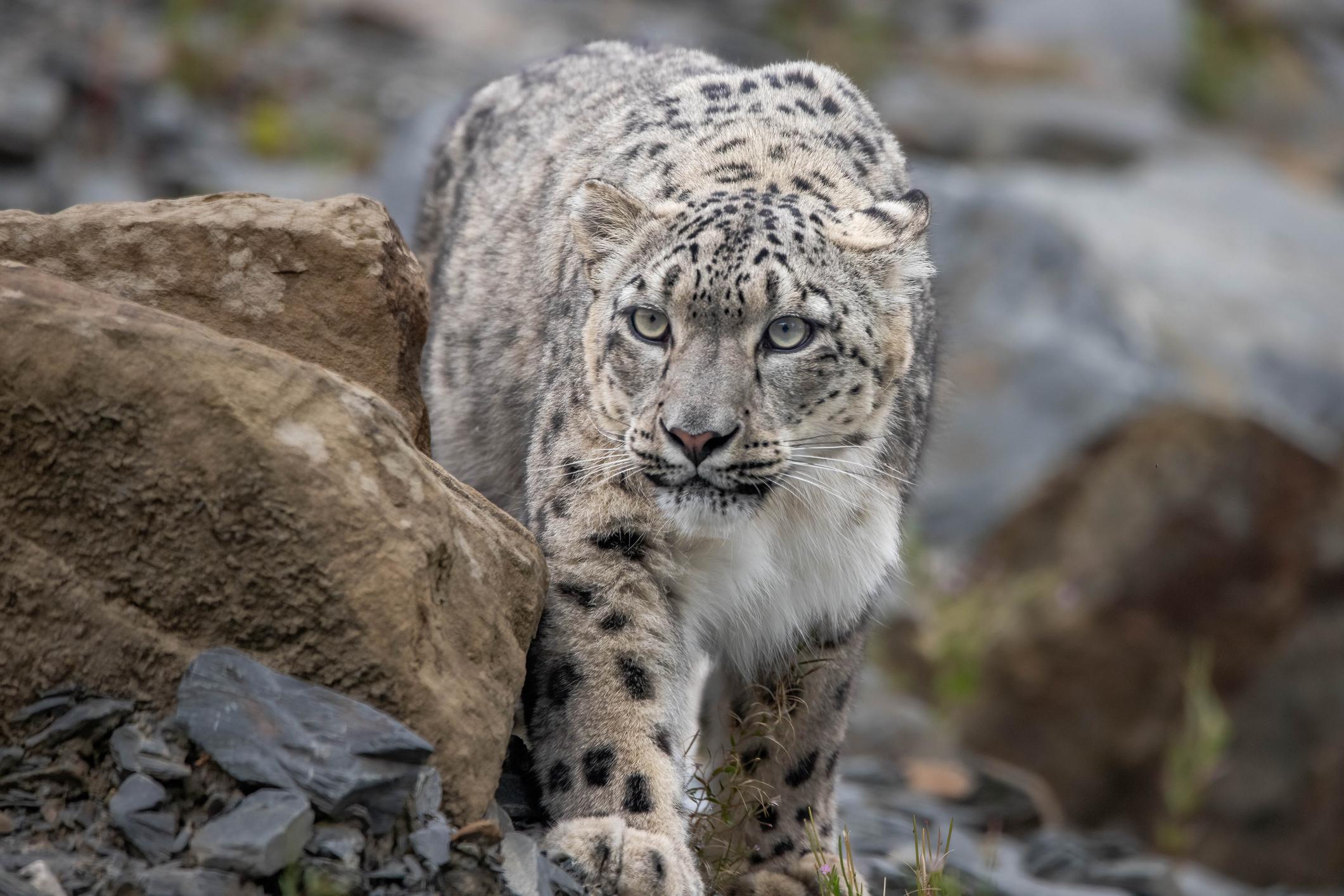
The snow leopard is famously the most elusive of our world’s big cats, earning its title as the 'ghost of the mountains’. These remarkable animals live at high altitudes in extreme environments above 3,000m (9,842ft). Their smokey, cream coats and dark rings blend them into the surroundings. Each cat can travel over 25 miles (40km) in one night, and there are less than 8,000 left in the world.
The Hemis National Park in Ladakh, a territory between the Karakoram and the mighty Himalayas, has the highest density of snow leopards in the world.
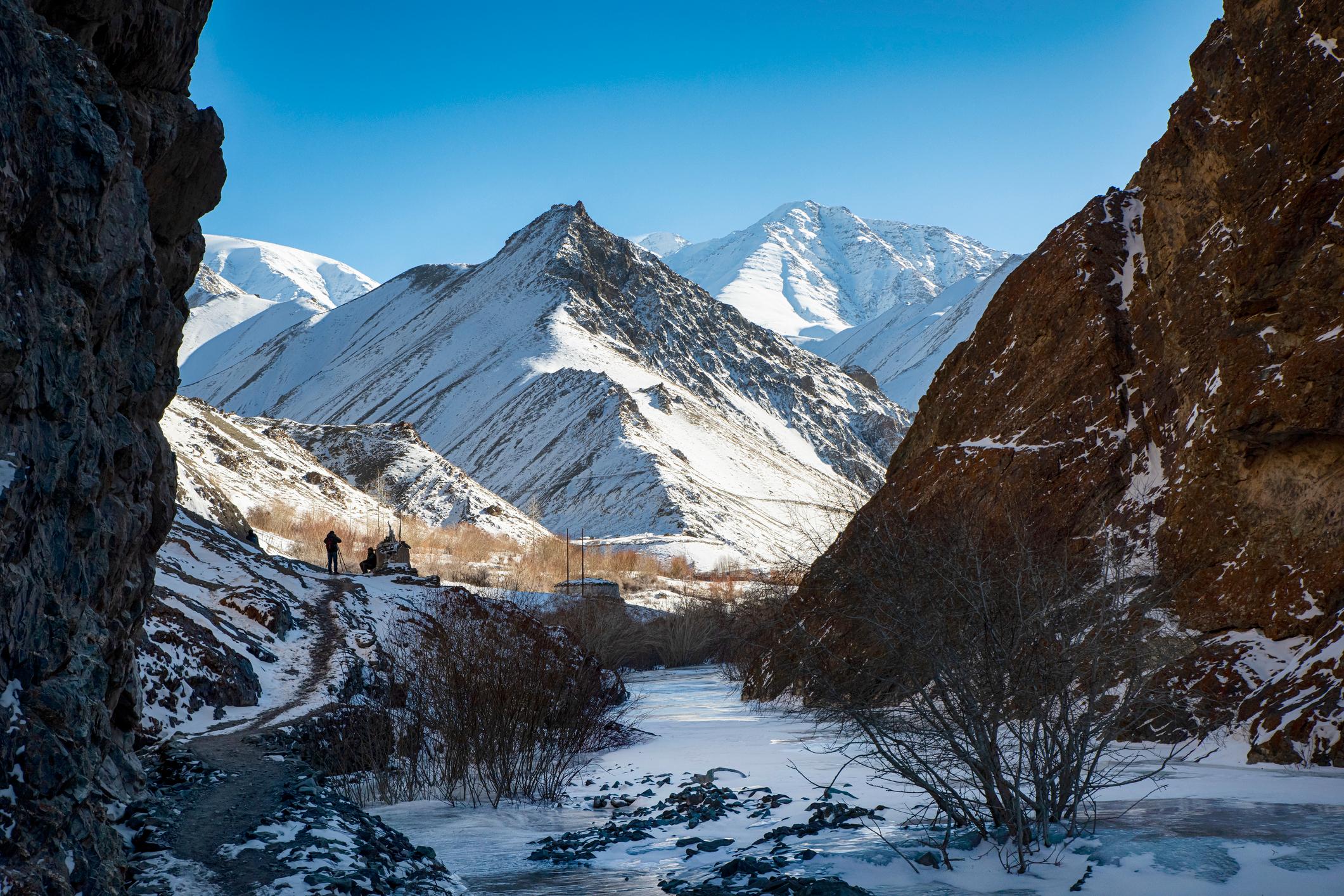
The high-altitude landscape here is one of stark valleys and crumpled stone wilderness, rather than spiking, dramatic peaks. And it’s not easy to get to.
 Much Better Adventures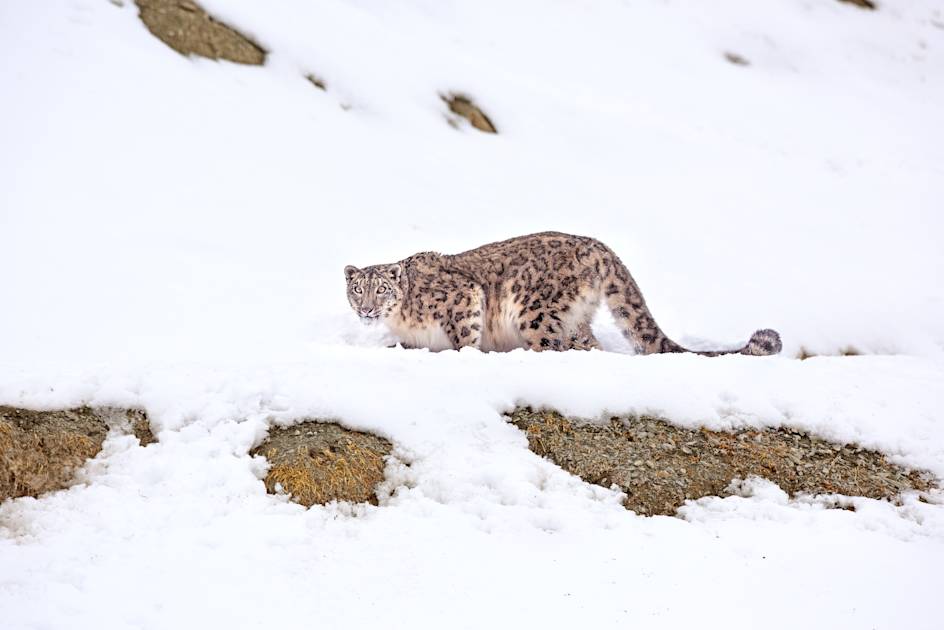
Visitors first need to fly to Delhi, before catching a smaller plane, an hour and a half north to Leh, an ancient city which was once a crucial trading post on the old Silk Road. It is entrenched in Buddhist culture, with a palace built into the rocks. Leh is the gateway to Ladakh, set at 3,524m (11,562ft) above sea level. Only once you have acclimatised - take the time to explore the murals of Alchi and visit the 23m (75ft) golden statue of Maitreya at Likir Monastery - should you head beyond the city, into the unforgiving desert and rock of Hemis.
The Art of the Search
There is more to spotting a snow leopard than luck. “Most of the snow leopard's moments happens either early in the morning or in the evening," explains Dorjee. “On a 10 day trip, we spend a week in the field, and move around different valleys and villages. Most of the terrain has snow, but it depends on the winter.”
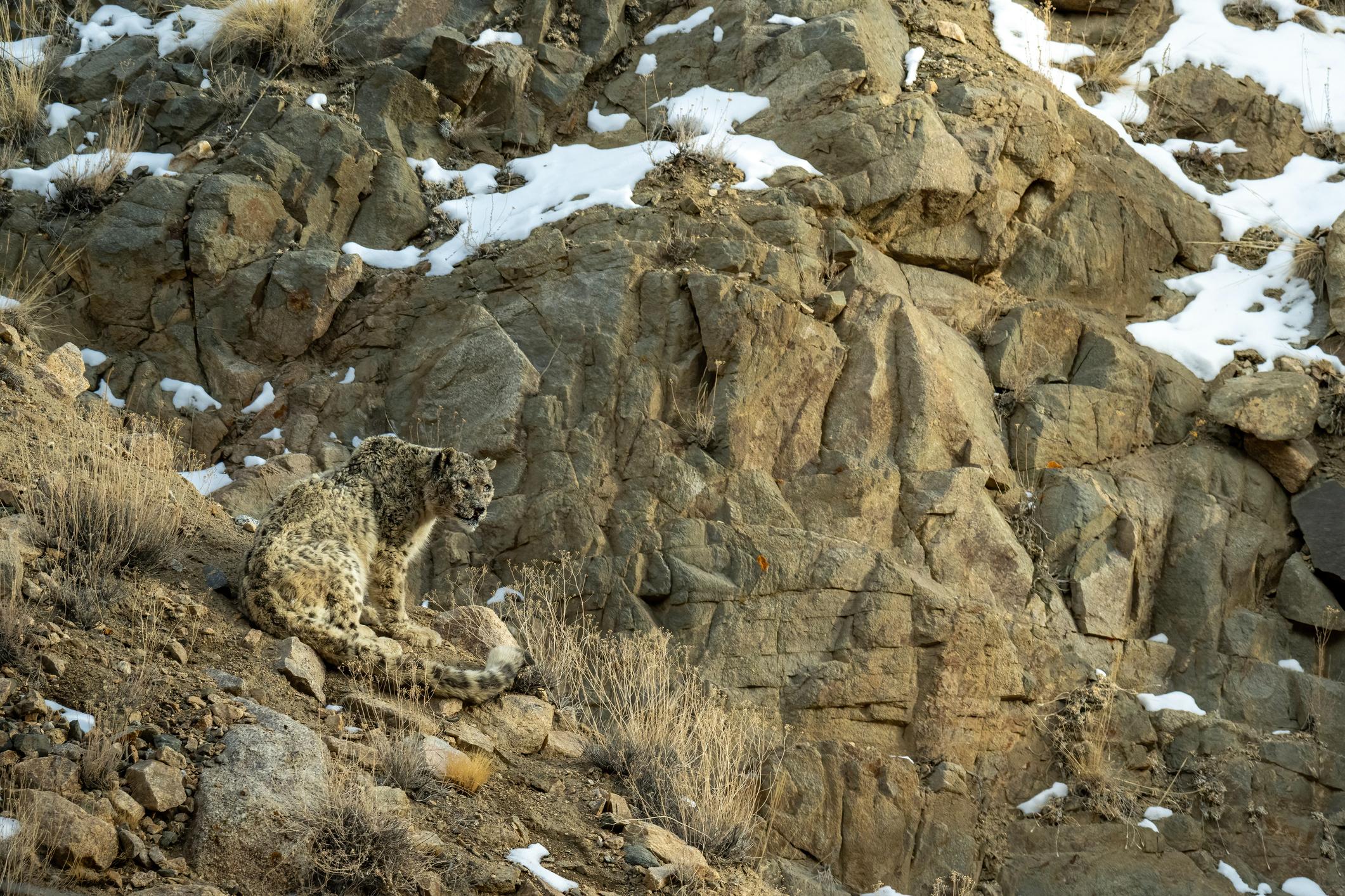
Teams of spotters head out before dawn, scanning ridgelines and checking tracks. "Our spotters can usually be about 90% sure whether tracks are from that morning, the previous night, or the day before," Dorjee says. It's then about patience. Teams stay in contact via walkie-talkie. Phone signal, while limited, has improved in recent years, though satellite phones remain off-limits in the area due to Indian border security rules. State-of-the-art scopes are crucial, and most sightings happen at a distance, seen through the lens of a telescope.
It can be that a kill - be it Himalayan ibex, blue sheep or an unlucky Ladakhi urial - provides the best chance of a sighting.
If there is no leopard by mid-morning, the team moves to higher ground, while spotters work away in the background. If a valley is quiet for two or three days on end, it may be that the whole operation moves to another valley.
"If we haven't found anything in our area, we can connect with others who tell us where a leopard has been seen," Dorjee says, which is why no itinerary is ever fixed. The villages you stay in depend on where the cats have been sighted.
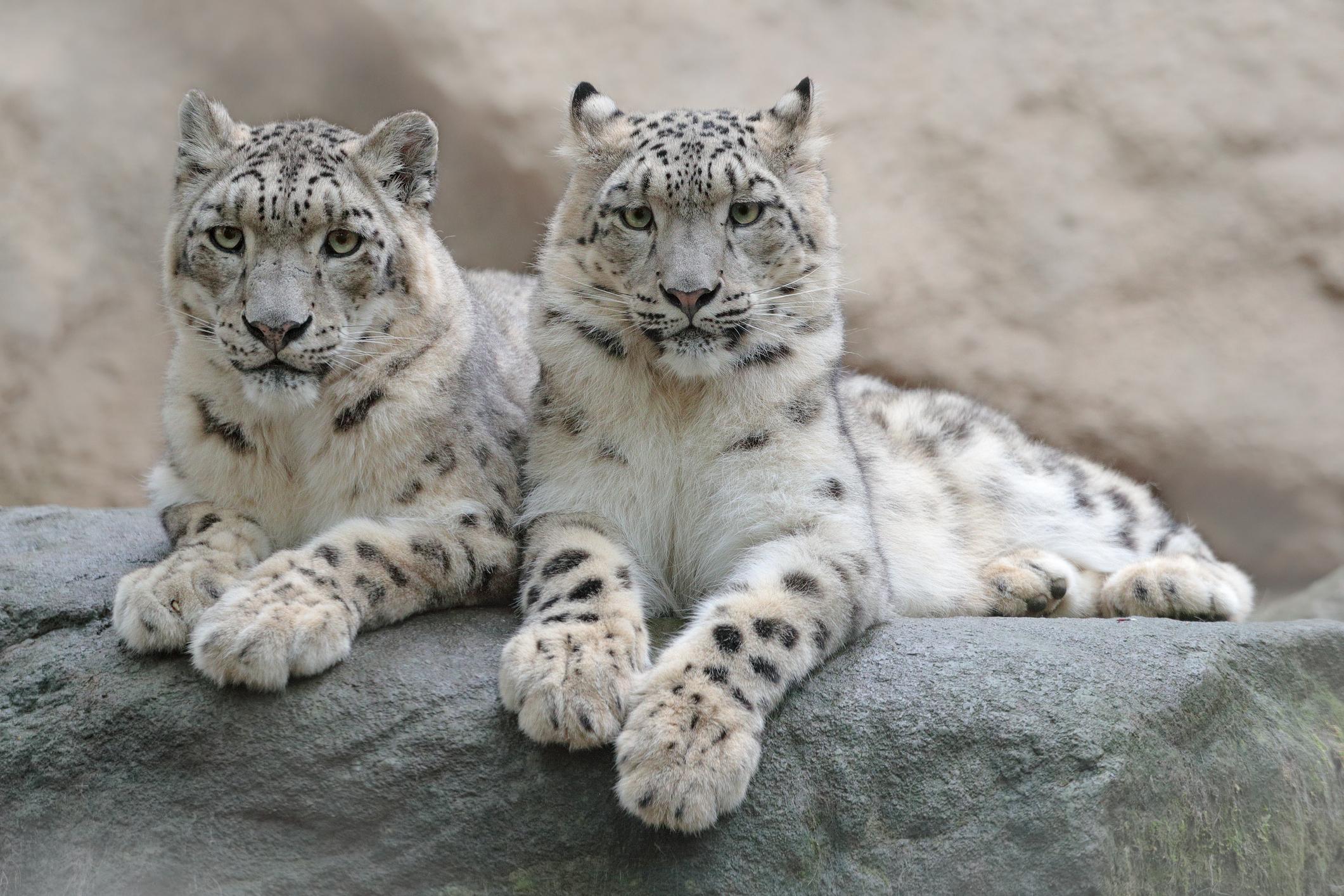
“Generally it’s easy walking terrain,” Dorjee says. “It can get more complicated, depending on where we spot a snow leopard, or if we spot kill sites in steeper areas.” It can be that a kill - be it Himalayan ibex, blue sheep or an unlucky Ladakhi urial - provides the best chance of a sighting of a cat, feasting on its prey. “The leopard will stay at the same place until it finishes feeding,” Dorjee says, explaining that this can be days, giving travellers an excellent opportunity to watch them.
Dorjee recalls some of his finest experiences watching these elusive animals.
“I’ve always enjoyed seeing snow leopards early in the morning or evening on the ridgeline," he says, "but last year I saw a snow leopard from 40 metres away, and I watched it for about an hour. It was unusually close. One of the most magical moments came when I was watching a mother snow leopard with her cubs. She went off hunting while the cubs waited, and at the end of the day, in the last light of the evening, she called the cubs, and they found their way back to her. It was a moment that was out of the box. It was emotional.”
In the Eyes of Locals
Snow leopard tourism has become a pivotal part of the economy in this remote region, particularly in winter, but none of it would have been possible without a quiet cultural shift that has taken place in recent decades.
Older or weaker snow leopards, unable to hunt wild prey efficiently, have been known to take a sheep, goat or donkey from a village corral instead of finding their own meal in the wild, and this led to tension with locals. The cats were once killed on sight here by local herders, who villainised them for lost livestock.
An NGO called the Snow Leopard Conservancy India Trust - founded in 2003 by Rinchen Wangchuk, a Ladakhi mountaineer and conservationist - set out to change that relationship, and foster a culture of coexistence. The organisation built more than 150 predator-proof livestock corrals in Ladakh, and in them, multiple-kill losses decreased by 90%. There is also now a community-run livestock insurance scheme which compensates farmers for their losses.
The end result is that there is less conflict between locals and leopards.
“Over the last couple of years, we’ve witnessed the snow leopard population slightly increasing,” says Dorjee, “particularly in Ladakh. It’s become one of the most popular places to find snow leopards. We’ve been spotting more of them."
A successful expedition depends on connections within the community.
It is a tale as old as time in conservation. The success of a project relies not on policing, but on addressing local concerns - and creating opportunities for them.
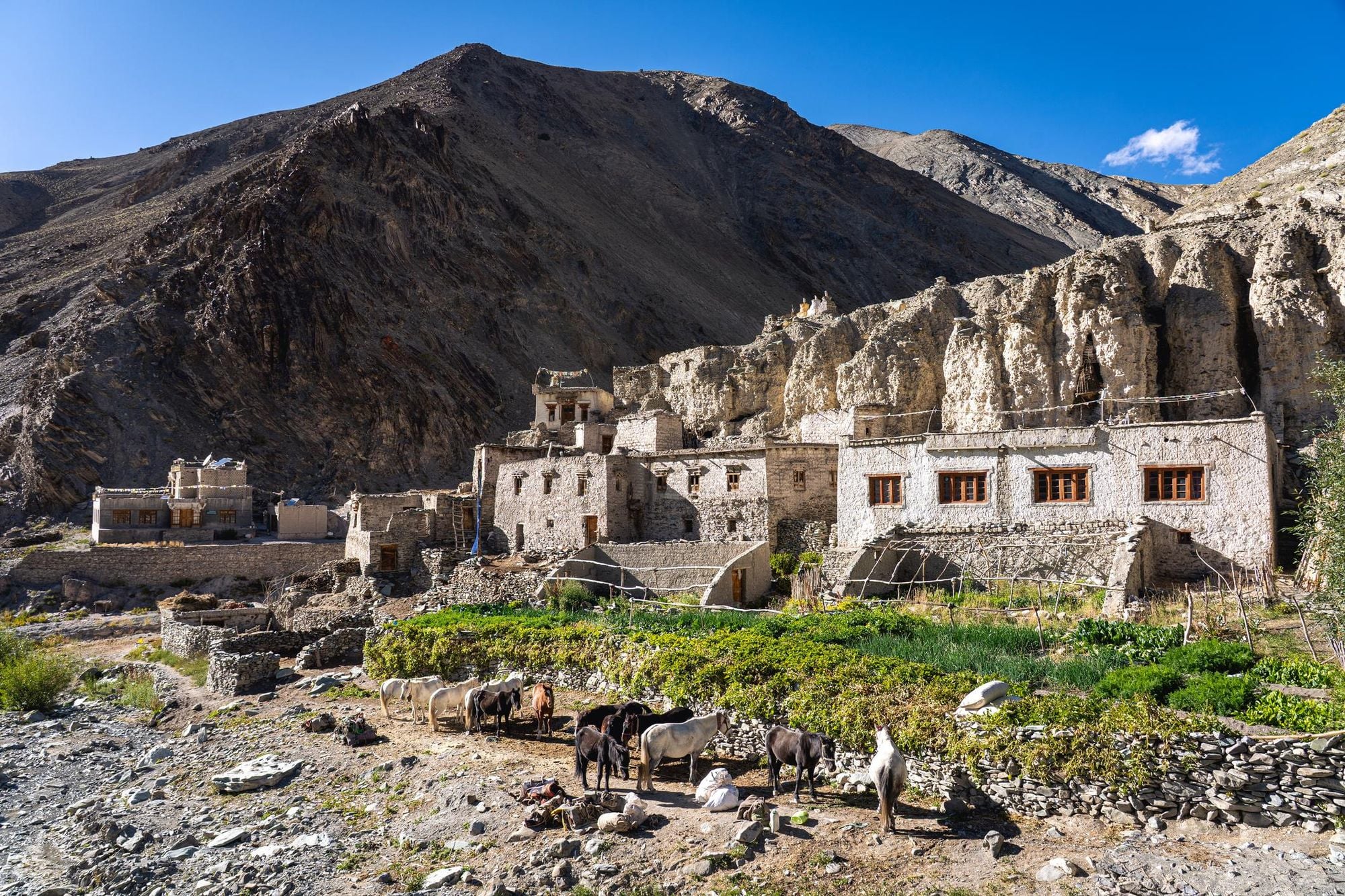
The Himalayan Homestay programme is at the heart of the tourism offering here, featuring around 200 homestays in 40 villages, including homes used regularly on snow leopard trips. It was the brainchild of a woman local to Ladakh, who suggested it would bring in more benefits for locals than camping, and would enrich the visitor experience. In practice, it means the opportunity to share a meal with a local family - perhaps Ladakhi skyu, a thumb-pressed pasta soup, cooked on a stove that has been used for generations - and to ask questions.
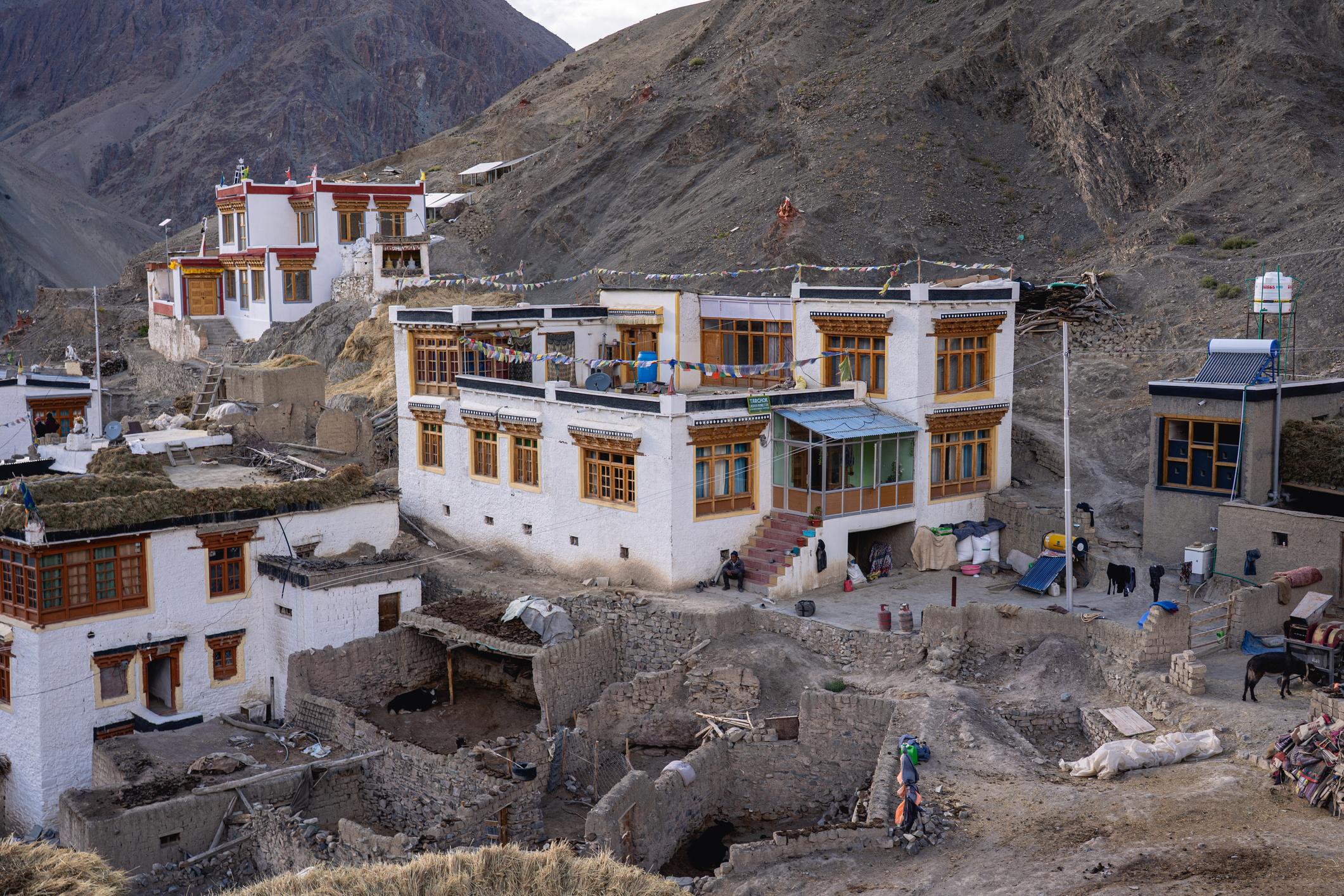

Some of that homestay income goes into a village conservation fund for tree planting, litter clean-up and the upkeep of local chortens and mani walls, and hosting duties rotate between families, so no single household monopolises the income stream. The Conservancy has also trained thousands of women in handicrafts and hundreds of young people as nature guides.
Much Better Adventures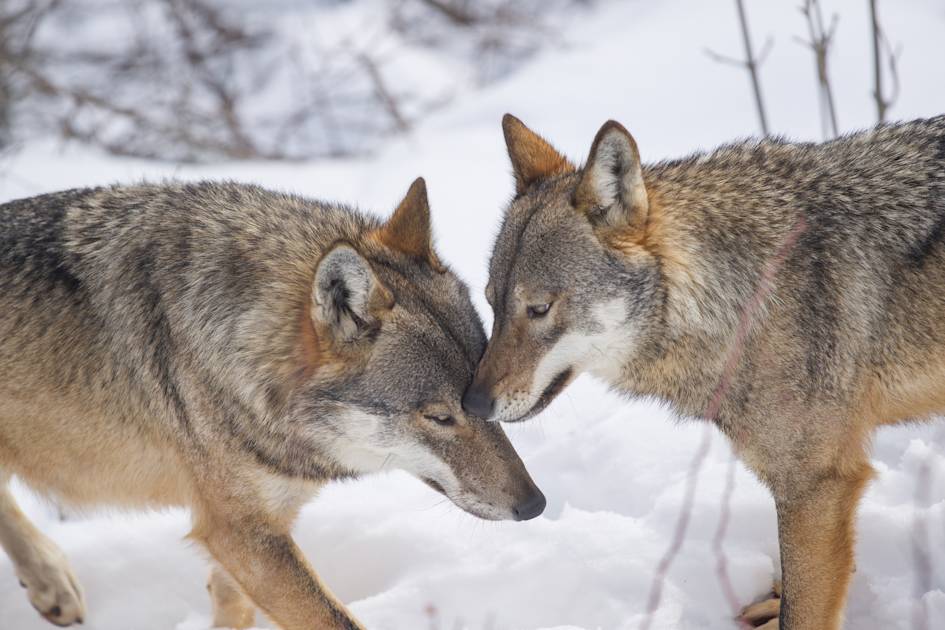
“A successful expedition depends on connections within the community,” Dorjee says. “Not just with people in our own village, but with guides and spotters working with different companies and groups across different regions.”
People are adapting to this culture of coexistence.
Jikmet Nurbu is an adventure travel expert in Ladakh, and was born in Leh. He says that growing tourism has "made it easier to share the importance of coexistence" between people and predators. “Alongside the growing number of tourists in winter, people are adapting to this culture of coexistence."
The leopard's move from Endangered to (the slightly better) Vulnerable on the IUCN Red List in 2017 is widely credited, in part, to this model. These cats are worth more alive to the community, up on a ridgeline, than dead in a corral.
The Ghost of the Himalayas
For all that, no sighting of a snow leopard can ever be promised.
Across a typical week of tracking, there is a good chance of at least one sighting, but it is possible that some visitors may leave without seeing a snow leopard. The beauty of spotting such a cat is, after all, that it is truly wild.
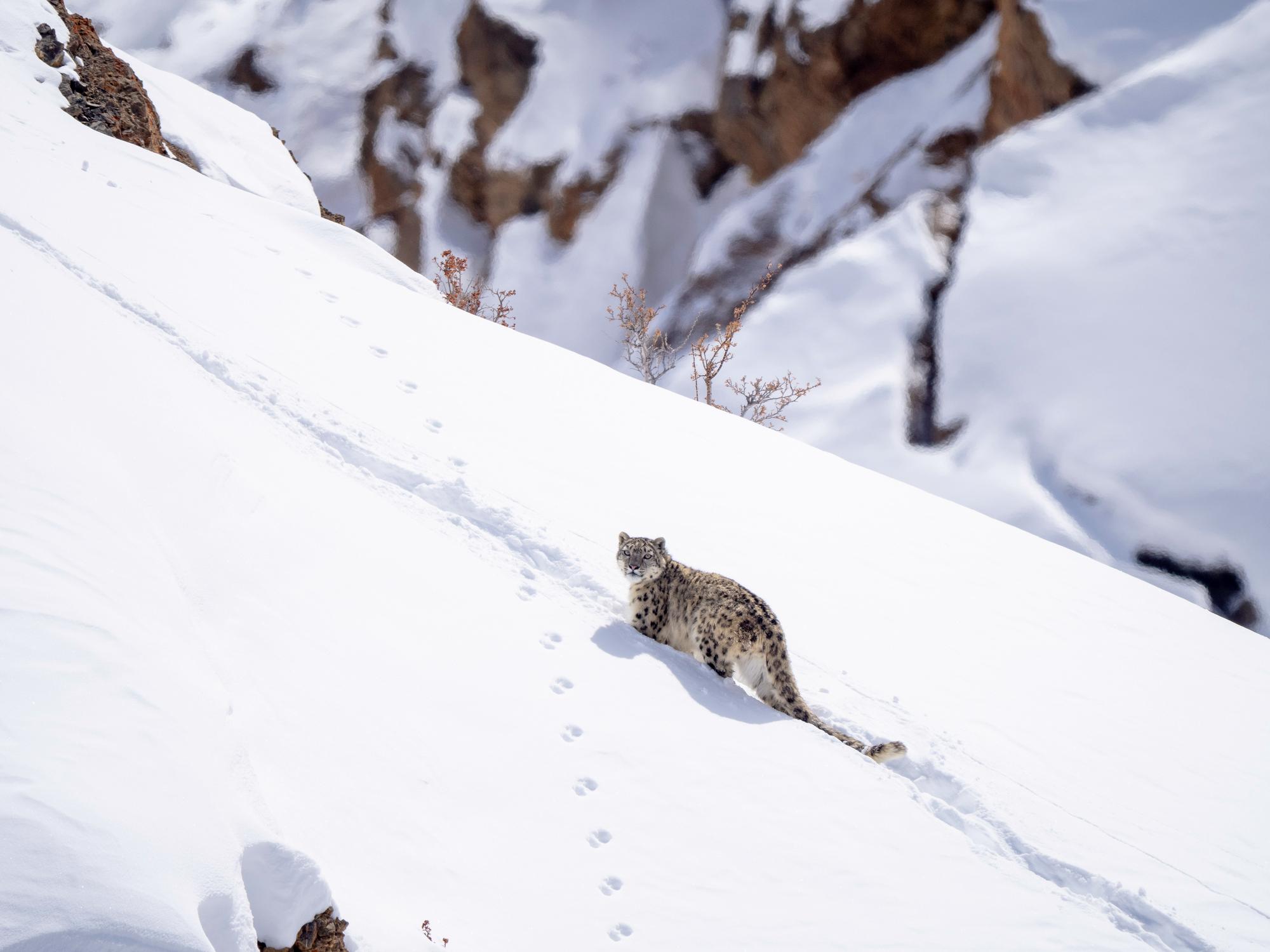
"Finding a snow leopard isn’t easy, and it isn't everybody's cup of tea," Dorjee admits. “We might see tracks, or when they have cubs, they don’t travel far. Then the chances of a sighting are quite high. If one disappears for a couple of days, it might have found a kill. We also explain to clients how to spot signs themselves."
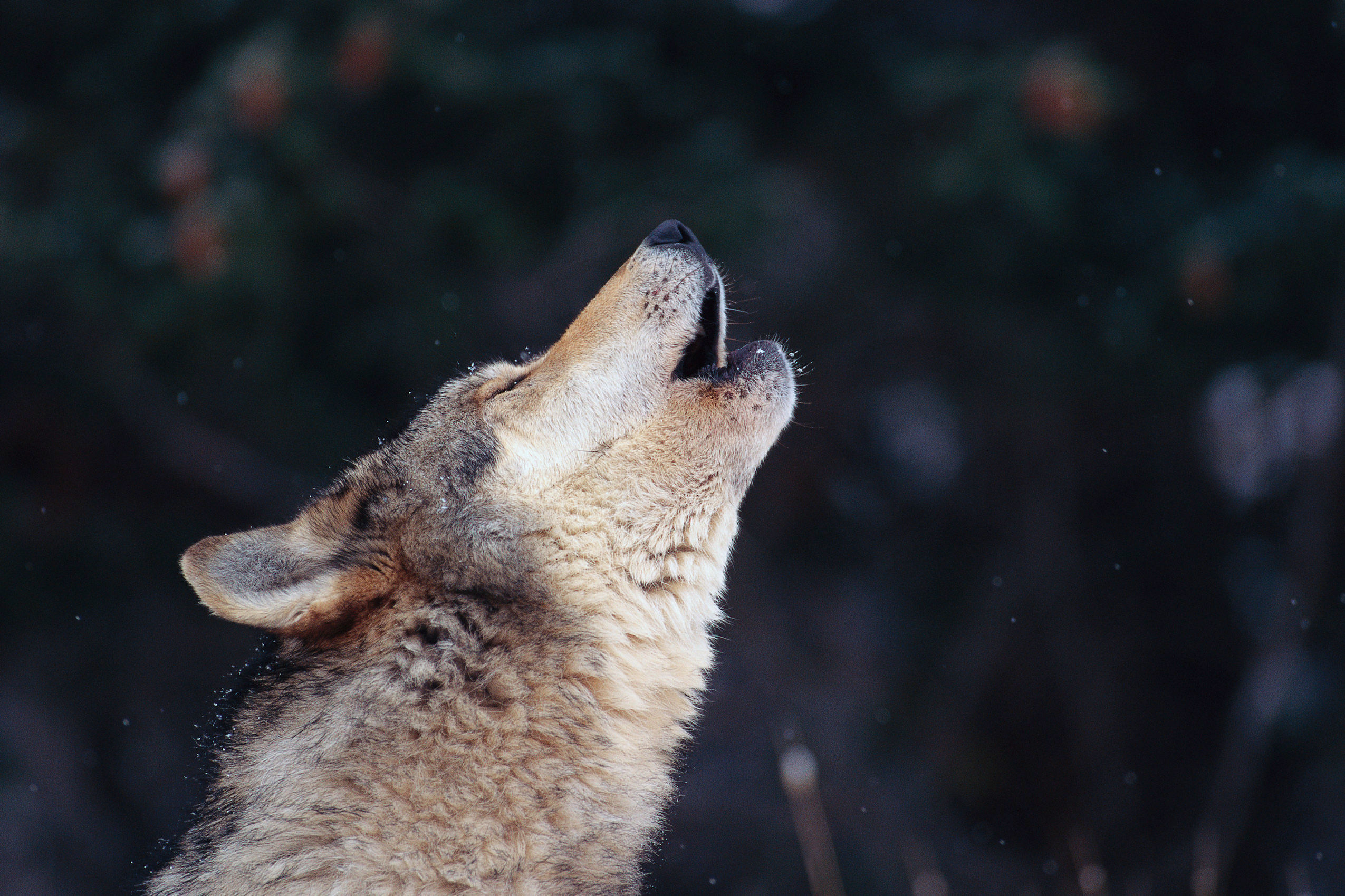
Much Better AdventuresVisitors invariably will see something remarkable - whether that’s ibex on the rocky slopes, golden eagles soaring, Himalayan wolves, or if fortunate, the near-mythical Eurasian lynx. What you are guaranteed if you visit Ladakh is an adventure; a journey to a high-altitude mountainscape; a place of shifting light - and each tourist visit upholds the value of these majestic leopards.
In villages in the Indian Himalaya where people once hunted snow leopards, now they guide people to see them instead. The cats are a source not only of income, but pride. It is a transformation seen in the tracking at first light, in the spotters who read the rocks and ridgelines, looking for the Himalayan Ghost.
Inspired? Track Snow Leopards in the Indian Himalayas in 2027!