
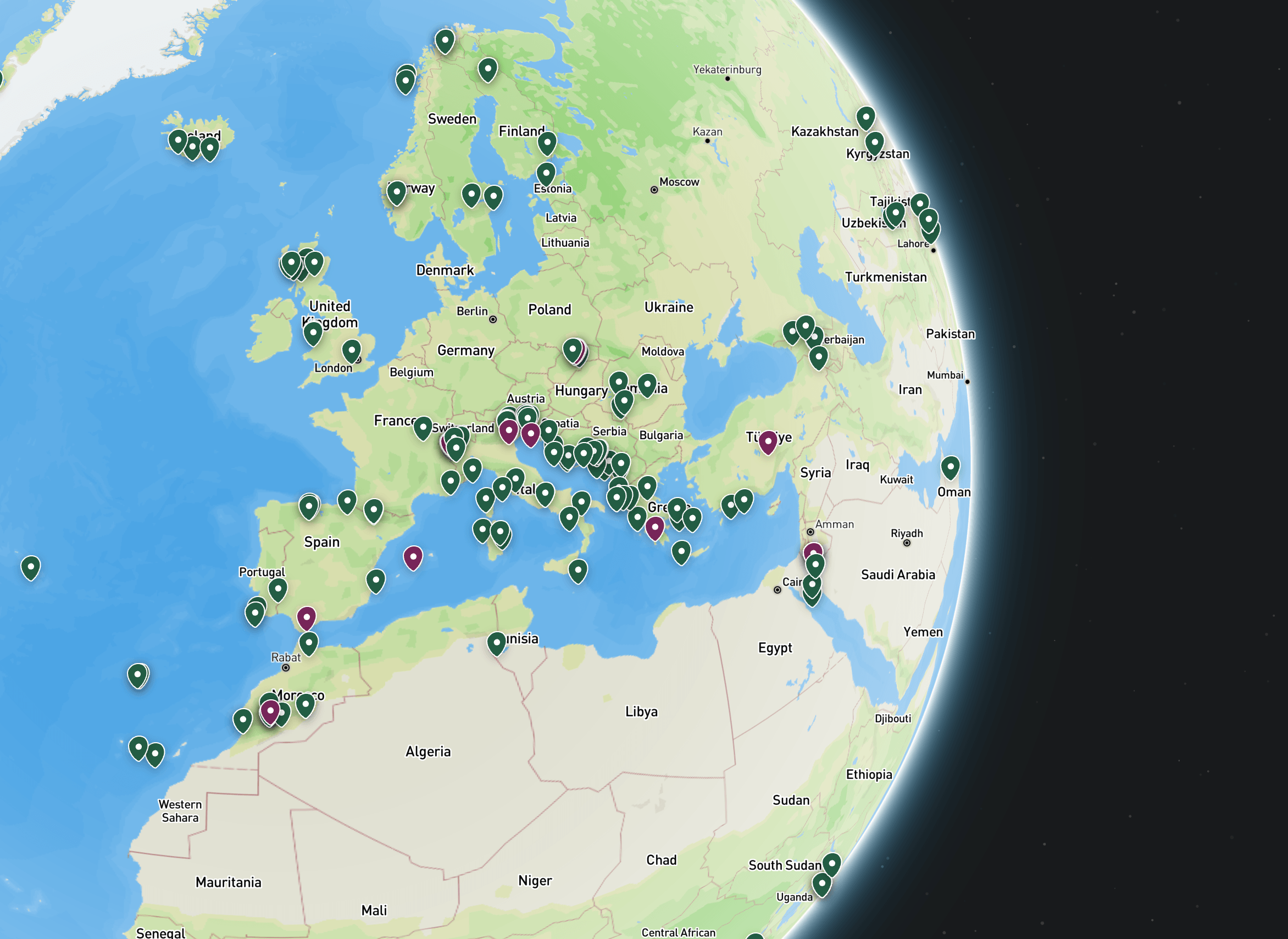



Comuna 13 was one of tourism’s great success stories. On the western hills of Medellín, a neighbourhood long marked by violence became a canvas for murals and music, its story of resilience carried through community-led tours. The Comuna became a global sensation - and then the world arrived.
“Noise levels increased dramatically,” says Ana Cristina Vélez Bunzl, a guide from the neighbourhood. “Trash increased. The traffic is impossible. Elderly people are desperate now. They cannot watch their telenovelas. It’s difficult to leave neighbourhoods, even to seek medical help. We now see homeless people and sex workers - things that were not common before. There is no control.”
Outside opportunists began to bring in crowds by the busload, extracting profit without any gain for the community , dilluting the benefits for locals, while grocery prices rose to tourist rates. The outdoor escalators built specifically to prevent locals having to walk the equivalent of a 30-storey building to reach the centre of Medellín were overwhelmed, and mobility was lost for many residents.
“When I go there now,” Ana Cristina says, “I feel like an outsider in the place where I grew up.”
Comuna 13 is an example of how tourism can revive, but also how it can consume - and it raises a question. Is equitable tourism actually possible?
The answer is yes, but not passively. It requires intentional steps to be taken.
Creating equitable destinations
Tourism is often described in absolutes. It either transforms communities or destroys them. It either spreads wealth or concentrates it. The reality is, of course, much more nuanced - even in an overtouristed spot like Comuna 13.
“There are people who genuinely want to do things well and create something meaningful,” Ana Cristina says. “Financial capacity has clearly improved for many people, but everything has also become much more expensive. Some areas have not been deeply affected, but the tourist zone around the electric escalators and surrounding neighbourhoods have undergone massive transformations.”
Rebecca Armstrong is the Head of Impact at Travel Forward (formerly The Travel Foundation), an organisation which aims to move conversations in tourism beyond the binaries and implement measurable, meaningful change.
Where is the money going? Who’s benefitting from it? How is that value from tourism not just created but distributed among destination communities?
Travel Forward - along with partners - released an 196-page report on Creating Equitable Destinations in 2024. The reason for their focus on equity is simple.
“It’s really about fairness,” says Armstrong. “The value that tourism generates doesn’t always reach as far as we might expect - or as far as we know is possible.
"What we did with the report was to look at how fair the system is at the moment and how it could be made fairer. So economically, where is the money going? Who’s benefitting from it? How is that value from tourism not just created but distributed among destination communities? Is it just in the hands of a few key players and destinations, or does it really find its way to those communities?”
At the heart of the issue is distribution. Beyond tourism money, who controls the land and infrastructure? What longer-term opportunities do tourism jobs actually provide? Who absorbs the pressures that comes with the crowds?
Tourism leakage remains one of the sector’s most persistent blind spots. Globally, a significant share of tourism income leaves the destination through global supply chains. In some developing economies, only a fraction of visitor spending remains in-country. The postcard image stays, but the profit does not.
“Links over leaks,” Armstrong says, a sentiment at the heart of tourism equity. “It's about what money is coming in? How much stays? And who does it go to?”
Five types of tourism equity
Travel Forward's report identifies five interconnected types of tourism equity: economic, environmental, spatial, cultural and experience equity.


Economic inequity is the most obvious. In destinations dominated by foreign-owned, often all-inclusive, resorts, local businesses struggle to access markets.
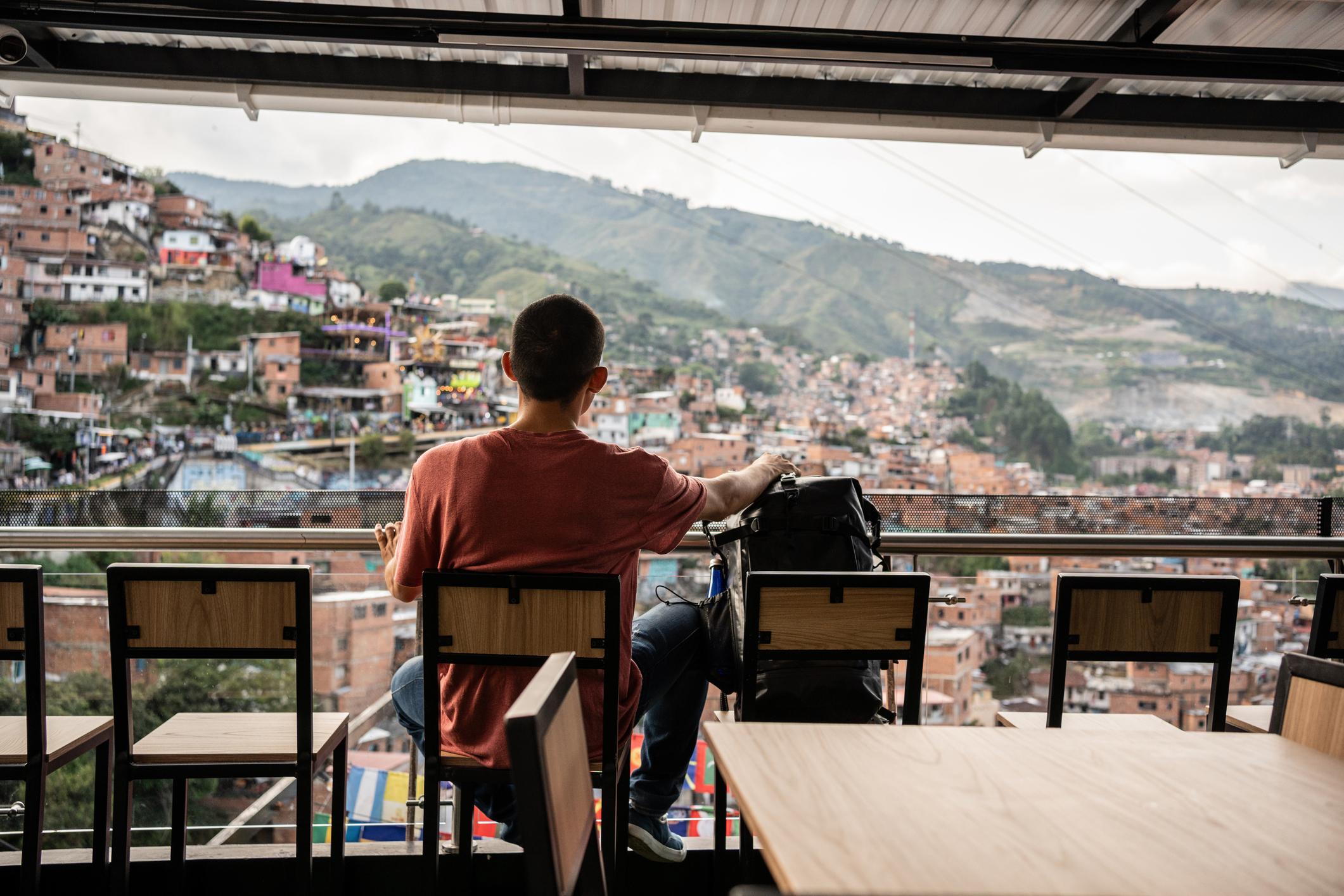
In the Maldives, where tourism accounts for a huge share of GDP, the legacy of internationally-owned resorts has meant that much of the income generated “comes into their businesses and leaves the Maldives again,” as responsible tourism advocate Ruth Franklin once put it to me. Guests sleep, eat, dive and shop within a closed system. The surrounding communities remain peripheral.
Less than 1% of Jamaica's coastline is accessible to residents.
But money is only part of the story.
Spatial inequity occurs when public spaces are transformed for visitors. Rebecca Armstrong cites a recent BBC travel feature that states that less than 1% of Jamaica's coastline is accessible to residents. Tourism may generate tax revenue, but if the land itself is privatised, what has been gained and lost for locals?
Cultural inequity surfaces when destinations are reduced to a performance of themselves. Back in Comuna 13, Ana Cristina Vélez Bunzl describes seeing people dress as Pablo Escobar for photographs - a caricature replacing a lived history - despite Escobar having no direct ties to the area. “One of the most painful aspects is that we are losing the true memory of the armed conflict here and of what happened to us as a territory,” she says.
In environmental terms, tourists often consume far more water and resources than residents, particularly in arid regions.
“Destinations have to be able to work out where that limit lies,” says Armstrong. “You might have 100 hotels in a destination that are highly certified to every sustainability certification. They're all using water efficiently and doing everything they can to minimise their water use. But if 100 hotels using water is too much for the local water supply, then that's not sustainable.”
Equity, Armstrong argues, must begin with place. “It’s starting with the place before you even get to tourism," she says. "Communities themselves are not homogeneous. So it's about understanding the priorities of that place - culturally, socially, environmentally - and then asking what tourism should deliver. How does tourism fit into that in a positive regenerative way?”
This approach is often referred to as destination or place stewardship.
When tourism works
Tourism is not inherently extractive. It can and does create positive, life-changing opportunities - when it is deliberately designed to do so.
In Madagascar, Hanitriniando Rabehajaina, Chief Sustainability Officer at Malagasy-owned operator Tamàna Adventure, describes a model built explicitly around community linkage. “Community engagement is at the heart of our excursions,” she says. All Tamàna guides, porters and cooks are from the regions the group adventures visit, so income flows directly into local families. Training is prioritised and women are employed in leadership roles within the office - something particularly crucial given the World Bank statistic that women in tourism are still paid less than men, by a whopping 14.7%.
A new study from the University of Toronto found that for every 1000 tourists that visit a protected area (PA) in Madagascar, deforestation decreased by 3.2%.
Travellers buy bread from bakeries and go to small grocery shops in remote areas that usually don’t get their share.
“Our mission is clear,” Rabehajaina says. “Protect the environment - and uplift local communities.”
The difference is intentionality, targeted at anchoring the benefits of tourism locally.
In Uganda, entry and gorilla trekking fees from Bwindi Impenetrable National Park provide 60 percent of the Uganda Wildlife Authority’s revenue.
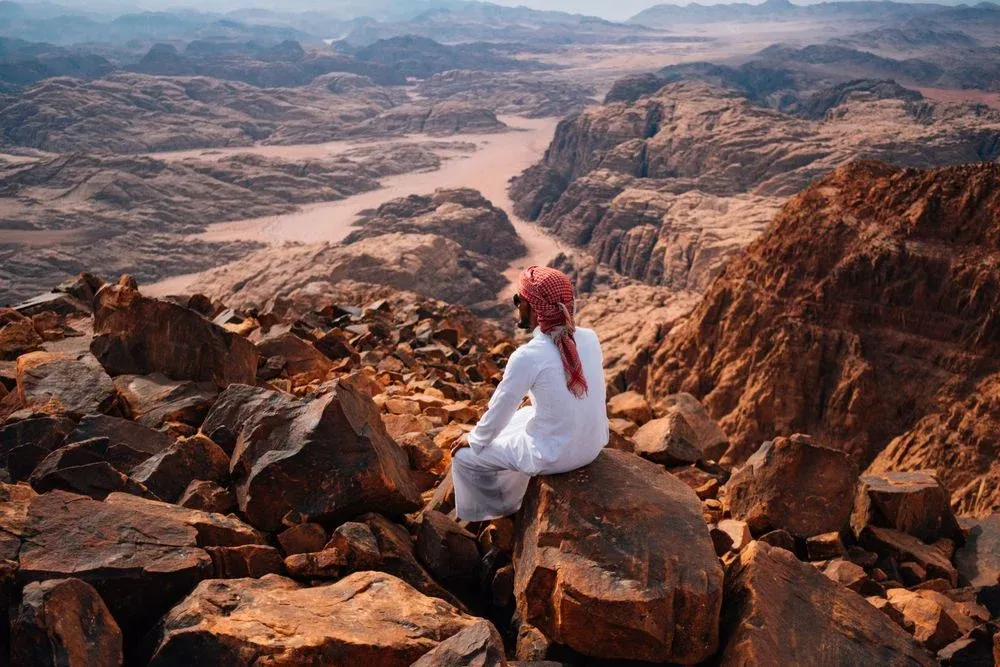
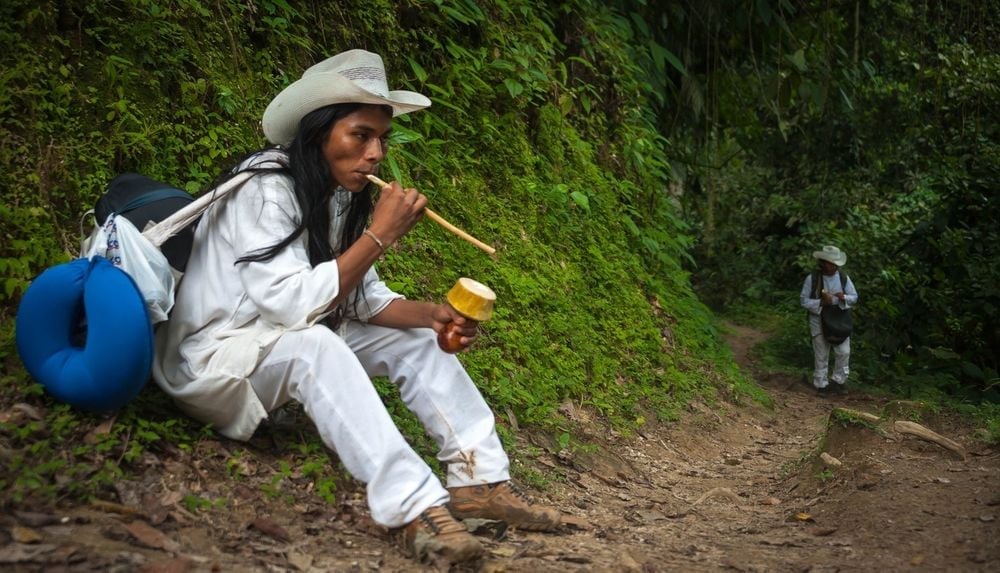
In Jordan, the long-distance Jordan Trail spreads the wealth of tourism beyond Petra’s well-trodden paths. “Travellers buy bread from bakeries and go to small grocery shops in remote areas that usually don’t get their share,” says co-founder Ayman Abd Alkareem. In the Sierra Nevada de Santa Marta jungle of Colombia, you can’t visit Ciudad Perdida (The Lost City) without a local guide, and the trek is closed for September for spiritual reasons tied to the indigenous people. Similarly in Nepal, trekkers now require a local guide for most remote hikes.
Bhutan is the most famous example of a high-impact tourist tax - charging USD 100 per person per night, which goes towards sustainability and free education and healthcare for its citizens. But similarly in Edinburgh, a new, smaller visitor levy is set to contribute £5m in funding to tackle the housing crisis, allowing the city to build nearly 500 affordable homes - a tangible benefit for local people.
Tourism employment is often seasonal and poorly-paid, but it doesn't have to be. In Sri Lanka, Action Lanka employ guides year round. "We pay them well and they're permanent employees, so as well as tips, they have government-managed pensions," says owner Peter Bluck. "Freelance guides don't have that security."
In Tanzania, safari specialist A View from a Tent's work stretches far beyond tourism - to producing elite netball players and paying for the schooling of star students, with the aim of producing role models in the community. "We're tired of people in Tanzania having nobody to look up to," one guide told me.

On an industry level, Travel Forward is working with the Canary Islands on a regenerative, collaborative initiative where tour operators directly invest in restoring degraded ecosystems and promoting social projects linked to tourism.
And Armstrong also highlights Makers Landing - a business incubator on the V&A Waterfront which provides kitchen space, mentoring and retail opportunities to small food entrepreneurs from disadvantaged communities. Tourists eat at the waterfront, where they'd naturally congregate, but the economic chain stretches outward. “It’s a model that can be replicated elsewhere,” Armstrong says.
These are not grand reinventions of tourism, but deliberate choices that make it work for more people. Mechanisms like local hiring, supply chain transparency, revenue sharing and visitor taxes exist. The problem is not that equitable tourism models do not exist - it’s that they’re currently not the default for the industry.
How we measure success
One reason equity remains a marginal topic is that tourism still largely measures success in visitor numbers, bed nights, GDP - the higher, the better.
“There’s still a disconnect between business models set up to reward volume and constant further growth, rather than measuring success by tourism’s contribution to equity,” Armstrong says. “I think we’re still a long way from that.”
In adventure travel, the most notable attempt to measure impact in recent years was the Ripple Score from G Adventures and Planeterra. A pioneering initiative, it measures the percentage of supplier spend that goes directly to locally-owned businesses. It was launched in 2018, but nobody has gone deeper since.
That is changing now - as an industry dependent on remote communities and the health of the environments they live in focuses in on the issue of equity.
It’s respecting the limits of natural resources, of land use, the impact on local housing and working hand in hand with the destination.
At the Adventure Travel Networking conference in February 2026, Much Better Adventures announced a tool to be launched later this year which, CEO Alex Narracott says, will "measure the economic impact of trips across our entire portfolio, without burying us or our partners in spreadsheets, done in a way that could work for anyone else in the industry who wants to do the same thing."
A big-picture tool like this would be used to identify key areas where impact could be improved - pairing with on-the-ground work to improve local benefits.
On the same panel, Thomas Armitt of Planeterra spoke about making the right kind of impact. "Not everything local is good. That's the reality," he said. "So it's being able to understand [...] ripple effects on those communities; increased education, women empowerment, youth empowerment, uplifting underserved, underrepresented members of the community." Kasia Morgan of Exodus also talked about their plans, working with local partners to deep dive into selected trips to see who benefits, how and what barriers remained to empowering locals.
Alex Narracott concluded: "You can be sure if we all start measuring economic impact, the improvement across the industry would be rapid and significant."
Back at Travel Forward, they advocate for tourism to introduce equity KPI targets (key performance indicators) to prioritise the delivery of local benefits, demonstrate community consent and protect tourism's social licence to operate.
“If the destination starts measuring the success of tourism by how much it contributes to local benefits and communities, and the industry on the supply side do the same, there's going to be much more alignment,” Armstrong says.
This is one of Travel Forward's four big solutions to change tourism.
“We’re never going to have 100% linkage or 0% leakage,” says Armstrong. “I think that’s necessary and there’s a healthy balance to be found in most destinations. It’s respecting the limits of natural resources, of land use, the impact on local housing and working hand in hand with the destination. And the destination itself should be confidently setting limits on that as well. It’s about the collective.”
Changing the model
Tourism can preserve culture, protect wild places, strengthen entrepreneurship and foster exchange. It can also overwhelm, displace and commodify. The difference lies in structure and intent. Individual travellers matter. Supporting locally-owned operators and those who connect them to the world, seeking out community enterprises, avoiding exploitative experiences - these decisions have weight. But Armstrong is clear that equity cannot rely solely on consumer virtue.
“This is about the model,” she says.
Destinations must decide what they want tourism to deliver, and at what cost. There must be limits. Operators must examine supply chains, and governments must embed equity targets into how success is measured.
The gains of tourism should be as broad as possible, and the harms contained.
Comuna 13 reminds us that tourism can have a startling impact - positive and negative. It can create new opportunities that lift people out of danger and poverty. But even a successful model can tip into negatives with startling speed.
Ana Cristina now advocates for visiting the nearby Comuna 3 in Medellín. “Tourism is still small-scale there," she says, "so there is a real opportunity to set rules and frameworks early, before things spiral out of control."
Sustainable tourism should not be defined only by carbon footprint or waste reduction, as important as those things may be. It must also take into account who tourism is set up to benefit - and whether the places visited still truly belong to those who live there. If they don't, tourism there is surely not sustainable.
Equity is possible in tourism. It's tougher to know if it can become the norm.
Check out our full range of adventure holidays, in partnership with local hosts around the world, or read more about equity via Travel Forward!