
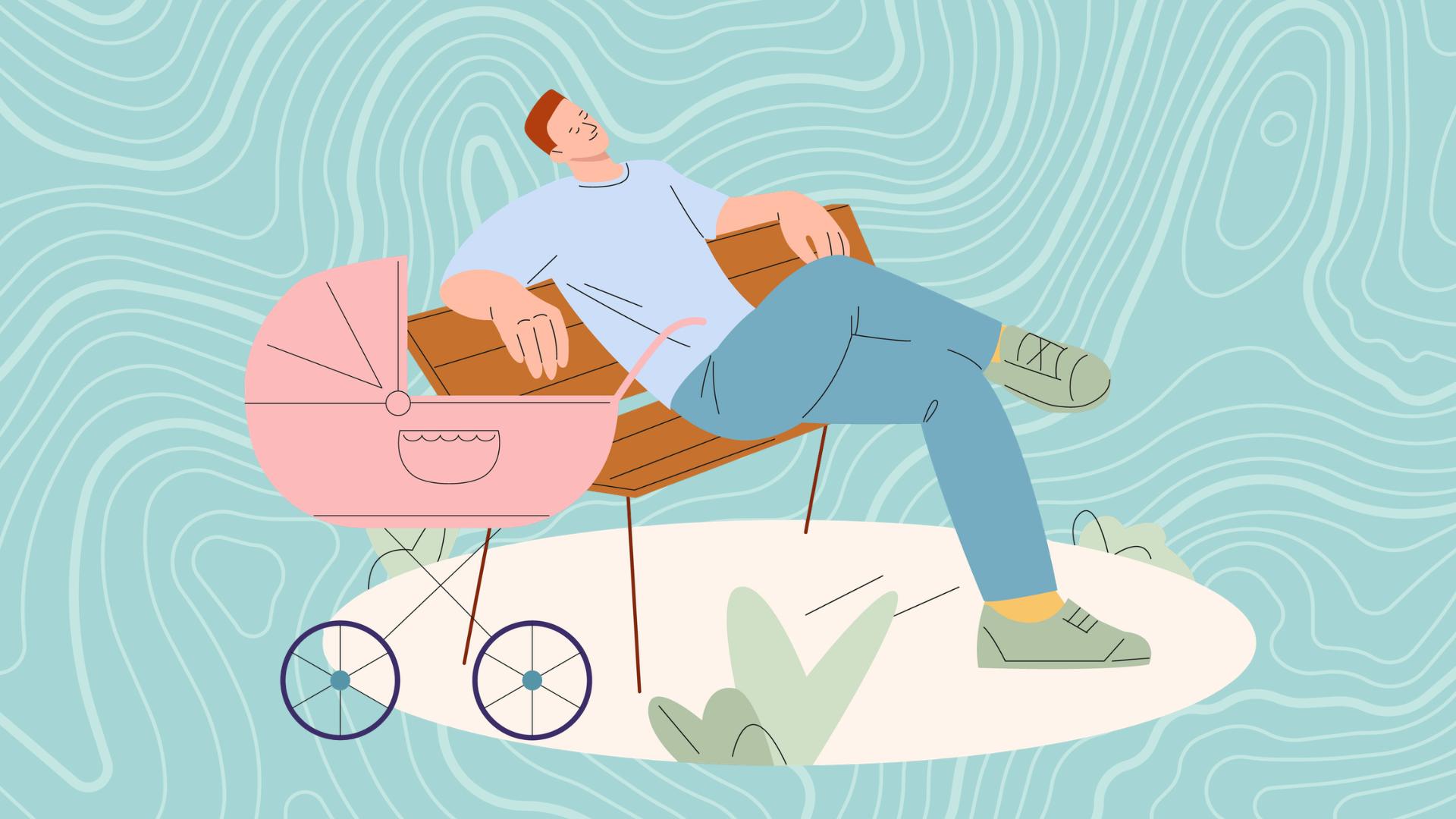
At 2am, I awake suddenly. Despite it being almost the height of summer, I’m shivering from the cold. Swaying in a hammock between two trees on the 1066 Country Walk, bundled up in my sleeping bag (and every layer of clothing I have with me), I remember something quite important. I’m a father now. I am literally someone’s dad.
The thought of dying from hypothermia briefly appears in my mind’s eye, and I’m struck by what a ludicrous and undignified way this would be for my life to end. Pictures of my son, years from now, learning about how his old man perished in the wilderness come forth like water from a spring.
‘Mum, what happened to Dad?’ says future-son.
‘Your father was found frozen solid, mere metres from an idyllic footpath in East Sussex,’ says future-widow, understandably annoyed at me for dying in this manner.
‘Was he alone at the end, mum?’ says future-son.

‘No. His friends were wrapped up warm in a tent right beside him but, your father being your father, he’d insisted that hammocks were much more fun,’ replies future-widow.
‘Right. I mean… that seems… yeah… that seems…’
The sound of wild animals close by brings me back to my bag-in-a-hammock reality. Fox? Badger? Some sort of monstrous hybrid that’s yet to be discovered? What on Earth am I doing here? My body craves the warm embrace of the morning sun that’s still, painfully, many hours away. Or, a bed. Yes, a bed would be nice. I own a bed and that bed is in a flat, and that flat has walls, and amenities, and is – I now realise, while close to death – actually quite nice. It’s not The Ritz by any stretch, but, however you choose to spin it, it’s also not a glorified fabric burrito gently swinging above the dirt.
After getting the all clear from our wonderful partners - and of course, promising to return the favour the next time they wanted a night off - we'd made our plans for this small group adventure. I'd be walking with two childhood friends of mine. One of these friends was, like me, a new dad trying to navigate the highs and lows of being a parent for the first time. The other was a best man at my wedding (and vice versa), but someone who’d yet to experience the frontline of fatherhood in all its messy glory. We’d all agreed that a little adventure would do us some good, especially those of us up to our necks in nappies and toddler tantrums. Getting outside and touching some grass, as the kids might say, was long overdue.
Parental isolation is nothing new, but it’s also a problem that doesn’t seem to be getting any better. Recent research from the National Childbirth Trust (NCT) has revealed that two-thirds of new parents feel isolated or lonely at least some of the time. This study also showed that almost 90% of new parents feel overwhelmed at least some of the time, and that nearly 25% of them believe they don’t have a strong support network around them. In a bid to tackle this mental health epidemic for rookie mums and dads, English Heritage have even introduced “bonding benches” at some of its most famous sites to encourage parents looking for a sense of community and camaraderie to talk to one another.
The mind also has more room to spiral into repetitive thinking; the brain defaults to threat-scanning and self-criticism when it lacks outside signals of safety and connection.
Dr Benjamin Perry is an Associate Clinical Professor of Psychiatry at the University of Birmingham, specialising in major mental illnesses like schizophrenia and depression.
“Isolation and staying indoors remove a lot of the inputs that keep mood-regulation systems stable: daylight, movement, social reward, and a sense of perspective beyond four walls. And it does it in stealth too, like a frog in hot water with the temperature gradually creeping up,” he tells me. “Without those mood regulation signals, the stress system – cortisol – stays switched on longer, and in turn this makes sleep and body clock cues drift, which are already off in new fatherhood anyway, and the brain’s “reward” circuits get less stimulation.
“This can culminate in a feeling like flatness, low motivation, and as though everything takes more effort. The mind also has more room to spiral into repetitive thinking; the brain defaults to threat-scanning and self-criticism when it lacks outside signals of safety and connection.”
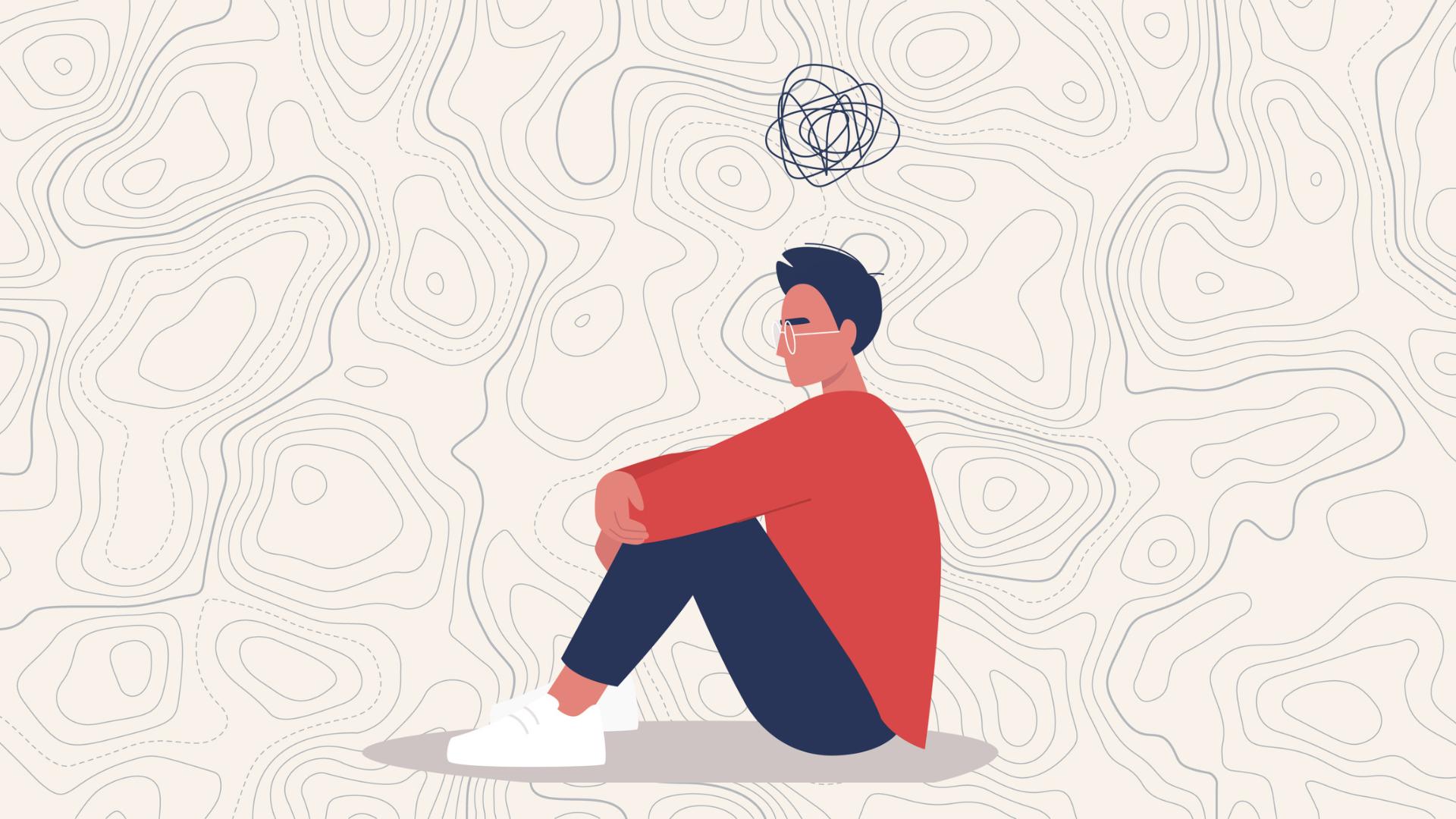
With the power of hindsight, and looked at now from a position where more of the picture is clear to me, I realise I’ve been that frog in hot water before; lost in a daze and numb to a creeping sense of despondency. Days bleeding into one another, putting on a brave face, telling myself ‘Well, I must be happy because this is supposed to be a happy time’, and forgetting to actually check in with how I’m really feeling. In my case, this wasn’t a permanent state of affairs. Like a cruel cosmic joke, I found it coming in waves – subtly sliding me off my lilo when the waters were calm and I was at my most content.
Research carried out in Sweden, and published on the website of the UK’s largest pregnancy and baby loss charity Tommy’s, has revealed that postnatal depression affects as many as one in 10 men. Alarmingly, almost a third of the men who took part in this study had symptoms that scored above mild levels of depression. And, perhaps most worryingly of all, fewer than one in five fathers who were depressed sought help.
Generally we see that men are less open to sharing their feelings and talking about mental health than women...
Mind Over Mountains, the award-winning mental health charity built around getting into nature with wellbeing coaches and counsellors, has been helping men and women struggling with anxiety and depression since it was founded in 2020. Its 31-year-old founder Alex Staniforth, who’s had two attempts to climb the world’s highest mountain derailed by natural disasters, has seen first-hand the positive impact that connecting with others outdoors can have on parents.
“I'm not a father personally, but generally we see that men are less open to sharing their feelings and talking about mental health than women, and the process of walking and talking side-by-side helps to enable that,” says Alex. “Often parents are so busy looking after others that they forget or don't find the time to look after themselves too.”
Ash Routen is an adventure journalist specialising in polar travel, a prominent outdoor voice on social media, and a Fellow of the Royal Geographical Society. He’s also, as of the end of 2025, a father to an infant daughter. When I speak to him in early 2026, he tells me that he’s taking a hiatus from his Arctic forays for the year but that plans for a short expedition in 2027 are already afoot. In the meantime, he’ll be making do with family excursions closer to home and seeing if he can arrange a summertime escape to the Peak District for an overnight wild camp.
“Adventure is a big part of my life and identity,” says Ash. “If I gave that up totally, I wouldn’t be the best version of me which would no doubt impact my ability to parent.”
For cynics, it’s easy to baulk at such things and label ‘dadventures’ (a term popularised by British gold medal rower Alex Gregory MBE and father-of-three in his 2018 book of the same name) as the indulgences of men refusing to grow up. But ideas around the benefits that exploring green spaces can bring, either alone or with your children, have been well documented and are now backed up by science.

For new parents, putting the blinkers on might seem like a sensible course of action when you’ve got nap schedules to map out and tummy times to oversee. This narrowing down of your attention to a single point can, though, cause things to spiral. Shutting yourself off from everything else might, in the heat of the moment when your head is spinning with fatigue and your nostrils can’t shake the smell of baby sick, have a twisted sense of logic to it but it’s ultimately doing more harm than good. This is something Dr. Perry is keen to point out to me during our conversation. “Over time, withdrawal becomes self-reinforcing like a vicious cycle,” he says. “You feel worse so you retreat more, and you retreat more so the brain gets even fewer of the ingredients that help it recover.”
Adventure isn't a bed of roses and neither is parenthood.
And so, here I am in the great outdoors. Not far from the Battle of Hastings site (where Harold Godwinson famously did not recover from getting an arrow to the eye), I’ve finally drifted off to sleep in my hammock. As the sun rises, I feel once again the moreish thrill of waking up in nature. The soul-soothing tranquility of it all is mixing with the coursing adrenaline from surviving the night. Everything feels right with the world. I am tired, yes, but I am also restored. The fact I’ve slept less than I do at home, where my son starts the day at 4:30am like a grindset LinkedIn bro, doesn’t matter. My body and mind feels regenerated, zapped back into equilibrium by being outdoors - and having the air space to think. I am, in the most plainly simple terms imaginable, ready to get home and be a dad again.
Being a father is beautiful and magical, but it has also tested me in ways I never imagined. When a small human being you’re responsible for is screaming at you in the middle of the night, depriving you of sleep and making you feel like you’re being interrogated by the CIA for information you don’t have, it can feel like a lot. Heading outdoors and getting outside of my comfort zone again reacquainted me with the idea that challenges are there to be overcome. Where there is darkness, there is also light. The world turns on its axis, clouds come and go, and the good times are never far away. Adventure isn't a bed of roses and neither is parenthood. And that's fine. That's one of the things that makes both worth doing.
It’s too simplistic, of course, to say that going for big walks on a regular basis can stop young men and new fathers from experiencing depression. But experiences like my overnight on the 31-mile trail between Pevensey and Rye were, for me, a much-needed reminder of the important role it can play in coping with the challenge. Next time, though, I might pack a hot water bottle.
Browse our full range of small group adventures around the world!