
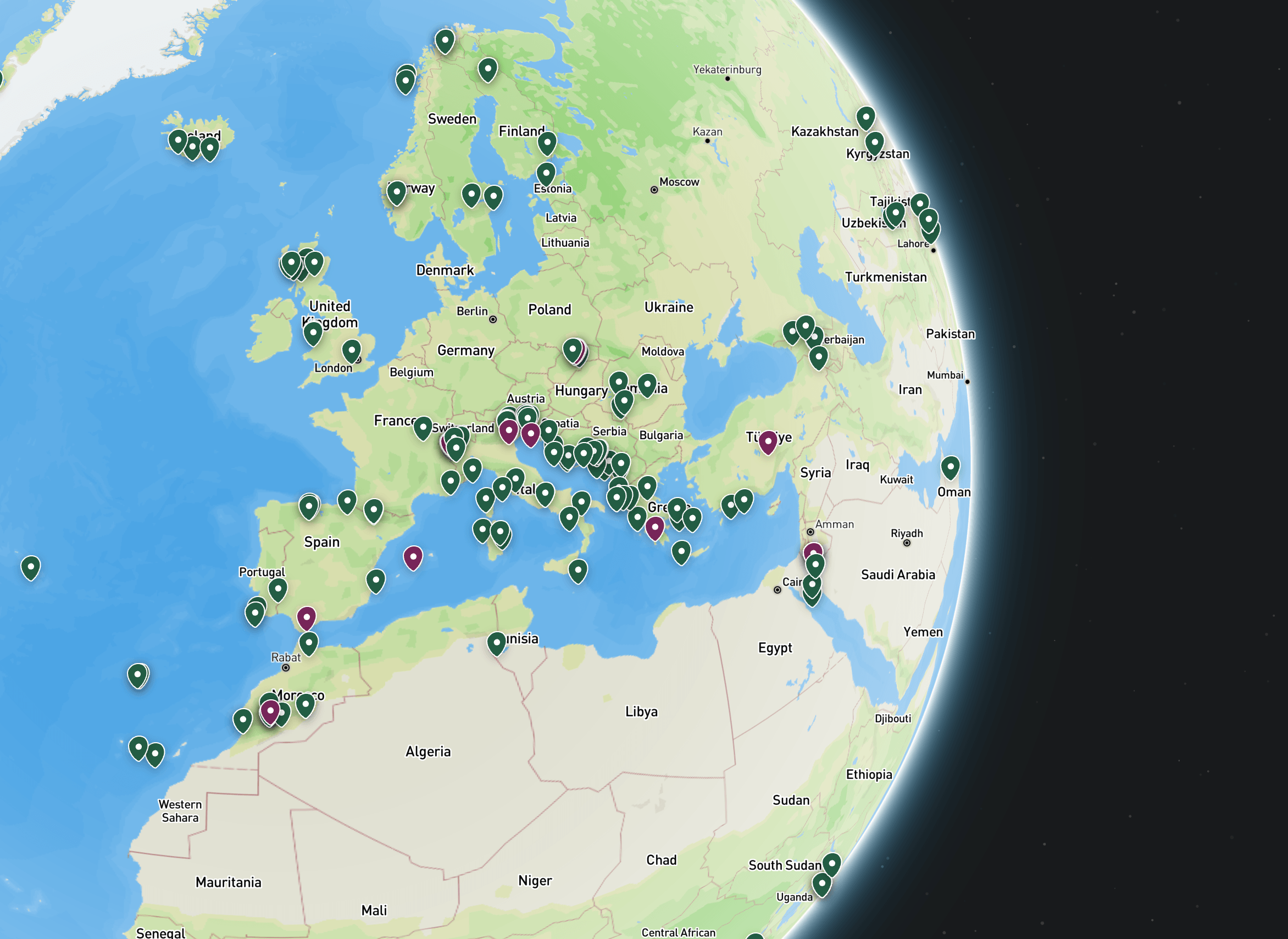


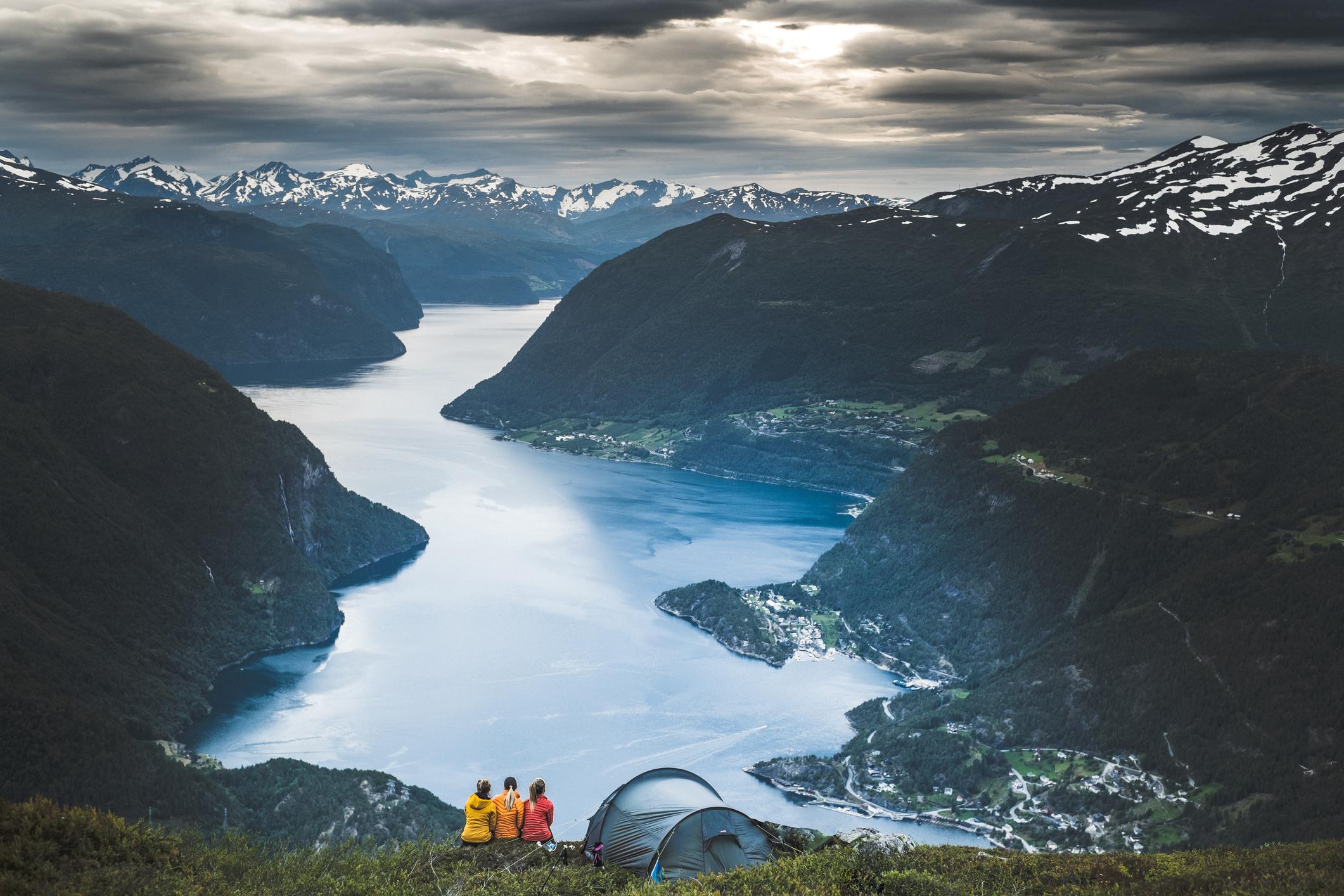
Norway is a remarkable place; a country of fjords, carved by glaciers, of plummeting waterfalls, of sea inlets and snowy, towering mountains peaks. It also happens to be one of the few places in the world where you can wild camp without having to hope that nobody notices - because it’s a legal right. Allemannsretten (“everyman’s right”) means that you can pitch a tent on uncultivated land almost anywhere in Norway, free of charge, without having to ask for anyone’s permission.
There are a few caveats to this. The land you camp on has to be uncultivated, and you have to be more than 150 metres from houses or cabins. In areas of high visitor footfall there may be local restrictions, and of course, people should practise responsible access and leave no trace. But this is a right that runs deep.
Fjords, forests, mountains and coastlines are not just beauty spots in Norway. They're an inherent part of being.
The playwright Henrik Ibsen coined the term friluftsliv (“free-air life”) in the 1850s. It's a term intertwined with Allemannsretten, and it captures how central the outdoors are to national identity here. The fjords, forests, mountains and coastlines an inherent part of being in Norway; they live and breathe like we do.
 Much Better Adventures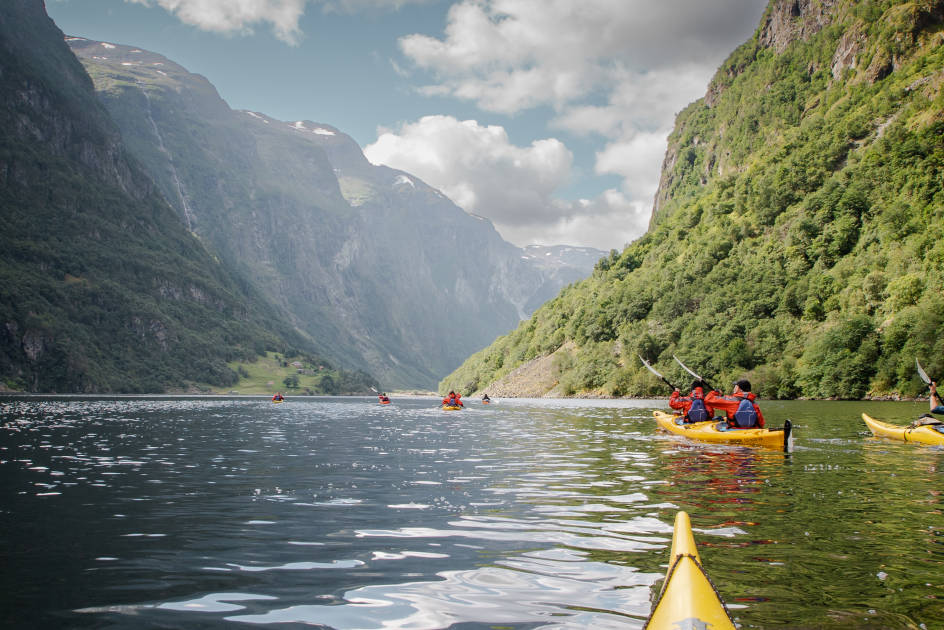
Allemannsretten, by extension, is emblematic of the connection between people and wild places here. It shows that the land simultaneously belongs to everyone and no one. It looks at nature as a fundamental human need and preaches the responsibility and co-existence which is so rare to find in our modern day lives. So it’s fair to say that the significance of the right to roam goes beyond practicalities - even if it’s also correct to say that those practicalities are absolutely fantastic.
In practise, what Allemannsretten means is that you can pitch a tent on the edge of a fjord after a long day of paddling, and cook a dinner a few steps from the water, without a fence in sight. It means that you can go to sleep in a forest and wake the next morning to the sounds of birdcall, without having to worry about whether or not an angry landowner will be hiding behind a tree, ready to shout at you.
You may hear a seal swimming up to the campsite, or you may hear an eagle in the early morning.
Jan Neilsen is a kayak guide who had led hiking, camping and kayaking trips on the UNESCO-listed Nærøyfjord for over two decades. "On an overnight trip, we stay out," he says. "We get the calmness of the fjord. The ferries stop moving. You may hear a seal swimming up to the campsite, or you may hear an eagle in the early morning, you may even hear an owl at night. The campfire conversation always leads somewhere - and those talks often revert back to the environment."
Here's our introductory guide to the Norwegian's beloved right to roam.
Can you wild camp in Norway? Allemannsretten, Norway's right to roam, explained
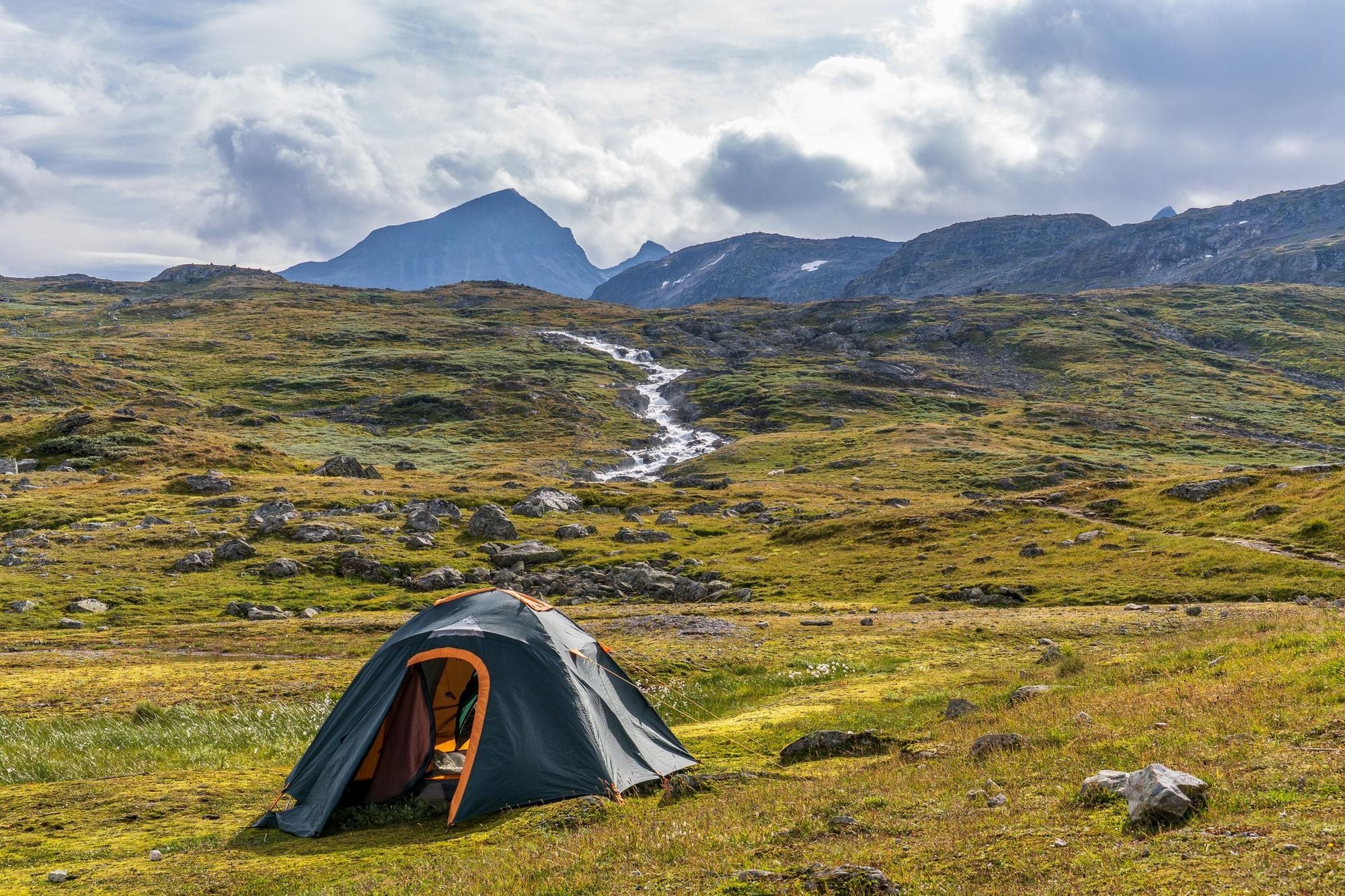
Yes, thanks to Allemannsretten, you can camp on uncultivated land in Norway legally, and without paying a cent. This principle has existed as common practise for centuries, and it was actively written into law in the Outdoor Recreation Act of 1957, which was created “to protect the natural basis for outdoor recreation and to safeguard the public right of access to and passage through the countryside and the right to spend time there.”
Norway is just the perfect place for kayaking. We have a lot of water, we have a lot of lakes, we have a lot of rivers, and the mountains provide protection for the wind.
There are some limitations - but they're entirely reasonable, and easy to follow.
The right to roam applies to utmark - uncultivated land. Examples of this include forests, mountains, moorland, most of the coastline of Norway and the shorelines of fjords. The right does not apply to innmark - cultivated or private land, such as agricultural fields, household gardens, farmyards or the areas immediately around someone’s house. Basically, if it looks like private land, you probably can't pitch up on it but if it's open countryside, then you're generally good to go.
There are a few practical rules to follow, even when pitching in utmark:
- Make sure you pitch at least 150 metres away from the nearest inhabited house or cabin.
- When you're in a lowland area, note that you can stay up to two nights in the same spot without asking the landowner - whereas in mountains, moorlands and more remote areas, multi-night stays are generally more acceptable.
- It's worth checking for local restrictions on top of the national rule before you go, especially if you’re visiting a heavily touristed area.
Wild camping in Norway is a right with a substantial cultural history, as well as a 70-year-old legal history behind it. There are even government-run gear libraries, where people can borrow kit to go camping for free. So, when you go camping in Norway, the emphasis is less on permission than it is on behaviour. It's crucial - as it is anywhere - that you don't abuse this right. Camp responsibly, with respect and leave no trace. That idea is built into the Norwegian right to roam.
There’s a lot of beauty here, that we want to share. But we have to share it responsibly.
"One of the things that makes Norway special is that we generally don’t allow motorised vehicles in wilderness areas, without a special permit," says kayak guide Jan Neilsen. "That leaves a lot of areas really unspoilt. We have a relaxed approach to the outdoors here. That is provided to every citizen by law - the Allemansratten. This creates a responsibility for us as tour operators. There’s a lot of beauty here, that we want to share. But we have to share it responsibly."
Is it legal to wild camp in Norway?
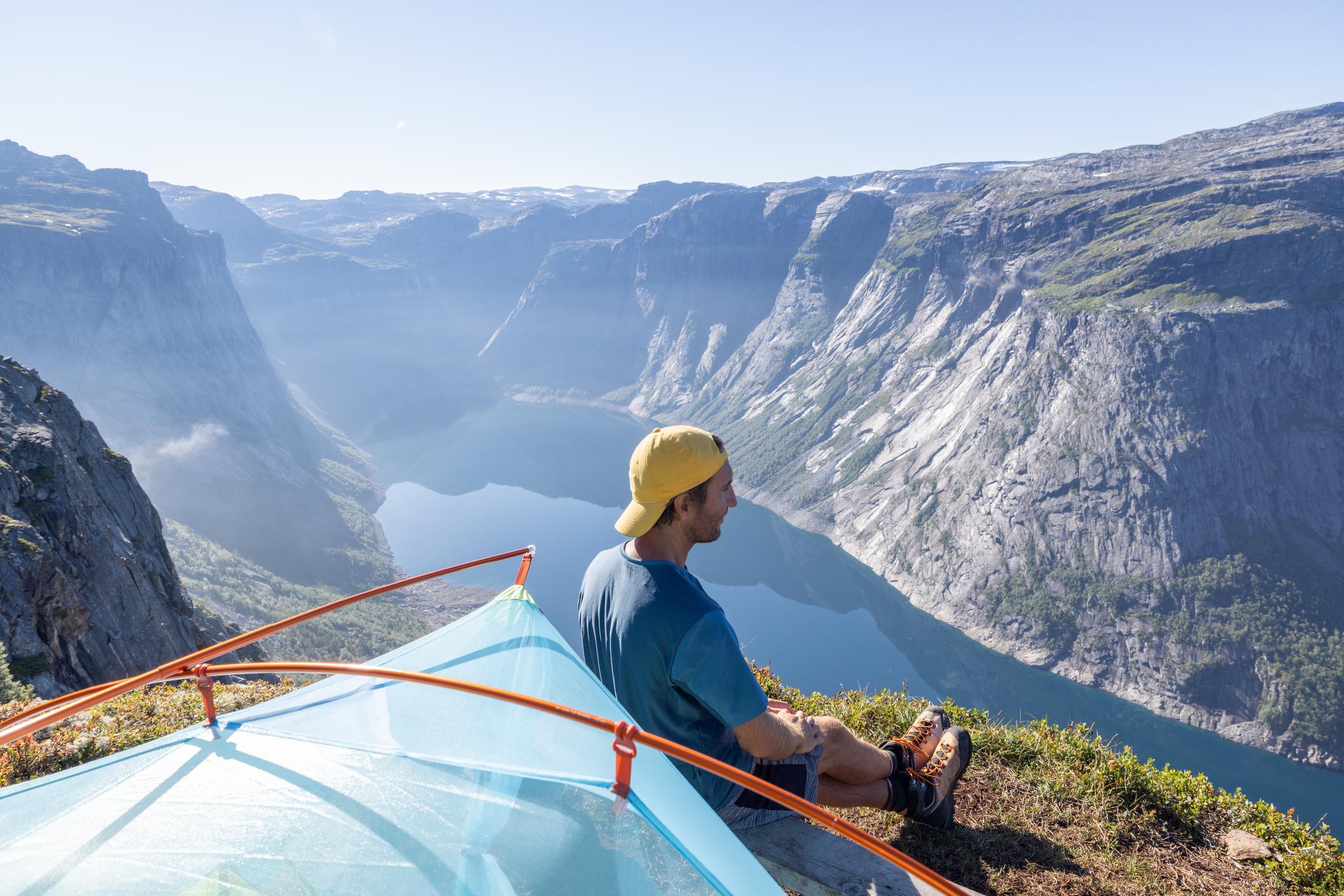
Yes. Wild camping is legal in Norway under Allemannsretten, the right to roam which was written into the 1957 Outdoor Recreation Act. You can pitch a tent on uncultivated land for up to two nights in one spot, as long as you stay at least 150 metres from the nearest house and leave no trace.
Can you camp in Norway for free?
Yes. As part of Norway’s right to roam, you can camp for free on utmark - which is uncultivated land, including mountains, forests and much of the fjords shoreline. You can stay for two nights in lowland areas, or for longer in remote mountain areas, leaving the site how you found it. You can also hike and kayak.
Much Better Adventures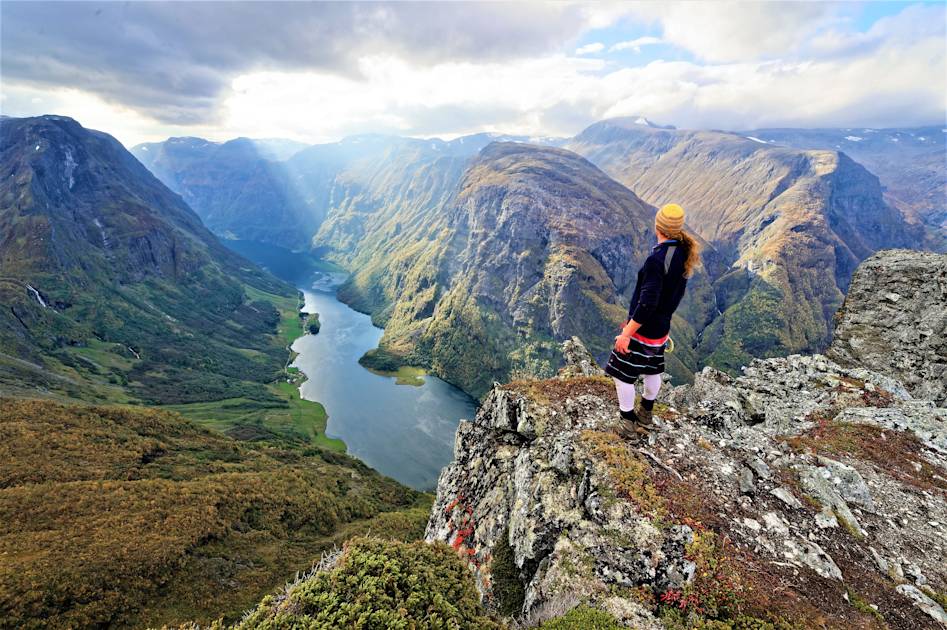
"Norway is just the perfect place for kayaking," says Neilsen. "We have a lot of water, we have a lot of lakes, we have a lot of rivers, and the mountains provide protection for the wind. Kayaking is such a peaceful way of travelling."
What happens if you get caught wild camping in the wrong spot?
Wild camping culture in Norway is based on trust and respect for the land. So if you do end up pitching a tent too close to a private house, or on cultivated land, the most likely outcome will be a polite request for you to move on - possibly accompanied by a suggestion of where to do so. If you deliberately ignore local restrictions or leave litter, though, there can be fines. Camp on uncultivated land, follow the 150 metre rule and leave no trace. Then you won’t have a problem.
What wild camping in Norway is actually like
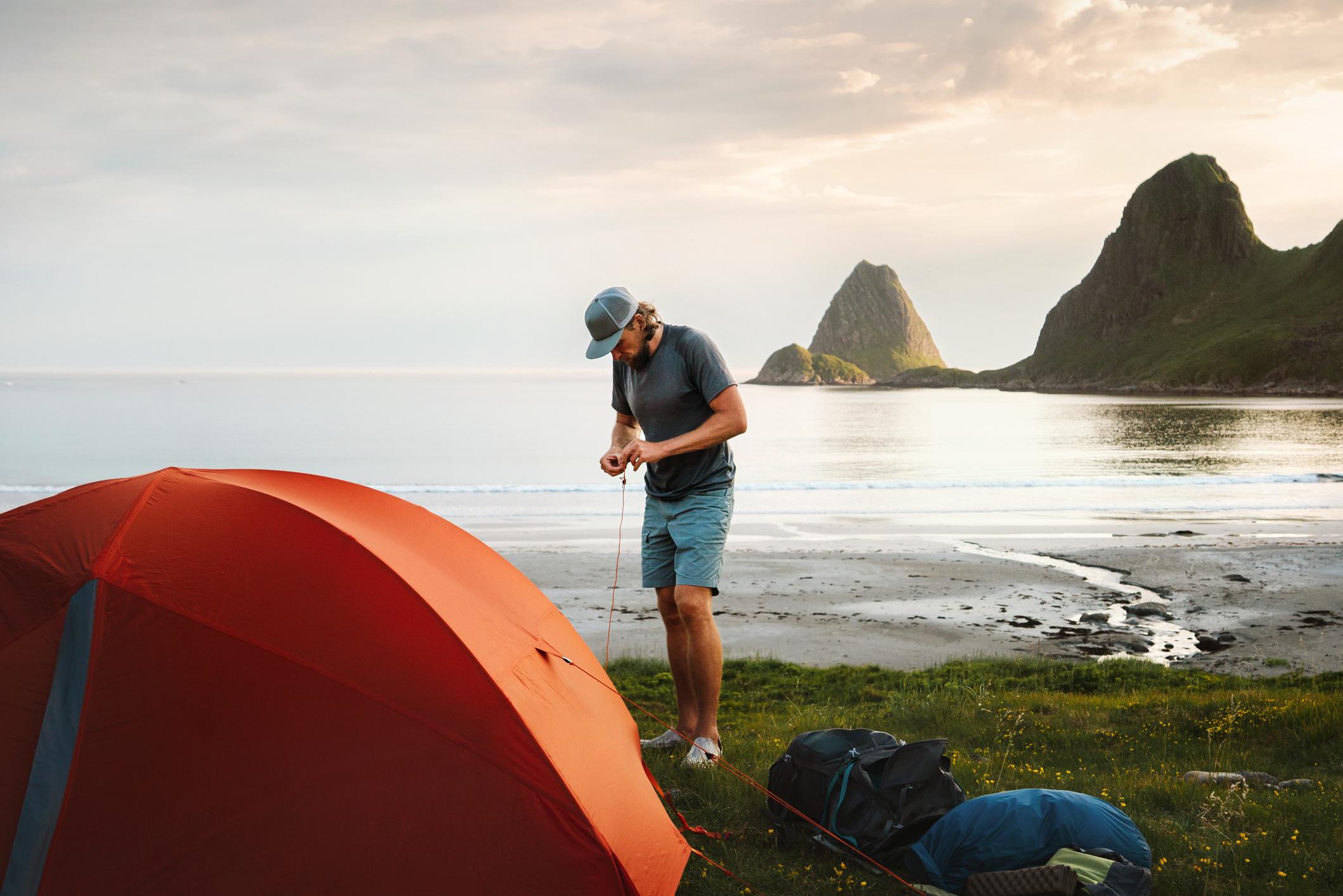
On our adventures in the Norwegian fjords, you'll find yourself camping on the edge of the beautiful Nærøyfjord. There's a sense of real serenity that comes with that. You can read a full description of what that's like in a previous feature we ran: 'The Benchmark for Beauty' | Kayaking the Fjords of Western Norway.
There is nothing quite like pitching a tent in such a sublime landscape - eating dinner as the sun sets, with the fjord fading away into darkness, and then unzipping the tent again in the morning to see it light up again, and watch huge birds of prey flying overhead, looking for their morning meal. The air is fresh, and being so immersed in the landscape gives you a sense of connectivity.
Those are some of the obvious upsides - but for this section, we thought it might also be helpful if we went through our customer reviews (of which there are thousands!) and picked out some frequently recurring points.
We were so lucky to see dolphins swimming alongside us and had wild goats following us along the fjord edge.
People do point out that the loos are primitive at this campsite, which is true. Naturally, if you're wild camping, sometimes there won't be any loos at all - and understandably, there are no showers on the side of a fjord, meaning the fjord itself may become your morning wash. It can be bracingly cold to jump into the water, but (if that's your kind of thing) it’s refreshing to do so as well, and very much part of the adventure. As one reviewer, Rebecca, put it in August 2025, jumping off the rocks into the water became “the evening entertainment”.
Dinner also tastes especially good when it’s grilled on the side of a fjord (and we're long time believers that any food consumed on a hike tastes better).
People wisely note that it's a good idea to pack an eye mask - especially if you're coming during the midnight sun of summer, where there is little (if any) darkness. If you like your comfort, bring a travel pillow or a thicker sleeping mat for a bit of extra padding too. The ones provided on the trip can be thin - but remember, everything you bring must be carried in and out and there's only so much you can fit into the storage of kayak.
Here's a few more direct review quotes to give you a flavour of camping in Norway:
- “The wild camping was great fun and waking up to the fjords each morning was beautiful.”
- “The meals were amazing, sleeping was cozy in the tents [...] We were so lucky to see dolphins swimming alongside us and had wild goats following us along the fjord edge.”
- “The camping location was dreamy.”
- “Brilliant trip if you embrace camping, the simple life and no issues with getting stuck in!”
This about sums it up, wherever you camp in Norway. Wild camping is never going to be a particularly luxurious experience - but it offers something that a comfy mattress and a fancy hotel room can't - the chance to truly connect with nature in a world where screens and doom-scrolling dominate. It lets you get back to basics, refresh - and feel once again like a part of nature, between the water and the stars.
The best places to wild camp in Norway
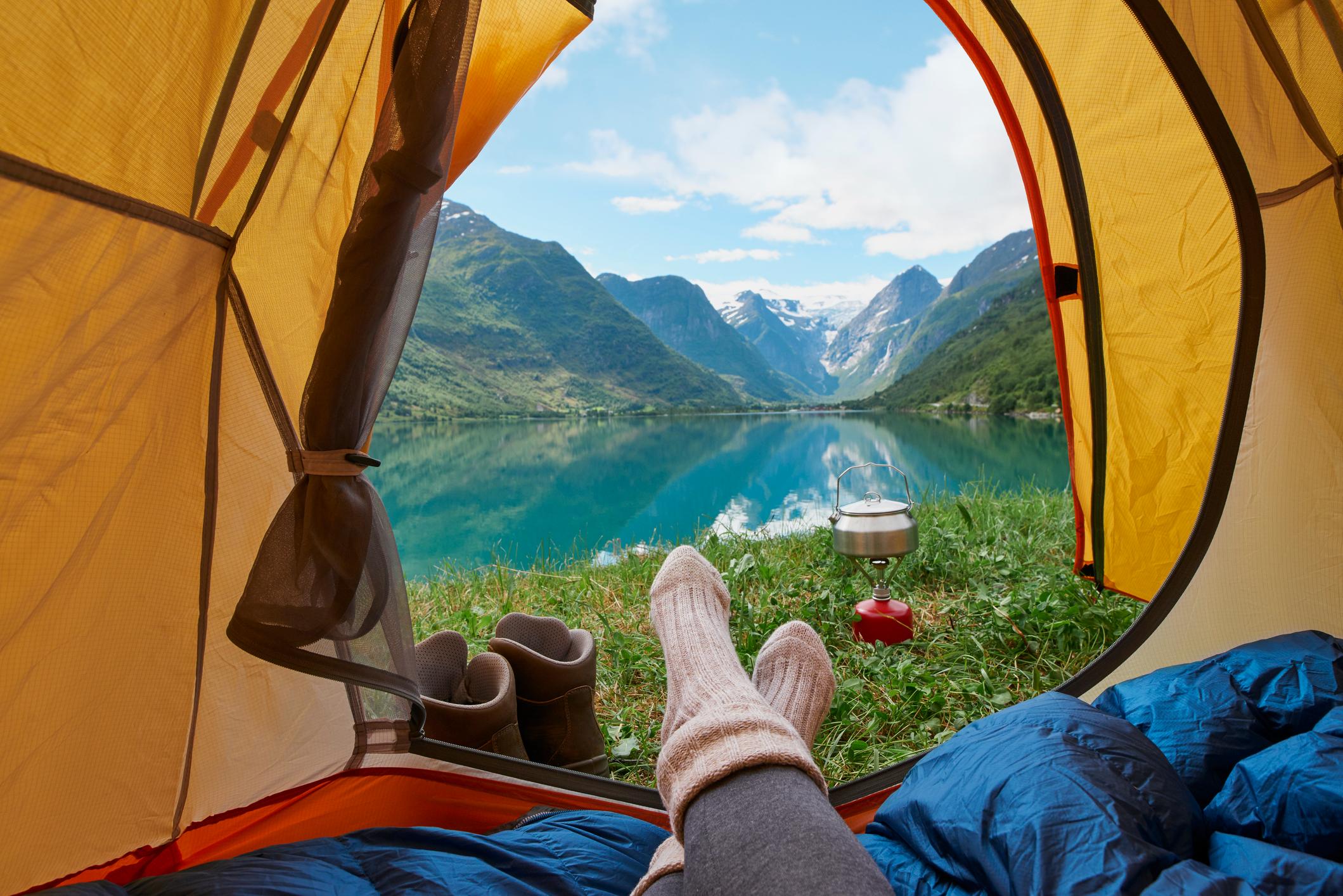
Whole books could (and have) been written about the best spots to go wild camping in Norway, but we also have a bit of expertise ourselves. The fjords are the benchmark for beauty in Norway and beyond, and if you ask us, the Nærøyfjord is the pick of the lot. It’s too narrow for big cruise ships to sail down it, meaning that you’re unlikely to see anyone else at all as you paddle along it, and when you do pick a camping spot, you’ll have peace and quiet day and night.
As Jan says: "Once you visit a place like this, you build up a great appreciation for what we have [in our world]. You come away with this deeper appreciation."
Much Better Adventures
Beyond the fjords, the beaches of Lofoten - a remarkable archipelago in the Arctic Circle, in Nordland - offer white sand beaches and a mountainous dreamscape, where huge peaks jut out of the water. And in-land, there are endless mountain plateaus - Hardangervidda National Park, for example, to explore and pitch up.
Wherever you wild camp, be sure to leave no trace. For more on the fjords, see our Norwegian fjords guide, or if you’re pairing camping and paddling, our guide to kayaking in Norway covers the routes that work well.
Wild camping kit list for Norway
This is the packing list which we've built for our trips in collaboration with our expert local guide Jan. It is a good starting point but you'll probably find you want to add an extra few items. Remember, as the Norwegians say, "Det finnes ikke dårlig vær, bare dårlige klær" - "there is no such thing as bad weather, only bad clothes."
- Tent
- Cooking gear and crockery
- Sleeping bag and sleeping mat
- Rucksack with waterproof cover
- Waterproof jacket with hood
- Warm clothes for evenings at the campsite: long trousers, fleece, warm jacket
- Base layers
- Worn in waterproof hiking boots or hiking shoes
- Hiking socks
- Swimwear and/or rash vest
- Flip flops/sandals or light trainers for camp
- Thin gloves
- Beanie
- Sunhat
- Sunglasses
- Sunscreen
- Small travel towel
- Refillable water bottle
- Toiletries
- Personal medication if needed
- Antihistamines/bite relief if you are allergic
- Head torch
- Personal snacks
Optional:
- Sleeping bag liner (recommended)
- Gaiters
- Waterproof trousers for hiking (recommended for early/late season departures)
- Walking poles (recommended, lightweight and collapsible)
Wild camping vs campsites in Norway
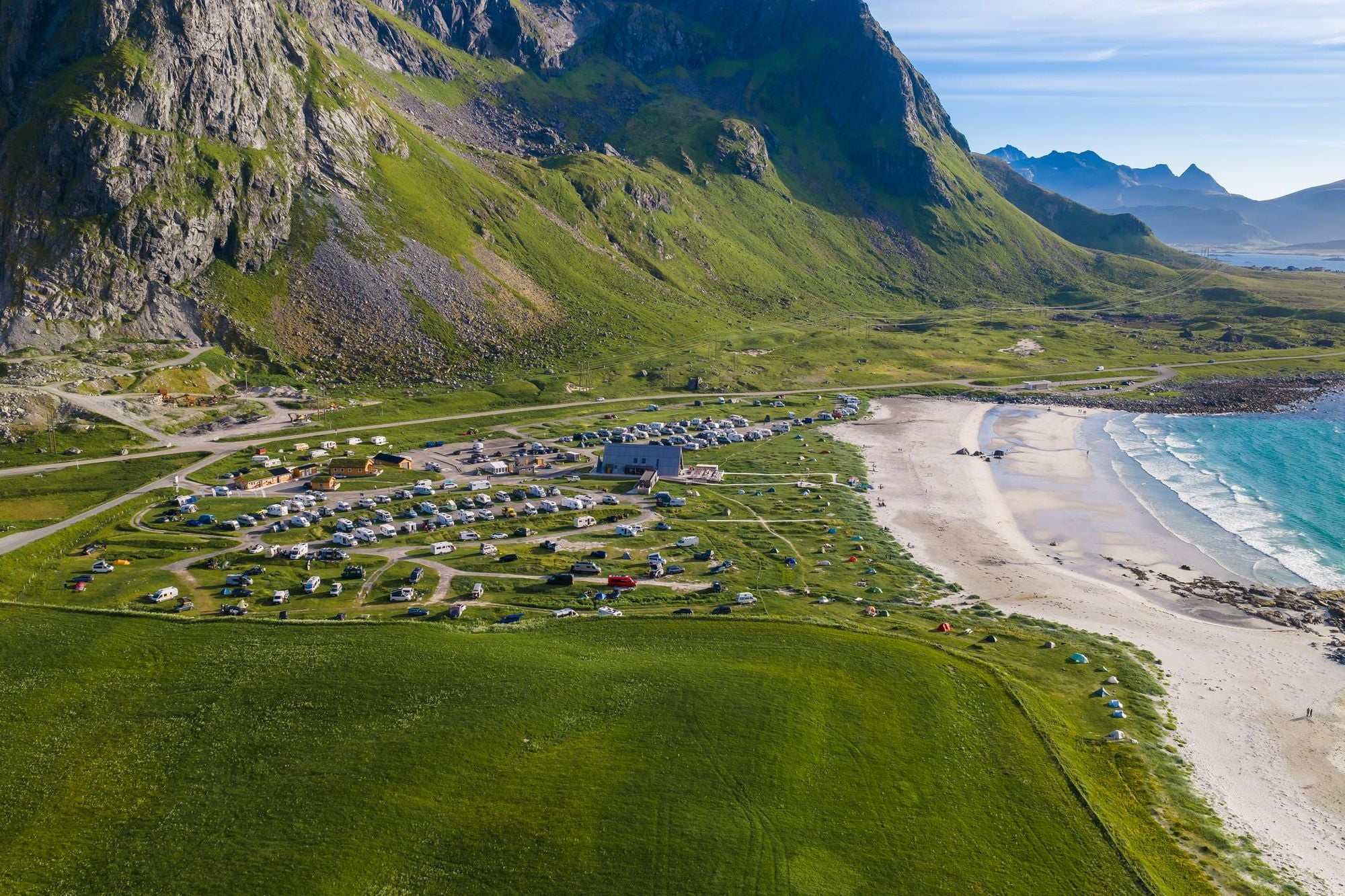
Although wild camping is legal in Norway, there’s also an excellent network of campsites around the country. These offer the obvious benefits that any campsite offers - proper facilities including showers, toilets and campsite shops. They still offer a semi-wild experience, but of course, they will be busier than a remote wild camp spot. This can make for a sociable experience on the upside, but ultimately the benefits of wild camping remain obvious.
Guided wild camping trips in Norway
If Allemannsretten has you keen to get your tent out but you’d rather an expert picks the pitch, we have a range of wild camping adventures in Norway:
- Kayak and Wild Camp the Norwegian Fjords in a Weekend
- Hike, Kayak and Wild Camp the Norwegian Fjords in a Weekend
- Hike, Kayak and Wild Camp the Norwegian Fjords in a Week
- Kayak, Hike & Wild Camp the Lofoten Islands
- The Ultimate Norwegian Fjords Adventure
On our adventures, the tents and sleeping gear are provided by the hosts, and you'll be led by an expert local guide with an outstanding knowledge of the local area and flora. They'll also handle your fjord-side dinners, and the route-finding through these sublime landscapes.
Inspired? Check out our full range of adventures in Norway now!