

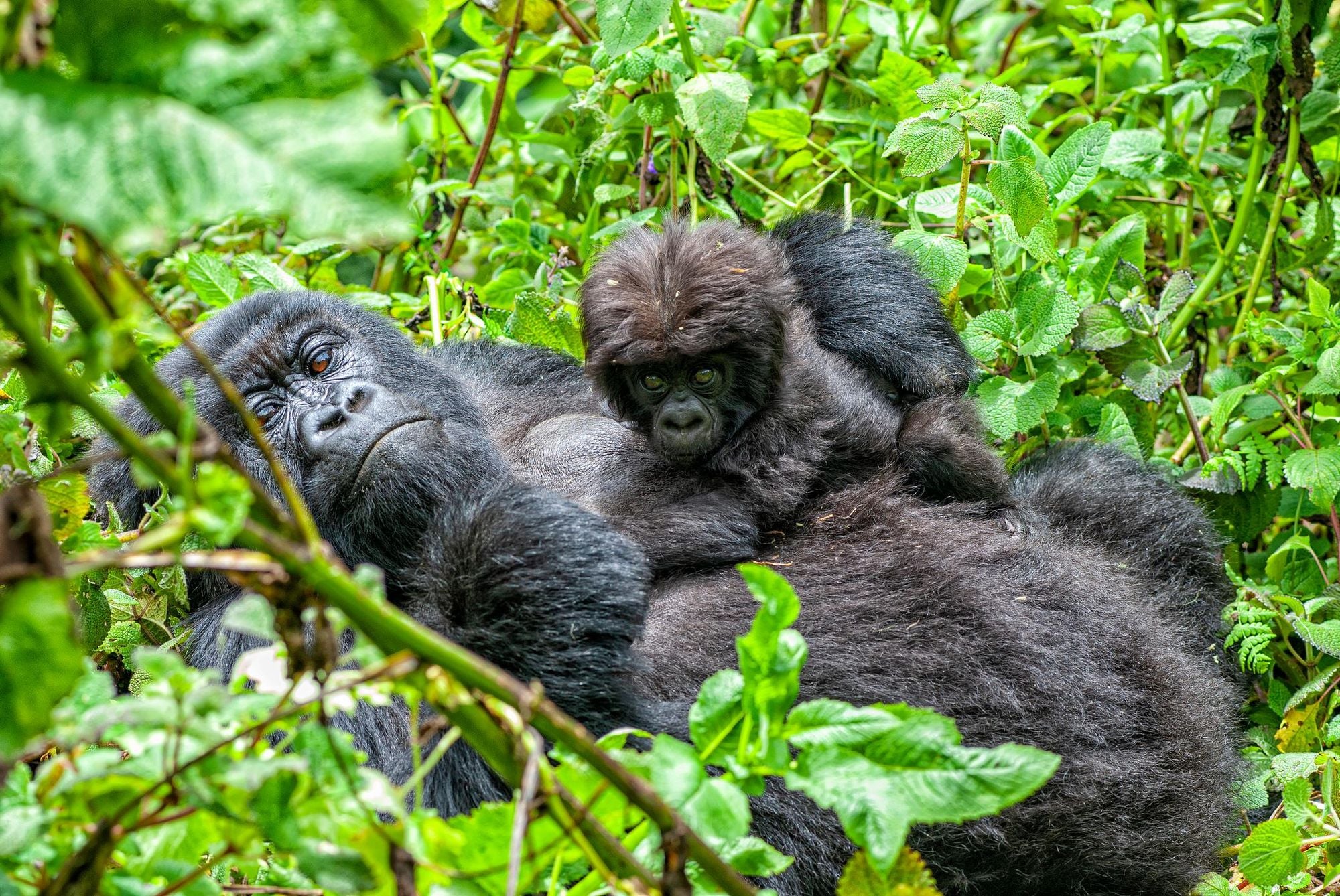
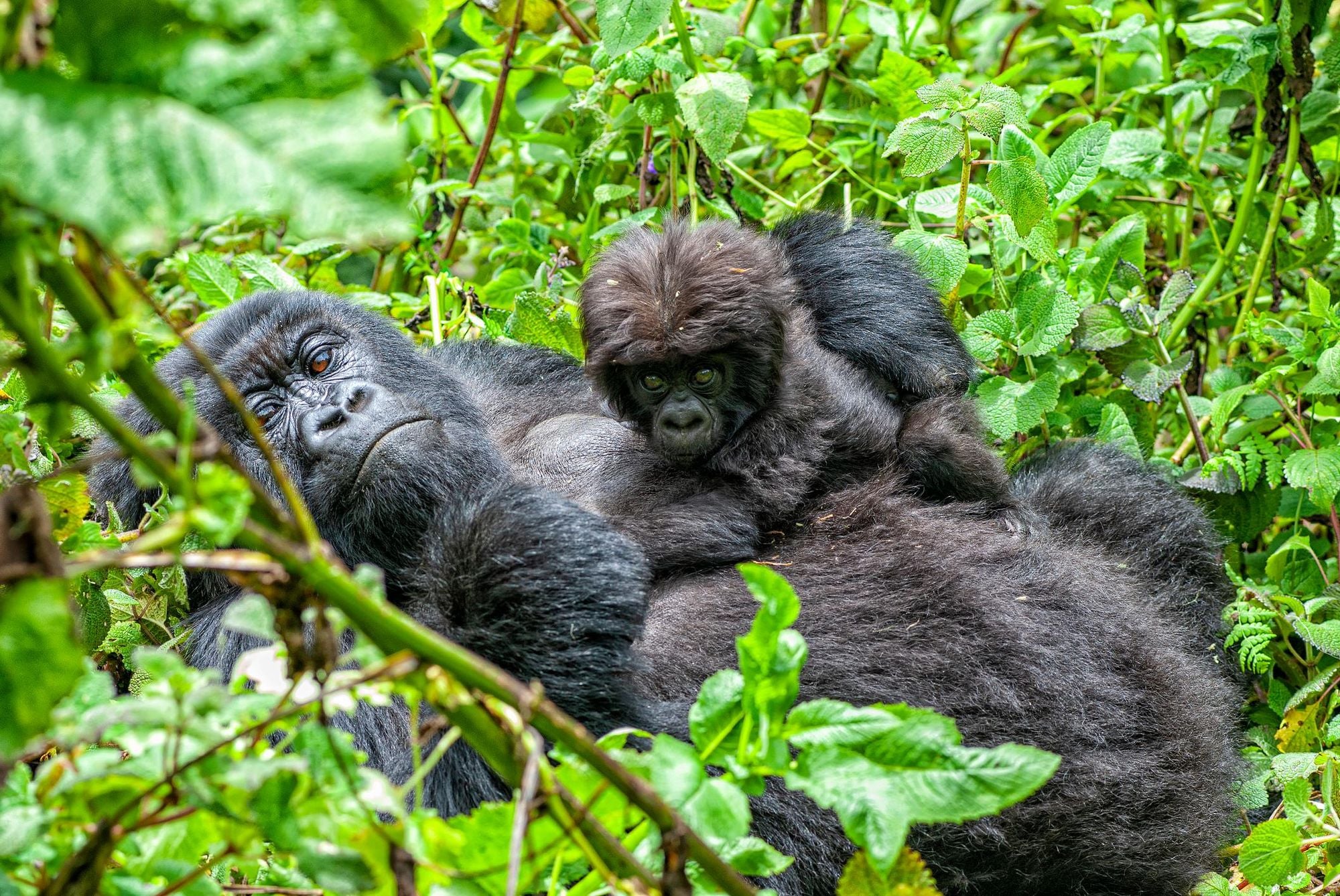
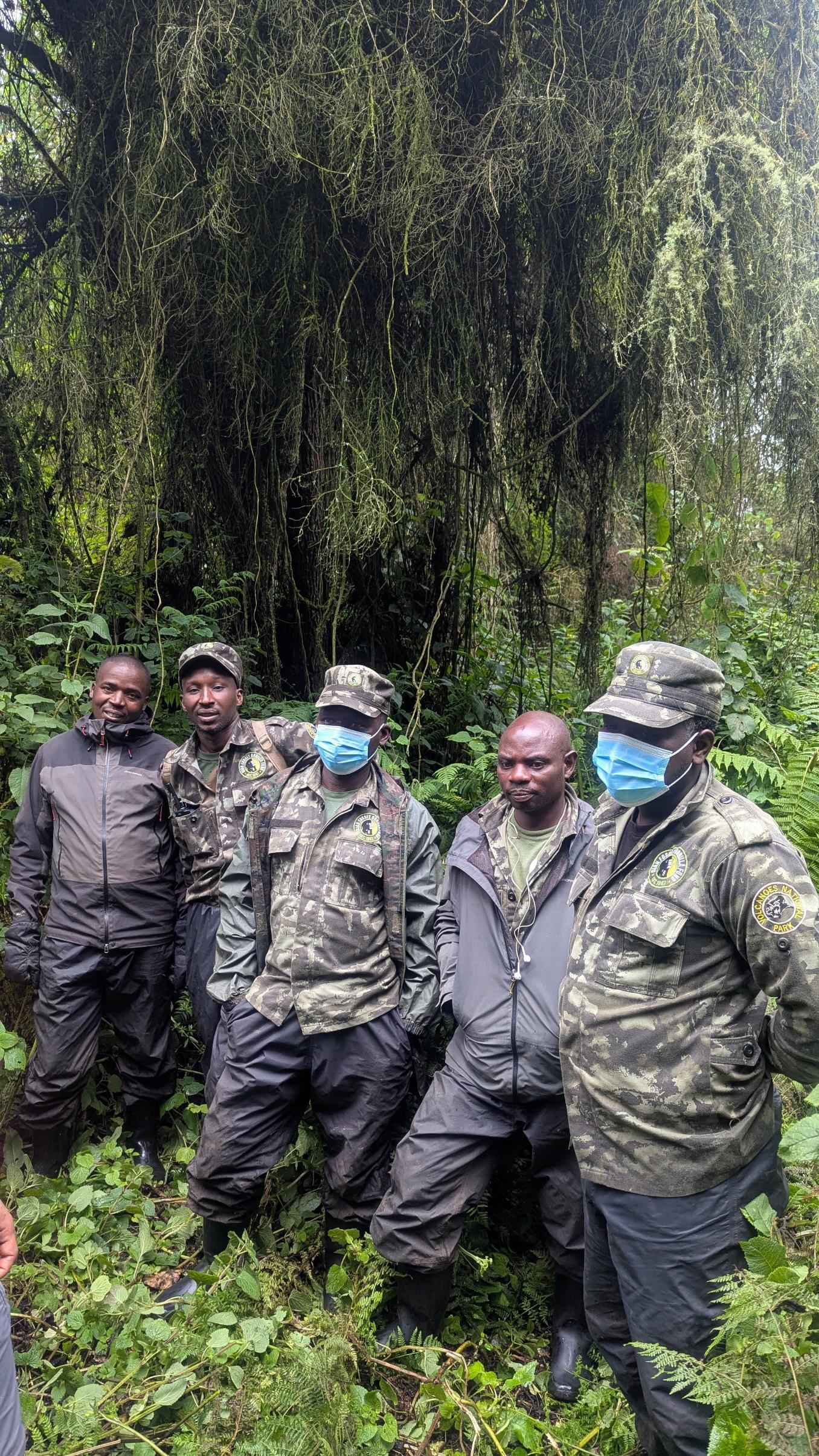
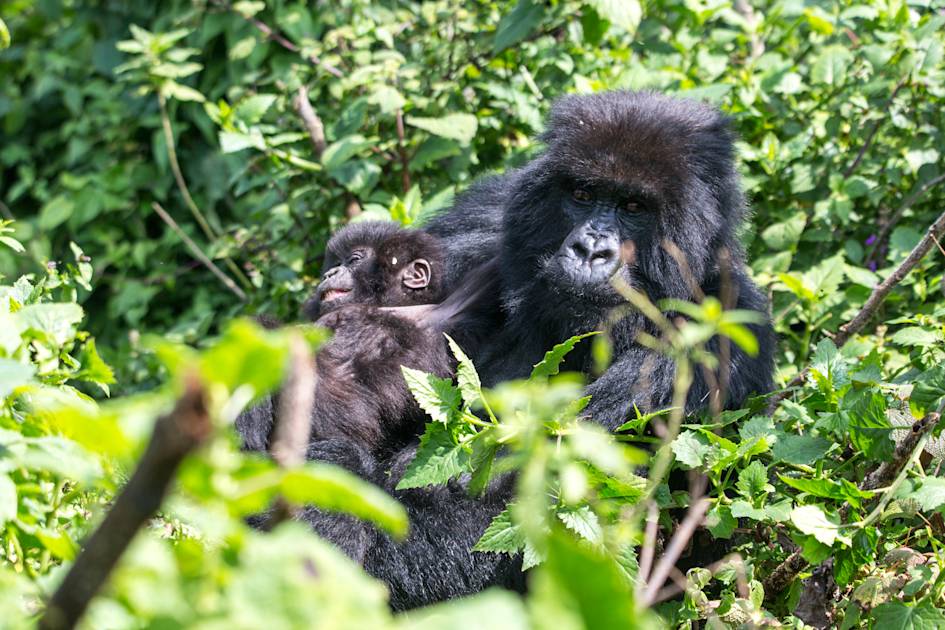
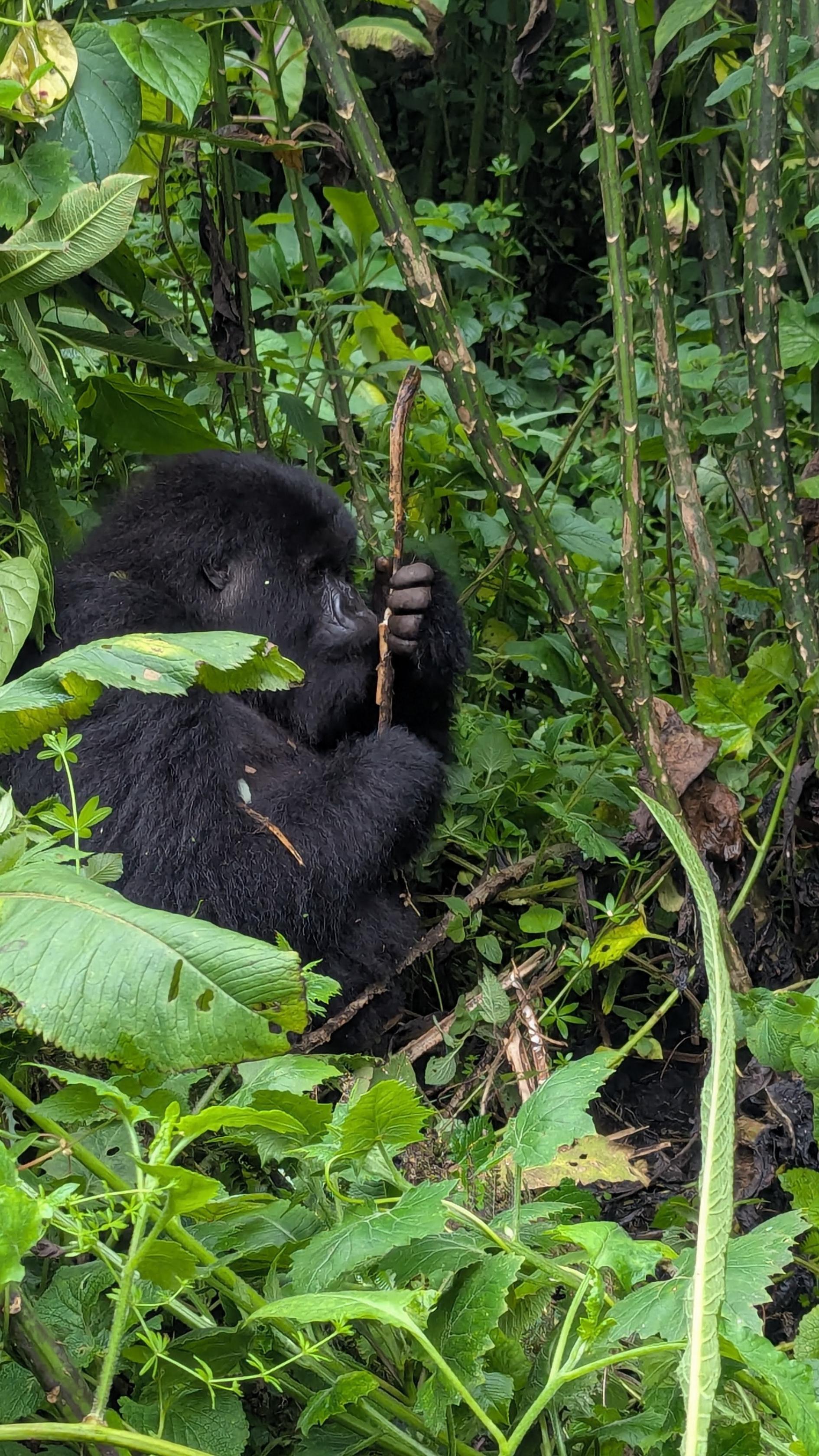
Deep in the middle of the rainforest, we catch sight of only the vaguest hints of what’s lurking behind a dense clump of leaves - a patch of black fur; a snout; a few twitching fingers. My group falls silent, barely breathing, as we strain to hear some very satisfying-sounding grunts and chomps; something is tucking heartily into lunch. Then, with a gentle signal from our tracker, Justin, who, along with his colleagues, interacts with these fascinating creatures every day, we edge sideways - and suddenly there she is. A young female gorilla, named Urahiriwe, sits calmly plucking handfuls of greenery to scoop into her mouth. Just seven years old, she’s part of the Sabyinyo family, one of several gorilla families which inhabit Volcanoes National Park in northwestern Rwanda, but who also travel freely along what is know as the Virunga Massif, a chain of volcanoes in the area where Rwanda, Uganda and the Democratic Republic of the Congo meet.
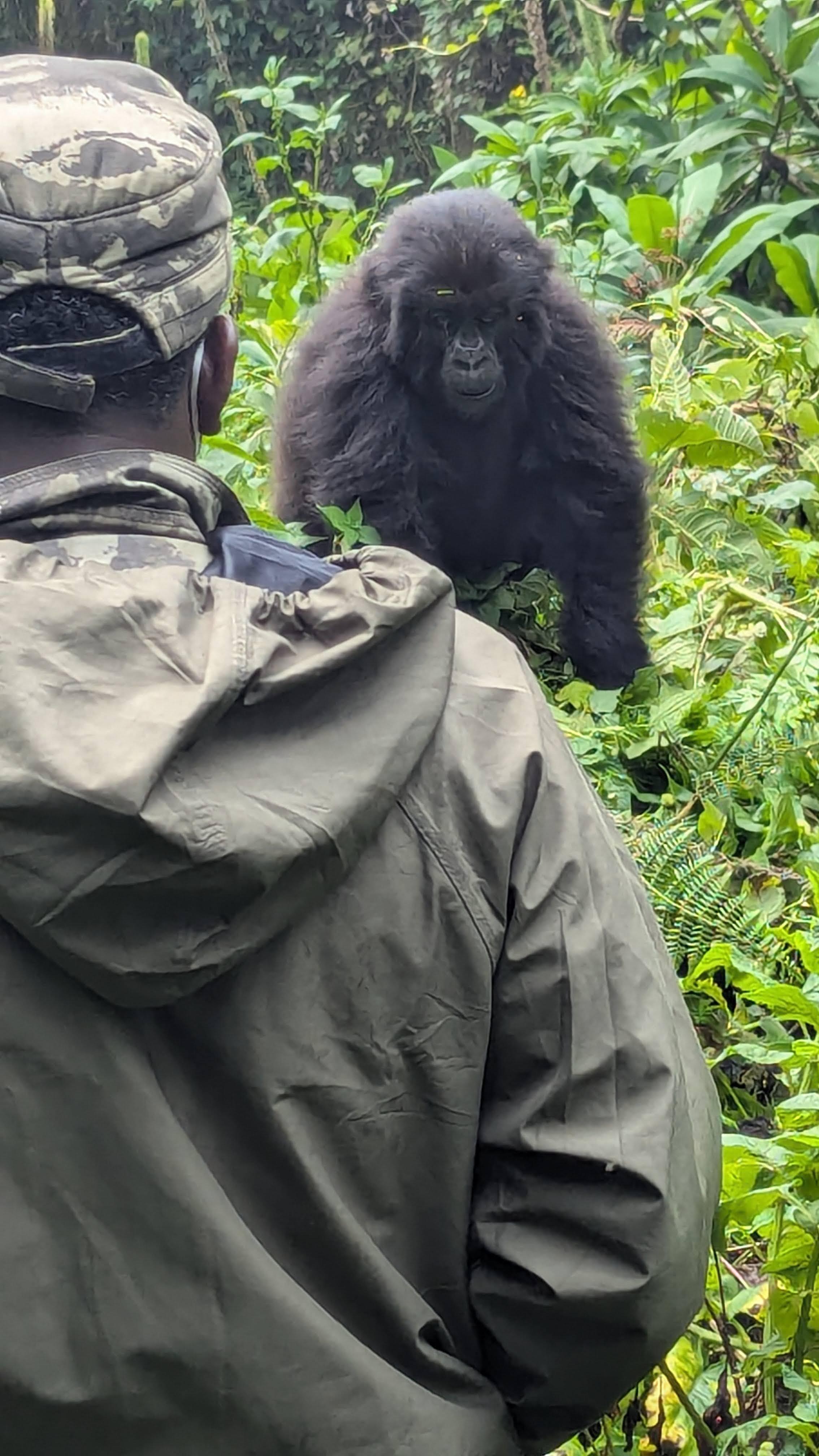
He turns around, making piercing, and rather uncomfortable, eye contact - it’s a silverback: the alpha male of this group, the protector, the father.
We’ve trekked for two and a half hours to find this particular family, and can consider ourselves lucky; some groups who come to view gorillas here can be walking, and waiting, for much longer.
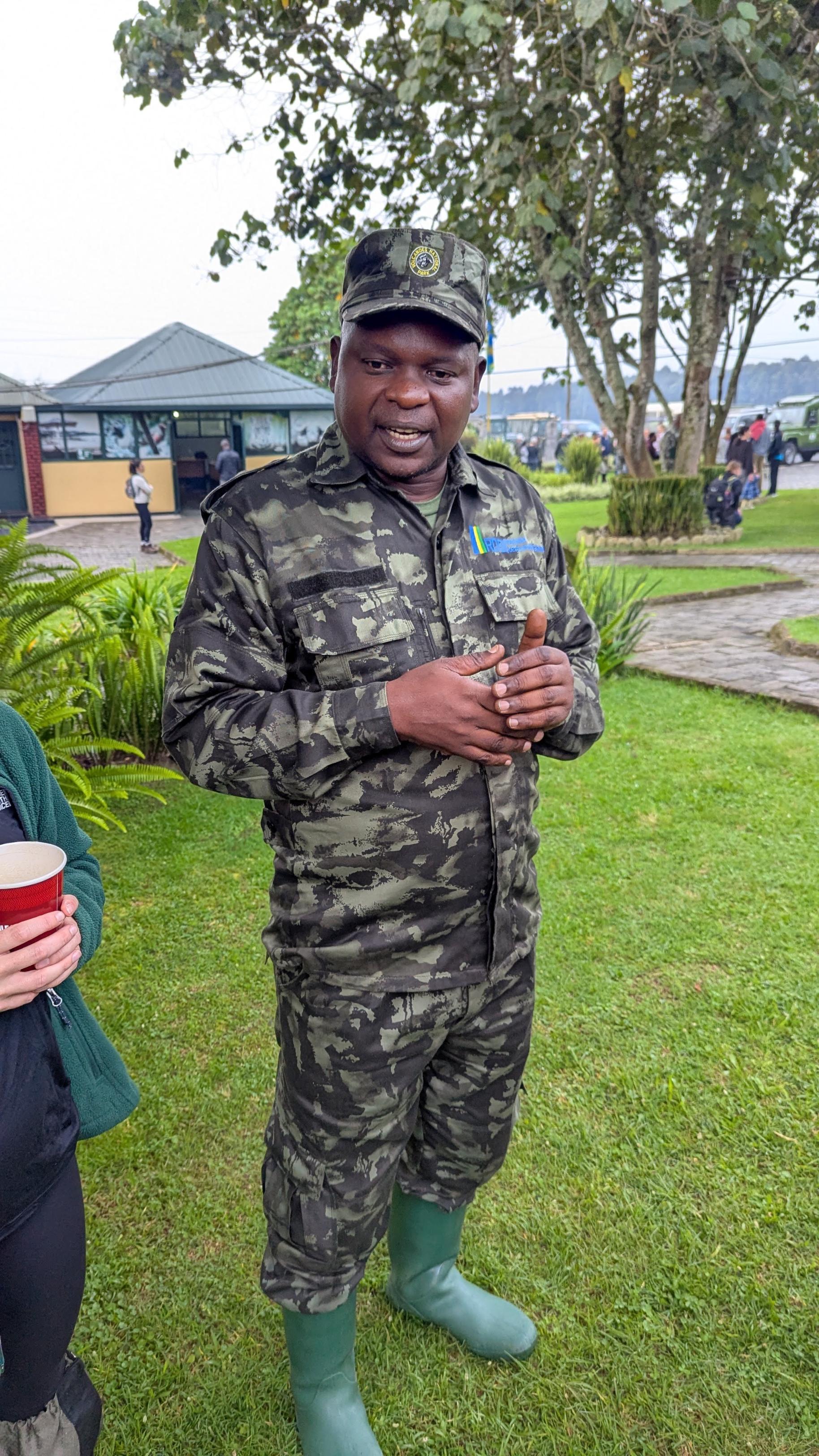
Before entering the park itself, we receive a thorough briefing about how to behave around them from our guide, park ranger Jovit Siborurema. First and foremost is to only talk amongst ourselves in low voices, although we are encouraged to try and communicate with the gorillas in their own language. "They make around 16 different vocalisations," he explains, "each with their own meaning. If you hear a noise that sounds like someone politely clearing their throat, that’s a happy sound." However, a cough is the opposite; they might do this if they feel we are standing in their way, or too close to their food. He finishes by advising us never to panic or run away if they approach. "They might kick out at you, but they’re just playing!" he says, somewhat alarmingly.
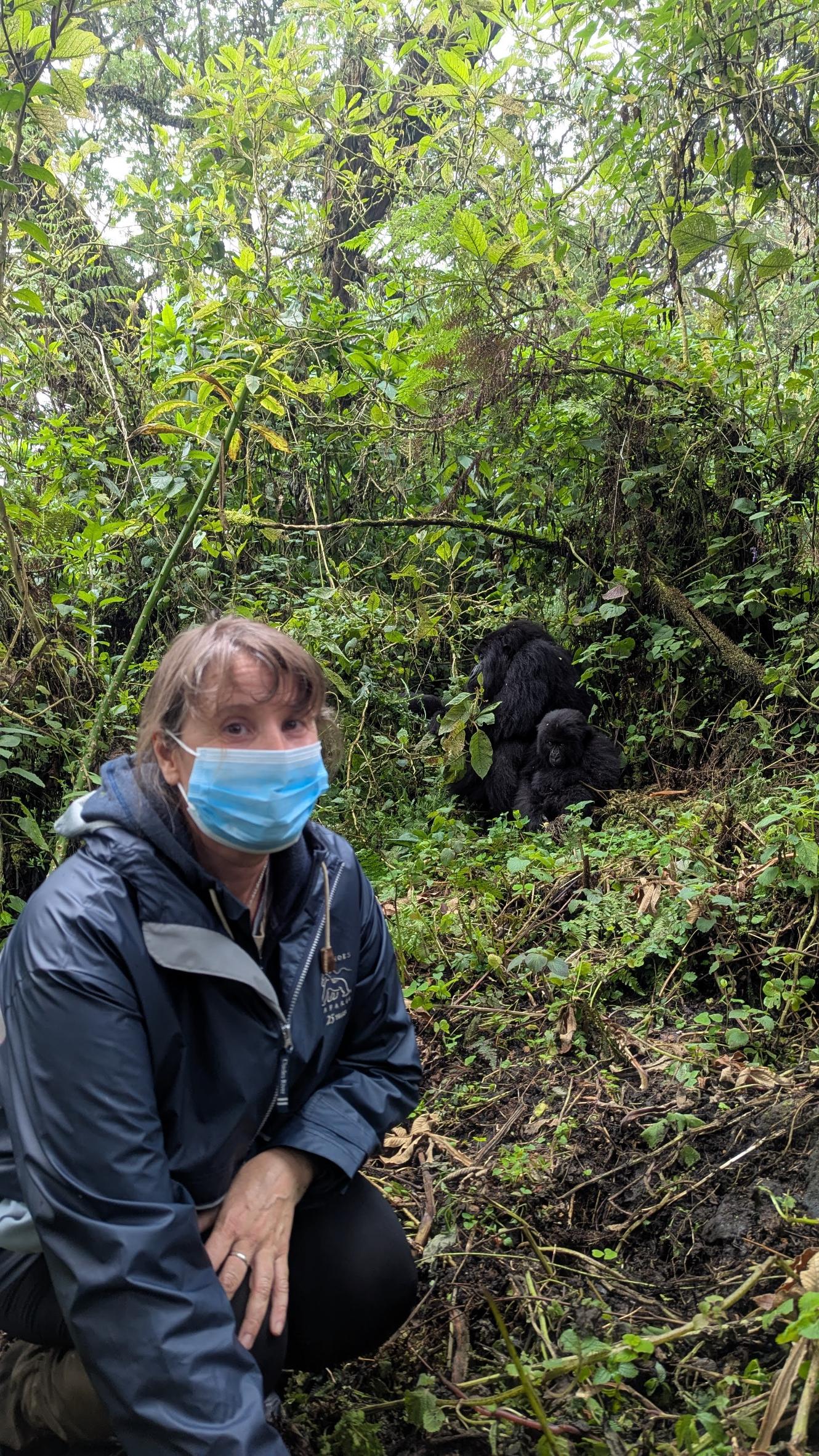
Urahiriwe barely glances at the eight humans who are now avidly staring at her, but for most of us, this is an absolutely jaw-dropping, bucket-list experience. Then it gets even better. In a nearby clearing, two playful juveniles somersault from bushes like exuberant toddlers, while their mother looks on with what seems like weary indulgence, and suppressed giggles ripple through our group. And then, the most awe-inspiring sighting of all. First, it’s only a glimpse: a flash of argent moving at pace through the undergrowth. But then he turns around, making piercing, and rather uncomfortable, eye contact - it’s a silverback: the alpha male of this group, the protector, the father. He weighs approximately 430lb (195kg) and stands around 5ft (152cm) high on two legs. He is utterly magnificent and utterly terrifying, and we are, essentially, invading his territory.

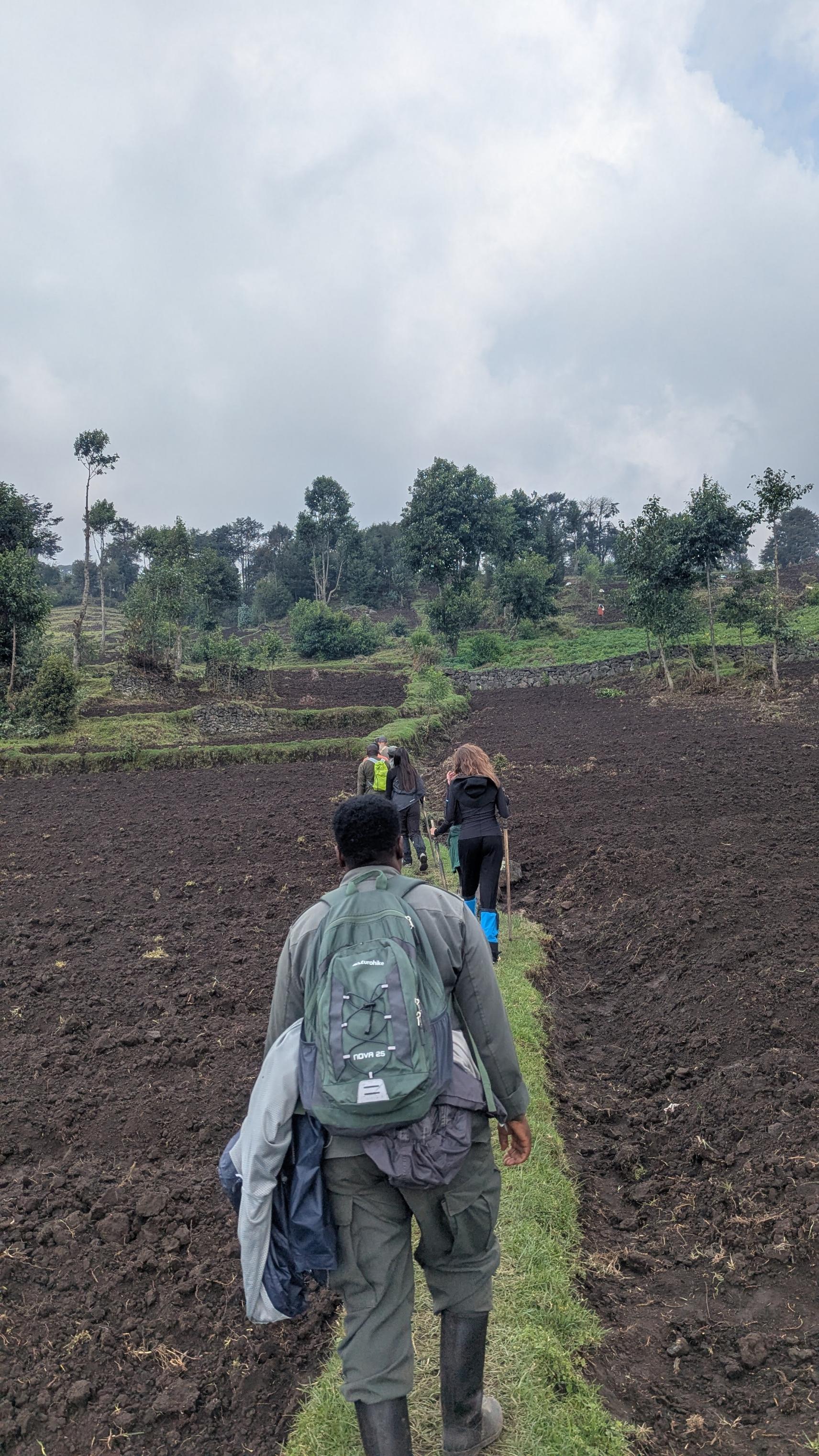
Thankfully there are no signs of discomfort or threat; no warning chest-beating or loud roars. We are all transfixed by his sheer size and power, as he also shrugs off our presence to grasp great handfuls of bamboo to shove into his vast, gaping mouth, flashing dagger-sharp canines. Beside me, one of my fellow trekkers, Theodore, is becoming emotional. A thirty-something teacher from New Jersey, he’d struggled to reach this point - largely because our route to the park entrance (there are several different ones) was, to put it mildly, tricky. There were a few moments when I didn’t think I was going to make it either, having fully forgotten about the effects of altitude.
Our trek began at 2,400m (7,874ft), winding through lush farmland before climbing into the dense rainforest. We might even, cautioned Jovit, reach around 3,000m (9,842ft), depending on where these gorillas headed today in search of food. I was breathless and panting all the way to the entrance (from where things thankfully levelled off), but at several points Theodore was seriously considering giving up and turning back. However, he’s made it, and as we stand, observing the silverback, I ask him how he feels. "Incredible," he says quietly, with tears in his eyes. "I’ve wanted to do this since I was 13 years old, watching Animal Planet with my brother. I can’t believe I’m actually here."
The revenue funds habitat preservation and directly supports local communities, with 10% reinvested into schools, health centres and roads.
That sense of awe is exactly why gorilla trekking in Rwanda, known as the ‘land of a thousand hills’, has become one of the world’s most sought-after wildlife experiences. Over the past few decades, the country has become an ecological success story. Volcanoes National Park - Africa’s first national park - was established in 1925 to protect the gorillas from poachers. Despite this, by the 1980s, the country’s gorilla population had plummeted to just 230-250, from a total of around 400-500 in the 1960s, becoming one of the most critically-endangered species in the world. This crisis was only reversed thanks to the tireless efforts of conservationist Dian Fossey. Today, the latest, pre-COVID census shows a much healthier number of over 1,000 in the wild, with more babies being born every year.
Protective measures are far-reaching; fewer than 100 visitor permits are issued daily, each allowing a maximum of 60 minutes with the gorillas. At $1,500 (£1,115) per person, the cost is steep, but essential. The revenue funds habitat preservation and directly supports local communities, with 10% reinvested into schools, health centres and roads. A compensation scheme ensures farmers are reimbursed for crop damage, helping to foster harmony between local people and gorillas. The industry also sustains livelihoods, employing rangers, trackers, porters and lodge staff. Now there are plans afoot to ensure the number of gorillas keeps on growing, thanks to new government-led initiatives.
"We are hoping to extend the park by around 500 hectares," explains Jovit, "buying back farmland that was once the gorillas’ habitat." The project will return vital bamboo forest to the animals, attract more visitors, and ensure the gorillas’ survival well into the future.
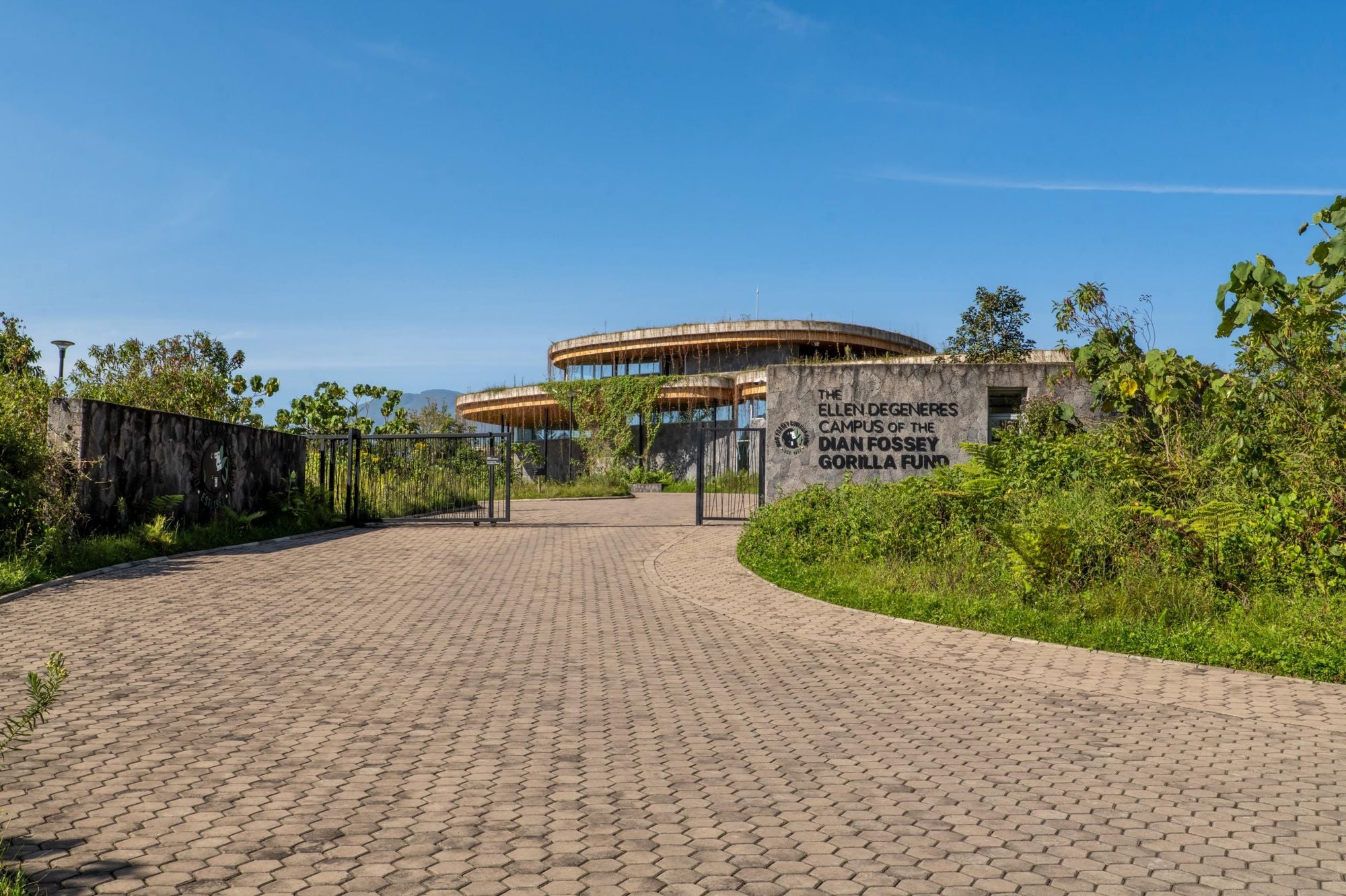
After eventually making our way back out of the park, absolutely exhilarated, we then have the chance to learn more about the sterling work Fossey did here with a visit to the Ellen DeGeneres Campus of the Dian Fossey Gorilla Fund nearby.
I see a gorilla skeleton contrasted with a human one, and the original typewriter Fossey used to type her field notes.
Fossey first visited Rwanda in 1967, establishing a permanent research base there later that year. She would spend the next two decades in the country before her untimely death in 1985. The Dian Fossey Gorilla Fund was originally established in 1978 and is based in Atlanta, Georgia, but the DeGeneres Campus was opened in Rwanda in 2022, in honour of the US actress and talk show host’s childhood heroine. DeGeneres wants to continue Fossey’s legacy of protecting endangered mountain gorillas and she and her wife, Portia de Rossi, funded a beautiful 12-acre, eco-friendly site designed by the Kigali-based architecture agency, MASS.
It provides a permanent, state-of-the-art facility to house scientific laboratories, classrooms, and meeting spaces that accelerate research on gorillas and their habitats. On a self-guided tour, I learn more about Fossey’s history - there’s a recreation of the cabin in which she used to live - and browse interactive digital experiences and virtual reality exhibits which bring gorilla anatomy, daily life, and habitat boundaries to life. A small cinema, donated by actor Leonardo DiCaprio and named after his mother, Irmelin, screens high-resolution, panoramic films about the mountain gorillas and conservation. As I stroll around, I see a gorilla skeleton contrasted with a human one, and the original typewriter Fossey used to type her field notes. It’s heartening to know Rwanda is doing more than its fair share to ensure its wildest, and most beloved, animals not only survive, but thrive - for many years to come.
Inspired? Browse our adventure holidays in Rwanda now!