

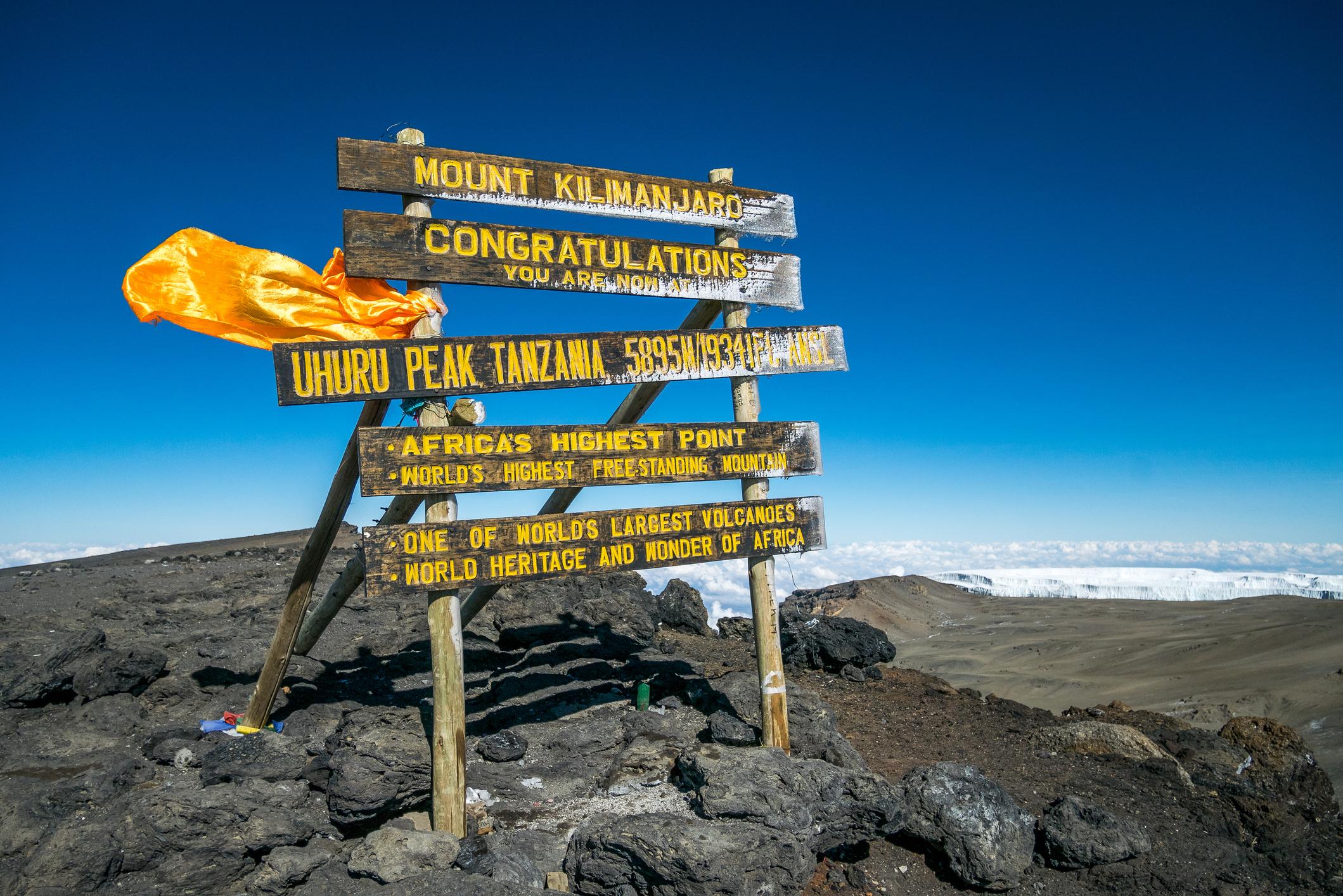
If you’re reading this article, you’re wondering how much it costs to climb Mount Kilimanjaro in Tanzania - so let's get right to it. A reputable guided climb of Kilimanjaro typically costs between $2,300-$5,000 per person (roughly £1,700-£3,800) depending on your operator, which Kilimanjaro route you choose, the level of luxury you enjoy along the way and your group size.
The mid-range price of $2,500-$3,500 (£1,900-£2,700) is where you’ll find most of the quality climbs, with fair pay for local guides and strong levels of safety for the hikers. Of that sum there are unavoidable park fees that many budget quotes omit. Here, we’ll break down the price it costs to climb Kilimanjaro, and explain what separates a safe, ethical climb from the cheaper alternatives.
Since 1999, independent trekkers have not been allowed on Mount Kilimanjaro, so a guide is essential for reaching the summit of this legendary peak.
For more, see our beginner's guide to climbing Kilimanjaro, or our guide on how hard it is to climb Kilimanjaro - an honest answer, with expert insight.
How much does it cost to climb Kilimanjaro? Price ranges at a glance
Here's an honest picture of prices for climbing Kilimanjaro across the market. These prices represent what will buy you an all-in, tour operator trip up and down the mountain. These prices do not include flights to reach Tanzania, visas, insurance and the actual gear and clothes that you'll need to summit Kilimanjaro.
The full cost breakdown: where your money goes
Where your money goes on any Kilimanjaro climb will always depend on who you travel with (as well as on how many days you take to climb the mountain, and what route you choose to take to the summit). On a typical mid-range, seven-day climb up the Lemosho route, though, it will likely look something like this:
The cheapest prices on the market usually exclude the mandatory park fees from their base price altogether (and only tell you about them later), or skimp on crew wages, food or make up the numbers by running a larger size of group.
Much Better Adventures
Kilimanjaro park fees explained
The relevant park fees you'll pay in Tanzania are set by TANAPA (Tanzania National Parks Authority) and administered by KINAPA (Kilimanjaro National Park Authority). They are the same for every operator - no one can negotiate a discount (despite what some say) - and they're the most transparent part of your base price. That said, they do vary for each trip, depending on how many days you stay on the mountain, and where you stay along the way.
There is also an extra charge if you enter the forest area, which many routes do.
Figures below are valid as of June 2026 (but depend on conversion rates. Fees are reviewed annually and are expected to increase by 15% year-on-year until 2030/2031. Check the TANAPA official website for current rates):
Naturally, your biggest concern will be about what all of this adds up to. If you're a solo climber, embarking on a seven-day camping route on Kilimanjaro, you can expect to pay somewhere around $970 (£732) in park fees. That's before a single cent has gone to the crew, or on food, or to the tour operator you're booking with. It's for that reason that any price below $1,500 (£1,300) which claims to include park fees is slightly dubious.
What's not included? The hidden costs of climbing Kilimanjaro
There are a lot of tangential costs involved in climbing Kilimanjaro beyond the price of a guide and a tour - from flights and visas to gear and insurance.
- International flights: This one depends where you're coming from, of course. If you live in Tanzania already? You're all set. But speaking very roughly, it might you cost £500-£1,200 (from the UK) or $600-$1,400 (from the US) return to Kilimanjaro International Airport (JRO) or Nairobi (NBO) with onward connection. It depends on season and when you book.
- Tanzania visa: $50 for most nationalities. This is a single-entry e-visa, which you can get in advance at visa.immigration.go.tz.
- Travel insurance: It might be an optional add-on elsewhere, but insurance is not optional on Kilimanjaro, and your policy must explicitly cover high-altitude trekking above 6,000 metres (19,685 feet) and include helicopter evacuation and medical repatriation. This means it may cost a bit more than usual. Think $80-$200 (£60-£150) depending on where you're from and the policy.
- Vaccinations: Be sure to consult a travel health clinic eight weeks before departure. Common recommendations include yellow fever (which is required if you are arriving from or transiting through a designated risk country), typhoid, hepatitis A, and malaria prophylaxis. The costs vary hugely by country of course, but very roughly, you can budget $120-$250 or £100-200.
- Trekking gear: Varies hugely by brand and quality, as any regular hiker will know. Expect to pay $400-$800 (£300-600) for the key items if you're buying them new. You'll need an insulated sleeping bag, a down jacket, waterproof shell, trekking poles, gaiters, base layers, boots. Some items can also be rented in Moshi for $5–$15 per item per trip.
- Tips (more below): Tips for the crew are an expectation on Kilimanjaro, and many budget $250-$400 (£150-£300) per climber for a 7-day climb. More on this below.
- Extra hotel nights: Many operators include one night each side nearby - but not all. Allow a night pre-climb in Moshi or Arusha and a night post-climb. Very roughly budget $50-$150 (£35-£110) per night depending on stay.
- Spending money in Moshi: For add-ons like meals, souvenirs, laundry and so on. Budget $50-$150 (£35-£110) or higher if you tend to spend big.
How much should you tip on Kilimanjaro?
Tips are not included in the trip cost. These are, of course, entirely at your discretion but the norm in Tanzanian culture means there is an expectation to tip for good service. This particularly applies to climbing Kilimanjaro, where tipping culture is deeply ingrained. Even if it may not be customary to you, it is of considerable significance to the people taking care of you during your travels.
After your climb, there will be a ‘tipping ceremony’ in which you’ll have the opportunity to show your gratitude to the team who have supported you along the way. It forms an important part of the mountain etiquette, represents a significant portion of the total income of some of the crew members, and more to the point, it's a chance to thank the crew who got you to the top of Kilimanjaro.
US Dollars are the preferred currency on the mountain, so bring USD, and ideally bring it in small bills to make it easier to split up and distribute.
The benchmark for tipping on Kilimanjaro comes from the KPAP (Kilimanjaro Porters Assistance Project), which is an independent organisation advocating for fair porter treatment and working conditions on the mountain.
Here's what they recommend you tip per person, per day, at the end of your trip:
- Lead Guide: $20
- Assistant Guide: $12
- Cook: $12
- Porter: $6
As a rule of thumb for a seven-day climb, you should budget $350 (£260) per climb in cash tips for the crew that you're climbing with. Of course, any tips you give above and beyond this will always be appreciated by the staff.
US Dollars are the preferred currency on the mountain, so bring USD, and ideally bring it in small bills to make it easier to split up and distribute. Tips are typically given to the lead guide and then divided amongst the crew at the end of the trip.
Why is there such a big price range? Cheap vs premium climbs
The short answer to this is that all cheap climbs are finding a way to cut costs somewhere. Unfortunately it is usually the crew safety or the medical and safety kits that take the hit. A quote below $2,000 is likely cutting one of the following:
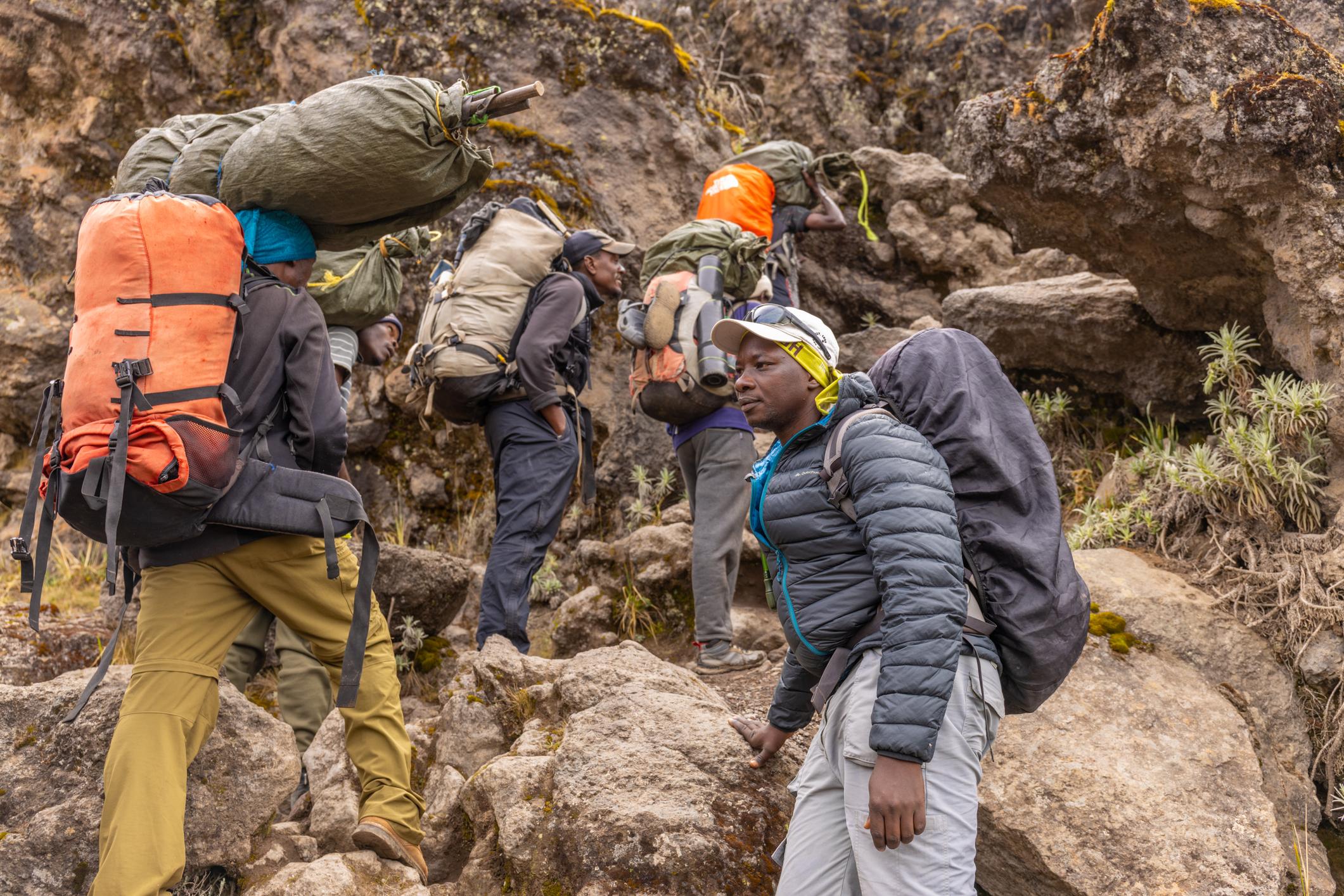
- Porter welfare: The load limit for porters is usually 20kg for personal and group kit. Cheap tours often seriously exceed this to reduce the number of porters. This leads to overloaded and underpaid porters.
- Medical and safety kit: Many responsible operators carry gear for high-altitude safety - such as emergency oxygen, for example. On a 5,895m (19,341ft) like Kilimanjaro, acute mountain sickness is common and can escalate quickly - so it's important that the crew are prepared for this. For clarity, emergency oxygen is for emergencies only (not for help up the mountain). If you use the emergency oxygen, you must also descend.
- Toilets: Some trips have a toilet porter, who carries a portable loo in a tent or two, and which is private for your group. Others don't. There's variation.
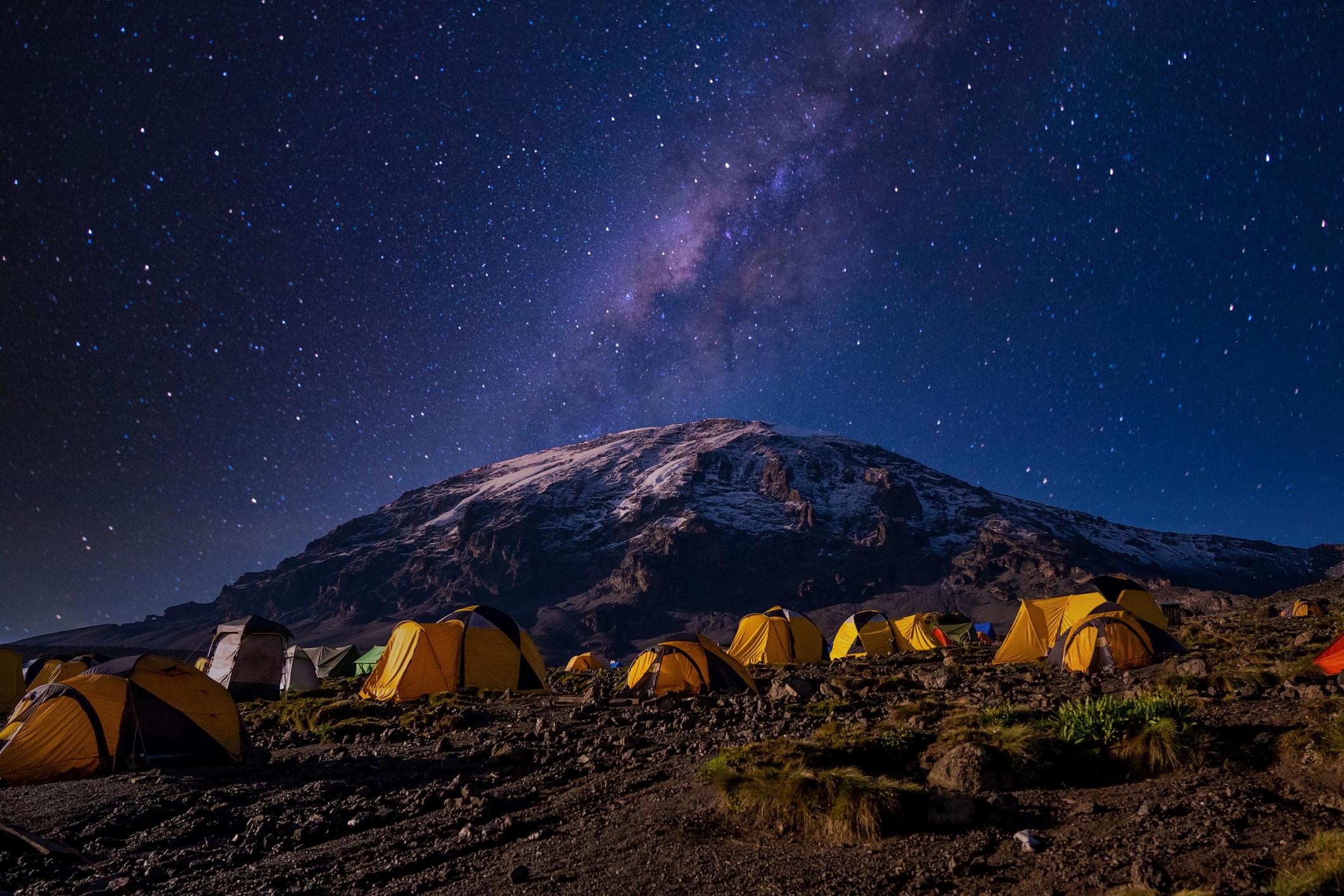
- Tent quality: Varies dramatically between budget ranges. Some provide small, poor quality tents. Others provide large ones with camping beds.
- Itinerary length: The lower the number of days you spend climbing the mountain, the cheaper the price will be, as you'll save on crew costs, food, park fees and more. However, itinerary length is also the single biggest predictor of summit success rate. A five or six day climb has a summit rate of 50-60%. If you climb over seven days, that goes up to 70-85%, and so on. Budget operators may push shorter itineraries because they save on fees - but that's at the cost of acclimatisation and summit chances.
- Group size: A group of 20 people will mean your guide may be spread thin, while maximising operator profit. If you pay more, then the group size will come down to 12 people or less, meaning the guides can be more attentive, the campsite management will be better and the summit night co-ordination will be safer.
- Park fees: Be sure to check these are included in the base price of your trip.
- Transfer length: Transfers cost more for Rongai (on the northern side of the mountain) and often for Lemosho than they do for Marangu and Machame, both of which are close to Moshi.
After all that, you may ask: is a sub-$2,000 climb actually safe? The answer is nuanced (sorry). It's possible for it to be safe, but we would advise asking the operator directly what is included, and looking into where those savings are being made. In particular, confirm that the crew are being treated well, and that park fees are included, as unfortunately, this may be why the price is cheaper.
How does Much Better Adventures' price compare to all this?
Much Better Adventures Kilimanjaro itineraries start at £2,349 (approx $3,150) per person, depending on the departure date, group size, route and date.
That price includes:
- All TANAPA park fees, including the VAT
- All accommodation, including pre-and-post climb accomodation in Moshi or elsewhere
- A full crew on fair wages, adhering to load limits
- Emergency oxygen and full medical kit. To be clear, we carry oxygen for emergencies, not for supplementary purposes on our trips. If you require the oxygen, you will also have to descend from the mountain.
- Group size from 1-12 people (and strictly capped at 12)
- Airport transfers
What the price doesn't include:
- International flights
- Visa for the country
- Personal travel insurance
- Your gear for the trip
- Tips for your climbing crew
We're committed to advocating for the fair pay and treatment of porters through membership of key local associations, as well as providing further benefits such as training opportunities so porters can progress on to roles of cooks or guides as they gain experience on the mountain. As a baseline MBA commit to ensuring:
- Porters are paid a minimum of 25,000Tsh per day (US $1 = approx 2,000 Tsh)
- Salaries must be paid within five days of the descent of ALL climbs
- A transparent tipping procedure, so porters receive the full tip amount intended for them
- Loads carried by the porter should not exceed 20kg for the company (excluding porter's personal kit)
- Porters are provided with three meals per day
- Porters have proper shelter conditions and sleeping equipment
- Porters are outfitted with proper gear
- Sick or injured porters are properly cared for
How to keep the cost down without cutting corners
You work hard for your money, and so you'll want to pay a competitive but fair price to climb Kilimanjaro. So, if you care about safety and the fair treatment of staff, what can you do to keep your costs down without risking exploitation?
- Book a group departure: Shared itineraries cost less than private climbs, and still very much possibly to maintain proper crew ratios and standards.
- Travel in shoulder season: March-May and November will sometimes be priced cheaper by certain operators, as they are deemed shoulder season.
- Rent gear rather than buying: You can rent (or borrow from friends!) sleeping bags, boots and more rather than buying, to keep costs down.
- Choose the right route: Different routes require different numbers of days on the mountains - but you should pick your route based on ability and comfort rather than price. Remember, while a shorter climb might be cheaper, but it also means you are statistically less likely to make it to the summit.
FAQs
Is $2,000 enough to climb Kilimanjaro?
A $2,000 package covering park fees, crew, and accommodation is possible, but it raises questions you should seek answers to before booking. Which route will you be climbing, how many days will you be doing it in, what will the crew-to-climber ratio be, and does that price include VAT on park fees? A cost below $2,000 with fees included is a red flag, as mandatory government park fees alone are nearly $1,000 on a 7-day camping route. If the price seems too good to be true, unfortunately, it probably is. Ask for an itemised breakdown before booking if you're unsure.
What's the cheapest route to climb Kilimanjaro?
The Marangu Route (sometimes called the Coca-Cola Route) is the cheapest and most common way to climb Kilimanjaro. This is because the climbers usually sleep in shared mountain huts rather than tents (so there's no tent hire cost for operators) and the itinerary runs 5-6 days rather than longer. We should note, though, that the route also has one of the lowest summit success rates - around 50-65% - because of the insufficient acclimatisation time. And it's by far the busiest route on the mountain. You'll find that "cheap" and "successful" are often two terms which end up in tension on an ascent of Mount Kilimanjaro.
Are park fees included in the quoted price?
With reputable operators, park fees are usually included - but do not take this for granted. Some budget operators quote a "From" price which excludes park fees to make them look more competitive, then will ask for that money from you at a later date. Ask your operator: "does your price include all TANAPA fees and VAT?"
How much are flights to Kilimanjaro?
This will vary dramatically depending on your take-off destination. But return flights from the UK to Kilimanjaro International Airport (JRO) cost somewhere in the region of £600-£900 in economy, booked 3-6 months in advance. From the US, expect something moe like $700-$1,300. Flights from Nairobi (NBO) are also an option, with an onward connection or overland transfer then required to Moshi.
Why is climbing Kilimanjaro so expensive?
Mandatory park fees, the cost of the crew and the logistics of operating at altitude. You're looking at around $970pp for park fees on a 7-day camping route after VAT, then the whole crew needs paid (including around 7-9 porters). Solo climbing on Kilimanjaro is illegal - so every climber must be accompanied by a licensed guide.
So how much should I budget in total?
Budget around £4,000-£5,500 per person for a complete trip from the UK, including the climb, return flights, insurance, visa, vaccinations, gear and tips. That'd be around $5,000-$7,000 in USD. Climbing Kilimanjaro is not cheap, but there's a reason so many people still do it. It's one of the most great high-altitude summits, the roof of Africa, and the cost reflects the complexity of getting people up and down the mountain safely - and ensuring they have a good time.
This article was last updated June 2026. Park fees are reviewed annually by TANAPA/KINAPA; confirm current rates at tanzaniaparks.go.tz or with your operator before booking. All USD figures are based on current TANAPA tariff schedule valid January 2025-June 2026. GBP conversions approximate at June 2026 exchange rates.
Inspired? Check out our full range of adventure in Tanzania now!