
4.9
Cycle the Backroads of Cuba
- Cuba
- 7 nights
A revolutionary ride through western Cuba's beautiful interior and Caribbean coastline
What's Included?
- Activities & Certified GuidesAll itinerary activities with expert, local, English-speaking cycle guides
- Casa particular & stilted hut6 nights in welcoming casas particulares and 1 night in a stilted hut
- MealsAll breakfasts, lunches and dinners
- Transfers & Support VehicleAll airport and local transfers; plus a support vehicle to hop in to if your legs need a rest
- EquipmentTrek 8.3 DS 2015 front suspension bike
- Small Like-minded GroupsSolo-friendly by design, join our small n’ sociable groups of up to 14 like-minded, active and outdoorsy people
From…excluding flights
Highlights
Roll through the verdant Jurassic landscapes of Viñales and along sparkling stretches of Caribbean coastal roads
Pedal into the Sierra del Rosario Biosphere Reserve and cool off with a wild swim in the San Juan River
Sip mojitos in Havana, dance with the locals in old fishing villages, kick back on white sand beaches and cycle up to Che Guevara's hideouts
Itinerary
Day 1
Welcome to Cuba!
Casa particularTwin shareDinner includedShow Day 1 detailHide detail
Your adventure begins as you touch down in Havana, the vibrant capital adored by Hemingway. Meet your host at the airport and transfer to the heart of the Old Town, aka La Habana Vieja. Settle into your casa particular then perhaps take a stroll around the colourful streets. In the evening, you'll meet your guide and the rest of the group to head out to a nearby paladar for your first Cuban feast of the trip.
Day 2
Cycle to Las Terrazas
Cycling25km · 210m up · 120m downStilted hutTwin shareAll meals includedShow Day 2 detailHide detail
Head to the outskirts of Havana to start your first ride on Cuba’s diverse roads. Pedal towards the Sierra de Rosario, a UNESCO Biosphere Reserve and home to the Las Terrazas community. Once a struggling farming region, this area is now a self-sufficient community, where reforestation efforts have brought the landscape to life. After a local lunch at a community-run restaurant, gear up for an optional zip-line adventure – soar above the lush forest and enjoy panoramic views. Later, cruise downhill to the tranquil San Juan River, where you’ll check into your stilted hut. Cool off with a refreshing swim in the river before tucking into dinner at Cuba’s first vegetarian restaurant.
Day 3
Las Terrazas to San Diego
Cycling75km · 665m up · 770m downCasa particularTwin shareAll meals includedShow Day 3 detailHide detail
Wake up to birdsong and cycle to Hotel Mok for breakfast overlooking the forest. Today’s route will vary depending on weather and group preferences, but either way it will be a scenic ride. Descend out of the Las Terrazas Biosphere Reserve to the valley below with views of the Sierra del Rosario mountain range to your right and the expansive plains of Cuba’s coastal lowlands to your left. Pedal through the rural villages and agricultural landscapes of Artemisa and Pinar del Río provinces, with colourful street scenes and warm interactions with locals along the way. This mostly flat route leads you to San Diego de los Baños, a quiet and picturesque former spa town. Spend the evening soaking up the peaceful vibe of this hidden gem, far from the typical tourist path.
Day 4
San Diego to Puerto Esperanza
Cycling67km · 858m up · 918m downCasa particularTwin shareAll meals includedShow Day 4 detailHide detail
Today, prepare for a picturesque ride to Cuba's serene north coast. Leaving San Diego, cycle through the enchanting Parque La Güira before visiting Cueva de los Portales, a site of historical significance as Che Guevara’s hideout during the Cuban Missile Crisis. Continue your ride past lush landscapes and tobacco farms, arriving in Puerto Esperanza, a charming fishing village almost untouched by tourism. This area offers a rare glimpse into authentic Cuban life. After checking into your next casa particular, meet with the local community cultural project, La Camorra, for a fun evening of traditional Creole music.
Day 5
Puerto Esperanza to Viñales via Cayo Jutias
Cycling47km · 110m up · 110m downCasa particularTwin shareAll meals includedShow Day 5 detailHide detail
After breakfast, say goodbye to Puerto Esperanza as you venture through quiet backroads (be prepared for some potholes and unpaved paths) on your way to Cayo Jutias. This stunning 11km coastal stretch, with its pristine white sand beach, has yet to be discovered by most travellers. Enjoy a leisurely lunch, taking time to relax, swim, or snorkel in the crystal-clear waters of the Caribbean. Afterward, your support vehicle will transport you to Viñales, where you’ll spend the evening.
Day 6
Viñales Valley
Cycling38km · 300m up · 100m downCasa particularTwin shareAll meals includedShow Day 6 detailHide detail
Today, embark on a scenic cycling adventure through the breathtaking Viñales Valley, a UNESCO World Heritage Site known for its dramatic landscape of limestone 'mogotes' (steep, isolated hills) and traditional farming practices. Visit the famous Mural de la Prehistoria, a giant, colourful painting on the hillside. Cycle along farm tracks, stopping at tobacco farms to learn about Cuba’s world-renowned cigars. Explore fruit farms and other agricultural sites as you pedal through the lush terrain. Head to Cueva del Indio, where you’ll take a boat ride along its subterranean river. Later in the afternoon, enjoy free time to wander through the relaxed streets of Viñales.
Day 7
Viñales to Havana
Cycling46km · 350m up · 270m downCasa particularTwin shareAll meals includedShow Day 7 detailHide detail
Fuel up on brekkie at Yoan and Yareli's casa before you bid them farewell and head off for your final ride through the stunning Viñales Valley. Pedal north, surrounded by the towering Viñales mountains and dramatic ‘mogotes’ that line the road. Along the way, make a stop at the Los Portales cave, the historic site where Che Guevara was stationed during the 1962 Cuban Missile Crisis. After a picnic lunch you'll travel the three hours back to Havana by bus where you'll check back into the casa particular stayed in on your first night. The last night of any Cuban adventure means one thing: dinner and cocktails in a local paladar before heading out to find some music!
Day 8
Adiós, Cuba
Breakfast includedShow Day 8 detailHide detail
Depending on your flight time, enjoy a walk through Havana's captivating Old Town. With its vibrant colors, historical charm, and bustling streets, it’s the perfect way to say goodbye to Cuba. Transfer to Havana Airport for your onward journey.
Getting There
- Nearest airport
- José Martí International Airport (HAV)
- Pick up
- Jose Marti Airport, Havana
Any time on Day 1 - Drop off
- Jose Marti Airport, Havana
Any time on Day 8
What is and isn't Included?
What's included
- Guided ride to the Sierra de Rosario and the San Juan river
- Zip-line in Las Terrazas (optional)
- Guided ride to San Diego de los Baños
- Guided ride to the fishing village of Puerto Esperanza
- Meet with the a community cultural project for a session on traditional Creole music
- Guided ride along the coast to Cayo Jutias
- Swim or snorkel in the Caribbean Sea
- Guided ride exploring Viñales Valley
- Visit a tobacco farm
- Visit the underground river at Cueva del Indio
- Guided ride with views of the Viñales mountains
- Visit the Los Portales cave
- Expert, local, English-speaking cycle guide
- 6 nights in casas particulares
- 1 night in a riverside stilted hut
All your meals are provided for the duration of the trip. This includes:
- 7 traditional Cuban breakfasts
- 6 sit-down picnic style lunches
- 7 tasty flavourful dinners
- Snacks while cycling
- Arrival transfer from Jose Marti Airport at any time on Day 1
- Departure transfer to Jose Marti Airport at any time on Day 8
- All transfers during the trip
- Trek 8.3 DS 2015 front suspension bike
- To transfer your luggage, and for you to hop in to if your legs need a rest
What's not included
Our trips do not include flights, trains or other travel to the start point and back from the end point.
Tips are not included in the trip cost. These are entirely at your discretion but there is an expectation to tip for good service. Your guide will help with advice, however, we suggest the below as a guideline:
- £5/€6/$6.50 per person, per day
Please note that the Cuban Peso is quite unstable as a currency, so your guides would hugely appreciate any tips in a hard currency, particularly Euros which are widely accepted in Cuba.
Of course, you are free to tip more or less, and the amount should be reflective of your perception of service and quality.
Visa requirements often change, and you are responsible for obtaining any required visas for this trip. Please see the FAQ below, and check with your nearest embassy or consulate for up-to-date advice.
You know your own spending habits best, so please budget an appropriate amount for things like optional meals and drinks, shopping, optional activities, and laundry.
Travel insurance is compulsory for all of our adventures, and you'll need to provide your policy details before departure. Your insurance should offer adequate cover for overseas medical treatment, evacuation/repatriation, your baggage and equipment, and the specific activities involved in your adventure. We also recommend ensuring your policy includes cancellation and curtailment cover, in case you're unable to join your trip due to unforeseen circumstances such as illness.
Standard travel insurance may not cover all the activities included in your adventure, so it's essential to check the details carefully. There are adventure-specific providers that many travellers have used in the past, such as True Traveller (opens in new tab) (for those based in the UK or Europe), or Rise + Shield (opens in new tab), both of which offer cover for a wide range of adventurous activities.
Please make sure your chosen policy meets your individual needs and covers all aspects of your trip.
Where You'll Stay
Looking for a private room? See Optional Extras for details and pricing.
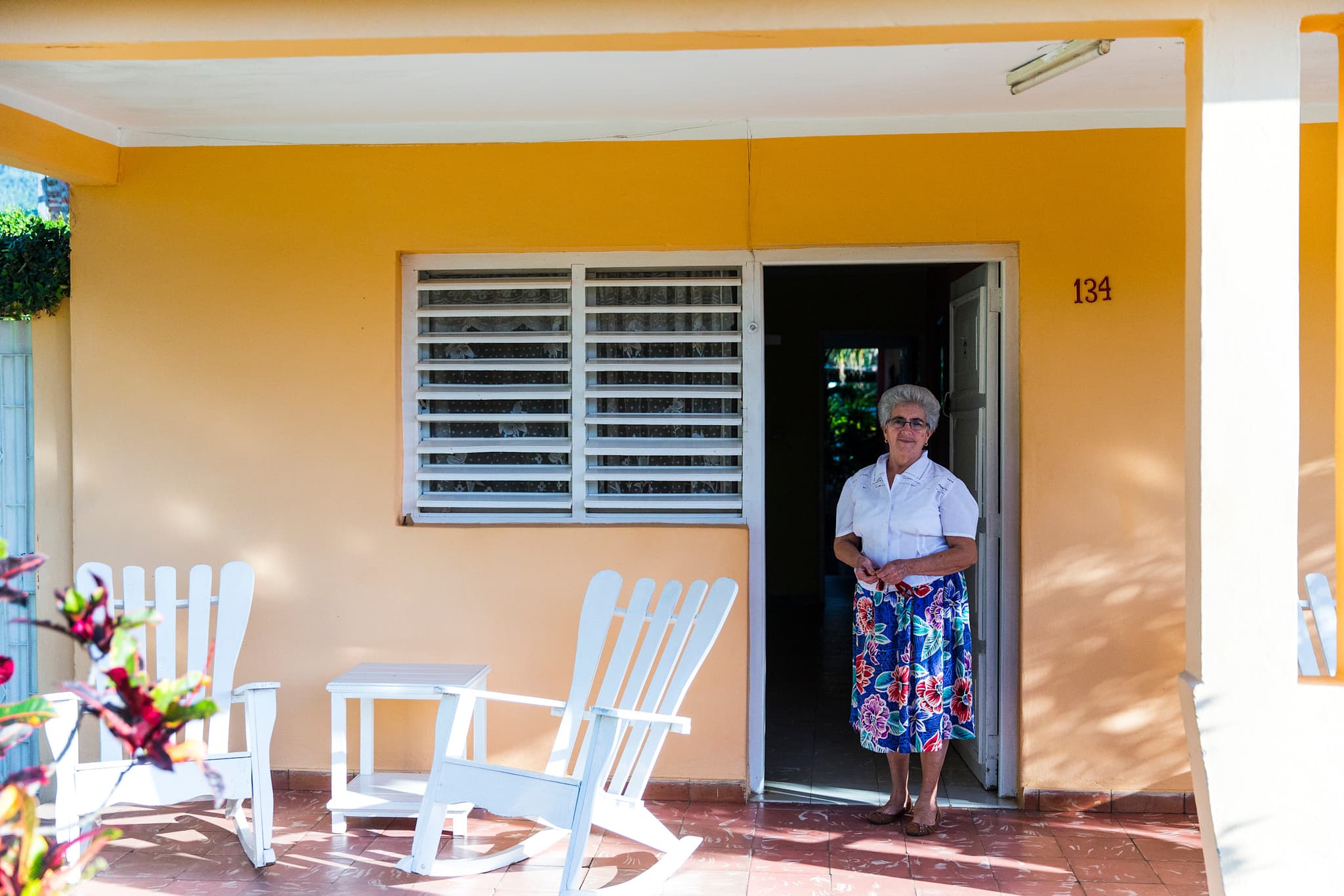
Casas particulares
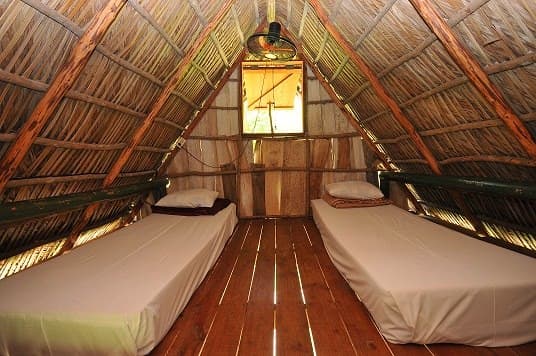
Las Terrazas
What You'll Eat
You'll be tucking into rice, black beans, slow-roasted pork and chicken, fresh fish, plenty of tropical fruit and maybe even lobster. It can be difficult to find a good sandwich in Cuba, so your guide will often arrange a sit-down lunch. It is a good…
Optional Extras
Others
- Cuba visa (can be sold to British & European passport holders resident in the UK)
- …/per person
Pre/Post Trip Accommodation
- Single room in Old Town casa particular
- …/per night
- Twin/double room in Old Town casa particular
- …/per night
Upgrades
- Optional private room upgrade
- …
For solo travellers looking for their own space, an optional private room can be booked for an extra charge. See Optional Extras for the price. Please request this at the time of booking (subject to availability). Note this does not cover the stay at Mil Cumbres - there are no single rooms available there.
Transfers
- Taxi between Havana airport and accommodation - each way (3-5 people)
- …
- Taxi between Havana airport and accommodation - each way (up to 2 people)
- …
To request any extras, message your host via your Much Better Adventures account once you have booked your trip.
All extras must be paid before your trip starts.
This Trip is Graded Level 3
- Level 3
Moderate
For active people who want to explore more wild and adventurous places
Hot climate: factors to consider + 1 other factor - How much activity is involved?
Multiple days of steady activity, four to five hours long
You'll need some good fitness levels to cover the distances and to stay comfortable and happy during six consecutive days of cycling. The riding itself is of easy to moderate ...
- Right level, wrong trip?
Browse all our Moderate trips
Your next adventure is out there

 Not sure which level is right?
There's a level for everyone – find your match
Ratings & Reviews
4.913 reviews
- 3 stars (0)
- 2 stars (0)
- 1 star (0)
Category rating
- Food
- 4.0
- Guides & crew
- 5.0
- Accommodation
- 4.0
- Itinerary
- 5.0
Latest Reviews
Customer Photos
Want to Know More?
Ask our AI Assistant
Get instant answers about this adventure
We've Got Your Back
Book with confidence and peace of mind.
Departure dates
Don't see a date you like?
Get an email alert when new dates are added.
Got a Group of 6 or More?
Book the whole trip privately. We sort the details, you split the cost. Pure adventure, zero faff.
What to Pack
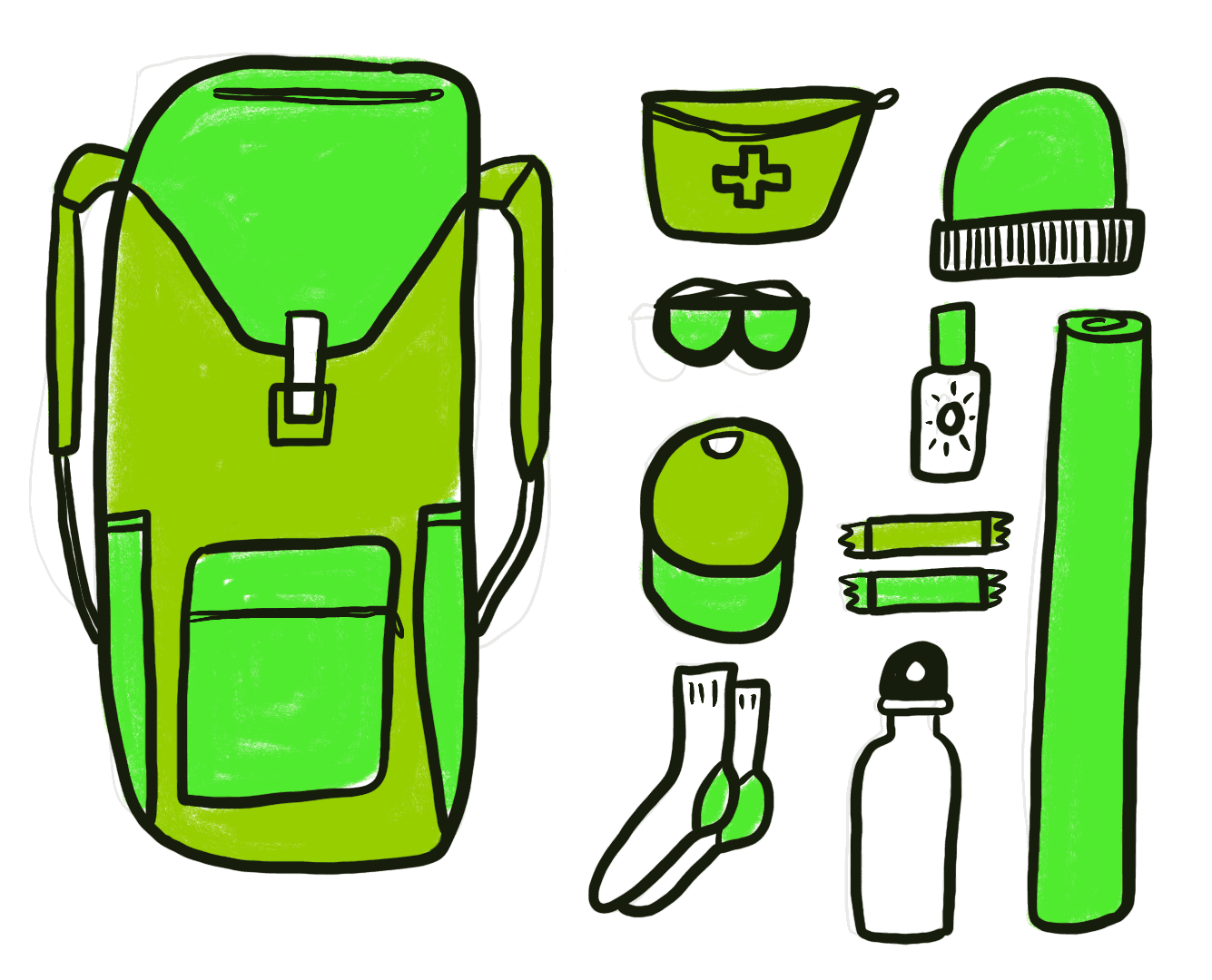
Know before you go! Some stuff we'll provide, other things you'll need to bring.
FAQs
How does a Much Better cycling adventure work?
It's no secret that we love cycling and many of us at HQ think it's the best way to see a country; however, we realise that organising your own trip can be a total faff. On our cycling trips, we've found a local guide who has put together a perfect route and will navigate for you all the way. We send a van that transports your overnight luggage, as well as providing high-quality bikes and delicious snacks to keep you going. Faff eliminated! All you have to do is turn up, pedal and take in the landscape with your fellow tourers. You don't need to be a lycra-clad 'roadie' although they're welcome too!
Have a read of our article on cycling difficulty levels for further information on selecting the right level of bike adventure for you.
What type of bikes are provided?
You will be using Trek Allant Specialized Rockhopper hardtail mountain bikes with front suspension and hybrid tyres. These are light aluminium mountain bikes, perfect for riding on roads and rough tracks. The bikes are equipped with a water bottle cage and standard flat pedals. If you would like to bring your own SPD pedals and saddle, these can be fitted for you.
Bikes are available in the following sizes:
- Small (for people 155cm to 165cm tall)
- Medium (for people 165cm to 175cm tall)
- Large (for people 175cm to 183cm tall)
- Extra Large (for people 183cm to 193cm tall)
- Extra Extra Large (for people 193cm to 203cm tall)
Can I bring my own bike? Bringing your own bike is discouraged. This is due to a lack of storage for bike boxes/bags, and also, the support trailers are tailored to fit the bikes the host provides, which means safe carriage of your personal bike cannot be guaranteed. In addition, your own bike may require special parts for maintenance which may not be locally available, nor possible for the support vehicle mechanics to repair, so the use of the bikes provided by your host is recommended.
Will we cycle point to point?
On some days, you'll cycle point to point; on other days, there will be a transfer to get you between the cycling routes – this is to keep you away from busy roads and on to the best cycle routes. Driving durations are stated in the itinerary above. The backroads take a bit of piecing together to ensure the riding will be fun and stress-free, and the bus will provide some time to kick back and take it all in.
Can I upgrade to an e-bike on this trip?
E-bike upgrades are not available for this trip; you’ll be riding hybrid bikes as listed in the trip inclusions. Keeping everyone on the same bike type helps maintain a comfortable group pace, simplifies logistics and ensures a more inclusive experience. We do, however, have a growing collection of e-bike adventures which you can explore.
What is a casa particular and what are they like to stay in?
Casas particulares are Cuba’s answer to the B&B – a Cuban home that rents out at least one room to guests. They became legal to operate in 1997 and have since become the most popular type of accommodation on the island. You'll experience a real Cuban home as the family usually lives in the property they rent out, giving you a unique insight into the way Cubans live. Staying in a casa particular not only it brings you closer to the real Cuba, it’s also a great way to contribute directly to the local economy. The money you spend in a casa particular stays with the family and gets reinvested in their community, making it the simplest way to practice sustainable tourism in Cuba. Your host family will provide breakfast at each of the casas particulares that you stay at on this trip.
What do I do about drinking water?
Your host provides three litres of mineral water per person, per day. If you require any more than this, you'll need to filter your own water since the tap water in Cuba is not safe to drink. The best option here is to bring a water bottle with a built in water filter, although water treatment tablets are also fine. Have a read of our article on the best water filters for adventurers.
What currency should I bring to Cuba?
In 2021, Cuba got rid of its dual currency system, leaving the CUP (Cuban Peso) as the sole domestic currency. Cuban salaries are paid in CUP, and locals can pay for basic utilities and goods with this currency. What previously was the CUC (Cuban Convertible Peso) has now been more or less replaced by the digital MLC (Moneda Libremente Convertible), which basically requires Cubans to have access to foreign currencies from outside of Cuba to purchase any imported goods, toiletries, medication, etc.
What does this mean for your trip to Cuba? Long story short, we suggest you bring cash in either USD or Euros (small note denominations) and exchange only a small amount into the local currency (CUP, Cuban Pesos). US dollars currently represent the best value.
GBP and CAD may be accepted as cash payments in some private sector restaurants and bars, however USD and Euros have much more of a reliable and widespread appeal, especially Dollars.
If you want to use your bank card, it is very important to check prior to travel that the bank is not US-owned, as if so you will not be able to use it in Cuba. More ATMs are appearing in Cuba but, in reality, they are very unreliable and often empty. Bank cards can be used in government-owned shops, duty-free shops, as well as hotels, but are rarely accepted in restaurants or bars, so make sure that you plan on bringing enough cash.
Do I need a visa? And can I buy one through Much Better Adventures?
Nationals of most countries, including the UK, all EU countries, Australia, Canada and USA require a visa to enter Cuba. The required tourist visa allows the holder to stay in Cuba for 90 days (within 180 days of issue) and is valid for a single entry. You must provide proof of a confirmed return flight and booked accommodation. This tourist visa can be renewed for a further 90 days in Cuba if needed. Note that in 2024, the Cuban government introduced a new 'E-Visa' and announced that the paper 'Tourist Card Visas' would be phased out, remaining valid only up until 31st December 2024.
As long as you are a UK or European Passport holder resident in the UK, you can buy a visa through the local host that we partner with for this trip. Please see Optional Extras to add this to your booking – the cost is £26. Please request this in good time prior to travelling, as the host cannot guarantee the administration of last-minute visa requests.
Alternatively, you can obtain a visa from the Cuban Consulate in person in London, paying in cash. For reliability of service, we strongly recommend purchasing via the host and allowing sufficient time pre-travel.
Note that the visas sold by the host are not applicable for US citizens, nor or anyone travelling from/via/to the United States. In these cases a different type of visa must be purchased from permitted US companies.
Can I connect to the internet in Cuba?
You can connect to the internet in most of the larger cities and hotels, but expect the connection to be slower and sometimes patchier than at home (best not plan to watch videos or download large files while you are there). We recommend turning off your roaming data when you land, as you can be hit with heavy charges (check with your provider in case). You will be able to access the internet at your hotel either free of charge, or by purchasing a NAUTA WiFi card. You can also buy a local tourist SIM card (CubacelTur SIM card) at the airport or at offices in the main cities. Unless you have a VPN installed, some US-owned websites will be blocked for you. Your host will be able to help out with more information.
How might relations between the USA and Cuba impact my travel plans?
Travel from the USA to Cuba for tourism purposes is currently prohibited by the US Government. This is regardless of your nationality, and applies to all flights scheduled between the two countries. To avoid potential problems with US immigration it is strongly advised not to travel to Cuba via the US. Read the OFAC Regulations on travel to Cuba for more information.
US citizens are very welcome as visitors to Cuba, and commonly fly to Havana on separate flight bookings via regional airports situated in other neighbouring countries.
The US Government classified Cuba as ‘state sponsors of terrorism’ and as a result, anyone travelling to the country after 12th January 2021 is no longer eligible to apply for the US visa-waiver (ESTA) and, as things currently stand, will instead need to apply for a visa through a US Embassy in order to visit the USA in the future. You can request Cuban Immigration not to stamp your passport.
Can I leave my excess luggage somewhere?
Yes, you can leave any excess luggage at your host's base in Havana.
Do I need to bring my own cycle helmet?
Yes, you need to bring your own cycle helmet on this adventure. It should meet recognised safety standards, display a relevant certification mark, and be in good condition. It is mandatory for all riders to wear a helmet whenever cycling.
Please make sure your helmet is:
-
A purpose-built cycling helmet that meets a recognised safety standard and displays a relevant certification mark, including (but not limited to):
- CE/EN 1078 (UK & Europe)
- CPSC or Snell B90/B95 (USA)
- AS/NZS 2063 (Australia & New Zealand)
-
In good condition:
- ideally no more than five years old
- not involved in a crash
- no visible cracks/dents, compressed foam, or damaged straps
-
A good fit:
- sits level (not tipped back)
- snug, secure and stable when fastened (doesn't rock or slide)
- retention system and straps work properly
If your helmet isn’t suitable on arrival:
- you may need to rent or buy a suitable helmet locally (availability varies by destination)
- if a suitable helmet can't be sourced, you may be unable to join some or all cycling activities on safety grounds, in line with your booking conditions
Need help choosing or fitting a helmet?
For advice see British Cycling’s guidance.
Cycle Safety Please see our cycling safety guidance for further information.
Can I book on my own?
Sure can! Over 70% of our travellers travel solo, it’s a great way to meet like-minded people.
Who is running the trip?
Our team of Adventure Hunters co-create exclusive adventures which are run by highly vetted, specialist hosts. The trip is run by our trusted host partner in the destination. We only work with independent, local, in-destination experts who know the very best places to explore and how to stay safe. Read more information about the local teams we partner with. You’ll be introduced to the host straight after making a booking via the Much Better Adventures platform.
What is the official travel advice?
Much Better Adventures refer to the UK Government’s official travel advice when designing trips and monitoring trip operations. We recommend that all customers are familiar with the practical information provided on the Government’s FCDO website, where current travel advice can be found by searching for the applicable destination(s).
For customers joining this trip from other international destinations – please also read the official travel advice applicable to your country of residence/origin, as this may differ.
What vaccinations do I need?
We recommend checking out the country-specific information and also talking to a travel nurse.
How are the trips priced?
We automatically convert prices from the local currency that a host receives to your chosen currency. We update our exchange rates on a daily basis so this does mean that prices displayed on the site are subject to currency fluctuations, which is why you may see them change over time.
If you wish to change the currency you pay in, head to the bottom of the page.
Why are your adventures only for adults?
All of our group adventures are specially designed for adults to enjoy as we want these adventures to bring together outdoorsy people who are truly like-minded. You must be over 18 to join one of our trips.
Who else will be on my trip?
You're always in good company on one of our adventures.
Our trips are typically made up of a mixture of solo travellers and small groups of 2 or 3 friends, with most in their 30s-50s.
Our sociable adventures are solo-friendly by design and naturally attract outdoorsy people with a shared mindset; a love for adventure, a desire to push themselves and meet awesome, like-minded people along the way. Check out our Community Values – a shared code to make sure that everyone's experience is safe, inclusive and brilliantly unforgettable.
It’s this camaraderie that has so often turned a great adventure into a life-changing one.
Don't just take our word for it:
- 95% of people rate the group dynamics on our trips 5/5
- 90% of people recommend joining a trip to make new friends
- 75% of people have met people on our trips that they would now consider friends
See here for more info about the Much Better Adventures tribe.
What's the weather like?
Cuba is always warm, but certain months are better to visit than others. High season is November to mid-April, with pleasant temperatures in the mid-high twenties Celsius, and plenty of clear skies. September and October bring a higher risk of hurricanes in the Caribbean, so we don't offer trips during those months. Temperatures are higher in the low season, particularly July and August with highs of 32°C/90°F in Western Cuba. April-June is the shoulder season and can be an excellent time to travel, as the weather is pleasant and there are generally fewer visitors. The month of May can be wet, though it’s considered good luck to get wet in the first May showers!
What's the carbon footprint for this trip?
We partner with the World Land Trust to ensure this trip achieves Net-Zero emissions. We also support their Buy an Acre programme, helping local communities to buy and protect natural habitats in perpetuity.
What's the number?
It works out on average at 128kg of CO2 emissions per person, including all local transport, accommodation, food, activities, guides, staff and office operations.
The only thing it doesn’t include right now is flights and travel to the destination. We do make an overall estimate across all our customers separately, but as we don’t book flights, have customers from all corners of the world, and no way of reliably knowing their travel plans, we simply can’t include an individual number in the figure on display here. We’ve got a goal to fix that, so that when you book, there is a way to measure and mitigate the carbon emitted by your flight too.
But what does the number mean?
Yep, hard to picture eh? To give you an idea:
- Driving 1000 miles/1609km would be approximately 281kg of CO2 in an average car (or 140.5kg per person, if there were two of you in it).
- A return economy class flight between London and New York would be approximately 1619kg (1.66 tonnes) per person.
- 10 trees in a temperate forest are estimated to remove approximately 250kg of CO2 from the air in a period of 5-10 years.
What are we doing about it?
Our trips are relatively low-carbon by design, and we're working with all our hosts to develop long term carbon reduction plans. We partner with the World Land Trust to ensure this trip achieves Net-Zero emissions. We also support their Buy an Acre programme, helping local communities to buy and protect natural habitats in perpetuity, ensuring the protection of the reserve and its wildlife.
Want to know more?
Amazingly, no international travel company has ever publicly published their carbon measurements before, as far as we know. We believe that must change, quickly. So we’re openly sharing the method we used in the hope that other companies will be able to more easily follow suit and build on what we've done so far. You'll find it all here.
Unlock £100 off your next adventure
Still Undecided?
A few other trips to tickle your fancy