The Ultimate Adventure Through Mongolia
An epic journey through Mongolia’s nomadic heartland on foot and horseback, from the ‘Mini Gobi’ dunes to alpine valleys and remote steppes
What's Included?
Activities & Certified Guides
All itinerary activities with local, expert, English-speaking guidesAccommodation
2 nights in hotels, 5 nights in traditional gers (yurts) and 2 nights campingMeals
All your meals are included throughout the tripTransfers
To and from the airport and everything in betweenEquipment
All camping equipment, including sleeping bagsSmall Like-minded Groups
Solo-friendly by design, join our small n’ sociable groups of up to 14 like-minded, active and outdoorsy people…
…
What's it like?
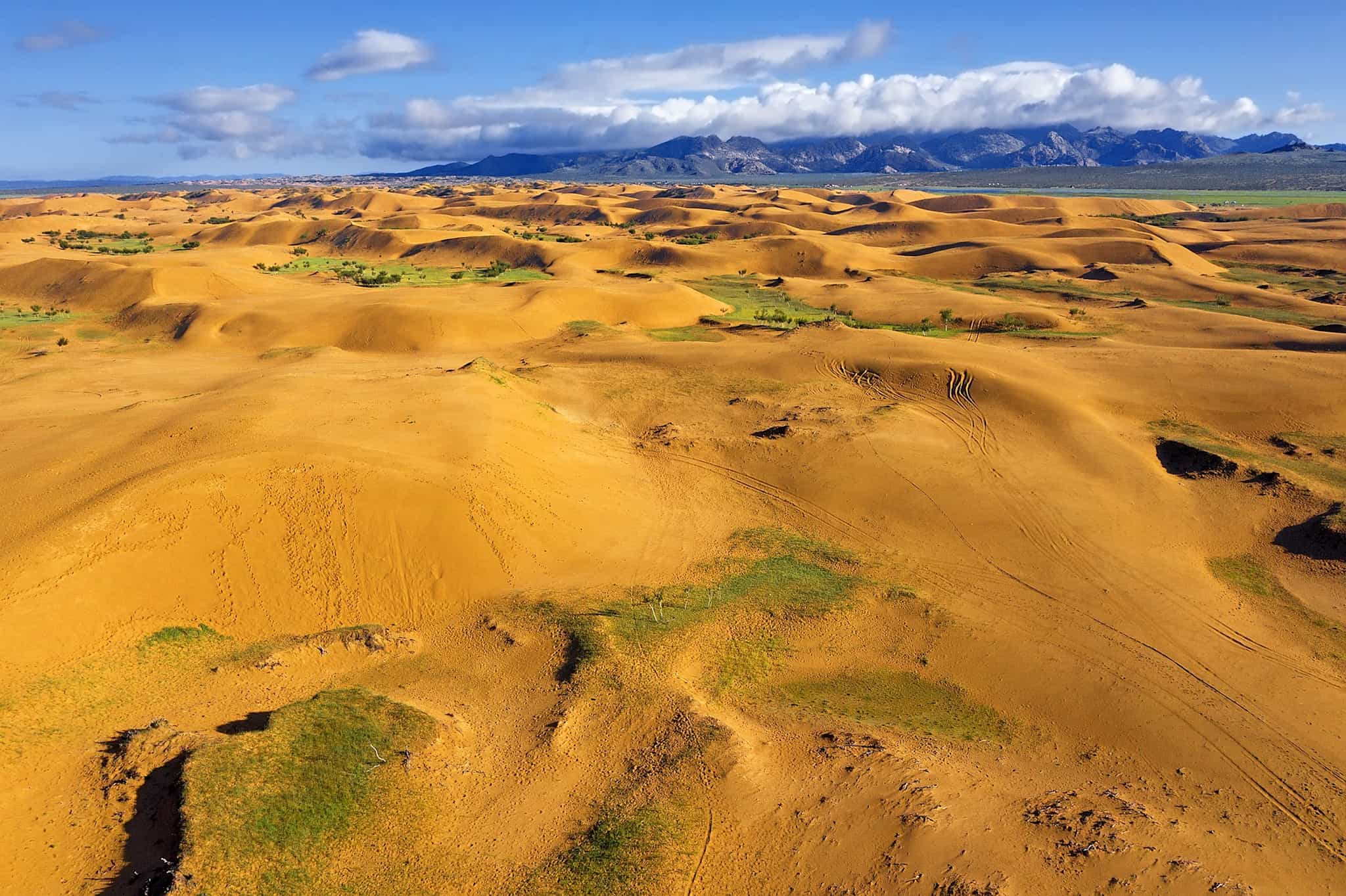
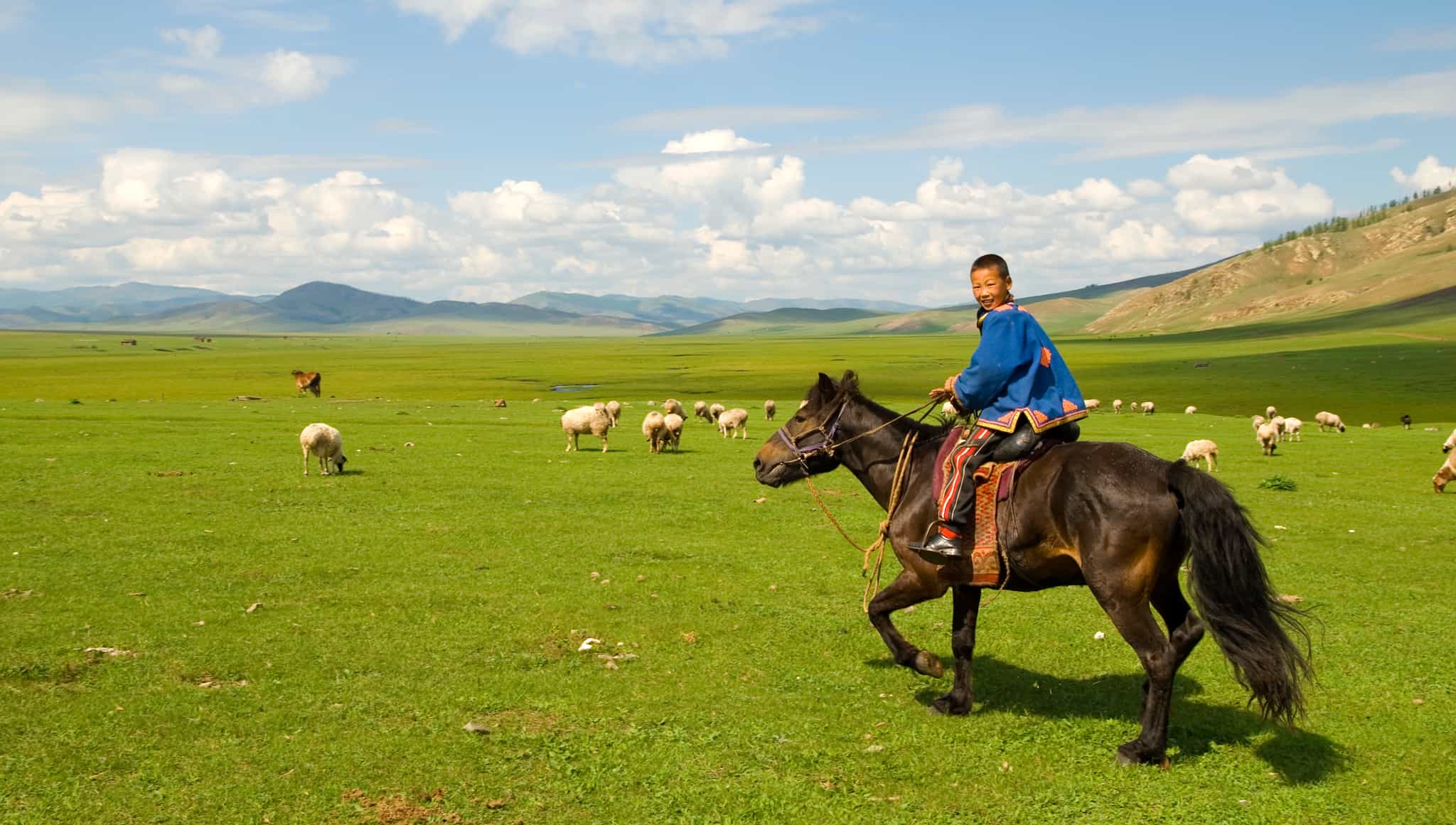
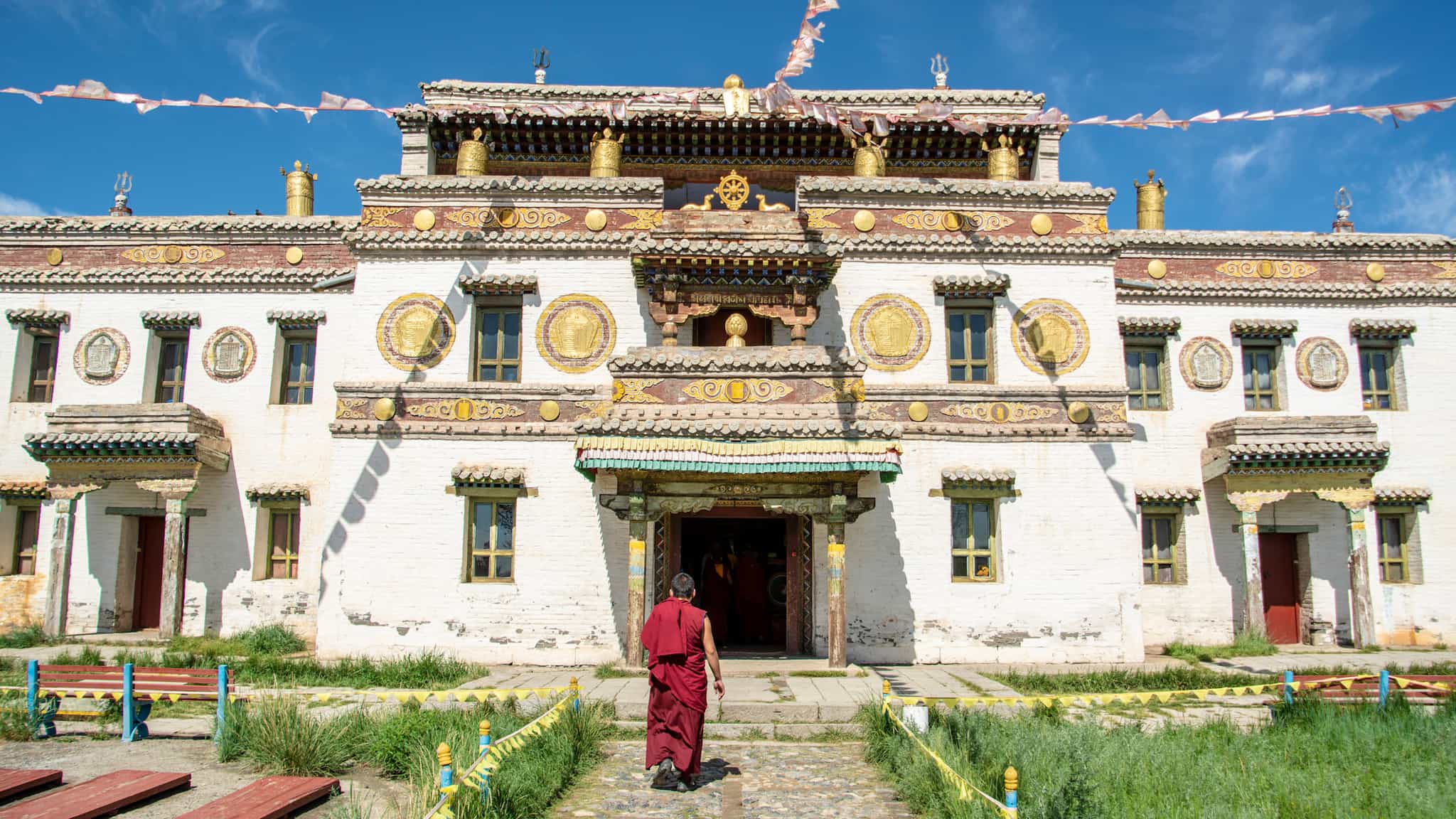
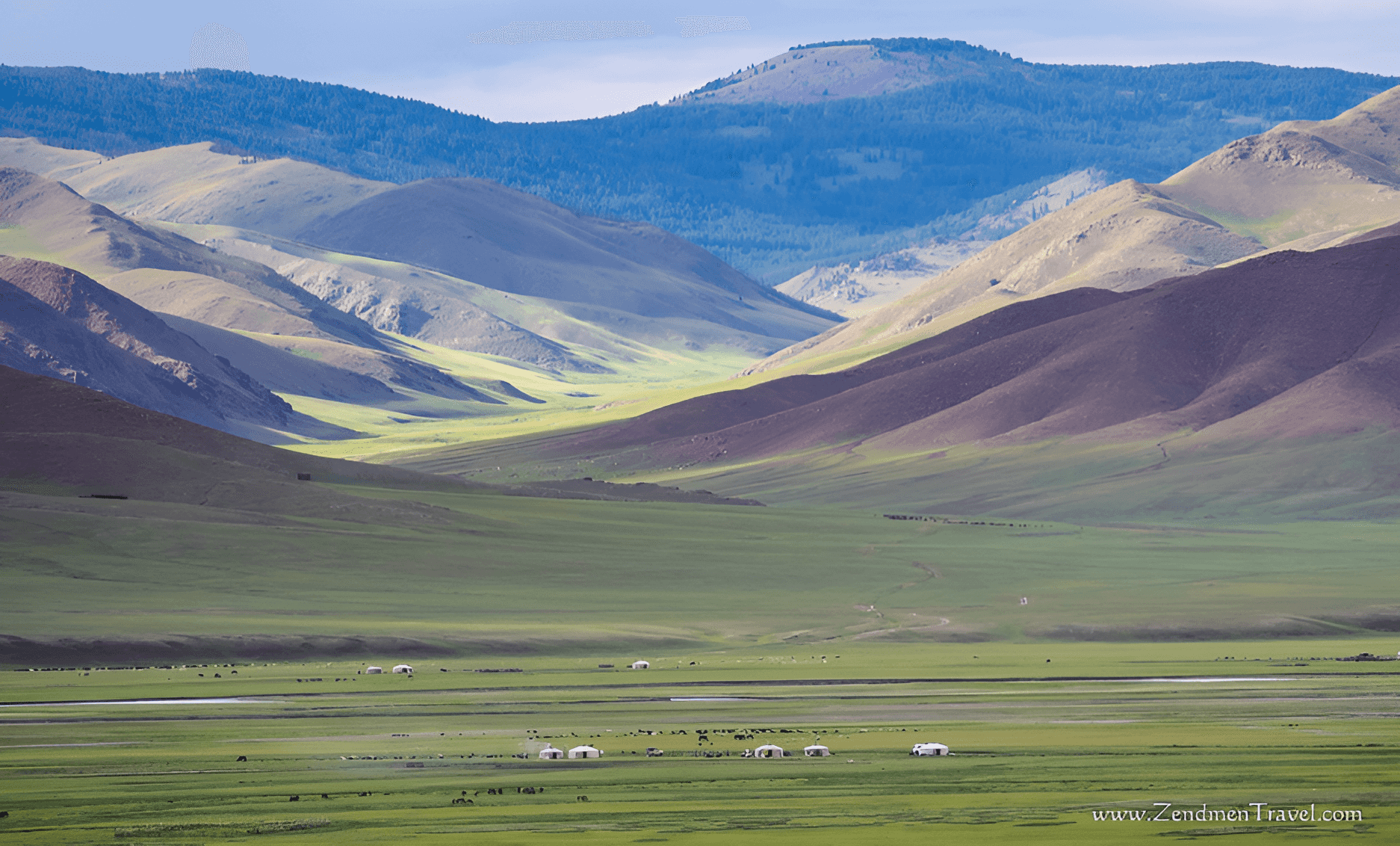
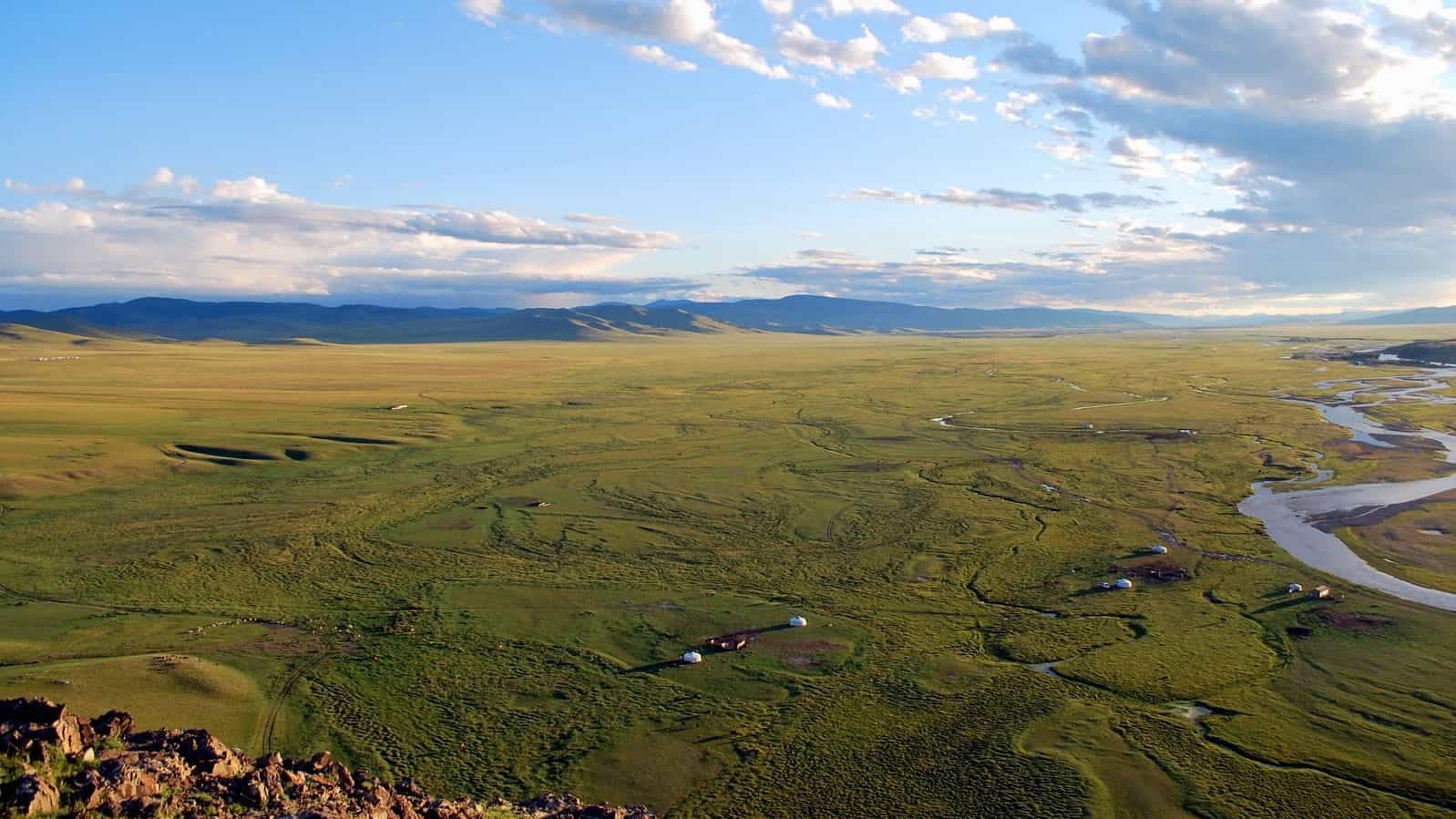
Clamber the dunes of Elsen Tasarkhai and the rocky ridges of Khugnu Khan as you explore this striking desert-steppe landscape
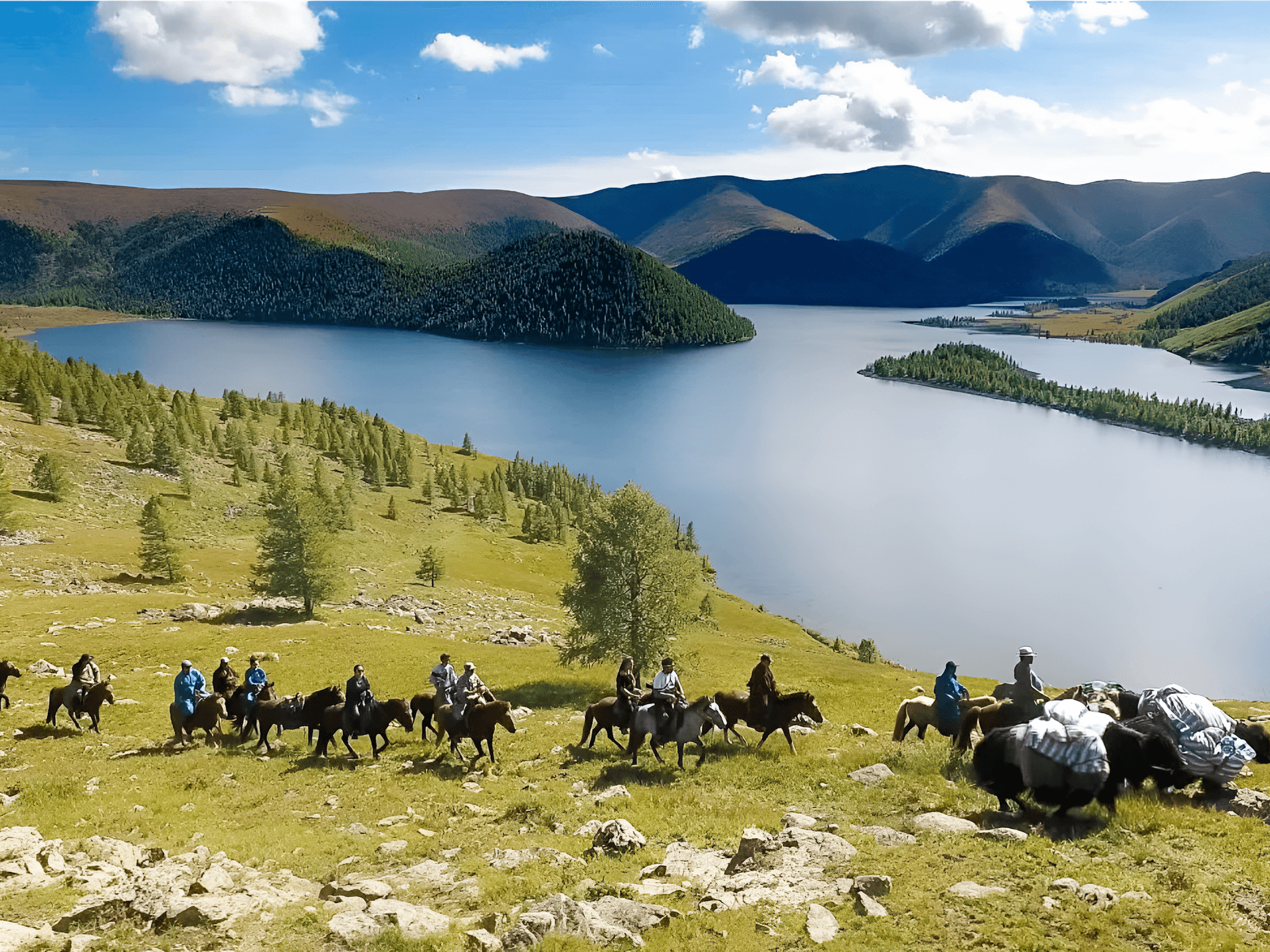
Ride deep into the remote Eight Lakes of the Khangai Mountains on horseback, camping in the wilderness beside pristine alpine waters
Hike to the hidden Tuvkhun Monastery and explore Erdene Zuu, learning about Mongolia’s living Buddhist traditions
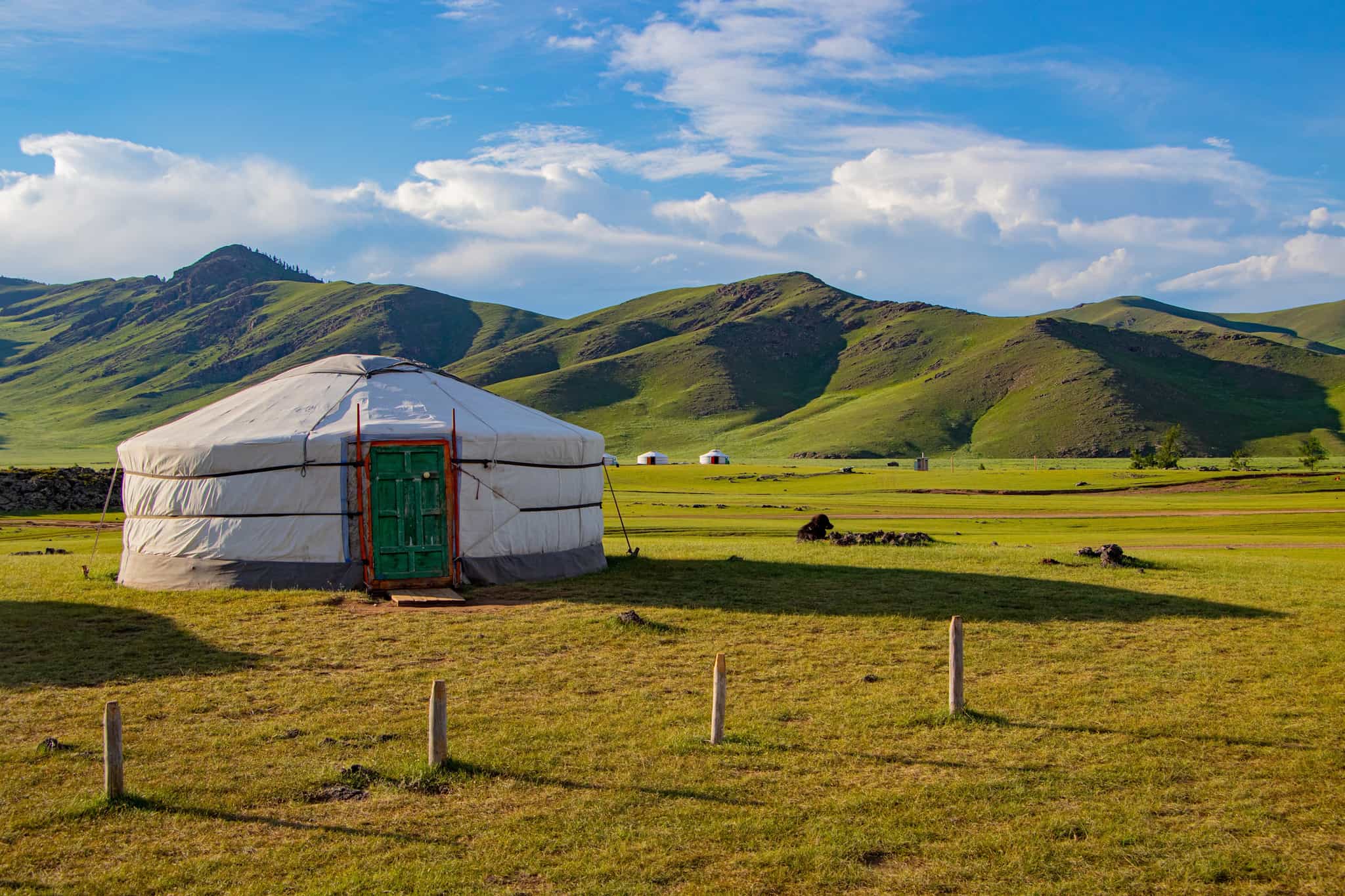
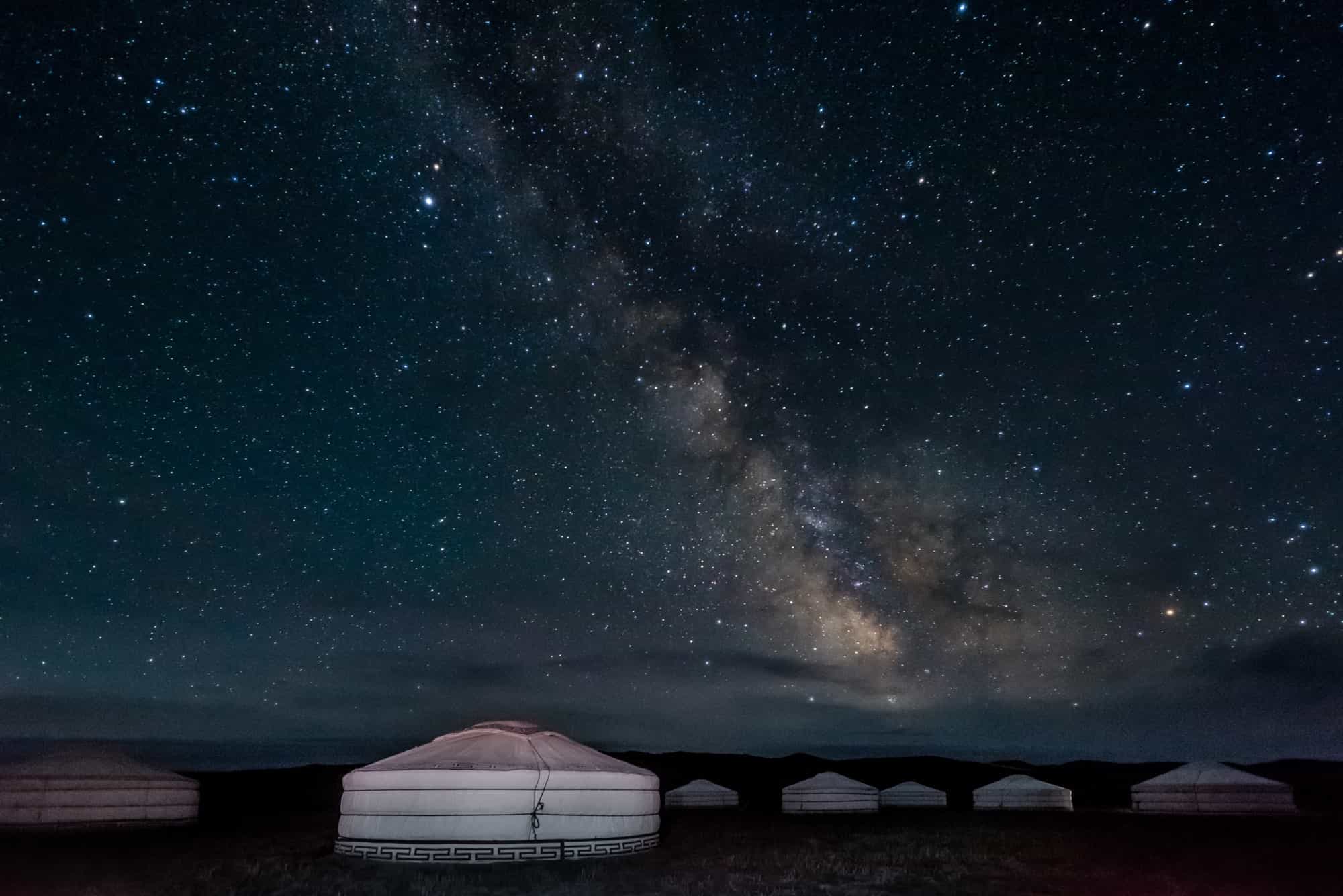
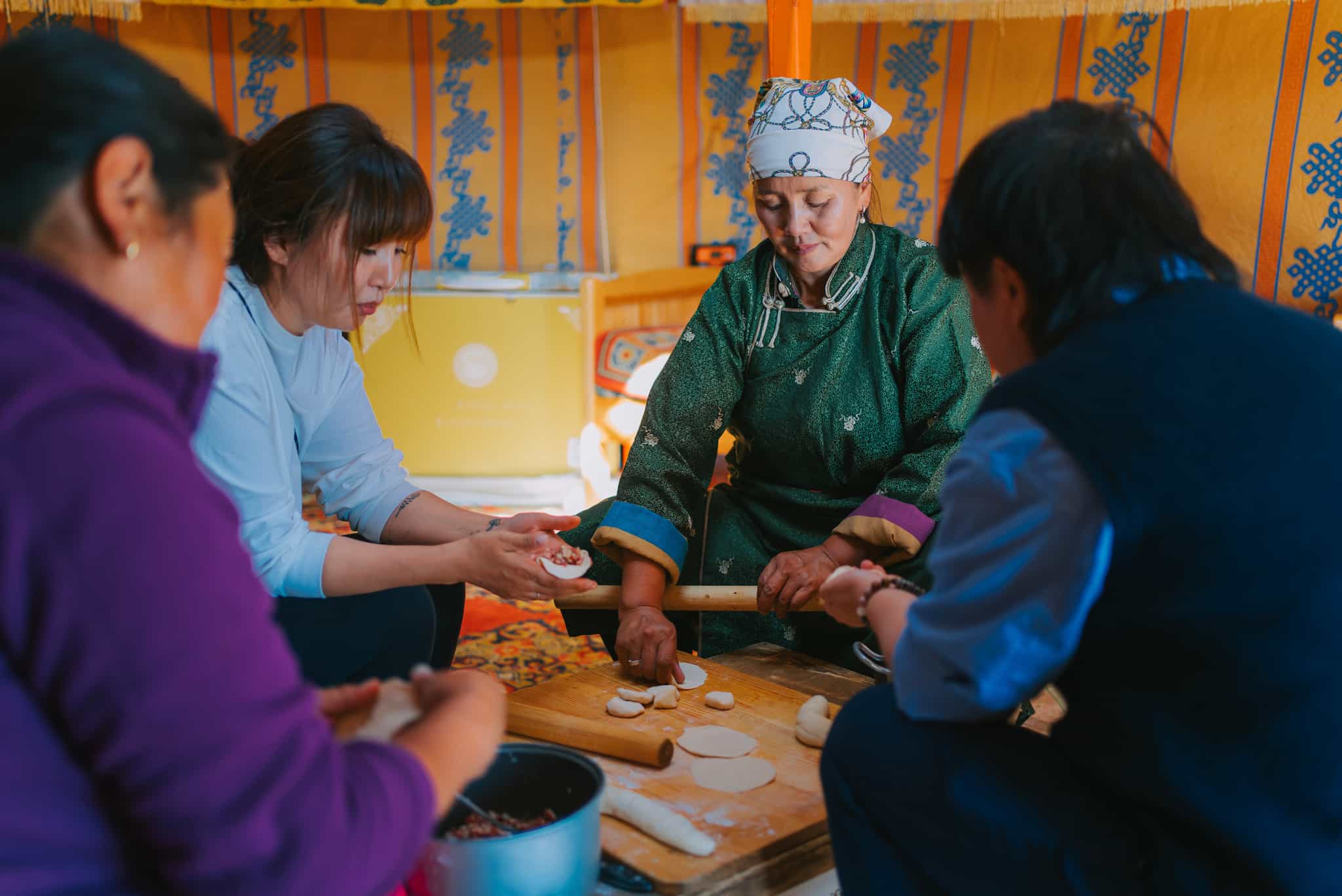
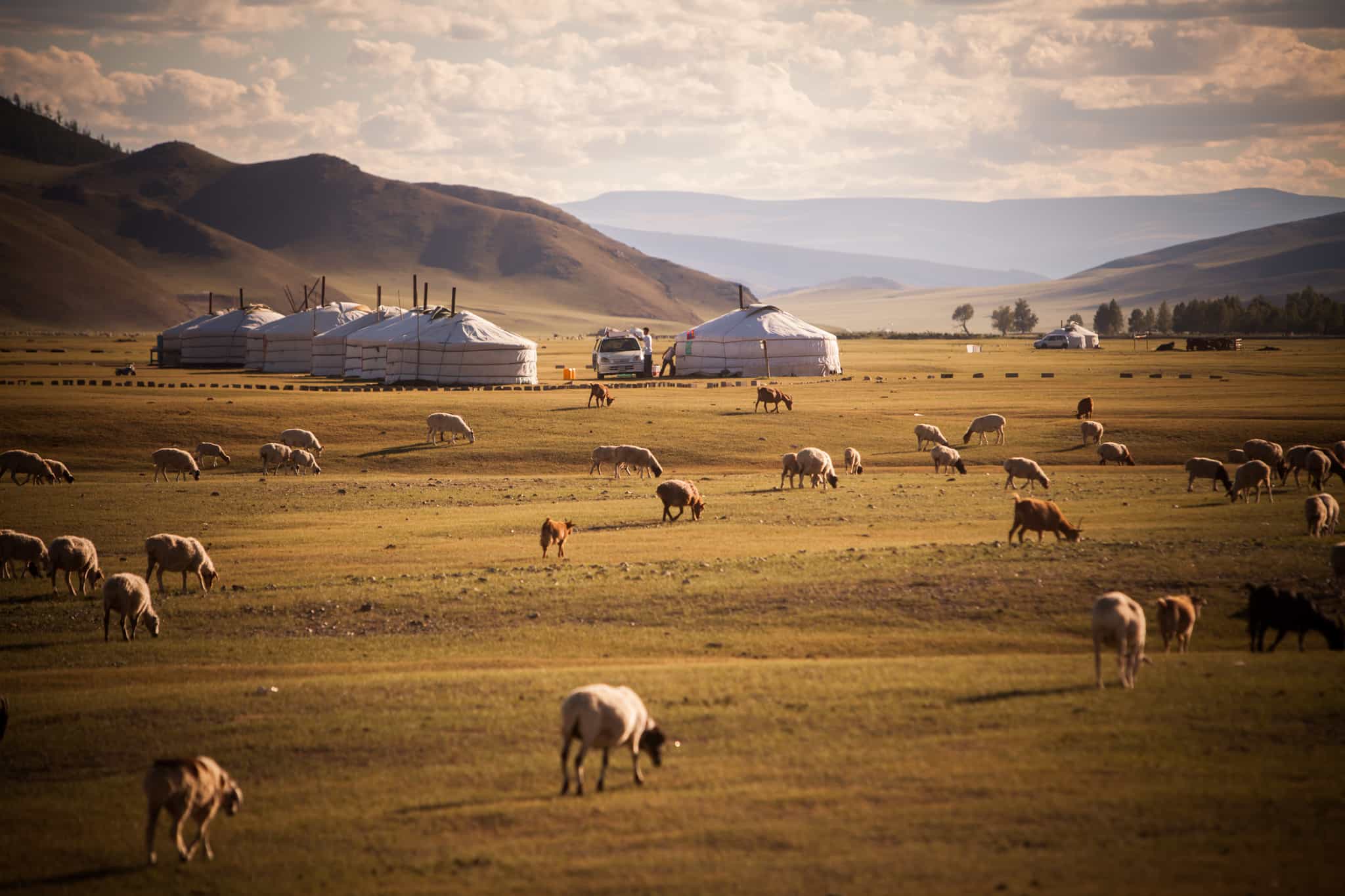
Stay in traditional gers (yurts) in the Orkhon Valley, meeting modern nomadic families and gaining insight into life on Mongolia’s vast steppes
Key Information
Day 1
Welcome to Mongolia
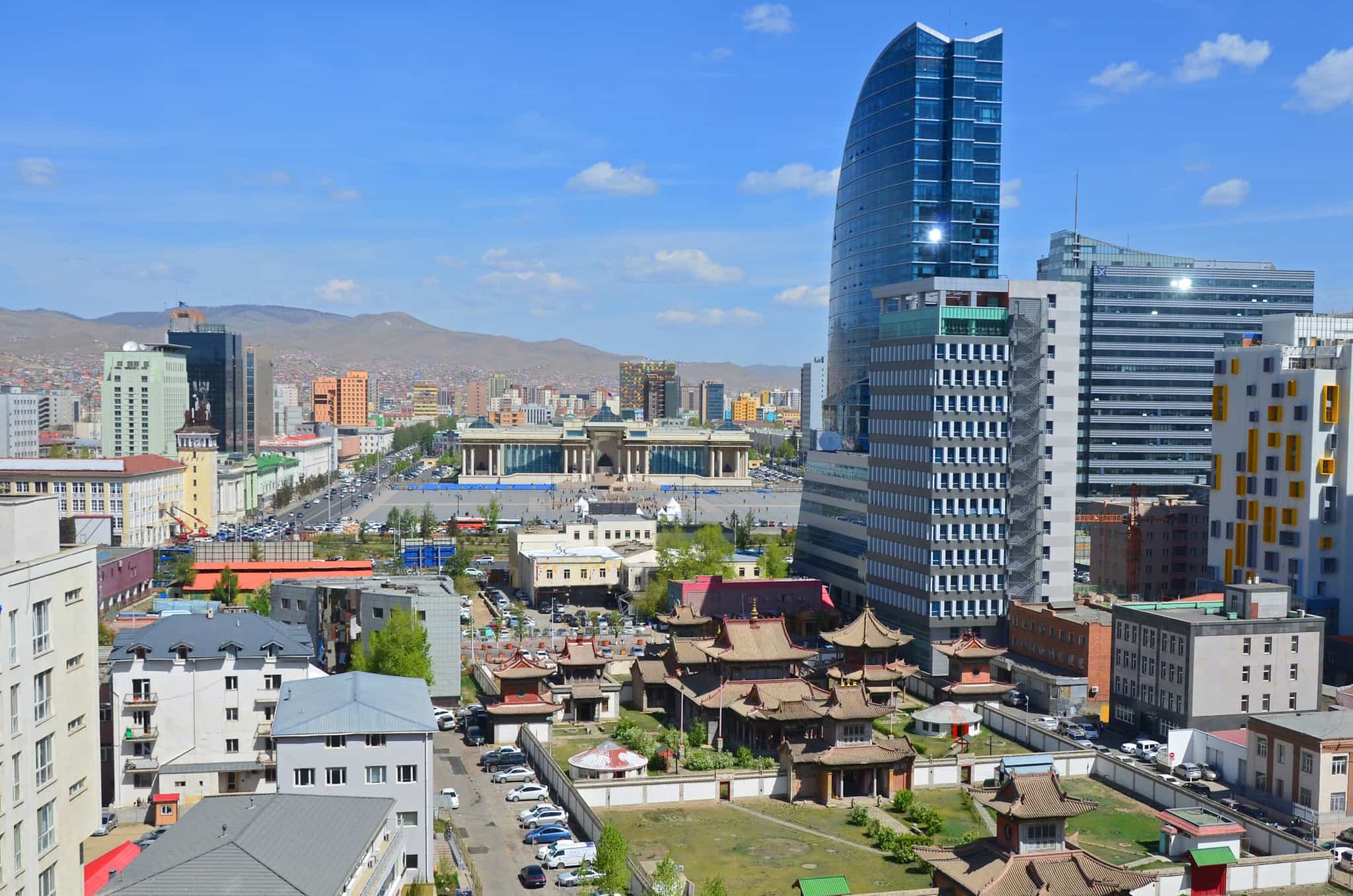
Meet your driver at the airport and transfer to your centrally located hotel in Ulaanbaatar. If you've arrived in the morning, you can join an optional afternoon visit to Gandantegchinlen Monastery, the spiritual heart of Mongolian Buddhism. Explore the Megjid Janraisag Temple, home to a 26m gilded statue of Avalokiteshvara, and gain insight into the country’s living Buddhist traditions as monks carry out their daily ceremonies. If you arrive in the afternoon, simply check in and relax before meeting your guide and fellow travellers for a welcome briefing later in the day. You’ll run through the journey ahead, then head out together for dinner – your first taste of Mongolian cuisine and a chance to get to know the group before your adventure begins.
Day 2
Hustai National Park & the 'Mini Gobi'
Hiking
Wildlife Tracking
Driving
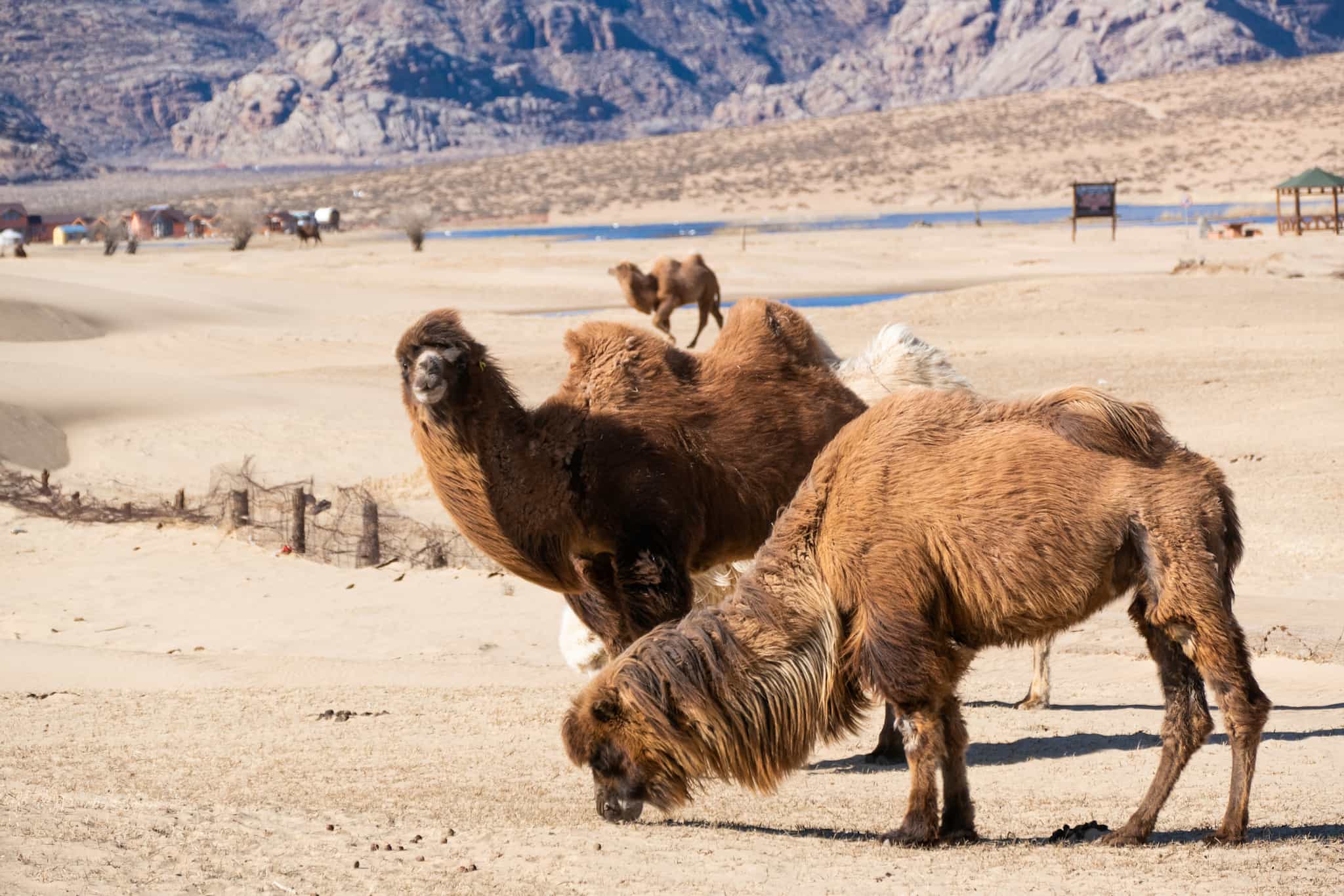
After an early breakfast, leave Ulaanbaatar behind and head west across the open steppe towards Hustai National Park, a couple of hours' drive away. This protected reserve is home to the rare takhi – the world’s only true wild horse – successfully reintroduced to Mongolia in the 1990s. Stop at the park’s information centre to learn about the conservation programme, then venture into the valleys in search of these remarkable animals. Keep watch for marmots, red deer, steppe gazelles and birds of prey circling overhead. After lunch, continue for around three hours to Elsen Tasarkhai, often referred to as Mongolia’s 'Mini Gobi', where golden sand dunes rise from rolling grasslands and distant hills. On arrival at Sweet Gobi Geolodge, settle into your traditional ger (yurt )at this low-impact camp set between dunes and open steppe. Designed with sustainability in mind, the camp operates without fences and keeps infrastructure minimal, so you feel immersed in the landscape. After a short introduction to camp life, head out on a gentle hike into the nearby dunes as the light softens over the grasslands and shifting sands. Later, enjoy dinner at camp and your first night beneath Mongolia’s wide, star-filled skies.
Day 3
Khugnu Khan & the Orkhon Valley
Hiking
Driving
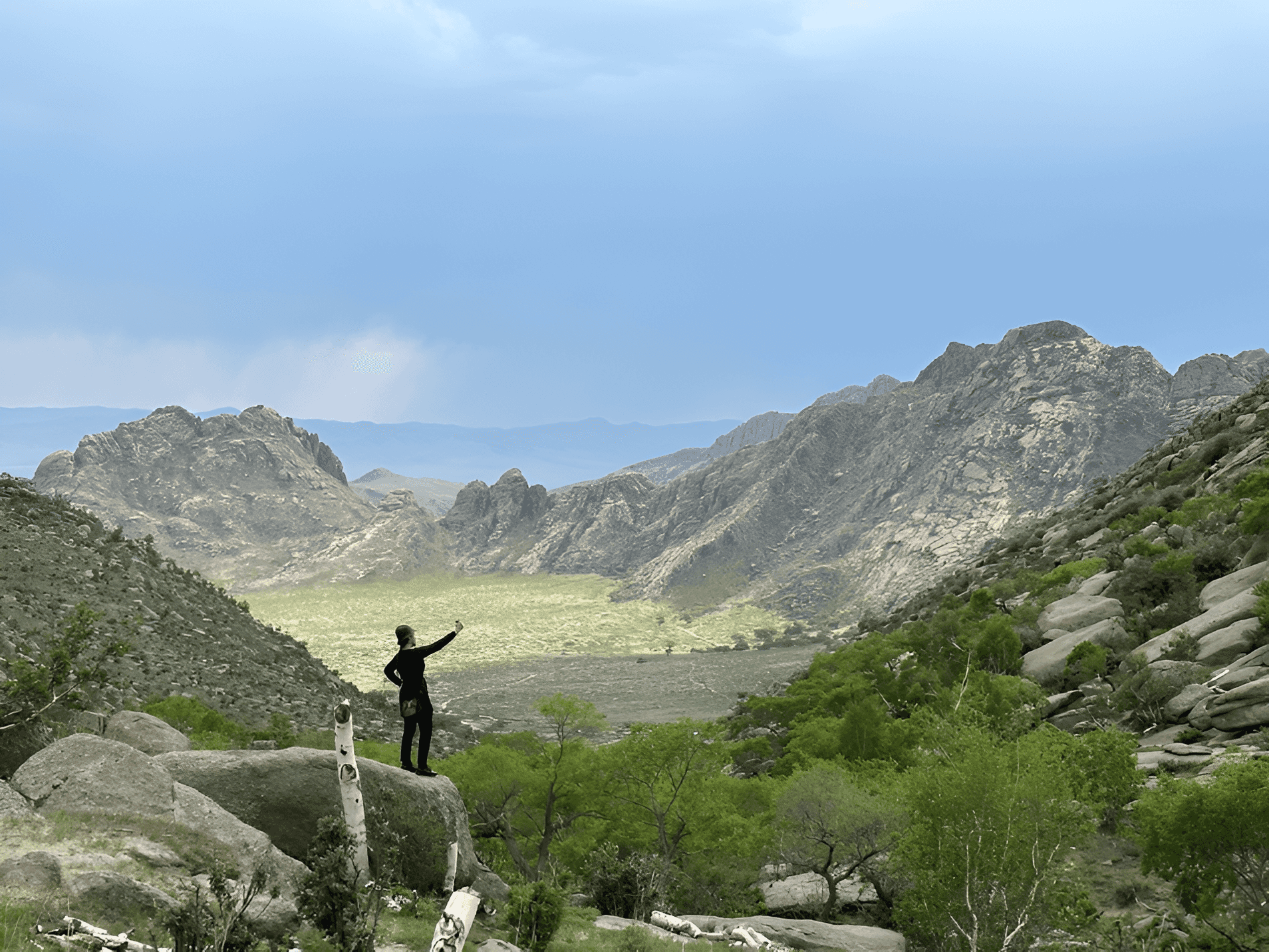
After breakfast, drive to the nearby Khugnu Khan Mountains, a dramatic outcrop rising to 1967m from the surrounding steppe. Set out on a hike along rocky ridgelines and across open grasslands, where sand dunes, granite formations and rolling hills meet in sharp contrast. As you walk, your guide will share stories of 17th-century battles between the Oirad and Khalkh Mongols, adding context to this wide, elemental landscape. Later, you can opt for a camel ride across the nearby dunes – a gentle way to experience Mongolia’s desert-steppe terrain from a different perspective. After lunch, continue west for around 150km to the UNESCO-listed Orkhon Valley, considered the birthplace of nomadic civilisation and home to Mongolia’s longest river. The drive is part of the adventure, crossing sweeping grasslands framed by distant mountains and dotted with grazing livestock. For the next two nights, stay at Ursa Major Eco Camp, a low-impact ger camp set in a river valley. Built to minimise its environmental footprint, the camp blends into its surroundings and offers a simple, atmospheric base in the heart of the steppe. After settling in, take a short hike along the river or relax outside your ger as the light fades across the valley.
Day 4
Hike to Tuvkhun Monastery, a hidden sanctuary in the Khangai Mountains

Hiking
Driving
After breakfast, drive to a spot in the forested foothills of the Khangai Mountains (around 1.5 hours away) for a hike through larch woodland, gradually ascending to one of Mongolia’s most sacred and secluded monasteries. Perched at over 2300m on Shireet Mountain, Tuvkhun Monastery was founded in 1651 by Zanabazar, Mongolia’s first spiritual leader. The monastery is simple and partially reconstructed, yet its setting and significance make it remarkable. Long used as a place of meditation and retreat, it retains a strong sense of quiet spirituality. Explore the small wooden temples and meditation caves carved into the rock, then enjoy a picnic lunch overlooking the Khangai Mountains before hiking back down to meet your driver. Return to Ursa Major Eco Camp in the afternoon and, after dinner, step outside your ger to take in one of Mongolia’s greatest natural spectacles – the vast night skies. On clear evenings, the camp’s telescope may be available for stargazing, offering a closer look at constellations and planets in one of the country’s darkest regions.
Day 5
Ulaan Tsutgalan Waterfall & the Upper Orkhon

Hiking
Driving
Today you’ll travel deeper into the Orkhon Valley. En route, stop at Uurtiin Tokhoi for wide views over the meandering Orkhon River, then continue to Temeen Chuluut, a Bronze Age archaeological site scattered with ancient burial mounds and stone carvings. Your guide will share insight into Mongolia’s early nomadic civilisations, adding context to this stark, windswept landscape. Continue to Ulaan Tsutgalan Waterfall, formed by volcanic eruptions and earthquakes thousands of years ago. A short walk leads to the falls, where the Orkhon River plunges into a basalt gorge. There will be time to explore part of today's route along the Orkhon Valley on foot before reaching Boorog Ger Camp. The afternoon is free to relax and enjoy the peaceful setting. This evening, settle into your ger – equipped with proper beds and shared shower facilities – before heading further off-grid tomorrow. As the next two nights will be spent wilderness camping, you’ll pack a smaller overnight bag in preparation for the adventure ahead.
Day 6
Into the remote Eight Lakes
Horse Riding
Hiking
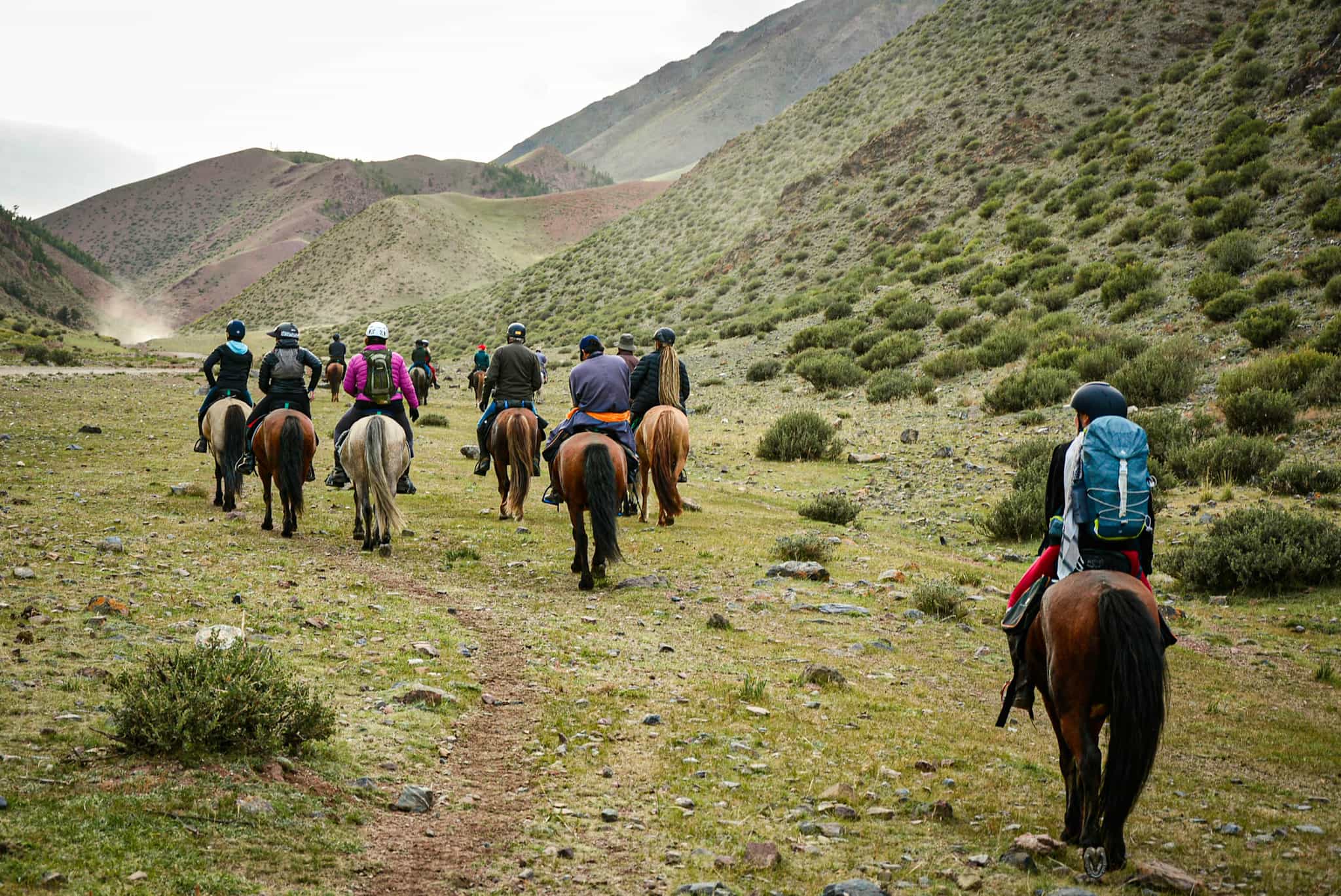
This morning, set off on a horse trek along the Bituut River, ascending gradually through the wooded slopes of the Khangai Mountains (if you prefer to hike, you can follow the same route on foot alongside the riders). The trail climbs from around 2100m to 2400m, weaving through alpine meadows, larch forest and open clearings with wide views across this remote highland region. You’ll enter the Khuisiin Naiman Nuur Nature Reserve – the Eight Lakes – a protected volcanic landscape formed by eruptions within the Khangai range. Over the next two days, you’ll explore part of this enormous lake system, including Khuis and Shireet lakes. Arrive at Khuis Lake by lunchtime, the smallest of the group and set among forested ridgelines and wildflower clearings. After settling into your wilderness campsite, complete with dining tent and a basic camping toilet, enjoy lunch before heading out on a short guided hike to a panoramic viewpoint overlooking the lake basin, giving you a sense of the scale and isolation of the Khangai Mountains. As dusk falls, gather around the campfire while your local guides prepare dinner, sharing stories beneath some of the darkest, clearest night skies you'll have ever seen.
Day 7
A remote day trek to Lake Shireet
Hiking
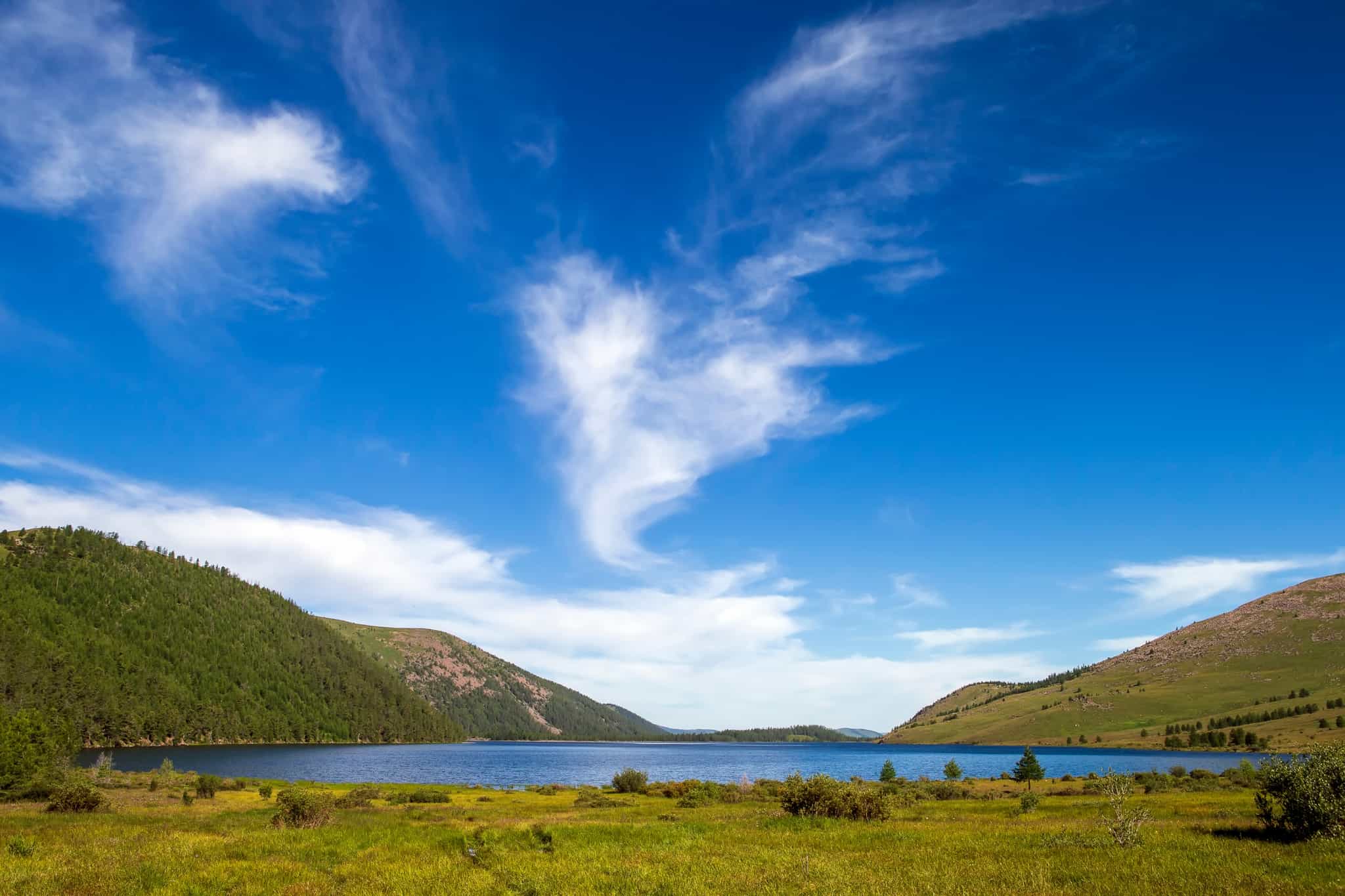
Today you’ll head deeper into the Eight Lakes region on a rewarding hike to Lake Shireet, the largest of the volcanic lakes scattered across this remote highland basin. The return route covers around 15km, crossing forest, alpine meadow and open marshland at altitudes between 2400m and 2500m. The landscape shows signs of ancient volcanic eruptions and glacial movement, from sculpted ridgelines to rocky moraines and wide valleys framed by the peaks of the Khangai Mountains. In the distance, Mount Iv Uul rises to 3165m, reinforcing the sense of scale and isolation. Accessible only by foot or horseback, this is one of Mongolia’s most pristine wilderness areas, home to ibex, red deer and, on occasion, grey wolves. Reach the shores of Lake Shireet by late morning and pause for a picnic beside its still waters, far from roads or signs of modern life. In the afternoon, retrace your steps to camp at Lake Khuis. This evening, gather around the fire for dinner before settling into your tent for another peaceful night in the mountains.
Day 8
Horse trekking and nomadic encounters
Horse Riding
Driving
This morning, saddle up for your final horse trek, descending from the high alpine basin back towards Boorog Ger Camp. Cross a mountain pass and follow the Bituut River as you ride from 2400m down to 2100m through forested slopes and open meadow. If you prefer, you can follow the same route on foot. Afterwards, continue by vehicle to visit a local horse-herding family in the Bat-Ulzii region. Here, you’ll experience nomadic hospitality first-hand, learning how airag (fermented mare’s milk and Mongolia’s national drink), is produced. Join your hosts to prepare Mongolian dumplings before sharing a late lunch together – a chance to connect with life on the steppe and its enduring traditions. In the afternoon, drive on to Kharkhorin, once the capital of the Mongol Empire under Ogedei Khan and settle into your final ger camp of the trip. Now a small provincial town, Kharkhorin sits within one of Mongolia’s most significant historical landscapes.
Day 9
Kharkhorin & Erdene Zuu Monastery
Driving
After a relaxed breakfast, head out to visit Erdene Zuu, Mongolia’s oldest surviving Buddhist monastery and an important spiritual centre. Founded in 1585 on the ruins of the ancient Mongol capital, it is enclosed by 108 white stupas rising from the steppe like a sacred boundary. Within its walls, centuries of faith, destruction and revival are reflected in the temples and courtyards. If timing allows, you may witness the rhythmic chanting of monks during daily prayers, offering insight into Mongolia’s living Buddhist traditions. Later, begin the long drive back to Ulaanbaatar, watching vast grasslands gradually give way to the capital. This evening, gather for a farewell dinner to mark your journey through Mongolia’s valleys and high mountain lakes.
Day 10
Farewell Mongolia!
After breakfast, say goodbye to your fellow travellers, taking with you memories of vast steppe landscapes, remote lakes and time spent in Mongolia’s nomadic heartland. Your host will transfer you to Chinggis Khaan International Airport in time for your onward journey home. If you have a later departure, there may be time for some last-minute exploring or shopping in Ulaanbaatar. The Narantuul Market and Galleria Ulaanbaatar are good options for locally made souvenirs – Mongolia is especially known for high-quality cashmere, yak and camel wool products.
The Area
Logistics
Starts
Chinggis Khaan International Airport, Ulaanbaatar (UBN)
Arrive by 16:00 on Day 1
Ends
Chinggis Khaan International Airport, Ulaanbaatar (UBN)
Depart any time on Day 10
Transfers
Private transfers from and to Chinggis Khaan International Airport in Ulaanbaatar are included when you arrive on Day 1 and depart on Day 10. Please provide your flight details at the time of booking so your local host can arrange these services in advance.
Your trip briefing and welcome dinner take place on the evening of Day 1, so we recommend arriving into Chinggis Khaan International Airport no later than 16:00 to allow time to transfer to the hotel and settle in. If you land in the morning, there is an included guided afternoon visit to Gandantegchinlen Monastery. On Day 10, the trip concludes after breakfast with a transfer to the airport. If you’d prefer to arrive early or extend your stay in Ulaanbaatar, your host can assist with arranging additional nights of accommodation and private transfers. Please see the Optional Extras section for further details
Travel options
Chinggis Khaan International Airport is well connected via major Asian and Middle Eastern hubs. Travellers from the UK and Europe typically connect via Istanbul, Seoul, Frankfurt, while travellers from North America often connect via Seoul or other Asian gateways. Airlines such as Turkish Airlines, Korean Air and MIAT Mongolian Airlines operate regular international routes into Ulaanbaatar. Given Mongolia’s geographic location, most international journeys require at least one stop. We recommend allowing generous connection times, particularly on the outbound journey.
Day 1
Breakfast
Lunch
Dinner
Day 2 – Day 5
Breakfast
Lunch
Dinner
Day 6 – Day 7
Breakfast
Lunch
Dinner
Day 8
Breakfast
Lunch
Dinner
Day 9
Breakfast
Lunch
Dinner
Day 10
Breakfast
Lunch
Dinner
What is the food like?
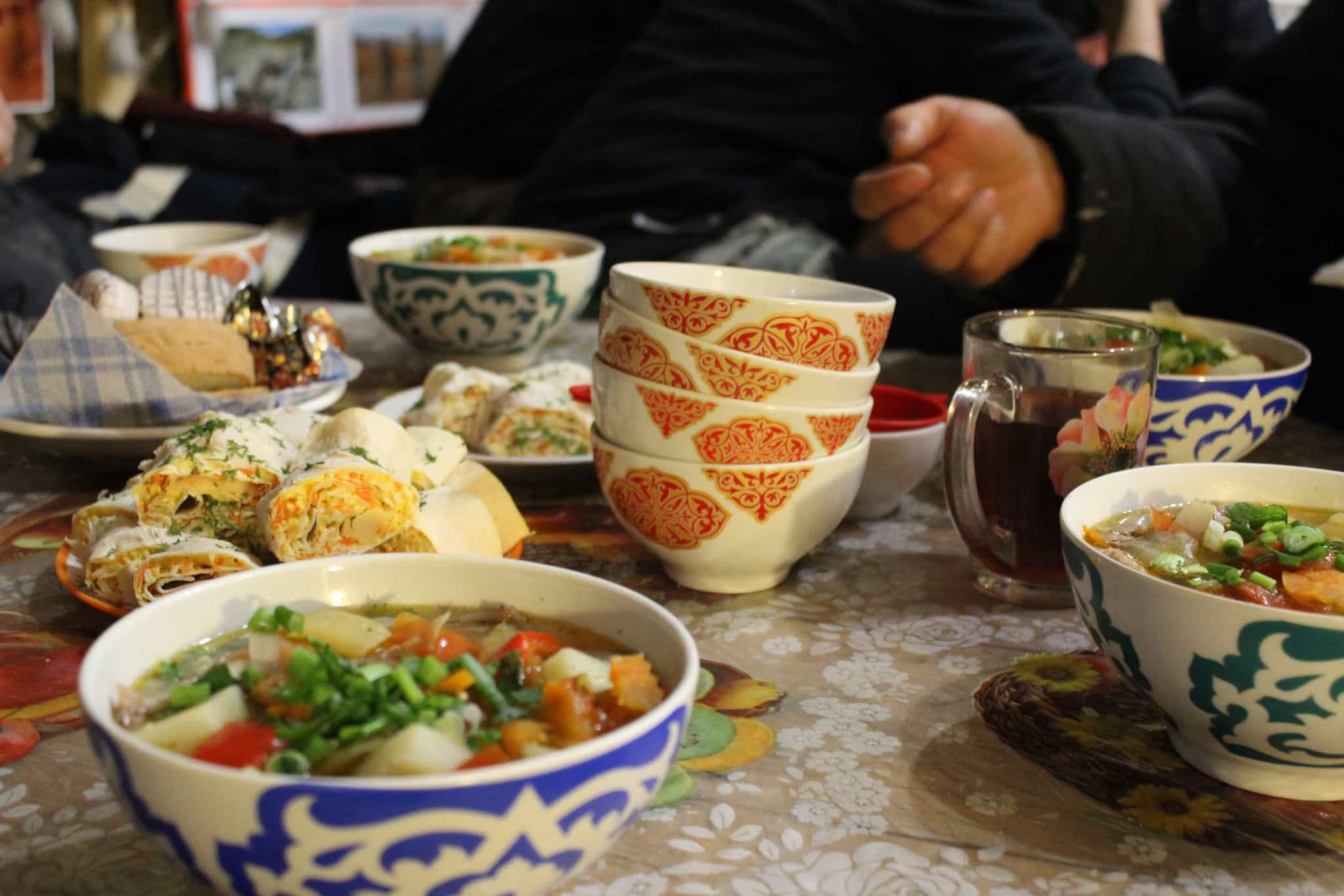
Food is an integral part of this journey, offering insight into Mongolia’s nomadic culture and traditions. While Mongolian cuisine is traditionally meat-focused, meals throughout the trip are varied, hearty and designed to suit different dietary requirements where possible. Breakfasts typically include fresh bread, eggs, porridge, pancakes or fried dough, seasonal fruit, jams, and plenty of tea and coffee. Lunches served in the yurts are simple and satisfying – often homemade noodle soups, rice dishes, stir-fried vegetables, dumplings (buuz), salads and grilled meats, depending on the region and availability of ingredients. In Ulaanbaatar, you’ll enjoy restaurant meals featuring a mix of Mongolian and international dishes. Out on the steppe, meals are of a more traditional, home-cooked style, reflecting local ingredients and pastoral life. During your visit to a nomadic family, you’ll learn how fermented mare’s milk (airag) is produced and join in preparing traditional dumplings before sharing a meal together – a meaningful cultural exchange and insight into everyday life on the steppe. While wilderness camping in the Eight Lakes region, a dedicated cook travels with your group to prepare fresh meals in camp. This ensures high standards of food safety and quality, even in remote conditions. Expect wholesome, nourishing dishes served in a communal setting, a welcome comfort after a day of trekking or horse riding.
If you have any dietary requirements, intolerances or allergies, please check the FAQ below: ‘Can my dietary requirements be catered for on this adventure?’ for specific advice relating to this trip. The availability of foods you may get at home varies in different destinations, so please read the FAQ in full before making your booking to ensure that this trip can accommodate your dietary needs.
What is the accommodation like?
Ulaanbaatar
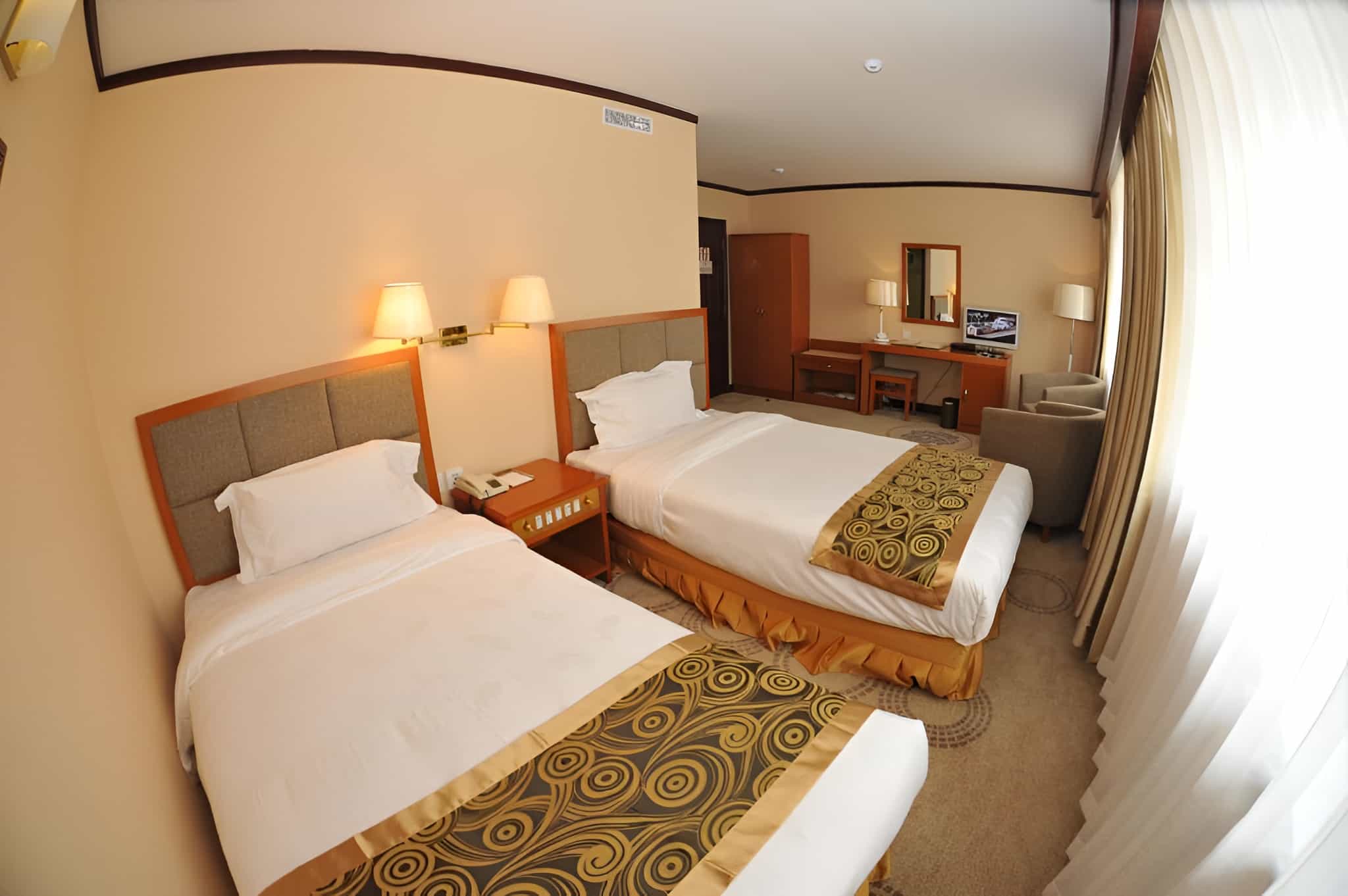
You’ll spend your first and final nights in Ulaanbaatar, usually at the Flower Hotel, a well-located and comfortable base in the capital. Rooms are twin-share with en-suite bathrooms, air conditioning and modern amenities. The hotel has several on-site dining options and a Japanese-style sauna, perfect for unwinding at the end of your adventure. Its central location makes it easy to explore the city on arrival, while offering a comfortable place to relax, regroup and reflect on your journey across Mongolia’s vast landscapes. Occasionally, subject to availability, you may stay at an alternative accommodation of similar standards such as the comfortable Chinggis Khan Hotel.
Elsen Tasarkhai
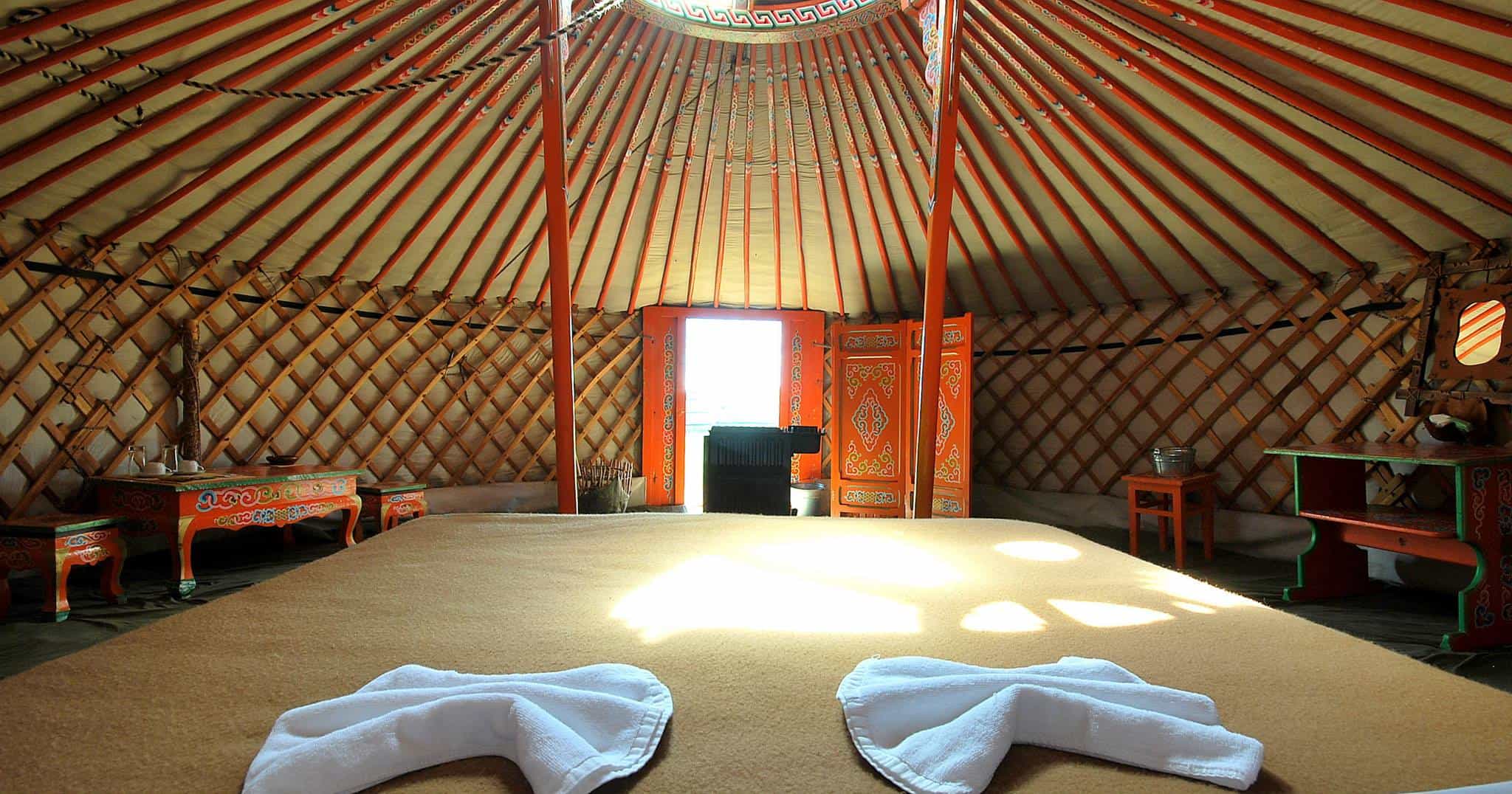
You’ll spend one night at Sweet Gobi Geolodge, an eco-conscious ger camp set between the dunes and grasslands of Elsen Tasarkhai. The twin-share yurts are decorated with locally crafted furniture and textiles and heated by traditional wood-burning stoves, creating a cosy retreat once temperatures drop in the evening. In keeping with its low-impact philosophy, the camp operates without electricity in individual yurts (electricity plugs are available in the main restaurant) or running water. There are shared dry toilets, and instead of showers, guests are provided with hot, pine-scented towels to freshen up. The central restaurant serves traditional Mongolian cuisine, while the bar acts as the social heart of the camp – a welcoming space to enjoy a drink, play games and unwind to the sounds of Mongolian music as the sun sets over the steppe. Facilities are intentionally simple but thoughtfully managed, offering comfort while preserving the wild, open character of this unique landscape.
Orkhon Valley
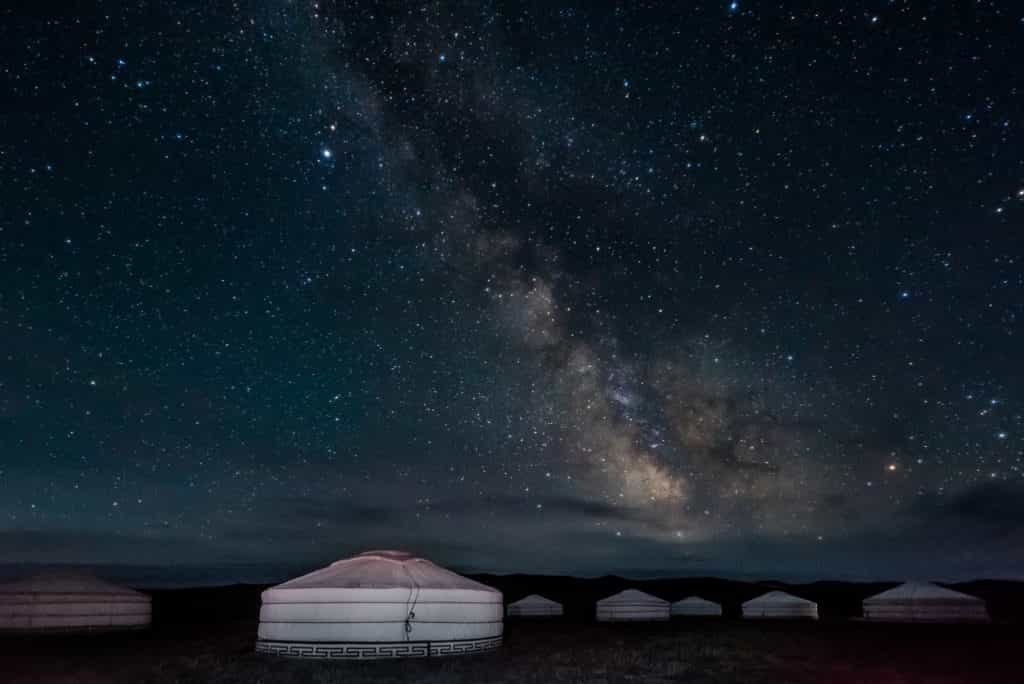
You’ll spend two nights at Ursa Major Ger Camp, a low-impact eco camp set in a quiet corner of the Orkhon Valley, surrounded by open grasslands and river scenery. The camp is designed to blend into its natural surroundings, offering a simple and atmospheric stay in traditional Mongolian gers (yurts). Accommodation is in twin-share gers furnished with proper beds and warm bedding. Similarly to Sweet Gobi Geolodge, facilities are intentionally basic to minimise environmental impact: dry toilets are shared and located in a separate amenities block, and instead of standard showers, guests are provided with hot towels in the evening and the option of a simple hair-washing service in the morning. There is no running water inside the gers and electricity is limited in the common areas only. The focus here is on tranquillity and immersion rather than luxury. With no light pollution and minimal infrastructure, evenings are best spent outside your ger watching the sky darken over the valley – and, on clear nights, enjoying exceptional stargazing in one of Mongolia’s most peaceful settings.

Upper Orkhon Valley
You’ll spend one night at Boorog Ger Camp, a small, family-run camp set in the Upper Orkhon Valley at the gateway to the Naiman Nuur (Eight Lakes) National Park. Surrounded by larch forest and backed by the Khangai Mountains, the setting feels peaceful and remote, with wide valley views in every direction. The camp has a limited number of traditional furnished gers and offers shared bathroom facilities with water closets and hot showers – a welcome stopping point to rest, reset and prepare before beginning the more self-sufficient, off-grid part of the adventure.

Wild Camping
For two nights, you’ll experience wilderness camping in the remote Eight Lakes region (Naiman Nuur), deep within the Khangai Mountains. Reached only by horseback or on foot, this high-altitude volcanic basin sits at around 2400m above sea level and offers a rare sense of isolation far from roads or settlements. You’ll stay in twin-share expedition tents set up by your local support team, near the shores of Lake Khuis. A simple camping toilet is installed nearby. There are no permanent facilities, electricity or showers – this is a fully off-grid experience. A dedicated cook travels with the team to prepare fresh, hearty meals in camp, ensuring quality, hygienically prepared meals despite the remote setting. Evenings are spent gathered around the fire, with crisp mountain air, total silence and some of the darkest skies in Mongolia overhead. Conditions are simple but comfortable for a wilderness setting. This is the most adventurous part of the journey: raw, peaceful and deeply immersive.
Khakhorin
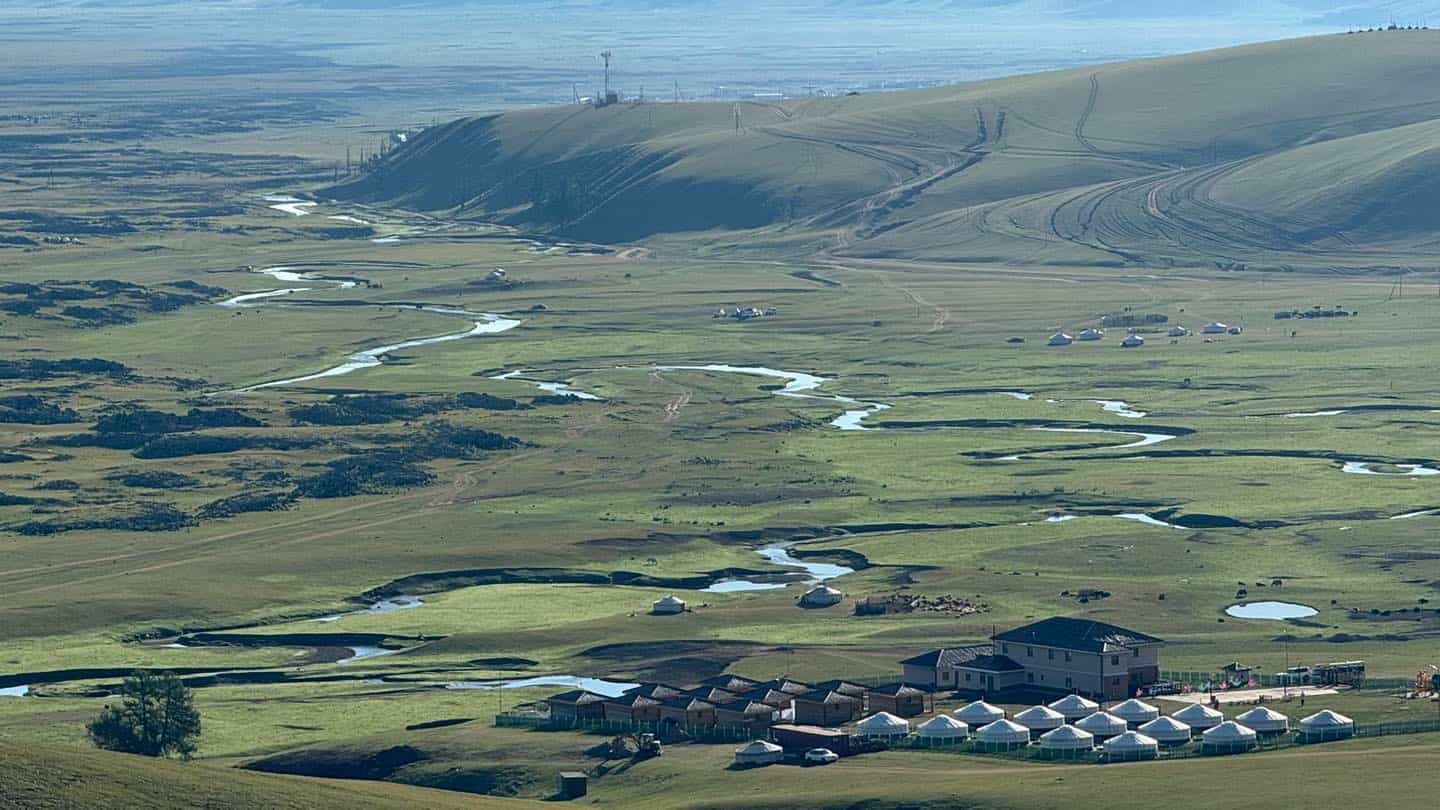
You’ll spend one night at Urguu Ger Camp, located near Kharkhorin in the heart of Mongolia’s ancient capital region. Set on open steppe land not far from Erdene Zuu Monastery, the camp provides a comfortable and well-positioned base for exploring this historically significant area. Accommodation is in traditional twin-share gers furnished with proper beds and warm bedding. Facilities include a shared amenities block with flushing toilets and hot showers – a welcome comfort after your time in the wilderness. There is also a central dining ger serving local dishes in a relaxed setting. While simple and in keeping with Mongolia’s ger camp style, Urguu offers more conventional facilities than the eco camps and wild camping sections earlier in the trip, making it a comfortable final night in the countryside before returning to Ulaanbaatar.
Upgrades
For solo travellers looking for their own space, an optional private room and tent can be secured for the full duration of the trip, for an extra charge (see Optional Extras for pricing). Please request this at the time of booking – this is subject to limited availability, due to the size of the camps.
This trip runs from June to mid-September, Mongolia’s short summer season, when conditions are generally mild and ideal for outdoor activities like trekking and horse riding. Mongolia’s landscapes also shift noticeably through the summer season. Early summer (June) brings lush green steppe and wildflowers, July is typically the warmest and most vibrant, while late August and early September see cooler temperatures, golden grasses and crisp, clear skies.
Daytime temperatures during the summer typically range between 18–28°C (64–82°F) in the steppe and Mini Gobi regions, though strong sun and wind exposure can make it feel hotter or cooler. Evening temperatures drop quickly after sunset.
In the higher-altitude Eight Lakes region (2100–2500m), expect cooler conditions, with daytime temperatures of 12–20°C (54–68°F) and nighttime lows of 0–8°C (32–46°F).
Weather can change quickly, with occasional short rain showers and gusty winds. Layered clothing, sun protection and a warm jacket are essential, particularly for the wilderness camping section. Most ger camps are equipped with wood-burning stoves, which can be lit for warmth if needed.
We’re still waiting to collect any reviews from other travellers on this trip. However, all our hosts go through an extensive vetting process to ensure that your adventure is awesome.
Itinerary Activities
- Guided visit to Hustai National Park, tracking takhi (wild horses)
- Guided desert hike and meditation session in Elsen Tasarkhai (aka 'Mini Gobi')
- Guided hike in the Khugnu Khan Mountains
- Guided hike to Tuvkhun Monastery
- Visit to Ulaan Tsutgalan Waterfall and Temeen Chuluut Bronze Age archaeological site
- Guided horse trekking in the Khangai Mountains (Eight Lakes region)
- Guided trek to Lake Shireet
- Traditional Mongolian dumpling-making experience with a nomadic family
- Guided visit to Erdene Zuu Monastery
Guides
- 1 expert, local, English-speaking guide, with an extra assistant guide for groups of 8+ travellers.
During the horse trekking section in the Eight Lakes region, additional specialist support is provided:
- 2 horse wranglers for 1–4 riders
- 3 horse wranglers for 5–9 riders
- 5 horse wranglers for 10–14 riders
This ensures a high level of safety, personalised attention and logistical support throughout the more remote sections of the journey.
Accommodation
- 2 nights in a comfortable, centrally located hotel in Ulaanbaatar
- 1 night in a eco ger camp nea the golden sand dunes of Elsen Tasarhai (Mini Gobi)
- 2 nights in a eco ger camp in the Orkhon Valley
- 1 night in a ger camp at the gate of the Naiman Nuur National Park
- 2 nights wilderness camping in the remote Eight Lakes region
- 1 night in a ger camp in Kharkhorin
Meals
All meals are provided for the duration of the trip. This includes:
- 9 tasty breakfasts
- 8 local lunches (including picnic lunches in remote mountain regions)
- 9 traditional dinners
Transfers
- Arrival airport transfer at any time on Day 1
- Departure airport transfer at any time on Day 10
- All transfers throughout the trip in comfortable air-conditioned 4WD Delica vehicles
Equipment
- All group camping equipment, including tents, camping mattresses and a 2-season sleeping bag
- Helmet during horse riding
Permits & Fees
- All permits and local fees required for the itinerary
Our trips are hassle-free by design. We include all the activities and equipment, as well as many of the meals, so you can simply rock up with your rucksack and share the adventure with your new pals.
Travel to and from the trip
Our trips do not include flights, trains or other travel to the start point and back from the end point.
Tips
Tipping is not as deeply ingrained in Mongolia as in some destinations, but it is appreciated and increasingly customary in the tourism industry. It is normal to tip drivers, ger camp staff, horse wranglers and other local support teams who assist throughout the journey.
To make the process simple, we operate a tipping kitty system on this tour. At the start of the trip, your guide will collect a contribution from each guest. This pooled fund is then used to tip service providers who support the group as a whole. If at any point you feel a service provider has not delivered an acceptable standard of service, please inform your guide so this can be addressed.
We recommend budgeting approximately $40 (USD) per person for the entire trip (around 150,000 Mongolian Tögrög) for the tipping kitty.
At the end of the trip, if you feel your tour leader has delivered an exceptional experience, a personal tip will be appreciated though entirely at your discretion. As a general guideline, we recommend $5–7 (USD) per person, per day.
Personal expenses
You know your own spending habits best, so please budget an appropriate amount for things like optional food and drinks, shopping and laundry.
Travel insurance
Travel insurance is compulsory for all of our adventures, and you'll need to provide your policy details before departure. Your insurance should offer adequate cover for overseas medical treatment, evacuation/repatriation, your baggage and equipment, and the specific activities involved in your adventure, including horse riding. We also recommend ensuring your policy includes cancellation and curtailment cover, in case you're unable to join your trip due to unforeseen circumstances such as illness.
Standard travel insurance may not cover all the activities included in your adventure, so it's essential to check the details carefully. There are adventure-specific providers that many travellers have used in the past, such as True Traveller (for those based in the UK or Europe), or Rise + Shield, both of which offer cover for a wide range of adventurous activities.
Please make sure your chosen policy meets your individual needs and covers all aspects of your trip as well as medical evacuation.
Visas
Visa requirements often change, and you are responsible for obtaining any required visas for this trip. Please check with your nearest embassy or consulate for up-to-date advice.
What's included?
- All camping equipment including tents, mattresses, and sleeping bags
- Helmet for horse riding
What do I need to bring?
BAGS
- Soft duffel bag or rucksack
- Daypack (40 litres) – large enough to carry your overnight kit for two nights while camping in the wilderness
- Waterproof liner or drybags for kitbag/rucksack
CLOTHES
- Down jacket
- Waterproof jacket
- Waterproof trousers
- Breathable wicking layers
- Fleece jacket or similar
- Thermals (merino best)
- Warm hat
- Gloves
- Buff or neckscarf
- Lightweight trousers/shorts/skirts
- T-shirts
- Underwear and socks
- Sunglasses
- Sunhat
- Sleepwear
- Hiking boots (worn-in)
- Sandals
SLEEPING
- Cotton or silk sleeping bag liner (recommended)
- Travel pillow (optional, for extra comfort during the camping nights)
OTHER
- Water purification tablets/treatment system (essential)
- Universal travel plug adapter
- Power bank or solar charger (essential)
- Passports (and visas)
- Travel insurance documents
- Ear plugs
- Insect repellent
- Suncream
- Personal first-aid kit (inc. blister treatment)
- Personal items (biodegradable toiletries, sanitary wear etc)
- Toilet kit (toilet paper, biodegradable bags to carry paper out to dispose of)
- Quick-dry towel
- Alcohol hand-gel
- Headtorch or torch
- Reusable water bottle x1 litre (or x2)
- Biodegradable wet-wipes
- Energy bars and snacks - read our article on Best Hiking Snacks
Additional Night in Ulaanbaatar Single Room
Payable Before Departure
Additional Night in Ulaanbaatar Single Room
… Per night
Additional Night in Ulaanbaatar Twin/Double Room
Payable Before Departure
Additional Night in Ulaanbaatar Twin/Double Room
… Per night
Optional Private Room and Tent Upgrade (9 nights)
Payable Before Departure
Optional Private Room and Tent Upgrade (9 nights)
… Per person
Private Arrival Transfer Ulaanbaatar Airport - Hotel (1-3 pax)
Payable Before Departure
Private Arrival Transfer Ulaanbaatar Airport - Hotel (1-3 pax)
…
Private Departure Transfer Ulaanbaatar Hotel - Ulaanbaatar Airport (1-3 pax)
Payable Before Departure
Private Departure Transfer Ulaanbaatar Hotel - Ulaanbaatar Airport (1-3 pax)
…
We partner with the World Land Trust to ensure this trip achieves Net-Zero emissions. We also support their Buy an Acre programme, helping local communities to buy and protect natural habitats in perpetuity.
What's the number?
It works out on average at 609kg of CO2 emissions per person, including all local transport, accommodation, food, activities, guides, staff and office operations.
The only thing it doesn’t include right now is flights and travel to the destination. We do make an overall estimate across all our customers separately, but as we don’t book flights, have customers from all corners of the world, and no way of reliably knowing their travel plans, we simply can’t include an individual number in the figure on display here. We’ve got a goal to fix that, so that when you book, there is a way to measure and mitigate the carbon emitted by your flight too.
But what does the number mean?
Yep, hard to picture eh? To give you an idea:
- Driving 1000 miles/1609km would be approximately 281kg of CO2 in an average car (or 140.5kg per person, if there were two of you in it).
- A return economy class flight between London and New York would be approximately 1619kg (1.66 tonnes) per person.
- 10 trees in a temperate forest are estimated to remove approximately 250kg of CO2 from the air in a period of 5-10 years.
What are we doing about it?
Our trips are relatively low-carbon by design, and we're working with all our hosts to develop long term carbon reduction plans. We partner with the World Land Trust to ensure this trip achieves Net-Zero emissions. We also support their Buy an Acre programme, helping local communities to buy and protect natural habitats in perpetuity, ensuring the protection of the reserve and its wildlife.
Want to know more?
Amazingly, no international travel company has ever publicly published their carbon measurements before, as far as we know. We believe that must change, quickly. So we’re openly sharing the method we used in the hope that other companies will be able to more easily follow suit and build on what we've done so far. You'll find it all here.
Mongolia is vast – nearly five times the size of Germany – and trying to cover multiple regions in one itinerary, such as the Southern Gobi and Central Mongolia, or Northern and Central Mongolia, usually means long daily drives of six to seven hours or more, frequent one-night stops and less time spent properly exploring each place. This journey has therefore been intentionally designed to focus only on Central Mongolia: the UNESCO-listed Orkhon Valley, the semi-desert region of Elsen Tasarkhai (nicknamed 'Mini Gobi') and the remote Eight Lakes region, a true hidden gem. By concentrating on one area, you're able to spend more time outdoors, enjoy some active time, and offer deeper immersion in nomadic culture and landscapes. You won’t simply pass through highlights: you’ll stay in them. The Eight Lakes section in particular is a very special experience, as it's rarely included in standard loop itineraries. Reached only by foot or horseback, this protected volcanic basin sits at over 2400m and offers a true sense of remoteness that isn’t possible on faster, vehicle-heavy routes. If your goal is to see as many regions as possible in one trip, a longer classic 'grand tour' of Mongolia may be a better fit. If you’re looking for meaningful encounters, some active time in the outdoors and a more immersive experience of Mongolia’s nomadic heartland, this itinerary has been designed exactly for that.
Much of this adventure takes place in remote areas where roads are unpaved and conditions can be rough. You’ll travel on a mix of tarmac, dirt tracks and open steppe, and some journeys can be long due to the terrain. All driving distances are listed in the itinerary, though do bear in mind these are estimates that are dependent on the conditions of the terrain at the time of travel. The vehicles used are comfortable, air-conditioned 4x4s (usually Mitsubishi Delicas) and are driven by experienced local drivers. To keep things sociable and comfortable, the group may split between vehicles, and your leader will rotate between them during the journey so everyone has a chance to chat and spend time with the guide.
Throughout the trip you’ll stay in a variety of traditional ger camps. Gers (known as yurts in other parts of world) are circular felt tents which have been used by Mongolian nomadic families for centuries. They are surprisingly spacious and cosy, furnished with real beds and warm bedding. Facilities vary by location; while some camps have shared shower blocks with hot water, other more remote eco-camps operate without running water, providing dry toilets and hot towels instead. There are no ensuite bathrooms. Electricity is often limited or generator-based, therefore device-charging opportunities may be restricted to common areas for a few hours a day. This trip is about immersion in Mongolia’s wild landscapes, so a spirit of adventure and flexibility will help you get the most from the experience.
Yes. For the welfare of the horses, there is a recommended maximum rider weight of approximately 95kg (210lbs, excluding your backpack). If you are close to or above this weight, or if you are taller than 1.90m in height, please let us know in advance so we can assess suitability and discuss alternatives.
Mongolia is vast, wild and weather-dependent, and flexibility is part of travelling here. Road conditions, weather patterns and local factors can occasionally require changes to the itinerary – particularly in remote areas such as the Eight Lakes region. Your experienced local team constantly monitors conditions and will always prioritise safety and the quality of your experience. If adjustments are needed, suitable alternatives will be arranged wherever possible. Again, a flexible mindset and sense of adventure will go a long way on this journey.
For the two-night wilderness camp in the Eight Lakes region, you’ll need to pack a smaller overnight bag with a change of clothes, water bottle and any essential medication. Your main luggage will remain stored securely at the ger camp, so we recommend taking any valuables with you. All camping equipment will be transported separately by the support team, so you’ll only need to carry your overnight pack during the trek or horse ride. For the remainder of the trip, your main luggage or duffel bag will travel with the vehicle, meaning you’ll have access to it each evening.
For the two-night wilderness camp in the Eight Lakes region, you’ll pack a smaller overnight bag. Your main luggage will be transported separately. Even in summer, temperatures at altitude can drop significantly at night, so warm layers are essential.
A full detailed kit list will be communicated by your tour leader, but expect to bring:
- Warm layers for the night
- Waterproof jacket
- Comfortable walking boots
- Head torch
- Personal toiletries (biodegradable products recommended), medication and valuables
Access to clean drinking water is available throughout the trip, but the type of treatment varies depending on location. At ger camps, drinking water is typically boiled and provided for guests. During the wilderness camping section, water is sourced from nearby rivers or natural springs. These are generally clean mountain sources, and the local team is experienced in selecting safe collection points. That said, it is essential that all guests bring a reusable water bottle and their own personal purification method (such as purification tablets, a Steripen, or a lightweight water filter) for additional peace of mind. This provides flexibility and ensures you’re comfortable with your own water treatment preferences, particularly in remote areas. Your guide will advise each day on water refilling points and best practices. For more information, have a read of our article on the best water filters.
At Much Better Adventures, we work hard to accommodate dietary requirements and allergies so your trip is safe, inclusive and enjoyable. That said, options can vary by country, location and accommodation, and in some places options may be limited or unavailable. The information below has been provided by your host so you’re fully informed about what will be possible on your trip depending on your individual requirements. This information should be read carefully prior to your trip to ensure that you are adequately prepared for the situation ‘on the ground’.
Once you have booked on your trip, please fill out your passenger information form asap with any dietary requirements. Once you complete your passenger information, your dietary needs and any allergies are automatically shared with your host and, in turn, your guide. Please submit this as early as possible so they can plan accordingly and deliver the best experience. Please also remind your guide about your dietary requirements upon arrival, as mentioning these in person allows your guide to comprehend individual preferences and limitations as soon as you arrive.
SPECIAL DIETS
Vegetarian
Vegetarian diets can be partially catered for on this trip, provided that your host is made aware in advance.
Vegan
Vegan diets can be partially catered for on this trip, provided that your host is made aware in advance.
Please be aware that Mongolian cuisine is traditionally meat-heavy, especially outside of Ulaanbaatar, where many meals consist of meat, dairy and animal fats. At the ger camps and during wilderness camping, meals are hearty and locally prepared, often using ingredients that are readily available in these remote regions. Vegetarian guests can expect simple alternatives such as vegetable soups, salads, rice, noodles, eggs and seasonal vegetables where possible. Vegan diets are more challenging to accommodate consistently in rural Mongolia due to the reliance on dairy products (such as milk, yoghurt and cheese) and limited access to fresh produce in remote areas.
Kosher
Fully certified Kosher kitchens and supervision are rare and usually cannot be guaranteed.
Halal
Certified Halal supply varies by location and cannot be guaranteed on this trip.
INTOLERANCES
Gluten Free (for Coeliac, please see Allergies section below)
Gluten-free diets can be catered for on this trip, provided that your host is made aware in advance. However, please be aware that options are limited, so bringing specific products and supplements from home is highly recommended.
Lactose Free
Lactose-free diets can be catered for on this trip, provided that your host is made aware in advance.
ALLERGIES
Our host has confirmed that they are able to accommodate mild allergies to the 14 allergens identified by the UK Food Standards Agency, where these are disclosed in advance. However, if you have a severe or life-threatening food allergy, please get in touch with our Customer Experience team prior to booking to discuss whether your requirements can be accommodated safely on this trip. This will allow us to carefully consider the sensitivity and severity of your allergy, the available provision on the trip and the accessibility of medical care should a reaction occur. Your safety is always our top priority. Please note that when travelling overseas, local ingredients, food preparation methods and labelling standards may vary, particularly in remote areas. It is also worth noting that any allergies may result in more limited options and repetitive provision in some areas. Whilst your guide will help communicate dietary requirements where possible, customers remain responsible for managing their own allergies during the trip.
No previous horse riding experience is required. The horses used are accustomed to trekking routes, and local horse wranglers will accompany the group at all times to assist with mounting, dismounting and general support. If you would prefer not to ride, you can hike the same routes instead; please speak to your leader locally so arrangements can be made. The experience is designed to be flexible and inclusive of different comfort levels.
This journey travels through remote parts of Central Mongolia, particularly during the Eight Lakes section, where you will be several hours from the nearest town and medical facilities. Your guides are experienced in operating in these environments and carry communication equipment and first-aid kits. However, access to advanced medical care can be delayed due to distance and terrain.
It is essential that you:
- Have comprehensive travel insurance that covers remote evacuation
- Bring sufficient personal medication for the duration of the trip
- Inform us in advance of any relevant medical conditions
If you have specific concerns about fitness or medical needs, please speak to us before booking.
Sure can! Over 70% of our travellers travel solo, it’s a great way to meet like-minded people.
Our team of Adventure Hunters co-create exclusive adventures which are run by highly vetted, specialist hosts. The trip is run by our trusted host partner in the destination. We only work with independent, local, in-destination experts who know the very best places to explore and how to stay safe. Read more information about the local teams we partner with. You’ll be introduced to the host straight after making a booking via the Much Better Adventures platform.
Much Better Adventures refer to the UK Government’s official travel advice when designing trips and monitoring trip operations. We recommend that all customers are familiar with the practical information provided on the Government’s FCDO website, where current travel advice can be found by searching for the applicable destination(s).
For customers joining this trip from other international destinations – please also read the official travel advice applicable to your country of residence/origin, as this may differ.
We recommend checking out the country-specific information and also talking to a travel nurse.
We automatically convert prices from the local currency that a host receives to your chosen currency. We update our exchange rates on a daily basis so this does mean that prices displayed on the site are subject to currency fluctuations, which is why you may see them change over time.
If you wish to change the currency you pay in, head to the bottom of the page.
All of our group adventures are specially designed for adults to enjoy as we want these adventures to bring together outdoorsy people who are truly like-minded. You must be over 18 to join one of our trips.
You're always in good company on one of our adventures.
Our trips are typically made up of a mixture of solo travellers and small groups of 2 or 3 friends, with most in their 30s-50s.
Our sociable adventures are solo-friendly by design and naturally attract outdoorsy people with a shared mindset; a love for adventure, a desire to push themselves and meet awesome, like-minded people along the way. Check out our Community Values – a shared code to make sure that everyone's experience is safe, inclusive and brilliantly unforgettable.
It’s this camaraderie that has so often turned a great adventure into a life-changing one.
Don't just take our word for it:
- 95% of people rate the group dynamics on our trips 5/5
- 90% of people recommend joining a trip to make new friends
- 75% of people have met people on our trips that they would now consider friends
See here for more info about the Much Better Adventures tribe.
This trip is graded Level 2
Easy-Moderate
Perfect for adventurers looking to gently step things up
Daily light activities, usually three to four hours long
This is an immersive and active journey designed to explore Central Mongolia’s vast wilderness. None of the activities are technically challenging and all are completed at a s...
Browse all our Easy-Moderate trips
Your next adventure is out there
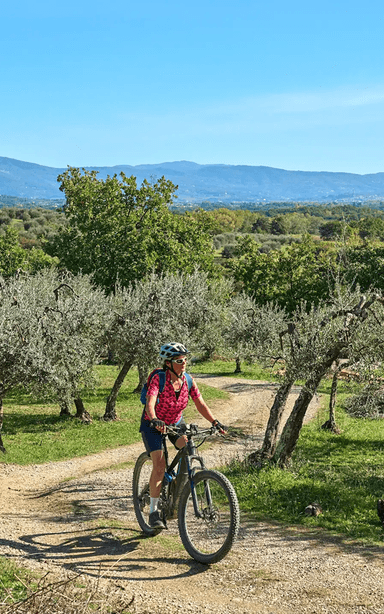
There's a level for everyone – find your match
No Reviews yet
This trip is brand new
We’re still waiting to collect any reviews from other travellers on this trip. However, all our hosts go through an extensive vetting process to ensure that your adventure is awesome.
We've got your back
Book with confidence and peace of mind.
DEPARTURE DATES
Sunday 16th August 2026
to Tuesday 25th August 2026
2026 Sale Offer - Next 2 spots available at 10% off
Sunday 6th September 2026
to Tuesday 15th September 2026
2026 Sale Offer - Next 2 spots available at 10% off
Sunday 13th June 2027
to Tuesday 22nd June 2027
Sunday 27th June 2027
to Tuesday 6th July 2027
Sunday 11th July 2027
to Tuesday 20th July 2027
Sunday 18th July 2027
to Tuesday 27th July 2027
Sunday 1st August 2027
to Tuesday 10th August 2027
Sunday 15th August 2027
to Tuesday 24th August 2027
Sunday 29th August 2027
to Tuesday 7th September 2027
Sunday 5th September 2027
to Tuesday 14th September 2027