

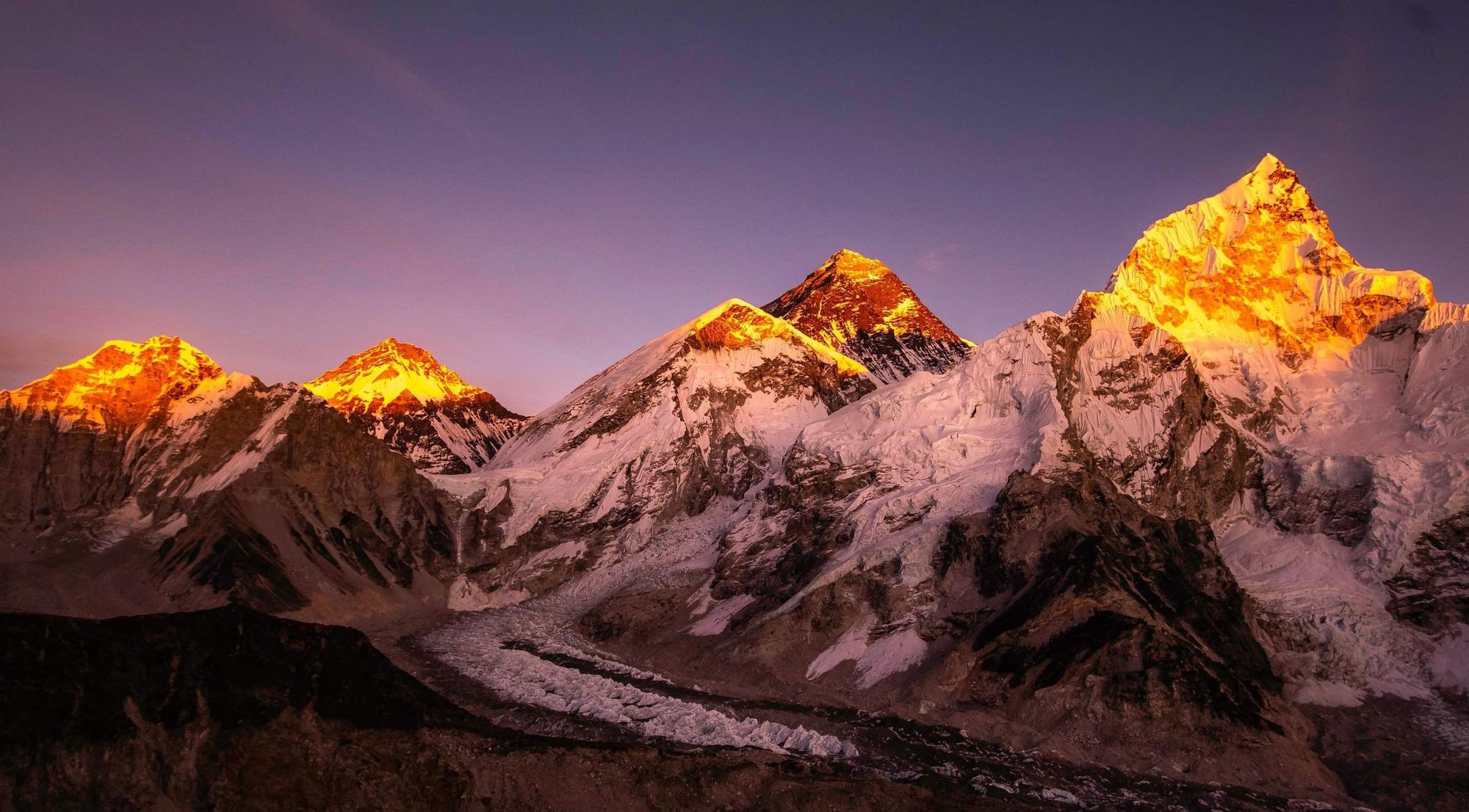
The 10 highest mountains in Asia are also the 10 highest mountains in the world. So it’s no exaggeration to say that the mountains in Asia are more immense, iconic and humbling than any others on our planet. Top of the list is the iconic Mount Everest, at 8,848m high. It’s located in the Himalayas, where you’ll also find 8 more on the list - K2, the second highest summit in Asia, is the only one that isn’t.
We reckon you’ve probably landed on this page because you’re looking for the answer to a pub quiz, or you’re trying to prove a point in an argument. If so, we hope you win. Or maybe you’re looking for your next mountain climbing adventure. If that’s the case, the highest mountains in Asia - all of which are in excess of 8,000m - are restricted to the world’s most accomplished mountaineers.
The good news is that there are plenty of other hiking trails and lower peaks in the Himalayas where you can get a brilliant view of these mighty mountains, such as the iconic Everest Base Camp trek. We’ve listed some suggestions in our ‘top 10 list’ below.
What Are the Highest Mountains in Asia?
1. Mount Everest (8,848m)
- Height: 8,848m
- Location: Himalayas, Nepal/Tibet Autonomous Region, China
- Best trekking viewpoint: The Everest Base Camp Trek
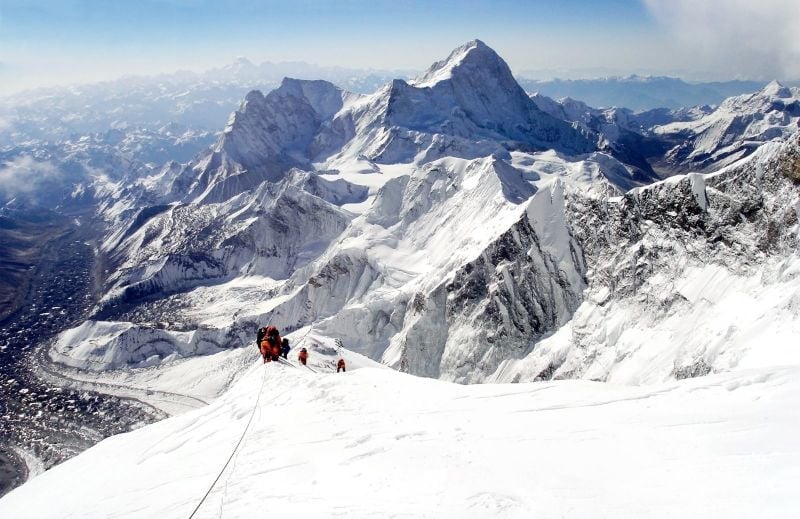
First climbed by Sir Edmund Hillary and Tenzing Norgay in 1953, Mount Everest is the highest mountain in the world. However, despite its vast height, it’s a challenge many people aspire to - in fact, 667 mountaineers reached the top during 2023’s climbing season.

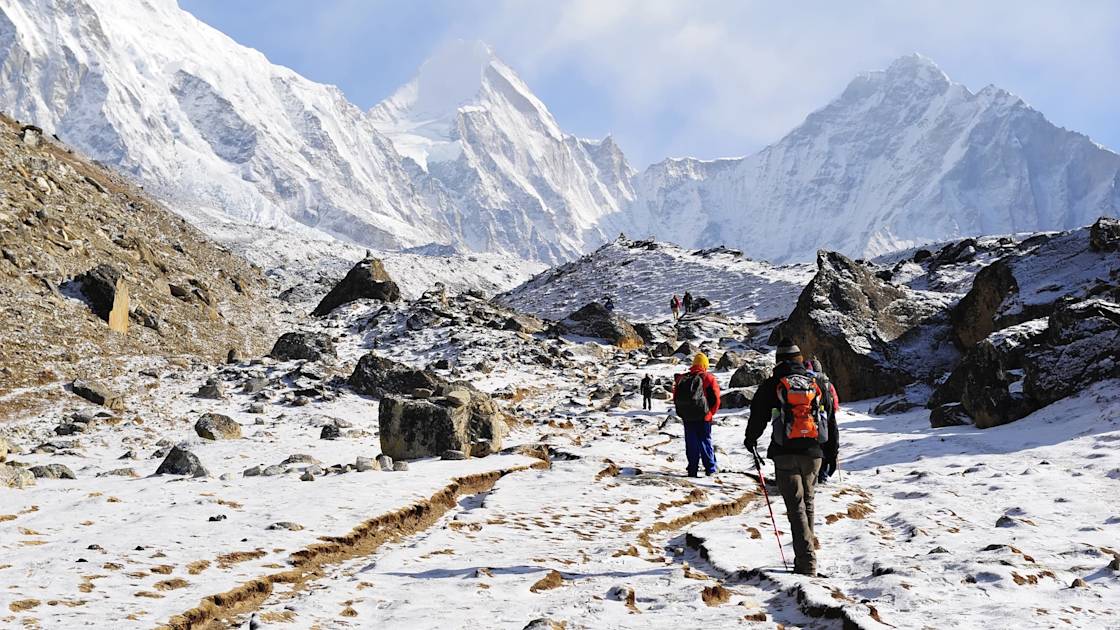
Take the trek to Everest Base Camp and you might even meet some of these climbers, as they prepare to make their summit push. If you climb the nearby mountain Kala Patthar (5,550m), you’ll also catch sight of some epic views of Everest itself.
2. K2 (8,611m)
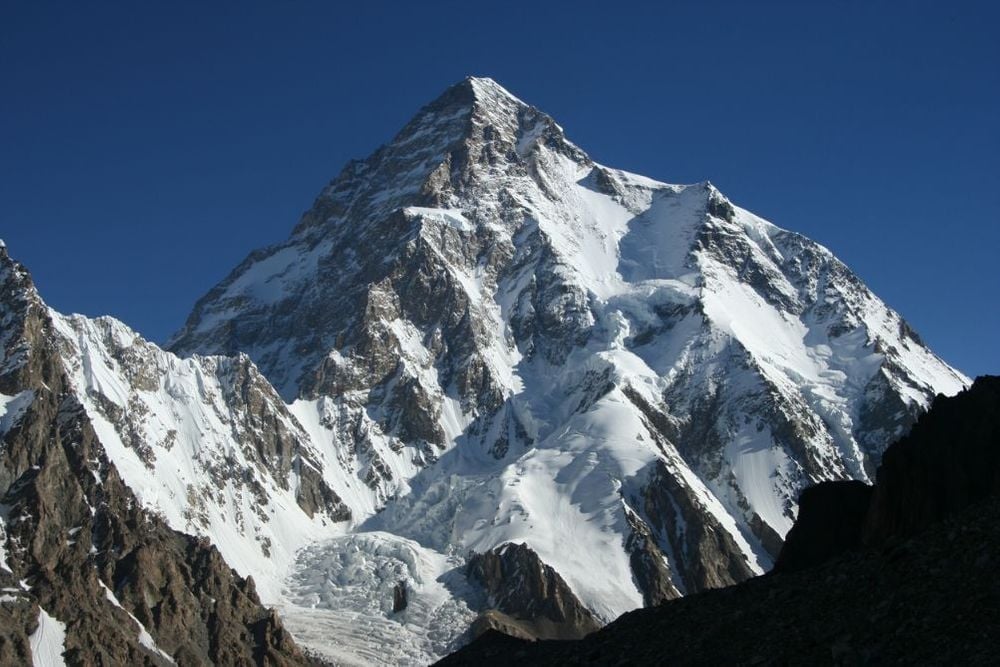
- Height: 8,611m
- Location: The Karakoram Range, Pakistan/China
- Best trekking viewpoint: K2 Base Camp and Gondogoro La Trek
The second highest mountain in the world is K2, the notation used during the Great Trigonometrical Survey of British India (it’s also called Mount Godwin Austen, after the peak’s first surveyor).
K2 is typically considered one of the toughest mountains in the world to climb, notoriously harder than Mount Everest - it has the second-highest fatality rate per summit attempt of all mountains over 8,000m. It was the last of the world’s highest mountains to be climbed in winter - the first successful winter ascent of K2 was in 2021.
It’s possible to take a guided trek to K2 Base Camp. If you ascend the nearby Gondogoro La pass (5,600m) you’ll get a good view of the K2 summit on a clear day.
3. Kangchenjunga (8,586m)
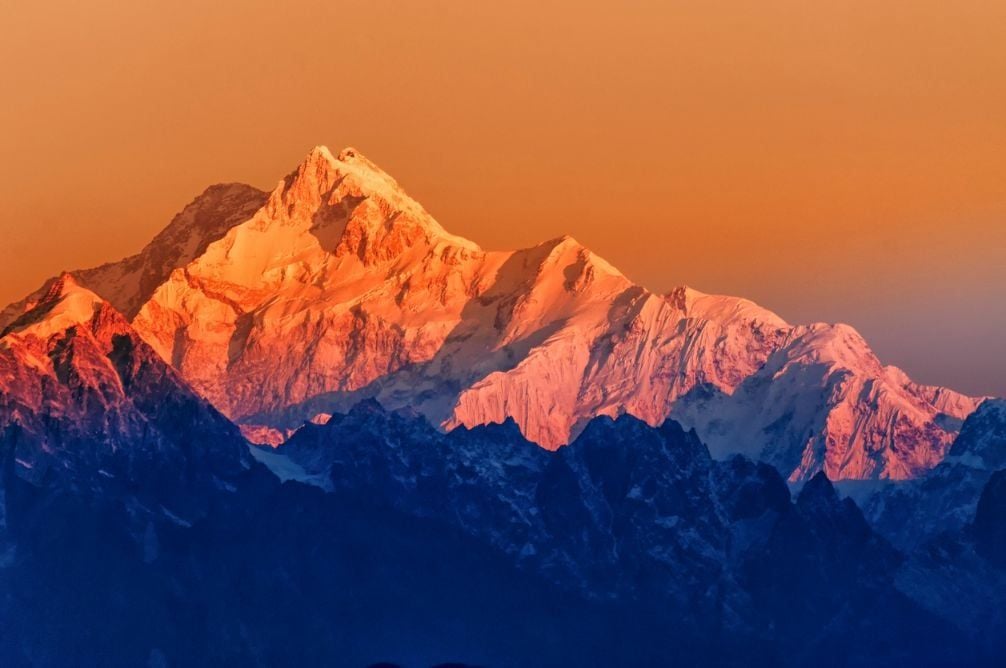
- Height: 8,586m
- Location: Himalayas, Nepal/India
- Best trekking Viewpoint: The Kanchenjunga Circuit Trek
Kangchenjunga is the third highest mountain in the world, and the highest mountain in India. Its name means ‘the five treasures of the snow’, because Mount Kanchenjunga has five main peaks: three lie between Sikkim, India and eastern Nepal; and the other two in the Taplejung district in Nepal.
For awe-inspiring views of Kanchenjunga, check out the Kanchenjunga Circuit Trek, which takes you through past glacial lakes and remote Nepalese villages to the Kanchenjunga Massif - you’ll stay at Kanchenjunga Base Camp North.
4. Lhotse (8,516m)
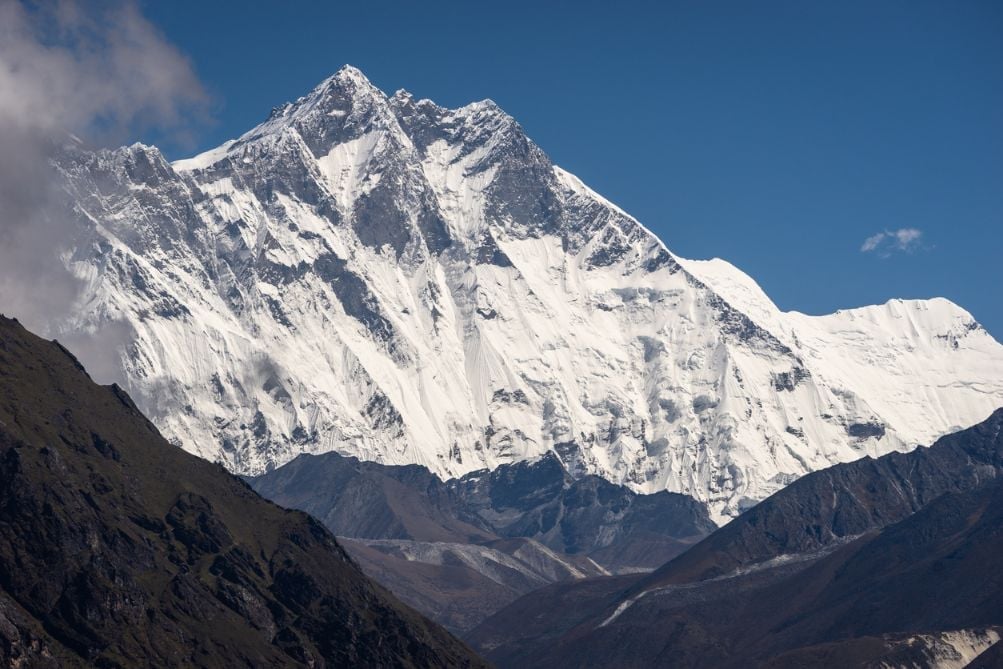
- Height: 8,516m
- Location: Himalayas, Nepal/Tibet Autonomous Region, China
- Best trekking viewpoint: Mera Peak
Lhotse is one of the more well known ones on this list, thanks to its proximity to Mount Everest. In fact, the route up Lhotse also leaves from Everest Base Camp. Because Everest gets all the attention, Lhotse had remained relatively unclimbed – despite being considered more visually attractive. Lhotse Middle, the middle summit, was the highest unclimbed named point on earth until 2011, when a Russian climbing team reached the peak.
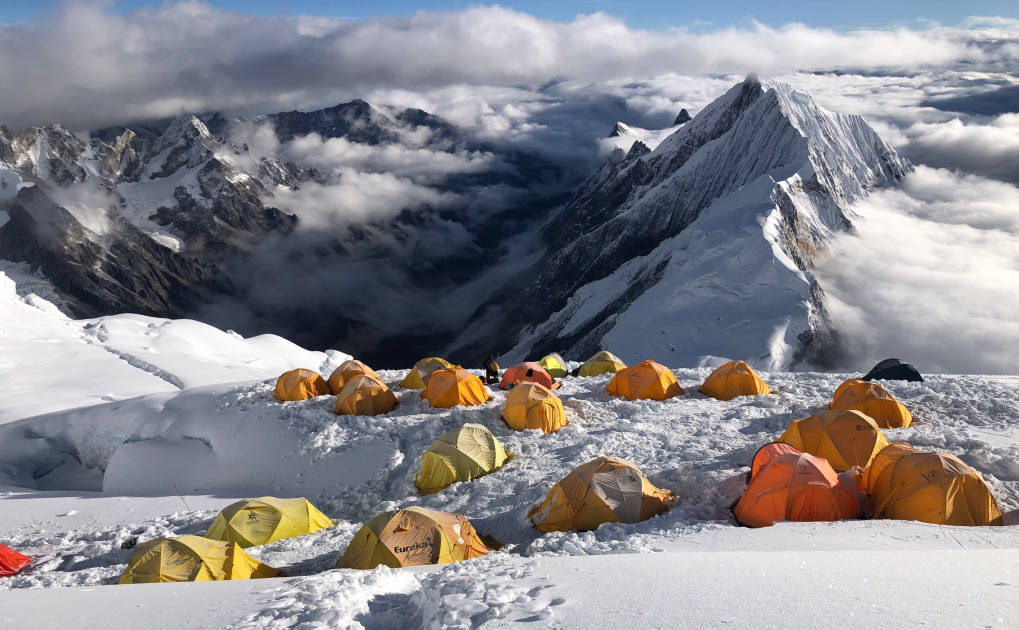
One of our favourite ways to catch a glimpse of Lhotse – and the 8,000m+ peaks surrounding it - is by climbing Mera Peak, the highest trekkable peak in the Himalayas. This 6,461m-high mountain offers panoramic views of five eight-thousanders – Everest, Kangchenjunga, Lhotse, Makalu and Cho Oyu.
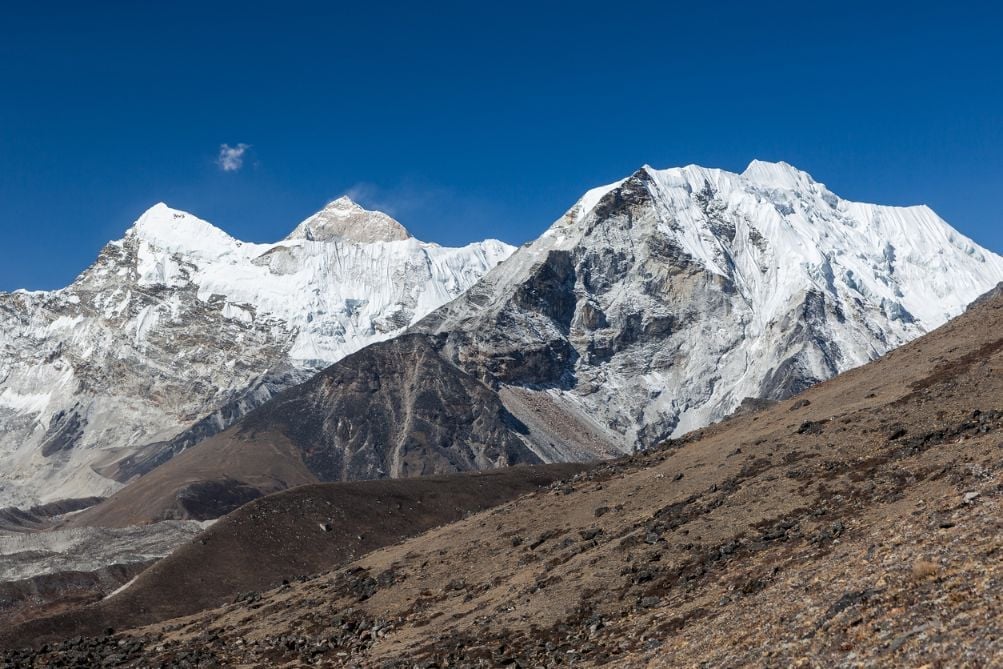
5. Makalu (8,485m)
- Height: 8,485m
- Location: Himalayas, Nepal/Tibet Autonomous Region, China
- Best trekking viewpoint: Makalu Base Camp
Makalu is the third of the four 8,000ers in the Everest Massif in Nepal - and is considered a difficult climb, thanks to its exposed, knife-edged ridges. The first successful summit was by a French expedition led by Jean Franco in 1955 - all ten members reached the top.
Only the most experienced climbers reach the summit here, but fit hikers can tackle the trek to Makalu Base Camp (4,870m) - climb nearby Barun Glacier (5,100m) for even better views of Makalu. You can also see Makalu on the Everest Base Camp trek.
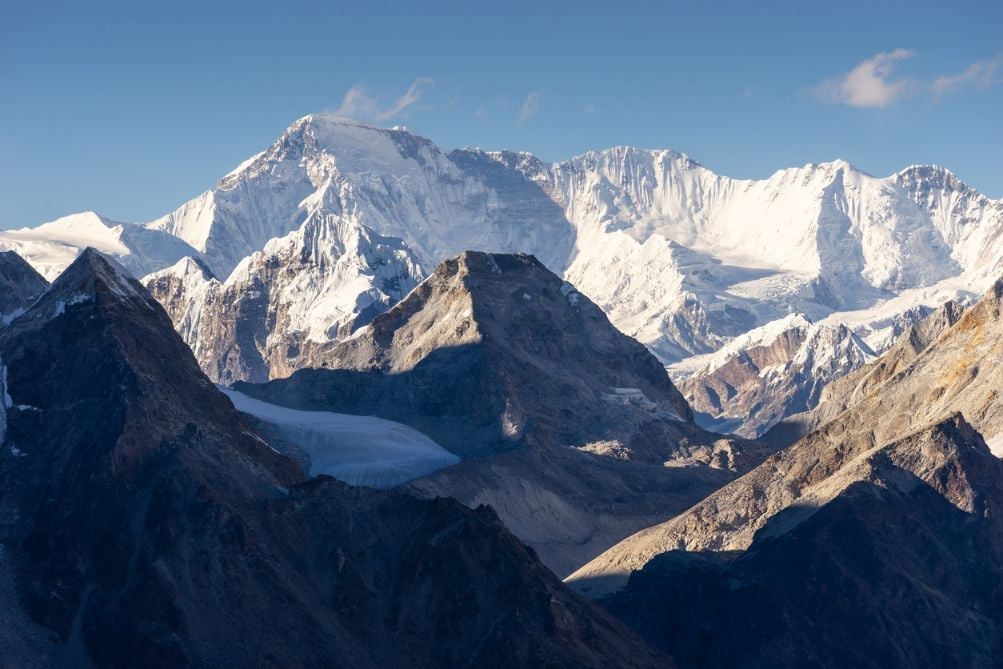
6. Cho Oyu (8,201m)
- Height: 8,188m
- Location: Himalayas, Nepal/Tibet Autonomous Region, China
- Best trekking viewpoint: Everest Base Camp via Gokyo Lakes
The fourth mountain in the Everest Massif over 8,000m is Nepal. It’s considered the easiest of the four to climb, as it has the gentlest slopes - because of this it can get busy.

For a great view of Cho Oyu, climb the Gokyo Ri Pass (5,357m) on the Gokyo Lakes circuit - you’ll also be able to see the glacial Gokyo Lakes and the summit of Everest.
7. Dhaulagiri (8,167m)
- Height: 8,167m
- Location: Himalayas, Nepal/Tibet Autonomous Region, China
- Best trekking viewpoint: Annapurna Circuit Trek
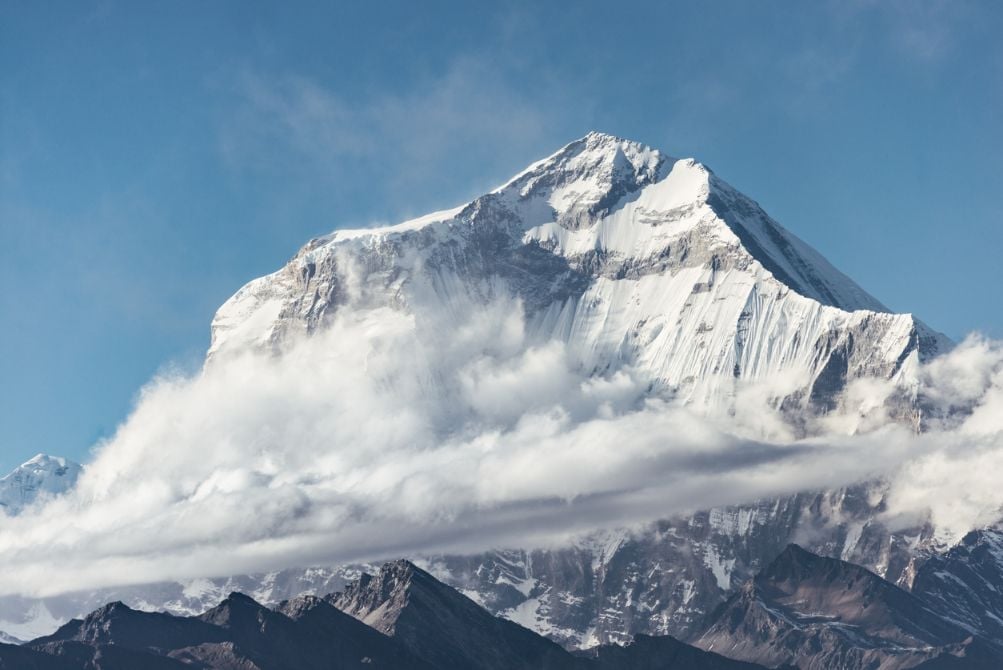
Dhaulagiri in Nepal is the seventh highest mountain in the world. It has multiple peaks - numbered I to IV - and it’s Dhaulagiri I which is the highest, at 8,167m. The first ascent of Dhaulagiri was on 13th May, 1960.

One of the best ways to catch sight of Dhaulagiri is on the Annapurna Circuit, where it’s a regular feature on the skyline - the views from Thorong La pass (5,416 m) are particularly epic.
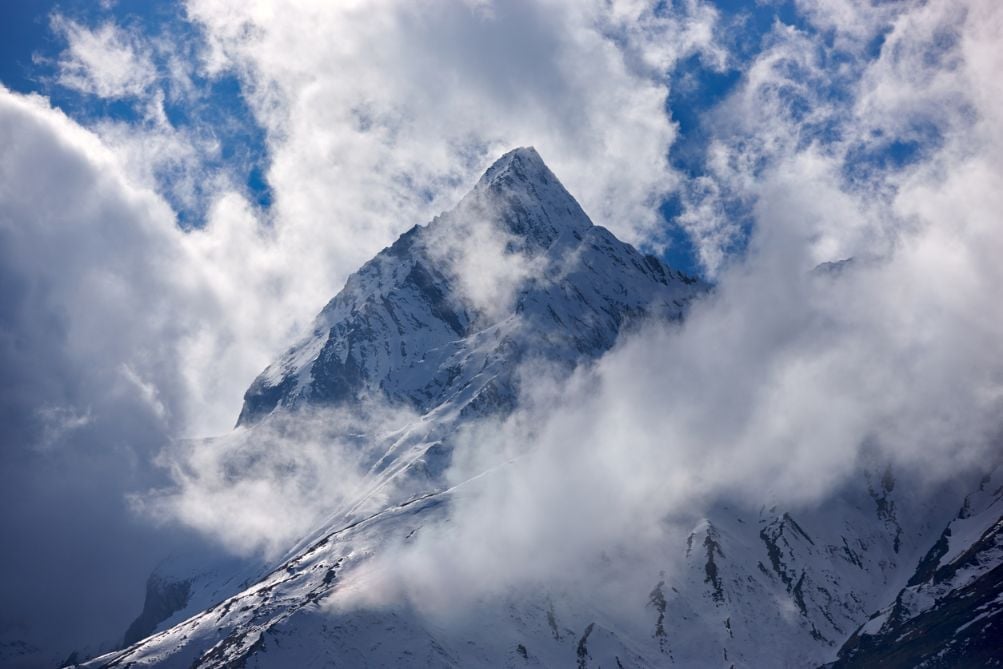
8. Manaslu (8,163m)
- Height: 8,163m
- Location: Himalayas, Nepal
- Best trekking viewpoint: Manaslu Circuit
Manaslu is the eighth highest mountain in the world. The first recorded summit climb was in 1956 - a Japanese expedition led by Toshio Imanishi and Gyalzen Norbu. Their ascent was controversial - locals believed that previous attempts had displeased the Gods and caused avalanches that destroyed a monastery, killing 18 people. The Japanese made a substantial donation to rebuild the monastery, but this didn’t restore goodwill - the second ascent of Manaslu didn’t take place until 1971.
The best way to catch a glimpse of Manaslu is on the Manaslu Circuit trek, which takes 12-14 days depending on your tour operator. The trek begins in the lowlands village of Soti Kohla and gradually winds its way to higher altitudes - it’s when you reach the mountain village of Lho that you catch your first glimpse of Manaslu’s glaciated summit.
9. Nanga Parbat (8,126m)
- Height: 8,126m
- Location: Pakistan, Himalayas
- Best trekking viewpoint: Fairy Meadow & Nanga Parbat Base Camp Trek
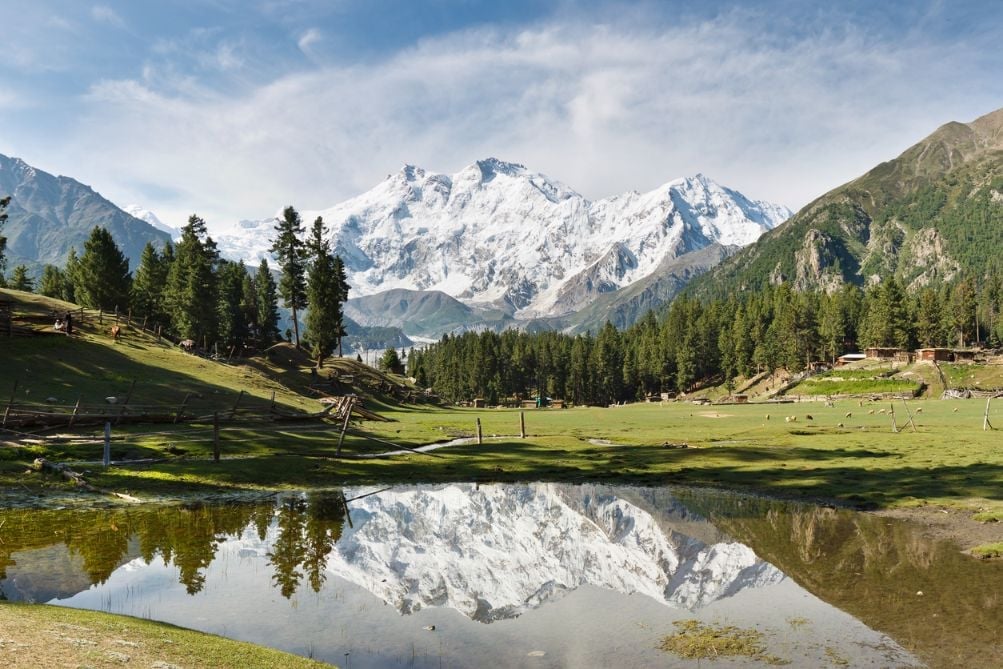
The ninth highest mountain in the world is Nanga Parbat, in the Diamer District of Pakistan’s Gilgit Baltistan region in the western Himalayas. The name comes from Sanskrit, with ‘nanga’ and ‘parvata’ meaning ‘naked mountain’. The mountain’s Rupal Face is particularly spectacular, rising 4,600m above its base - it’s often called the highest mountain face in the world.
One of the best ways to see Nanga Parbat is by doing its base camp trek. This is a short day or overnight trek which begins at Fairy Meadows, a lush green located at an elevation of 3,300m - there’s a breathtaking view of Nanga Parbat from here.
10. Annapurna (8,091m)
- Height: 8,091m
- Location: Nepal, Himalayas
- Best trekking viewpoint: The Annapurna Sanctuary Trek
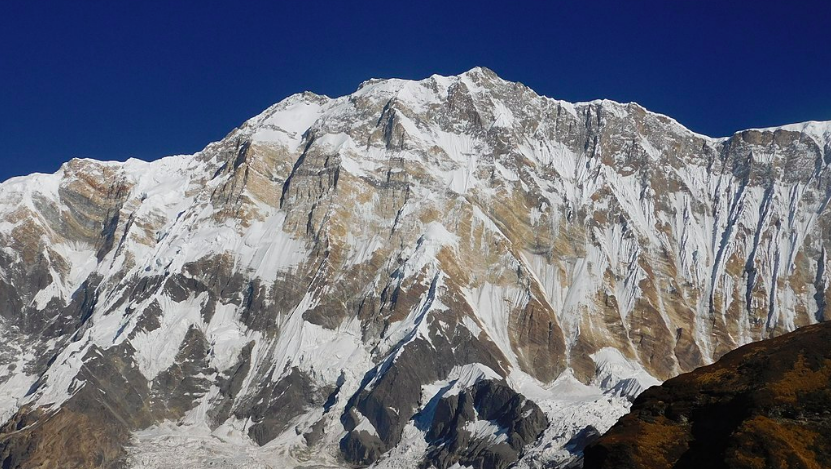
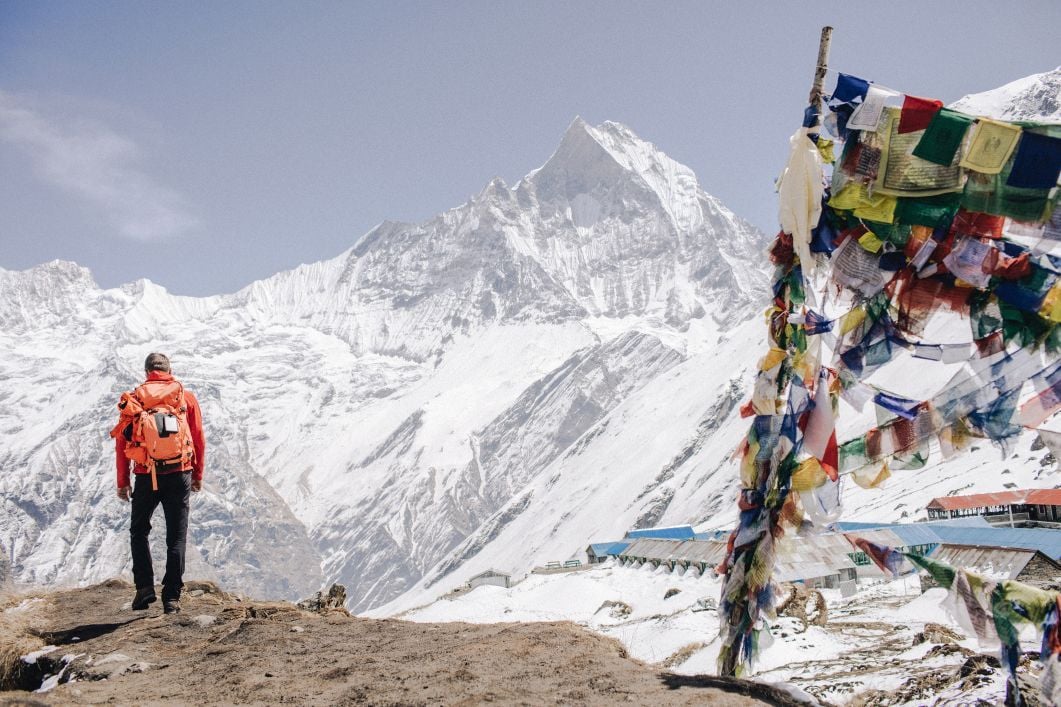
Annapurna I in Nepal is the tenth highest mountain in the world, and it’s also known as the most deadly mountain in the world - 32% of summit attempts result in a fatality. However, there is a much safer way to experience Annapurna - through world renowned hikes such as the Annapurna Circuit trek and the Annapurna Sanctuary route.
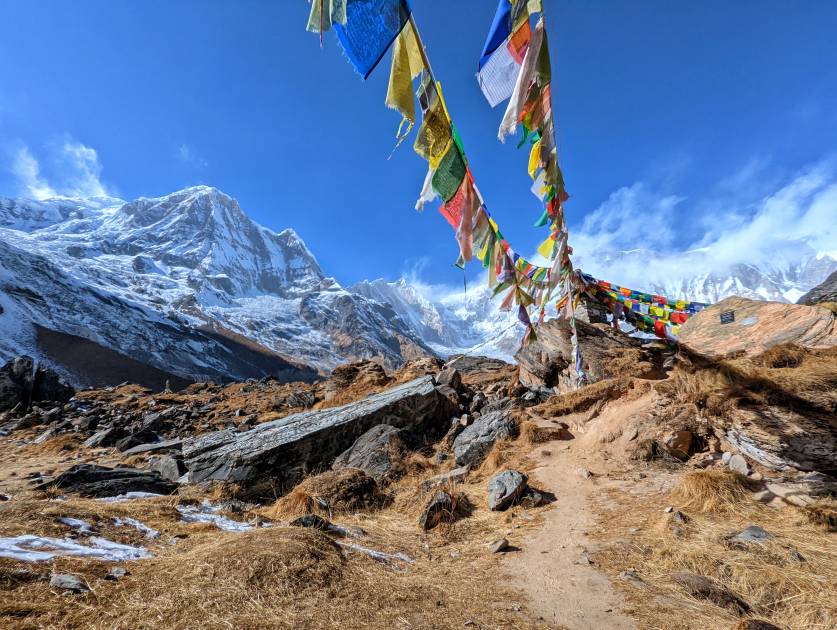
Both the Annapurna Circuit and Annapurna Sanctuary treks offer views of the awe inspiring Annapurna I. The circuit is slightly longer, a circular route around the Annapurna Massif, while the Annapurna Sanctuary takes you to Annapurna Base Camp, right at the foot of Annapurna I. It’s up to you which one to choose!
FAQs
Why are the highest mountains in Asia?
The highest mountains are in Asia because the Indian and Eurasian tectonic plates collided, uplifting the Himalayas and surrounding ranges. This geological activity formed Earth's tallest peaks, including Everest and K2, concentrated along this massive collision zone.
How many of the world's ten highest mountains are in Asia?
All ten of the world’s highest mountains are in Asia. These peaks include Mount Everest, K2, Kangchenjunga, and others in the Himalayas and Karakoram ranges, making Asia the continent with the highest mountains.
How long does it take to climb Mount Everest?
Climbing Mount Everest typically takes about two months, though the exact duration depends on factors such as the chosen route, weather conditions and acclimatisation strategy. Most traditional expeditions last six to eight weeks from arrival in Nepal to the summit attempt and return, beginning with a seven to 12 day trek from Lukla to Everest Base Camp at 5,364m (17,598ft), during which climbers acclimatise to the oxygen-poor air to reduce the risk of altitude sickness.
Once at Base Camp, climbers spend four to six weeks completing acclimatisation rotations, repeatedly ascending to higher camps (Camp 1, Camp 2, and Camp 3) and descending again to allow their bodies to adapt safely to extreme altitude. After this process, climbers wait for a brief and unpredictable weather window—usually in May—to make a summit push that takes four to seven days, including a demanding 10–12 hour final ascent from Camp 4 and a careful descent. Weather delays caused by high winds and storms can further extend the expedition.
How many people have climbed K2?
As of recent records, over 900 people have successfully climbed K2. Before 2020, fewer than 400 had climbed K2, but the pace accelerated dramatically in recent years. The mountain is known for its extreme difficulty and high fatality rate, making ascents far less common than Everest.
Where is Kangchenjunga located?
Kangchenjunga is located on the border of Nepal and the Indian state of Sikkim. It is the third-highest mountain in the world and a prominent peak in the eastern Himalayas.
Inspired to scale new heights? Check out out our Mountain Climbing Adventures led by trained local guides.