

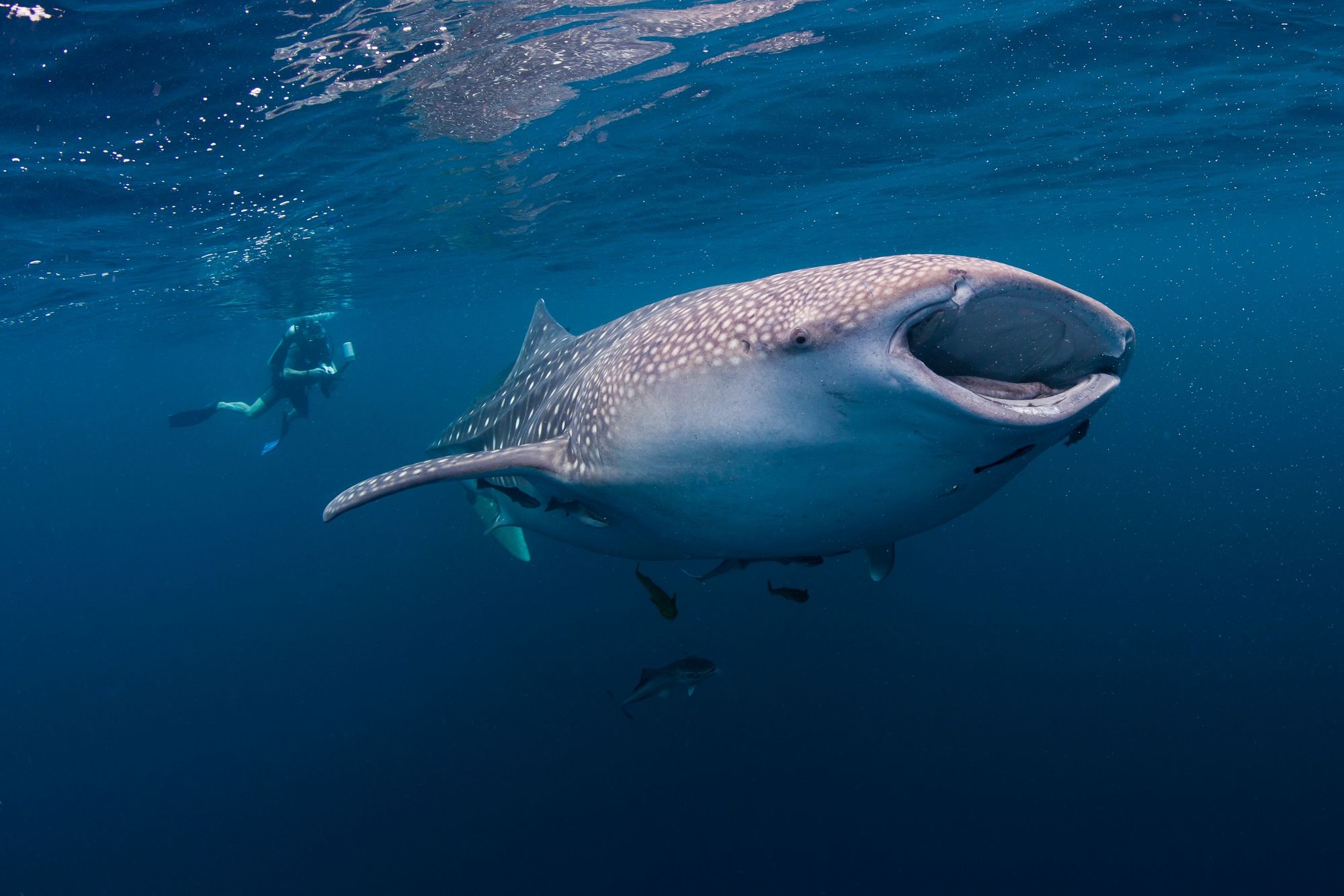
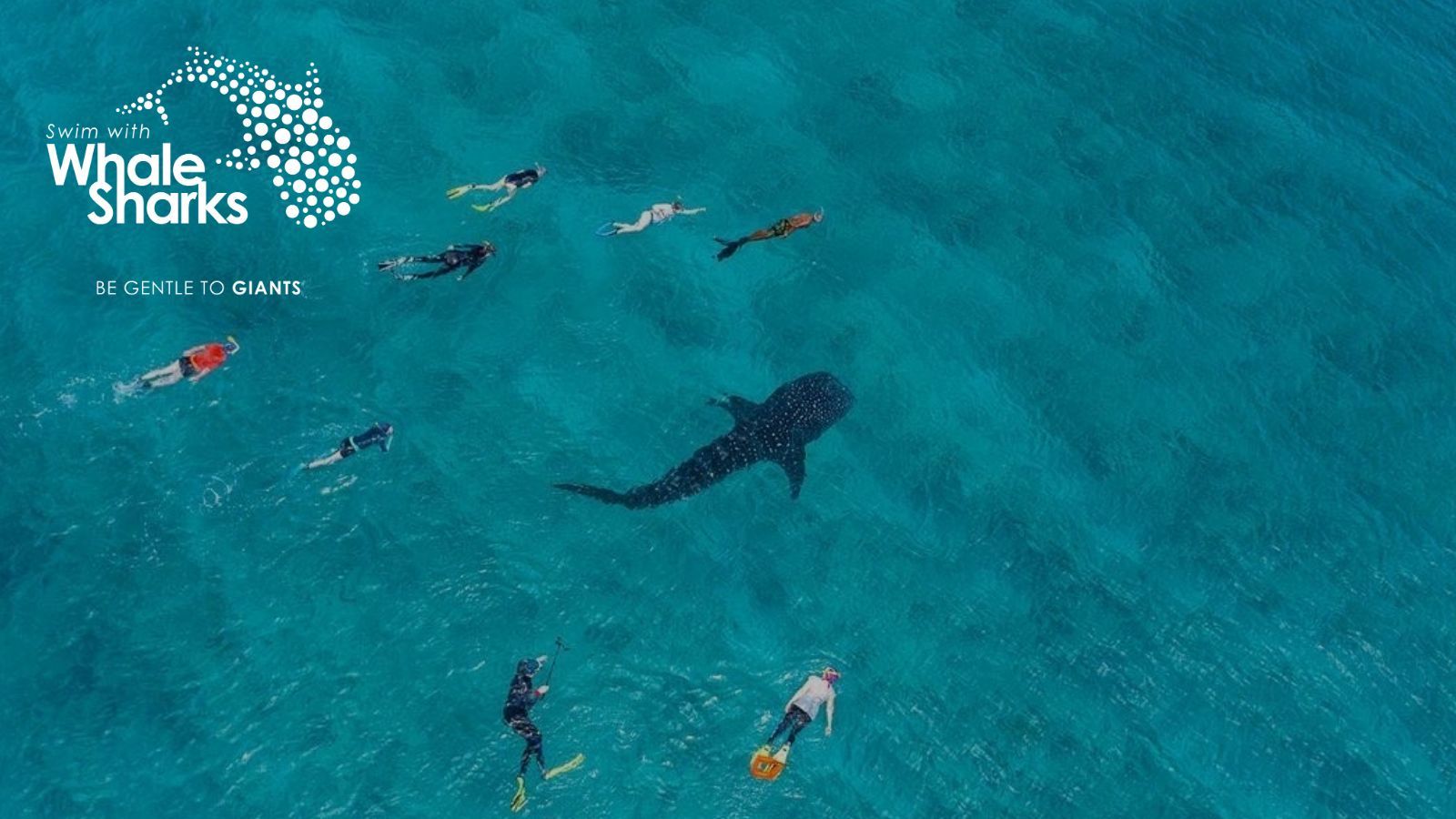
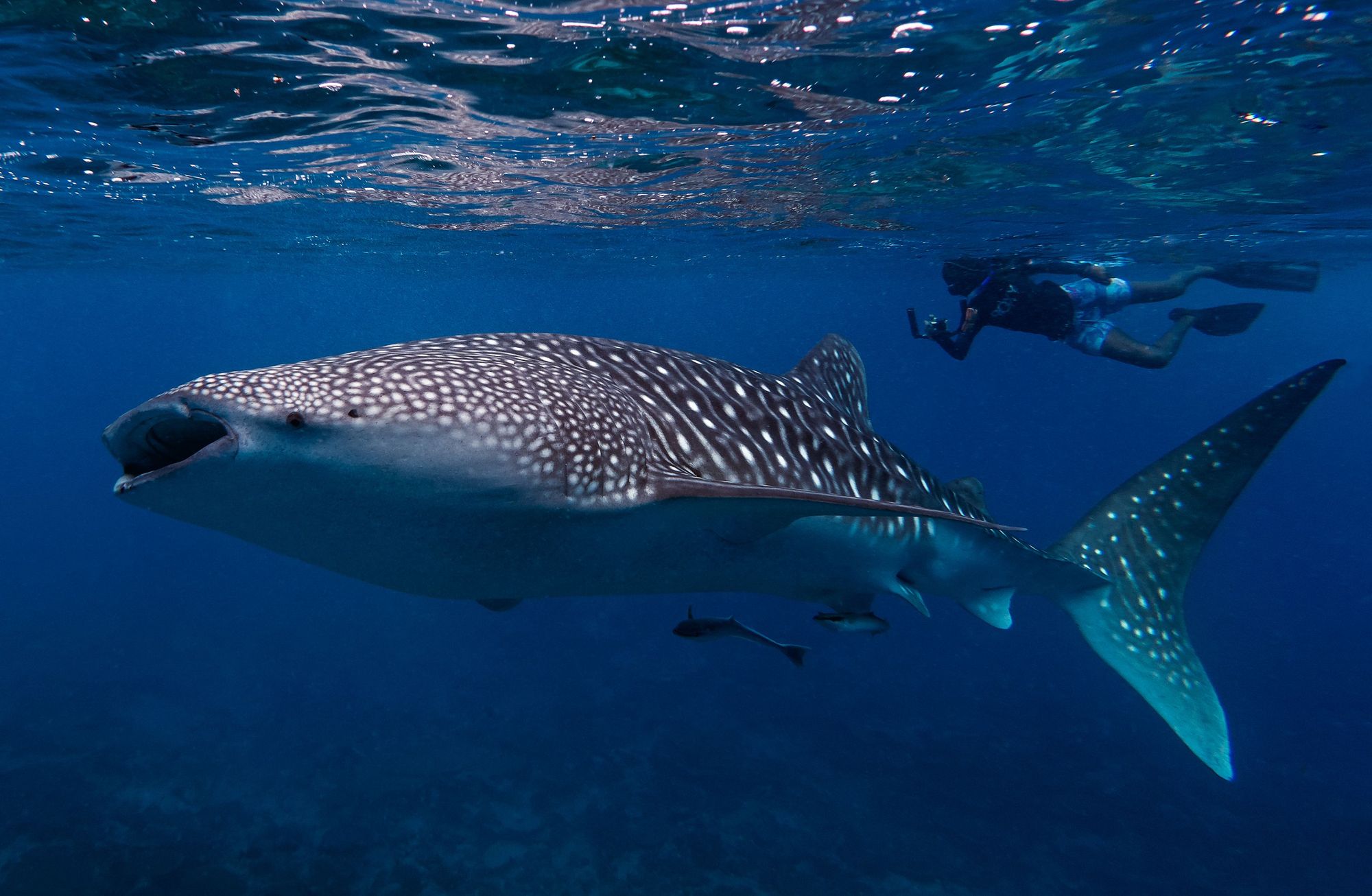
The whale sharks in the waters of the Maldives measure up to 20ft. These gentle giants of the ocean are the largest fish alive on our planet today, feeding on tiny plankton. In the South Ari Marine Protected Area (SAMPA) in the Maldives, they’re visible on dives and snorkelling trips; their enormous bodies dwarfing the intrepid travellers who swim alongside them in awe.
This area is home to one of only three year-round aggregations of whale sharks in the world, and in this one Maldives site alone, whale sharks directly generate $9.4 million per year in tourism revenue (according to a 2014 paper. That figure is likely to be higher today). But these magnificent animals are under threat, in part because of a minority of reckless tourist operators - who redirect, block, frighten or even accidentally cut sharks with loud, fast speedboats.
The Be Gentle With Giants campaign is a new initiative, launched this month by several marine conservation NGOs who work in the Maldives, asking tourist operators to follow a code of conduct around these beautiful animals - and asking travellers to favour responsible operators flying the #BeGentleToGiants flag.
Ruth Franklin, founder of the local tour operator Secret Paradise Maldives, is one such person. “This campaign won't be a silver bullet solution, but it will provide a necessary policy push, in order that regulations for all tourism stakeholders are put into place and monitored,” she says.
The campaign is a showcase of how organisations across industries can link up to amplify their voices and fight for a change in behaviour. It's a collaborative spirit that is required elsewhere in the Maldives, too - in the community-based tourism (CBT) drive. Tourism has changed a lot in the Maldives in the past 20 years, but this stunning archipelago remains one with a power imbalance - where the resorts, not the community, dominate the tourism market.
As a 2020 study on CBT in the Geojournal of Tourism and Geosites states: “Tourism growth in Maldives has been historically (and arguably still is) dominated by foreign controlled resorts. While tourism has assisted Maldives to develop economically, its benefits have not been fairly distributed.”
The White Lotus Effect
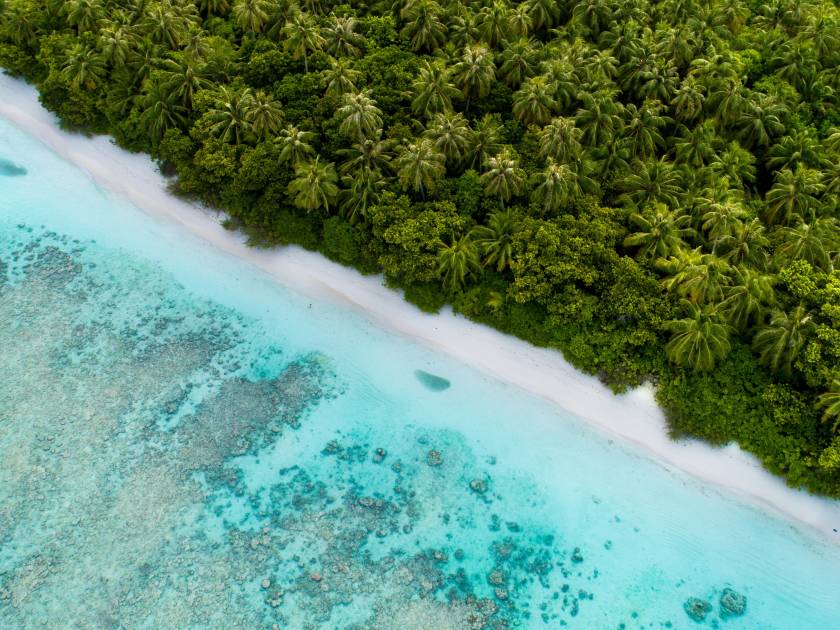
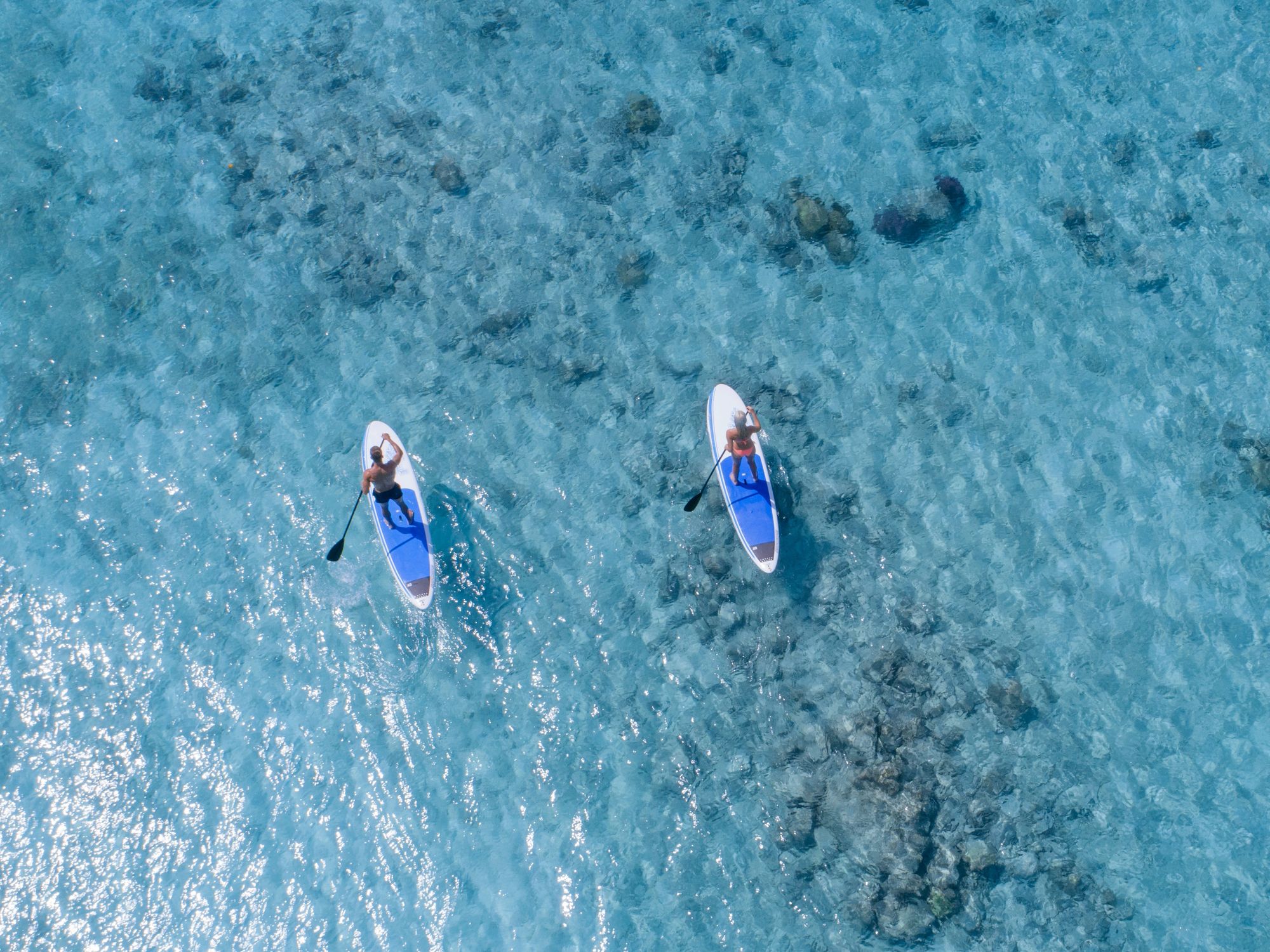
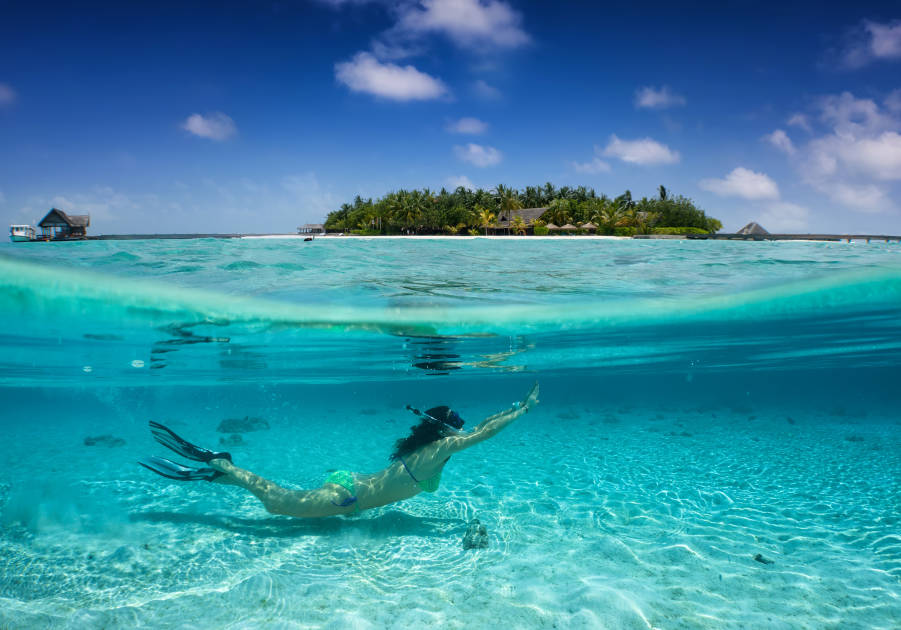
The secluded, sun-soaked islands of the Maldives are world renowned for their white-sand beaches, perfect surf breaks and unspoiled jungle. Sea turtles and manta rays share colourful coral reefs with tremendous whale sharks - all of which can be seen beneath the water, on idyllic dive days spent under striking amber, purple or clear blue skies.
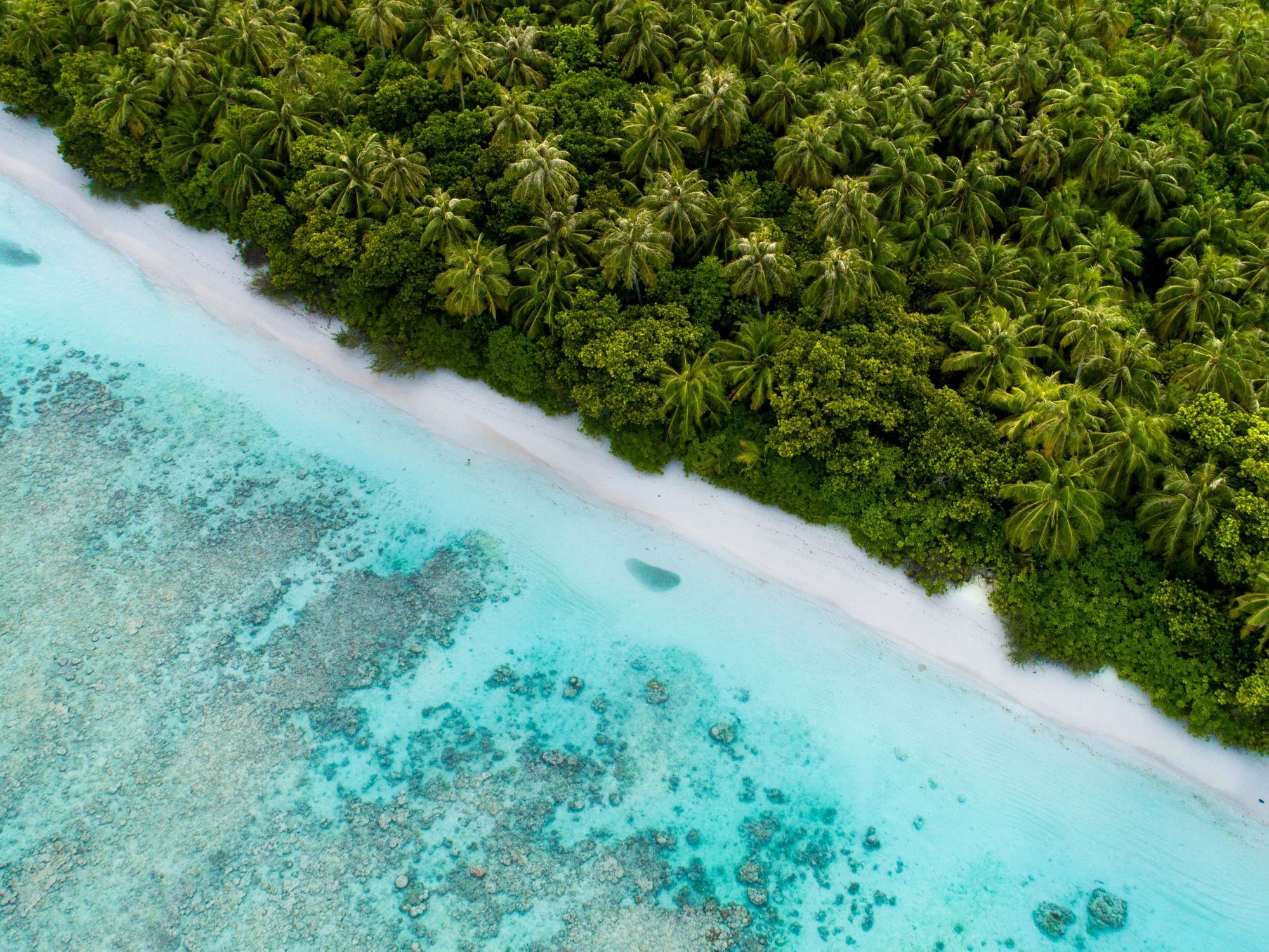
On this archipelago of over 1200 islands, dotted along the Indian Ocean like a string of pearls, tourism fuels the economy. The first resort actually only opened half a century ago, on Kurumba Island in 1972, but in 2019, tourism was accountable for approximately 30% of the country’s GDP. A 2021 study noted the Maldives earn “up to 70% of total government revenue in tourism tax.”
Tourism has transformed the Maldives in the past 50 years, and particularly in the last decade or so, since locals on inhabited islands have been allowed to build and open guesthouses, kickstarting local island, community-based tourism.
Once a spot largely for honeymooners or fly-and-flop tourism, today there are backpackers and island-hopping opportunities, and with that, a different clientele. It’s now a serious option for adventurers (and not just the diving variety). But it’s the legacy of the ‘one resort, one island’ policy implemented back in 1978, and the subsequent dominance of foreign-owned resorts in the country, that has made the tourist landscape here what it is today.
This policy kept resorts isolated and private, and built the ‘luxurious castaway’ moodboard many still think of when they think of the Maldives. But, unfortunately, it also played a part in excluding locals from the tourist market.

“In the last 50 years, resort tourism has dominated the Maldives,” says Franklin. “You’ve got over 170 resorts, and with the exception of a very small number, the remaining properties are internationally owned. So that money just doesn’t stay here. It comes into their businesses and leaves the Maldives again.”
This is an example of tourism leakage, a phrase which describes the money that is spent by a tourist in any given destination which then leaks out to external economies, rather than circulating and multiplying in the country, where it can benefit more than just the initial payee.
 Stuart Kenny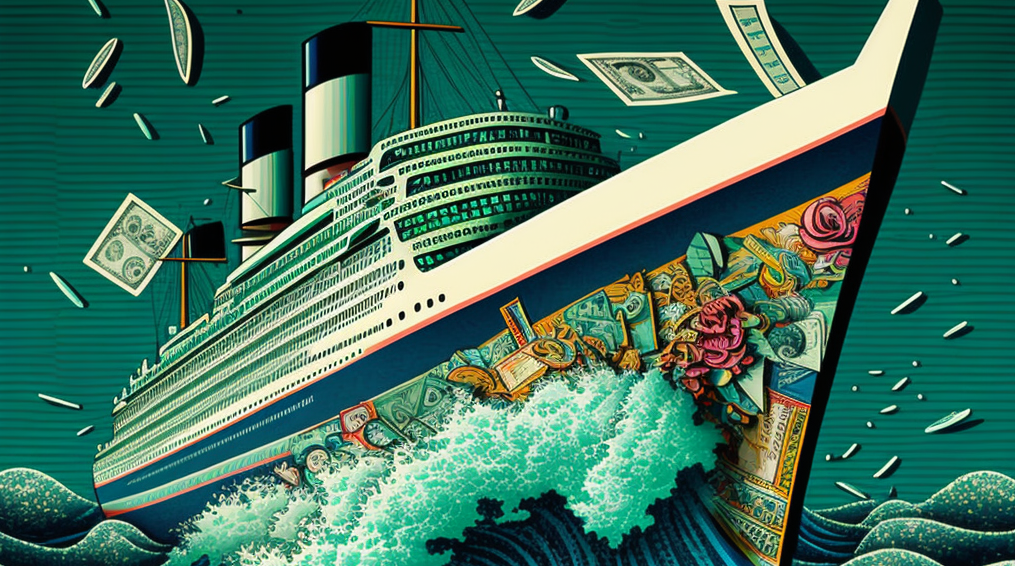
In countries with high leakage, locals often find it hard to reach higher-paid positions in tourism, having to settle for lower-paid roles, which are more vulnerable to external shocks. For this reason, working in tourism doesn't appeal to many in the Maldives. Instead, they work in fishing, the service industry, move to Malé for work or emigrate.
A UNDP/World Bank Vulnerability and Poverty Assessment showed that households with a member working in tourism are more likely to be non-poor, but “only 15% of employed Maldivian men and 4% of employed Maldivian women work in the sector [ …] The lack of opportunities at the managerial level deters many Maldivians from participating in tourism.”
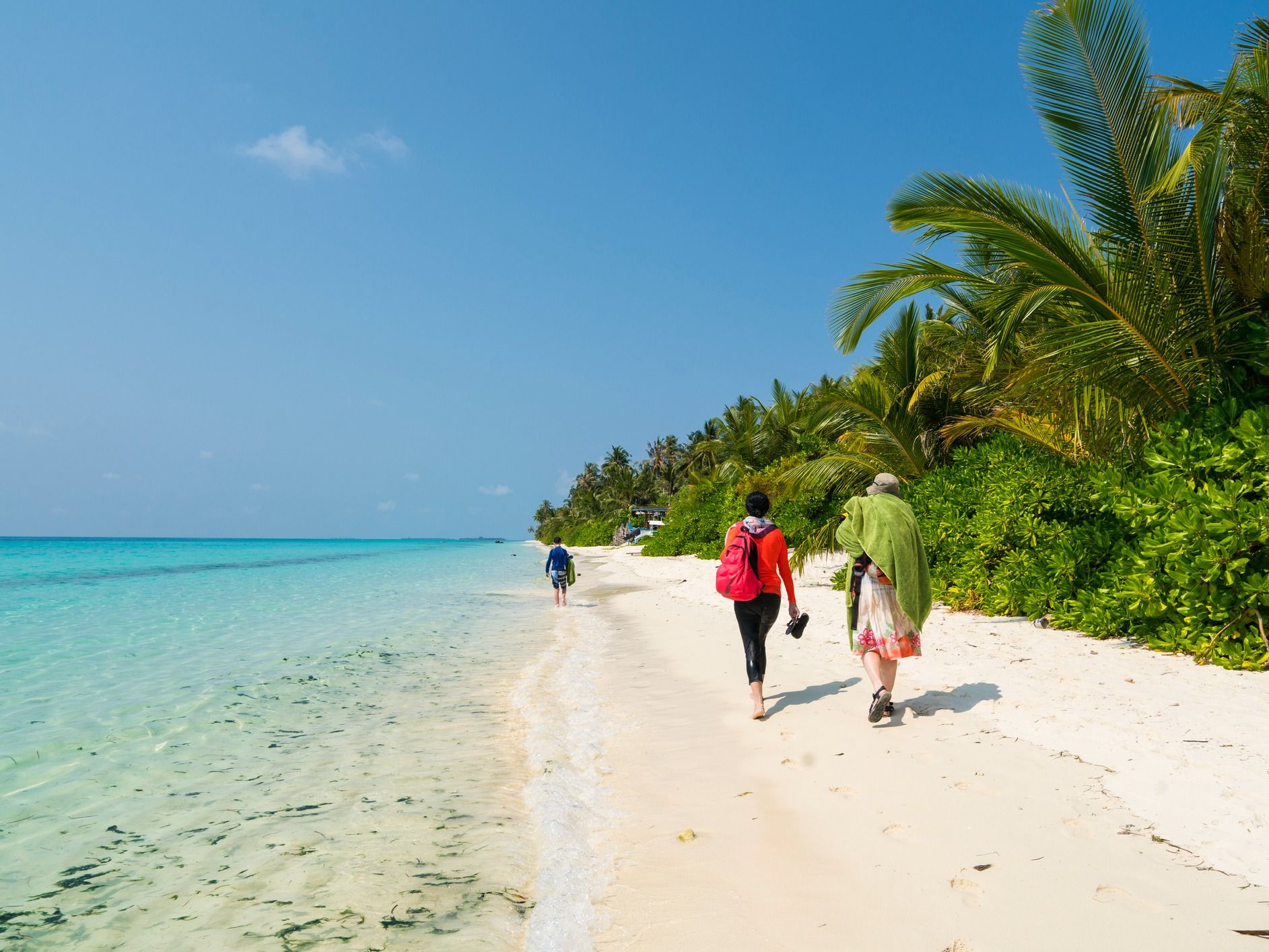
Each member of Ruth's team at Secret Paradise Maldives is Maldivian, and training is offered to them, to help further their career opportunities.
It can be difficult for local entrepreneurs to get started, owing to investment, marketing and infrastructure needs. But when global corporations have a hold on the market, and a 50 year head start, it’s even harder. “All resorts, as well as many of the bigger guesthouses or hotels, are not only providing guests with accommodation, they’re providing meals, and spas and excursions,” says Ruth. “They’ve got their own dive shops or their own souvenir shops, so people aren’t going out and spending their money in the community. So they’re not sharing the wealth of tourism.”
The Maldives have enough resources and capacities to make tourism an industry that benefits all Maldivians...
This is not an unfamiliar story in small island developing states (SIDS), where tourism is often set up with community involvement as an afterthought. The issues this causes - diluted cultural authenticity and limited job opportunities in tourism - are having a moment in the spotlight after the release of the HBO series White Lotus, which explores the topic in a fictional resort in Hawaii. The same issues exist in the Maldives; perhaps why it was name-dropped in season two.
“Leakage estimates range from the World Bank’s conservative leakage rates of 55% to over 80% for some SIDS, such as the Bahamas,” reads a 2017 study from the University of Kent. If the country's biggest industry is only keeping 20% of its intake, that's far from ideal.
This was highlighted in real terms in the Maldives during the pandemic, says Franklin. “There was limited US dollar within the country, because resorts weren't banking, so there was no cash flow.” Locals are paid in the Maldivian Rufiyaa, but many locals travel abroad for medical care, education, or have family members living abroad whom they support, which requires USD. “During the pandemic there was far less USD in circulation,” says Ruth. “And limits were put on the amount that could be withdrawn. When the destination needed it, that money wasn’t available to them.”
So, what’s the solution? Linking communities into the existing tourist networks, creating new networks - and asking tourists to choose responsibly.
Linkages over Leakages
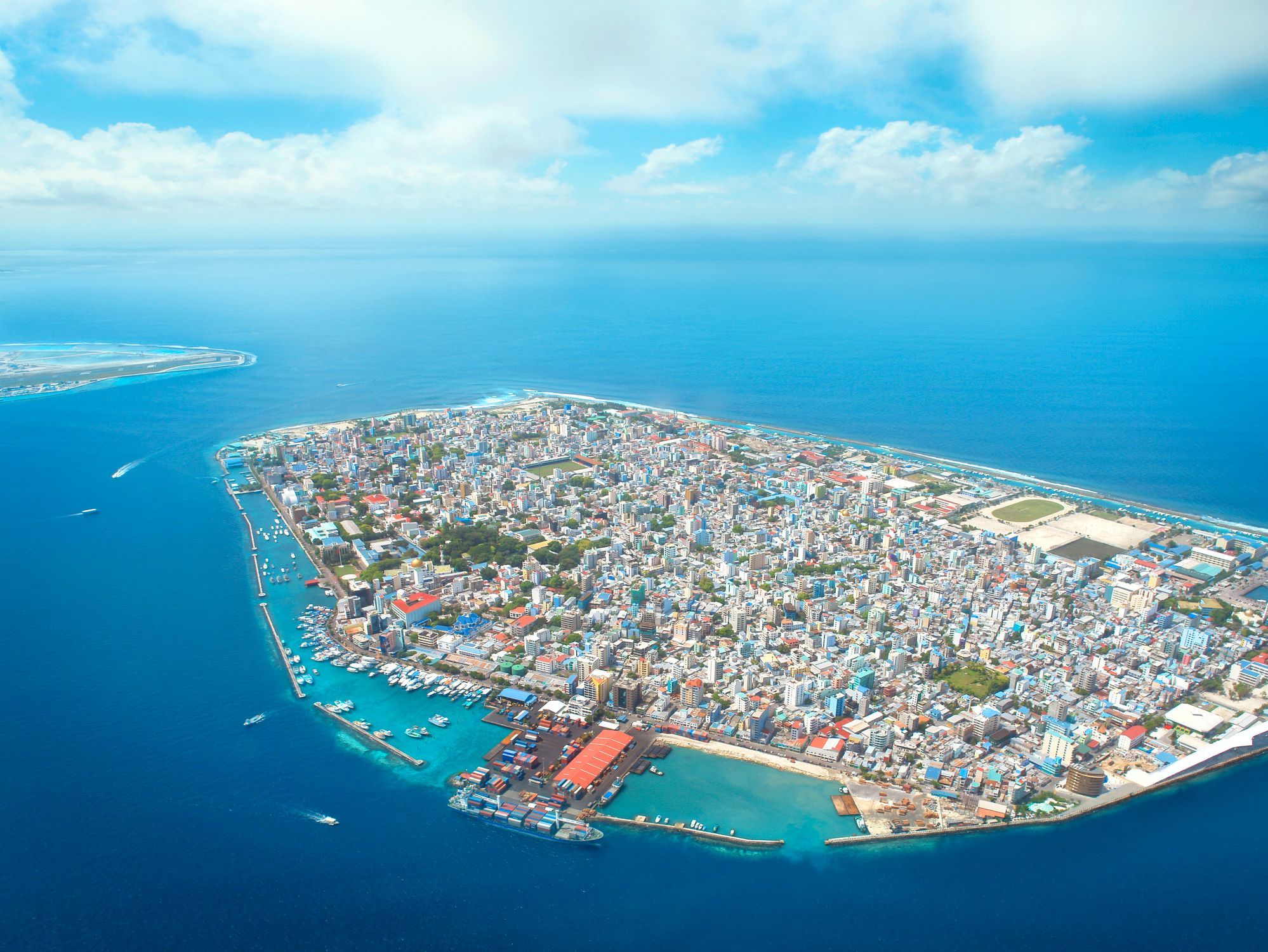
There are roughly 200 inhabited local islands in the Maldives, including Malé, the densely-populated capital. Around 166 are resort islands, with 29 more islands allocated for development in 2019 and 14 more in 2023. Tourism leases can last 100 years, so these are long term developments.
Resort-based tourism is well established, but it too has changed. Resorts now run sustainability programs - beach cleans and coral restoration programs, for example. This comes not only from the fact that tourism to a stunning location like the Maldives depends on a healthy ecosystem, but from consumer expectation. The more that customers demand something; whether that's sustainability measures or authentic local experiences - an attitude that tends to come with the arrival of adventure tourism - the more resorts take notice.
And the resorts are in a unique position to help local companies get started.
“You’ve got resorts that are international chains, and they have this toolbox of knowledge and experience which they could in turn be sharing with local businesses,” says Ruth. “Resorts shouldn't consider local island tourism as a threat; ultimately it's adding to the diversity of Maldives tourism. It gives guests another reason to return.”
Community-based tourism thrives when businesses are connected.
“If you look at employment, everything links back into tourism - the airport, domestic flights, seaplanes, supplies and services, procurement of food and beverage, even fishing,” says Ruth.
But there are discrepancies in the Maldives, one example being that the country, through line and pole fishing, catches some of the most sustainable tuna in the world. But because of that, the tuna comes at a premium cost, so the import of less sustainable tuna from other destinations is still extremely common, as it's a cheaper procurement option. This, of course, is not good for local trade.
Community-Based Tourism in the Maldives
Various studies have been done on the rise of CBT in the Maldives, and what has to happen next to make it work. To better prepare Maldivians for more senior jobs in tourism, a CBT-specific curriculum should be introduced, says one 2020 study.
“Specific attention needs to be placed in the local education system to advance and augment the knowledge related to all types of accommodation and to have a critical foundation on tourism development. It is not enough to produce a skilled workforce for menial jobs,” it reads.
“The need is to go beyond producing workers/employees but to advance and enhance the development of a well rooted local understanding of tourism in all its aspects and facilitate the flourishing of local owners and managers.”
The paper addresses the current “inequality in the control, ownership and benefit from tourism” and argues that “this is not to say that private resorts and hotels should be eliminated” but that “a shift to reform the private resorts and hotels towards CBT” would benefit all. The Maldives “have enough resources and capacities to make tourism an industry that benefits all Maldivians.”
The paper proposes making certain local partnerships compulsory in law, to avoid situations like the aforementioned tuna example, and suggests using the accommodation sector as a starting point - getting locals involved in entrepreneurial roles in guesthouses and boutique hotels, which can also help to prevent overtourism on the Maldives, by spreading visitors across the islands.
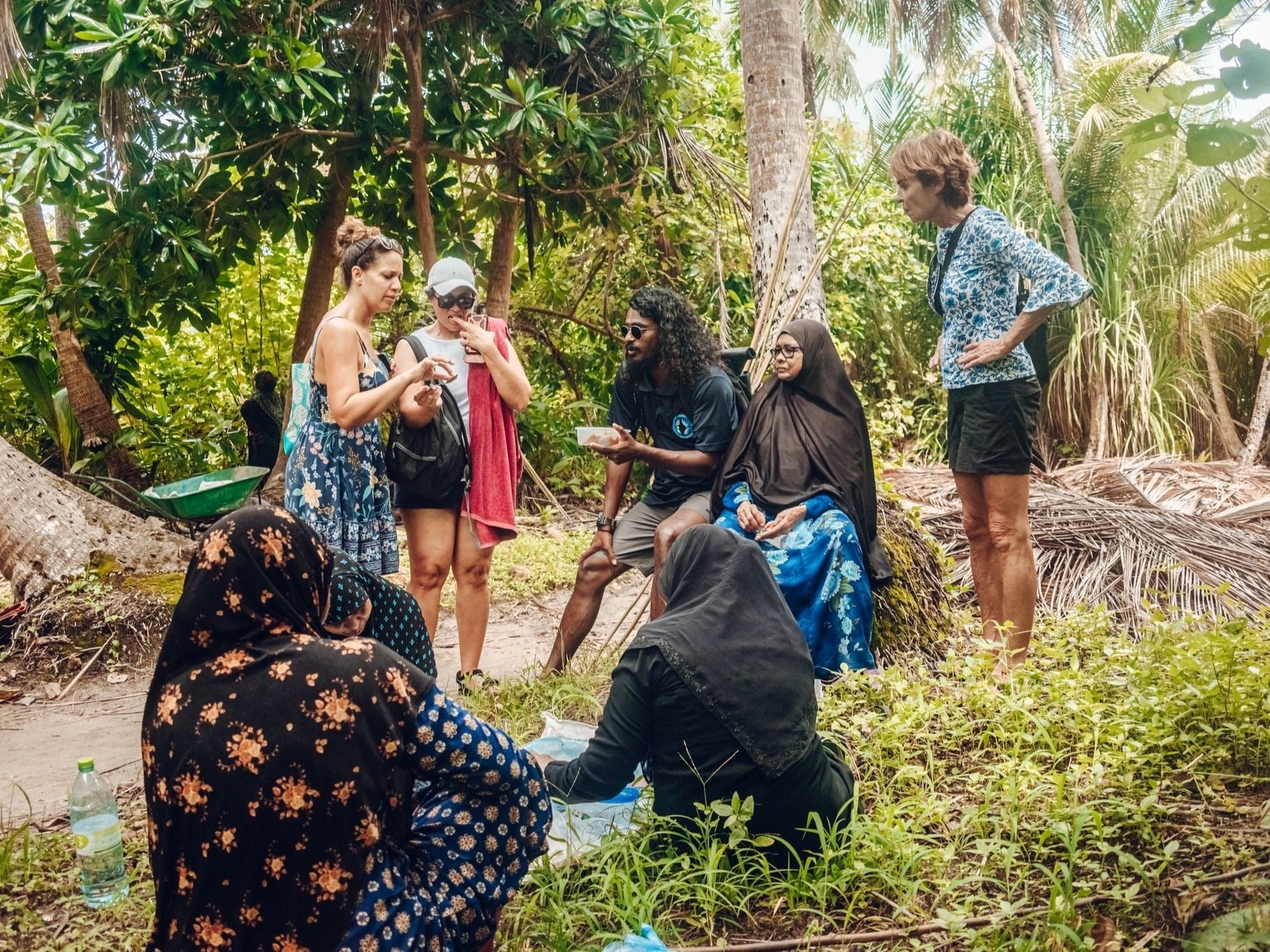
“When local island tourism started, it was an opportunity for people to convert a home on their island into a guest house or to build on land they owned as a family," says Ruth. "But 12 years down the line, we have businesses building guest houses; many with no connections to the island. That money isn't staying within the local island community from an accommodation perspective.
“It shouldn’t just be ‘oh, we’ll have tourists here’; there should be a process of investing in the community, getting tourists spending within that community and putting our empty buildings into use and bringing life back into the heart of a village. Otherwise, you get 12-15 story buildings on local islands, and we'll lose the traditions and culture, because they will just be tourist islands, but at a lower level than a resort island. The community will be pushed out.”
As that 2020 study states, “this involvement of indigenous communities usually of low income [...] means that these groups of people will have found a platform to engage with government from which they are often excluded.” In short, it gives indigenous people a say on how their land is used.
Let the Maldives again be at the forefront – a trail blazer and innovator of international tourism development.
That paper closes by proclaiming: “The Maldives have been a pioneer in tourism with the approach ‘of one island one resort’. Let the Maldives again be at the forefront – a trail blazer and innovator – of international tourism development approach by starting to shift towards a more locally controlled and equitable tourism sector anchored on CBT principles of local ownership and management, based on local resources and advancing equity and cooperation.”
Upholding culture through tourism
A 2023 study on leakage in the post-pandemic Maldives, published in COVID-19 and the Evolving Business Environment in Asia, found construction, agriculture and handicrafts - authentic souvenirs - as opportunities to reduce leakage.
“Maldivian craftsmanship has a regional reputation for excellence that is associated with the ancient tradition of using locally available raw materials such as coral, palm leaves, reeds, shells, coir, and wood,” the study states. “Each island and atoll is known for a unique and historically specialised craft.”
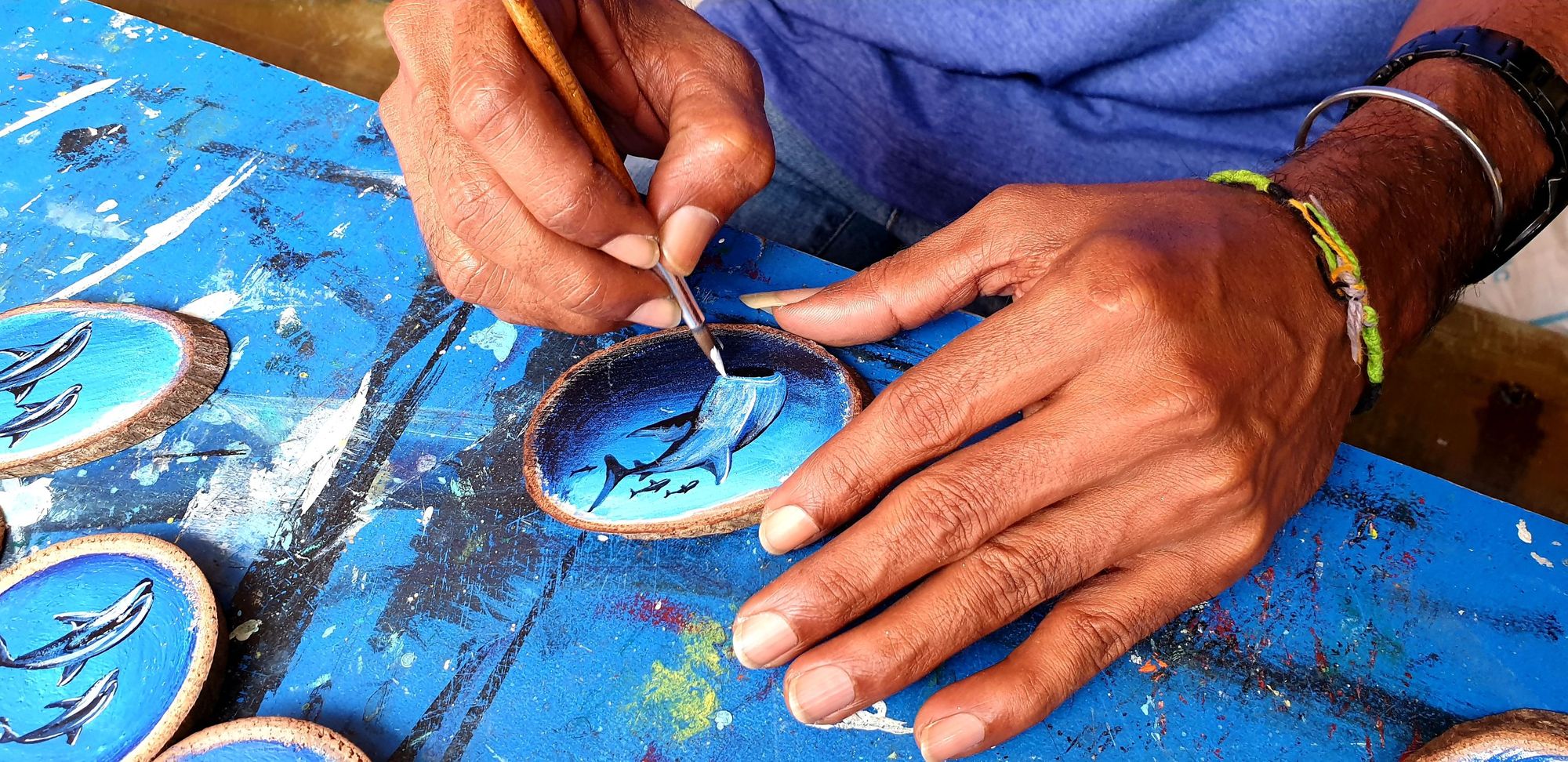
Franklin adds: "There’s a demand for crafts to be purchased that are made in the Maldives, that showcase the Maldives, and it's about protecting heritage and culture - because if locals don't have the opportunity to be able to to sell products that are crafted, that historical craft will die out, because youngsters will see no reason to learn.”
The pandemic showed “the importance of strengthening the Maldives’ resilience against external shocks”, says the study. It goes on to discuss the vital role tourism must play in that process. “It acts as a catalyst that stimulates other sectors of the economy, such as transportation, construction, trade, and financial services.” There are other benefits too, “including gender equality, environmental sustainability, and partnerships” - all crucial to the everyday lives of local life.
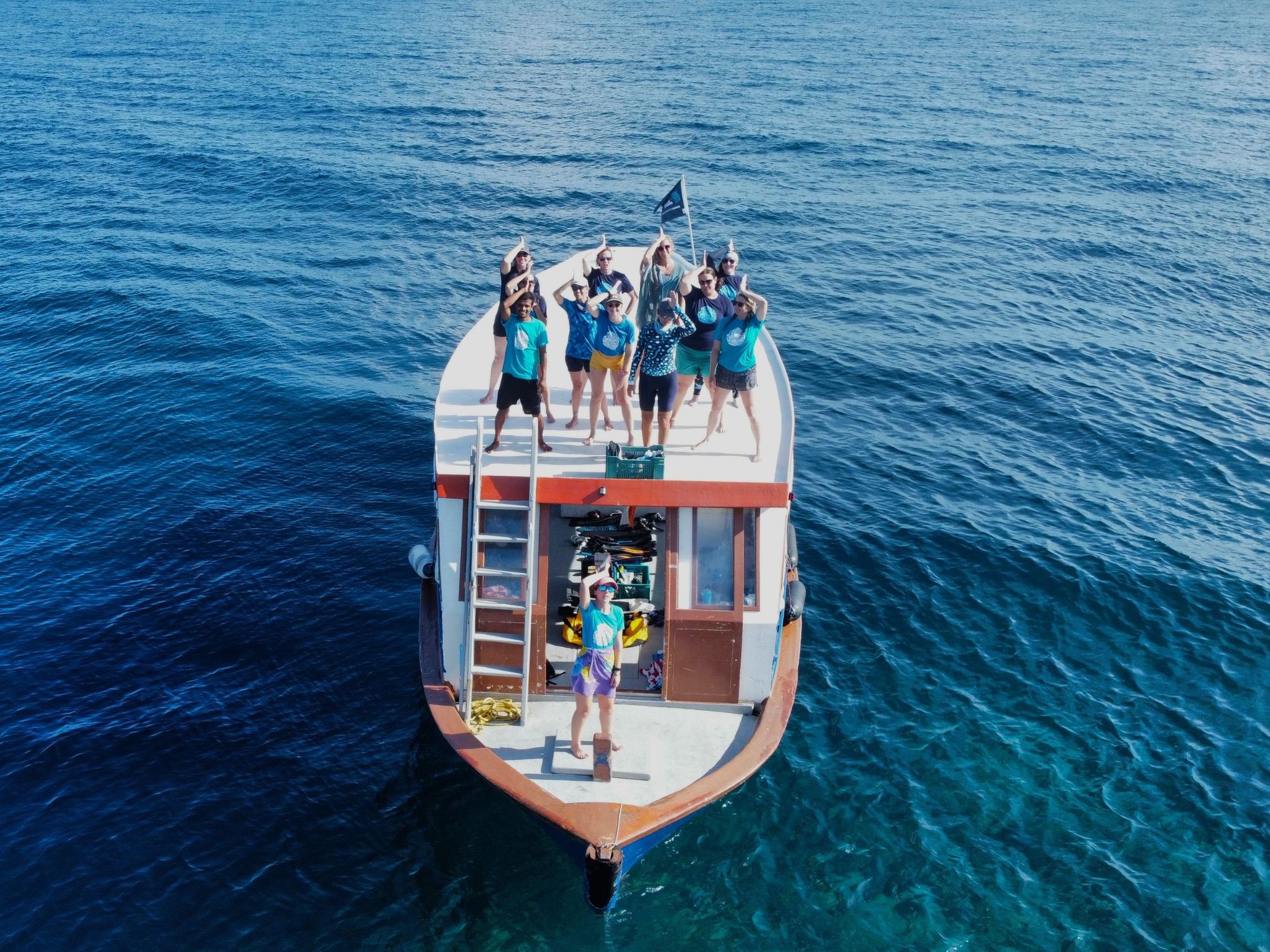
Franklin says that it’s time that “all-inclusive needs to be associated with local communities and not just a meal plan option” in the Maldives. Done right, sustainable community tourism can empower people financially, and help to preserve and restore their local island cultures.
“Ultimately, it’s about being able to stay on their home island, through choice,” says Ruth. “A lot of people leave their local islands because they come to the capital for education, and then after that, they go into employment, and that’s not possible back on their home island. It’s about livelihoods; about people being able to stay with their families and having employment opportunities, and money being invested in these islands. But it’s also important that there is a balance between tourism and community life on those islands.”
Ultimately, change is driven by consumer demand. “If the consumers are asking about this, then they will need to start thinking about it,” says Ruth, whether it’s whale sharks or tourism that benefits locals. “The guest can become the activist.”
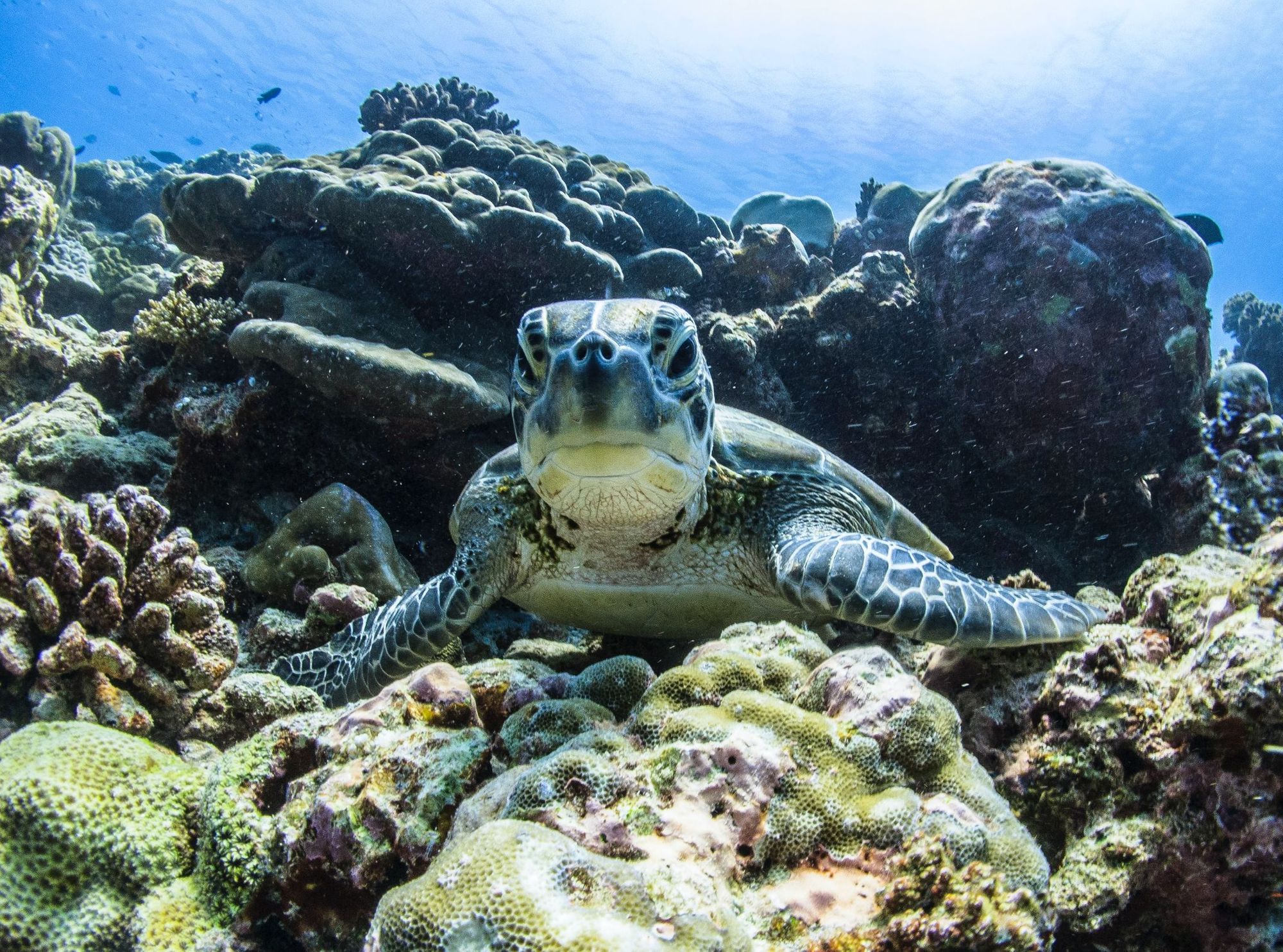
Franklin wants to see more community-based tourism on local islands, and to see that style of tourism backed and promoted by all tourism stakeholders.
“There needs to be a balance across the Maldives,” says Franklin. “So we’re not looking at local islands that get no economic benefit from tourism, or at overtourism and overbuilding.
“You can have these awe-inspiring moments - snorkelling, free diving, scuba diving and seeing this myriad of tropical fish and animals; from turtles and reef sharks to whale sharks - and each guide here has their own stories too. It’s a beautiful environment, and the people here will capture your heart. There are challenges, as there are in any destination, but they can be overcome if all stakeholders work together.”
Inspired? Check out our new trip, hiking, kayaking and swimming with whale sharks, built in partnership with Secret Paradise Maldives!