

What's Included?
- Activities & Certified GuidesAll itinerary activities with expert, local, English-speaking guides
- Guesthouse & wilderness camping4 nights at a hotel or guesthouse in Longyearbyen and 2 nights camping in the Arctic wilderness
- MealsAll breakfasts, all lunches, and 2 dinners
- EquipmentEverything you need for winter camping, glacier walking, ice cave hiking and snowmobiling
- Permits & feesAll permits and entry fees
- Maximum group size: 10Join small n’ sociable groups of like-minded, active and outdoorsy people – designed to be solo-friendly
From…excluding flights
Highlights
Spend two nights of the adventure on a mini-expedition in the otherworldly Arctic wilderness, wild camping and keeping lookout for polar bears
Deep-dive into the frozen underworld of ancient glaciers, exploring the glassy passages of glittering ice caves
Zip across Svalbard’s frozen wilderness and past dazzling fjords on a snowmobile, and bunk down in Longyearbyen – the world’s northernmost town
Itinerary
Day 1
Arrive in Longyearbyen
GuesthouseTwin shareShow Day 1 detailHide detail
As your plane begins its descent, peer out the window for a chance to spot Svalbard's (opens in new tab) wild side from above – endless glaciers, jagged peaks and snow-covered valleys stretching all the way to the horizon. Landing at 78 degrees north, you’ll step into Longyearbyen, the northernmost town on Earth. After checking in at your cosy guesthouse, the rest of the day is free to explore. Pop into the Husky Cafe, browse the local art gallery or museum, or grab any last-minute kit from the gear shops in town. In the evening, you’ll meet your group and guide for a quick briefing, then head out together for dinner at a local restaurant (not included).
Day 2
Hike to a glacial ice cave
Hiking5-6 hours · 6km · 400m upGuesthouseTwin shareBreakfast and lunch includedShow Day 2 detailHide detail
Wake up to your first full day in the Arctic and tuck into breakfast before a short briefing with your expedition guide. You’ll then set off on an uphill hike towards the glacier, climbing steadily until you reach the entrance of a frozen ice cave. With spikes strapped to your boots and a headtorch to light the way, you’ll step into a dazzling underworld of shimmering crystals, glassy chambers and twisting tunnels carved by glacial meltwater. After exploring this magical hidden landscape and pausing for a warm drink and lunch inside the cave, you’ll make your way back down to Longyearbyen. The evening is yours to relax at the guesthouse or head into town. Depending on the weather and conditions, this hike may be moved to Day 4 and replaced with another day hike.
Day 3
Head in to the Arctic wilderness
Hiking5-6 hours · 8kmWild campingTwin shareAll meals includedShow Day 3 detailHide detail
After breakfast you'll load up your pulka – a small sled which you'll drag behind you using a harness attachment – with everything you need for your polar expedition. Feeling like a real explorer, you'll head out of town, finally leaving civilisation behind. Step by step, the white silence opens around you, with mountains rising as you move deeper into the wilderness. With snowshoes strapped on, you'll cover 8–10 km at a steady pace, pausing for stories from your guide and to take in the surroundings. Keep an eye out for Arctic foxes and reindeer as you go. You'll reach camp by late afternoon (although hiking time will differ depending on conditions and group fitness). Your guide will teach you how to set up camp safely and successfully in the sub-zero conditions. Enjoy a surreal and otherworldly dinner in the stillness of the Arctic. If you are visiting in early March, there's a chance that you'll spot the northern lights.
Polar Bear Lookout: Tonight you'll have the unique experience of being on polar bear lookout. After a full safety briefing, each member of the group will take it in turns to keep watch - a moment of solitude at the very edge of the world. Watching for polar bears in the distance as your fellow adventurers sleep is an unforgettable experience.
Day 4
Wake up in the wild to hike mountains and glaciers
Hiking4-5 hoursWild campingTwin shareAll meals includedShow Day 4 detailHide detail
Wake up in the heart of the wilderness and sip your morning coffee with panoramic mountain views for company. After a hearty breakfast, set off on a day of true exploration. The route will be shaped by weather and snow conditions, as well as the fitness of the group – part of the adventure is not knowing exactly where the day will take you. With a choice of nearby peaks and glaciers, one thing’s certain: you’ll reach viewpoints few others ever see. Back at camp, there’s time to settle in and soak up the stillness before another night in the wilderness under the Arctic sky.
Day 5
Load up the pulkas and hike back to civilisation
Hiking5-7 hours · 8km · 350m upGuesthouseTwin shareBreakfast and lunch includedShow Day 5 detailHide detail
After another memorable night wild camping in the Arctic, you'll help take down the camp and load up the pulkas, ready for another big push through the wilderness back towards Longyearbyen. The intended route takes you up Fardalsbakken – a steady 350m climb – before crossing Longyearpasset, where Longyearbyen comes into view, ringed by mountains. From there, you'll descend across the Longyearbreen Glacier, a scenic and rewarding way to end your time in the wild. As always, the exact route will depend on conditions and your guide’s assessment. Arriving back into civilisation by late afternoon, your guesthouse will be a welcome sight after what will feel like an age outside. Hot showers will be the order of the day, followed by perhaps the most well-earned glass of wine of your life.
Day 6
Explore Svalbard by snowmobile
Snowmobiling8 hours · 100kmGuesthouseTwin shareBreakfast and lunch includedShow Day 6 detailHide detail
Have your driving licence ready – it’s snowmobile time. Climb aboard your personal snowmobile for an exhilarating journey through the Arctic wilderness, covering far greater distances than on your previous snowshoe treks. As you travel through the snow-covered landscape, the wide Advent Valley opens up ahead, flanked by rugged mountain peaks and often dotted with curious Svalbard reindeer. If conditions allow, you’ll continue to Villa Fredheim, a legendary trapper’s cabin where a family lived for 26 winters in the remote Tempelfjorden, watched over by the dramatic Temple Mountains. Whatever the route, expect sweeping views and a true sense of Arctic exploration. Along the way, you’ll pause for a warm expedition-style lunch with hot drinks out in the snow. In the evening, celebrate your final night in the Arctic with a group dinner – or, for something different, head to the floating sauna just outside town for a polar plunge (optional; fees apply). If you're keen on the sauna, chat to your guide at the start of the trip, as it books up fast and must be reserved as a group.
Day 7
So long, Svalbard
Breakfast includedShow Day 7 detailHide detail
Say farewell to Longyearbyen and the Arctic, returning to Svalbard Airport in time for your flight home.
Practical Stuff
Getting There
- Nearest airport
- Svalbard Airport, Longyear (LYR)
- Pick up
- Your guesthouse in Longyearbyen
Any time on Day 1 - Drop off
- Your guesthouse in Longyearbyen
Any time on Day 7
This Trip is Graded Level 5
- Level 5
Challenging
Made for those who seek to push themselves and embrace the outdoors
Highly Remote Environments: Factors to consider - How much activity is involved?
Very active days, usually seven to eight hours long
You'll need to have a good level of fitness and a serious sense of adventure for this expedition. While you will be kitted out with everything that you need to be safe and com...
- Right level, wrong trip?
Browse all our Challenging trips
Your next adventure is out there

 Not sure which level is right?
There's a level for everyone – find your match
What is and isn't Included?
What's included
- Guided hike to an ice cave and explore the frozen underworld beneath a glacier
- 3 days of guided hiking in the Arctic wilderness
- Complete a shift on polar bear lookout
- Snowmobiling expedition to Tempelfjord
- Expert, local, English-speaking guides
- 4 nights at a guesthouse in Longyearbyen
- 2 nights camping at an Arctic wilderness camp
- 6 tasty breakfasts
- 5 dry-pack expedition-style lunches
- 2 homemade dinners
- Everything you need for winter camping, glacier walking, ice cave hiking and, of course, a snowmobile
- All permits and entry fees
What's not included
Our trips do not include flights, trains or other travel to the start point and back from the end point.
This trip begins and ends at your guesthouse in Longyearbyen, as the airport shuttle is the quickest and easiest way to get into town from the airport. See the 'Getting There' section for more information on making your way to the guesthouse.
Tips are not included in the trip cost; these are entirely at your discretion. If you would like to tip, the amount should be reflective of your perception of service and quality.
You know your own spending habits best, so please budget an appropriate amount for things like optional meals and drinks, shopping, optional activities, and laundry. Please note that all payments will need to be made card, as cash is not accepted in Svalbard.
Travel insurance is compulsory for all of our adventures, and you'll need to provide your policy details before departure. Your insurance should offer adequate cover for overseas medical treatment, evacuation/repatriation, your baggage and equipment, and the specific activities involved in your adventure. We also recommend ensuring your policy includes cancellation and curtailment cover, in case you're unable to join your trip due to unforeseen circumstances such as illness.
Standard travel insurance may not cover all the activities included in your adventure, so it's essential to check the details carefully. There are adventure-specific providers that many travellers have used in the past, such as True Traveller (opens in new tab) (for those based in the UK or Europe), or Rise + Shield (opens in new tab), both of which offer cover for a wide range of adventurous activities.
Please make sure your chosen policy meets your individual needs and covers all aspects of your trip.
Visa requirements often change, and you are responsible for obtaining any required visas for this trip. Please check with your nearest embassy or consulate for up-to-date advice.
Where You'll Stay
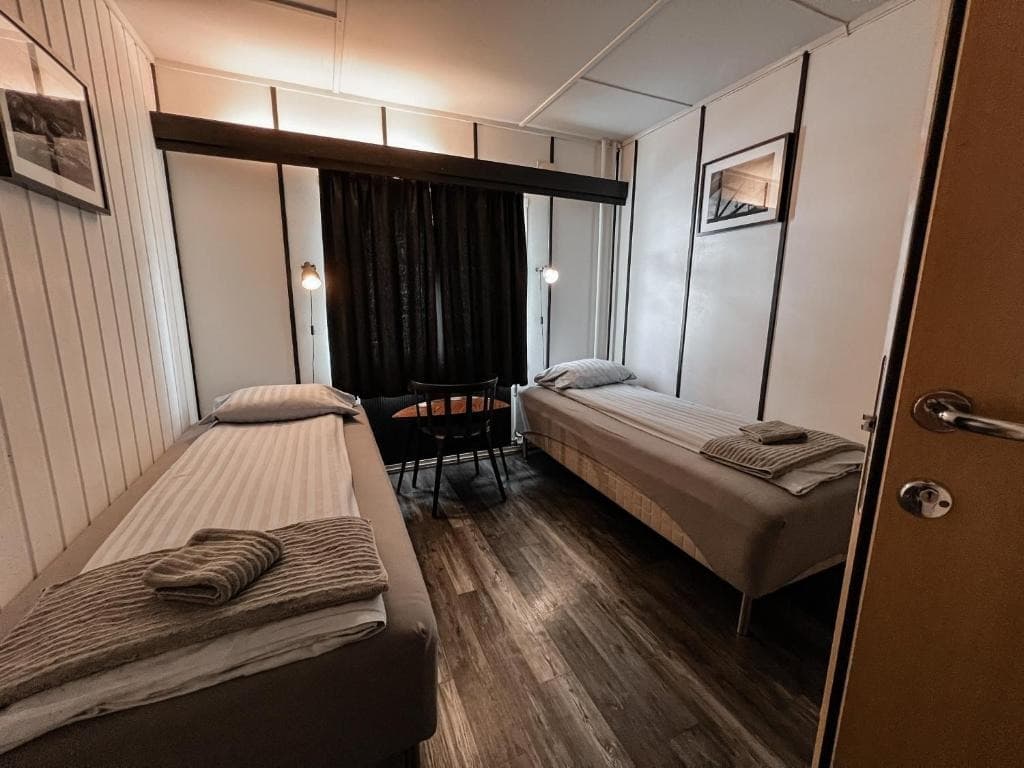
Looking for a private room? See Optional Extras for details and pricing.
Longyearbyen
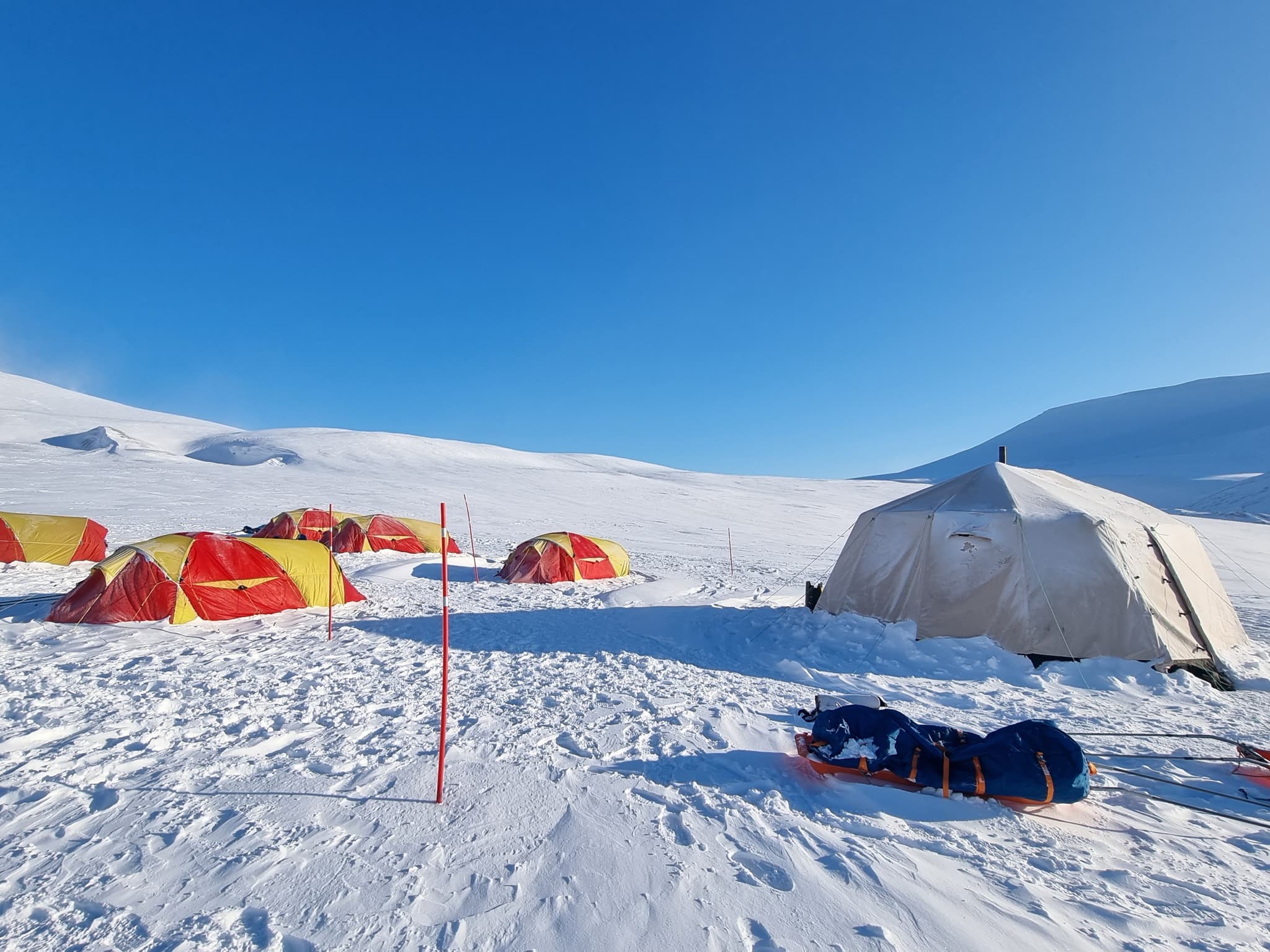
In the Arctic wilderness
What You'll Eat
At the wilderness camp, breakfasts will consist of cereals or porridge, tea, coffee and 'polar bread' as well as possibly bread, ham, cheese, eggs and bacon. Lunches will typically be dry-pack expedition-style meals, heated using water boiled while y…
Optional Extras
Equipment / Kit Hire
- Sleeping bag hire
- …
Pre/Post Trip Accommodation
- Single room: 2026 prices start from
- …/per night
- Single room: 2027 prices start from
- …/per night
- Twin/Double room: 2026 prices start from
- …/per night
- Twin/Double room: 2027 prices start from
- …/per night
Upgrades
- Optional Private Room Upgrade (4 nights): 2026 prices start from
- …/per person
- Optional Private Room Upgrade (4 nights): 2027 prices start from
- …/per person
For solo travellers looking for their own space, an optional private room can be booked for the four nights spent in Longyearbyen for an extra charge, see Optional Extras for the price. Please request this at the time of booking, as this is subject to availability.
To request any extras, message your host via your Much Better Adventures account once you have booked your trip.
All extras must be paid before your trip starts.
Ratings & Reviews
5.034 reviews
- 3 stars (0)
- 2 stars (0)
- 1 star (0)
Category rating
- Food
- 4.0
- Guides & crew
- 5.0
- Accommodation
- 4.0
- Itinerary
- 5.0
Latest Reviews
Customer Photos
Before You Travel
What to Pack
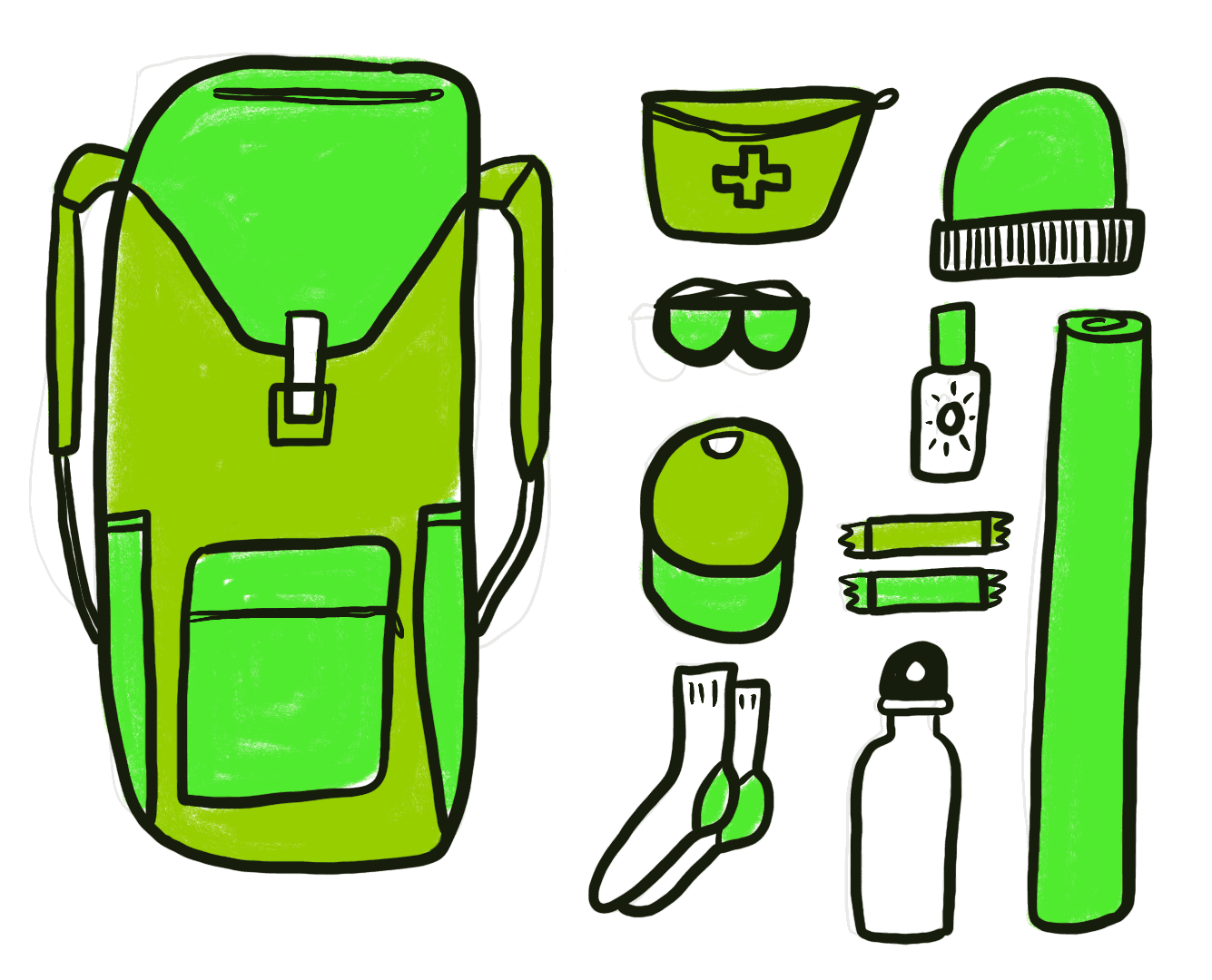
Know before you go! Some stuff we'll provide, other things you'll need to bring.
FAQs
Is camping out in the Arctic safe?
Camping in the Arctic is a completely safe and hugely enjoyable experience with the correct preparation. Your hosts in Svalbard are expert wilderness guides, the majority of whom are originally from the island itself, and you'll be perfectly safe in their hands.
However, you will need to pack correctly for this trip. There are various specialist pieces of kit included in the trip cost, as well as other items available to hire when you get to Svalbard – see the Kit List above for a full breakdown. The other items on the kit list are important to bring along too, so perhaps do a dummy-run packing your bag a couple of weeks before the trip, then you can buy anything that you might be missing. There will be outdoor adventure shops in Longyearbyen to plug any gaps, but items will be considerably more expensive to buy in Svalbard. Your host will run a check of everyone's preparedness for the camping expedition before heading out into the wilderness on Day 3.
The camping equipment provided is specifically designed for extremely cold conditions, to ensure everyone has a safe and comfortable couple of nights camping in the Arctic. The preparation and equipment will let you relax and enjoy this amazing experience. Your guides will be carrying GPS, emergency beacons, satellite phones, first aid equipment, flare guns and rifles (rifles must be carried outside Longyearbyen by law). For concerns on polar bear safety, please read the FAQ: 'What does Polar Bear Lookout entail?'
What does polar bear lookout entail?
For the two night on expedition, each member of the group will take it in turns to look out for polar bears while the rest of the group sleeps. The experience of being on the lookout is one of the most memorable parts of the trip and has been described as "like being a crew member on a David Attenborough documentary".
You'll be given a full briefing and safety instructions and a shift roster will be developed between you all. Only one person is generally on lookout at a time, and lookout shifts are usually around two hours. However, if your group size is larger than four, you will have at least one night without needing to take a shift.
While on this trip you will be in the hands of expert wilderness guides. Your host has been operating wildlife expeditions in the area for over 25 years and has never had a close call with a polar bear. This is all down to their knowledge and expertise. There are polar bears in the area and they have come close to camp before, but the guides know exactly what to do in all cases.
How is visiting Svalbard beneficial to the environment?
Sustainable tourism provides an economic incentive to protect, rather than exploit, vital wildlife areas in Svalbard. Over the years, seven national parks and 21 nature reserves have been created to protect the Svalbard archipelago. As a result, the local population of polar bears and various marine species have increased, and tour operators in Svalbard – including your host – have worked alongside environmental groups such as the WWF and Friends of the Earth to block any unsustainable development such as new roads, mining and fossil fuel exploration. Every visitor to Svalbard also pays an environmental tax of NOK 150, which goes directly to a fund to manage the protected areas. The adventure itself – mostly self-powered activities and wilderness camping – is about as low-carbon as it’s possible to get, especially when compared with the myriad cruise ships that visit Svalbard.
The only non-self-powered activity on this trip is a day driving a snowmobile. Snowmobiling is a part of modern life in the Arctic, and for many months of the year it is the only way for locals to travel between settlements. Your host uses the most modern snowmobiles currently available in Svalbard, to ensure as high energy efficiency and as low noise level as possible. Your journey follows a frequently used route along a valley floor leading to Tempelfjord, as this limits the disturbance to wildlife by avoiding going 'off-piste'. Any local or visitor to Svalbard wanting to venture deeper into the national parks has to apply for permission to do so. Travel by snowmobile for tourists is a highly monitored activity, in order to avoid negative impacts on Svalbard's wildlife.
For more on this topic, you can read our article on tourism and conservation in Svalbard (opens in new tab), where our very own Stuart Kenny interviews Arne Kristoferson, your host for this trip and resident of Svalbard for nearly three decades.
Also, here’s how our very own co-founder Sam answered the question ‘Is it responsible?' (opens in new tab) after we launched our winter Svalbard hiking and snowmobiling tour (opens in new tab).
Can I hire some of the items on the Kit List before leaving home?
Absolutely! We would advise getting in touch with a kit hire specialist. In the UK, you could try Expedition Kit Hire (opens in new tab) or Outdoor Hire (opens in new tab), who are usually very helpful. They are likely to be able to help you with the key items such as jackets, salopettes and Arctic hiking boots – just let them know which trip you're doing and the conditions expected, so they can provide the right items.
What are insulated Arctic hiking boots?
Important: 'insulated Arctic hiking boots' are not regular hiking boots, even those hiking boots designed for winter will not suffice – you won't be able to fit double wool socks inside and they won't let your feet breathe enough. Your host recommends winter Sorel boots that have an inner felt liner – these can be found on various outdoor sites, or can be hired by an expedition kit hire specialist as per the above FAQ. They are perfectly adequate for hiking in and waterproof enough for the conditions you will encounter. They are also a joy to wear as they are easy to get on and off and to layer your warm socks inside.
Is a driving licence required to drive a snowmobile?
Yes, a driving licence is required to drive a snowmobile. If you do not have a licence then it is possible to skip the activity and have free time in Longyearbyen, or you can request to ride as a passenger with another person driving the snowmobile (please note that this is not always possible as it depends on the group size – please ask you host in advance).
What do I do about drinking water?
The water in Longyearbyen is drinkable. At the wilderness camp you'll have a supply of water brought in, as well as the option to melt snow for drinking water. This Arctic ice water is perfectly safe to drink and super refreshing!
Can I leave my excess luggage somewhere?
You can leave any excess luggage in Longyearbyen before heading to the wilderness camp. There is storage at your hotel and also at your host's secure warehouse.
What spending money should I bring?
Svalbard is a cash-free society – cash is not accepted and there is no bank. Only card payments are accepted, so you'll need to bring your credit and/or debit cards with you.
Can my dietary requirements be catered for on this adventure?
At Much Better Adventures, we work hard to accommodate dietary requirements and allergies so your trip is safe, inclusive and enjoyable. That said, options can vary by country, location and accommodation, and in some places options may be limited or unavailable. The information below has been provided by your host so you’re fully informed about what will be possible on your trip depending on your individual requirements. This information should be read carefully prior to your trip to ensure that you are adequately prepared for the situation ‘on the ground’.
Once you have booked on your trip, please fill out your passenger information form asap with any dietary requirements. Once you complete your passenger information, your dietary needs and any allergies are automatically shared with your host and, in turn, your guide. Please submit this as early as possible so they can plan accordingly and deliver the best experience. Please also remind your guide about your dietary requirements upon arrival, as mentioning these in person allows your guide to comprehend individual preferences and limitations as soon as you arrive.
BACKGROUND
Svalbard's food culture reflects its extreme remoteness: almost all provisions are shipped in from mainland Norway, as the Arctic climate and permafrost rule out any local farming, leaving meals built around imported staples, preserved goods and occasional game or seafood. Longyearbyen's handful of restaurants generally follow Norwegian labelling standards, which helps with clarity around allergens, though the choice of fresh produce and substitutes stays narrow. Suitability for special diets is manageable in town but becomes trickier on expedition legs or in remote camps, so travellers should expect to plan ahead and pack some backup snacks. Throughout, your guide will be on hand to help communicate any requirements.
Vegetarian
Vegetarian diets can be catered for on this trip, provided that your host is made aware in advance.
Vegan
Vegan diets can be catered for on this trip, provided that your host is made aware in advance.
Kosher
Fully certified Kosher kitchens and supervision are not available on this trip. Vegetarian or vegan options can often be the most reliable alternative if this is acceptable to you. Please read the related sections above.
Halal
Certified Halal supply is not available on this trip. Vegetarian or vegan options can often be the most reliable alternative if this is acceptable to you. Please read the related sections above.
INTOLERANCES
Gluten Free (for Coeliac, please see Allergies section below)
Gluten-free diets can be catered for on this trip, provided that your host is made aware in advance.
Lactose Free
Lactose-free diets can be catered for on this trip, provided that your host is made aware in advance.
ALLERGIES
Our host has confirmed that they are able to accommodate mild allergies to the 14 allergens (opens in new tab) identified by the UK Food Standards Agency, where these are disclosed in advance. However, if you have a severe or life-threatening food allergy, please get in touch with our Customer Experience team prior to booking to discuss whether your requirements can be accommodated safely on this trip. This will allow us to carefully consider the sensitivity and severity of your allergy, the available provision on the trip and the accessibility of medical care should a reaction occur. Your safety is always our top priority. Please note that when travelling overseas, local ingredients, food preparation methods and labelling standards may vary, particularly in remote areas. It is also worth noting that any allergies may result in more limited options and repetitive provision in some areas. Whilst your guide will help communicate dietary requirements where possible, customers remain responsible for managing their own allergies during the trip.
Can I book on my own?
Sure can! Over 70% of our travellers travel solo, it’s a great way to meet like-minded people.
Who is running the trip?
Our team of Adventure Hunters co-create exclusive adventures which are run by highly vetted, specialist hosts. The trip is run by our trusted host partner in the destination. We only work with independent, local, in-destination experts who know the very best places to explore and how to stay safe. Read more information about the local teams we partner with (opens in new tab). You’ll be introduced to the host straight after making a booking via the Much Better Adventures platform.
What is the official travel advice?
Much Better Adventures refer to the UK Government’s official travel advice when designing trips and monitoring trip operations. We recommend that all customers are familiar with the practical information provided on the Government’s FCDO website (opens in new tab), where current travel advice can be found by searching for the applicable destination(s).
For customers joining this trip from other international destinations – please also read the official travel advice applicable to your country of residence/origin, as this may differ.
What vaccinations do I need?
We recommend checking out the country-specific information (opens in new tab) and also talking to a travel nurse.
How are the trips priced?
We automatically convert prices from the local currency that a host receives to your chosen currency. We update our exchange rates on a daily basis so this does mean that prices displayed on the site are subject to currency fluctuations, which is why you may see them change over time.
If you wish to change the currency you pay in, head to the bottom of the page.
Why are your adventures only for adults?
All of our group adventures are specially designed for adults to enjoy as we want these adventures to bring together outdoorsy people who are truly like-minded. You must be over 18 to join one of our trips.
Who else will be on my trip?
You're always in good company on one of our adventures.
Our trips are typically made up of a mixture of solo travellers and small groups of 2 or 3 friends, with most in their 30s-50s.
Our sociable adventures are solo-friendly by design and naturally attract outdoorsy people with a shared mindset; a love for adventure, a desire to push themselves and meet awesome, like-minded people along the way. Check out our Community Values (opens in new tab) – a shared code to make sure that everyone's experience is safe, inclusive and brilliantly unforgettable.
It’s this camaraderie that has so often turned a great adventure into a life-changing one.
Don't just take our word for it:
- 95% of people rate the group dynamics on our trips 5/5
- 90% of people recommend joining a trip to make new friends
- 75% of people have met people on our trips that they would now consider friends
See here (opens in new tab) for more info about the Much Better Adventures tribe.
What's the weather like?
You will be visiting Svalbard in what is known as the 'light winter' – as this is when the archipelago emerges from the months of 24-hour darkness. In March you can expect around 12-13 hours of daylight, and during April it doesn't get truly dark at all. In March you'll experience lows of -20ºC (-4ºF) and highs of -13ºC (9ºF), while April warms up a touch to a balmy -9ºC (16ºF).
What's the carbon footprint for this trip?
We partner with the World Land Trust to ensure this trip achieves Net-Zero emissions. We also support their Buy an Acre programme, helping local communities to buy and protect natural habitats in perpetuity.
What's the number?
It works out on average at 112kg of CO2 emissions per person, including all local transport, accommodation, food, activities, guides, staff and office operations.
The only thing it doesn’t include right now is flights and travel to the destination. We do make an overall estimate across all our customers separately, but as we don’t book flights, have customers from all corners of the world, and no way of reliably knowing their travel plans, we simply can’t include an individual number in the figure on display here. We’ve got a goal to fix that, so that when you book, there is a way to measure and mitigate the carbon emitted by your flight too.
But what does the number mean?
Yep, hard to picture eh? To give you an idea:
- Driving 1000 miles/1609km would be approximately 281kg of CO2 in an average car (or 140.5kg per person, if there were two of you in it).
- A return economy class flight between London and New York would be approximately 1619kg (1.66 tonnes) per person.
- 10 trees in a temperate forest are estimated to remove approximately 250kg of CO2 from the air in a period of 5-10 years.
What are we doing about it?
Our trips are relatively low-carbon by design, and we're working with all our hosts to develop long term carbon reduction plans. We partner with the World Land Trust (opens in new tab) to ensure this trip achieves Net-Zero emissions. We also support their Buy an Acre (opens in new tab) programme, helping local communities to buy and protect natural habitats in perpetuity, ensuring the protection of the reserve and its wildlife.
Want to know more?
Amazingly, no international travel company has ever publicly published their carbon measurements before, as far as we know. We believe that must change, quickly. So we’re openly sharing the method we used in the hope that other companies will be able to more easily follow suit and build on what we've done so far. You'll find it all here (opens in new tab).
Want to Know More?
Ask our AI Assistant
Get instant answers about this adventure
Departure dates
Monday 22nd March 2027
to Sunday 28th March 2027
…Monday 29th March 2027
to Sunday 4th April 2027
…
Don't see a date you like?
Get an email alert when new dates are added.
We've Got Your Back
Book with confidence and peace of mind.

Got a Group of 6 or More?
Book the whole trip privately. We sort the details, you split the cost. Pure adventure, zero faff.

Feeling Adventurous?
Get travel tips, offers and expert advice when you sign up to the Much Better Adventures newsletter
Still Undecided?
A few other trips to tickle your fancy
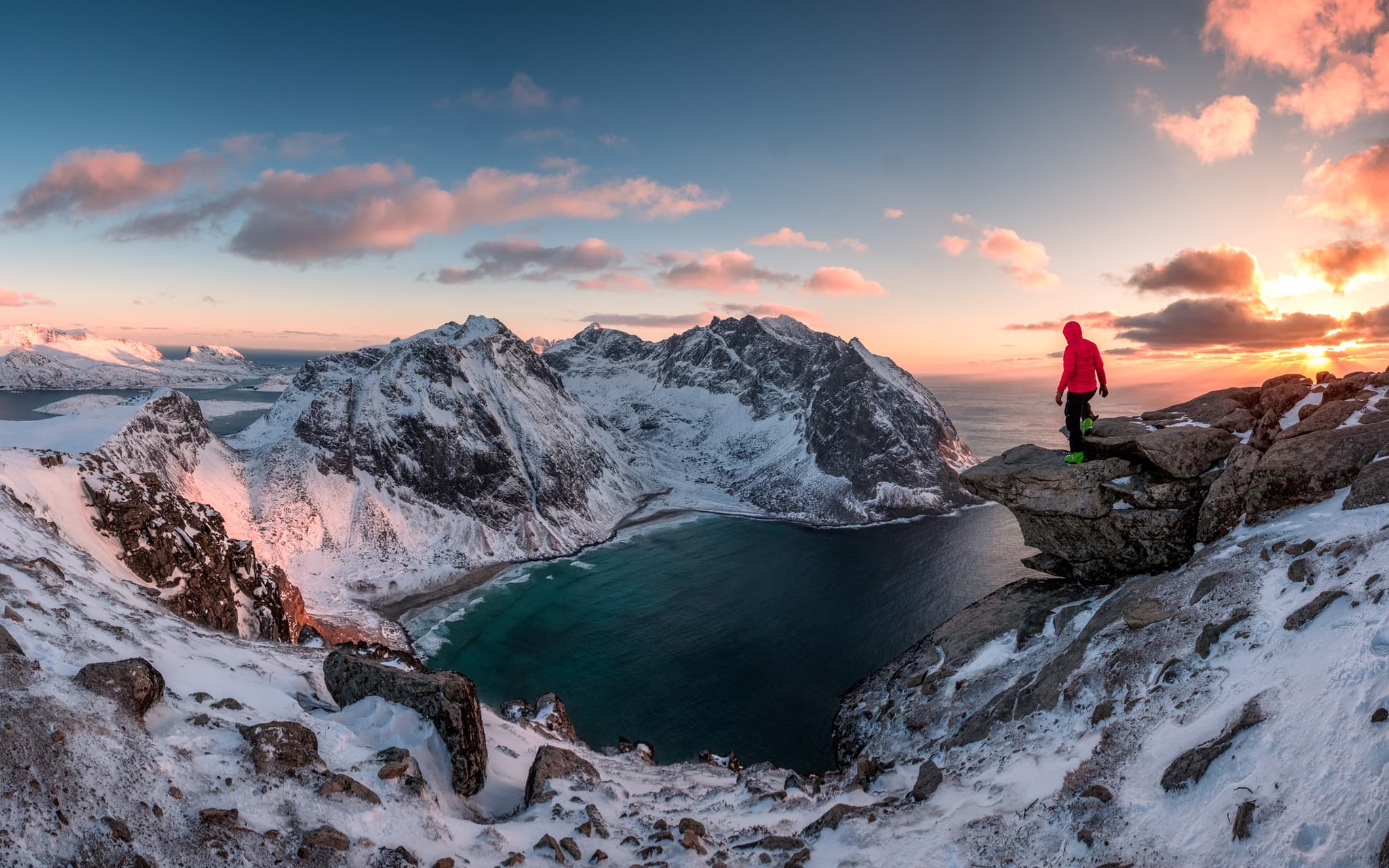
Hike, Kayak and Chase the Aurora in Lofoten
5 nights…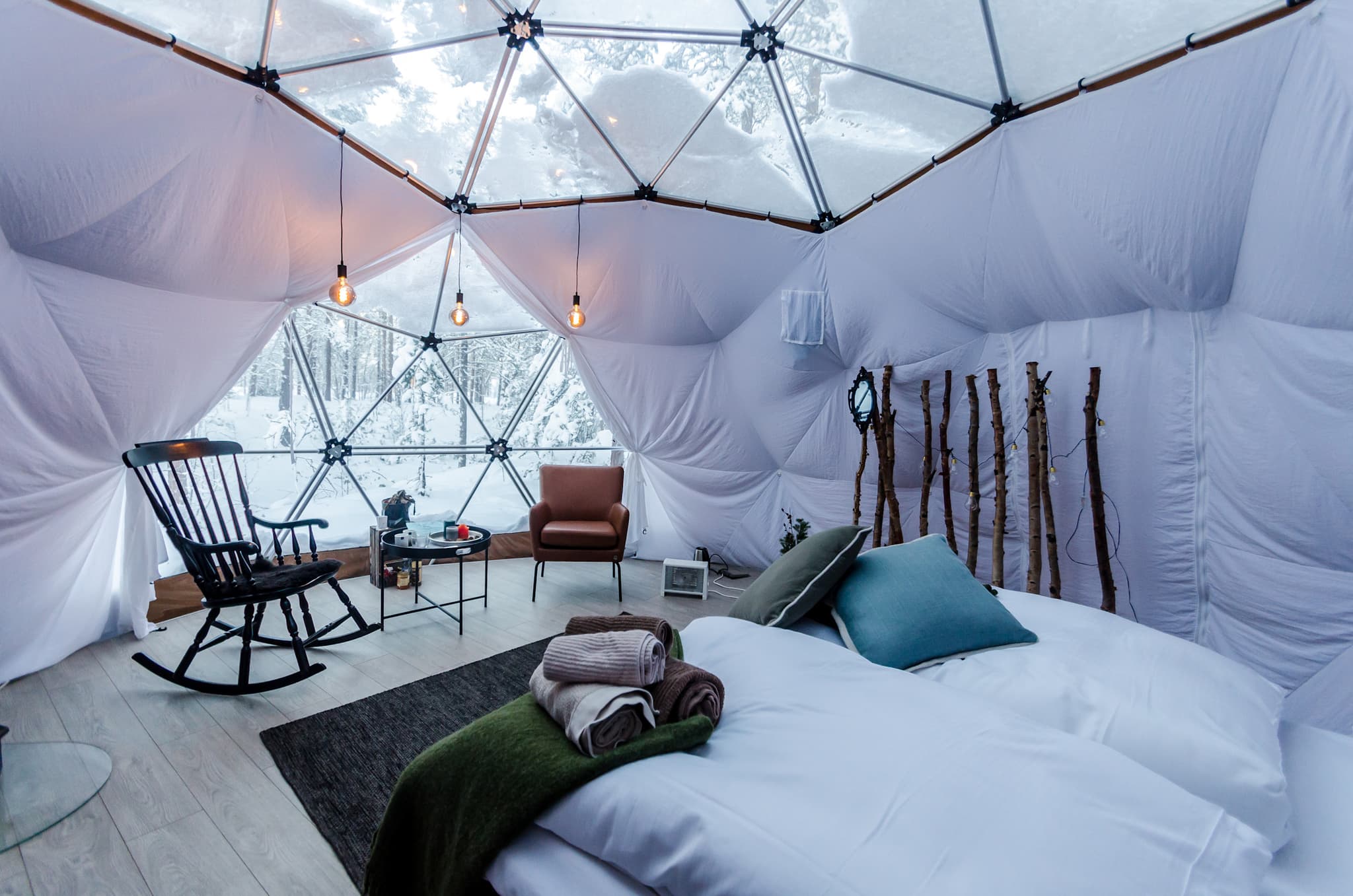
Winter Arctic Circle Adventure in Norway
3 nights…
Ice, Snow and Saunas in Arctic Finland
3 nights…
Hike and Explore Greenland's Wilderness
7 nights…
Winter Adventure in Finnish Lapland
4 nights…
The 3 Peaks Challenge in Iceland
5 nights…
Trek Ecuador’s Avenue of Volcanoes to Cotopaxi's Summit (5897m)
9 nights…
Trek the Remote Trails of Madagascar
12 nights…
Climb Mount Kenya (4985m) and Go on Safari
8 nights…
Hike and Kayak Slovenia in Winter
5 nights…