
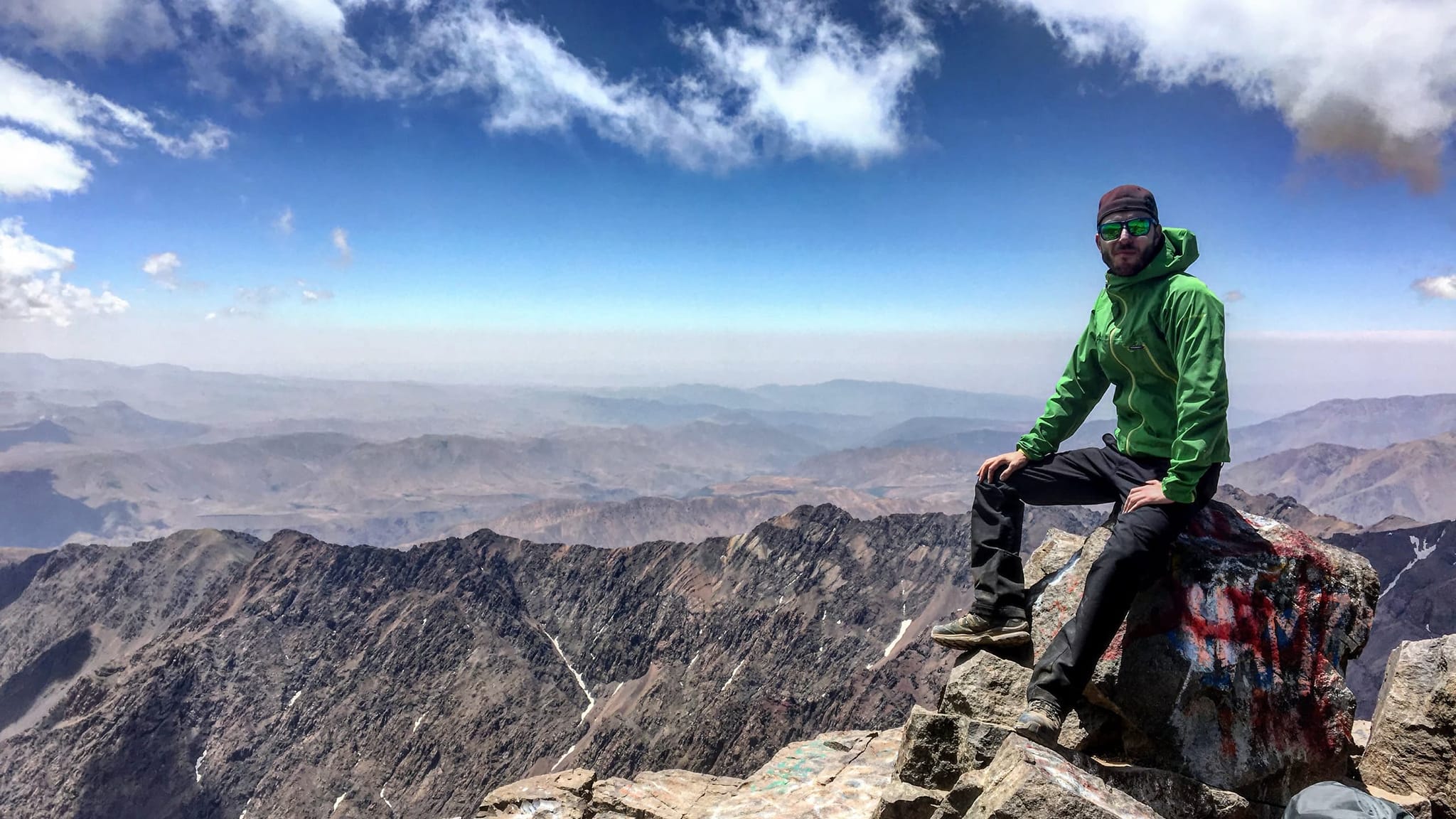
The climb up Mount Toubkal in the High Atlas range of central Morocco is a non-technical ascent, but one that shouldn’t be underestimated. Although reaching its summit during the warmer trekking seasons doesn’t require ropes, harnesses or expert mountaineering skills, the highest peak in the Atlas Mountains and North Africa still comes with its fair share of challenges.
To get to the top of Toubkal, which sits 4,167 metres (13,671ft) above sea level, you’ll need to tackle a lengthy and, at times, steep walk on foot. Rewarding those who take it on with stunning views of the Marrakech Plains, the Anti-Atlas and, on a clear day, even the northern edges of the Sahara Desert, the leg-sapping trek will see you hiking at thin-aired altitude for several hours. It’s not the upper echelons of the Himalayas by any stretch, but the climb does represent a genuine test of your physical endurance. For more on what’s involved, be sure to check out our full guide to climbing Mount Toubkal.
How hard is the Mount Toubkal climb, really?
Climbing up and down Toubkal involves 16 hours of strenuous walking and around 16.7 miles (27km) of hiking in total. Factor in a gruelling 3am start on summit day to catch those epic sunrise views from the top, and the kind of scree-ridden terrain that can wreak havoc on your knees, and the answer to the question above is simple: pretty hard, actually.
Back in the spring of 2017, I was fortunate enough to experience climbing Toubkal for myself on a guided tour with Much Better Adventures. As an outdoor enthusiast, but one with little in the way of technical mountaineering skill, I was drawn to how the package offered a chance for me to summit a 4,000-metre-plus (13,123ft) mountain over the course of a single weekend. With not much more than a pair of hiking boots and a can-do attitude seemingly required, I was unable to resist the itinerary’s almost gravitational pull on me.
Guided only by the light of the headtorches in front of you, you snake your way this way and that up loose ground.
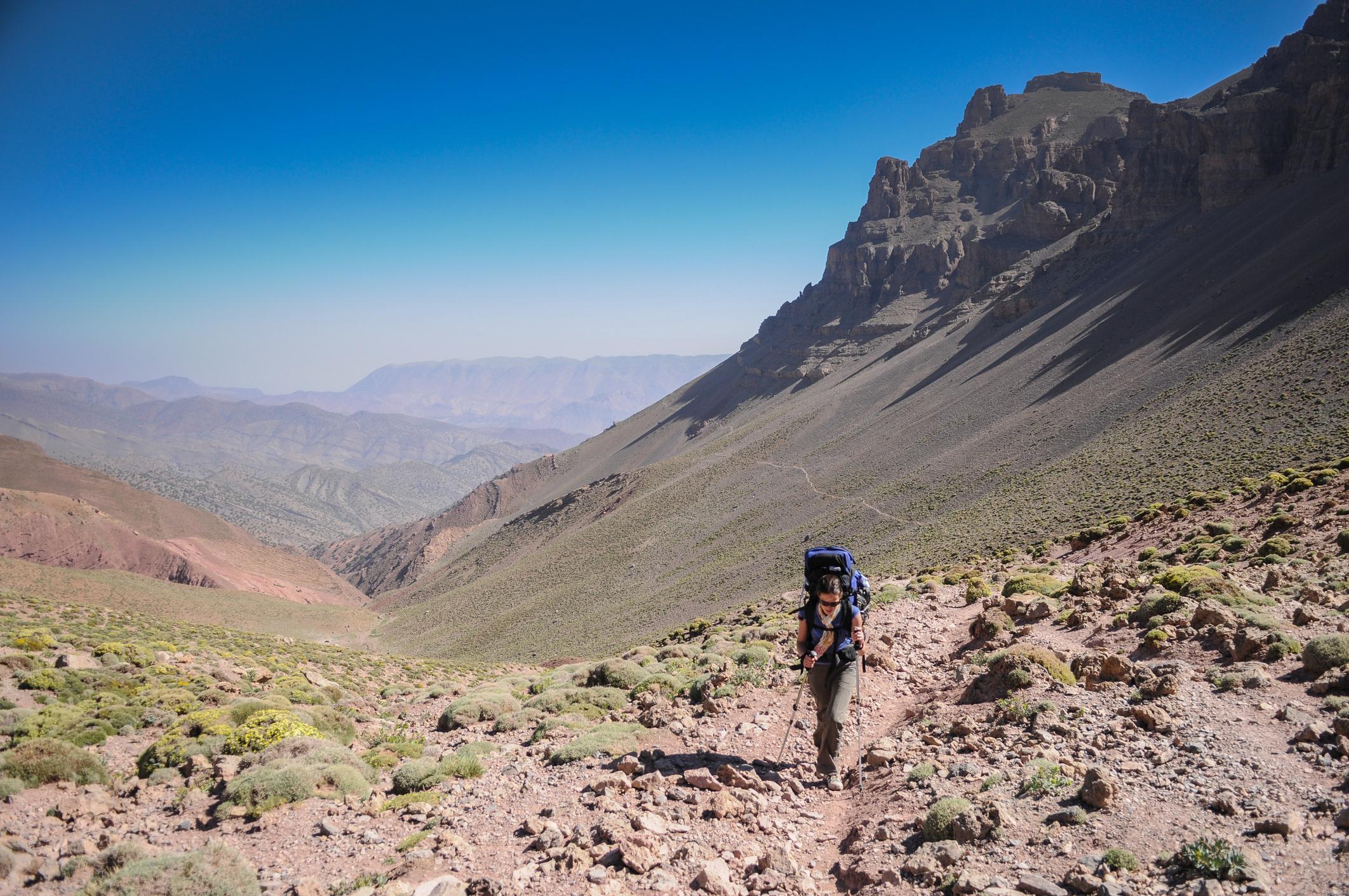
Any illusion I had that climbing Toubkal would essentially be a glorified walk in the park, though, soon dissolved when confronted with reality on the ground. Walking under the beating North African sun as we made our way out of Imlil, Toubkal’s gateway village, I quickly started to wonder if I’d bitten off more than I could chew. Two tiring days later, after overcoming almost 2,700 metres (8,858ft) of ascent (and the long journey back down), I’d completed what I set out to achieve and could finally rest my aching limbs.
 Much Better Adventures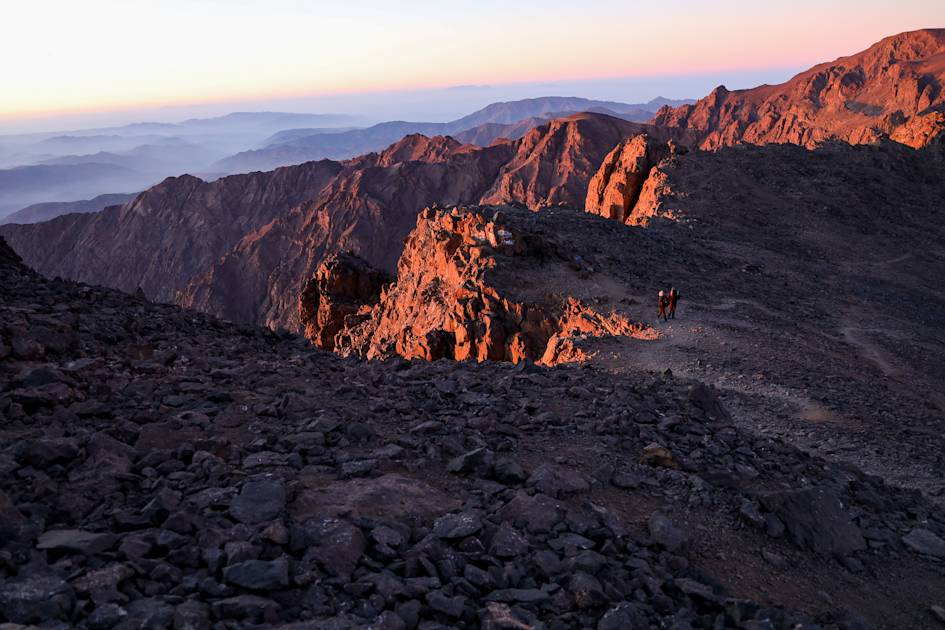
The group I climbed Toubkal with was a real mix of ages and backgrounds. Most of the climbers within our group of roughly a dozen were, like myself, ascending the highest mountain of their lives so far. We did, however, have a couple of people with us who’d been up Kilimanjaro and one who’d even made it to Everest Base Camp.
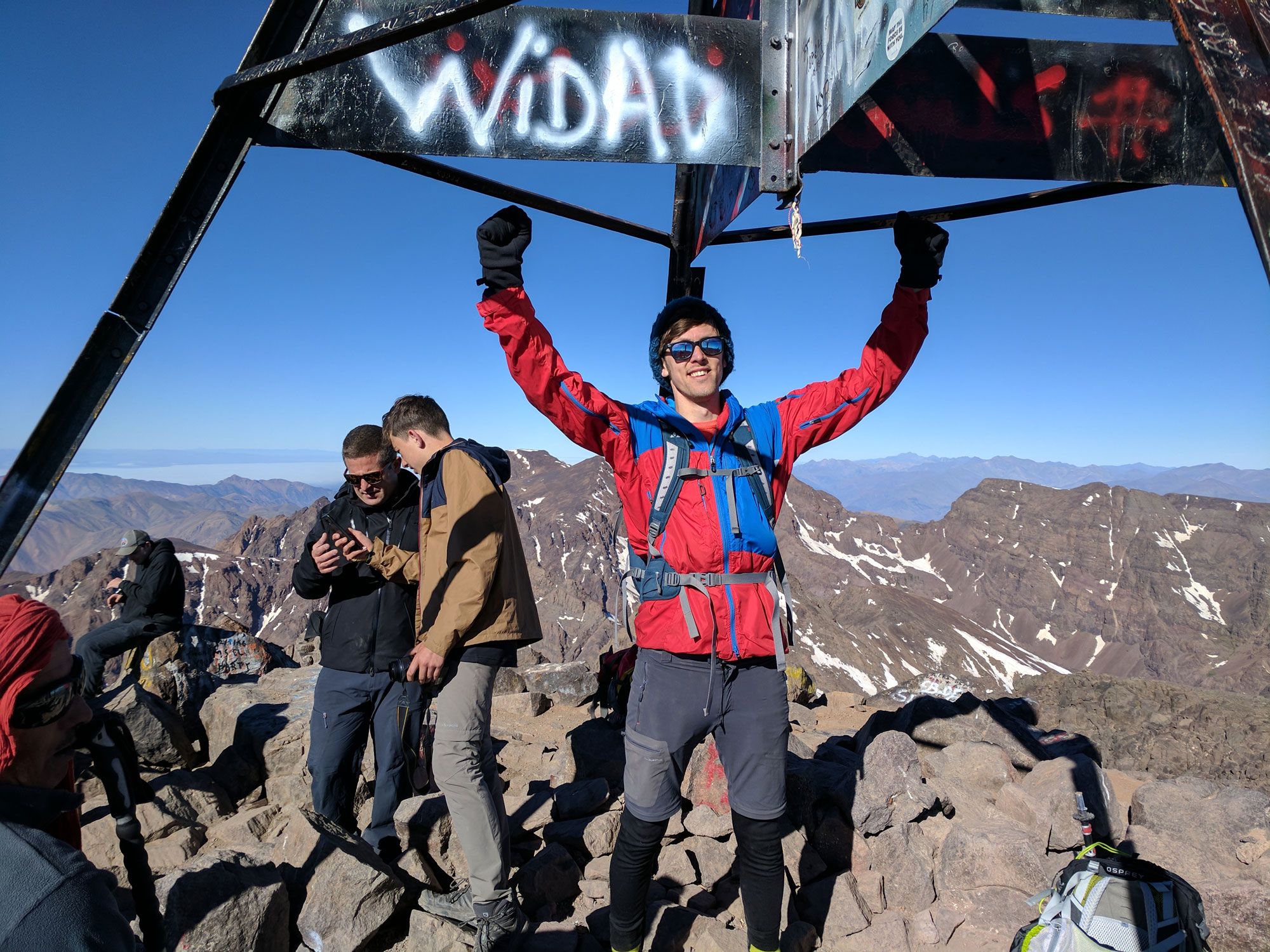
Every single member of our group reached the summit of Toubkal, apart from one of my English compatriots who had to turn back and return to the mountain refuge (3,200m) due to altitude sickness. This alarming development, which took place on summit morning and which was safely resolved with the help of our excellent guides, brought home the scale of the challenge and the frightening reality of climbing big mountains.
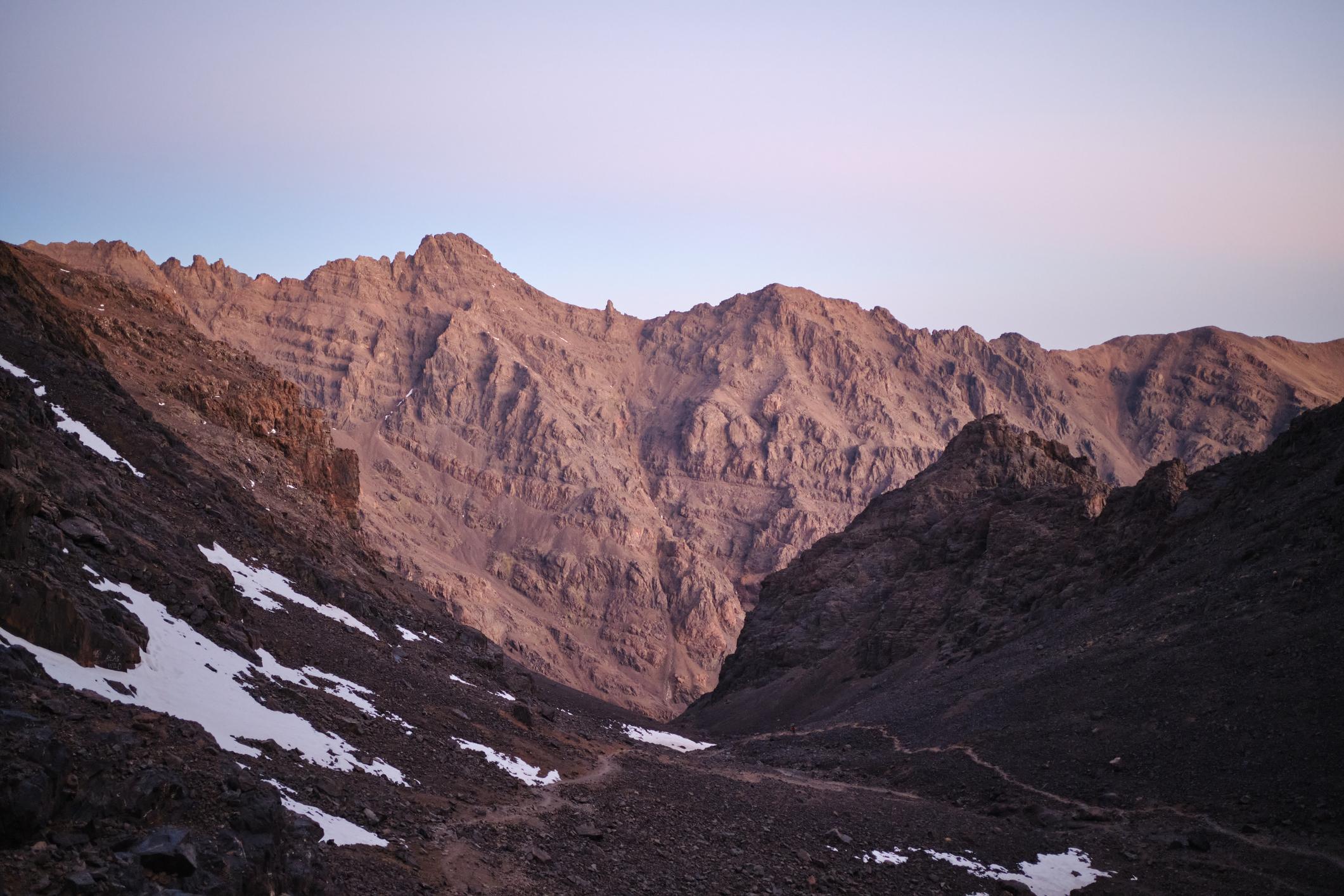
The altitude sickness incident took place on what was, for me at least, the hardest part of the entire climb. After leaving the comfort of the mountain refuge in the early hours of the morning, you’re confronted with a steep climb in the dark. Guided only by the light of the headtorches in front of you, you snake your way this way and that up loose ground. Things naturally get a little easier as the sun slowly makes an appearance, but it’s definitely a section of the ascent where the sense of adventure really starts to escalate.
Speaking now, with the power of hindsight (good old hindsight), there were definitely things I wish I knew before climbing Mount Toubkal. For me, everything from a lack of mental and physical preparation to poor boot and sock selection made what is already a challenging hike that little bit more tricky. The error I made, I’ve since realised, was confusing ‘non-technical’ with ‘not difficult’; ‘expertise not needed’ with ‘this will be easy’.
It’s true that a lot of people underestimate the climb, especially the people who come in the summer. They think it’s not technically difficult, but forget about endurance.
Mohamed Aztat is a partner of Much Better Adventures, and an independent Berber tour operator based in Imlil and Marrakech, with vast experience on Toubkal. Now aged 46, the professional mountain guide first went up the mountain when he was just 13 years old, and has since summited it more than 180 times. He knows more than most about what it takes to climb Toubkal.
“It’s true that a lot of people underestimate the climb, especially the people who come in the summer,” he tells me. “They think it’s not technically difficult, but forget about endurance. There’s the length of the hike and the ground. It’s rocky, especially on the second day. It’s steep slopes. It’s loose scree. It’s the altitude. These kinds of things make them tired. These are the things that surprise a lot of people.”
Much Better Adventures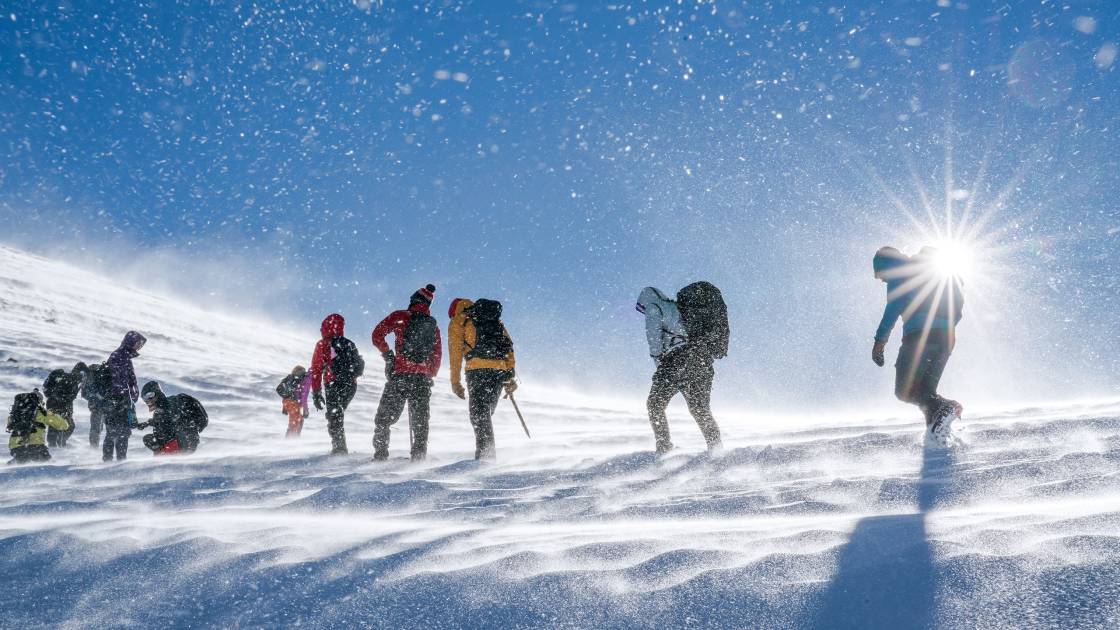
Can a beginner climb Mount Toubkal?
A fit beginner can climb Toubkal. The mountain doesn’t require technical expertise and so has a reputation for being a good first high-altitude peak. Naturally, though, this statement comes with a few caveats. Firstly, you will need good general fitness. If you’ve never done any sort of hillwalking before, you’re almost certainly not ready for the highest mountain in North Africa. Someone with no prior walking background or multi-day hike experience should prepare accordingly, rather than jumping straight in.
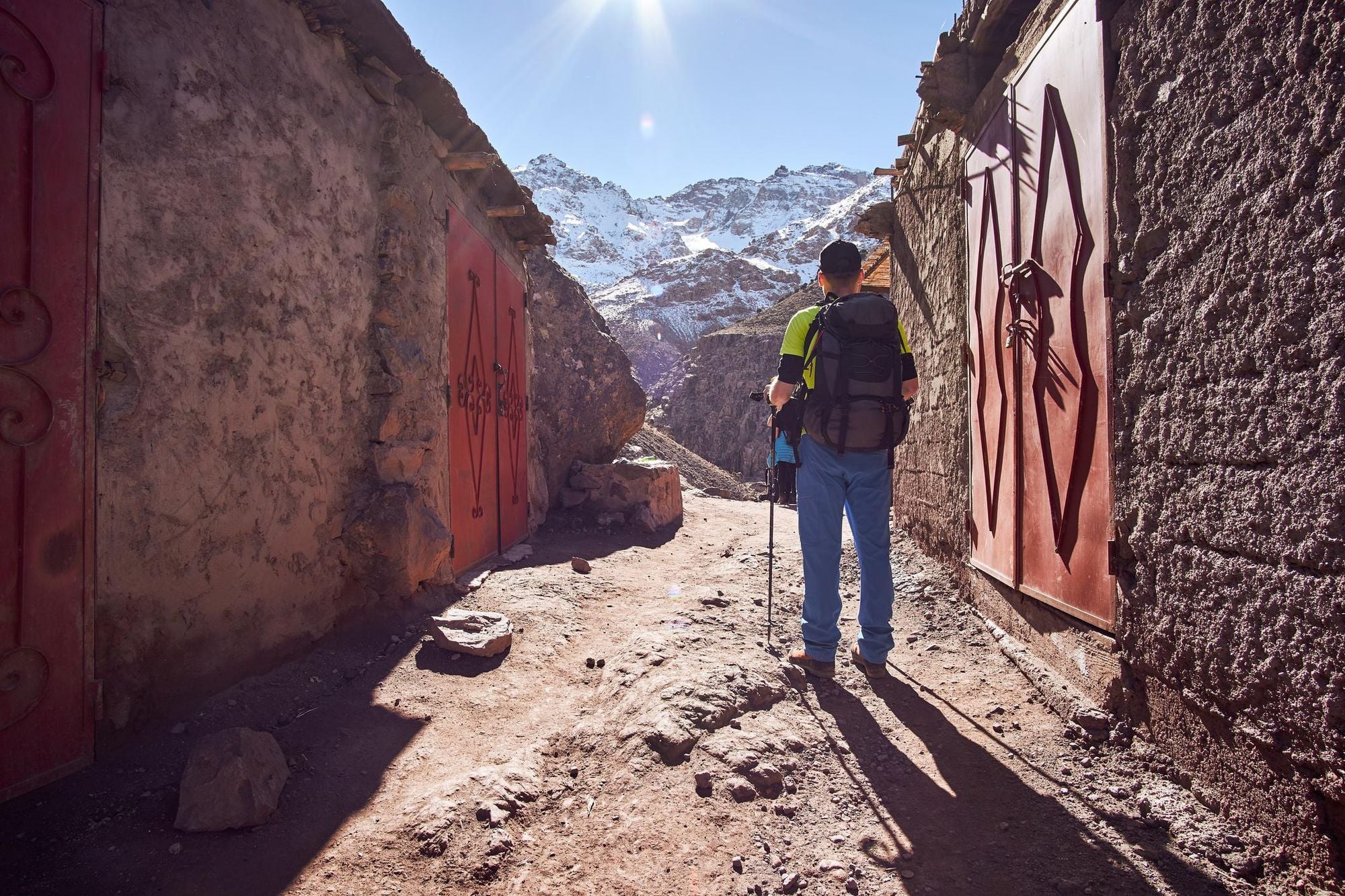
“We’ve climbed Toubkal with many people who have never been higher than 2,000m (6,561ft) and they can do it easily,” says Mohamed, before stressing the importance of preparation. “People should do some training. They should do some previous climbing in the mountains and test themselves, not go straight from home up to 4,000m (13,123ft).”
How fit do you need to be, and how do you train?
The bottom line, when it comes to fitness and Toubkal, is that you need to be fit enough to walk between six and 10 hours on back-to-back days. Add rough ground and altitude into the mix and you’ve got yourself a recipe for a trek that is going to test you physically. Getting yourself into a position where you can handle this, if you’re not there already, is vital before you set off on such an adventure in the Atlas Mountains.
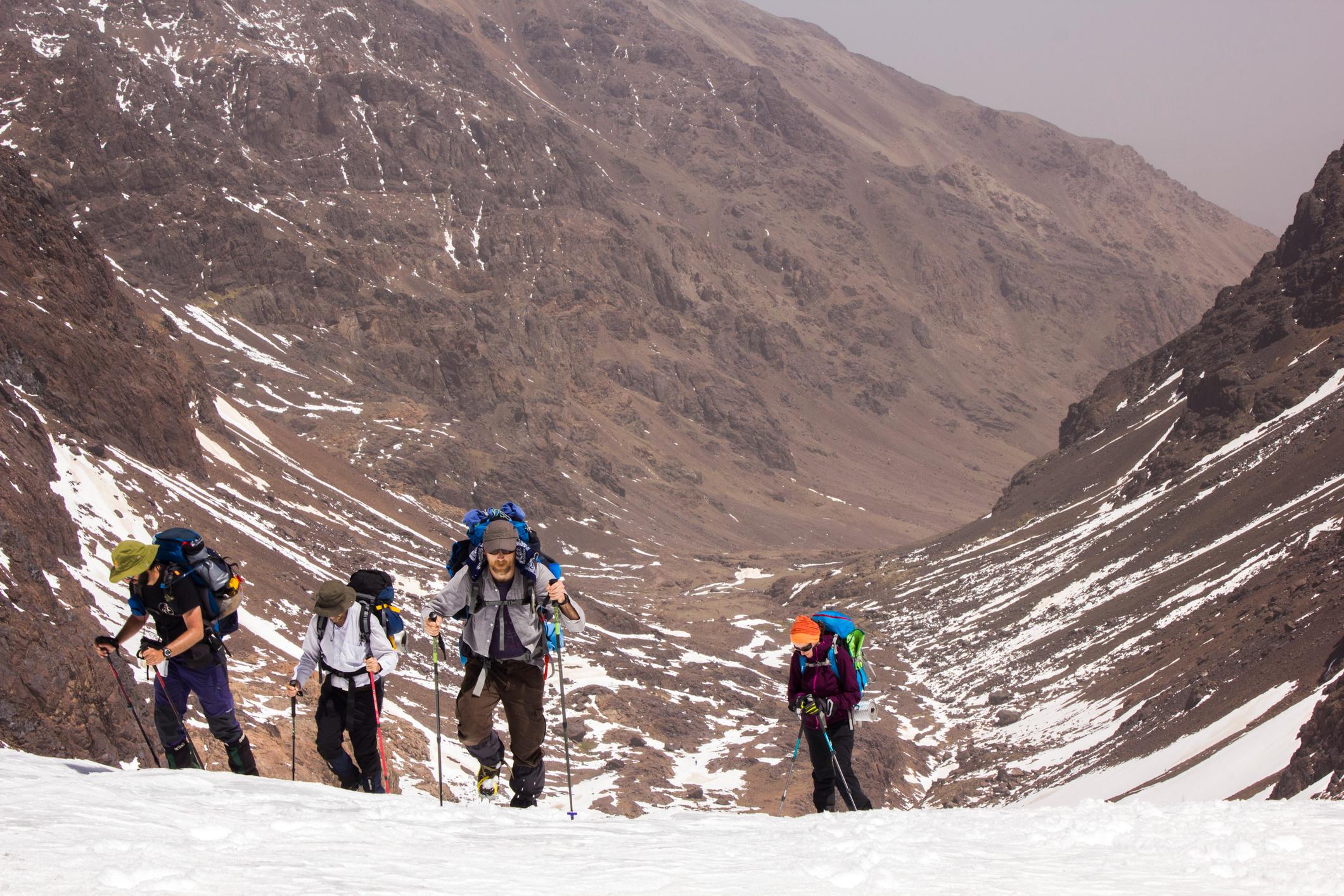
If you don’t think you’re fit enough to climb Toubkal, but can’t stop thinking about taking on the challenge, consider pulling together a training plan. Over the course of eight to 12 weeks, you’ll want to build towards hill days where you can hike for a minimum of six hours with a daypack on. Taking this even further, you should aim to get yourself to a point with your training where you’re hiking long distances on consecutive days. The descent on Toubkal, with its steep, scree-covered sections, means you should also find ways to work on your knee strength. Trust us, you’ll thank us on the downhill.
“A lot of people climb Toubkal with no problem, but they do some exercises at home before,” says Mohamed. “Go to the gym, run, go cycling. This kind of thing helps.”
Mount Toubkal altitude: do you need oxygen?
Up at the summit of Toubkal, 4,167m (13,671ft) above sea level, you’ll be breathing in roughly 40% less oxygen than you would down at the coast. Unsurprisingly, this can make breathing harder than you’re used to. It can also, as I discovered when climbing Toubkal and one of my fellow climbers suffered from it, cause mild altitude sickness.
Although this will sound frightening to many, the issue of Toubkal’s altitude should actually be treated with a healthy amount of respect rather than outright terror and flight cancellation. At around 4,000m (13,123ft), the challenges brought on by heightened altitude and thinner air are real but manageable. Yes, you’ll be taking in fewer oxygen molecules than you would at sea level. And yes, this means your lungs and heart will have to work a little harder to maintain the status quo. But there really is no need to panic.
In the world of mountaineering, supplemental oxygen tanks aren’t really used until climbers get above 7,000m (22,965ft)). At this altitude and above, the significantly reduced air pressure means the number of oxygen molecules you can breathe in drops below 40%. In the infamous “Death Zone,” a term used to describe altitude above 8,000m (26,246ft), the amount of oxygen you take in with each breath drops to a third of what it would be at sea level. It is not, as its name suggests, a region of Earth hospitable to sustaining life.
The good news for you is that even standing at the summit of Toubkal, you’ll still be about 4,000m (13,123ft) below the highest points of the Himalayas – and all the additional dangers that come with that. Altitude on Toubkal shouldn’t be underestimated, by any stretch. But there’s no need to pack oxygen tanks in your excess luggage either.
Altitude sickness and the “how many days” trade-off
Acute Mountain Sickness (AMS), which is the mildest form of altitude sickness and the one most likely to be experienced on Toubkal, can start occurring within six to 12 hours of climbing above 2,500m (8,202ft). Symptoms include headache, nausea, vomiting, dizziness, fatigue, sleep disturbance and decreased appetite.
One thing that needs to be weighed up when worrying about AMS on Toubkal is how many days you’re willing to give over to acclimatisation. The honest truth is that slower ascents, with more overnight rests along the way, mean you’re less likely to suffer altitude-related symptoms as you go. This is because your body simply has more time to adjust to the amount of oxygen it's breathing in, and can adapt accordingly.
Much Better Adventures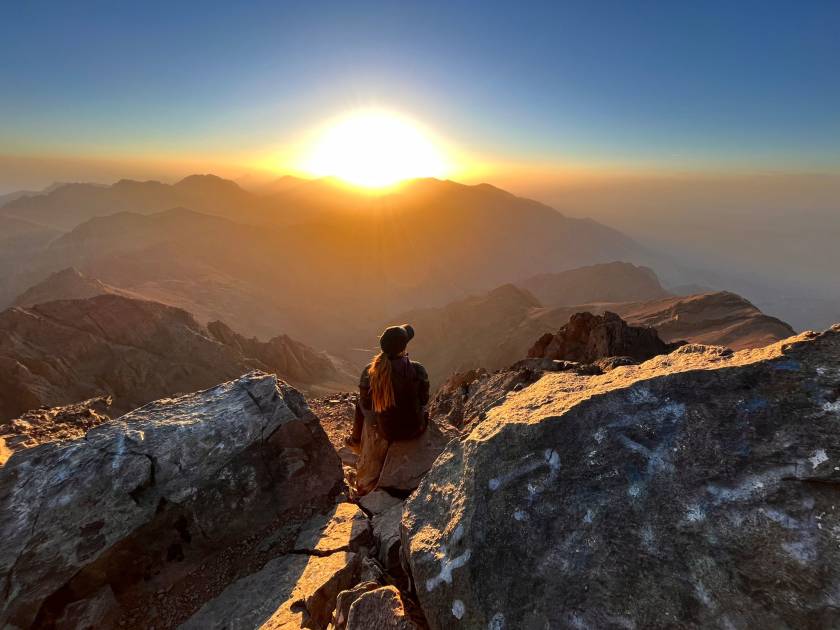
On the flipside, of course, is that not all of us have the luxury of enough annual leave to slow-climb mountains like Toubkal in small increments. Time constraints around things like getting back to life, work and real-world responsibilities (boring, I know), mean that sometimes potential downsides of a quicker climb just have to be rolled into the equation. And that’s to say nothing of the fact that longer climbs will also, by their very nature, be more expensive.
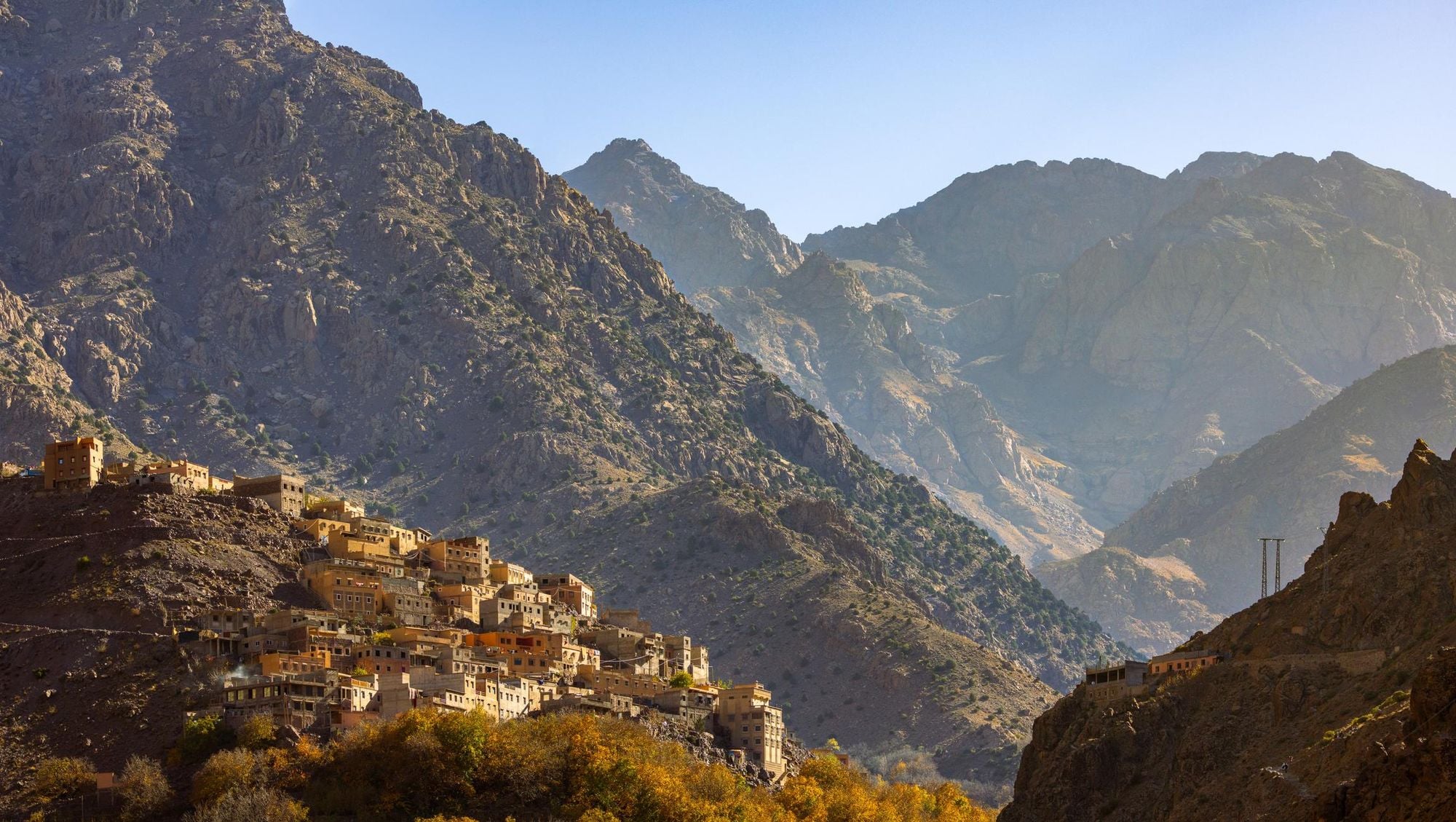
As a rule of thumb, just remember that two-day dashes up Toubkal are more likely to leave you under acclimatised than longer journeys to the summit. Suffering AMS symptoms as a result of climbing the mountain more quickly is not guaranteed, by any stretch, but it is worth keeping in mind.
When it comes to altitude sickness on Toubkal, expert mountain leaders like Mohamed know what to look for and are able to respond accordingly. “They [the climbers] start getting dizzy. They can’t see that much. If they start vomiting, it’s the last sign and they need to come immediately down,” he says. “But that’s very rare to happen. It’s always normal to feel a bit of headache in the last 200 metres, but the guides pay attention.”
Is Mount Toubkal harder than Kilimanjaro?
Not only is Toubkal’s summit (4,167m) well over 1,500 metres below the summit of Kilimanjaro (5,896m), it also requires far less time to climb it – somewhere between two and five days, rather than a full week. Offering less altitude risk and a smaller trip duration, Toubkal is a common stepping stone toward Kilimanjaro. Neither mountains are easy, and winter conditions can make things trickier of course, but summiting Kilimanjaro – generally speaking – represents a harder and more significant climbing challenge than Toubkal.
Much Better Adventures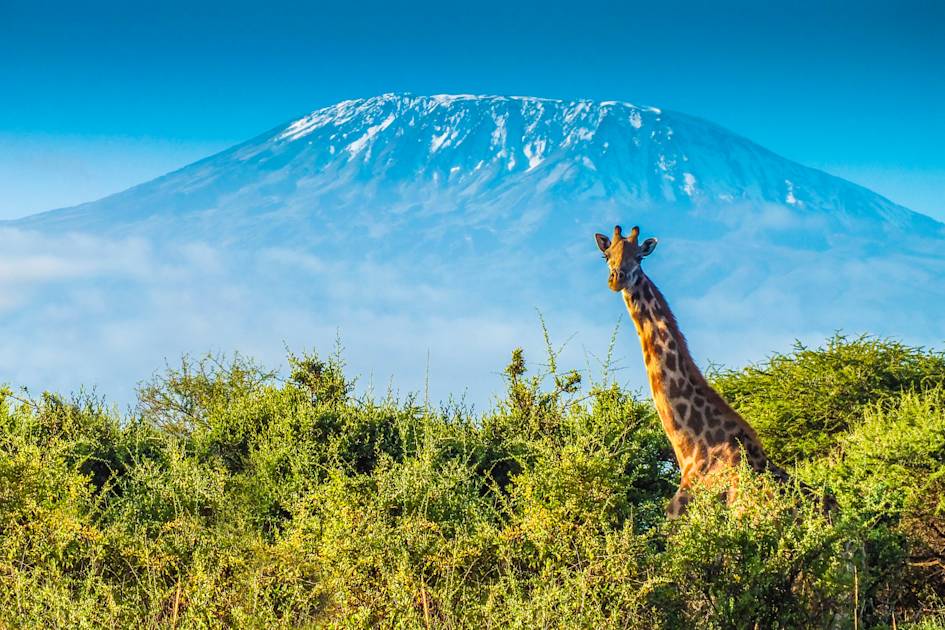
Jim Eite, who guided on Kilimanjaro for four years and has summited it more than 50 times, has spoken before of what it takes to climb such a mountain. Preparation, as is the case with Toubkal, remains key. “When I was guiding, the biggest thing people struggled with was that although they did training walks, they didn’t do back-to-back training walks. They never went out to walk for six days, so a lot of people struggle with the cumulative fatigue,” he says.
Is climbing Mount Toubkal safe?
Over the years, Toubkal has been safely climbed by thousands of people. During its existence, everyone from relative beginners to expert mountaineers have made it to the top without incident. Like with any mountain, though, the climb isn’t without risk.
We’ve already touched on the altitude but it’s worth reiterating that with Toubkal, like with any mountain climb over 4,000m (13,123ft), you’ll be exerting yourself in an environment where it’s harder to breathe. Acute mountain sickness itself is rarely fatal but if symptoms are ignored and climbers continue to climb higher, they are putting themselves at risk of more serious complications like High Altitude Pulmonary Edema (HAPE) – a potentially fatal condition where fluid builds up in the lungs. If AMS symptoms occur, err on the side of caution and descend rather than climb higher.
Other Toubkal risks to be aware of include its loose scree. Some sections, especially on summit day, can be steep and this, combined with the scree, requires concentration on both the ascent and descent. Whatever time of year you’re climbing Toubkal in, remember to pack durable footwear with strong ankle support and good grip underfoot. Leave the ballet pumps and plimsolls at home. This isn’t the time or place for them.
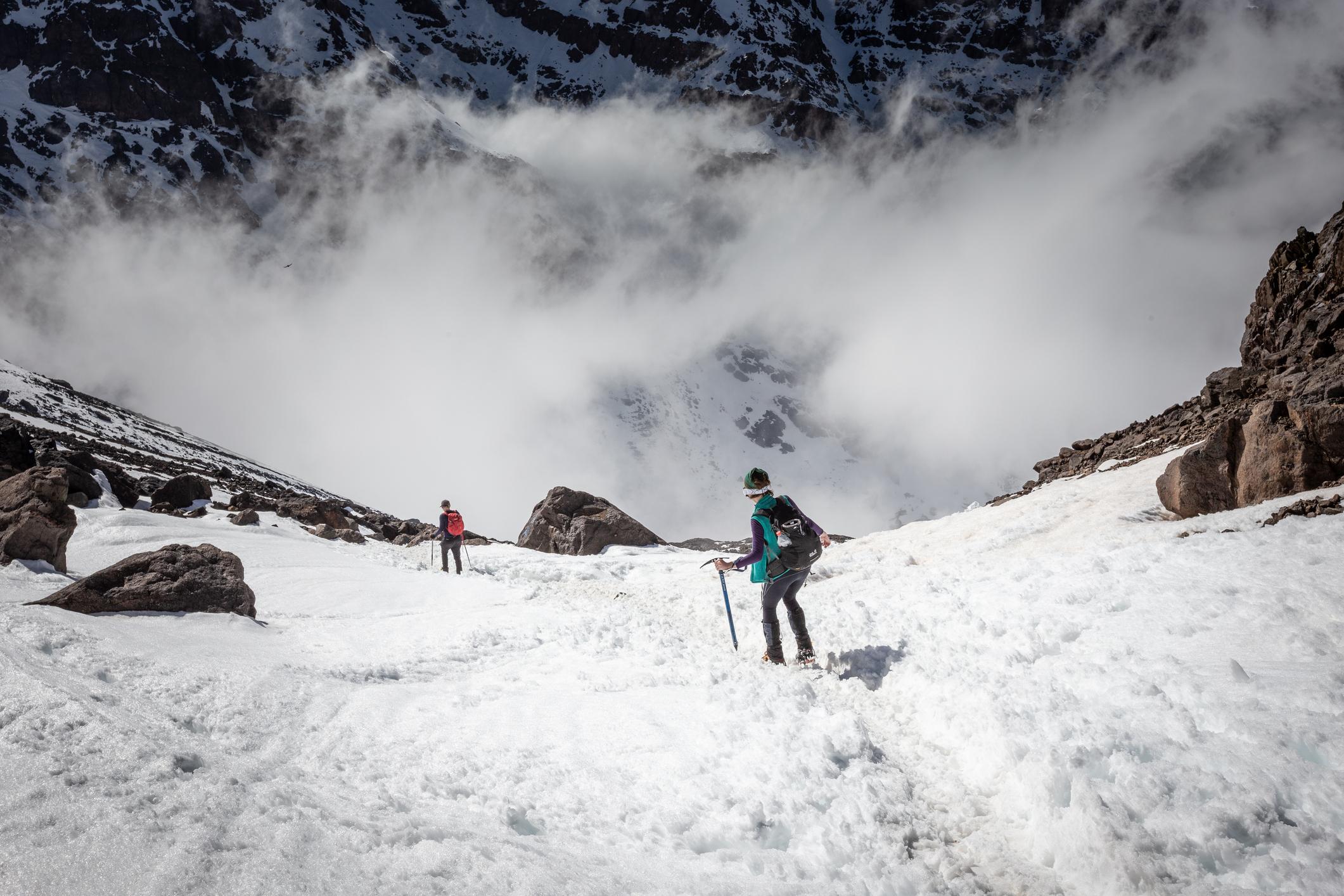
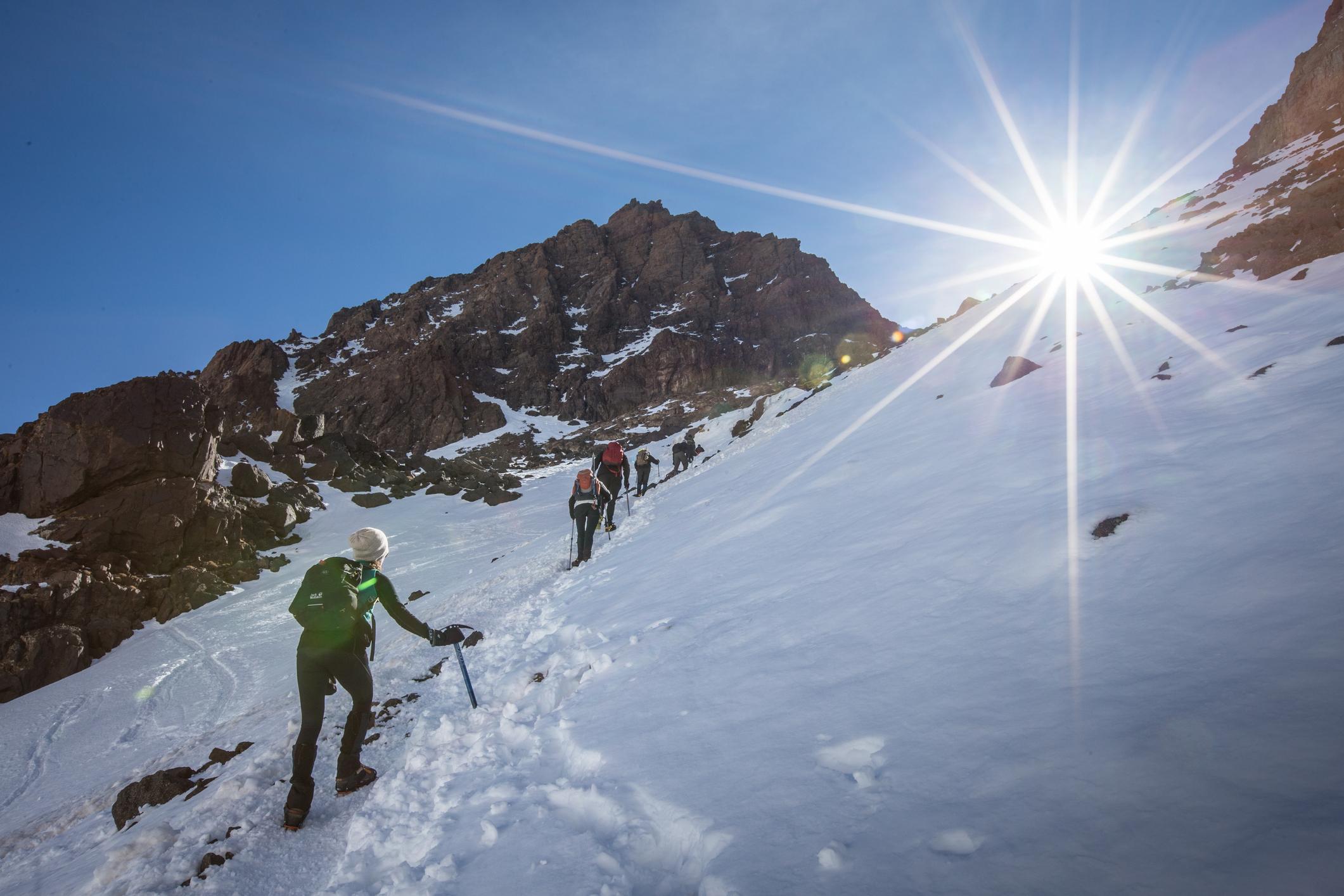
Requiring crampons, ice axes, and more specialised mountaineering gear, climbing Toubkal in winter is a trickier business than it is in summer. Cold temperatures, powerful winds and snow, ice and even avalanche risks are all factors here, and an expert guide will be crucial in keeping you safe in such an environment.
 Sian Lewis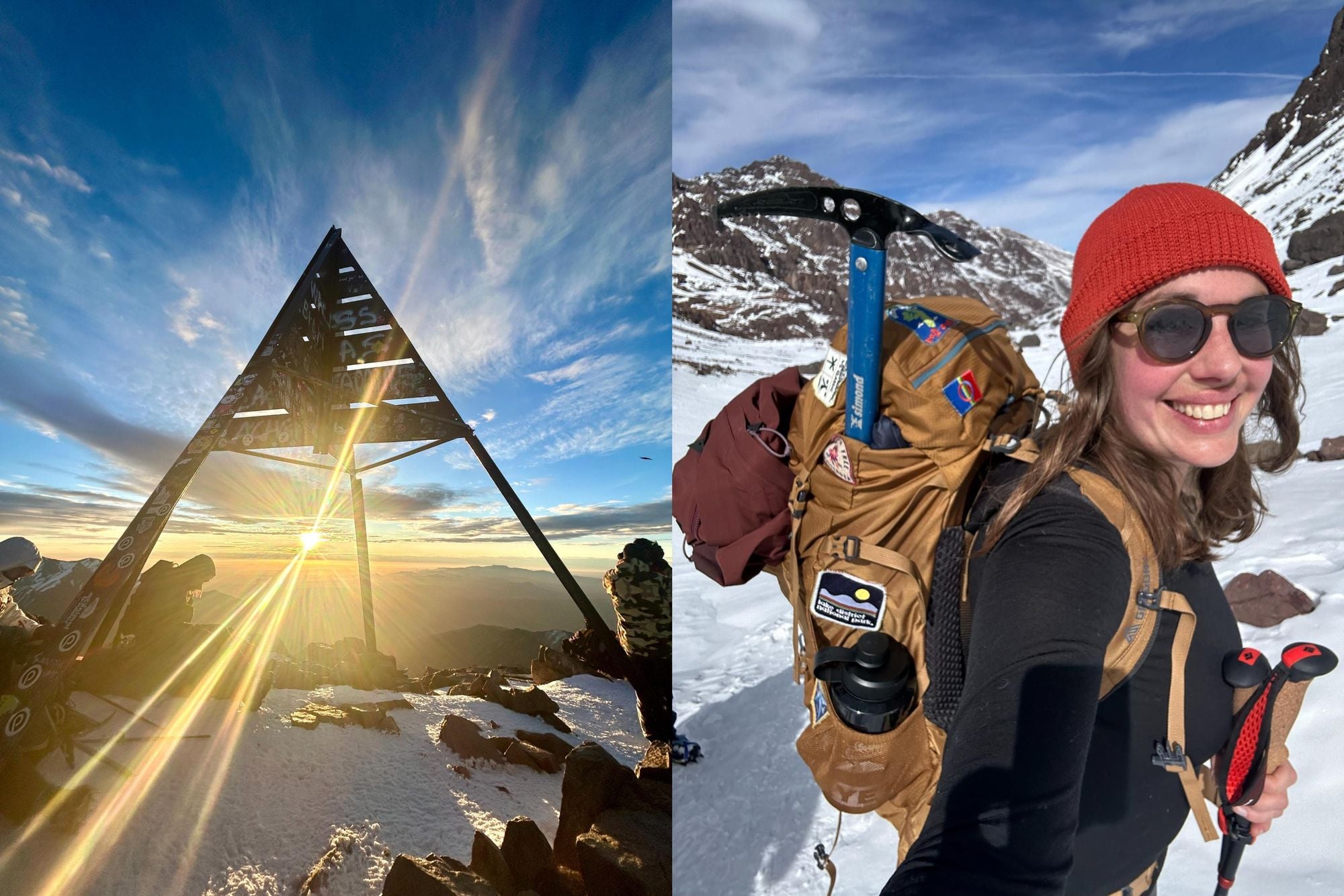
The winter weather in these parts can change quickly. Summit attempts have been known to be delayed, or cancelled altogether. Remember that your guide’s job, first and foremost, is to keep you safe. As frustrating as summit-day turnbacks can be, they’re always done with the climbing group’s best interests at heart.
In the winter, it can be very windy. It can be thick snow. The last part of the climb is on a ridge, so if it’s windy, there’s no point to carry on.
“December and January can be the most difficult times,” says Mohamed. “In the winter, it can be very windy. It can be thick snow. The last part of the climb is on a ridge, so if it’s windy, there’s no point to carry on.”
What to pack
Toubkal is considered a non-technical climb. But this doesn’t mean you can rock up in just your beach shorts, vest and flip-flops, and hope to summit without incident. Below you’ll find a list of what you’re required to bring with you if you’re climbing the mountain with Much Better Adventures. It’s all good stuff to bring, but things I found particularly useful – and which I could easily have forgotten, due to their size – were my head torch and sun protection. Remember to break in your hiking boots before your trip, too. I didn’t really do this and I paid for it with some big old blisters.
Gear you should pack:
- Sleeping bag (one is provided, but I brought my own)
- Day pack (25-35 litres)
- Rucksack or duffle bag (for the mules to carry overnight kit)
- Warm jacket
- Waterproof jacket
- Light-weight, breathable hiking shirts and trousers
- Broken-in hiking boots
- Warm hat
- Light gloves or mittens
- Sun protection (hat, sunglasses, sun block)
- First aid kit
- Electrolytes/rehydration solutions (especially if travelling during the summer)
- Personal toiletries
- Sanitary supplies (hand sanitiser, toilet paper, wet wipes, and ziplock baggies to carry out)
- Head torch
- Water bottle
- Towel
- Earplugs (optional)
- Sleeping bag liner
Climb Toubkal with expert guides
If you’re thinking of booking a guided tour of Toubkal with Much Better Adventures, you’ve got four options to choose from. Everything from weekend dashes and wintertime ascents to week-long treks and sleepovers in the Sahara are on the table. With prices ranging between £400 and £700, depending on which itinerary you plump for, there’s something to suit all manner of budgets.
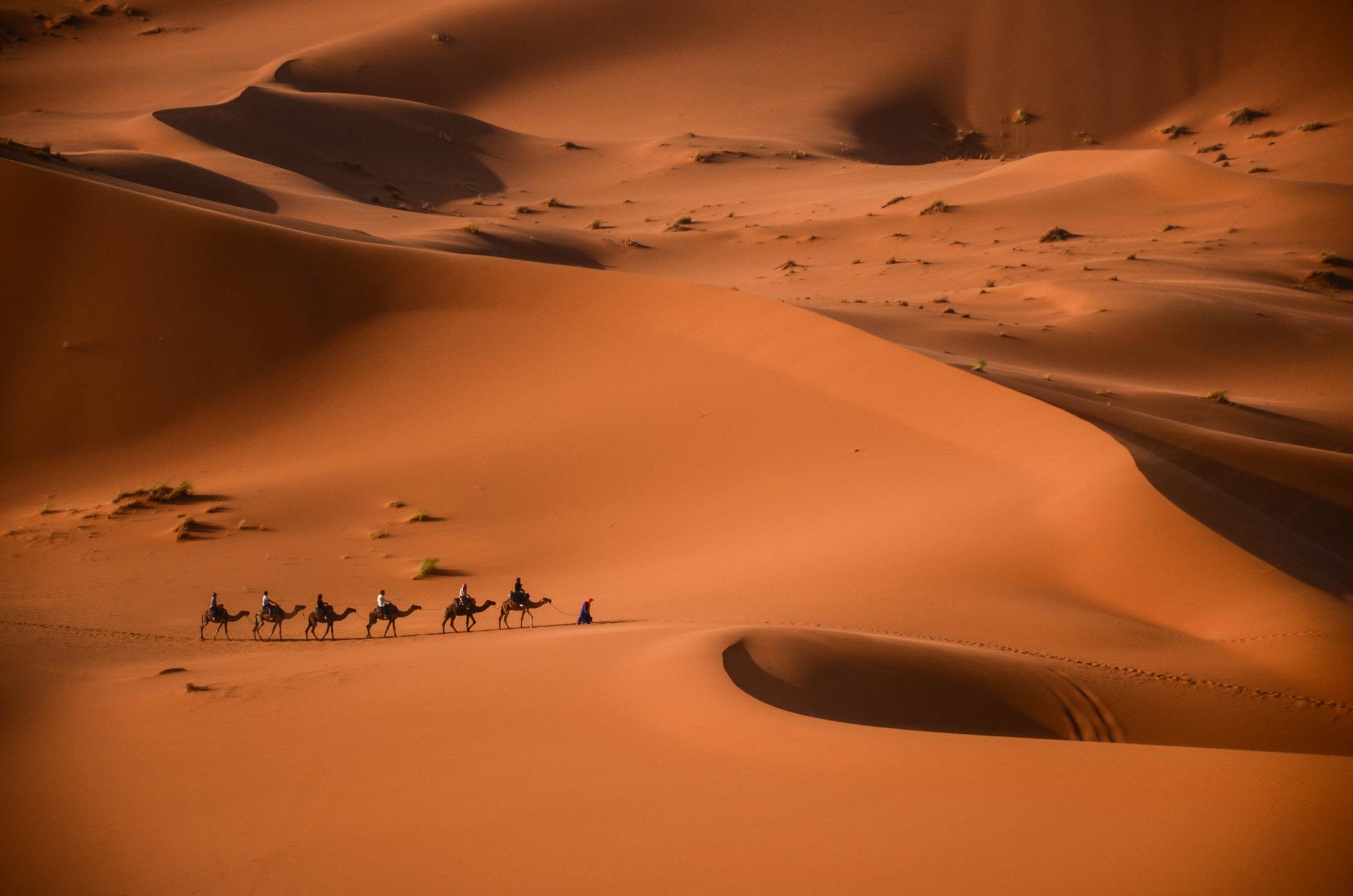
For those interested purely in summiting Toubkal and ticking it off their bucket list, the three-night ‘Climb Mount Toubkal in a weekend’ option is probably the best bet. Alternatively, if you’re someone looking to immerse yourself more fully in North African culture and experience things like sunrise camel treks, you might be swayed by the more all-encompassing ‘Climb Mount Toubkal in a Week'.
Inspired? Browse our full range of adventures in Morocco now!