

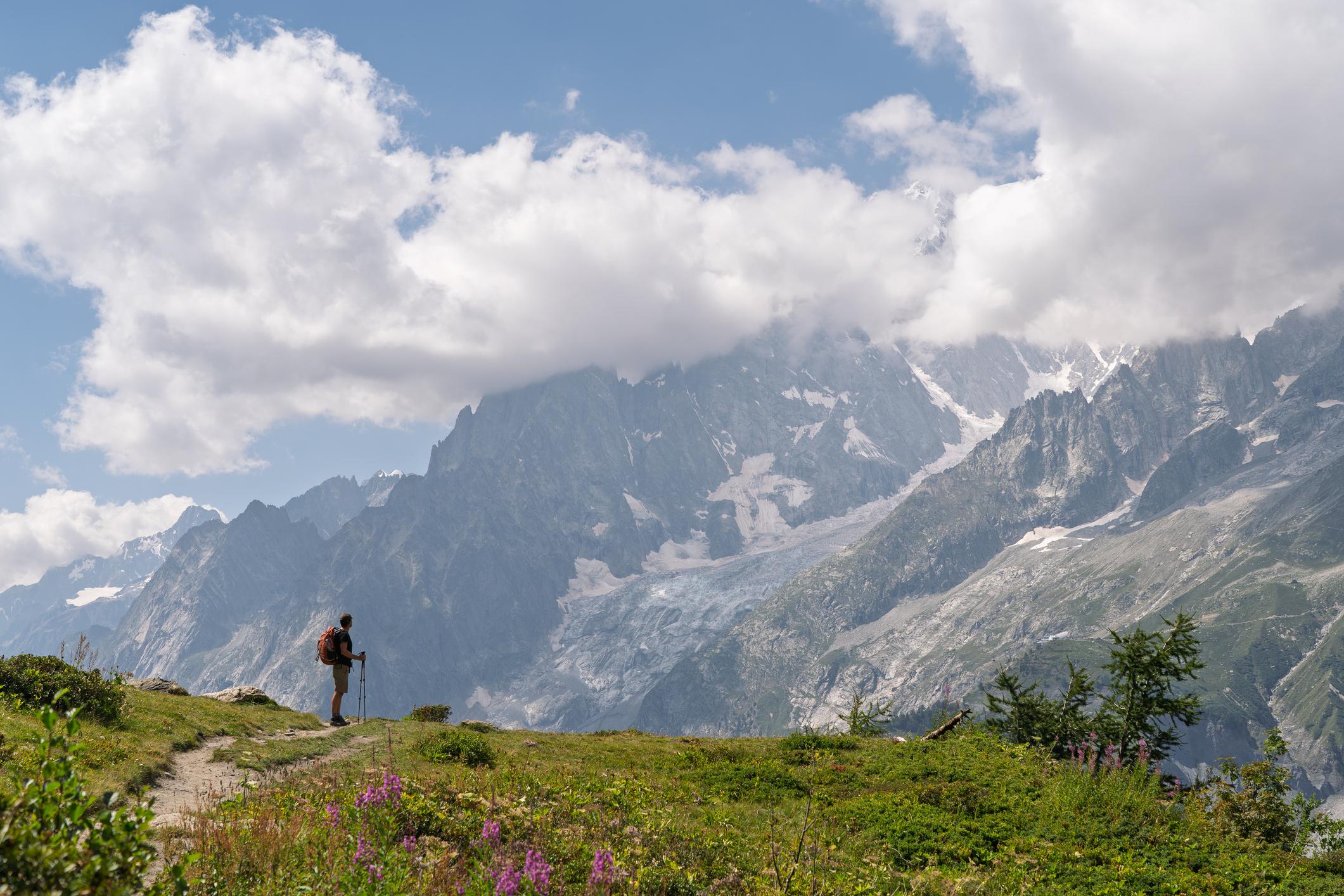
The Tour du Mont Blanc (TMB) is a 105-mile (170km) hiking route through France, Switzerland and Italy. This is a well-known and well waymarked hike, and as such, there are a few different ways you can walk it:
- Solo: handling all logistics yourself, walking alone or with friends.
- Self-guided: without a guide or a pre-organised group, but with logistics such as accommodation (and so, daily itinerary) sorted for you.
- Guided: led by an expert local guide, with a group of like-minded people, and with your accommodation and itinerary sorted for you.
Which of these three options is best for you comes down to how much planning you want to do, whether you want to hike alone or in a group, and your budget. It's likely that your experience levels will come into it too, as if you've never been on a multi-day walk before, hiking the TMB alone may be a big ask.
You also learn more about the flora and fauna. You have that expertise of someone who has done the trail dozens of times.
The benefits of walking solo are that you have full independence. You pick where you're going to stay each night, how far you're going to walk each day and how fast you're going to do it. Since you're sorting your own logistics, the cost will be lower, too. If you're choosing to go guided, you'll pay a higher price, but your accommodation, luggage and route-finding will all be handled for you. You'll also have an expert guide to tell you about the flora and fauna you're walking through, and you'll get a ready-made group to go hiking with. So there is a sociable aspect to it as well. Self-guided sits between these two - with a point of contact, and accommodation sorted, but without the expert guide or group.
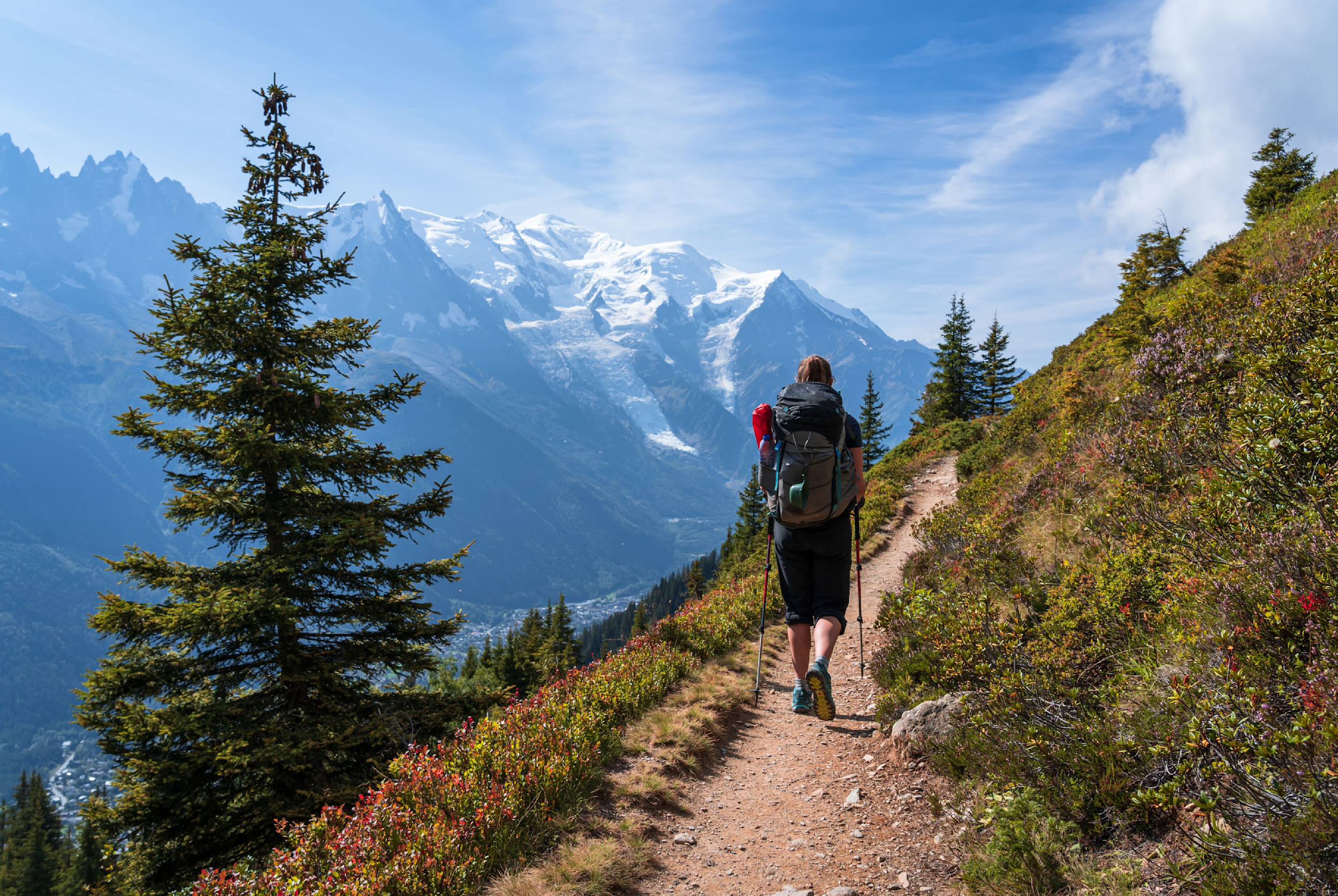
On this page, we're mainly going to comparing a solo hike on the Tour du Mont Blanc to a guided adventure. We’ll look at what each option (roughly) costs, cover what a guided trip actually includes, and look at how you should decide on which option might be right for you. For a more detailed description of the route, stages and timelines involved, see our full guide to trekking the Tour du Mont Blanc.
James Leask of Much Better Adventures has completed the route multiple times.
"Whilst hiking the TMB you become part of a community," he says. "It's a shared experience and hut culture is all about people enjoying being in the mountains."
Solo vs. Guided: Which is Right for You?
There’s no wrong or right answer. There are trade-offs to be made whether you go solo, guided or indeed self-guided. Each option has its merits and drawbacks.
| Solo | Self-Guided | Guided | |
|---|---|---|---|
| Cost | Cheapest option | Mid-range price | Higher base price |
| Flexibility | Full control over dates and pace | Fixed dates; set daily itinerary | Fixed dates, group pace |
| Refuges | Book yourself, months ahead | Pre-booked | Pre-booked |
| Navigation | You navigate yourself | You navigate yourself, with route notes provided | Route-finding by qualified guide |
| Luggage | Carried or arrange transfer yourself | Carried or can arrange transfer | Carried or can arrange transfer |
| Food | Manage own food | Some meals included at accommodation | Most meals included |
| Company | Solo or with friends | Solo or with friends | Ready-made group of like-minded hikers |
| Safety | Self-reliant | Self-reliant on the trail, with operator support | Guide and safety management |
A solo tour suits you if: you’re an experienced hiker, confident navigating and you want to walk alone or with a group of your own making. You should be comfortable handling the logistics of booking accommodation and putting together a plan for how far you're going to walk each day.
A self-guided tour suits you if: again, you're an experienced hiker, confident with route-finding, and you want to walk either alone or with a group of your making - but want some of the logistics handled for you. You don't want a guide or a ready-made group.
A guided tour suits you if: you’re a less experienced hiker, unfamiliar with the terrain of the TMB, or you are an experienced hiker, but you’d like a small group of like-minded people to walk with, and an expert guide to tell you about the flora, the fauna and the history and culture along the way. This is a good bet if you want all the logistics handled for you, so you can just turn up and walk.
Much Better Adventures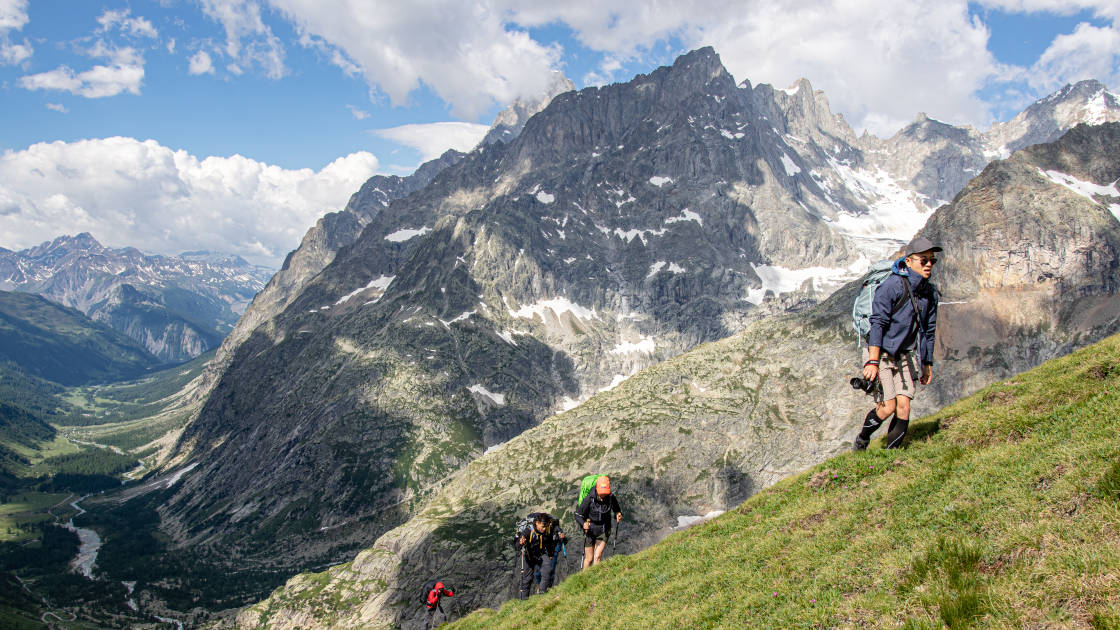
Joel Evans guided on the Tour du Mont Blanc for six years, and now organises tours on the route. "The main thing about having a guide, from our point of view, is that you get to learn a lot more about the local area," he says. "You get to learn a lot more about the culture and mountain etiquette; you learn more about the flora and fauna. You have that expertise of someone who has done the trail dozens of times. They know when and where you might see certain animals."
I also think, having that safety and security of a guide, who is trained, and who knows how to read the weather [...] plays into it.
Joel continues: "I also think, having that safety and security of a guide, who is trained, who knows how to read the weather, the safety procedures if something does go wrong, knowing where and when you have phone signal for any emergencies - that plays into it a lot in terms of guided and self-guided.
"The questions we get asked from the self-guided groups on the hill - whether it's individuals, couples, or groups of 6-10 - are always questions that could've been answered by your guide, about the weather for example, or which route to take."
How Much Does the Tour du Mont Blanc Cost?
It costs roughly £1,100-£2,000 GBP ($1,400-$2,600 USD) to walk the full circuit of the Tour du Mont Blanc solo, versus around £2,000-£2,600 GBP ($2,550-$3,300 USD) guided, all-in. Both have wide ranges because refuge prices, level of luggage transfers and food vary. Self-guided will be in between the two.
Solo cost breakdown
It takes 9-11 nights to walk the Tour du Mont Blanc at the classic pace, averaging six to eight hours of walking her day over the 105 miles (170km) involved.
- Refuges (half-board/demi-pension), per night: £50-£80 ($64-$105)
- Luggage transfer, per stage: £20-£60 ($25-$80)
- Food, snacks and drinks, per stage: £35-£60 ($45-$80)
- Maps and a GPX navigation app: £10-£30 ($13-$28)
- Chamonix airport transfers: £60-£120 ($75-$150)
Prices are approximate. They'll vary depending on time of year (and will go up over time). The company you go with will also have an impact. Refuge rates change from season to season. We have excluded flights from the breakdown, as the price range varies wildly depending on your point of departure.
Guided cost, all-in (except flights to Chamonix)
- Trek the TMB Full circuit: from £2,175 ($3,181 USD) for nine nights
Much Better Adventures also run shorter variants on the Tour du Mont Blanc which are cheaper and allow you to sample the trail in a weekend or week.
- Tour du Mont Blanc in a Weekend: The Hut-to-Hut Edition: (from £917/$1,341)
- Tour du Mont Blanc in a Week: (from £1,646/$2,408)
- Tour du Mont Blanc in a Week: The Hotels Edition: (from £2,219/$3,246)
Much Better Adventures
What’s included on a Guided Tour du Mont Blanc?
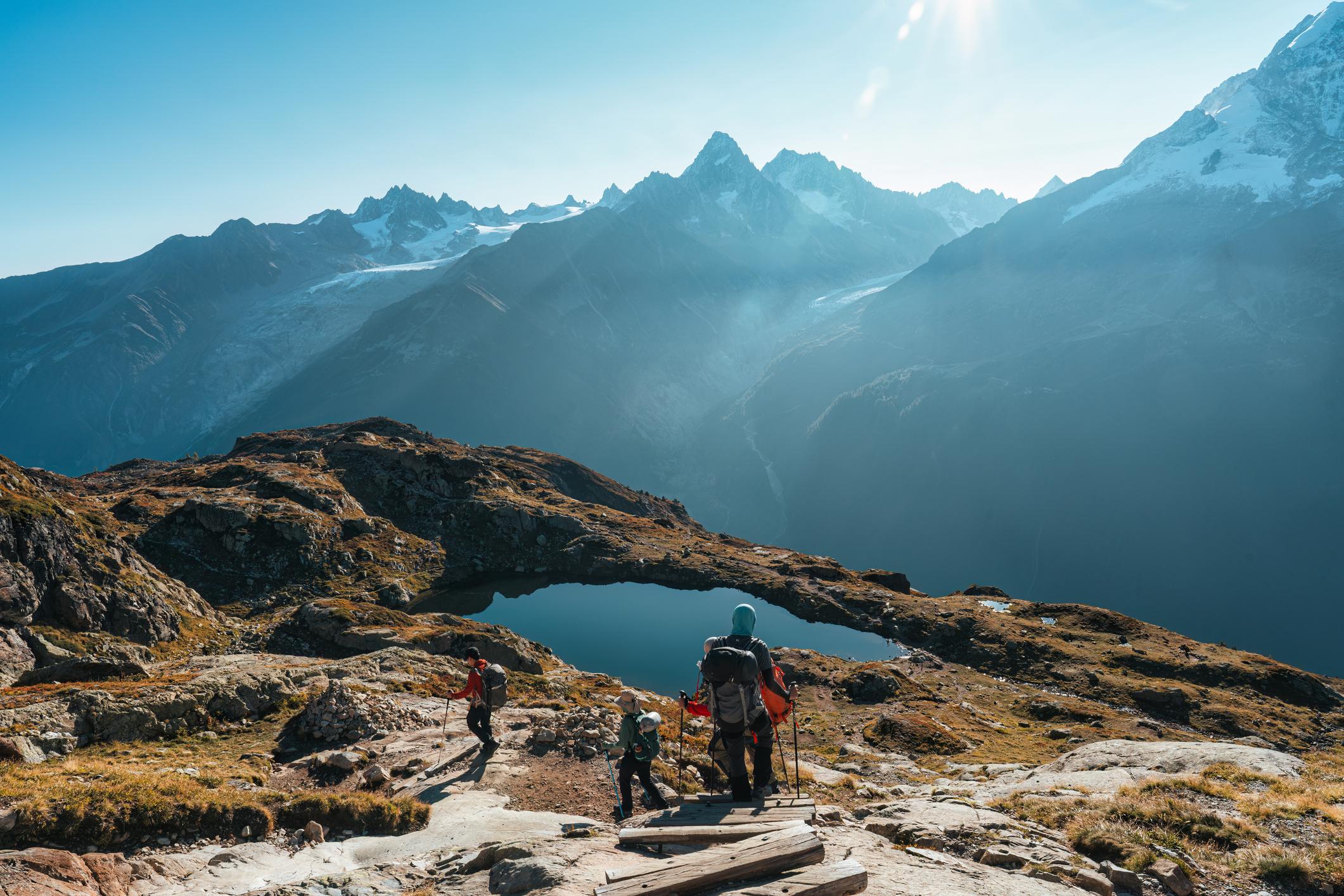
No two operators offer exactly the same thing, so we'll tell you what our nine-night guided trip on the Tour du Mont Blanc includes:
- A qualified local guide: You will walk with English-speaking IML-certified guides who know the route, have stayed in the refuges before, and who have seen every type of weather before on this trail. As one reviewer recently put it, “everything is planned with military precision.”
- Pre-booked refuges: The refuges on the TMB book out months in advance. Having them pre-booked means you don’t have to worry about it.
- Most meals: Our treks includes breakfast, lunch and dinner.
- A small group: Hike with like-minded people.
- Safety management: Your experienced guide team know the area.
Luggage Transfer is an optional add-on for our Tour du Mont Blanc itinerary, and there is also the option to leave a bag in storage in Chamonix. Luggage transfer for the full period costs £320 ($468) per bag, while storage in Chamonix is £35 ($51). These are available by ticking a box at checkout.
Much Better Adventures
Booking Refuges Yourself: What Solo Walkers Need to Know
If you’re going to hike the TMB solo, you need to take the booking of refuges seriously. It has a knock-on impact for your day-to-day walking itinerary for obvious reasons. If you can't stay at your refuge of choice on a certain day, that might mean you have to walk for longer to reach another one that day.
A lot of the most popular refuges on the route sell out as early as the winter before the summer you’ll be walking. Booking on a whim a few months ahead of a trek isn’t an option, especially if you want to stick rigidly to the TMB trail and walk the classic stages. You can usually book the refuges from six to nine months before summer, but this varies from hut to hut. You can contact the refuges directly via e-mail or use a TMB booking management system.
In some of the larger stops like Courmayeur, you can also book hotels to vary your stays. Our various Tour du Mont Blanc trek options include hikes which make use of both refuges and hotels.
If you're going to be hiking the TMB route solo, a good starting point is to think about how many days you want to hike it in. From there, you can look at the daily breakdown, and where it makes sense to stay. Then you can look at when the bookings open for the refuges you're targeting - and prepare to get them booked.
Solo or Guided: What to expect from refuges?
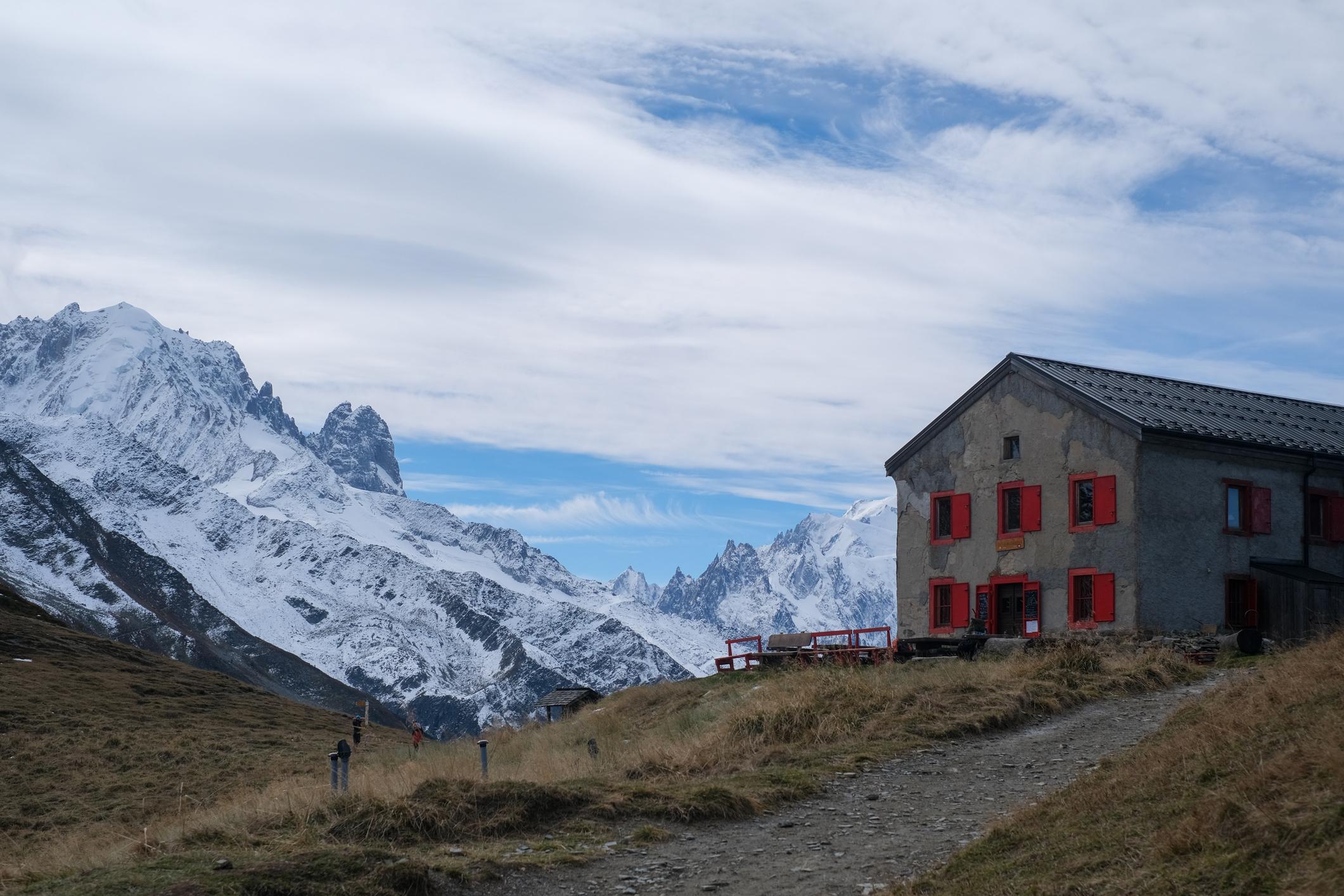
Mountain refuges are typically remote, and are often the only accommodation option in the area. Half-board (demi-pension in French) is standard, meaning dinner and breakfast are included in the price of your stay. Breakfast tends to be simple and cold, while dinner is usually a hearty three-course set menu. There is often a tuck shop where you can buy bottled water, beer, wine or soft drinks.
Most refuges have mixed dormitory rooms, and you’ll be sharing a space with others. You might want to pack an eyemask and earplugs to keep out light and snoring. There are basic toilets, sinks and showers. The atmosphere tends to be lively, with walkers comparing hikes and equally, the mornings start early as people leave before the crack of dawn or prepare to get back out on the trail.
The views are sublime - looking out over the beauty and drama of the alps. Don’t expect reliable Wi-Fi at every stop. For more information, have a read of our article on the refuges of the Tour du Mont Blanc.
Joel breaks down what it looks like to arrive at a mountain refuge with a group:
"When you arrive with your group, it's 'okay guys, take your boots off - I'm going to go in and say hello'. I'll double check the reservation; ask where we're staying - and then I'll go back outside and explain to the group: this is the boot room, this is where you leave your poles, this is where you leave your bags and take only essential items to the room. And then I will just explain how that particular refuge works - where you can charge your phone etc.
Having a guide who has stayed at that refuge a dozen times before [...] everything just gets a lot more streamlined.
"I think the guardians prefer it, because they're not bombarded with 10 people asking the same questions, when between 4-5pm every day there's 100 people coming through the door, all with bags; sometimes wet kit, wet boot, wet bags. So having one person, a guide who has stayed at that refuge a dozen times before, explain exactly how it works and how it goes - everything just gets a lot more streamlined. You're being told when dinner is, you're being told 'go for a shower now because the next group is going to arrive and they are all going to want a shower'. Sometimes people like that when they're on holiday."
Luggage Transfer on the Tour du Mont Blanc
Luggage transfer is an optional, add-on service that moves your bag from refuge to refuge (or hotel to hotel), meaning you can hike the TMB with a light daypack rather than having to carry everything with you all the time. This service is priced per day. You can expect to pay around £35 ($47) per stage, with a weight limit of around 15kg. There are certain stages where luggage transport isn’t possible, so look into this before booking and ask your guide or operator if you have any specific questions. If you’re solo, you need to arrange this transfer yourself, whereas for guided trips, it’s an additional add-on option.
Frequently Asked Questions
Do you need a guide to hike the Tour du Mont Blanc?
No. The Tour du Mont Blanc is a famous, waymarked hiking route that many experienced hikers walk on their own every year. A guided tour comes with a lot of benefits though, from the booking of accommodation to the handling of navigation. Plus, you get a ready-made group of hikers and a local expert.
Can a beginner do the TMB solo?
We’d strongly recommend that if you’re a hiker with no experience of multi-day trekking, you choose to hike the TMB with a guide. We’d say the same for any challenging, long-distance route. The Tour du Mont Blanc may be famous, but it’s a long, multi-day route with a lot of logistical challenges, so while it is, of course, possible for a beginner to hike the TMB solo, they would need to have a strong level of fitness and be confident they can navigate on the trail.
How far in advance do you need to book TMB refuges?
The most popular refuges sell out months ahead. Often, bookings open in the autumn or winter before. Once you know your dates, book as soon as you can.
Is the Tour du Mont Blanc worth doing with a guided group?
Absolutely. For anyone looking to skip the logistical headache and hike with like-minded people, trekking with a guided group is a great option. You'll form a real sense of camaraderie with your group while you’re walking this trail, and a guide offers local expertise and knowledge as well as safety.
How much should I budget for the TMB?
It costs roughly £1,100-£2,000 GBP ($1,400-$2,600 USD) to walk the full circuit of the Tour du Mont Blanc solo, versus around £2,000-£2,600 GBP ($2,550-$3,300 USD) guided, all-in. See the cost breakdown above for our full answer to this question.
Inspired? Check out our range of treks on the Tour du Mont Blanc now!